Reviewed · TOURS IN SIEM REAP
2-Day ‘Angkor & Village’ Tour
Angkor is too large and varied for a quick temple stop, and this private two-day plan gives you time for the grand monuments, smaller ruins, sunrise, and Tonle Sap. The best moments include Bayon’s calm stone faces, Ta Prohm’s tree-covered walls, and the detailed carvings at Banteay Srei.
I like the private air-conditioned vehicle and the flexibility of a guide who can shape the pace around your group. I also like the mix of famous sights and local life at Kompong Phluk. The catch is physical: steep steps, uneven ruins, heat, and long walking make this a poor fit if you have trouble walking normally.
Key points to know before booking
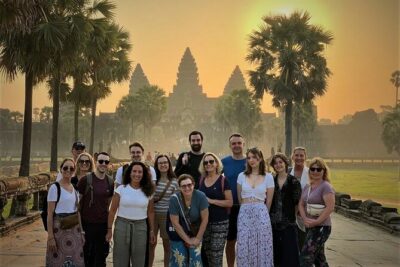
- Angkor Wat at sunrise: You return early on Day 2, then go back to your hotel for breakfast.
- Private touring: Only your group participates, with hotel pickup, an air-conditioned vehicle, driver, and English-speaking guide.
- More than the main temples: The plan includes Bayon, Baphuon, Ta Prohm, the Royal Terraces, Banteay Srei, Banteay Samre, and Pre Rup.
- Tonle Sap by boat: Kompong Phluk adds a look at fishing villages built largely on stilts.
- A flexible second-day choice: You can visit Kompong Phluk or request Preah Khan, Neak Pean, Ta Som, and East Mebon instead.
- Budget beyond the tour price: Temple admission, meals, drinks, and alcohol are extra.
Why two days makes sense at Angkor
At $130, this is a fairly strong value for a private two-day tour, especially if two or more people share the cost. You receive hotel transfers, transport, a professional English-speaking guide, bottled water, cold towels, and the motorized boat fee. The price does not include temple admission or meals, so you need to add those costs before comparing it with other options.
The biggest benefit is not simply seeing more temples. It is having room to spread out the big sights. Angkor Wat can feel like a lot to absorb after several hours of ruins, steps, and sun. Here, you see the main temple on Day 1, then return for sunrise on Day 2. That second visit lets you experience the building in a different mood instead of trying to force every detail into one long morning.
The tour begins at about 8:30 a.m. on Day 1, with pickup at your accommodation. Day 2 starts much earlier for sunrise, though the exact pickup time is not stated. Ask your provider for that time before bed. Your vehicle remains a useful refuge between sites, and the cold towels and bottled water are small but welcome comforts in Cambodia’s heat.
The stated temple-pass information needs a quick check before you pay. The details mention buying an Angkor pass for at least two days, list a three-day pass at $62 and a seven-day pass at $72, and also give a two-day pass figure of $67 elsewhere. Since these numbers may change or conflict, confirm the current price and ticket type with Asia Voyage Tour. Using the listed $67 figure, the tour and pass would come to about $197 per person before food, but the final amount depends on the current ticket price and the size of your group.
A few more things to do in Siem Reap worth a look
- Siem Reap: Angkor Wat 2-Day Tour with Sunrise and Sunset
★ 4.9 · 4,429 reviews - Angkor 2-Day Sunset & Sunrise Small-Group Tour
★ 5.0 · 2,567 reviews - 2 Days Exclusive Temple Highlights with Sunset and Sunrise Tour
★ 5.0 · 1,157 reviews
Day 1: Bayon, Baphuon, and the royal center
Your first stop is the Angkor Enterprise ticket office, where you buy your temple pass. This takes about 30 minutes and is not an entrance fee included in the tour price. Bring the details needed for the ticket purchase, and keep the pass safe for both days.
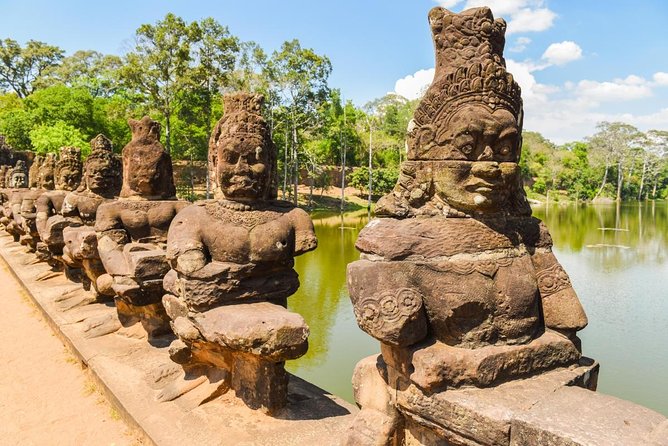
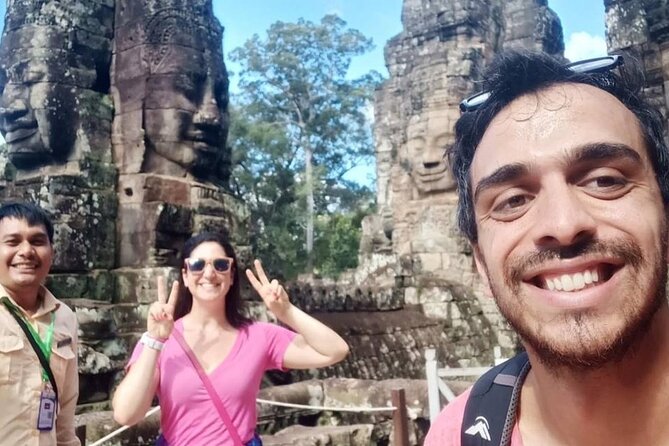
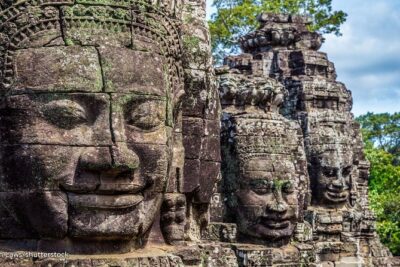
Bayon is the first major temple and a fine introduction to Angkor Thom. Built under Jayavarman VII in the late 12th or early 13th century, it was the state temple of a Mahayana Buddhist king. Its carved stone faces are the feature most people remember, but your guide can also help you read the lower reliefs and understand how the temple fitted into the old capital.
Allow about an hour here. The narrow passages, stairways, and changing views make Bayon more than a quick photo stop. It can also be crowded, so a private guide is useful when you want to pause, ask questions, or move through at a slower pace.
Nearby Baphuon gives you a different architectural experience. Built in the mid-11th century as a Hindu temple dedicated to Shiva, it rises in tiers as a temple mountain. The approach and upper levels involve steps, and this is one of the places where your fitness matters. If your knees or balance are not reliable, tell your guide early so the pace can be adjusted.
The Terrace of the Elephants and the Terrace of the Leper King formed the eastern edge of the royal palace area. The Elephant Terrace faces the old parade grounds, so your guide can help you picture processions and ceremonies rather than seeing only a long carved platform. Thirty minutes is enough for a focused visit, though you may want extra time for photographs.
Ta Prohm and the temple made famous by trees
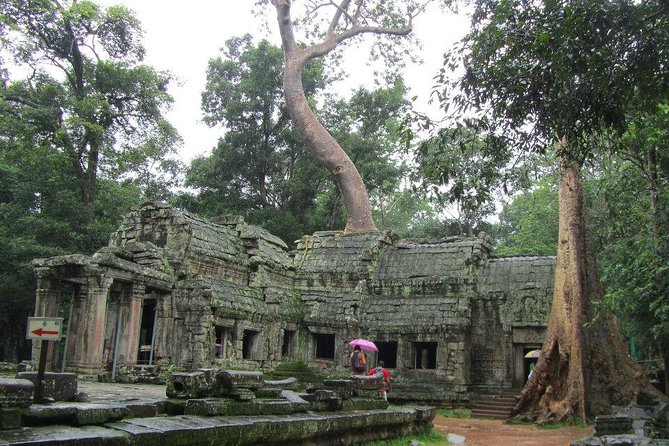
Ta Prohm is one of Angkor’s most atmospheric stops. Its later name is better known than its original name, Rajavihara, and it was built in the Bayon style in the late 12th and early 13th centuries.
The appeal is the contrast between architecture and forest growth. Roots press against walls, stones lie in uneven heaps, and doorways open into shadowed corridors. This is also one of the busiest places on the route, so the private format helps you avoid being locked into a group schedule.
Your time here is listed as about an hour. That is enough to see the principal areas, but not every corner. Wear shoes with a good grip, since the ruins are uneven and some approaches require climbing. The first-day schedule already includes several active sites, so do not treat Ta Prohm as an easy stroll.
Three hours for Angkor Wat
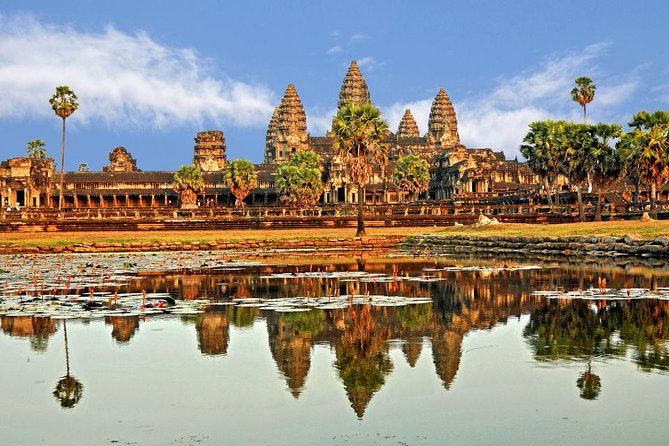
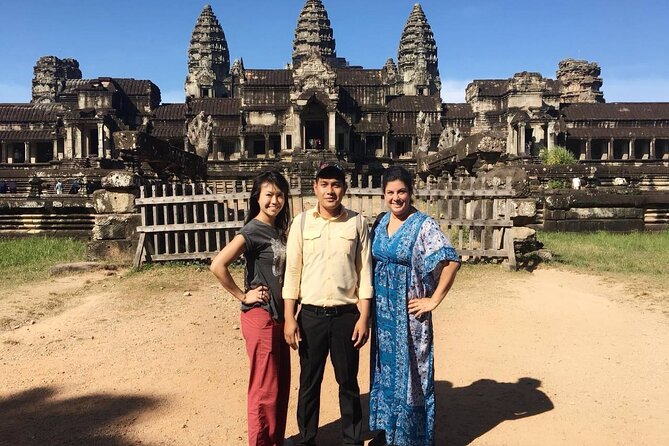
After lunch, the tour turns to Angkor Wat, the great temple complex that gives the whole park its name. It was first built as a Hindu temple and covers a vast site. Three hours is a sensible amount of time for a first visit, since you can see the approach, galleries, central sanctuary, and major carvings without rushing through the building.
Angkor Wat rewards a guide who explains what you are looking at. Without context, the long galleries and repeated bas-reliefs can blur together. With help, you can separate religious stories, royal imagery, building design, and the practical layout of the temple.
You should expect plenty of walking. The site is large, and the stone surfaces can be tiring after Bayon, Baphuon, Ta Prohm, and the terraces. The midday timing may also bring strong heat. Keep water with you, use the vehicle breaks wisely, and do not feel pressured to climb every available staircase.
The next morning returns you to Angkor Wat for sunrise. This is one of the strongest reasons to choose this tour over a one-day circuit. Sunrise offers softer light and a quieter feeling than the middle of the day, though the early start means you will trade sleep for the view.
After sunrise, you return to the hotel for breakfast. That return is practical. You do not have to carry breakfast around the temples, and you get a short reset before the second day’s longer drive into the outer Angkor area.
Same base, a different kind of day out:
- Angkor Wat Sunrise or Sunset Tour with Guide from Siem Reap
★ 5.0 · 12,109 reviews - Siem Reap: Angkor Wat: Small-Group Sunrise or Sunset Tour
★ 5.0 · 9,444 reviews - From Siem Reap: Kampong Phluk Floating Village Tour by Boat
★ 4.9 · 6,979 reviews - Sunset tour of Kampong Phluk stilts home village on the Tonle Sap
★ 5.0 · 4,865 reviews
Phnom Bakheng and the first day’s long finish
The itinerary allows about three hours at Phnom Bakheng. This hilltop temple is a temple mountain dedicated to Shiva, built during the reign of Yasovarman at the end of the ninth century. Its position above the surrounding area made it a popular place for late-day views and sunset visits.
The climb is the issue. You already will have spent much of the day on foot, and Phnom Bakheng adds a hill and more stairs. If you are tired, ask your guide how much walking remains and decide how far you want to go. The tour is private, so you have a better chance of making that choice without holding up a larger group.
One description of the experience refers to both sunrise and sunset touring, while the detailed schedule places Phnom Bakheng on Day 1. Confirm the exact sunset plan and return time when you book. The listed route returns to the hotel after the day’s program, with the second morning starting early.
Day 2: Banteay Srei and Banteay Samre
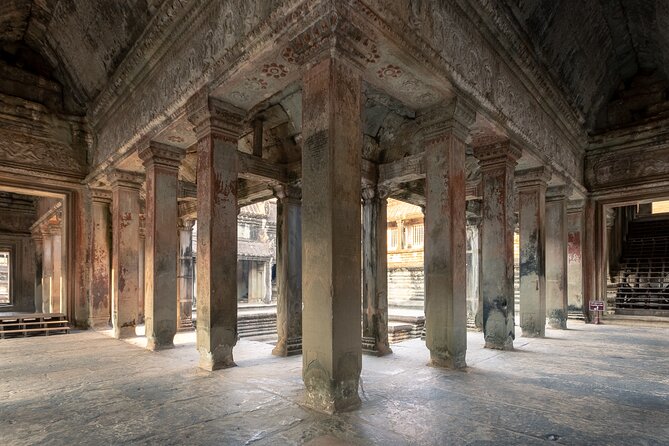
After the early Angkor Wat visit and hotel breakfast, you head toward Banteay Srei. This 10th-century temple is dedicated to Shiva and lies about 25 kilometers northeast of the main Angkor group, near Phnom Dei.
Banteay Srei is smaller than Angkor Wat but famous for its fine sandstone carving. The scale makes it feel more intimate, and the detailed decoration rewards close attention. Two hours gives your guide time to explain the design while leaving room for photographs and a relaxed circuit.
The drive out is part of the value. You see a different side of the Angkor area rather than spending both days among only the central monuments. The tradeoff is time in the vehicle, but the private car makes that easier than a shared bus with a fixed seat and schedule.
Banteay Samre follows, with about an hour at the temple. Built in the early 12th century during the reigns of Suryavarman II and Yasovarman II, it is a Hindu temple in the Angkor Wat style. It is a useful companion to Banteay Srei because the two sites show different periods and scales of Khmer construction.
Pre Rup comes next. Built in 961 or early 962 as the state temple of Rajendravarman, it uses brick, laterite, and sandstone in a temple-mountain design. It is a clear place to compare materials and construction methods, and its upper levels again require steps and care.
By this point, the route has included enough climbing to test your legs. The tour notes that it is not suitable for people with below-average fitness or who cannot walk normally. That warning is worth taking seriously, not as a reason to avoid Angkor, but as a reminder to pace yourself.
Kompong Phluk and life on Tonle Sap
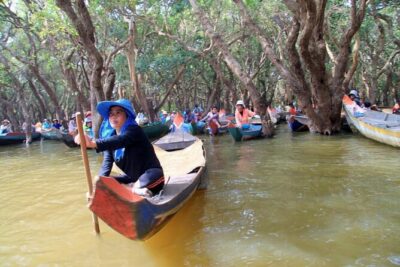
The afternoon option is Kompong Phluk, a group of villages built largely on stilts along Tonle Sap. The name means Harbor of the Tusks, and the community depends heavily on fishing. The village changes with the seasonal water cycle, with fishing especially important during the wet season from May through October.
The motorized boat fee is included, which removes one common extra charge. Allow about three hours for this part of the day. It adds a human and working dimension to the temple circuit, showing how people live around the lake rather than keeping the experience focused only on monuments.
Do not expect Kompong Phluk to feel like another temple stop. It is a village and a boat outing, not a polished attraction built around ruins. Water levels and seasonal conditions affect what you see, so keep your expectations practical. The value is in the change of pace and the chance to see stilted homes and fishing life.
If you prefer more archaeology, the alternative route replaces Kompong Phluk with Preah Khan, Neak Pean, Ta Som, and East Mebon. This option also takes about three hours. Ask for the choice when booking or at the start of Day 2, since the schedule needs to be planned around transport and the return to town at about 5 p.m.
The guide and driver make a real difference
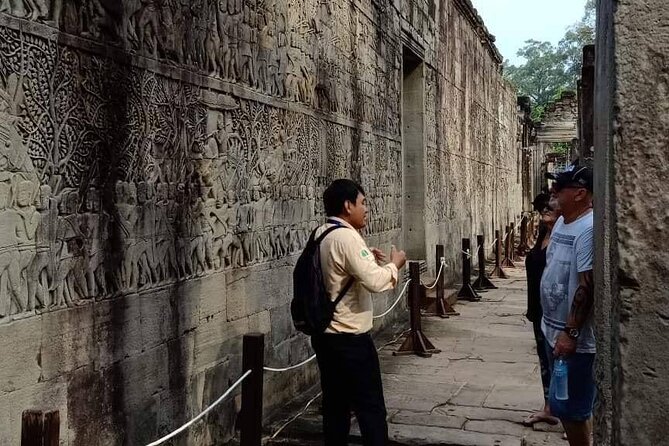
This is a private tour, not a fixed large-group excursion. That matters at Angkor because people tire at different times and do not all want the same balance of history, photographs, climbing, and rest.
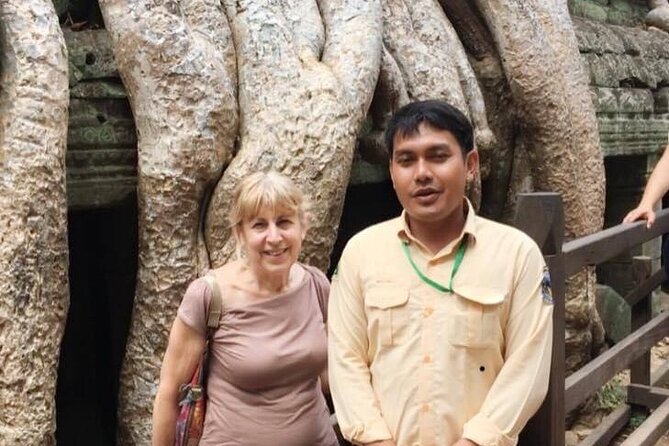
The experience includes a professional English-speaking guide and a driver. Guides named Choup and Seng have been associated with especially strong outings. Seng is noted for adjusting the route to personal interests and adding Tonle Sap, while Choup is praised for making a full temple schedule enjoyable. You cannot assume one particular guide will be assigned, but you can request a preference if the provider allows it.
The vehicle is air-conditioned and used for pickup, drop-off, and the temple circuit. That is more than a comfort detail. Between sites, you can cool down, drink water, and give your feet a break. Cold towels are also supplied, which are useful after a dusty walk or a climb.
Who should book this Angkor tour?
I would choose this for a couple, family, or small private group that wants the major Angkor sights without arranging separate transport and guiding. It also suits you if sunrise at Angkor Wat matters, but you want to return to the hotel for breakfast rather than eat on the road.
It is less suitable if you want a slow, highly specialized photography tour, since the schedule covers many places in two days. It is also not a good match if you dislike early starts, long walks, uneven stone, or stairs.
The route is ambitious. You may need to skip a minor area or shorten a stop if the heat catches up with you. That is where private touring helps: tell your guide when you need shade, water, or a shorter climb.
Should you book the $130 package?
Book it if you want a well-organized private introduction to Angkor with transport, guiding, sunrise, Banteay Srei, and a choice between Tonle Sap and more temples. The combination is the real strength. You get the famous sites, several less central ruins, and a glimpse of present-day life around the lake.
Before confirming, check the current temple-pass price, the exact sunrise pickup time, and whether you want Kompong Phluk or the alternate temple route. Add meals and drinks to your budget, and be ready for a demanding amount of walking.
For a relaxed temple holiday, this two-day plan gives you enough structure without turning every minute into a race. Just remember that the temples are the easy part to admire and the hard part to walk.
FAQ
Is this a private tour?
Yes. Only your group participates, with a private air-conditioned vehicle, driver, and English-speaking guide.
Is hotel pickup included?
Yes. Pickup and drop-off at your accommodation are included, and the vehicle departs at the tour start time.
What time does the tour begin?
The stated start time is 8:30 a.m. on Day 1. Day 2 begins early for the Angkor Wat sunrise, but the exact pickup time is not provided.
Are Angkor temple passes included?
No. Temple passes are extra. The details advise buying a pass for at least two days and list several ticket prices, so confirm the current rate before booking.
Is the Kompong Phluk boat included?
Yes. The fee for the motorized boat is included. The village visit takes about three hours.
Can I visit more temples instead of Kompong Phluk?
Yes. The alternative route includes Preah Khan, Neak Pean, Ta Som, and East Mebon instead of Kompong Phluk.
Is the tour suitable for children under three?
No. The experience is not available for children under three years old.
Just added in Siem Reap
- Twilight Tastes of Siem Reap Include Dinner★ 5.0 · 13 reviews
- Ultimate Sunrise to Angkor Wat, Angkor Thom and Bayon Temple★ 5.0 · 3 reviews
- Trekking Tour at Phnom Kulen National Park from Siem Reap★ 5.0 · 3 reviews
- Full-Day Private Tour of Angkor Wat with Pick Up★ 5.0 · 12 reviews
- Private Day Trip to Angkor Temples with Expert Guide★ 5.0 · 4 reviews
- Siem Reap City Tour with War Museum and Killing Field★ 5.0 · 27 reviews
- Waterfall & River of 1000 Siva Linga- Kulen Mountain Private Tour★ 5.0 · 3 reviews
- Angkor Wat Experience Temple Pass and Siem Reap Food Tour★ 5.0 · 13 reviews
Tours in Siem Reap, compared.
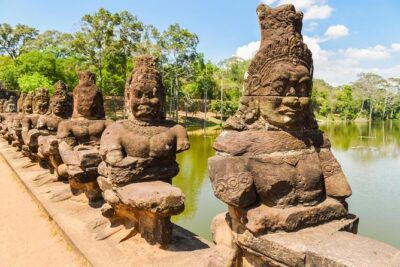
Angkor Wat Sunrise or Sunset Tour with Guide from Siem Reap
Read our review →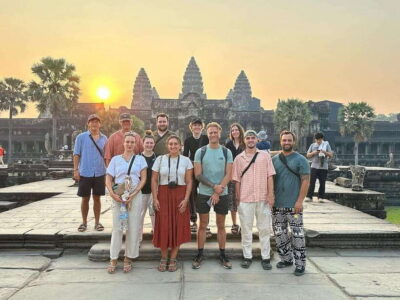
Angkor Wat: Small-Group Sunrise or Sunset Tour
Read our review →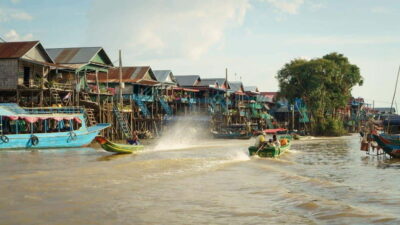
Sunset tour of Kampong Phluk stilts home village on the Tonle Sap
Read our review →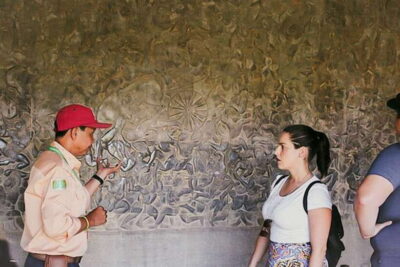
Angkor Wat 2-Day Tour with Sunrise and Sunset
Read our review →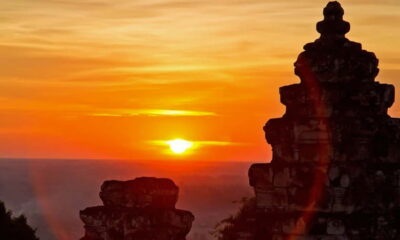
Angkor Wat Sunrise tour with Small – Group and Guide tours
Read our review →