Reviewed · TOURS IN SIEM REAP
2 Days Temples with Sunrise-Small Group
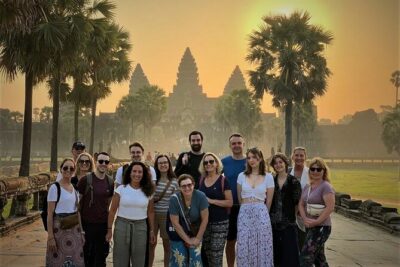
Angkor Wat at sunrise is the headline here, but the best part is the range of temples packed into two well-planned days. You move from the broad brick terraces of Pre Rup to the tiny, finely carved details of Banteay Srei, then return for the great stone faces of Bayon and the roots of Ta Prohm.
I like the small group of no more than 15 people, plus hotel pickup, cold drinking water, and an air-conditioned vehicle. I also like that an English-speaking guide such as Sok can add meaning to the carvings, plants, and animals you see along the way. The main drawback is cost: the advertised $43 price does not include the required $62 temple pass or meals.
Key points at a glance
- Sunrise at Angkor Wat: Enter before dawn and approach the temple from the quieter eastern side, with a torch.
- Banteay Srei’s fine carvings: This smaller sandstone temple is famous for unusually detailed relief work.
- A useful mix of major and quieter sites: Preah Khan and Neak Pean add variety beyond Angkor Wat, Bayon, and Ta Prohm.
- Small-group transport: The maximum group size is 15, with hotel pickup, drop-off, and an air-conditioned vehicle.
- Practical local support: Guide Sok and driver Richard are named members of the team, with water provided between stops.
- Plan for the real price: Add the $62 two or three-day temple pass and budget separately for breakfast and other meals.
Two days that cover the main Angkor sights
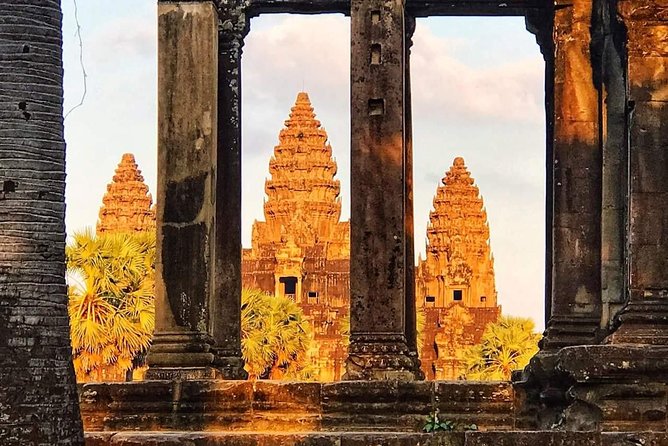
This tour is built for you if you have limited time in Siem Reap but do not want to see only Angkor Wat. Across two days, you visit major temples inside the Angkor complex and several important sites farther out.
The route gives you different kinds of temple experiences. Some stops are grand and open, some are compact and highly detailed, and others feel atmospheric because trees and broken stone have been left in place. That variety matters. After several large temple courtyards, a smaller site such as Neak Pean can reset your attention.
The vehicle is air-conditioned, and pickup and drop-off at your hotel are included. That is especially useful in Cambodia, where heat can make long walks between stone galleries tiring. The group limit of 15 is not private-tour intimacy, but it is more manageable than a large coach.
The published start time is 8:00 a.m., while the second day begins before dawn for Angkor Wat sunrise. Confirm the exact pickup time with the operator, and ask your hotel for a wake-up call. Missing the early departure would mean losing the central feature of day two.
A few more things to do in Siem Reap worth a look
- Siem Reap: Angkor Wat 2-Day Tour with Sunrise and Sunset
★ 4.9 · 4,429 reviews - Angkor 2-Day Sunset & Sunrise Small-Group Tour
★ 5.0 · 2,567 reviews - 2 Days Exclusive Temple Highlights with Sunset and Sunrise Tour
★ 5.0 · 1,157 reviews
Day one begins at Pre Rup
The first day starts with Pre Rup, a Hindu temple built as the state temple of Khmer king Rajendravarman II. Its tall brick towers and stepped form give you an immediate sense of the older Angkor style.
You have about 30 minutes here. That is enough for a first look, photographs, and a walk around the main structure, but it is not a long study visit. The upper levels can involve steps, so comfortable walking shoes are a sensible choice.
Pre Rup is a good opening stop because it feels different from the later jungle temples. The brickwork and strong geometric shape make it easy to understand from a distance. If you prefer slow photography or extended time at each ruin, the short visit may feel brisk.
Banteay Srei rewards careful attention
The drive continues to Banteay Srei, one of the most finely carved temples in Cambodia. It is smaller than Angkor Wat, but its sandstone reliefs are exceptionally detailed. Look closely at the figures, floral patterns, and framed scenes rather than treating the temple as a quick photo stop.
You spend about an hour here. That timing works well because Banteay Srei is compact, and its appeal comes from details close to eye level. A guide can help you notice parts of the carving that are easy to miss when you first walk in.
The temple is outside Angkor Thom, so this stop also gives the day a change of pace. You are not simply moving from one huge monument to another. The tradeoff is additional driving time, but Banteay Srei is one of the strongest reasons to choose this route over a basic Angkor Wat-only outing.
The supplied admission information lists the stop as free, but you still need the required temple pass for the tour overall. The pass is paid directly at the site and costs $62 for two or three days.
Preah Khan brings stone and trees together
After lunch or a midday break, the route moves to Preah Khan for about two hours. This is one of the longer visits, and it deserves the time.
Preah Khan is a large, partly ruined temple complex with corridors, courtyards, carved stone, and tree roots spreading through the remains. The mood is less polished than at Angkor Wat. You get a stronger sense of a ruin being reclaimed by vegetation, though the paths and structures can feel uneven.
Two hours lets you walk beyond the first courtyard and see how the temple unfolds. You will want to pace yourself, since shade and seating may vary from one section to another. Wear shoes with a firm sole and bring water, even though mineral water is provided during the tour.
Preah Khan was commissioned by Jayavarman VII, the same king linked with several major Angkor projects. Your guide can help connect this site with the temples you see on the second day, making the two-day plan feel like one story rather than a collection of unrelated stops.
Same base, a different kind of day out:
- Angkor Wat Sunrise or Sunset Tour with Guide from Siem Reap
★ 5.0 · 12,109 reviews - Siem Reap: Angkor Wat: Small-Group Sunrise or Sunset Tour
★ 5.0 · 9,444 reviews - From Siem Reap: Kampong Phluk Floating Village Tour by Boat
★ 4.9 · 6,979 reviews - Sunset tour of Kampong Phluk stilts home village on the Tonle Sap
★ 5.0 · 4,865 reviews
Neak Pean offers a quieter change
The final stop on day one is Neak Pean, an artificial island with a Buddhist temple on a circular island in the Jayatataka Baray. You have about 50 minutes here.
Neak Pean is not a giant temple complex. Its appeal comes from the setting and the unusual central design. The approach gives you a different view of Angkor engineering, with water and the island shaping the visit.
This is a useful late-day stop because it is visually different from Preah Khan. You are not climbing another major pyramid or walking through another long series of galleries. Instead, you get a more contained visit before returning to your hotel.
Angkor Wat sunrise requires an early start
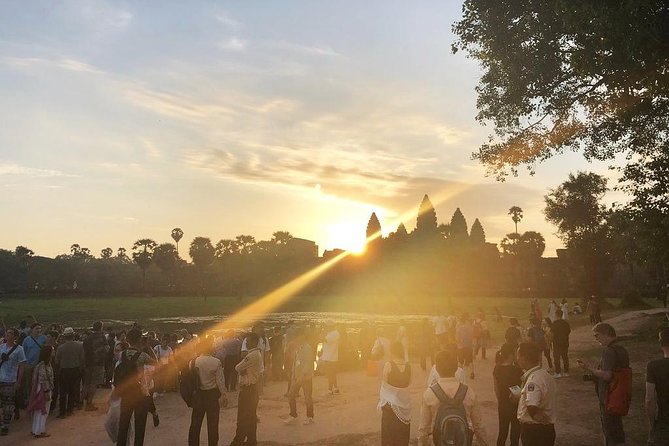
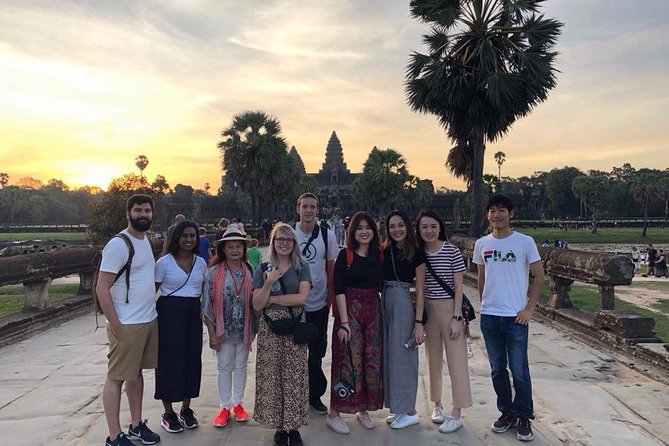
Day two begins before dawn. You enter Angkor Wat in darkness, so bring a torch. The route uses the eastern side, described as less visited, before you reach the main temple areas.
You spend about two hours and five minutes at Angkor Wat. Sunrise itself can be crowded, and the weather may affect what you see, so it is best to treat the early departure as a chance for atmosphere and changing light rather than a guaranteed perfect reflection.
The scale of Angkor Wat is hard to grasp in a rushed visit. Give yourself time to look across the outer spaces, study the galleries, and follow the guide through the main areas. The long visit helps, though the pre-dawn start can be demanding after a full first day.
If your hotel breakfast is included, request a breakfast pack to take with you. You can eat after sunrise at Angkor Wat. Another option is breakfast at a Khmer local restaurant near Srah Srang, but meals are not included in the tour price.
Srah Srang is the practical breakfast stop
After Angkor Wat, the group stops at Srah Srang for about 50 minutes. This is the planned breakfast break, and you can bring a pack from your hotel or order food at the local restaurant.
Srah Srang is a reservoir associated with the Angkor complex. On this tour, it also serves an important practical purpose. You have been awake since before dawn, and a proper pause helps before the next round of temple walking.
Do not assume breakfast is covered. It is not included, so plan ahead if you want to avoid ordering while tired and hungry. A hotel breakfast pack is the simplest choice if your accommodation offers one.
Ta Prohm is the most atmospheric stop
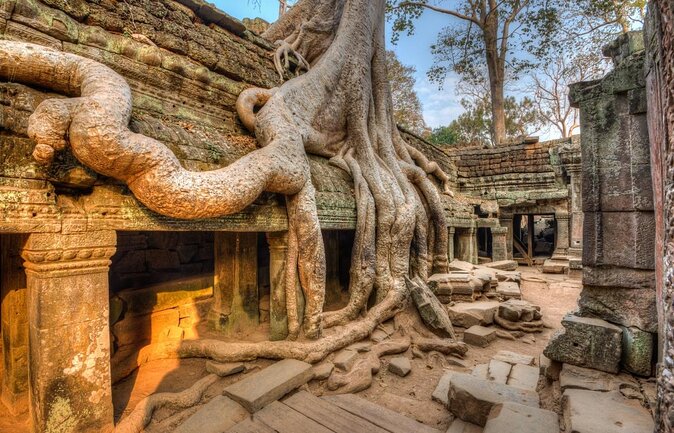
After the break, you visit Ta Prohm for about an hour. This is the temple often associated with massive tree roots growing over stone walls and galleries.
Ta Prohm was once home to 2,740 monks and has been left looking much as it did in the early 1850s, according to the tour description. The combination of trees, broken corridors, and carved stone gives the place a strong sense of age.
An hour is enough to see the principal areas, but you will not cover every corner. The paths can be uneven, and the roots and stonework demand attention. Keep your pace steady and follow any directions from the guide.
Ta Prohm is also one of the busiest names on the route, so the small-group format helps with coordination, but it does not remove the possibility of crowds. Your guide can help you move through the site without losing the main points of interest.
The Terraces show Angkor’s ceremonial scale
The tour passes the Terrace of the Leper King and the Terrace of the Elephants, with about 20 minutes assigned to this part of the day.
These terraces are not treated as long, stand-alone temple visits. Instead, you get a short look at the carved walls and ceremonial setting as the group moves through Angkor Thom. The Terrace of the Elephants is especially useful for understanding how public and royal spaces were arranged around the city.
If you enjoy inscriptions and detailed sculpture, you may want more time here. The brief stop is better suited to a first visit focused on the major highlights.
Bayon finishes the temple circuit
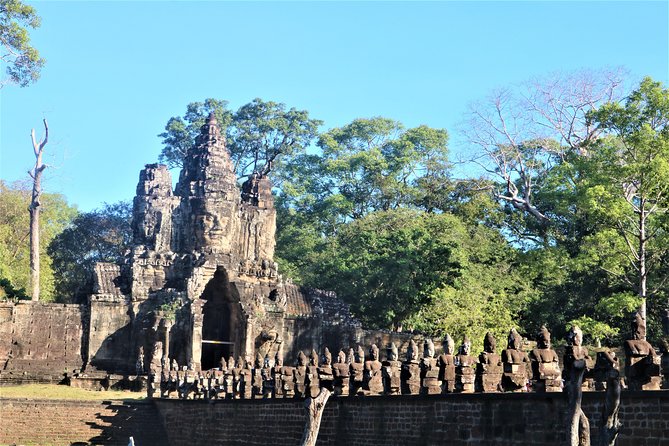
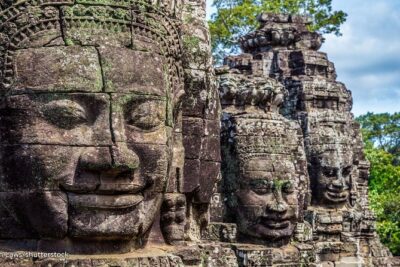
The final listed stop is Bayon, the 12th-century temple at the center of Angkor Thom. You spend about an hour among its central towers, which are covered with more than 200 enormous faces.
Bayon is easy to remember because the faces appear from different angles as you move through the towers. The temple can feel confusing at first, with narrow passages and layered structures. This is where a good guide adds real value by helping you understand the plan and pointing out details you might walk past.
Sok is the named English-speaking guide associated with the experience, and the description of his work includes explanations of temples, plants, and animals. Richard is the named driver, and one direct account also singled him out for providing water and a cool flannel between stops. Those small comforts matter after several hours in the heat.
What the $43 price really covers
At $43 per person, the base price is attractive for two days of hotel transport, a licensed English-speaking guide, an air-conditioned vehicle, mineral water, and local tax.
You must add the $62 temple pass, paid directly on the day. That brings the basic cost to $105 per person before breakfast, lunch, dinner, or other personal spending. The pass is valid for two or three days, which fits this schedule.
I consider that a reasonable package price if you value having transport and a guide arranged for both days. Hiring separate transport, finding the sites, and managing the sunrise timing yourself may be less convenient, though this information does not provide a comparison price.
The group limit is 15, so you should not expect a private guide focused only on you. Still, it is a useful middle ground between a private tour and a large bus. Group discounts may be available, but the exact terms are not provided.
Clothing, walking, and daily comfort
Dress casually, but cover your shoulders and knees inside the temples. This is not just a packing suggestion. Inappropriate clothing can make entry difficult or disrespectful at religious sites.
Bring comfortable walking shoes, a torch for the sunrise entry, and a small amount of personal spending money for meals. Mineral water is included, but you should still take any personal essentials you need for long periods outdoors.
Children younger than five are not allowed, and children who do attend must be accompanied by an adult. Most people can participate, but the two days involve walking across temple grounds, steps, uneven surfaces, heat, and an early morning start.
Free cancellation is available if you cancel at least 24 hours before the local start time. Cancellations within 24 hours are not refunded, and poor weather can lead to a new date or a full refund.
Who should book these two temple days
I would choose this tour if you want the main Angkor sights with a guide and do not want to organize sunrise transport yourself. It suits first-time visitors who want Banteay Srei, Preah Khan, Neak Pean, Ta Prohm, Bayon, and Angkor Wat in one compact plan.
It is also a good fit if you appreciate practical help. Hotel pickup, a cool vehicle, bottled water, a named guide, and a driver reduce the small hassles that can distract from the temples.
I would think twice if you want a private pace, long photography sessions, or a late start each morning. The second day begins before dawn, and the schedule packs in many sites. You also need to remember that the $43 headline price is not the final cost.
If that tradeoff works for you, this is a strong two-day introduction to Angkor. Book it for coverage, local guidance, and the sunrise start, but arrive prepared for early mornings, heat, walking, and the separate temple pass.
FAQ
What is included in the two-day temple tour?
The tour includes two days of temple visits, sunrise at Angkor Wat, a licensed English-speaking guide, hotel pickup and drop-off, an air-conditioned vehicle, mineral water, and local tax.
How much does the temple pass cost?
The required two or three-day temple pass costs $62 per person and is paid directly on the day of the activity.
Are meals included?
No. Meals are not included. After sunrise at Angkor Wat, you can bring a breakfast pack from your hotel or order breakfast at a local Khmer restaurant near Srah Srang.
What time does the tour start?
The listed start time is 8:00 a.m., but day two begins before dawn for the Angkor Wat sunrise visit. Confirm the exact early pickup time with the operator.
How large is the group?
The maximum group size is 15 people.
What should I wear to the temples?
Casual clothing is fine, but shoulders and knees must be covered inside the temples. Comfortable walking shoes are recommended.
Can I cancel for a full refund?
Yes. You can receive a full refund if you cancel at least 24 hours before the experience start time. Cancellations or changes made within 24 hours are not refunded. If poor weather causes the activity to be canceled, you will be offered another date or a full refund.
Just added in Siem Reap
- Twilight Tastes of Siem Reap Include Dinner★ 5.0 · 13 reviews
- Ultimate Sunrise to Angkor Wat, Angkor Thom and Bayon Temple★ 5.0 · 3 reviews
- Trekking Tour at Phnom Kulen National Park from Siem Reap★ 5.0 · 3 reviews
- Full-Day Private Tour of Angkor Wat with Pick Up★ 5.0 · 12 reviews
- Private Day Trip to Angkor Temples with Expert Guide★ 5.0 · 4 reviews
- Siem Reap City Tour with War Museum and Killing Field★ 5.0 · 27 reviews
- Waterfall & River of 1000 Siva Linga- Kulen Mountain Private Tour★ 5.0 · 3 reviews
- Angkor Wat Experience Temple Pass and Siem Reap Food Tour★ 5.0 · 13 reviews
Tours in Siem Reap, compared.
Angkor Wat Sunrise or Sunset Tour with Guide from Siem Reap
Read our review →
Angkor Wat: Small-Group Sunrise or Sunset Tour
Read our review →
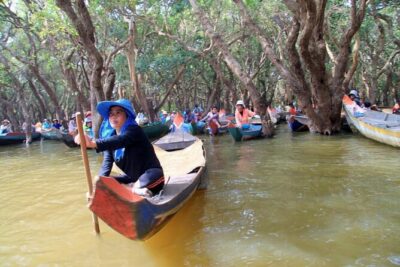
Sunset tour of Kampong Phluk stilts home village on the Tonle Sap
Read our review →
Angkor Wat 2-Day Tour with Sunrise and Sunset
Read our review →
Angkor Wat Sunrise tour with Small – Group and Guide tours
Read our review →