Reviewed · TOURS IN SIEM REAP
7-must See Temples in Angkor Park (Private Guided Tour)
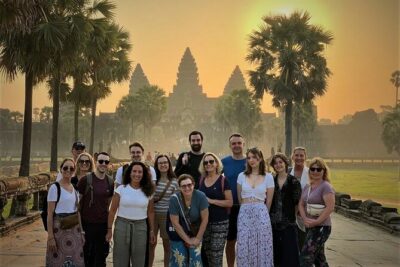
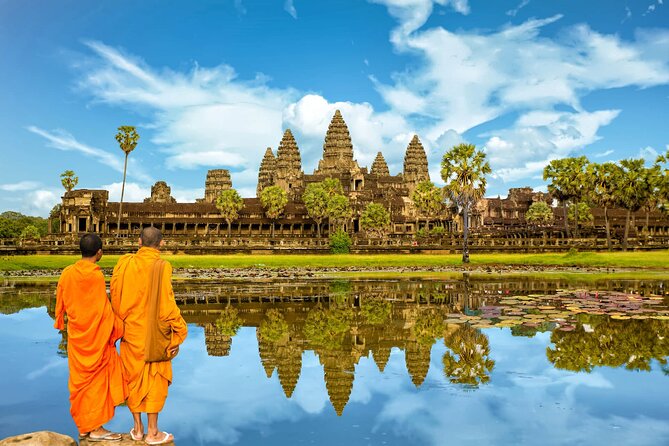
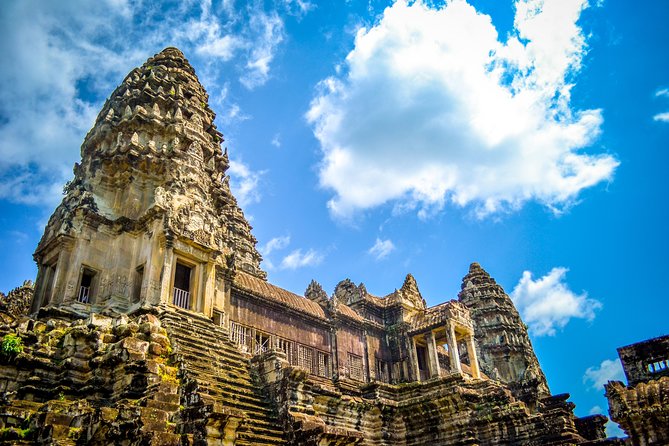
Sunrise at Angkor Wat is only the opening act on this long temple day. You’ll also see the tree-covered Ta Prohm, pink sandstone Banteay Srei, the smiling faces of Bayon, and smaller sites that give the Angkor complex its range. The route is built for first-time visitors who want the major sights chosen for them.
I like the private format, since your group can ask questions and avoid the fixed pace of a large coach tour. I also like the practical touches: an air-conditioned vehicle, bottled water, and cool towels matter after hours in Cambodia’s heat. The main drawback is the early start and packed schedule, with roughly 6 to 7 hours on the road and on foot.
Key points at a glance

- Sunrise begins at Angkor Wat: Start early, purchase or arrange your temple pass, then enter one of Cambodia’s defining monuments.
- Eight listed stops cover the essentials: The day includes Angkor Wat, Ta Prohm, Srah Srang, Pre Rup, Banteay Srei, Neak Pean, Bayon, and Angkor Thom’s South Gate.
- A private guide and driver lead the day: Only your group participates, with an English-speaking guide and air-conditioned transport.
- Banteay Srei adds a different look: Its pink sandstone carving gives you a sharp contrast with the larger gray stone temples.
- Sophal and Nek are named guide examples: Guide assignments can vary, but both have been praised for clear explanations and friendly service.
- The listed price excludes the temple pass: The tour costs $65 per person, while temple tickets are an additional $37 per person.
Why this seven-temple route works
Angkor Park is not one monument. It is a huge collection of temples, gates, reservoirs, roads, and former royal centers spread across a broad area. If you visit without a plan, you can spend a lot of time deciding where to go next. This tour solves that problem by focusing your day on seven headline sites, plus Angkor Thom’s South Gate.
The route also gives you variety. Angkor Wat supplies the grand opening. Ta Prohm feels atmospheric and overgrown. Banteay Srei is smaller but packed with fine carving. Bayon is strange and memorable, with enormous stone faces looking down from its towers. Pre Rup offers a brick-built design, while Neak Pean and Srah Srang show how water shaped the Angkor world.
I like this mix because you are not seeing seven versions of the same temple. You get major religious buildings, a royal gate, a reservoir, a small island shrine, and a brick mountain temple. The day still favors the famous places, but it does not stop at Angkor Wat and Ta Prohm.
The private setup matters here. You have your own guide and driver rather than sharing every decision with a large group. That can make it easier to stop for photos, ask about a carving, or slow down briefly when a site catches your eye. It does not make the day short, though. Eight listed stops in 6 to 7 hours is a full program.
A few more things to do in Siem Reap worth a look
- Full-Day Angkor Wat Sunrise Private Tour with Guide from Siem Reap
★ 5.0 · 2,920 reviews - Siem Reap: Angkor Wat Private Tuk-Tuk Tour
★ 4.9 · 2,222 reviews - Angkor Wat Private Day Tour from Siem Reap
★ 5.0 · 834 reviews
Angkor Wat at sunrise
The day starts with hotel pickup and a visit to Angkor Wat. The plan is to purchase the temple ticket before walking into the monument for sunrise. The admission pass is not included in the $65 tour price, and the stated cost is $37 per person.
Plan your budget around $102 per person before breakfast, drinks, or other personal spending. That total combines the $65 tour with the $37 temple ticket. For a private vehicle, an English-speaking guide, water, and a full day across the park, the price can make sense if you value personal service and a planned route. It is less attractive if you only want transport or prefer to explore without a guide.
Angkor Wat receives the longest listed visit, about two hours. That gives you time to see the famous front view, cross into the temple grounds, and listen to an explanation of the building rather than simply taking a quick photo and leaving.
The sunrise start is useful for more than the view. An early departure helps you reach the first major site before the hottest part of the day. One practical note: the exact sunrise timing and pickup hour are not stated, so confirm those details when you book.
A provider message about arranging the pass in advance helped one person save time. That is worth taking seriously. Since the ticket is needed before entry, ask how the pass process will work before the morning begins.
Ta Prohm and the temple made famous by film
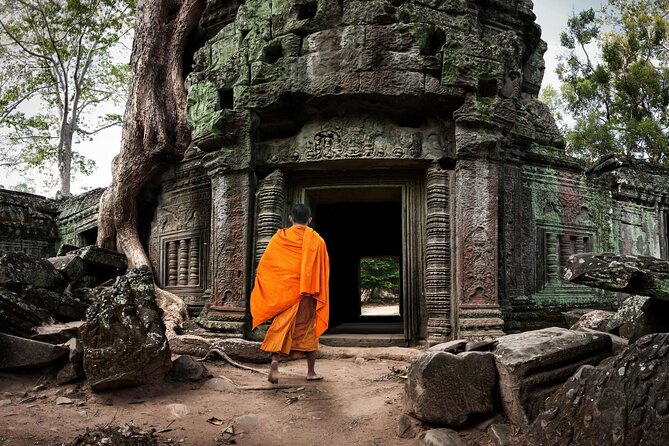
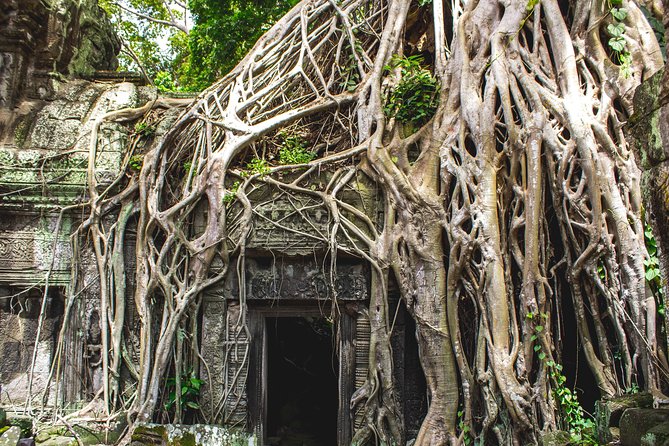
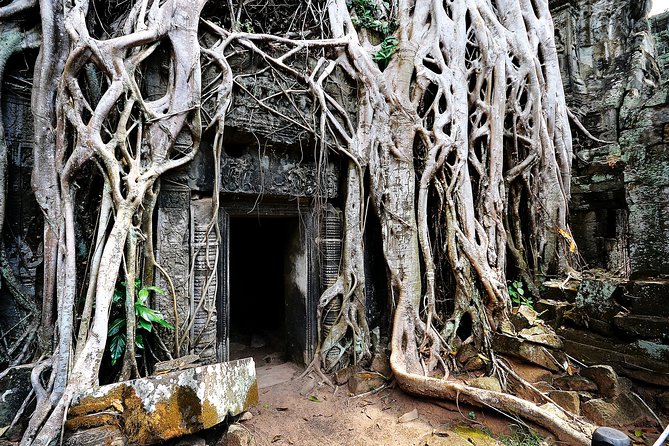
Ta Prohm is the next major stop, with about an hour set aside. This is the temple associated with Angelina Jolie’s film shoot, a detail that draws many first-time visitors. Its appeal goes beyond the movie connection. The building feels more tangled and enclosed than Angkor Wat, with trees and roots forming much of its visual character.
Your guide can help separate what you are seeing from the movie legend. You will want time for photographs, but the temple also rewards a slower look at its doorways, galleries, and carved stone. The narrow passages and uneven surfaces make comfortable shoes a sensible choice, though the tour information does not specify walking conditions in detail.
Ta Prohm can be one of the most memorable stops because it feels less formal than Angkor Wat. I like having it early in the route, when you still have energy for its corridors. The schedule gives you a real visit rather than a quick roadside stop.
The itinerary describes Ta Prohm as the final temple in one part of the plan, but it also places the site directly after Angkor Wat. The full route includes several temples afterward, so treat the timing as a planned sequence that may be adjusted by the guide and driver.
Breakfast and coffee beside Srah Srang
After Angkor Wat and Ta Prohm, the group stops at Srah Srang for a break. The listed time is 45 minutes, including breakfast and coffee. Food and drinks are personal expenses, so keep extra money available.
Srah Srang is a useful pause in a demanding morning. You have already seen two major temples, and a drink, food, and a seat can make the rest of the day much more comfortable. The tour includes bottled water and cool towels, but not a meal.
The stop also changes the rhythm. Instead of moving from one stone monument directly to another, you get time to reset. Ask your guide where and how the breakfast stop will work, since the supplied details do not name a restaurant or specify what food is available.
Same base, a different kind of day out:
- Angkor Wat Sunrise or Sunset Tour with Guide from Siem Reap
★ 5.0 · 12,109 reviews - Siem Reap: Angkor Wat: Small-Group Sunrise or Sunset Tour
★ 5.0 · 9,444 reviews - From Siem Reap: Kampong Phluk Floating Village Tour by Boat
★ 4.9 · 6,979 reviews - Sunset tour of Kampong Phluk stilts home village on the Tonle Sap
★ 5.0 · 4,865 reviews
Pre Rup, a brick temple with a different character
Pre Rup receives about 20 minutes, making it one of the shortest visits. It dates from the mid-10th century and uses brick along with sandstone and laterite. That construction gives it a warmer, more textured appearance than the large gray stone temples.
Twenty minutes is enough for a focused look and photographs, but not a long exploration. I would listen closely here as the guide explains the building materials and layout. Without that context, Pre Rup can seem like a simple stop between larger attractions.
The short visit is also a reminder that this is an overview tour. You will see a lot, but some temples receive only enough time to understand their main features. If Pre Rup becomes a favorite, you may want to return another day with more time.
Banteay Srei and the finest carving on the route
Banteay Srei gets about 45 minutes and is described as a pink sandstone temple with especially fine carving. It is smaller than Angkor Wat, but its detailed decoration gives it a strong identity. The pink stone also breaks up the day’s gray and brown palette.
This is one of the most valuable stops on the route because it shows a different kind of Khmer artistry. At the larger temples, scale can dominate your attention. At Banteay Srei, the details are the point. Look closely at the carved doorways and figures, and let the guide explain what you are seeing.
The tradeoff is time and distance. The schedule includes Banteay Srei, but only 45 minutes, and the tour does not state how long the drive between sites takes. Your private vehicle makes this more manageable, but the stop still belongs to a tightly arranged day.
Neak Pean, a water-centered temple
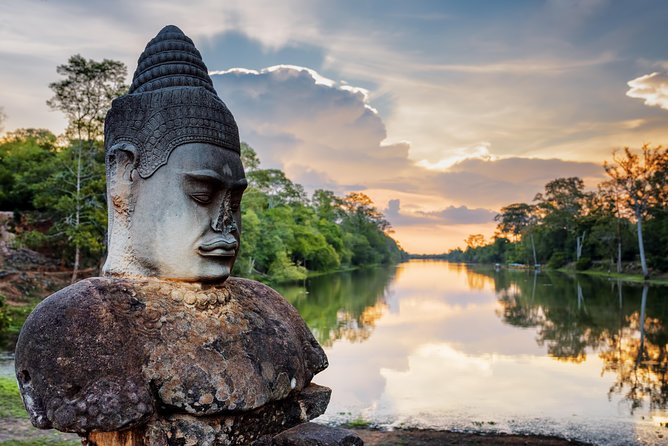
Neak Pean receives about 40 minutes. It is listed simply as a great temple, but its place in the route adds another type of site to the day. Unlike the massive central structures, Neak Pean is tied to water and a more compact design.
This stop gives you a chance to see how Angkor’s builders worked with reservoirs and pools rather than only towers and galleries. The walk and approach are part of the visit, so do not judge the site only by the time spent beside the central structure.
Admission is listed as not included at this stop, but the tour also says the main temple ticket costs $37 per person. The practical reading is simple: budget for the required Angkor pass rather than expecting entry to be covered by the tour price.
Bayon and the faces of Angkor Thom
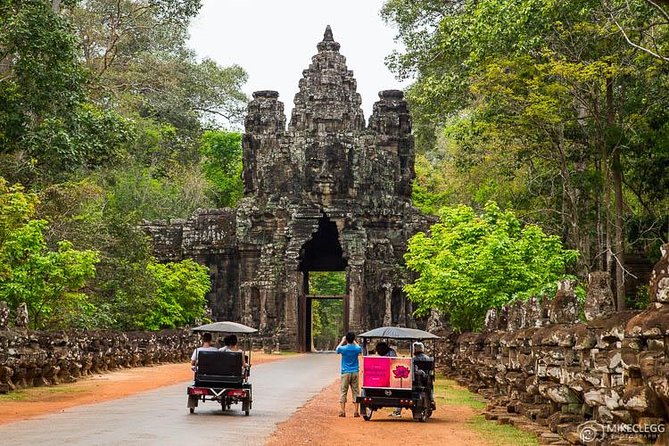
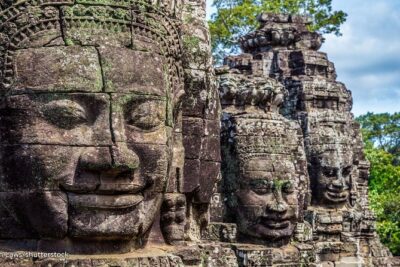
Bayon receives about an hour and is one of the day’s strongest stops. Its towers carry huge carved faces, creating the unusual feeling that the temple is watching you as you move through it. The tour places Bayon after the sunrise visit to Angkor Wat, allowing the two temples to contrast sharply.
Angkor Wat is broad and orderly. Bayon feels more enclosed and puzzling, with towers, galleries, and faces appearing as you move around the structure. This is a good place to stay close to the guide. Without help, it is easy to miss the meaning of the carvings or lose track of the building’s layout.
One person singled out an unexpected stegosaurus carving seen during the day. That odd detail captures the fun of a guided visit: the temples contain small surprises that are easy to miss when you focus only on the best-known photo spots. Ask your guide to point out unusual carvings and details.
Angkor Thom’s South Gate
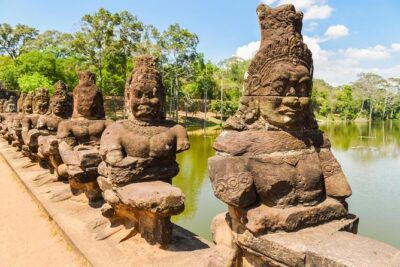
The South Gate gets only 10 minutes, so expect a photo stop rather than a full exploration. It is one of the key entrances to Angkor Thom, the former capital of Cambodia, and gives you a quick look at the monumental approach to the old city.
The short stop still earns its place. Gates help you understand Angkor Thom as a planned royal center, not just a collection of separate temples. The carved figures and broad entrance make a useful link between the road, the city, and Bayon inside.
Do not expect a long talk or extended walking time here. Ten minutes is enough to see the gate and take photographs, but the schedule clearly gives priority to the major temples.
What the private vehicle adds
The tour includes an air-conditioned vehicle, an English-speaking guide, bottled water, and cool towels. Those are practical inclusions, not decoration. A day of temple visits can become tiring, and returning to a cool vehicle between sites gives you a chance to recover.
The tour is described as private, with only your group participating. That makes it a better fit if you want to ask questions freely or keep the pace within your own party. It also means the $65 price should be judged against a private service, not against a low-cost shared bus.
The experience is not completely independent. The route has a set list, and the day must fit eight listed stops into 6 to 7 hours. You will have some flexibility through the guide, but the supplied information does not promise custom stops or a fully tailored itinerary.
Guide quality is central to the value. Sophal is praised for making the temples more fascinating through clear explanations, while Nek is described as offering a friendly and well-informed introduction to the history. These guides may not be assigned to every booking, so ask who will lead your group if a particular guide matters to you.
Who should book this temple day?
I would choose this tour if you have limited time in Siem Reap and want the main Angkor sights arranged into one private day. It suits first-time visitors who prefer explanations, transport, and a clear plan over finding every temple on their own.
It is also a good choice for couples, families, or small groups who want their own vehicle and guide. The private structure can be especially useful when different people in your group want different amounts of time for photographs and questions.
I would think twice if you dislike early mornings, long sightseeing days, or a fixed list of stops. You will need to pay separately for the $37 temple pass and your food and drinks. The route covers a lot, but its short visit to Pre Rup and quick South Gate stop may frustrate you if you prefer slow, detailed exploration.
Book at least a day ahead if your plans may change. Free cancellation is available up to 24 hours before the start time. Cancellations or changes made inside that 24-hour window are not refunded or accepted.
Should you book the $65 private Angkor tour?
Book it if you want a well-paced introduction to Angkor’s major monuments without having to decide which temples matter most. The strongest reasons are the private guide, air-conditioned transport, broad mix of sites, and the chance to see Angkor Wat at sunrise before continuing through Ta Prohm, Banteay Srei, Bayon, and Angkor Thom.
Skip it if you want a slow temple study, a later start, or the lowest possible cost. Once you add the $37 pass, meals, and drinks, this is not a budget sightseeing day. For a first visit, though, the route gives you a useful foundation and leaves you with a clear sense of which temples deserve a longer return visit.
FAQ
How long does the private temple tour last?
The tour lasts approximately 6 to 7 hours.
How much does the tour cost?
The listed price is $65 per person.
Is the temple ticket included?
No. The temple ticket costs $37 per person and is not included in the tour price.
Which temples are visited?
The route includes Angkor Wat, Ta Prohm, Pre Rup, Banteay Srei, Neak Pean, and Bayon.
Is Angkor Thom included?
Yes. The tour stops at Angkor Thom’s South Gate, described as one of the important gates to the former Cambodian capital.
Does the tour include sunrise at Angkor Wat?
Yes. The day begins with a visit to Angkor Wat for sunrise.
Is breakfast included?
No. Breakfast and coffee are taken during the stop at Srah Srang, but personal meals and drinks are not included.
Is transportation provided?
Yes. Pickup is offered, and the tour includes an air-conditioned vehicle.
Is the tour private?
Yes. Only your group participates in this private activity.
What does the tour include besides transport and guiding?
It includes an English-speaking guide, bottled water, and cool towels.
What is the cancellation policy?
You can cancel up to 24 hours before the start time for a full refund. Cancellations or changes made less than 24 hours before the start time are not refunded or accepted.
Just added in Siem Reap
- Twilight Tastes of Siem Reap Include Dinner★ 5.0 · 13 reviews
- Ultimate Sunrise to Angkor Wat, Angkor Thom and Bayon Temple★ 5.0 · 3 reviews
- Trekking Tour at Phnom Kulen National Park from Siem Reap★ 5.0 · 3 reviews
- Full-Day Private Tour of Angkor Wat with Pick Up★ 5.0 · 12 reviews
- Private Day Trip to Angkor Temples with Expert Guide★ 5.0 · 4 reviews
- Siem Reap City Tour with War Museum and Killing Field★ 5.0 · 27 reviews
- Waterfall & River of 1000 Siva Linga- Kulen Mountain Private Tour★ 5.0 · 3 reviews
- Angkor Wat Experience Temple Pass and Siem Reap Food Tour★ 5.0 · 13 reviews
Tours in Siem Reap, compared.
Angkor Wat Sunrise or Sunset Tour with Guide from Siem Reap
Read our review →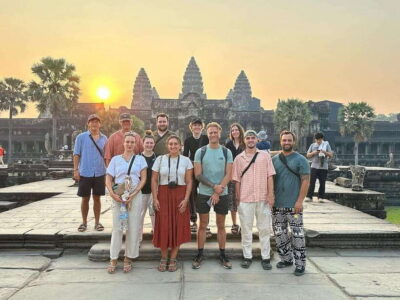
Angkor Wat: Small-Group Sunrise or Sunset Tour
Read our review →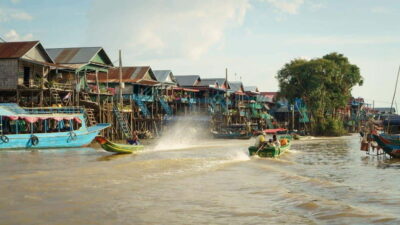
Sunset tour of Kampong Phluk stilts home village on the Tonle Sap
Read our review →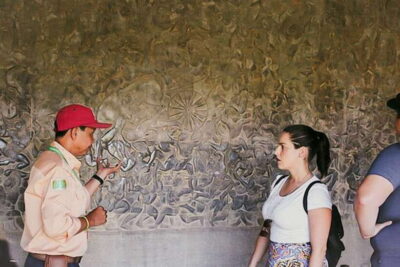
Angkor Wat 2-Day Tour with Sunrise and Sunset
Read our review →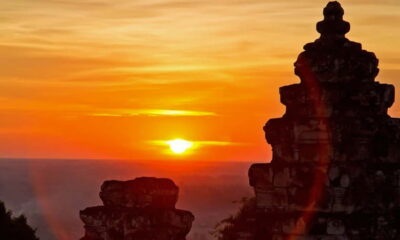
Angkor Wat Sunrise tour with Small – Group and Guide tours
Read our review →