
Reviewed · COUNTRYSIDE BIKE TOURS
Angkor Region & Rainforest Bike Tour
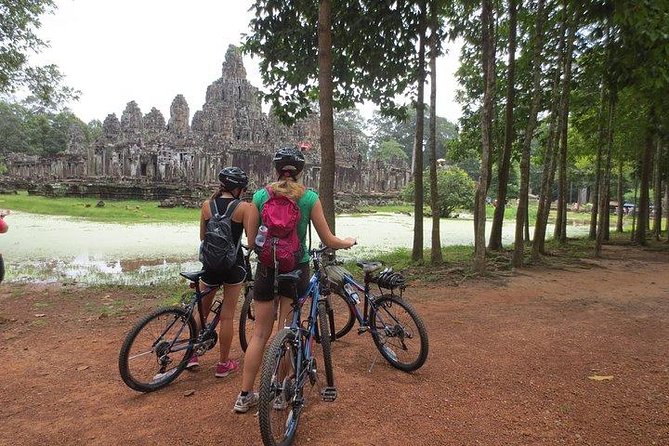
Angkor Wat is only part of the story here. This eight-hour bicycle tour links five major temple sites with forest paths, old walls, and quieter routes that let you see the Angkor complex at a slower, more personal pace than a standard vehicle tour. You ride a quality TREK mountain bike, wear the supplied helmet, and follow an English-speaking guide through the trees.
I like the combination of temple variety and active travel, and I like that lunch, coconut water, and drinking water are included. The main consideration is physical comfort: the ride can become muddy in rain, and hotel pickup is not provided, so you must reach the meeting point on Taphul Road by 7:30 a.m.
Key points at a glance
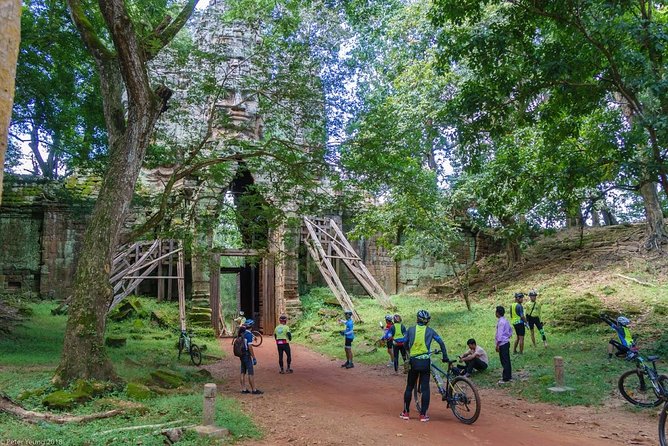
- Five major temple stops: Angkor Wat, Bayon, Preah Khan, Tanei, and Ta Prohm are all included.
- Forest routes instead of only main roads: The ride uses smaller rainforest paths and old routes away from the busiest tourist traffic.
- A small maximum group: No more than 10 people can join, which should make guiding and riding together easier.
- Good practical inclusions: A TREK mountain bike, helmet, lunch, coconut water, and pure drinking water are supplied.
- A muddy-weather possibility: Rain can turn the natural trails into a wet, muddy ride, so shoes and clothing should be chosen with care.
- Budget for the temple pass: The $50 tour price does not include the one-day Angkor admission ticket, listed at $37.
Why cycling changes your Angkor day
Angkor is spread across a large area, and the usual way to see it is by car or tuk-tuk. That is efficient, but it can make the ancient complex feel like a string of stops between rides. On a bicycle, the movement between temples becomes part of the experience.
You hear the forest, feel the heat, and notice the changing paths as you move from one monument to the next. The guide takes you along rainforest trails and less-used routes rather than keeping you only on the main tourist roads. That does not mean you avoid every other visitor, especially at Angkor Wat and Bayon, but the cycling gives you a quieter way to connect the sites.
The tour also has a useful rhythm. You ride, stop for a temple visit, ride again, and pause for food and drinks. Eight hours is a full morning and afternoon commitment, but it gives you time to see five separate monuments without treating every stop as a quick photograph.
The group limit of 10 matters here. A bicycle group that is too large can stretch out on narrow paths and make temple visits awkward. This tour keeps the maximum small enough for the guide to offer direction and help the group stay together.
More Bike Tours in Siem Reap
- Siem Reap Countryside Bike Tour / E-Bike or Tuk Tuk
★ 5.0 · 935 reviews - Angkor Sunrise Bike Tour / E-Bike or Tuk Tuk
★ 5.0 · 615 reviews - Siem Reap: Bike the Angkor Temples – Full-Day 30km Tour
★ 5.0 · 463 reviews
Starting at 7:30 a.m. on Taphul Road
You meet at Angkor Cycling Tour on Taphul Road in Siem Reap. The start time is 7:30 a.m., and the tour ends back at the same meeting point. Since hotel pickup and drop-off are not included, plan your route to the starting point before tour morning.
The early start is useful in Cambodia’s heat. It also gives you more time at the temples before the day becomes tiring. Bring sunscreen, sunglasses, and a camera, as advised by the operator. You should also give your height when booking so the bike can be prepared properly.
The supplied TREK mountain bike and helmet remove two common hassles. You do not need to find a rental shop, judge the condition of a bike, or carry your own helmet from home. A well-maintained bicycle matters on uneven paths, and the equipment has been praised by repeat customers, including one rider who returned for a second ride with the same company.
Still, this is not a casual sightseeing ride where you sit back and let the vehicle do the work. You should be comfortable spending much of the day on a bicycle. The tour says most people can participate, but the exact riding distance and trail difficulty are not specified, so anyone with concerns should ask the operator before booking.
Angkor Wat: the grand opening stop
Angkor Wat is the best-known monument in the area and usually the emotional high point for first-time visitors. It was built as a major religious and political center of the Khmer Empire, which ruled from the ninth through the fifteenth centuries.
Seeing it by bicycle gives the approach a different feel. Instead of arriving only at a vehicle drop-off point, you travel through the wider temple zone before entering one of the world’s most famous ancient sites. The scale can be hard to grasp from a single viewpoint. Its towers, galleries, courtyards, and long approach become clearer when you have arrived under your own power.
Angkor Wat can also be the busiest part of the day. The forest paths help reduce time spent with traffic, but they cannot remove the popularity of the monument itself. Give yourself room to look beyond the standard front view. Your guide’s explanations should help connect the architecture with the wider Khmer capital and its religious purpose.
The temple pass is not included. The listed price is $37 for a one-day entry, so add that cost to the $50 tour fee when comparing this experience with other Angkor options.
Angkor Thom and the South Gate
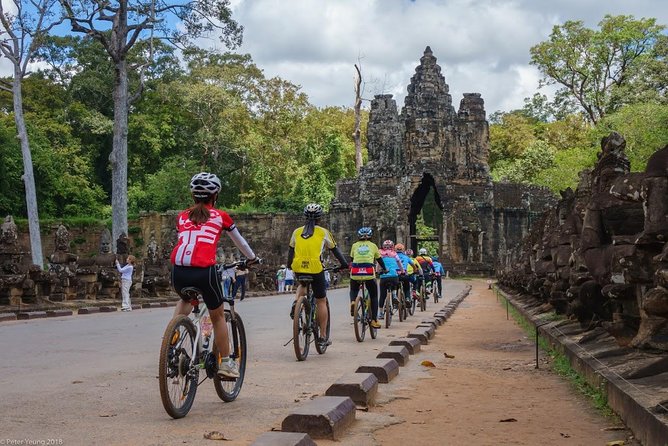
After Angkor Wat, the route moves toward Angkor Thom, the former capital area. The South Gate is described as one of the most appealing defensive entrances, and it is an excellent place to understand the scale of the old city.
Angkor Thom was not simply one temple. It was a vast royal capital enclosed by walls and protective features. Approaching its gate by bike helps you see it as a city entrance rather than a single isolated monument.
One unusual part of the route takes you onto the protection wall of Angkor Thom. From there, you ride toward Prasat Chrung for views across the surrounding area. This section adds a sense of exploration that is missing from a simple temple-to-temple transfer.
The wall ride is also one reason to wear practical clothing and secure footwear. The surface may not feel like a smooth cycle path, and conditions can change after rain. You should expect an active route rather than a polished park trail.
The tour also passes the West Gate and North Gate of Angkor Thom. These additional entrances help show how extensive the old capital was. They are not just extra photo stops. They give you a better idea of how walls, gates, and routes worked together to protect and organize the city.
More rides through the countryside near Siem Reap:
- Siem Reap: Angkor Wat Sunrise Bike Tour & Jungle Breakfast
★ 5.0 · 415 reviews - Siem Reap: Guided Countryside Bike Tour
★ 4.9 · 294 reviews - Siem Reap Countryside Sunset Bike Tour / E-Bike or Tuk Tuk
★ 5.0 · 173 reviews - Siem Reap: Bike the Angkor Temples – Full-Day 30km Tour
★ 4.9 · 159 reviews
Bayon and the famous stone faces
Inside Angkor Thom, Bayon is the visual centerpiece. The temple is known for its 54 towers and 216 smiling faces, carved into the stone towers and looking out across the complex.
Bayon rewards a slower visit. The faces appear at different levels and angles, and narrow passages can make the temple feel close and enclosed. Your guide can help you understand the layout and point out details that are easy to miss when you are focused only on the largest towers.
The drawback is that Bayon is another popular stop, so it may feel crowded at certain times. The cycling route helps you avoid some road congestion, but the temple itself remains a major attraction. Stay aware of your group and listen for the guide’s meeting instructions before moving on.
Preah Khan, where jungle meets stone
Preah Khan brings a different mood. The temple is described as being covered by jungle, and its combination of stone corridors, vegetation, and partially reclaimed structures gives it a more untamed character than Angkor Wat.
This is one of the strongest reasons to choose the bicycle option. The route does not simply focus on polished monuments. It takes you toward places where trees and old stone share the same space, making the ride between stops feel connected to the temple visits.
Preah Khan can be visually busy. Roots, collapsed sections, carved doorways, and narrow passages compete for your attention. Take your time, but remember that this is a group ride and the guide will set the schedule for the day.
Tanei, a quieter and less-restored stop
Tanei is presented as an ancient hospital site that remains largely untouched by archaeologists. That makes it a useful contrast with the better-known monuments, where restoration and visitor access are more obvious.
Do not expect Tanei to deliver the same monumental scale as Angkor Wat or Bayon. Its appeal is the sense of a site still surrounded by forest and less shaped for mass sightseeing. The ride to reach it is part of the attraction, particularly for anyone who prefers old paths and vegetation to large crowds.
This stop also shows why the tour is not just a bicycle transfer between famous monuments. You are visiting places selected for their setting and character as well as their fame.
Ta Prohm and the power of the forest
Ta Prohm, also written as Taprom in the tour details, is famous for the way trees have grown around and over the temple. Stone walls, roots, and shadow create an atmosphere that is very different from the open scale of Angkor Wat.
It is a strong final temple stop because it brings the forest theme back into focus. The temple is visually dramatic, but it can also be busy. The guide can help you move through the main areas while making time for the details that give Ta Prohm its character.
The forest ride leading to the temple is likely to be as memorable as the monument itself. One repeat rider described a wet, muddy day on small trails through the rainforest and still considered it a great ride. That is useful advice: if rain is in the forecast, accept that mud is part of the experience rather than a flaw in it.
Lunch, coconut water, and the practical comforts
Lunch is included, along with fresh coconut water and pure drinking water. These details matter on a long bicycle day. You do not need to stop and arrange food during the route, and the water supply reduces the need to organize every drink yourself.
You should still bring the personal items recommended for the tour, especially sunscreen and sunglasses. A camera is worth carrying if you can protect it from rain and dust. Ask about dietary requirements when booking, since the operator requests that information in advance.
The included food and drinks improve the value of the package, but they do not cover the temple pass or transport to the start. The real cost is therefore $87 per person before getting to the meeting point: $50 for the tour and $37 for the one-day admission ticket.
For a full day with a guide, bike, helmet, lunch, drinks, and five temple visits, that is a reasonable package if you specifically want to cycle. It is less attractive if you mainly want the fastest and easiest way to see Angkor, since a vehicle-based tour may require less physical effort.
What the weather can change
Cambodia’s tropical conditions can affect the ride. The route includes natural rainforest trails, and rain may leave them wet and muddy. That can make the day more adventurous, but it can also make cycling less comfortable and clothing harder to keep clean.
Choose practical clothes and shoes. Sacred-site dress rules also apply: shorts and skirts above the knees, along with bare shoulders, are not allowed in sacred palaces. Respectful clothing is expected because Angkor remains an active spiritual area where people pray and meditate.
You will also want to pace yourself. The ride lasts about eight hours, and the combination of heat, temple walking, and cycling can be tiring. The included water and coconut juice help, but they do not replace sensible preparation.
Who should book this Angkor bicycle tour?
I would choose this tour if you want more than a checklist of famous temples. It suits you best if you enjoy cycling, small groups, forest paths, and the chance to see Angkor between the main monuments.
It is also a good fit for families or friends who want a shared active day. One rider enjoyed the experience enough to return with family on a later visit, which says something about the tour’s appeal as a group activity.
I would think twice if you dislike heat, mud, uneven natural paths, or long active days. The tour is not the right pick for someone who wants air-conditioned transport, hotel pickup, or a short temple circuit with minimal effort.
The English-speaking guide is important here. You are not only renting a bike. You are paying for route planning, temple context, timing, and support on trails that you would be less likely to find on your own. Bo Bo is associated with the operation, and the company team has a reputation for keeping the bicycles in good condition.
Should you book it?
Book this tour if the idea of cycling through Angkor’s rainforest sounds as appealing as seeing the temples themselves. The strongest features are the small group limit, quality bike and helmet, five varied temple stops, and included food and drinks.
Skip it if you want an effortless day or if an added $37 temple pass and your own transport to Taphul Road make the total cost less attractive. For active visitors, though, this is a well-rounded way to connect Angkor Wat, Angkor Thom, Bayon, Preah Khan, Tanei, and Ta Prohm without spending the entire day inside a vehicle.
FAQ
How long does the Angkor Region and Rainforest Bike Tour last?
The tour lasts approximately eight hours. It starts at 7:30 a.m. and ends back at the meeting point.
Where does the tour start and finish?
You meet at Angkor Cycling Tour on Taphul Road in Krong Siem Reap. The activity ends back at the same meeting point.
Is hotel pickup included?
No. Hotel pickup and drop-off are not included, so you must make your own way to the meeting point.
Is the Angkor temple pass included in the price?
No. The one-day temple pass is listed separately at $37 per person.
What equipment is provided?
A TREK premium mountain bike and helmet are included. An English-speaking tour guide is also provided.
Are food and drinks included?
Yes. Lunch, refreshing coconut water, and pure drinking water are included.
What should I wear to the temples?
Wear respectful clothing that covers the knees and shoulders. Shorts and skirts above the knees, as well as bare shoulders, are prohibited in sacred palaces.
Just added in Siem Reap
- 1-Day Angkor Wat Private Tour with Spanish Tour Guide.★ 5.0 · 9 reviews
- Angkor Wat plus Balloon Ride with Khmer Lunch★ 5.0 · 46 reviews
- Angkor Wat: Small-Group Tour with Balloon Ride and Lunch★ 4.6 · 13 reviews
- Sky Venture Microlight Siem Reap★ 4.9 · 18 reviews
- Private Angkor Wat Temple Tour★ 5.0 · 76 reviews
- Siem Reap: 3-Hour Ancient Trails Motorbike Tour★ 4.8 · 71 reviews
- Angkor Wat Private Tour in a Tuk Tuk★ 5.0 · 69 reviews
- Angkor Silk Farm & Lotus Silk Farm: Siem Reap Discovery Tour★ 4.8 · 68 reviews
Countryside Bike Tours, compared.
Siem Reap Countryside Bike Tour / E-Bike or Tuk Tuk
Read our review →
Phnom Penh Silk Island Bike Tour/ E-Bike or Tuk Tuk
Read our review →
Angkor Wat Sunrise Bike Tour & Jungle Breakfast
Read our review →
Local Livelihood Half Day Bike Tour in Battambang
Read our review →
Silk Island Cycling Adventure & lunch with locals
Read our review →Browse the lists this tour appears in