Reviewed · TOURS IN SIEM REAP
Day in a Life Authentic Village Experience in Siem Reap
The best part of this seven-hour outing is that you are not touring a staged village. You spend the day with a real Cambodian farming family, helping with whatever work fits the season, from planting rice to repairing a palm-leaf roof. I like the small-group format and the chance to plant a fruit tree that may feed the family later. I also like that your fee supports a Type 1 Poor Family and village projects.
The main consideration is flexibility. The day has no fixed activity list, since farming, ceremonies, weather, and family needs shape the schedule. You should also expect a simple rural setting, limited sanitation, and lunch prepared by a catering partner rather than cooked in the village.
Key points at a glance
- A real village 16 kilometers from Siem Reap: This is a working farming community, not a tourist replica.
- Activities change with the season: You might plant or harvest rice, weave palm leaves, plant vegetables, make prahoc or rice wine, or ride an ox cart.
- One family receives direct support: Your visit provides income to a Type 1 Poor Family, with additional funds set aside for village projects.
- A fruit tree gives the visit a long tail: You plant a tree for the host family, creating a future food source and possible income.
- Lunch is fresh but not village-sourced: A Khmer meal with a starter, main course, and fruit dessert is prepared by a Siem Reap catering partner.
- The practical setup is easy: Hotel pickup starts the morning, transport is by air-conditioned minivan, and the group is limited to eight.
Leaving Siem Reap for a working village
The morning begins with an 8:00 am departure from Siem Reap. Transport is provided in an air-conditioned minivan, a useful comfort during Cambodia’s heat and on the roughly 16-kilometer trip out to the village.
Pickup is included from hotels, but the return arrangement is different. You are dropped at the provider’s centrally located office rather than back at your hotel. That is a small detail, but it matters if you have afternoon plans or are carrying luggage. Check the location before booking so you can allow time to walk or arrange a short ride afterward.
The village is made up mostly of farming families. That sets the tone for the day. You are not arriving at a polished cultural center with timed performances and souvenir stalls. The work and pace depend on the people who live there.
This also means the schedule can change. A ceremony may be taking place, a family may need to attend to an unexpected matter, or the weather may make one task impractical. The guide adapts rather than interrupting village life for the sake of a prewritten timetable. I see this as a strength, but only if you can accept that the experience may not match a neat list of promised activities.
Other trips people book in Siem Reap:
- Angkor Wat Sunrise or Sunset Tour with Guide from Siem Reap
★ 5.0 · 12,109 reviews - Siem Reap: Angkor Wat: Small-Group Sunrise or Sunset Tour
★ 5.0 · 9,444 reviews - From Siem Reap: Kampong Phluk Floating Village Tour by Boat
★ 4.9 · 6,979 reviews
Meeting the host family
Each tour works with one host family classified as a Type 1 Poor Family. In practical terms, this means the family has no regular income source or savings and may be vulnerable to missed meals and illness.
That information gives the visit a serious purpose. You are not simply paying for a rural excursion. Part of the money provides income directly to the family, while each tour also sets aside funding for projects in the village through HUSK Cambodia’s responsible tourism work.
Still, the arrangement calls for respect. You are entering the family’s home area, not visiting a display built for outsiders. Your guide helps explain local customs and keeps the interaction appropriate. Listen first, ask before taking photographs, and let the family decide how much contact they want.
The lunch is normally shared with the family, but sometimes they prefer to eat separately. Do not read that as a slight. Different households have different routines, and respecting that choice is part of visiting responsibly.
Rice work, palm leaves, and the ox cart
The hands-on work is the heart of the day. Your activity depends on the time of year and what the host family needs.
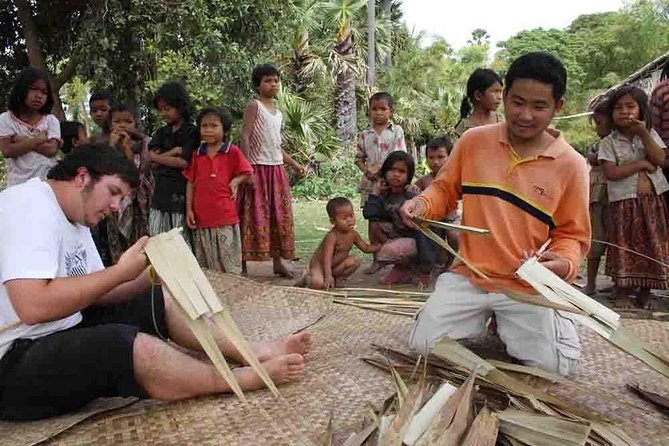
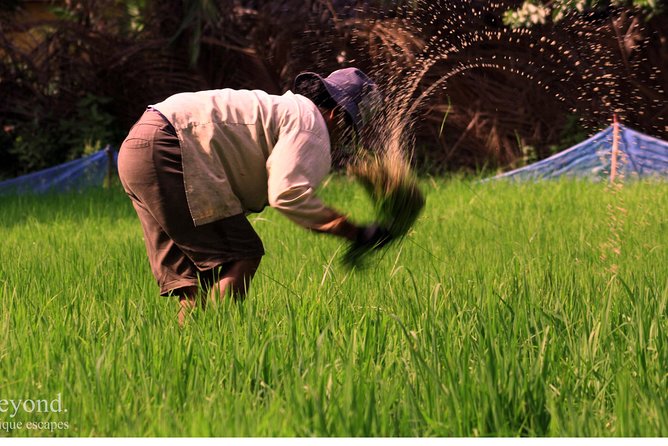
During one season, you may help plant, transplant, or harvest rice. During another, you might weave thatch for a roof or make palm-leaf wall panels. You could plant vegetables, help make prahoc or rice wine, or take part in another ordinary task connected with village life.
The palm-leaf work is especially telling. A previous visit included building a palm-leaf roof, which turns a rural craft into something practical. You are not making a decorative sample for a shop. You are helping with a repair that the family can use.
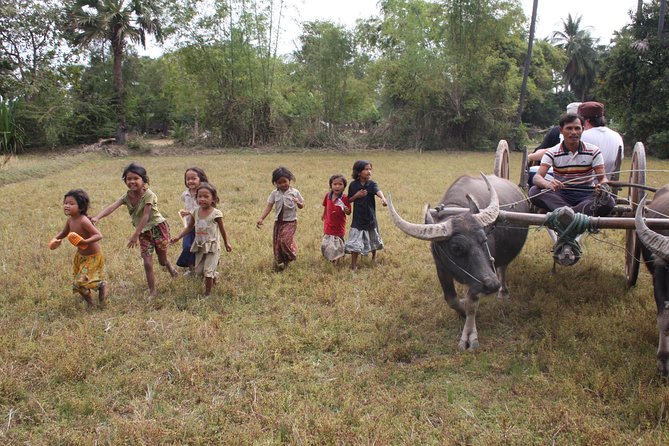
An ox cart ride is also included, along with the other activities. Learning to drive an ox cart offers a simple look at rural transport, though it is not an amusement-park ride. The animals, route, and timing belong to the family’s normal setting. Follow the guide’s instructions and treat the experience as a working activity rather than a thrill attraction.
You also have the chance to plant a fruit tree for the host family. This is one of the most useful parts of the visit because it may provide food later and perhaps a small source of income. A tree will not change a family’s finances in one afternoon, but it gives your visit a practical result that lasts beyond your departure.
Seeing village life beyond the work
The day is not limited to farm labor. You learn about village customs and daily life, and you may visit the local pagoda and school if circumstances allow.
The phrase if possible matters here. The village is not required to open every door on a fixed schedule. A ceremony, class, or local event may change what you see. That uncertainty can be frustrating if you want a guaranteed checklist, but it also prevents the tour from forcing normal life into a tourist program.
A local market may be part of the day as well. One itinerary included a visit to a unique market, along with the roof work and lunch. Since the schedule responds to local conditions, you should regard the market as a possible addition rather than a guaranteed stop.
These visits help connect the work to the wider community. You see that rice fields, homes, religious spaces, schools, and markets all fit into one daily system. The guide’s explanations are important here, since a short visit on your own would show you activity without much context.
Same base, a different kind of day out:
- Sunset tour of Kampong Phluk stilts home village on the Tonle Sap
★ 5.0 · 4,865 reviews - Siem Reap: Angkor Wat 2-Day Tour with Sunrise and Sunset
★ 4.9 · 4,429 reviews - Siem Reap: Full-Day Angkor Wat Guided Tour with Sunset
★ 4.9 · 3,803 reviews - Angkor Wat Sunrise tour with Small – Group and Guide tours
★ 5.0 · 3,655 reviews
A Khmer lunch with a practical compromise
Lunch is a freshly prepared Khmer hot meal served in the village. It includes a starter, main course, and fresh fruit for dessert. Bottled water and cold towels are also provided, which are welcome after a morning outdoors.
The meal is prepared using ingredients arranged by a catering partner in Siem Reap. It does not come from the village itself because the area lacks electricity and proper sanitation for sourcing and preparing food to the required standard.
That detail may sound less romantic than a meal cooked entirely by the family, but it is the responsible choice. Food safety matters, and the arrangement still lets you eat in the village and, when the family wishes, share the meal with them.
Tell the operator about allergies or dietary needs before arrival. The provided information does not promise a particular alternative menu, so early notice is important. If the family eats separately, enjoy your meal without expecting a staged communal scene.
What responsible tourism looks like here
The tour’s responsible tourism policy is more than a donation added to the price. Your participation directly supports one host family, and funds are also reserved for village projects. The program works with HUSK Cambodia, which focuses on income and community support.
You are specifically asked not to hand out gifts or money in the village. That rule protects both you and the community. Individual gifts can create jealousy between households and may encourage a begging cycle, even when offered with good intentions.
If you want to help further, ask the guide or staff about useful options rather than arriving with sweets, school supplies, or cash. This is a good lesson for any village visit: support should be organized, fair, and guided by local needs.
The approach also explains why the tour may feel less polished than a standard sightseeing day. Responsible travel sometimes means accepting uncertainty, leaving ceremonies undisturbed, and allowing a family to say no to a meal or visit. That is a fair trade for seeing a community on its own terms.
Is the $68.72 price good value?
At $68.72 per person, the price is not the cheapest way to spend a day outside Siem Reap. It includes round-trip morning transport to the village, an English-speaking guide, a private vehicle, the ox cart ride, activities, lunch, water, cold towels, and a contribution to HUSK Cambodia.
The value rests on the combination. A basic countryside transfer and lunch would cost less, but they would not provide the same organized introduction to a family or the direct support built into this experience. You are paying for a small group, local coordination, transport, food, and a program designed to avoid turning the village into a photo stop.
The maximum group size is eight, which helps keep the visit personal. The tour is also described as private, so clarify the exact setup when booking if group arrangements matter to you. Group discounts may be available, making the price more attractive for families or friends traveling together.
I would consider it good value for someone who wants a meaningful village visit and accepts that the activities cannot be guaranteed in advance. It is weaker value for someone seeking a tightly scheduled list of sights or the lowest possible day-trip cost.
Who should book this day?
I would recommend this experience to you if you want to meet local people through useful activity rather than a performance. It suits visitors who are comfortable with mud, heat, changing plans, and a rural setting with limited facilities.
It also works well for travelers who have already seen Angkor and want a different side of Siem Reap. The day shows how much Cambodian life remains tied to farming, family work, religious places, and seasonal routines.
Families with older children may enjoy the practical tasks and ox cart ride. Children aged 12 to 18 must be accompanied by an adult. Most people can participate, but sturdy footwear is required, and covered knees, shoulders, and chest are expected.
You should think twice if you need guaranteed access to a school or pagoda, have difficulty with outdoor work, or dislike plans changing at short notice. This is not a luxury countryside retreat. It is a working village visit built around respect and participation.
What to wear and what to expect
Wear clothing that covers your knees, shoulders, and chest. Choose sturdy footwear rather than sandals, since the activities may include farm work, weaving, planting, or walking on uneven ground.
Bring a flexible attitude. The guide may adjust the day because of village events, ceremonies, weather, or family needs. That is not a failure to deliver the tour. It is part of keeping the program from interfering with normal village life.
The trip includes bottled water and cold towels, but the provided details do not promise other personal supplies. Bring anything you normally need for a seven-hour outdoor day, especially if you have specific medical or dietary needs.
Service animals are allowed, and most people can participate. Children between 12 and 18 need an adult with them.
Booking, cancellation, and timing
Confirmation is sent within 48 hours of booking, subject to availability. The experience is often reserved well ahead, with an average booking lead time of 135 days, so leaving it until the last minute may not work.
You can cancel for a full refund up to 24 hours before the 8:00 am start time. Cancellations or changes made less than 24 hours before departure are not accepted for a refund. The cutoff uses local Cambodian time.
Because hotel drop-off is not included, plan the afternoon around arrival at the centrally located office. The day lasts about seven hours, but village conditions can affect the exact rhythm.
Should you book the village day?
Book it if you want a direct, useful encounter with rural Cambodia and you value the idea that your money supports a family and village projects. The palm-leaf roof work, ox cart ride, possible market visit, and fruit-tree planting give the day more substance than a quick countryside photo stop.
Skip it if you want a fixed itinerary, guaranteed access to every listed village site, or a polished cultural show. The strongest reason to choose this outing is also its main limitation: you enter a real community, so the people and season set the pace.
For the right visitor, $68.72 buys transport, food, a small group, hands-on work, and a responsible way to spend a day beyond Siem Reap. Pack sturdy shoes, keep your plans flexible, and let the village remain a village.
FAQ
Where does the experience take place?
The village is about 16 kilometers from Siem Reap and consists mostly of farming families.
What time does the tour start?
The experience starts at 8:00 am and lasts about seven hours.
Is hotel pickup included?
Hotel pickup is included from Siem Reap. Hotel drop-off is not included. Return transport goes to the provider’s centrally located office.
What activities will I do?
Activities depend on the season, family needs, and village events. You may plant, transplant, or harvest rice, weave palm leaves, plant vegetables or trees, make prahoc or rice wine, and ride an ox cart.
Is lunch included?
Yes. A freshly prepared Khmer hot lunch includes a starter, main course, and fresh fruit dessert. Bottled water and cold towels are also provided.
Can children join the experience?
Children aged 12 to 18 must be accompanied by an adult. Most people can participate.
What should I wear?
Wear clothing that covers your knees, shoulders, and chest, and choose sturdy footwear.
Can I give gifts or money to the family?
No. Donations and handouts in the village are strictly forbidden. Speak with the guide or staff if you want advice on making a useful contribution.
Just added in Siem Reap
- Twilight Tastes of Siem Reap Include Dinner★ 5.0 · 13 reviews
- Ultimate Sunrise to Angkor Wat, Angkor Thom and Bayon Temple★ 5.0 · 3 reviews
- Trekking Tour at Phnom Kulen National Park from Siem Reap★ 5.0 · 3 reviews
- Full-Day Private Tour of Angkor Wat with Pick Up★ 5.0 · 12 reviews
- Private Day Trip to Angkor Temples with Expert Guide★ 5.0 · 4 reviews
- Siem Reap City Tour with War Museum and Killing Field★ 5.0 · 27 reviews
- Waterfall & River of 1000 Siva Linga- Kulen Mountain Private Tour★ 5.0 · 3 reviews
- Angkor Wat Experience Temple Pass and Siem Reap Food Tour★ 5.0 · 13 reviews
Tours in Siem Reap, compared.

Angkor Wat Sunrise or Sunset Tour with Guide from Siem Reap
Read our review →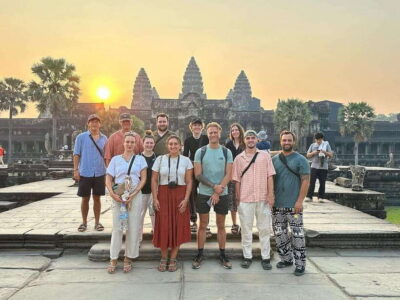
Angkor Wat: Small-Group Sunrise or Sunset Tour
Read our review →
Sunset tour of Kampong Phluk stilts home village on the Tonle Sap
Read our review →
Angkor Wat 2-Day Tour with Sunrise and Sunset
Read our review →

Angkor Wat Sunrise tour with Small – Group and Guide tours
Read our review →