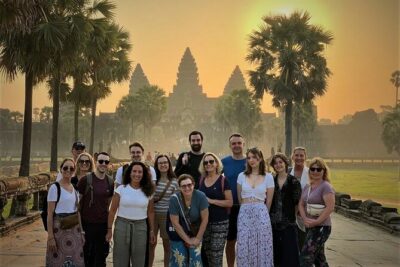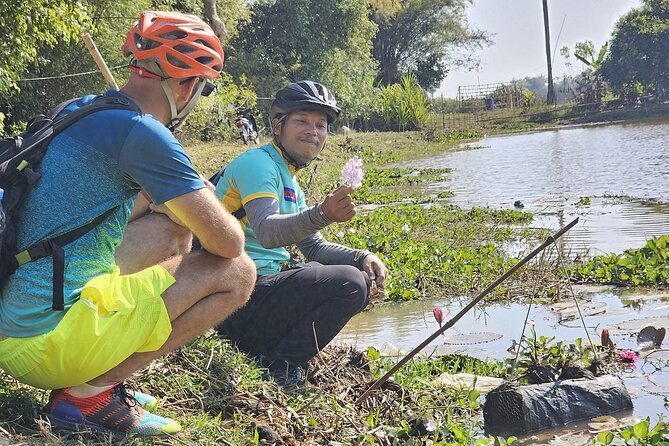
Reviewed · TOURS IN SIEM REAP
East Corner of Siem Reap – Roluos Group & Countryside
The best part of this outing is the ride itself: you leave Siem Reap by bicycle and reach Hariharalaya, the early Khmer capital, through rice fields, village roads, and a nature reserve. I like the small maximum group of 10, which makes village stops and temple explanations more personal. I also like that lunch, coconut water, drinking water, a helmet, and a Trek mountain bike are included.
The main drawback is the extra cost and early start. The $50 price does not include the $37 one-day temple pass, so your basic outlay is $87 before getting to the meeting point. You also need to be ready to ride at 7:30 am and arrange your own hotel transport.
Key points before you book
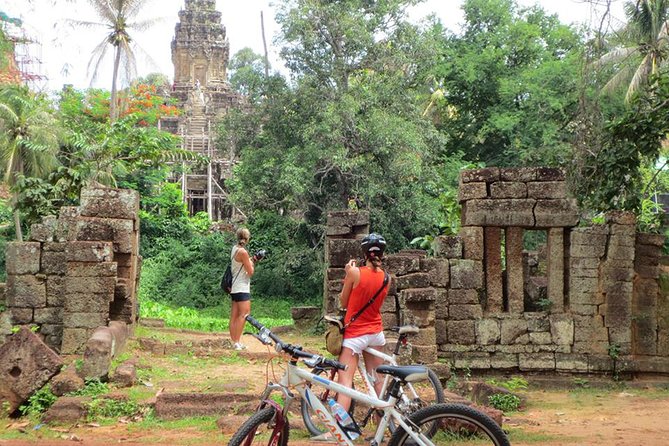
- Three important early Khmer temples: Visit Preah Ko, Bakong, and Lolei at Hariharalaya, the former capital linked to the beginnings of the Khmer Empire.
- A countryside route, not just a temple transfer: The ride passes rice fields, rural homes, local flora, and a nature reserve.
- Food is part of the experience: Stop at a local market for exotic fruit, Khmer snacks, and delicacies, then sit down to an included Khmer meal.
- Practical cycling support: You get a Trek mountain bike, helmet, pure drinking water, coconut water, and assistance from a bike mechanic.
- Small-group format: The tour accepts no more than 10 people, a useful size for keeping the group together on rural roads.
- Plan for the real price: The $50 tour fee excludes the $37 temple pass, hotel pickup, and hotel drop-off.
Why the ride to Hariharalaya matters
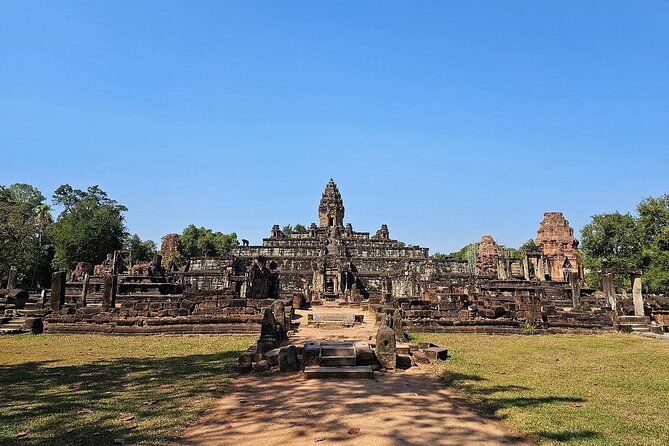
Most first-time visitors to Siem Reap focus on Angkor Wat and the famous temples north of town. This trip takes you in a different direction, toward Roluos, where the Khmer capital of Hariharalaya was located in the ninth century.
That change of direction matters. You are not simply driven from one monument to the next. You pedal through the countryside, with time to notice rice fields, village life, local plants, and the rhythm of rural Cambodia. The bicycle makes the journey part of the day rather than empty space between sights.
The route also gives you a look at a quieter side of Siem Reap. You will meet local villagers, receive a welcome from rural children, and see everyday activity away from the city center. The contact is brief and guided, but it adds a human dimension that a standard temple circuit often lacks.
You do not need to be an expert cyclist. The tour is designed around a mountain bike, helmet, support from the cycling team, and a small group. Still, this is a seven-hour activity, so you should be comfortable spending much of the morning and early afternoon on a bicycle.
Other trips people book in Siem Reap:
- Angkor Wat Sunrise or Sunset Tour with Guide from Siem Reap
★ 5.0 · 12,109 reviews - Siem Reap: Angkor Wat: Small-Group Sunrise or Sunset Tour
★ 5.0 · 9,444 reviews - From Siem Reap: Kampong Phluk Floating Village Tour by Boat
★ 4.9 · 6,979 reviews
Starting at 7:30 am on Taphul Road
The meeting point is Angkor Cycling Tour on Taphul Road in Siem Reap. The tour starts at 7:30 am and ends back at the same point. Hotel pickup and drop-off are not included, so you need to make your own way there.
An early start is sensible in Cambodia. It gives you cooler hours for cycling and leaves time for the three temple visits, food stops, and the return ride. The tradeoff is simple: this is not a slow late-morning activity. Have your breakfast before arriving or arrange it at your hotel, since the first meal specifically included in the tour is lunch.
Your equipment is part of the fee. You receive a premium Trek mountain bike and helmet, along with drinking water and coconut water. One detailed account of the outing praised the way guide Seng and mechanic Nguey fitted and prepared the bikes, describing them as well maintained and comfortable. If those two are on your departure, you can expect hands-on help with bike fit and mechanical support.
That detail has real value. A poorly adjusted saddle or bike can spoil a long ride, while a mechanic nearby gives you some comfort on rural roads. The group size is capped at 10, so the guide should have a better chance of keeping an eye on different riding speeds than on a large bus-style excursion.
Rice fields, village roads, and a nature reserve
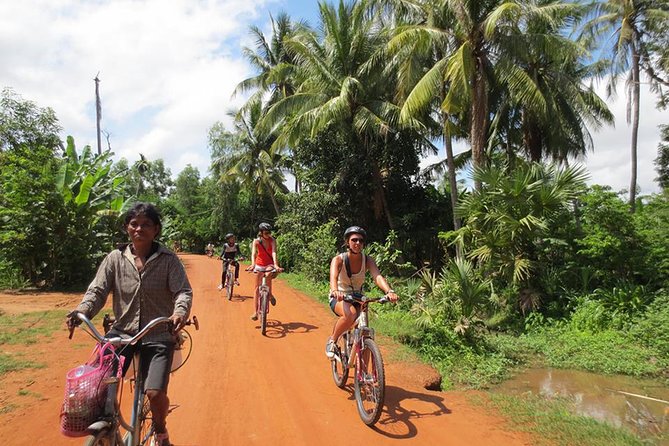
The route leads away from Siem Reap through countryside rather than along a string of major tourist stops. You will see rice fields and local flora and fauna, with a nature reserve included in the ride.
The appeal here is the pace. From a vehicle, you pass rural Cambodia quickly. On a bicycle, you have more time to notice the fields, homes, paths, and people around you. You can stop for photographs, and the guide can explain what you are seeing as the group moves along.
The village interaction is another important part of the day. You may meet traditional Cambodian villagers and receive a warm welcome from local children. Keep your approach polite and relaxed. The point is not to turn village life into a show, but to make a respectful connection while learning about daily activity outside Siem Reap.
A countryside ride also has limits. Rural roads can feel less controlled than city streets, and the tour description does not specify the exact riding distance or road surface. If you are unsure about cycling for several hours, ask the operator for more detail before booking. The tour says most people can participate, but it does not promise a flat or effortless ride.
The local market and Khmer food
The market stop adds flavor to a day that could otherwise become temple-heavy. You may see exotic fruits, Khmer snacks, and local delicacies. This is a chance to try something outside the usual hotel breakfast and restaurant menu.
You do not have to treat every unfamiliar food as a challenge. Look, ask questions, and choose what suits you. The guide can help explain what you are seeing, which is useful when labels are limited or ingredients are unfamiliar.
Lunch is included and described as an authentic Khmer meal. That is a practical benefit as well as a cultural one. You do not need to interrupt the ride to search for a restaurant, and the meal gives you a proper pause before or after the temple visits.
Tell the operator about specific dietary needs when booking. The tour asks you to provide that information in advance, but the supplied details do not state which special diets can be accommodated. If food is a serious concern, get confirmation before paying.
Coconut water and pure drinking water are included. That matters in a warm climate, especially after cycling through open fields. You should still bring sunscreen and sunglasses, along with a camera if you want photographs from the route and temple grounds.
Same base, a different kind of day out:
- Sunset tour of Kampong Phluk stilts home village on the Tonle Sap
★ 5.0 · 4,865 reviews - Siem Reap: Angkor Wat 2-Day Tour with Sunrise and Sunset
★ 4.9 · 4,429 reviews - Siem Reap: Full-Day Angkor Wat Guided Tour with Sunset
★ 4.9 · 3,803 reviews - Angkor Wat Sunrise tour with Small – Group and Guide tours
★ 5.0 · 3,655 reviews
Preah Ko, the sacred bull temple
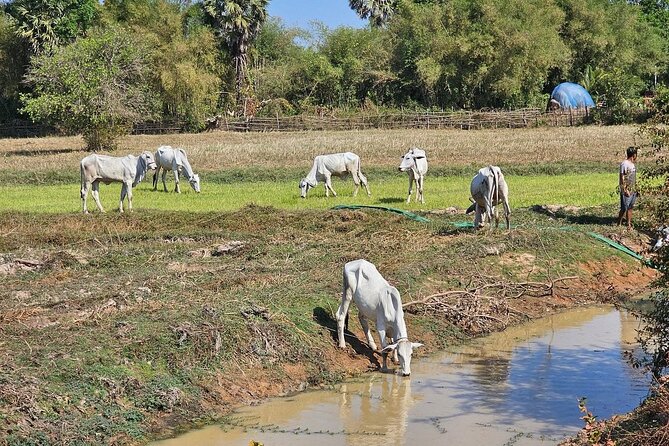
The first major temple stop is Preah Ko, whose name means sacred bull in Khmer. The temple was dedicated to Shiva and belongs to the early period of Khmer temple building at Hariharalaya.
Preah Ko is a useful introduction to the Roluos Group because its purpose is easier to grasp when explained in place. The connection to Shiva, the bull imagery, and the early setting show how religious ideas shaped Khmer royal architecture.
This is not the largest temple on the route, and you should not expect the scale of Angkor Wat. Its value is in its age, purpose, and place within the development of Khmer sacred architecture. Your guide can help turn a compact set of ruins into a readable first chapter.
You will also have a chance to take photographs. The guide is specifically there to help with pictures at key sites, so do not hesitate to ask for a good angle or for a group photo. The cycling format makes this stop feel like part of a larger journey rather than a hurried photo break.
Bakong, the first large mountain temple
Bakong is the visual centerpiece of the Roluos visit. It is described as the first large mountain temple of Angkor, a form that became central to Khmer royal architecture.
The mountain-temple design gives the site a strong upward focus. As you look across the structure, you can see how the builders created a symbolic center that connected kingship, religion, and sacred space. Your guide’s explanations are particularly useful here because the name and layout alone do not explain why Bakong matters.
Bakong is likely to be the stop where you spend the most time looking closely at form and scale. The visit also rewards photography, with broad views and architectural details to record. Bring your camera, but keep the temple visit ahead of the perfect picture.
The practical issue is heat and energy. By the time you reach Bakong, you have already cycled through the countryside. Drink the water provided, use the shade when available, and pace yourself around the temple. The tour combines physical activity with site visits, so you should not approach it as a purely relaxed sightseeing day.
Lolei and its island-temple setting
Lolei is the third temple in the Roluos Group. It is described as an island temple built by King Yasovarman I.
That setting gives Lolei a different character from Preah Ko and Bakong. Rather than seeing three similar monuments, you get three examples of early Khmer religious design with distinct identities: a Shiva temple linked to sacred bulls, a large mountain temple, and a temple associated with an island setting.
Lolei completes the historical arc of the morning. By this point, you have seen how the early Khmer capital used temples to express religious belief and royal power. The guide’s role is important because the ruins may not explain their place in the story without context.
As with the other stops, you will have time for photographs. The tour does not include the temple admission charge, so remember to buy the one-day pass separately. The stated price is $37, and it is not included in the $50 cycling fee.
What the $50 price really covers
At first glance, $50 per person is a moderate price for a seven-hour guided activity. The value improves if you want a full day with equipment, food, water, temple guidance, and countryside access arranged in one booking.
You are paying for an English-speaking guide, a Trek mountain bike, helmet, mechanic support, lunch, coconut water, and drinking water. You also get a planned route linking villages, a market, a nature reserve, and three temples. For someone who wants to combine exercise and culture, that is a useful package.
But the advertised price is not the final activity cost. Add the $37 temple pass and you reach $87 per person. You must also pay for your own transport to and from Taphul Road, since hotel transfers are not included.
That total can still make sense if you value a small group and active sightseeing. It is less attractive if you only want the temples, since a cycling tour includes several hours of riding that you may not need. I would choose it for the countryside connection and guided route, not simply as a cheaper way to reach Roluos.
Who will enjoy this day most
This tour suits you if you want more than a standard vehicle-based temple visit. It is a good fit for cyclists who enjoy a moderate physical challenge, families or friends who like being outdoors, and first-time visitors who want a structured introduction to rural Siem Reap.
It also works well for people who appreciate a small group. With no more than 10 participants, the guide can explain the temples without the noise and distance of a large coach group. You also have a better chance to ask questions and get help with photographs.
You may want another option if you dislike cycling in warm conditions, prefer a late start, or need guaranteed hotel transport. The exact distance, road conditions, and cycling difficulty are not provided, so ask the operator for those details if they affect your decision.
Bring sunscreen, sunglasses, and a camera. Wear clothing suitable for cycling and temple visits, though the supplied information does not specify a dress code. Tell the operator about dietary requirements at booking time.
Booking, cancellation, and the final call
You receive confirmation at booking, and the ticket is mobile. Public transportation is nearby, and the activity returns to its starting point. Free cancellation is available if you cancel at least 24 hours before the local start time. Changes or cancellations inside that period are not accepted for a refund.
I would book this tour if I wanted to see the Roluos Group while also getting beyond the city roads. The combination of rice fields, village contact, market food, and early Khmer temples gives the day more variety than a simple temple transfer.
I would skip it if I wanted the shortest possible temple visit or did not enjoy several hours on a bicycle. For the right rider, the extra cycling is not a burden. It is the reason to choose this experience.
FAQ
Where does the tour start and finish?
It starts at Angkor Cycling Tour on Taphul Road in Siem Reap at 7:30 am. The activity ends back at the same meeting point.
How long does the experience last?
The tour lasts approximately seven hours.
What temples are included?
The route includes Preah Ko, Bakong, and Lolei, the three main temples of the Roluos Group at Hariharalaya.
Is the temple admission fee included?
No. The one-day temple pass costs $37 and must be paid separately.
What is included in the $50 tour price?
The price includes an English-speaking guide, a Trek mountain bike, helmet, lunch, coconut water, and pure drinking water.
Is hotel pickup and drop-off provided?
No. Hotel pickup and drop-off are not included. You need to reach the meeting point yourself and return there at the end.
How many people can join the tour?
The activity accepts a maximum of 10 participants. Most people can participate, according to the supplied tour information.
Just added in Siem Reap
- Twilight Tastes of Siem Reap Include Dinner★ 5.0 · 13 reviews
- Ultimate Sunrise to Angkor Wat, Angkor Thom and Bayon Temple★ 5.0 · 3 reviews
- Trekking Tour at Phnom Kulen National Park from Siem Reap★ 5.0 · 3 reviews
- Full-Day Private Tour of Angkor Wat with Pick Up★ 5.0 · 12 reviews
- Private Day Trip to Angkor Temples with Expert Guide★ 5.0 · 4 reviews
- Siem Reap City Tour with War Museum and Killing Field★ 5.0 · 27 reviews
- Waterfall & River of 1000 Siva Linga- Kulen Mountain Private Tour★ 5.0 · 3 reviews
- Angkor Wat Experience Temple Pass and Siem Reap Food Tour★ 5.0 · 13 reviews
Tours in Siem Reap, compared.
Angkor Wat Sunrise or Sunset Tour with Guide from Siem Reap
Read our review →
Angkor Wat: Small-Group Sunrise or Sunset Tour
Read our review →
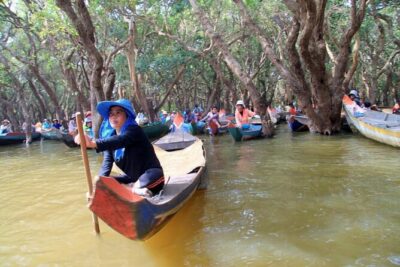
Sunset tour of Kampong Phluk stilts home village on the Tonle Sap
Read our review →
Angkor Wat 2-Day Tour with Sunrise and Sunset
Read our review →
Angkor Wat Sunrise tour with Small – Group and Guide tours
Read our review →