
Reviewed · KHMER COOKING CLASSES
Cambodian Cooking Class from Siem Reap
Cambodian food makes more sense once you see where its herbs, vegetables, fish, and spices begin. This half-day class takes you beyond Siem Reap’s tourist center by tuk tuk, into a village setting where you visit a local home and garden, then cook your own three-course meal beside a pond.
I especially like the small groups of no more than six and the fact that every cook gets a personal station. I also like the practical recipe advice, including substitutions for ingredients you may not find at home. The main drawback is the open-air setting: it can feel hot, and the short village walk is more comfortable with a hat and sturdy shoes.
Key points to know before booking
- Three and a half hours outside central Siem Reap: Tuk tuk transport takes you to a rural village and returns you to the central office.
- A true hands-on class: You chop, mix, pound, season, and cook at your own station rather than watching a demonstration.
- Market and village insight: Some sessions begin with a local market visit, while the core experience includes a family home, kitchen, and vegetable garden.
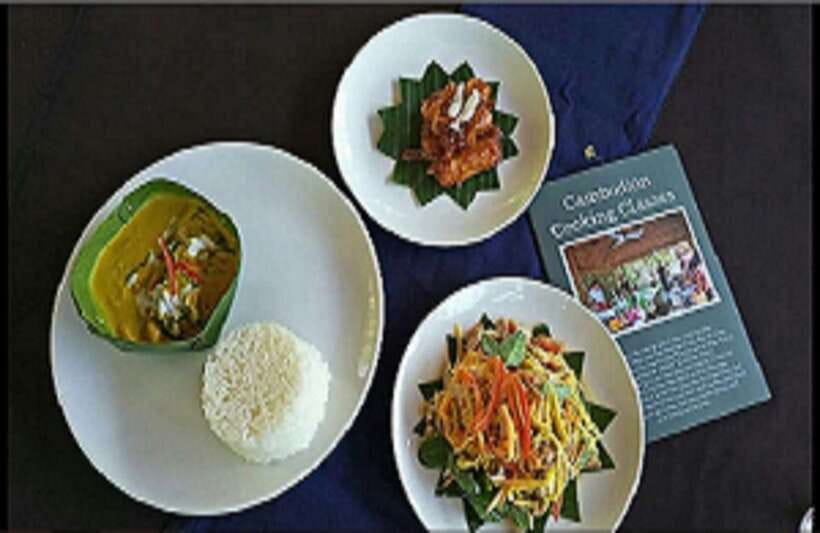
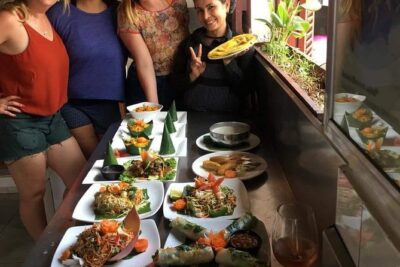
- Cambodian dishes you can recreate: Menus include fish amok, mango salad, Cambodian curry, minced fish on sugar cane, and traditional sweets.
- A peaceful meal beside a pond: Your finished dishes are served one by one, with a beer, soft drink, or bottled water.
- Best for curious eaters aged 12 and up: Private family classes can be arranged for younger children.
Why this Siem Reap cooking class feels different
Many cooking classes keep you inside a hotel kitchen. This one begins with a look at everyday food culture. You leave Siem Reap in a tuk tuk, pass into a more rural setting, and see how Cambodian cooking fits into ordinary household life.
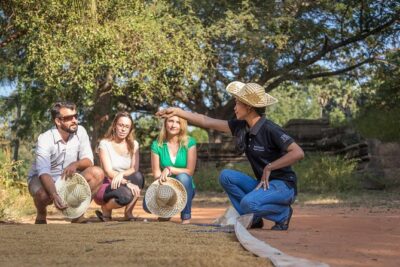
The village visit is not just a quick photo stop. You walk past gardens and learn about herbs and vegetables used in Khmer kitchens. At a local family’s home, you see the cooking area and hear how food is prepared in a Cambodian household. That context matters. It helps you understand why fresh herbs, curry pastes, coconut, fish, and palm sugar appear so often in the dishes you prepare later.
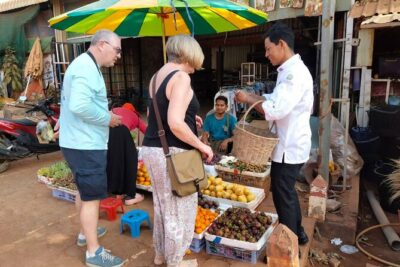
Several recent sessions have also included a stop at a local market before the cooking class. Guides such as Sophia, Sophie, and Sophia Lauren have led visitors through the produce stalls, explaining unfamiliar leaves, spices, fruits, and other ingredients. This market visit is a useful addition, but it may vary by schedule, so consider the village visit and cooking class the fixed core of the experience.
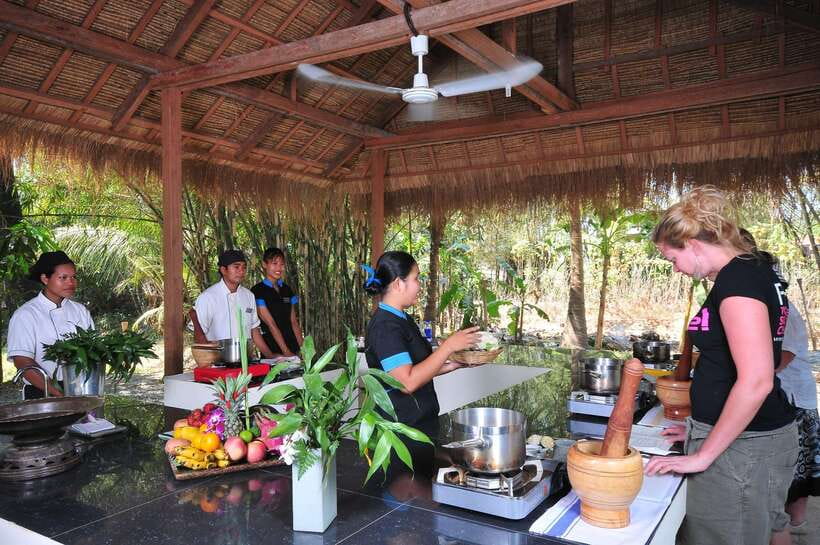
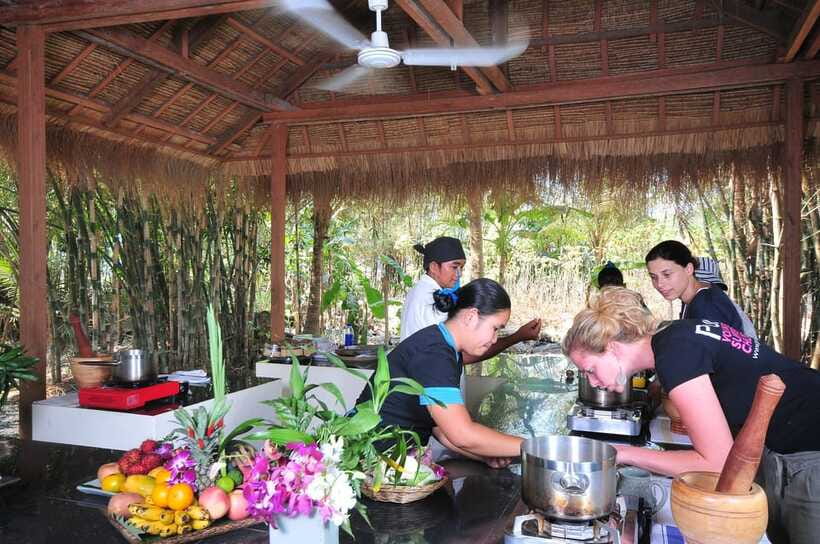
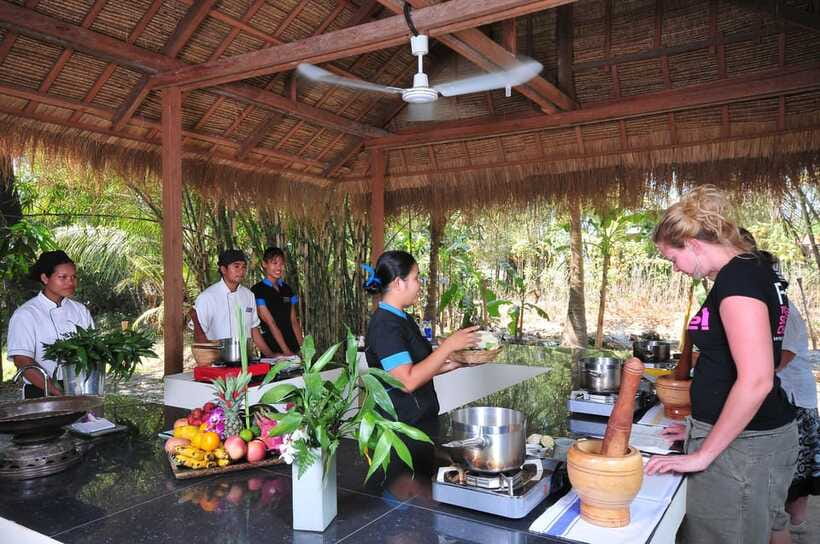
The setting is one of the strongest parts of the outing. Cooking takes place in an outdoor pavilion, often described as a clean, attractive spot beside a pond. Afterward, you sit down in the same area and eat what you made. It is a calm change from the traffic and noise of central Siem Reap.
More Cooking Classes in Siem Reap
- Khmer Cooking Class at a Local’s Home in Krong Siem Reap
★ 5.0 · 2,731 reviews - Siem Reap: Khmer Cooking Class at a Local’s Home
★ 5.0 · 1,108 reviews - Award-Winning Cooking Class Experience with Professional Teacher
★ 5.0 · 745 reviews
The tuk tuk ride into the countryside
Hotel pickup by tuk tuk is included, followed by a return to the centrally located tour office. The ride gives the morning or afternoon a sense of movement instead of making the class feel like an activity sealed off from Cambodia around it.
One practical point: the ride is part of the charm, but tuk tuks are open to the air. You will feel the heat and dust more than you would in an enclosed vehicle. Bring water, use sunscreen, and keep loose items secure. The class includes a complimentary bottled water, soft drink, or beer, but you should still arrive prepared for the road and outdoor cooking area.
The ride time is not fixed in the information provided, though one session described roughly 20 minutes on back roads. Expect a short transfer outside the city rather than a full-day excursion.
A local market, family home, and garden
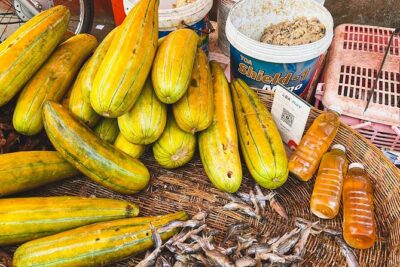
The market portion, when included, gives you a useful introduction to Cambodian ingredients before you start cooking. Rather than seeing a curry paste as an anonymous brown mixture, you can examine the leaves, roots, vegetables, and spices that give Khmer food its aroma.
Guides have also made a point of helping with unfamiliar foods. One guide bought small items so a participant could taste them, and another explained alternatives for ingredients that are difficult to find outside Cambodia. That kind of advice is worth more than a recipe alone if you want to cook the meal again at home.
The village portion focuses on a local family. You see the home, kitchen, and garden, and learn which plants are grown close to the house. The walk is short, but it adds a human side to the meal. You are not simply learning a restaurant recipe. You are seeing how household gardens support daily cooking.
Wear comfortable footwear. A hat is a smart choice, especially for the morning class in hot weather. The route is not presented as a demanding hike, but uneven paths and sun are possible.
Cooking at your own station
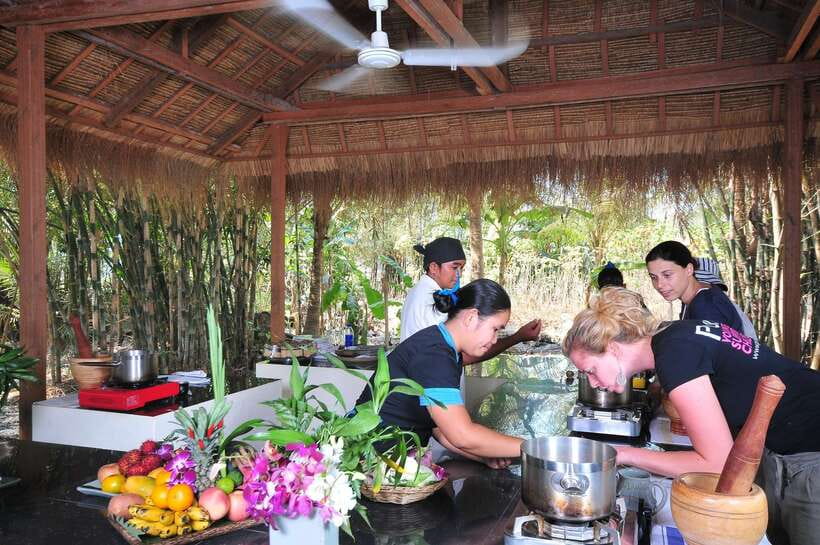
The class is fully hands-on. Each participant has an individual cooking station and equipment, with a local chef guiding the group through preparation. You are not expected to have previous cooking skills.
This format works well for beginners because the chef can correct small mistakes as you go. Guides and chefs have been praised for clear explanations and patient help, including support for first-time cooks and young teenagers. The teaching style is practical rather than formal. You learn by handling the ingredients and following each stage.
The outdoor kitchen is covered, but it is still open-air. That makes the setting pleasant and relaxed, though it also means heat can build up. If you dislike warm cooking conditions, the class may feel tiring during the hottest part of the day.
Some past sessions have been led by chef Prey, with Sophia or Sophie assisting and explaining the ingredients. Staff names can change, but the useful feature is the pairing of an English-speaking guide with a local chef. You get cultural explanation as well as cooking instruction.
Other classes where you cook in Siem Reap:
- Cambodian Village Cooking Class
★ 5.0 · 265 reviews - Siem Reap Cooking Class
★ 5.0 · 170 reviews - Khmer Gourmet Cooking Class
★ 5.0 · 145 reviews - Khmer Cooking Class Half Day (AM or PM)
★ 5.0 · 316 reviews
Morning menu: salad, fish amok, and palm sugar
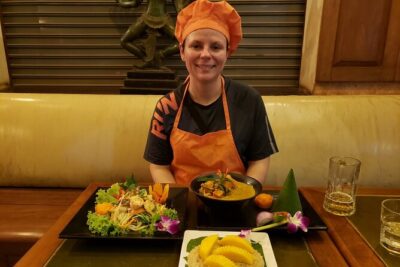
The morning class begins with Cambodian mango salad. Fresh, light, and slightly sweet, it is a good introduction to the balance of Khmer cooking. The dish gives you a chance to work with crisp produce and bright flavors before moving to the richer main course.
Next comes fish amok, perhaps the dish most closely associated with a first taste of Cambodian cuisine. The class prepares it in a young coconut, creating a smooth curry with fragrant spices rather than the sharp heat often linked with Thai food. Fish is the listed choice, though amok can also be made with chicken or tofu.
The important lesson here is the curry base. You learn how the ingredients are chopped and combined, and some classes include pounding the mixture with a mortar and pestle. It is a simple physical step, but it shows how much flavor comes from fresh aromatics rather than a jar of prepared paste.
Dessert is sticky rice balls with palm sugar and grated young coconut. The sweet course is hands-on too, and it rounds out a meal that moves from fresh salad to creamy curry to a soft, coconut-scented finish.
Afternoon menu: fish on sugar cane, curry, and a sweet finish
The afternoon menu opens with Prahet Chien, minced fish shaped around sugar cane. It is an interesting dish to prepare because the sugar cane is part of the presentation as well as the flavor. The recipe gives you another way to work with fish beyond the familiar amok.
The main course is Cambodian curry. It uses layers of fragrant spices, but the food is generally milder than neighboring Thai cooking. That makes this class a good choice if you enjoy spice and aroma but do not want an aggressively hot meal.
Dessert is Nom Tong Noun, a Khmer version of brandy snaps. It is slightly sweet and crisp, providing a different texture from the sticky rice dessert in the morning session.
The menus are set by class time, so check the available schedule before booking if one dish matters most to you. The recipe book includes additional recipes beyond the dishes prepared during your session, which adds value for anyone who wants to continue cooking at home.
Eating what you cook beside the pond
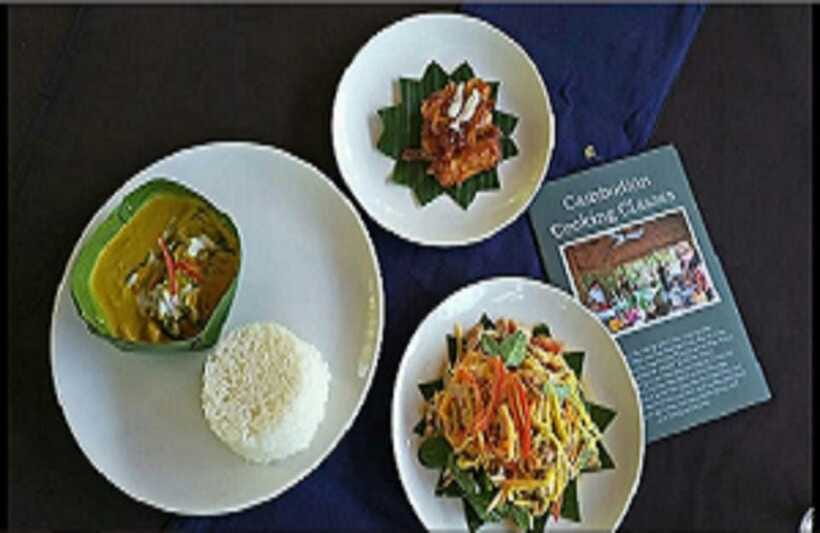
Once the cooking is complete, you sit in the wooden pavilion and your dishes arrive one by one. This gives you time to compare the courses instead of eating everything at once over a crowded work surface.
The meal is included, along with one complimentary beer, soft drink, or bottled water. You eat what you cook, so the class is both a lesson and lunch. Portions can be generous. One session even provided containers for leftovers, though you should not count on that as a formal inclusion.
The pond setting adds a quiet finish. Turtles have been seen in the water during past classes, and the area has been described as clean and peaceful. It is a simple place, not a polished resort restaurant, and that is part of its appeal.
What the $32 price really gets you
At $32 per person, the experience offers solid value. The price covers tuk tuk transport, an English-speaking guide and chef, the village visit, the hands-on class, your meal, a drink, and a recipe book.
A cheaper cooking demonstration might teach you less and give you no chance to prepare each dish yourself. A private class elsewhere could cost much more. Here, the maximum group size of six keeps the instruction personal without making the activity feel expensive.
The value is also cultural. You are paying for time in a rural setting, contact with a local family, ingredient explanations, and a meal you can try to reproduce later. Some sessions have been connected with an organization that helps local people develop skills and earn a living, which may appeal to visitors who want their spending to support community-based work.
There are limits. Personal expenses are not included, and the exact market portion may depend on the day. You also need to be comfortable with outdoor cooking and a short walk in the heat. Still, for a three-and-a-half-hour activity, the package is generous.
Dietary needs, age limits, and group size
The class is suitable for children over 12. Families with younger children can request a private class, but that arrangement needs to be made in advance.
Dietary restrictions have been accommodated in past sessions, including requests involving meat, fish, vegetables, and other meal changes. Tell the operator about your needs before the class rather than waiting until you arrive. The listed amok options include fish, chicken, or tofu, but not every substitution is guaranteed for every menu.
Groups are capped at six participants. If fewer people book, you may receive a near-private class. Several sessions had only one to four cooks, which allowed the guide and chef to provide close attention. Group size can affect the feel of the class, but the six-person limit keeps it manageable.
Who should book this experience
I would choose this class if you want more than a restaurant meal and have half a day free in Siem Reap. It suits first-time cooks, couples, solo visitors, families with older children, and anyone curious about the ingredients behind Cambodian food.
It is especially useful early in your Cambodia trip. Learning about amok, curry paste, palm sugar, coconut, and local herbs can help you order with more confidence during the rest of your stay.
You may want to skip it if you dislike heat, outdoor kitchens, fish, or hands-on preparation. The class is not a quick demonstration where you sit back and take notes. You will be chopping, mixing, cooking, and cleaning your station as part of the process.
Booking is flexible, with free cancellation up to 24 hours in advance and a reserve-now, pay-later option. The activity is offered in English, and starting times depend on availability.
Should you book the Cambodian Cooking Class from Siem Reap?
Yes, if you want a small, practical food experience with a genuine village setting. The strongest reasons are the personal cooking stations, patient English-speaking staff, market or garden ingredient lessons, and the chance to eat a full meal beside the pond.
Choose the morning session for mango salad, fish amok, and sticky rice balls. Pick the afternoon for Prahet Chien, Cambodian curry, and Nom Tong Noun. If your priority is meeting local people and understanding daily food preparation, either session gives you more than a standard city cooking demonstration.
At $32, this is a good-value half-day outing. Bring a hat, wear comfortable shoes, tell the operator about dietary needs, and expect a warm open-air class. For most visitors who want Cambodian food to make sense beyond the menu, it is an easy activity to recommend.
FAQ
How long does the Cambodian cooking class last?
The activity lasts approximately three and a half hours, including transport, the village or market visit, cooking, and the meal.
What is included in the price?
The price includes tuk tuk pickup, transport to the venue, the cooking class, an English-speaking chef and guide, the village walking tour, a complimentary beer, soft drink, or bottled water, a recipe book, and lunch made from the dishes you prepare.
Does the class include a market visit?
Several sessions have included a local market visit before cooking. The core experience also includes a village walk and a visit to a local family’s home, kitchen, and vegetable garden. The exact schedule may vary.
What dishes are made in the morning class?
The morning menu includes Cambodian mango salad, fish amok prepared in a young coconut, and sticky rice balls with palm sugar and grated young coconut.
What dishes are made in the afternoon class?
The afternoon menu includes Prahet Chien, minced fish on sugar cane, Cambodian curry, and Nom Tong Noun, a Khmer-style brandy snap dessert.
Do I need cooking experience?
No. The class is designed as a hands-on activity with guidance from a local chef and guide. Each participant receives a cooking station and equipment.
How many people can join each class?
Classes are limited to a maximum of six participants.
Can children join the class?
Children over 12 can join the regular class. Private classes for families with younger children can be arranged upon request.
Can the class accommodate dietary restrictions?
Dietary requirements have been accommodated in past classes. Contact the operator in advance so the chef can discuss suitable options, including possible fish, chicken, tofu, vegetable, or other adjustments.
More hands-on workshops in Siem Reap
- Siem Reap: Cambodian Pottery Class
★ 4.9 · 339 reviews - Cambodian Pottery Class in Siem Reap
★ 4.5 · 157 reviews - Workshop Visit and Sombai Liqueur Tasting
★ 5.0 · 90 reviews - Battambang: Cooking Class and Market Touring
★ 4.8 · 80 reviews
Just added in Siem Reap
- 1-Day Angkor Wat Private Tour with Spanish Tour Guide.★ 5.0 · 9 reviews
- Angkor Wat: Small-Group Tour with Balloon Ride and Lunch★ 4.6 · 13 reviews
- Sky Venture Microlight Siem Reap★ 4.9 · 18 reviews
- Angkor Wat plus Balloon Ride with Khmer Lunch★ 5.0 · 46 reviews
- 3-Day Angkor Wat & All Interesting Major Temples & Kulen Mount Waterfall★ 5.0 · 63 reviews
- One Full Day Private tour of Angkor Wat, Ta Prohm, Angkor Thom & Banteay Srie★ 5.0 · 64 reviews
- 3-Day Angkor Wat with All Interesting Major Temples, Banteay Srei & Beng Mealea★ 5.0 · 70 reviews
- Kulen Mountain Tour with Picnic and Floating Village Sunset★ 5.0 · 63 reviews
Khmer Cooking Classes, compared.
Khmer Cooking Class at a Local’s Home in Krong Siem Reap
Read our review →
Award-Winning Cooking Class Experience with Professional Teacher
Read our review →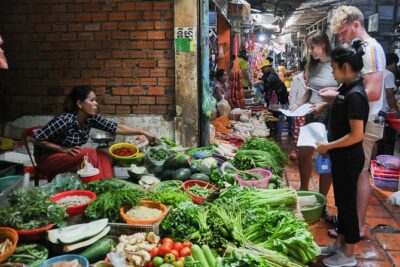
Browse the lists this tour appears in