Reviewed · TOURS IN SIEM REAP
Angkor Wat Full Day Tour in Siem Reap Small-Group
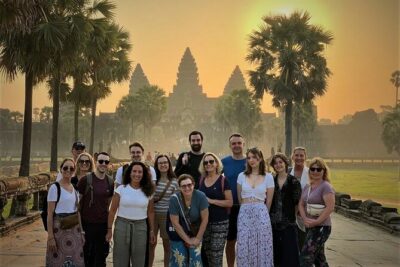
Angkor Wat is the headline, but the smartest part of this tour is the way it links the major temples into one full day without forcing you into the pre-dawn sunrise crush. You start around 7:30 to 8 a.m., then follow the grandest route through Angkor Wat, Angkor Thom, Bayon, and Ta Prohm with an English-speaking guide.
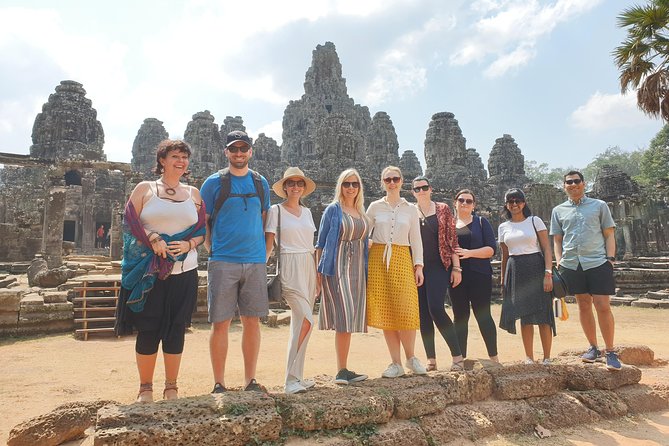
I like the small maximum of 15 people, which gives you a better chance to hear the guide and ask questions. I also like the practical touches: hotel pickup, air-conditioned transport, unlimited bottled water, cold towels when the heat bites, and guides such as Joe and Sopheap Tann, who have been praised for careful explanations and friendly service.
The main catch is the price shown is only the tour fee. You must add the $37 one-day temple pass, lunch, drinks, and a possible tip, so your real daily cost is closer to $62 before food and gratuity. Lunch is usually at a restaurant inside the national park, which is convenient but can cost more than eating in Siem Reap.
Key points to know before booking
- Starts after the sunrise rush: Pickup is normally between 7:30 and 8 a.m., so you avoid the earliest crowd without losing a full day.
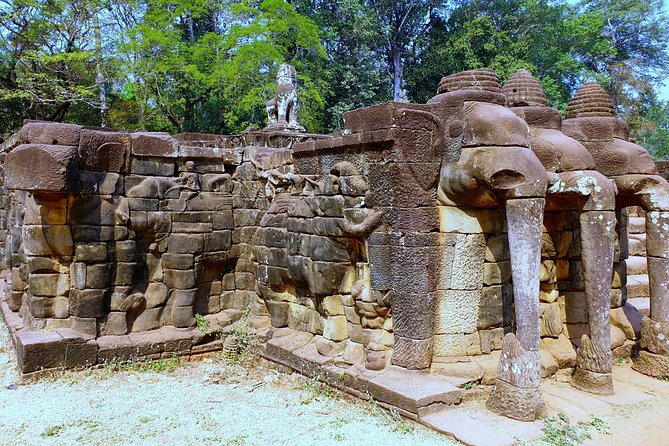
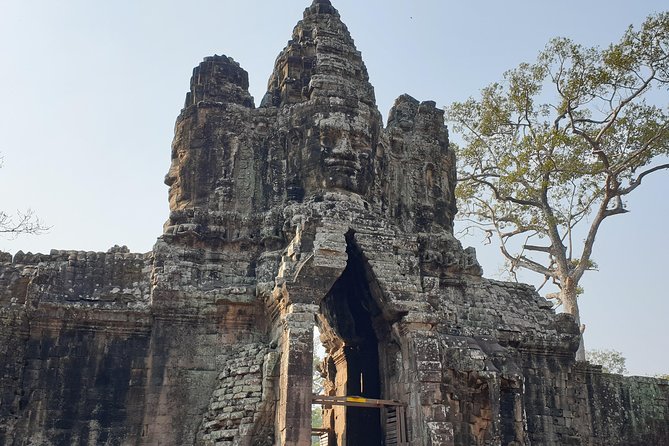
- Covers four major Angkor sites: You visit Angkor Wat, the South Gate of Angkor Thom, Bayon, and Ta Prohm.
- Groups are capped at 15: The group size can vary, but the stated maximum keeps this more personal than a large coach tour.
- The $25 price is not all-inclusive: Add the $37 temple pass, lunch, drinks, insurance, and tips.
- Guides make a real difference: Joe and Sopheap Tann are among the named guides associated with the experience, with Pan serving as a driver on one praised outing.
- Dress for temple rules and heat: Cover your shoulders and knees, wear proper clothing rather than relying on a scarf, and use the supplied water to stay comfortable.
Why the later start works well at Angkor Wat
Many Angkor Wat days begin before dawn, with a huge wave of people heading to the famous reflection pool. This tour takes a different approach. Pickup comes between 7:30 and 8 a.m., depending on your hotel, so you skip the sunrise rush and still reach the temples early enough for a long day.
That choice suits you if you care more about seeing the monuments at a manageable pace than taking the classic sunrise photograph. You will not get the special dawn light promised by a pre-sunrise outing, but you also avoid building the whole day around a very early alarm.
The drive from your hotel to the ticket office takes about 15 to 30 minutes. You buy the temple pass before entering the park. The one-day pass costs $37 and covers all the temples on this route. Visa cards are accepted, and the pass can be bought on the day of the tour.
Your $25 payment covers the guide, air-conditioned minibus or van, pickup and drop-off at city hotels, and unlimited bottled water. That is fair value for a full day of transport and guiding, but do the math before booking. With the pass added, the base cost becomes $62 per person, before lunch, drinks, and tips.
A few more things to do in Siem Reap worth a look
- Siem Reap: Full-Day Angkor Wat Guided Tour with Sunset
★ 4.9 · 3,803 reviews - Full-Day Angkor Wat Sunrise Private Tour with Guide from Siem Reap
★ 5.0 · 2,920 reviews - Siem Reap: Angkor Wat Sunrise and Full-Day Sightseeing Tour
★ 4.9 · 2,828 reviews
Angkor Wat: two hours with Cambodia’s great monument
Angkor Wat gets the longest first stop, at about two hours, and rightly so. This is the place where the scale can be hard to grasp at first. The temple complex was built roughly 900 years ago, and the guide’s job is to turn enormous stone corridors and carved walls into a story you can follow.
A guide adds useful structure here. Instead of wandering from one photo spot to another, you can learn about the design, the purpose of the buildings, and the making of the temple. The tour description also promises help with good photo angles, which matters at a site where it is easy to take dozens of pictures without capturing its size.
You should expect a lot of walking and time outdoors. The supplied water is not a minor perk in Cambodia’s heat. One guest described the day as extremely hot but said regular breaks, cold water, and cold towels made it easier to keep going. That is the sort of practical care you will appreciate more as the afternoon arrives.
Two hours is enough for a useful first look, but not enough to study every carving or corner. If Angkor Wat is your main reason for coming to Siem Reap, you may wish the schedule gave it more time. On the other hand, the point of this tour is to give you the wider Angkor experience in one day, not to spend the whole day at a single monument.
Wear clothing that covers your shoulders and knees. A scarf alone does not meet the stated dress rule, so do not count on wrapping one around yourself at the entrance. Comfortable shoes, sun protection, and a hat are sensible choices, though the tour information specifically requires respectful clothing.
Angkor Thom’s South Gate and the road into the ancient city
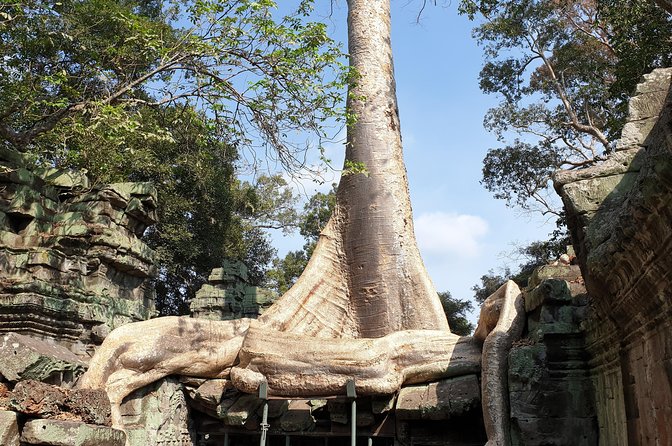
After Angkor Wat, the route continues to Angkor Thom’s South Gate for about 20 minutes. This is more than a quick photo stop. It gives you a clear sense of the entrance into the old city and provides a change of scale after the enclosed galleries of Angkor Wat.
All five gates of Angkor Thom are similar in form, but the South Gate has been restored more extensively and is described as the most complete. That makes it a good introduction to the city’s defensive and ceremonial layout.
The stop is short, so listen closely while the guide explains what you are seeing. You may not have time for a long, independent wander. The gate is also located inside Angkor Thom, so it works as a natural transition to Bayon rather than a separate major temple visit.
This is where a group of 15 or fewer helps. At a large site, a guide can easily lose people between the vehicle and the monument. In a smaller group, you have a better chance of staying close and catching the explanation before everyone moves on.
Bayon’s smiling faces and maze-like corridors
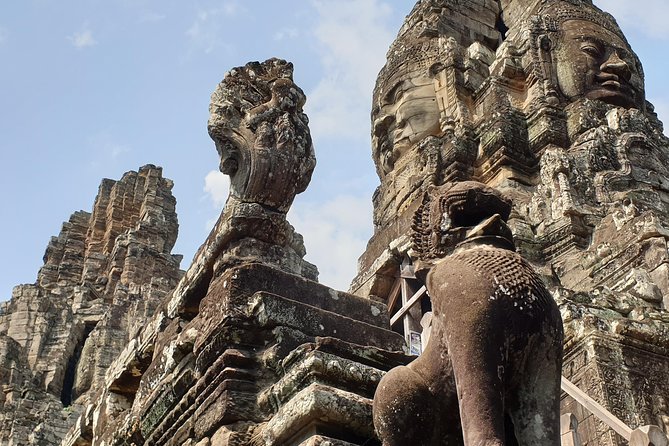
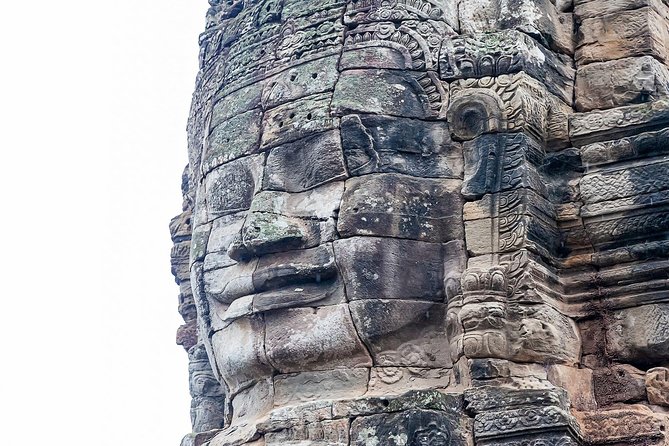
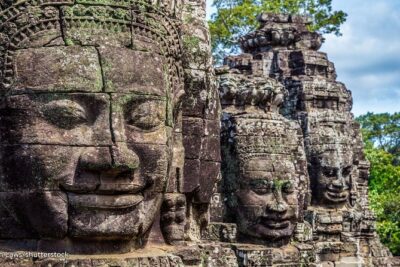
Bayon receives about an hour. Its famous stone faces are the main draw, but the temple is not simply a quick stop for a portrait. Inside, the layout becomes a maze of chambers, narrow corridors, and inner enclosures.
The temple is compact enough to visit in different orders, and its lack of a surrounding wall makes access fairly simple. Your guide can help you make sense of the tight plan, point out the best-known features, and prevent the visit from becoming a hunt for one famous face.
I like Bayon as the middle stop because it changes the mood of the day. Angkor Wat feels broad and formal. Bayon feels more enclosed and puzzling, with details appearing as you turn through the corridors. An hour gives you time to see the main areas without making the day drag.
You should still expect heat, uneven surfaces, and repeated steps. The tour is open to most people, but the pace is not designed as a special mobility program. Children must be accompanied by an adult, and the minimum age is five.
Same base, a different kind of day out:
- Angkor Wat Sunrise or Sunset Tour with Guide from Siem Reap
★ 5.0 · 12,109 reviews - Siem Reap: Angkor Wat: Small-Group Sunrise or Sunset Tour
★ 5.0 · 9,444 reviews - From Siem Reap: Kampong Phluk Floating Village Tour by Boat
★ 4.9 · 6,979 reviews - Sunset tour of Kampong Phluk stilts home village on the Tonle Sap
★ 5.0 · 4,865 reviews
Ta Prohm: roots, ruins, and a slower final stop
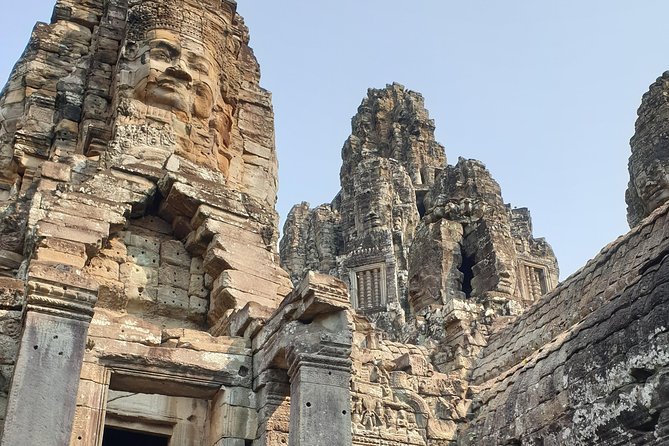
Ta Prohm comes after lunch and a rest break, with about an hour allocated to the temple. This is the atmospheric stop, with trees growing around and over parts of the old stonework. It is also the temple associated with the film Tomb Raider, a detail that may make it especially appealing if you want one of Angkor’s most recognizable settings.
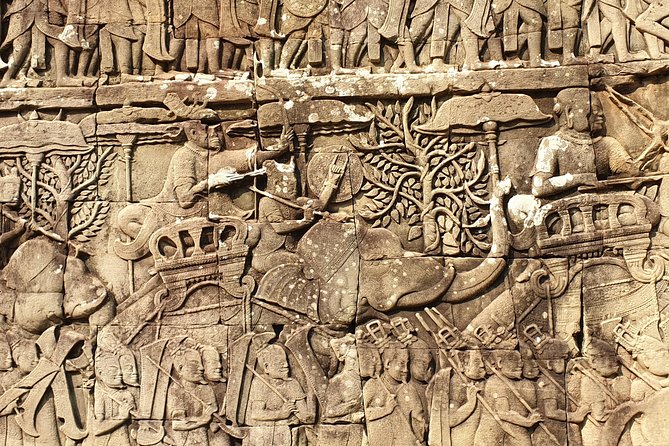
Ta Prohm once housed 2,740 monks. Today, the tree-covered ruins give you a very different experience from Angkor Wat’s ordered design and Bayon’s stone faces. The contrast is one reason this four-stop route works well. Each temple has a distinct character rather than feeling like another version of the same ruin.
The film connection can bring extra attention to the site, so your one-hour visit may feel short if you want to photograph every famous doorway and root-covered wall. The guide can help you focus on the key areas, but you should not expect a slow, private photo session.
Lunch is at your own expense. The guide normally stops at a local restaurant inside the national park because it is the practical choice during the tour. Prices can be higher than in town, so bring enough money and treat the meal as part of the convenience cost. You save time by not returning to Siem Reap, but you give up the wider choice of restaurants there.
What the vehicle, guide, and group size mean in practice
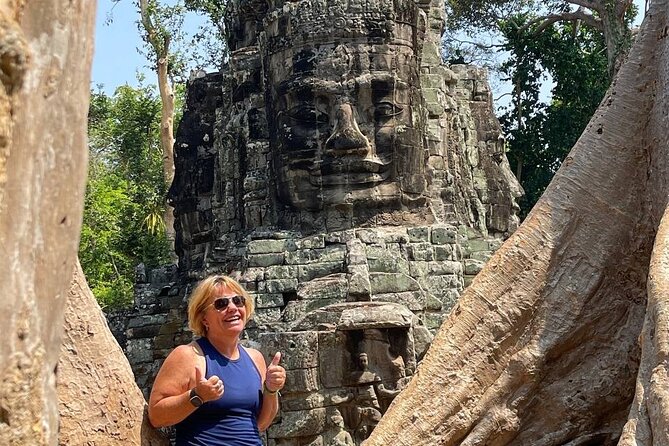
The tour uses an air-conditioned minibus or van, with pickup and drop-off at city hotels. That matters after several hours of walking. A shaded, cooled ride between sites gives you a chance to recover instead of spending the whole day in the heat.
Unlimited bottled water is included. This is especially useful because you are not expected to buy drinks at every stop. Lunch and other drinks are not included, so keep those separate from the advertised price.
The group can include as many as 15 people, though the actual size depends on bookings that day. Fifteen is not a private tour, but it is still a reasonable ceiling for a major temple circuit. You get social company without the scale of a full coach group.
Guide quality will shape the day. Joe has been singled out for thorough explanations, a welcoming manner, and strong local history knowledge. Sopheap Tann has also guided a highly praised outing, with Pan handling the driving. The exact guide is not guaranteed in the supplied details, so book this for the small-group format and service plan rather than expecting one named person.
A good guide also helps with small decisions: when to pause, where to stand for a photograph, how to follow the temple route, and when the group needs water or shade. Those details can turn a hot day into a manageable one.
Is the $25 tour good value?
At first glance, $25 for eight to nine hours looks like a bargain. The transport, guide, hotel pickup, drop-off, and water make it a useful package for someone who does not want to arrange a driver and temple route alone.
The temple pass changes the calculation. Add $37 and you are at $62 before lunch, drinks, insurance, and a tip for the guide and driver. That is still a reasonable price for a full day, especially if you value having the route organized and the major temples explained.
The tour is less appealing if you want complete control over timing. You will follow a set itinerary, stop for lunch where the guide normally takes the group, and spend about one to two hours at each main site. Independent visitors may prefer choosing a single temple, returning to a favorite, or taking a longer meal break.
For a first Angkor visit, I think the cost is easier to justify. You see the essential monuments, learn enough context to understand their differences, and avoid the work of negotiating transport between widely spaced sites. The $25 fee is best viewed as the guiding and transport portion of a larger day budget.
Heat, clothing, weather, and other practical details
Plan around the climate. The tour requires good weather, and if poor weather cancels it, you are offered another date or a full refund. Bring water-friendly patience for sudden changes in conditions, but do not count on the tour running in unsafe weather.
Respectful dress is required at the temples. Your shoulders and knees must be covered, and a scarf by itself is not accepted as a substitute for proper clothing. This rule is easy to handle if you dress for the temple from the start.
Children from age five can join, and children must be with an adult. The activity is suitable for most people, but the day involves walking around large temple grounds in hot conditions. Families should consider the heat, the eight to nine-hour duration, and the fact that lunch is not included.
Drone use is not allowed unless you first obtain permission from APSARA. Do not assume you can bring a drone and fly it over the temples during the tour.
Free cancellation is available up to 24 hours before the start time. Changes or cancellations inside that window are not accepted for a refund. The tour also needs a minimum number of bookings, so if it is canceled for that reason, you are offered another date or a refund.
Who should book this Angkor Wat day tour?
I would choose this for a first visit to Siem Reap when I wanted the main temples handled in one day. It suits you if you want hotel pickup, a cooled vehicle, a guide in English, and a group small enough for questions.
It is also a good fit if you would rather avoid the sunrise crowd. The later start is calmer, though you trade away the dawn view. The route suits people who want variety: the scale of Angkor Wat, the South Gate, Bayon’s faces, and Ta Prohm’s tree-covered ruins.
I would look elsewhere if you need a private schedule, want to spend half a day at Angkor Wat alone, or dislike paying for a fixed lunch stop. I would also check the total budget carefully if the $25 headline price is your limit.
For most first-time visitors, the balance is strong. The tour has a clear route, useful transport, practical heat relief, and guides who have earned praise for careful explanations and attentive service. Just add the temple pass and meal costs before deciding.
FAQ
What is included in the $25 tour price?
The price includes hotel pickup and drop-off in the city, transport in an air-conditioned minibus or van, an English-speaking guide, and unlimited bottled water.
Is the Angkor temple pass included?
No. The one-day temple entrance fee costs $37 and covers all the temples visited on the tour. It can be purchased on the day, and Visa cards are accepted.
What time does hotel pickup take place?
Pickup is normally between 7:30 and 8 a.m., depending on your hotel location. The ride to the ticket office takes about 15 to 30 minutes.
Which temples are visited?
The route includes Angkor Wat, Angkor Thom’s South Gate, Bayon Temple, and Ta Prohm. Angkor Wat receives about two hours, the South Gate about 20 minutes, Bayon about one hour, and Ta Prohm about one hour.
Is lunch included?
No. Lunch, breakfast, and drinks are not included. The guide normally stops at a local restaurant inside the national park, where prices may be higher than in Siem Reap.
How many people can join the tour?
The maximum group size is 15 people, though the actual number depends on bookings for that day.
What happens if the tour is canceled because of weather?
If poor weather causes a cancellation, you can choose a different date or receive a full refund. You can also cancel up to 24 hours before the start time for a full refund.
Just added in Siem Reap
- Twilight Tastes of Siem Reap Include Dinner★ 5.0 · 13 reviews
- Ultimate Sunrise to Angkor Wat, Angkor Thom and Bayon Temple★ 5.0 · 3 reviews
- Trekking Tour at Phnom Kulen National Park from Siem Reap★ 5.0 · 3 reviews
- Full-Day Private Tour of Angkor Wat with Pick Up★ 5.0 · 12 reviews
- Private Day Trip to Angkor Temples with Expert Guide★ 5.0 · 4 reviews
- Siem Reap City Tour with War Museum and Killing Field★ 5.0 · 27 reviews
- Waterfall & River of 1000 Siva Linga- Kulen Mountain Private Tour★ 5.0 · 3 reviews
- Angkor Wat Experience Temple Pass and Siem Reap Food Tour★ 5.0 · 13 reviews
Tours in Siem Reap, compared.
Angkor Wat Sunrise or Sunset Tour with Guide from Siem Reap
Read our review →
Angkor Wat: Small-Group Sunrise or Sunset Tour
Read our review →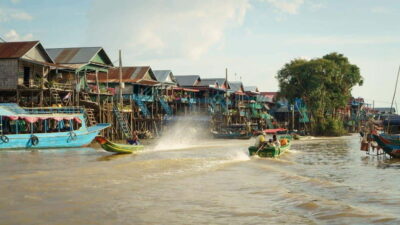
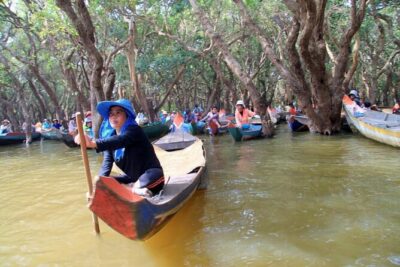
Sunset tour of Kampong Phluk stilts home village on the Tonle Sap
Read our review →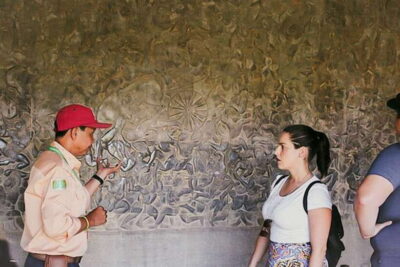
Angkor Wat 2-Day Tour with Sunrise and Sunset
Read our review →
Angkor Wat Sunrise tour with Small – Group and Guide tours
Read our review →