Reviewed · TOURS IN SIEM REAP
Cambodia Highlight 6 Days Tour from Siem Reap to Phnom Penh
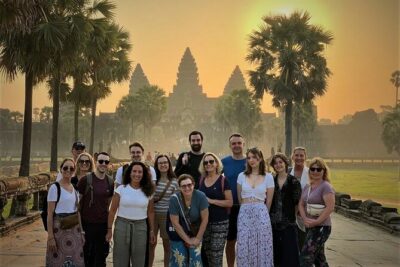
Angkor Wat at sunrise is only the beginning. This six-day private tour links Cambodia’s grandest temples with Phnom Penh’s royal landmarks and sobering Khmer Rouge sites, giving you a strong first look at the country without asking you to plan every transfer yourself.
I like the private guide and vehicle, since your pace and questions matter at a place as large as Angkor. I also like the mix of famous stops and quieter ones, especially Ta Nei, Banteay Samre, and Ta Som. The main drawback is the packed schedule, with several long temple days and a very early start on Day 2.
I love that entrance fees, five breakfasts, bottled water, fresh tissues, transport, and guide service are included. Guides named Leap and Sara receive especially strong praise for clear English, cultural insight, photographs, and thoughtful touches such as cooling towels. Still, confirm your hotel category before paying, since the options range from three to five stars and the room upgrade structure is not fully explained.
Key points to know before booking
- Sunrise starts at 4:30 a.m. on Day 2, followed by a full day among Angkor’s major temples.
- Ta Nei and Banteay Samre add quieter temple time, balancing the crowds and fame of Angkor Wat and Ta Prohm.
- The tour links two very different sides of Cambodia, from the ancient Khmer empire to Phnom Penh’s Khmer Rouge memorials.
- Private transport saves planning time, with an English-speaking guide, driver, water, and fresh tissues included.
- Hotel choices range from three to five stars, but you should check which category matches the advertised price.
- The tour is best for first-time visitors, couples, families, and small private groups with limited time.
What this six-day route does well
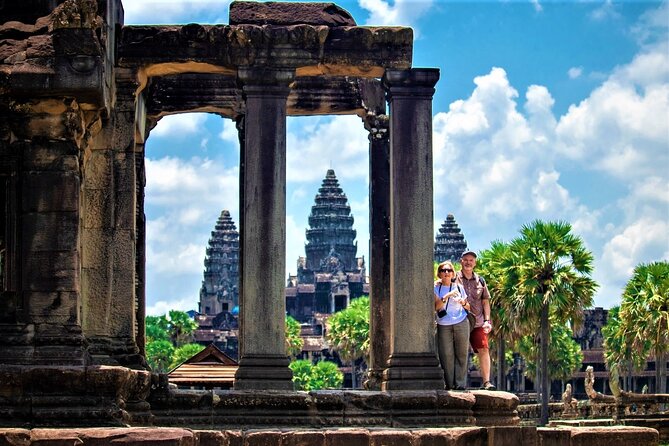
At $759.05 per person, this is not a bare-bones temple package. The price covers five nights of accommodation, private transport, an English-speaking licensed guide, entrance fees for the listed sites, five breakfasts, drinking water, and fresh tissues.
That can be good value if you want to see both Siem Reap and Phnom Penh in less than a week. Booking separate hotels, drivers, temple tickets, and city tours could take time, and the route includes many places you might skip when arranging everything yourself.
The value depends partly on the hotel level. The Siem Reap choices include Royal Crown Hotel & Spa at the three-star level, Regency Angkor Hotel at the four-star level, and Angkor Paradise Hotel at the five-star level. In Phnom Penh, the options include King Grand Boutique Hotel, Sun & Moon Urban Hotel, and Sun & Moon Riverside, again across three, four, and five-star categories.
Ask exactly which room category is included. A single room costs 40 percent more than the adult price, while double, twin, and triple accommodation are included in the stated arrangement.
A few more things to do in Siem Reap worth a look
- Highlight of Angkor Temples 6 Days Cambodia Tour
★ 5.0 · 4 reviews
Day 1: A simple arrival in Siem Reap
Your guide and driver meet you at Siem Reap Angkor International Airport and take you into the city. The listed airport service lasts about two hours, including the transfer and an introduction to local life and the city.
This is a useful soft landing after a flight. You do not need to find a taxi, negotiate a fare, or work out where your hotel is located. You can ask your guide about the next morning, which matters because the Angkor sunrise departure begins at 4:30 a.m.
The first night is at one of the listed Siem Reap hotels or a similar property. Since the tour begins with a very early wake-up, a comfortable room and a short, clear evening briefing are more important than a long list of hotel facilities.
Day 2: Angkor Wat before breakfast
The tour’s biggest morning begins in darkness. You leave at about 4:30 a.m. for sunrise at Angkor Wat, then continue through the temple complex before returning to the hotel for breakfast.
The early departure is tiring, but it lets you experience Angkor Wat at its most atmospheric and avoids putting the main temple into the hottest part of the day. Sunrise conditions can vary, so treat the sky as a bonus rather than a guarantee.
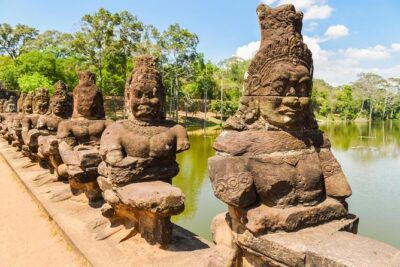
After breakfast, the route moves through Angkor Thom. The South Gate is one of the most recognizable entrances, with restored figures and surviving heads lining the approach. Your guide can give meaning to the gate’s design instead of leaving you with a quick photo stop.
Bayon follows, with its famous stone faces. The temple is not as open and immediately legible as Angkor Wat, so a guide is especially useful here. You then continue into Angkor Thom, the former Khmer imperial capital, before seeing Baphuon and Phimeanakas near the old royal enclosure.
The Terraces of the Elephants and the Leper King are shorter visits, but they help explain how the royal center once worked. Their carved surfaces reward close attention, even when the heat and the number of stops begin to catch up with you.
Ta Nei offers a change of mood. This small temple lies deeper in the jungle and is less visited than the headline sites. It can be difficult to find independently, making it one of the most useful stops on a private route.
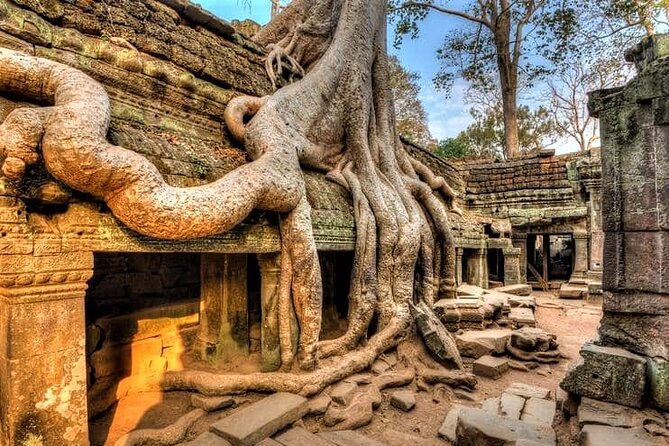
The final major visit is Ta Prohm, famous for trees growing around its stonework. The temple has been left largely intact apart from visitor paths and structural work, so it provides a striking contrast with the more cleared and formal Angkor Wat.
This is a very full day. The listed stops add up to many hours, before accounting for driving, breakfast, and pauses. Wear shoes with a firm sole, carry water, and expect uneven stone and outdoor walking. The supplied water, tissues, and cooling towels are practical comforts in this setting.
Day 3: The quieter Angkor circuit
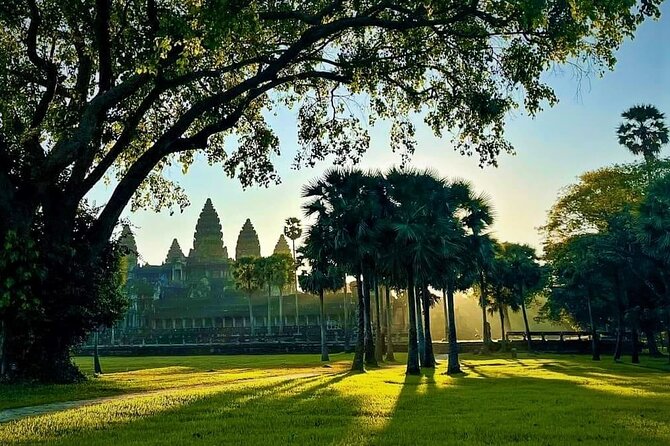
Day 3 reaches farther into the Angkor area and begins with Banteay Samre. Its restored structure is among the more complete temple complexes, though visible maintenance issues may affect the visit. It is a good place to look closely at layout and carved details without the same level of attention given to Angkor Wat.
Banteay Srei is one of the most delicate stops on the entire route. Its smaller scale and detailed carvings make it feel different from the large royal monuments. The temple is farther from the central Angkor group, so the drive adds time, but the change of pace is worthwhile.
Preah Khan is larger and more complex. Built during the reign of Jayavarman VII, it gives you another look at the scale of the Khmer building program. Corridors, courtyards, and partially restored sections make this a place where the guide’s explanation helps you understand what you are seeing.
Neak Pean is arranged around a man-made pond and was once part of a larger water system. The approach and setting matter as much as the central structure, so do not judge this stop by the size of the visible temple alone.
Ta Som is smaller and quiet. Its unrestored feel and tree growth give it a more relaxed character than the major monuments. It is one of the better places on the itinerary for slowing down and looking without trying to cover a huge complex.
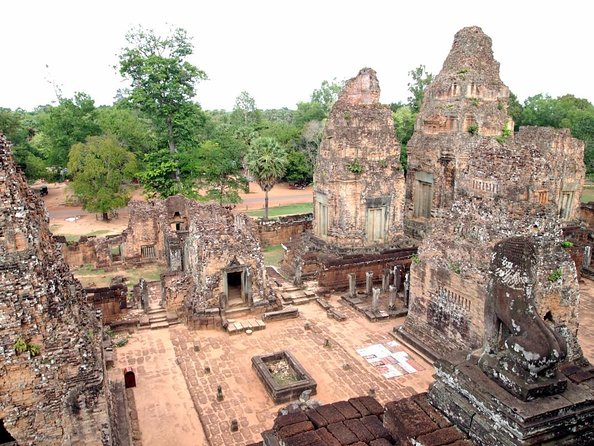
Pre Rup provides a strong architectural finish, with bold levels and a clear sense of height. Eastern Mebon follows, an older temple once positioned on an artificial island in the now-dry East Baray reservoir.
The day again asks a lot from you. Seven temple stops can feel repetitive if you are not interested in architecture, stone carving, or Cambodian history. For anyone who is, the sequence shows how temple design changed across time and how water shaped the Angkor area.
Same base, a different kind of day out:
- Angkor Wat Sunrise or Sunset Tour with Guide from Siem Reap
★ 5.0 · 12,109 reviews - Siem Reap: Angkor Wat: Small-Group Sunrise or Sunset Tour
★ 5.0 · 9,444 reviews - From Siem Reap: Kampong Phluk Floating Village Tour by Boat
★ 4.9 · 6,979 reviews - Sunset tour of Kampong Phluk stilts home village on the Tonle Sap
★ 5.0 · 4,865 reviews
Day 4: Leaving the temples for the road to Phnom Penh
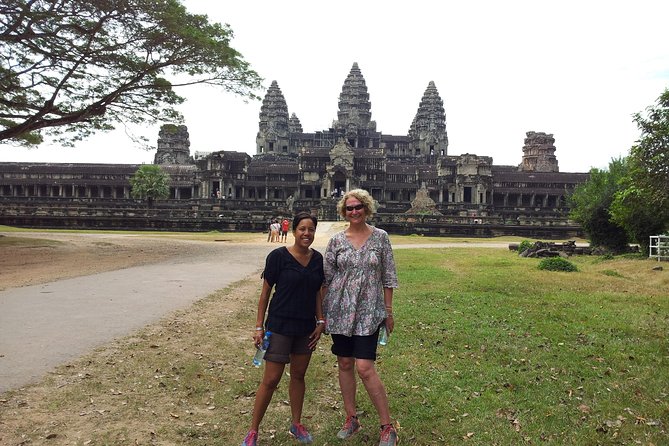
Day 4 shifts away from the main archaeological sites. Spean Praptos, also called Kampong Kdei Bridge or Dragon Bridge, is a laterite bridge more than 1,000 years old. Its plain function makes it a useful reminder that the Khmer building tradition was not limited to temples.
A stop along Stone Statue Shop Road introduces local stonework. The shops display pieces made for Buddhist temples, and some works are large. This is a shopping-oriented stop, so you should decide in advance how much time and interest you have for browsing.
The unusual stop is Skun Spider Sanctuary, a market known for its prepared spiders. You can look, ask questions, and decide for yourself how close you want to get to the food stalls. It is a memorable roadside encounter, though people who dislike insect markets may find it uncomfortable.
The route then continues toward Phnom Penh, where your hotel is one of the listed three, four, or five-star options. Because this day combines sightseeing with an intercity transfer, expect less time at each attraction than on the temple days.
Day 5: Phnom Penh’s royal center and difficult past
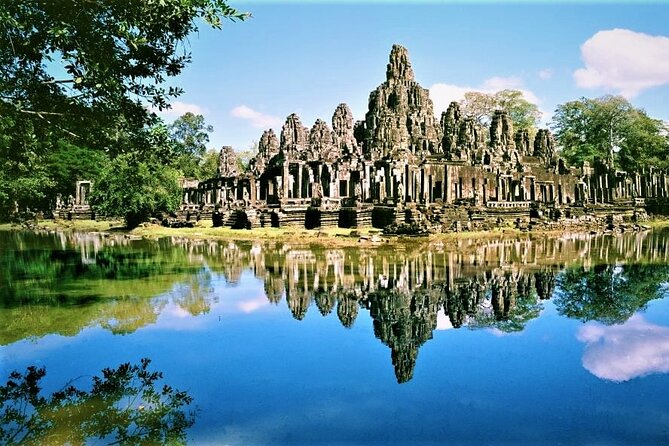
Phnom Penh sits where the Mekong and Tonlé Sap meet, and the tour begins with an introduction to the capital. The city portion includes royal buildings, monasteries, public monuments, markets, and genocide memorials, so the day has a wide emotional range.
The Royal Palace and Silver Pagoda provide the formal side of Phnom Penh. The palace began construction in 1886 after King Norodom moved the royal capital, while the Silver Pagoda is known for its garden and interior decoration. Dress respectfully and follow any rules given at the entrance.
Wat Phnom sits on the city’s only hill, a tree-covered knoll about 27 meters high. Its story reaches back to a 1373 foundation and gives you a small, calm break from the roads and traffic.
Wat Ounalom is another early monastery, dating to 1422, and sits close to the riverfront. Independence Monument then shifts the focus to Cambodia’s modern national story, marking independence from France in 1953.
The most difficult part of the day is the visit to Tuol Sleng Genocide Museum, a former secondary school used as Security Prison 21 under the Khmer Rouge. Choeung Ek Genocidal Center, about 17 kilometers south of Phnom Penh, follows with its former orchard and mass graves.
These sites are essential for understanding Cambodia, but they are not light sightseeing. Give yourself room to process what you see. The schedule includes about an hour and a half at Tuol Sleng and about an hour and 25 minutes at Choeung Ek, enough for a serious visit but not a leisurely one.
Central Market provides a sharp change of tone. The 1937 domed building has four arms filled with stalls, and it is a practical place to see everyday commerce. The final stop, the Statue of King Father Norodom Sihanouk, adds a brief modern memorial before the day ends.
A private guide matters most here. The sites require context, and the schedule moves quickly from royal Cambodia to the Khmer Rouge period. Guides such as Leap and Sara are praised for explaining culture and history in clear English, while drivers including Art, Orr, Pip, Pheap, and La are described as careful and attentive. Your assigned team may differ, so confirm names after booking.
Day 6: A low-stress departure
After breakfast, you have free time until a hotel transfer to Techo International Airport. The transfer is listed as being without a guide and takes about three hours in the schedule.
That final morning is not a sightseeing day, but the free time can help you pack and rest after a demanding route. Check your flight timing carefully and confirm the pickup arrangement with the operator, since the airport transfer is the one part that does not include a guide.
The tour is designed for private groups only, rather than a mixed coach. That gives you more control over questions, photo stops, and the pace at smaller temples, though the fixed number of sites still makes this an active trip.
Who will get the most from this tour
I would choose this tour if you have six days, want both Siem Reap and Phnom Penh, and prefer a prepared route over independent planning. It suits first-time visitors who want the major Angkor temples but also want lesser-known sites and a clear introduction to Cambodia’s modern history.
It also works well for families or couples who value a private vehicle and guide. The driver handles the route while the guide explains the monuments, and small private groups avoid the social uncertainty of a larger departure.
I would hesitate if you want slow mornings, long meals, or several free afternoons. The 4:30 a.m. start and repeated temple walks demand energy. I would also compare the price with other options if you are comfortable arranging hotels and transport yourself, especially if you do not need four or five-star accommodation.
The operator has a 100 percent recommendation rate from 40 reviews, with particular praise for guides Leap and Sara, safe driving, photography help, water, tissues, and cooling towels. Those details point to the kind of service that makes hot, demanding sightseeing easier, but they do not remove the need to confirm your exact guide, hotel, and vehicle arrangements.
Should you book it?
Book this Cambodia tour if you want a private, tightly organized introduction that covers Angkor Wat, quieter temples, Phnom Penh’s royal center, and the Khmer Rouge memorial sites in one route. The included entrance fees, breakfasts, transport, and guide service make the $759.05 price easier to justify, particularly at the three-star level.
Before booking, confirm the hotel category, single-room supplement, airport transfer details, and the identity of your guide. If you accept early mornings and a packed schedule, this is a practical way to see a great deal of Cambodia in six days. If you prefer a slower trip, select fewer temples and add extra nights instead.
FAQ
Where does the tour begin?
The tour begins with pickup at Siem Reap Angkor International Airport in Siem Reap, Cambodia.
Where does the tour finish?
The tour finishes with a transfer from your Phnom Penh hotel to Techo International Airport.
Is this a private tour?
Yes. Only your group participates in the private tour or activity.
What accommodation is included?
Accommodation is based on double, twin, or triple occupancy. Siem Reap options range from Royal Crown Hotel & Spa to Regency Angkor Hotel and Angkor Paradise Hotel, or similar properties. Phnom Penh options range from King Grand Boutique Hotel to Sun & Moon Urban Hotel and Sun & Moon Riverside, or similar properties.
Are entrance fees included?
Yes. Entrance fees for the sites listed in the tour program are included.
Are meals included?
Five breakfasts are included. Lunches and dinners are not listed among the inclusions.
Is a single room available?
Yes. A single room is available for an additional charge of 40 percent of the adult price.
Just added in Siem Reap
- Twilight Tastes of Siem Reap Include Dinner★ 5.0 · 13 reviews
- Ultimate Sunrise to Angkor Wat, Angkor Thom and Bayon Temple★ 5.0 · 3 reviews
- Trekking Tour at Phnom Kulen National Park from Siem Reap★ 5.0 · 3 reviews
- Full-Day Private Tour of Angkor Wat with Pick Up★ 5.0 · 12 reviews
- Private Day Trip to Angkor Temples with Expert Guide★ 5.0 · 4 reviews
- Siem Reap City Tour with War Museum and Killing Field★ 5.0 · 27 reviews
- Waterfall & River of 1000 Siva Linga- Kulen Mountain Private Tour★ 5.0 · 3 reviews
- Angkor Wat Experience Temple Pass and Siem Reap Food Tour★ 5.0 · 13 reviews
Tours in Siem Reap, compared.
Angkor Wat Sunrise or Sunset Tour with Guide from Siem Reap
Read our review →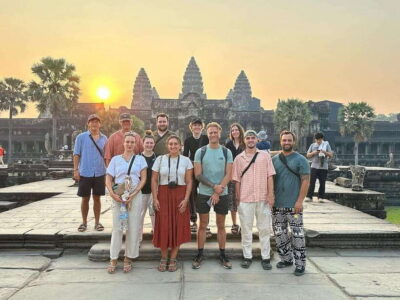
Angkor Wat: Small-Group Sunrise or Sunset Tour
Read our review →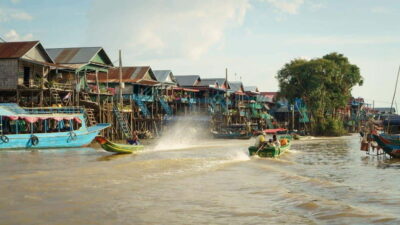
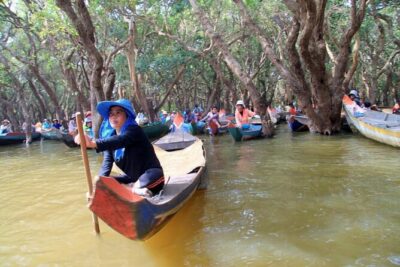
Sunset tour of Kampong Phluk stilts home village on the Tonle Sap
Read our review →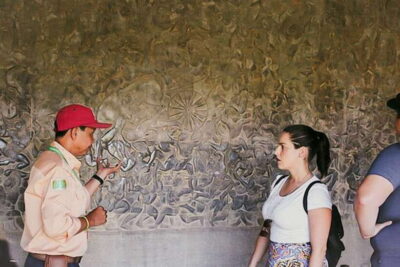
Angkor Wat 2-Day Tour with Sunrise and Sunset
Read our review →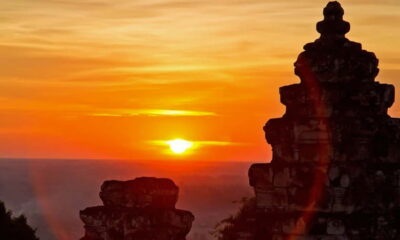
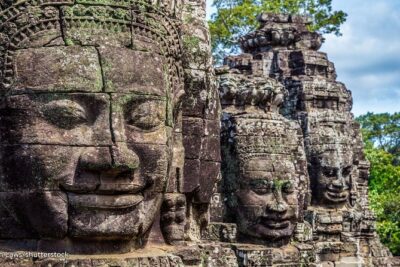
Angkor Wat Sunrise tour with Small – Group and Guide tours
Read our review →