Reviewed · TOURS IN SIEM REAP
Siem Reap: Grand circle tour Sun set on bakeang hill & Guide
The best part of this tour is its mix of major and quieter Angkor temples. You move from the brick towers of Pre Rup to the tree-wrapped gate at Ta Som, then finish above the forest at Phnom Bakheng as the light fades. Guides such as Sam, Sary, Vone, Sayon, and Mr Sok have earned strong praise for clear explanations, good humor, and help with photographs.
I like the comfortable transport and sensible route, especially in Cambodia’s heat. I also like the amount of temple time: you get guided visits at six sites rather than a quick photo stop at each one. The main consideration is pace. Eight hours with six temples and a sunset finish makes this a full day, and lunch and the temple pass cost extra.
Key points to know before booking
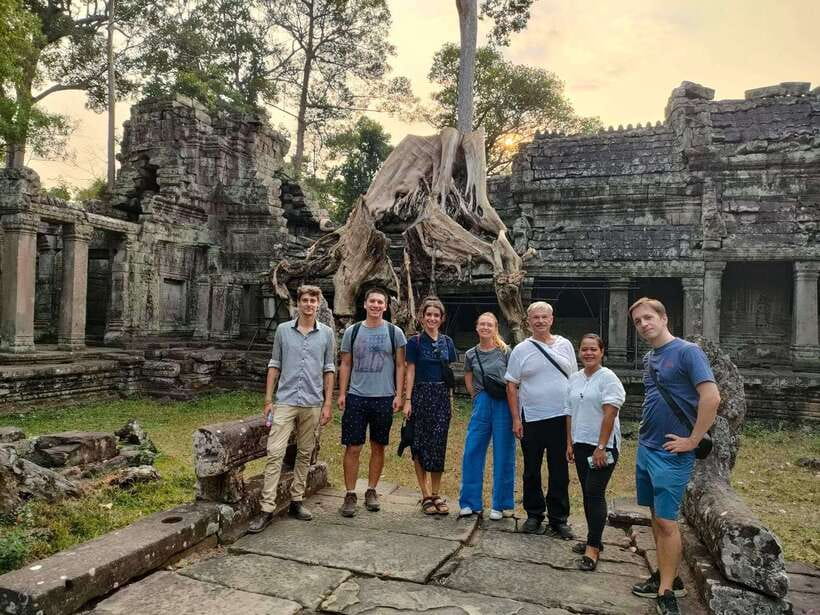
- Six temples in eight hours: Visit Pre Rup, East Mebon, Ta Som, Neak Pean, Preah Khan, and Phnom Bakheng in one well-packed day.
- A guide makes the difference: Sam, Sary, Vone, Sayon, Mr Sok, and other English-speaking guides have been praised for explaining culture, architecture, and Cambodian history in an engaging way.
- Sunset is the grand finale: Phnom Bakheng sits on a hill and offers the tour’s closing view, but the climb and long day require comfortable shoes.
- Good value at $19: Hotel pickup, drop-off, air-conditioned transport, bottled water, wet towels, and guiding are included, but you pay separately for the Angkor temple pass and food.
- A quieter side of Angkor: The Grand Circuit usually feels less crowded than the best-known Angkor Wat area, giving you more space to look closely at carvings and structures.
- Dress for temple rules: Shorts, short skirts, and sleeveless shirts are not allowed, so wear clothing that covers your shoulders and knees.
Why the Grand Circuit works so well
Angkor Wat gets the attention, but the temples east and north of it reveal how large and varied the Khmer temple city really was. This tour takes you beyond the famous postcard view and links six sites with different purposes, designs, and moods.
I like the order of the day. You begin with Pre Rup and East Mebon, move through the smaller and more atmospheric Ta Som and Neak Pean, then spend the longest visit at Preah Khan before climbing to Phnom Bakheng. The route gives you a gradual change from broad brick platforms to enclosed galleries, water symbolism, jungle growth, and finally a hilltop sunset.
The tour costs $19 per person, which is a strong price for eight hours of transport and guiding. The important catch is the Angkor pass. It is not included, so budget for that separately through the official Angkor Enterprise website. You also buy your own lunch and drinks, although chilled bottled water and a wet towel are supplied.
The group can be private if you choose that option. Otherwise, the tour offers the social benefit of meeting people from different countries while keeping the day organized. Several people specifically liked the small group feel, since it made it easier to hear the guide and ask questions.
A few more things to do in Siem Reap worth a look
- Angkor Wat Sunrise or Sunset Tour with Guide from Siem Reap
★ 5.0 · 12,109 reviews - Siem Reap: Full-Day Angkor Wat Guided Tour with Sunset
★ 4.9 · 3,803 reviews - Angkor Wat Sunrise tour with Small – Group and Guide tours
★ 5.0 · 3,655 reviews
Pre Rup: a strong opening among brick towers
Pre Rup is a mountain temple dedicated to Shiva, built from warm-colored brick and laterite. Its name is often associated with turning the body, which has led some people to describe it as a crematorium. The tour gives a more careful explanation: a stone structure that resembles a coffin was used by Hindus for meditation during the full moon.
That detail is useful because Pre Rup can look severe at first glance. Once you understand its religious purpose, the tall terraces and layered towers make more sense. The temple was also built by a king for himself, giving the site a personal and royal character.
You have about an hour here with the guide. That is enough time to walk the main levels, study the brickwork, and hear how the temple was used without rushing through the entire complex. The upper sections can be uneven, so shoes with a firm sole are a smart choice.
Pre Rup is also a good first stop because it introduces a theme that returns throughout the day: Angkor temples were not simply stone monuments. They were places for worship, meditation, royal ceremonies, water management, and remembrance.
East Mebon: an island temple without the reservoir
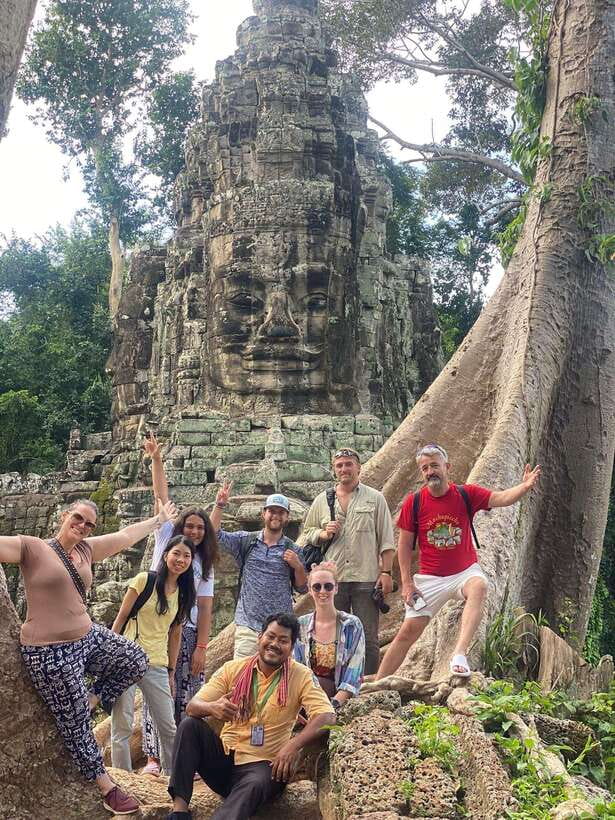
East Mebon was built in the 10th century for royal ancestors. It originally sat in the middle of a large reservoir, so the temple would once have appeared as an island reached by boat or causeway. Today, the water is gone, but the elevated setting still helps you picture the original design.
This stop adds useful context after Pre Rup. Rather than focusing only on a king’s personal temple, you see how architecture could honor earlier rulers and connect a royal family to sacred space.
East Mebon is known for its brick towers and guardian animals, including stone elephants positioned around the base. Your guide can point out details that are easy to miss when walking alone, especially among the upper towers and worn carvings.
The one drawback is that the reservoir is no longer there, so the original visual effect is difficult to recreate. Still, the temple’s position and structure make it a worthwhile second stop, particularly if you want to understand how water shaped Angkor’s design.
Ta Som: a small temple with a memorable tree
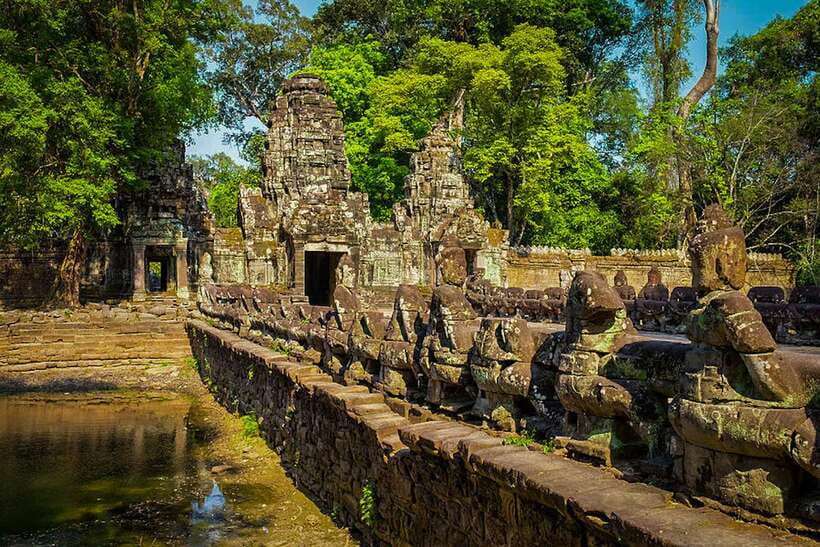
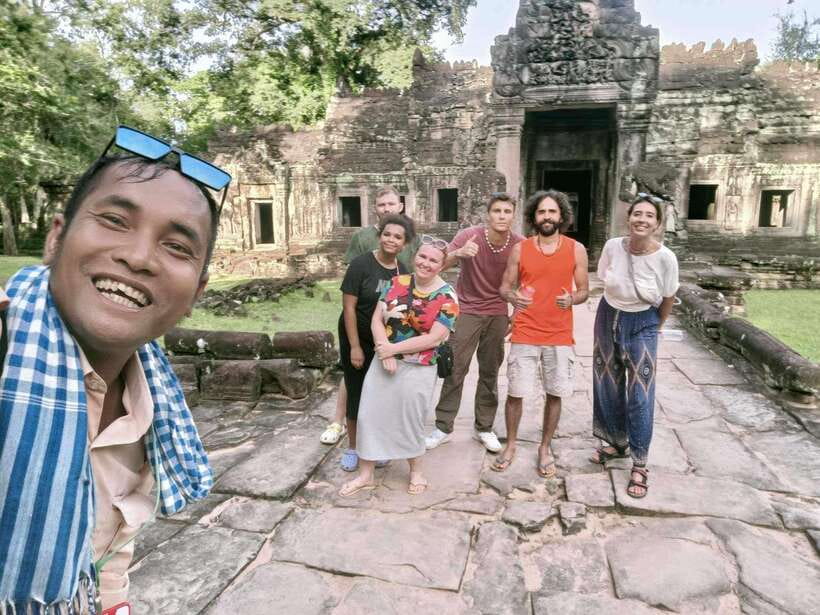
Ta Som is one of the day’s most charming stops. It was built for the king’s sister and features carvings of dancers with long hair. Its best-known feature is the large tree growing over the eastern gate.
I like Ta Som because it feels more intimate than the grander temples. The tree and stonework have become closely linked, but the carvings deserve your attention too. Look for the dancing figures and the way roots, walls, and doorway frame one another.
The temple has been carefully restored, which makes it easier to read the layout and appreciate the surviving decoration. You get about an hour here, enough for the guide to explain the site and for you to take photographs without treating the whole visit as a single tree picture.
Ta Som is also a good place to notice the balance between conservation and nature. The tree is part of the temple’s present identity, but the structure still needs protection and repair. Your guide can help you understand what you are seeing rather than leaving you with the simple idea that the jungle has taken over.
Same base, a different kind of day out:
- Siem Reap: Angkor Wat: Small-Group Sunrise or Sunset Tour
★ 5.0 · 9,444 reviews - From Siem Reap: Kampong Phluk Floating Village Tour by Boat
★ 4.9 · 6,979 reviews - Sunset tour of Kampong Phluk stilts home village on the Tonle Sap
★ 5.0 · 4,865 reviews - Siem Reap: Angkor Wat 2-Day Tour with Sunrise and Sunset
★ 4.9 · 4,429 reviews
Neak Pean: sacred water and a pause in the middle
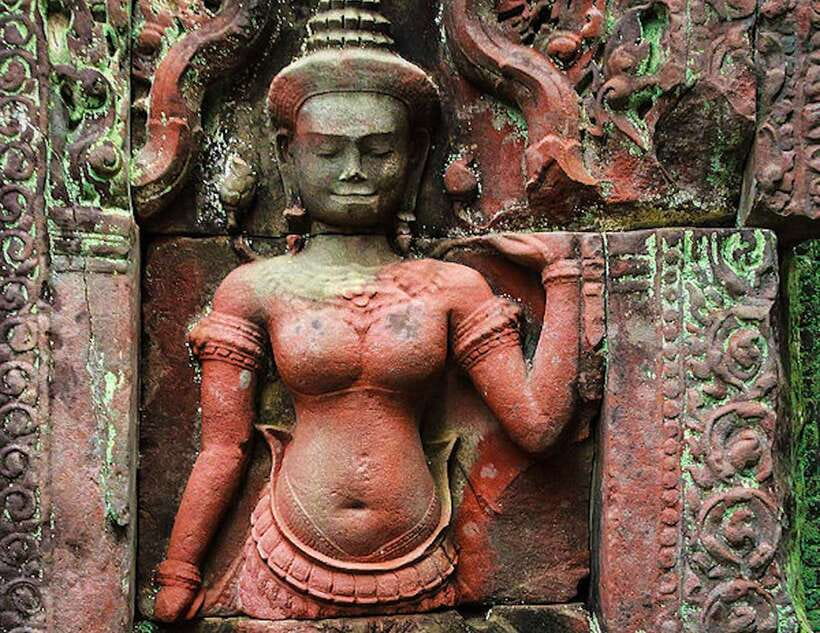
Neak Pean changes the rhythm of the tour. Instead of a broad temple mountain or enclosed gallery, you approach a small island shrine surrounded by water. During the Angkor period, the pools around it were associated with bathing and health.
The design centers on water and balance. Four surrounding pools represent elemental forces, with the supplied description identifying earth, fire, and water among them. The wording repeats water for the fourth element, so I would focus less on memorizing a list and more on the temple’s central idea: water was connected to health, ritual, and order.
The approach across the raised walkway gives you time to take in the setting before the guide explains the shrine. Neak Pean is not the largest temple of the day, but it is one of the most unusual because the surrounding pools are part of its meaning rather than just scenery.
A one-hour break follows at Neak Pean. This is an important practical feature. By this point, you have already visited three temples, and the pause gives you time to rest, eat, and cool down. Lunch is not included, and one afternoon stop has been used for a restaurant break, so you should bring money for food. Drinks beyond the supplied water are also your responsibility.
Preah Khan: the day’s biggest temple visit
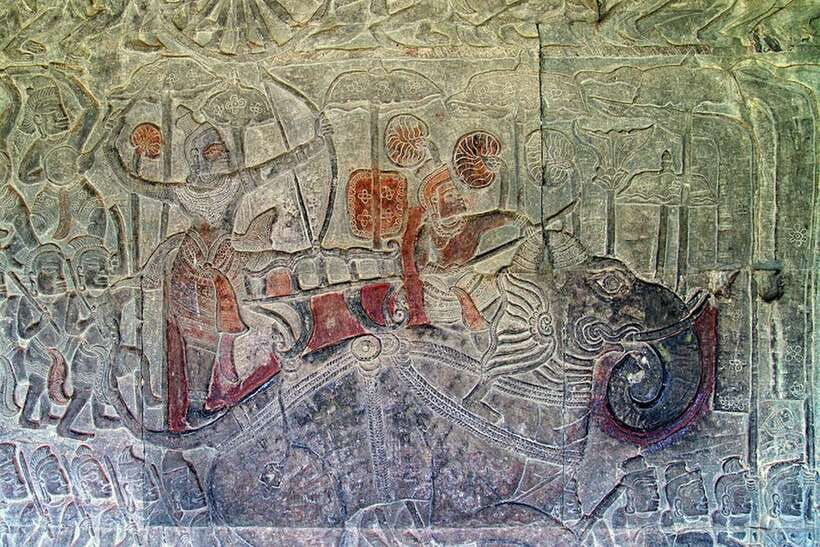
Preah Khan is the largest temple on this circuit and receives about 90 minutes of guided time. King Jayavarman VII built it for his father, and its name translates as Sacred Sword. The site combines long corridors, courtyards, towers, and carved details, making it the tour’s most substantial architectural stop.
This is where a good guide matters most. Preah Khan can feel like a maze, and it is easy to walk past a doorway or carving without understanding its role. Guides such as Mr Sok, Sam, and Sary have been praised for explaining the culture and stories behind the stone in a way that keeps the visit moving.
You should expect a mix of open courtyards and shaded passageways. The variety gives you a welcome break from standing in direct sun, although the ground can still be rough and uneven. Keep your shoes on and watch your footing.
Preah Khan is also a good place to see how religious traditions could overlap. The temple includes Buddhist and Hindu imagery, reflecting changes in royal worship and the complex spiritual life of Angkor. Rather than presenting the site as one simple monument, the guide can show you how different periods left their mark.
Phnom Bakheng: sunset from Angkor’s hilltop temple
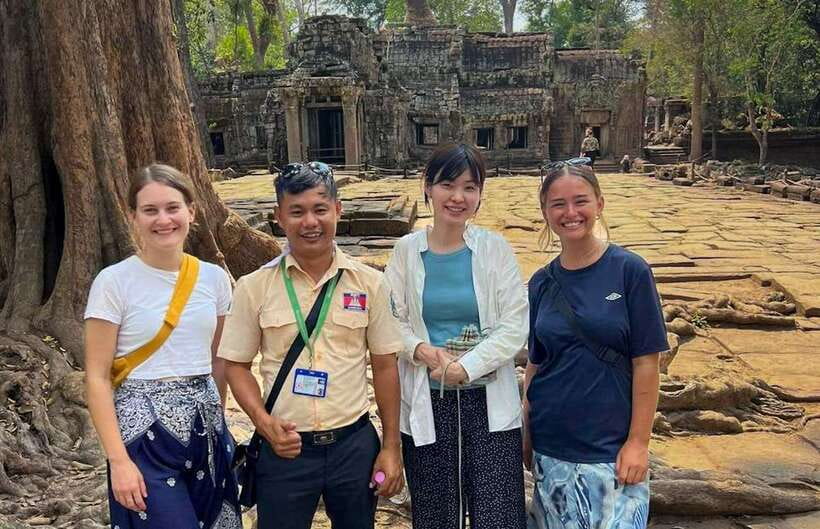
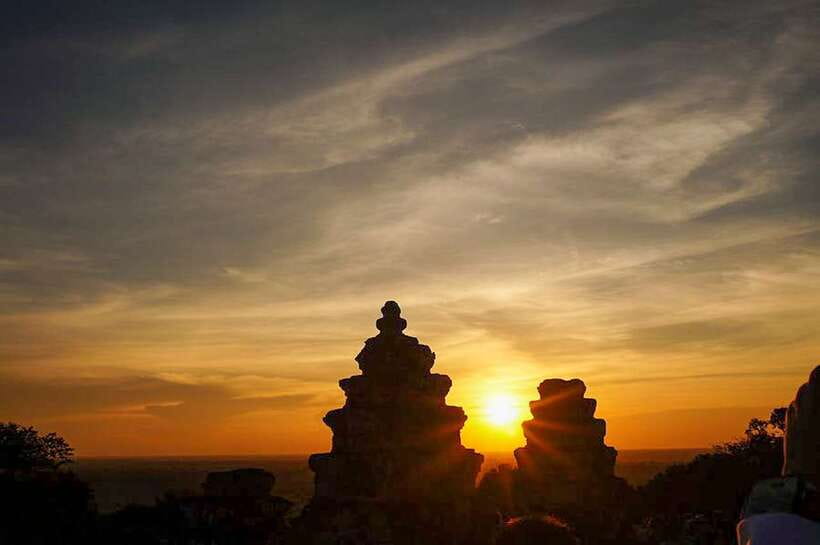
The final visit is Phnom Bakheng, a Hindu and Buddhist temple on a hill. Its 33 towers are said to represent the heavens, and the elevated position makes it the natural place to end a day of temple visits.
This is the tour’s most popular photo moment. You can watch the light change over the trees and surrounding plains, then use the temple’s upper levels as a dramatic foreground. Sunset conditions vary, so you should treat the view as a bonus rather than a guarantee of a perfect orange sky.
The climb is an important consideration. The tour information specifically recommends comfortable shoes, and you will appreciate that advice after six temple visits. If stairs, uneven paths, or a long day are difficult for you, Phnom Bakheng may be the most demanding part of the route.
The site has both Hindu and Buddhist associations, so it also brings the day back to the religious ideas introduced at Pre Rup and Neak Pean. You finish not just with a view, but with a sense of how Angkor’s temples connected earthly kingship to the heavens.
Guides, transport, and the practical rhythm
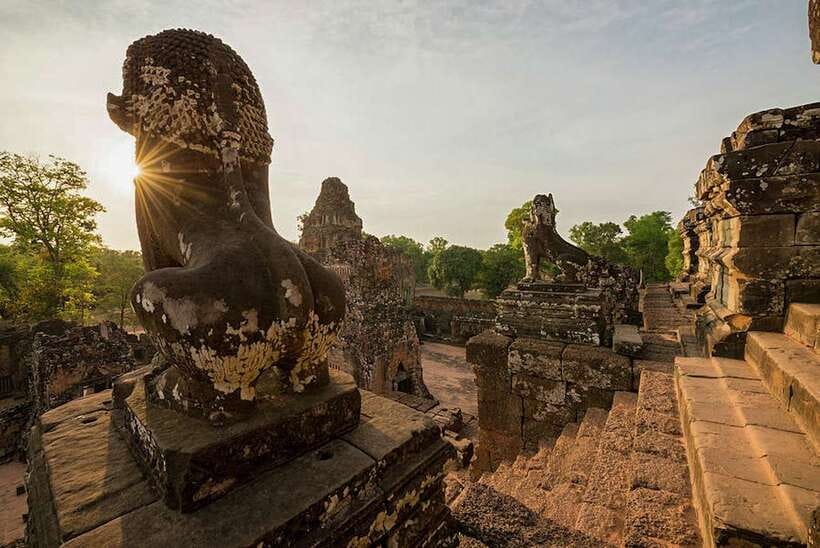
Pickup is from your accommodation in Krong Siem Reap, with the driver arriving about 30 minutes before the scheduled start. The ride to the first temple takes about 30 minutes, and the return journey takes about 45 minutes.
An air-conditioned minibus is a real advantage. Cambodia’s heat can make temple visits tiring, so a cool vehicle between sites helps you recover. Chilled bottled water and a wet towel are included, small touches that matter after walking in the sun.
The English-speaking guides are the strongest part of the experience. Sam has been praised for explaining Cambodian culture as well as the temples. Sary is known for being attentive and clear. Vone brings humor and patience, while Sayon has been praised for organization and a friendly manner. Mr Sok is another guide whose explanations have helped people connect the buildings with local culture and history.
You cannot guarantee a particular guide unless the operator confirms it, but the repeated pattern is clear: ask questions. The tour is more valuable when you use the guide’s knowledge instead of simply following the group from doorway to doorway.
What to wear and what to bring
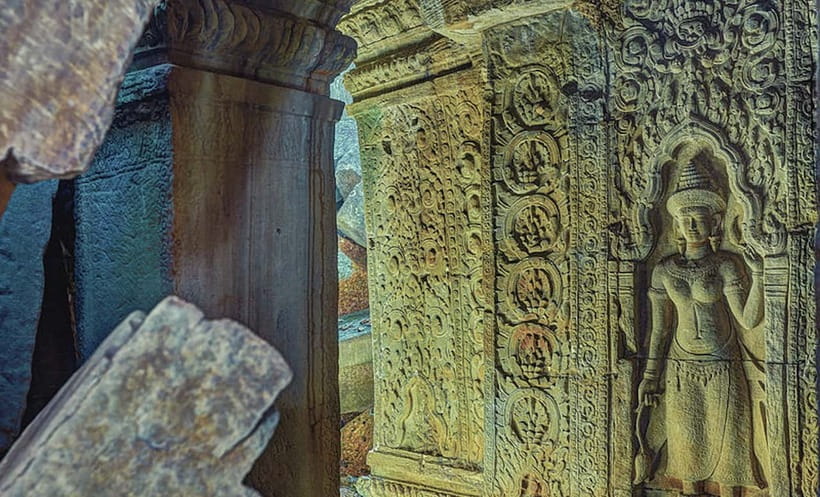
Angkor is an active religious site, so you need clothing that covers your shoulders and knees. Shorts, short skirts, and sleeveless shirts are not allowed. Loose trousers or a longer skirt with a top that covers the shoulders will keep you comfortable and within the dress rules.
Bring:
- Comfortable walking shoes
- Sunscreen
- Sunglasses
- A charged smartphone for photographs
- Money for lunch and extra drinks
- Your temple pass
Alcohol and drugs are not allowed. The tour is not suitable for people over 95 years old, according to the stated conditions.
You can cancel up to 24 hours before departure for a full refund, and the reserve-now, pay-later option keeps your plans flexible. These terms are useful if your Siem Reap schedule may change, but always check the booking conditions at the time you reserve.
Who should book this tour
I would choose this tour if you have one full day for Angkor’s Grand Circuit and want a guide to explain what you are seeing. It suits first-time visitors who want more than Angkor Wat, photographers looking for varied settings, and anyone who prefers a planned route over arranging several temple rides alone.
It is also a good fit if you want transport handled for you. The combination of hotel pickup, air conditioning, water, and a guide removes much of the day’s friction.
I would hesitate if you dislike full schedules or want long, quiet periods at each temple. Six sites in eight hours is efficient, but it is not slow travel. The sunset finish also means you should be comfortable walking in heat and climbing at Phnom Bakheng.
Should you book the $19 Grand Circle tour?
For $19, this is a strong-value way to see six important Angkor sites with transport and an English-speaking guide. The pass and meals add to the real cost, but the basic price still covers a great deal: pickup, drop-off, an air-conditioned minibus, chilled water, a wet towel, and guided visits from morning through sunset.
Book it if you want context, variety, and a well-managed day. Skip it if you want to explore at your own pace or prefer to spend an entire afternoon at one temple. For most people with limited time in Siem Reap, the route gives you a useful look at Angkor beyond its most famous monument, with Phnom Bakheng providing a memorable final scene.
FAQ
Does the tour include Angkor temple admission?
No. The temple pass is not included. You can buy it through the official Angkor Enterprise website.
How long does the tour last?
The tour lasts eight hours, including transport, temple visits, a break, and the return to Krong Siem Reap.
Which temples are included?
You visit Pre Rup, East Mebon, Ta Som, Neak Pean, Preah Khan, and Phnom Bakheng.
Is hotel pickup included?
Yes. Pickup and drop-off are included for accommodations in Krong Siem Reap. The driver is scheduled to arrive about 30 minutes before the tour begins.
Is transportation air-conditioned?
Yes. Transport is provided by air-conditioned minibus.
Is food included?
No. Food and drinks are not included, although chilled bottled water and a wet towel are provided. You need to pay separately for lunch and any additional drinks.
What language does the guide speak?
The live tour guide speaks English.
What clothing should I wear?
You should wear clothing that covers your shoulders and knees. Shorts, short skirts, and sleeveless shirts are not allowed. Comfortable shoes are recommended.
Just added in Siem Reap
- Twilight Tastes of Siem Reap Include Dinner★ 5.0 · 13 reviews
- Ultimate Sunrise to Angkor Wat, Angkor Thom and Bayon Temple★ 5.0 · 3 reviews
- Trekking Tour at Phnom Kulen National Park from Siem Reap★ 5.0 · 3 reviews
- Full-Day Private Tour of Angkor Wat with Pick Up★ 5.0 · 12 reviews
- Private Day Trip to Angkor Temples with Expert Guide★ 5.0 · 4 reviews
- Siem Reap City Tour with War Museum and Killing Field★ 5.0 · 27 reviews
- Waterfall & River of 1000 Siva Linga- Kulen Mountain Private Tour★ 5.0 · 3 reviews
- Angkor Wat Experience Temple Pass and Siem Reap Food Tour★ 5.0 · 13 reviews
Tours in Siem Reap, compared.
Angkor Wat Sunrise or Sunset Tour with Guide from Siem Reap
Read our review →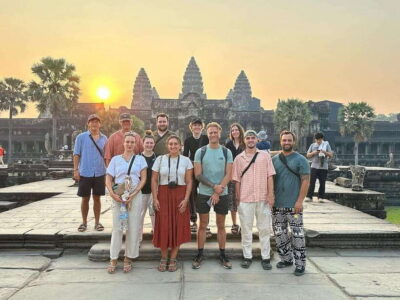
Angkor Wat: Small-Group Sunrise or Sunset Tour
Read our review →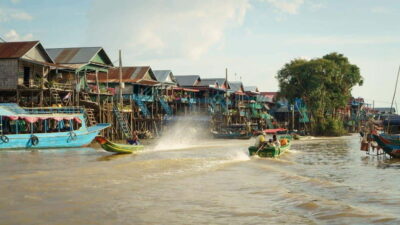
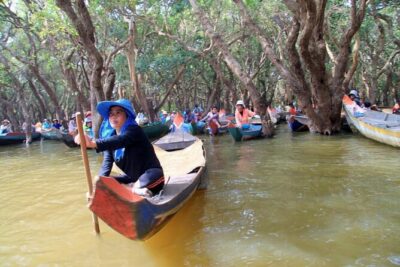
Sunset tour of Kampong Phluk stilts home village on the Tonle Sap
Read our review →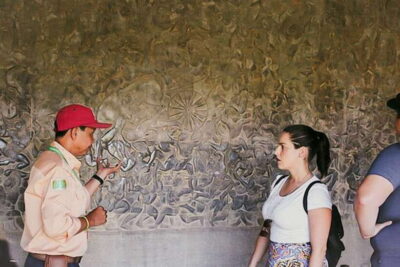
Angkor Wat 2-Day Tour with Sunrise and Sunset
Read our review →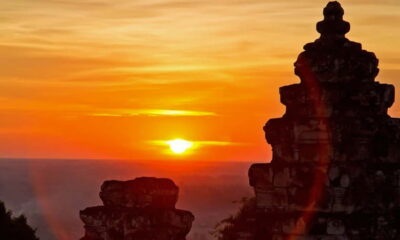
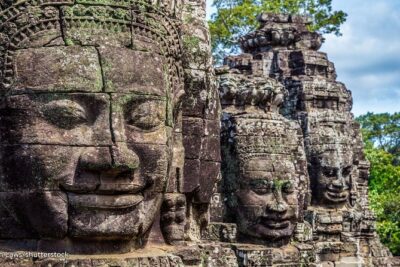
Angkor Wat Sunrise tour with Small – Group and Guide tours
Read our review →