
Reviewed · ANGKOR TEMPLE TOURS
1-Day private Angkor Temple Tour from Siem Reap
Angkor’s great trick is scale: in one day, you move from Angkor Wat’s carved galleries to Bayon’s giant stone faces, then into the tree-wrapped ruins of Ta Prohm. I like the private format, which lets you slow down, skip a section, or stop for a rest without holding up a busload of people. I also like the driver’s practical care, with cold water and, often, chilled towels waiting after each temple.
The drawback is simple: this is a long, hot day with plenty of walking and steps. The advertised $34 price does not include the $37 Angkor temple pass, so your real starting cost is $71 per person, before lunch.
Key points to know before you book
- Angkor Wat leads the day: Plan on about two hours among its galleries, towers, bas-reliefs, and central chambers.
- Private means flexible: Your guide can adjust the pace, breaks, lunch timing, and order of stops.
- Several major temples are included: Bayon, Baphuon, Phimeanakas, the Terraces of the Elephants and Leper King, and Ta Prohm fill out the route.
- Guides add real value: Sim, Som, Arun, Rith, Reed, and other English-speaking guides are praised for temple knowledge and photo help.
- Cooling support matters: The driver provides bottled water, and many departures include cold towels or refreshing wipes.
- Expect heat and walking: Comfortable shoes, sunscreen, a camera, and clothing covering the knees will make the day easier.
Why this private Angkor day works
I like this tour because it gives you the essential Angkor circuit without making you follow a fixed group schedule. You begin in Siem Reap, ride with a private driver, and spend the day with an English-speaking guide who explains what you are seeing rather than leaving you to guess at a wall of carvings.
The strongest part is the combination of interpretation and flexibility. Guides such as Sim, Som, Arun, Rith, and Reed have been praised for explaining Khmer history, religion, local life, and temple details in clear English. Several also know where to stand for better photographs and will take pictures for you.
You should still set realistic expectations. Seven hours sounds manageable, but the heat, humidity, uneven stone, stairs, and roughly 5 kilometers of walking can wear you down. The private setup helps because you can rest, shorten a stop, or change the pace. It does not remove the physical work of seeing Angkor.
The tour has a rating of 4.9 from 178 reviews, and transport receives a 96 percent perfect score. That fits the practical pattern of the day: prompt hotel pickup, a driver waiting at each stop, and water ready when you return from the temples.
More temples within reach of Siem Reap:
- Siem Reap Tour: Angkor Wat Sunrise, Bayon, Ta Prohm, Banteay Srei
★ 5.0 · 931 reviews - Siem Reap: Bike the Angkor Temples – Full-Day 30km Tour
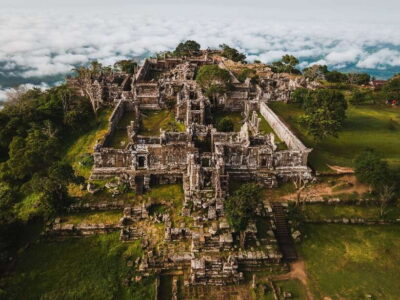
★ 5.0 · 463 reviews - Preah Vihear: Full-Day Preah Vihear and Koh Ker Temple Tour
★ 4.9 · 263 reviews
Angkor Wat: begin with the monument that sets the scale
Angkor Wat receives about two hours, which is a sensible amount of time for a first visit. This is not a quick photo stop. Your guide takes you through the temple’s major areas, explaining its purpose, stories, myths, and the scenes carved into its walls.
The bas-reliefs are a major reason to have a guide. They stretch for an extraordinary distance and depict religious stories alongside scenes from Khmer life and warfare. Without help, you can admire the detail but miss the meaning. A good guide points out what to watch for and links the carvings to the temple’s larger design.
You will also enter the central chambers and walk through the galleries. Expect lots of stone underfoot, open courtyards, and repeated changes between shade and direct sun. Wear shoes with a firm grip, and keep water close.
Angkor Wat is often the place where people want the most photographs. Guides including Som, Rith, and Arun have been praised for finding strong angles and taking pictures. That is useful when you are traveling as a couple or small group and want more than a collection of selfies.
The ticket is handled separately from the tour price. The Angkor pass costs $37 per person and covers the temples on this route. It can be paid for onsite, and one group reached the ticket office and completed the purchase within minutes. Still, allow some flexibility at the start in case the ticket process takes longer.
The South Gate and the approach to Angkor Thom
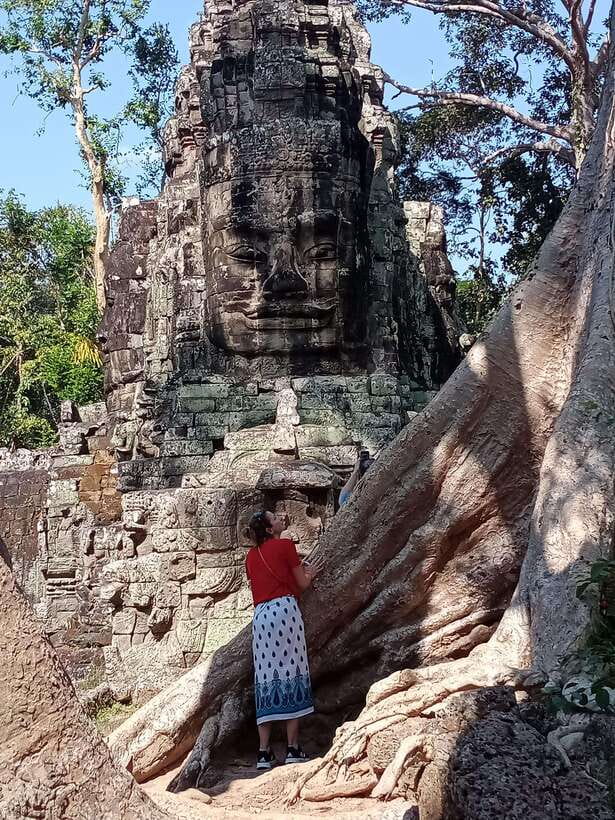
After Angkor Wat, the route moves to Tonle Om Gate, also called the South Gate of Angkor Thom. You get about 20 minutes here for a guided visit and photographs.
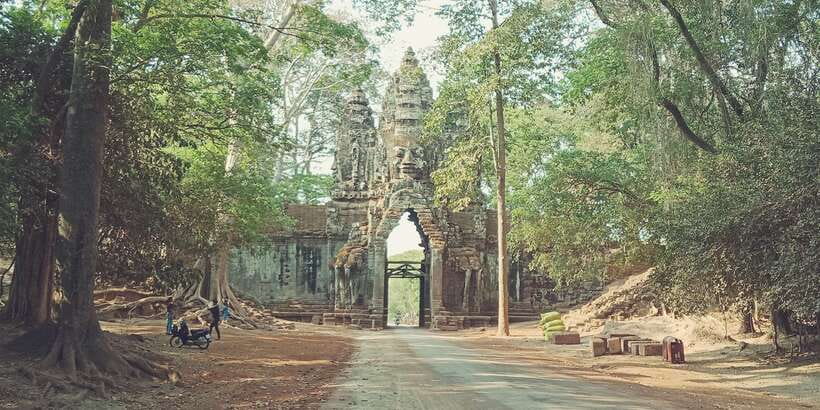
This stop works as a visual introduction to Angkor Thom, the former capital city of the Khmer Empire. The gate and its approach help you understand that the temples were part of a planned royal center, not isolated monuments scattered through the forest.
Twenty minutes is enough for an explanation and photographs, but not for a long study of every detail. If you are fascinated by gateways and sculpture, ask your guide to point out the figures lining the approach. If you are already feeling the heat, this is also a good place to keep the visit focused.
Bayon: giant faces and everyday Khmer scenes
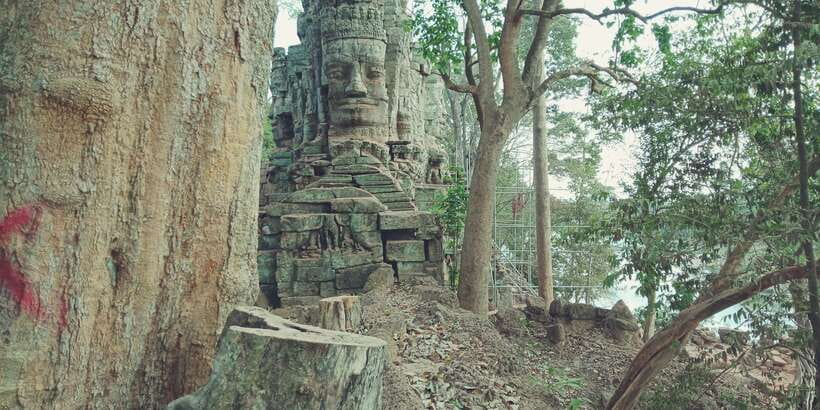
Bayon receives roughly 40 minutes. Its central towers carry enormous carved faces, with more than 200 faces associated with the temple. The effect is unusual: as you walk, the faces appear above you, around you, and between the towers.
Your guide can help separate the temple’s visual drama from its historical meaning. Bayon includes two sets of bas-reliefs, showing mythological scenes, historical events, and ordinary activities. Look closely and you may see that the walls are not only about kings and gods. They also record the daily world of the Khmer Empire.
The temple is compact but visually busy. You will climb, turn through narrow areas, and stop often as new faces appear. Forty minutes gives you a useful introduction, though you may wish for longer if photography is a priority.
This is one place where private touring pays off. You can spend more time on a particular wall or move on when the heat becomes too much. Guides such as Sim and Rith are especially well regarded for choosing quieter viewpoints and good photo locations.
A few more things to do in Siem Reap worth a look
- 1-Day Amazing Angkor Wat Tour with Sunset & All Interesting Major Temples
★ 5.0 · 308 reviews - Angkor Wat one Day Private Tour for All Highlight Angkor Temples
★ 5.0 · 199 reviews - 1-Day Angkor Wat Sunrise & All Interesting Temples Private Tour
★ 5.0 · 174 reviews - Angkor Wat Sunrise Small-Group 1-Day Tour from Siem Reap
★ 5.0 · 107 reviews
Baphuon, Phimeanakas, and the royal terraces
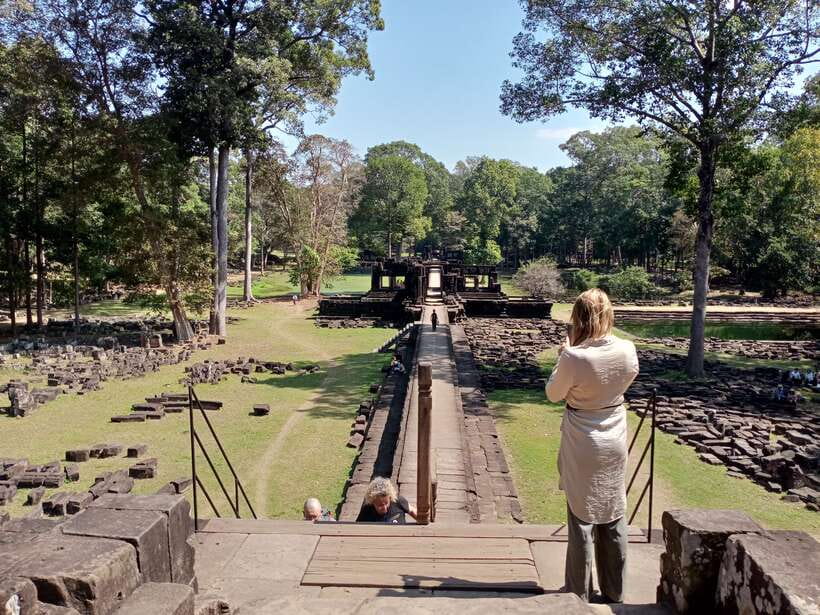
The next section brings several Angkor Thom sights close together, but they do not all feel alike.
Baphuon takes about 40 minutes. Built in the 11th century as a state temple, it rises as a three-level temple mountain. The design rewards you with changing views as you move upward, but the climb and exposed stone can be tiring. Take your time on the steps and do not rush simply because the schedule lists a set number of minutes.
Phimeanakas, the celestial temple, receives around 30 minutes. This 10th-century, three-tiered pyramid is quieter in character than Bayon and less immediately famous. Your guide’s explanation is useful here because the structure can look restrained after Angkor Wat and Bayon. The stop gives the day some variety and helps you see how temple forms changed over time.
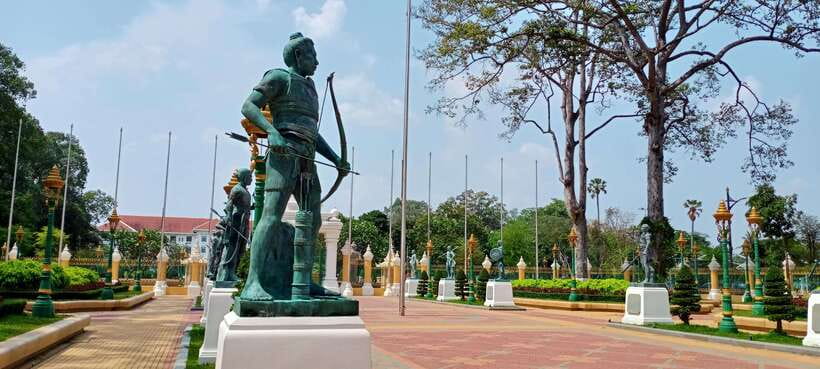
The Terrace of the Elephants takes about 20 minutes. At 350 meters long, it served as a giant reviewing stand for public ceremonies. You will mainly walk along the terrace and examine its carved decoration, rather than enter a large interior.
The Terrace of the Leper King follows, also for about 20 minutes. Its U-shaped structure has been linked by some interpretations to a royal cremation site. The reliefs and layout are worth seeing, but the stop is relatively brief, so let your guide direct you to the details that matter most.
This middle portion of the tour can feel like a lot of names in quick succession. I recommend asking your guide to explain how each site differed in role: state temple, royal compound, ceremonial terrace, or religious monument. That simple framework makes the sequence easier to remember.
Short stops and the value of a private schedule
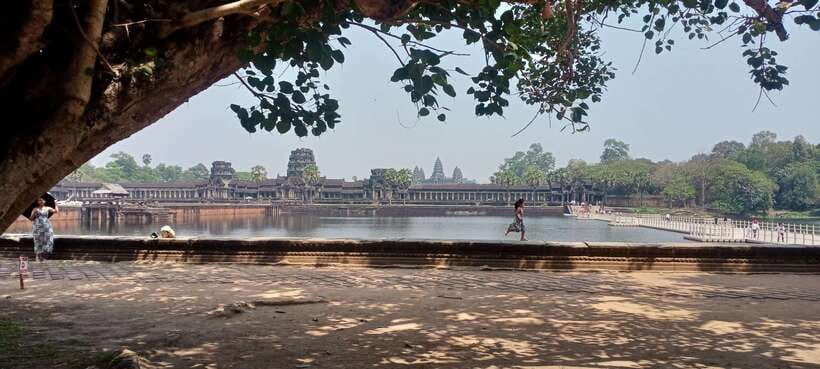
The itinerary includes a brief secret stop and another short stop described as a hidden site. Each receives about 10 minutes, with time for photographs, a short explanation, and walking.
Because the exact character of these stops can depend on the day and your guide, treat them as bonuses rather than the main reason to book. Their value is that they break up the major monuments and may give you a quieter pause away from the most famous temple approaches.
This is also where the private format matters most. You can ask to spend less time at a stop if you are tired, or linger briefly if a particular view catches your attention. The tour is designed around your group rather than a large coach schedule.
Ta Prohm: the day’s atmospheric finish
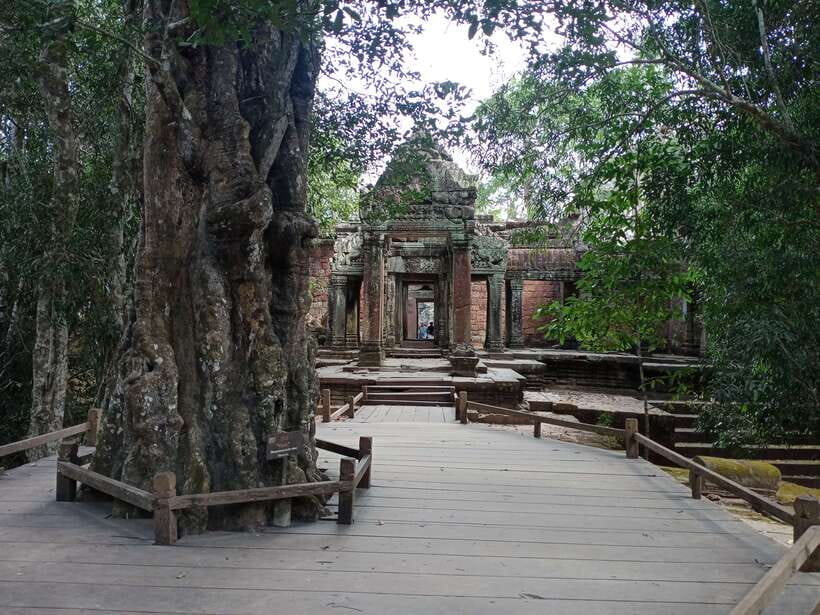
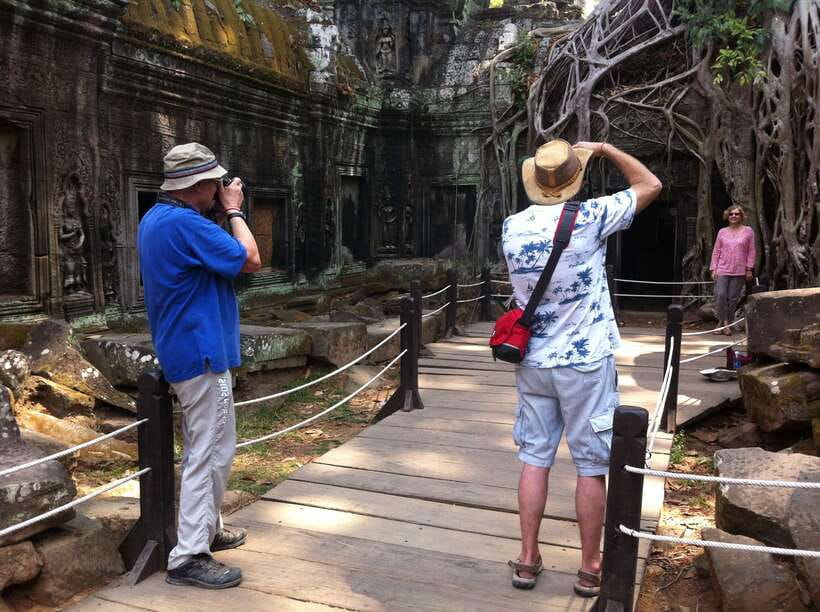
Ta Prohm receives about an hour, making it one of the best places to slow down. Built in the 13th century, it is famous for its condition and for the trees that grow through and around the ruins.
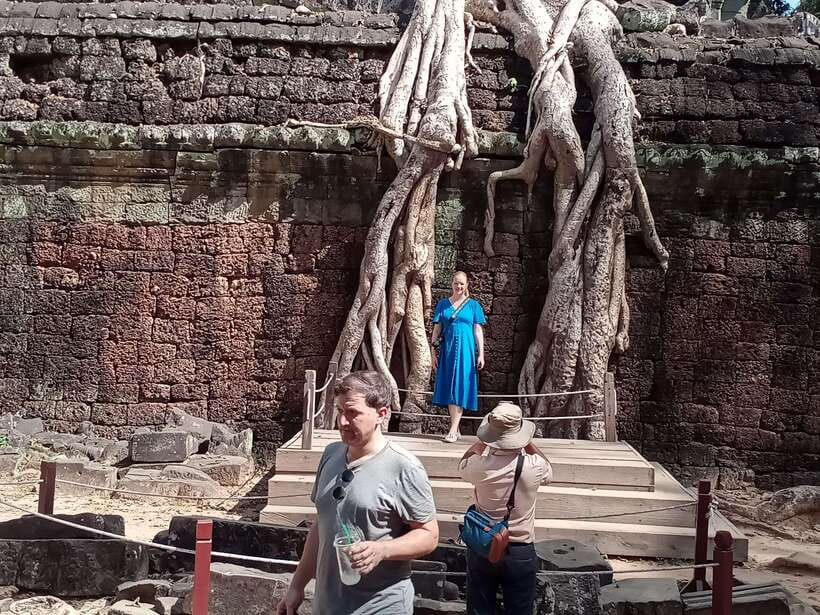
The temple feels different from Angkor Wat. Instead of broad galleries and carefully framed views, you move through corridors, courtyards, and broken stonework wrapped in jungle growth. Tree roots press against walls and towers, creating the image that made Ta Prohm famous as the Tomb Raider temple.
The setting is photogenic, but do not treat it as only a backdrop. The damage, restoration work, and surviving structure show how nature and time have shaped the site. Your guide can help you see where the temple’s original plan continues through the fallen stone.
An hour is useful here because Ta Prohm has many turns and small details. You can take photographs, rest briefly, and still see the main areas without racing. The drawback is that this is one of Angkor’s most popular temples, so the promise of avoiding crowds should be understood as crowd management, not total solitude. An early or carefully timed visit can help, but no popular Angkor stop is guaranteed to be empty.
Transport, water, and the heat question
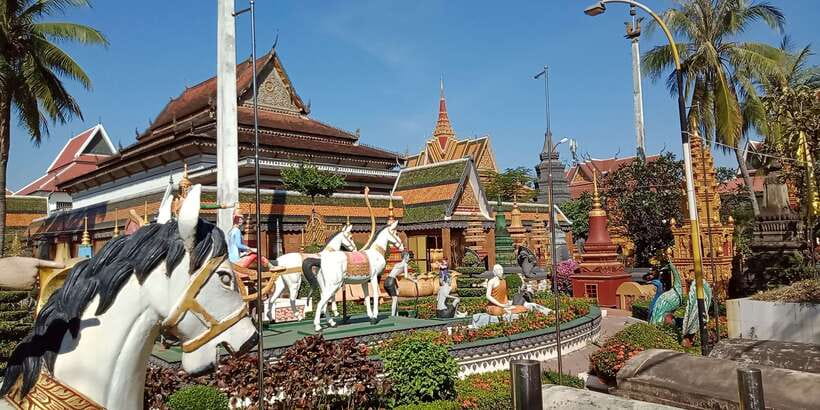
Your guide and driver pick you up from your hotel lobby in Krong Siem Reap. The guide holds a card with the lead traveler’s name, which makes the meeting easier. Return transport is included.
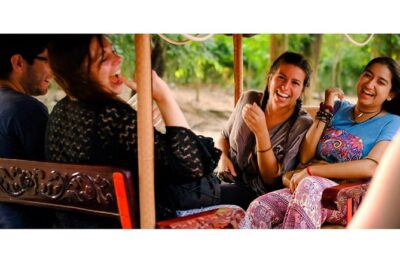
The vehicle may be a tuk-tuk or an air-conditioned car, depending on the arrangement. Both have advantages. A tuk-tuk keeps air moving between temples and gives you an open view of the roads, while a car offers stronger relief from the heat, especially for children or anyone who struggles with humidity.
The driver waits while you visit each temple. Cold bottled water is supplied, and several guides have also arranged cold towels or refreshing wipes. These are small details, but after walking across sunlit stone, they feel like part of the service rather than decoration.
Bring sunscreen, a camera, comfortable shoes, and clothing that covers your knees. The information says shorts at the knees are allowed, while another instruction says shorts are not allowed, so the safest choice is lightweight trousers or longer shorts that clearly cover the knees. Children under 12 receive free temple entry.
Lunch is not included, but the private schedule allows a lunch or rest break. Some groups stop at a restaurant, while others bring snacks. If you need a proper meal, tell your guide early rather than trying to fit food into the few minutes between temples.
Price, timing, and who gets the best value
The tour costs $34 per person, but the temple entry pass adds $37, bringing the basic total to $71 per person. Lunch is also extra. At first glance, the tour price looks unusually low for a private seven-hour experience, but the real comparison should include the guide, driver, vehicle, hotel transfers, water, and the value of avoiding a large group.
For two people, the private arrangement can be a good deal if you care about questions, photographs, and control over the pace. It is also useful for families, couples, older adults who need breaks, and anyone who has already visited Angkor Wat and wants to spend less time repeating familiar areas.
The day is less suitable if you want a slow, single-temple visit. You cover many sites, and even a well-managed schedule can feel full. Several hours of walking and climbing are unavoidable.
The free cancellation policy allows you to cancel up to 24 hours ahead for a full refund. You can also reserve now and pay later, which helps if your Siem Reap plans are still moving.
Should you book this Angkor tour?
Book it if you want the major Angkor sights in one organized day, with a private guide who can explain the carvings and adapt the pace. It is especially appealing if photography matters to you, since guides such as Som, Rith, Arun, and Reed are praised for finding good angles and taking pictures.
Think twice if you dislike early starts, heat, stairs, or a schedule with many stops. In that case, use the private format to cut out Baphuon, the terraces, or another section and spend more time at Angkor Wat and Ta Prohm.
For most first-time visitors with only one day in Siem Reap, I would book it. Just budget for the separate $37 temple pass, wear practical clothes, and tell the guide from the start how much walking and temple time you want.
FAQ
How long does the private Angkor temple tour last?
The tour lasts about seven hours, including hotel pickup, temple visits, transport between sites, and the return to Krong Siem Reap.
What temples are included?
The route includes Angkor Wat, the South Gate of Angkor Thom, Bayon, Baphuon, Phimeanakas, the Terrace of the Elephants, the Terrace of the Leper King, two short additional stops, and Ta Prohm.
Is the Angkor temple ticket included?
No. The temple pass costs $37 per person and covers all the temples on the tour. It is paid for separately, and children under 12 receive free temple entry.
Is this a private tour?
Yes. The group is private, so you can adjust the pace, take breaks, change the time spent at stops, and discuss lunch or other timing with your guide.
Is hotel pickup included?
Yes. The English-speaking guide and driver pick you up from your hotel lobby in Siem Reap. The guide holds a card with the lead traveler’s name.
What language does the guide speak?
The live tour is conducted in English.
What should I bring?
Bring a camera, comfortable walking shoes, sunscreen, water-friendly practical clothing, and clothing that covers your knees for temple entry.
Are shorts allowed at the temples?
The stated guidance says shorts covering the knees are allowed, but the safest choice is clothing that clearly covers your knees because temple dress checks can vary.
Are transport and water included?
Yes. Return transfers and bottled water are included. Depending on the vehicle and driver, you may also receive cold towels or refreshing wipes after temple visits.
Just added in Siem Reap
- 1-Day Angkor Wat Private Tour with Spanish Tour Guide.★ 5.0 · 9 reviews
- Angkor Wat: Small-Group Tour with Balloon Ride and Lunch★ 4.6 · 13 reviews
- Sky Venture Microlight Siem Reap★ 4.9 · 18 reviews
- Angkor Wat plus Balloon Ride with Khmer Lunch★ 5.0 · 46 reviews
- Siem Reap: 3-Hour Ancient Trails Motorbike Tour★ 4.8 · 71 reviews
- Angkor Wat Private Tour in a Tuk Tuk★ 5.0 · 69 reviews
- Angkor Silk Farm & Lotus Silk Farm: Siem Reap Discovery Tour★ 4.8 · 68 reviews
- Angkor Wat Sunrise Tour By E-Bike Experience With Breakfast Included★ 5.0 · 76 reviews
Angkor Temple Tours, compared.
Siem Reap Tour: Angkor Wat Sunrise, Bayon, Ta Prohm, Banteay Srei
Read our review →
Angkor Wat one Day Private Tour for All Highlight Angkor Temples
Read our review →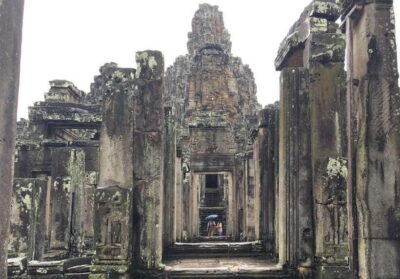
Private one-day tuktuk ‘small tour’ of the oldest Angkor temples
Read our review →
Angkor Wat Private Driver Tours to Angkor Wat Sunrise, Angkor Thom & Ta Prohm
Read our review →Browse the lists this tour appears in