
Reviewed · TOURS IN BATTAMBANG
Morning village tour Livelihood tour with Local Product discover
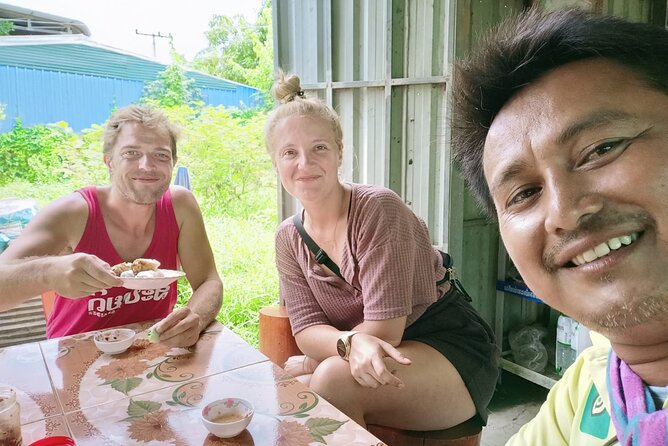
Battambang’s countryside is the star here. Instead of viewing Cambodia from a bus window, you stop at homes, workshops, and small food producers to see how everyday products are made. I especially like the chance to watch rice paper production and sticky rice cooking in bamboo tubes, two simple but memorable displays of local skill.
I also like the small group size, capped at 10 people, and the practical service from Kim Tours. The guide provides water, drives safely, and has been willing to adjust plans when guests request it. The main consideration is that this is a working village tour, not a polished attraction, so conditions may be basic and the experience depends on good weather.
Key points at a glance
- Rice paper made by hand: See one of Cambodia’s familiar food staples produced in a local setting.
- Bamboo-cooked sticky rice: Watch sticky rice cook over an open fire inside bamboo tubes.
- A close look at local food production: Visit places making fermented fish paste, dried bananas, banana chips, and rice wine.
- Small-group transport: The tour accepts a maximum of 10 people and offers pickup.
- Optional Wat Samrong Knong visit: Add a temple complex and killing fields stop if you want a more historical and reflective part to the morning.
- Good value at $15: Four to five hours of transport, guiding, tastings, and countryside visits make this an inexpensive way to see rural Battambang.
Leaving Battambang for the countryside
The morning begins with pickup between 8:00 and 8:30, giving you a useful start before the heat becomes too strong. The trip lasts about four to five hours, so you still have much of the day left for Battambang’s other sights, lunch, or a quiet afternoon.
Your guide first gives a short introduction to Battambang and its past. This opening matters because the tour is not only about snacks. It sets the village visits in a wider Cambodian context, then moves quickly into rural areas where people work with familiar ingredients and traditional methods.
Pickup is included, which adds real value at this price. You do not need to arrange separate transport to each stop, and the guide can connect a series of small producers that would be difficult to reach on your own. The vehicle also provides some relief from the morning sun and dusty roads.
The group limit is 10 people. That is large enough to keep the price low but small enough that you should be able to hear explanations and see the demonstrations without being pushed through in a crowd. If you prefer a private tour, this experience is not advertised as private, but the small maximum keeps it more personal than a large coach outing.
Other trips people book in Battambang:
- Battambang: Tuk-Tuk, Bamboo Train, Killing/Bat Caves, Sunset
★ 4.9 · 1,436 reviews - Battambang Tuk Tuk tour: Bambootrain, Killing & Bat Caves,Sunset
★ 5.0 · 799 reviews - Afternoon tour by tuk tuk to bamboo train,bat cave,killing cave,countryside.
★ 5.0 · 344 reviews
Seeing how rice paper is made
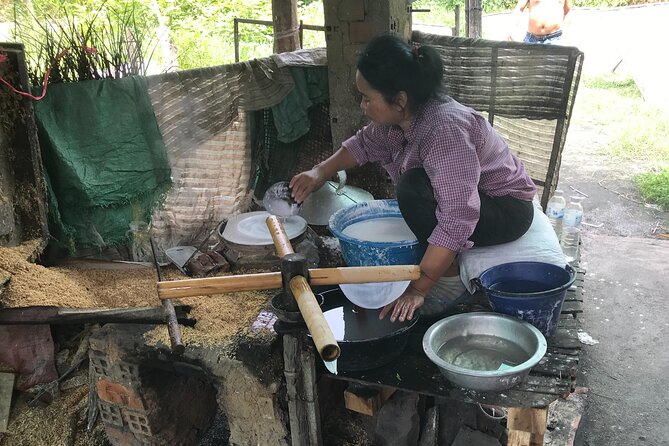
One of the most interesting stops focuses on rice paper. Rice paper is a basic part of Cambodian cooking, yet many visitors only encounter it as a finished product on a plate. Here, you get to see the work behind it.
The value of this stop is its simplicity. You watch a traditional food being prepared in a local setting rather than at a staged cultural center. The method requires care, timing, and repetition, which gives you a better sense of the daily work involved in producing food for sale.
This is also a good stop for anyone interested in Cambodian cooking. You see the connection between rice farming, household production, and the food served in towns. The tour does not treat local products as souvenirs alone. It shows them as part of ordinary work and family income.
The experience may not suit you if you want a long, formal cooking class. You are observing production and learning about the process, not signing up for a hands-on workshop. Still, for $15, seeing several different forms of village production is a fair exchange.
Sticky rice in bamboo over an open fire
The sticky rice stop adds a little drama to the morning. Rice is cooked inside bamboo tubes over an open fire, a method that gives you a clear view of how local ingredients can be prepared with basic equipment.
The fire, bamboo, and rice make this one of the easiest demonstrations to understand. You can see the cooking process rather than simply hearing an explanation. It also gives the tour a strong connection to rural life, where traditional techniques remain useful and familiar.
You should have a chance to taste local products during the tour, and the bamboo-cooked sticky rice is one of the foods to look forward to. Exact tastings can depend on what is being made that day, so do not expect a fixed restaurant-style menu.
That uncertainty is part of the character of the experience. Village production follows work schedules and available ingredients. If you need a guaranteed meal, bring that expectation down to a snack tasting and plan a separate breakfast or lunch.
Fermented fish paste and the stronger side of Cambodian food
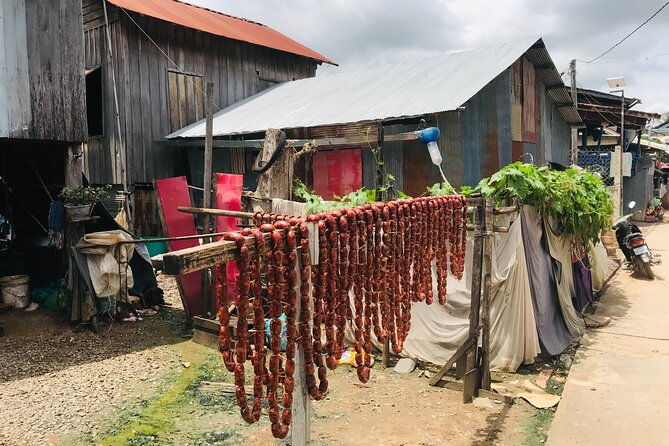
The old factory where fermented fish paste is made offers a different view of local food. This is not the sweet or easy introduction many visitors expect. Fermented fish paste has a strong smell and a distinctive place in Cambodian cooking, so the stop can be especially useful if you want to understand the ingredients behind everyday Khmer dishes.
The old factory setting adds a sense of working history without turning the place into a museum. You see where production happens and how a food with a powerful aroma becomes part of the local diet.
Be ready for a sensory experience. The smell may be challenging if you are sensitive to fermented foods. That is not a flaw in the tour, but it is worth knowing before you go. The stop is more valuable for curious eaters than for anyone who wants only mild flavors and tidy displays.
I would treat this as a chance to learn, not a test of bravery. You do not need to love fermented fish paste to understand why it matters. The guide can help connect the product to Cambodian meals and village work.
Same base, a different kind of day out:
- Local Livelihood Half Day Bike Tour in Battambang
★ 5.0 · 287 reviews - Explore Battambang full day tour by Tuk Tuk (start from 9am-6:30pm)
★ 5.0 · 240 reviews - Battambang: Bamboo Train, Bat Cave, Killing Cave by Tuk Tuk
★ 5.0 · 182 reviews - Full Day tour .City tour.Countryside.Bamboo Train.Secret Bat Cave
★ 5.0 · 178 reviews
Dried bananas and banana chips
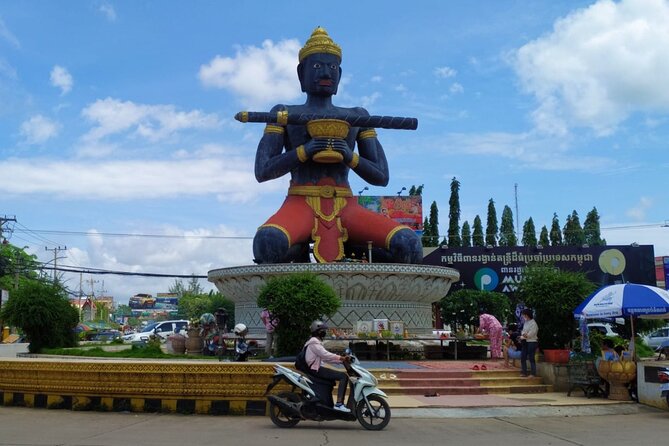
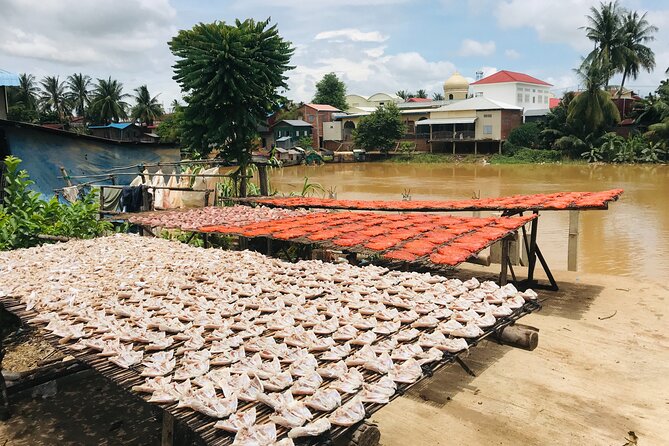
The banana stop brings the tour back to familiar territory. You see bananas being turned into dried fruit and banana chips, two products that are easy to recognize and taste.
This visit shows how local producers extend the life of fresh food. Instead of letting ripe bananas go to waste, they can be dried or cooked into a snack that is easier to store and sell. It is a small example of practical food production, and it helps explain why local products are important to rural livelihoods.
The stop should work well for families and anyone who likes food demonstrations. Banana chips are also a comfortable tasting for people who find fermented fish paste too strong. You get variety across the morning, from sweet snacks to savory ingredients.
Do not expect a large commercial factory with machines and a visitor center. The appeal is seeing smaller-scale production close to the people who make it. That means the setting may be plain, and the pace may change according to the work taking place.
Inside a traditional rice wine distillery
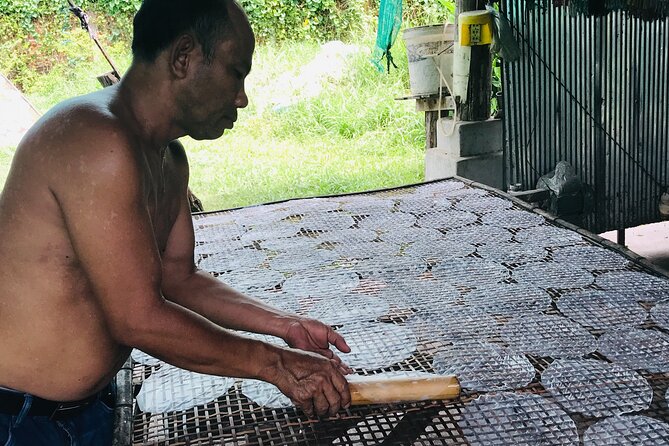
The rice wine distillery provides another look at how rice becomes more than a staple food. You visit a traditional old distillery and learn about a local drink made from one of Cambodia’s central crops.
This stop helps tie the morning together. Rice appears in paper, sticky rice, and wine, but each product involves different skills and methods. Seeing the range in one half-day makes the tour feel more purposeful than a simple drive through villages.
If you do not drink alcohol, the distillery can still be interesting as a production visit. Tasting details are not fixed in the information provided, so you should ask the guide what is available and never feel pressured to sample anything you do not want.
The old setting may appeal to anyone interested in traditional trades. It may disappoint you if you expect a modern tasting room or a polished commercial brand tour. This is a look at local production, not a formal wine education experience.
The optional visit to Wat Samrong Knong
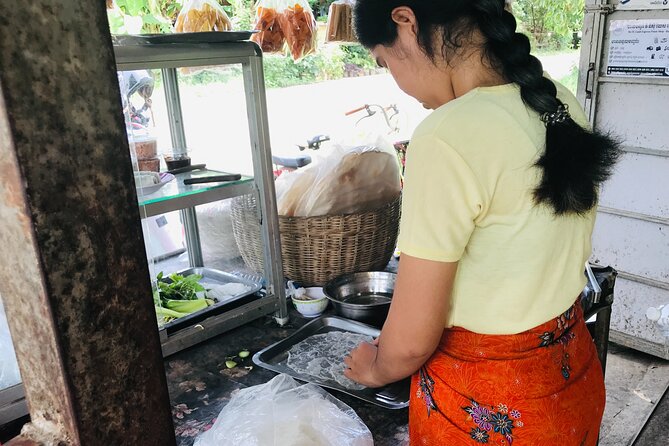
You can also choose to visit Wat Samrong Knong temple complex and the nearby killing fields. This changes the mood of the morning from food and village work to Cambodia’s difficult recent past.
Wat Samrong Knong is useful for visitors who want more context about Battambang beyond its countryside products. The killing fields stop is likely to feel somber, and you should allow yourself time to take it seriously rather than treating it as another quick photo stop.
Because the visit is optional, you can decide how it fits your day. If you have already visited several memorial sites in Cambodia and want to keep this tour focused on village livelihoods, you may prefer the food and craft stops alone. If you want a broader understanding of the region, adding the temple complex and killing fields gives the morning more historical weight.
Ask the guide at the start how much time is available for this option. The supplied details do not give a separate duration, so the exact balance between production visits and the temple complex may vary.
Why the $15 price is good value
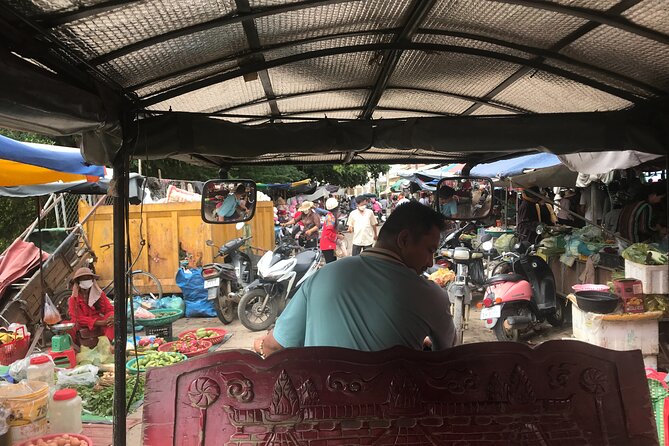
At $15 per person, this is inexpensive for a four to five-hour guided outing with pickup, transport, tastings, and several stops. You are paying for access and local coordination as much as for the vehicle. Without a guide and driver, reaching several village producers in one morning would be less practical.
The price also works well if you are trying to keep a Cambodia trip affordable. You get a rural excursion without committing to a full-day tour. Since the activity finishes around midday, you can still pay for an afternoon temple visit, a museum, or another Battambang activity.
A low price does mean you should keep your expectations realistic. This is not a luxury food tour, a private culinary class, or a staged cultural show. Facilities may be basic, and demonstrations may be shaped by the producers’ normal work.
The 100 percent recommendation rate and 5 out of 5 rating from 36 published ratings suggest strong satisfaction, but the practical details matter more for your decision. The tour suits you best if you value access to local life over polished presentation.
What the guide and driver add
The guide is an important part of this experience because the stops are spread through the countryside and the products may not explain themselves. You need someone to describe what is happening, identify the foods, and help you understand why each product matters.
Kim Tours also provides driving and pickup. A past afternoon outing and town transfers have been handled by the same operator, and the driver has been described as safe and accommodating. Water is provided, which is a small but useful detail during a warm morning outside the city.
No individual guide name is supplied, so you should not book expecting a specific named guide. What you can expect is local guiding through Kim Tours Battambang, with a willingness to respond to reasonable requests.
The guide can also help with the optional temple and killing fields visit. If that part matters to you, mention it early rather than waiting until the end.
Who should book this morning tour
I would recommend it to you if you want to see how rural families and small producers work, eat local products, and learn about Cambodian food beyond restaurant menus. It is also a good fit for first-time visitors who want an easy introduction to Battambang’s countryside without giving up a full day.
Families may enjoy the variety of sights, especially the rice paper, bamboo, banana, and fire-based demonstrations. Food-minded visitors will appreciate the range of ingredients, while photographers may find plenty of practical village scenes, provided they ask permission before taking close-up pictures.
The tour is less suitable if you want a quiet private outing, a detailed historical tour, or a guaranteed set tasting menu. The fermented fish paste factory may also be uncomfortable for people sensitive to strong smells.
Most people can participate, and service animals are allowed. The meeting point is near public transportation, and pickup is offered. Confirmation arrives at booking, so you should have the key arrangements in hand before the morning begins.
Timing, weather, and cancellation
The tour operates Monday through Sunday, with the meeting window from 8:00 to 8:30. The early start is sensible for outdoor stops and leaves room in your afternoon schedule.
Good weather is required. If poor weather cancels the outing, you are offered another date or a full refund. You can cancel for a full refund up to 24 hours before the start time, based on local time. Cancellations or changes inside 24 hours are not refunded or accepted.
The tour is booked an average of 14 days ahead. That does not guarantee that every date sells out, but it is a useful reason to reserve early if your Battambang schedule is tight.
Should you book it?
Book this tour if you want a low-cost, small-group morning that connects Battambang’s countryside with the food people make there. The strongest reasons are the range of stops, the included pickup, the local guide, and the chance to taste products made in traditional ways.
Skip it if you prefer polished attractions, private touring, or a fixed culinary program. For most visitors who want to see more than temples and city streets, though, this is a practical and worthwhile half-day. Add Wat Samrong Knong if you want a serious historical note, or keep the morning focused on food and village work.
FAQ
Where does this tour take place?
The tour takes place in Battambang and the surrounding countryside in Cambodia.
How long does the experience last?
The tour lasts approximately four to five hours.
What time does the tour begin?
The meeting and pickup window is from 8:00 AM to 8:30 AM.
Is pickup offered?
Yes. Pickup is offered as part of the experience.
How much does the tour cost?
The price is $15 per person.
How many people can join the tour?
The tour has a maximum group size of 10 people.
What local products will I see?
You may see rice paper, sticky rice cooked in bamboo tubes, fermented fish paste, dried bananas, banana chips, and traditional rice wine being produced.
Can I visit Wat Samrong Knong and the killing fields?
Yes. You have the option to visit the Wat Samrong Knong temple complex and killing fields.
Is the tour available every day?
Yes. The stated operating days are Monday through Sunday.
What happens if bad weather cancels the tour?
You will be offered a different date or a full refund if the experience is canceled because of poor weather.
Just added in Battambang
- Bamboo Train, Banann Temple, Fruit Bat, Bat Cave, Sunset★ 4.2 · 3 reviews
- Afternoon tour to Original Bamboo train. Bat cave. Killing cave★ 5.0 · 25 reviews
- Private Taxi Transfer Battambang from/to Phnom Penh★ 5.0 · 7 reviews
- Private Boat from Battambang to Siem Reap via Tonle Sap Lake★ 4.5 · 3 reviews
- Private Taxi Transfer From Battambang – Siem Reap City★ 5.0 · 4 reviews
- Tuk Tuk Tour (Full-Day)★ 5.0 · 7 reviews
- Explore local livelihood & countryside (Half-Day Cycling Tour)★ 5.0 · 19 reviews
- Afternoon Tour BambooTrain & Bat Cave★ 5.0 · 57 reviews
Tours in Battambang, compared.
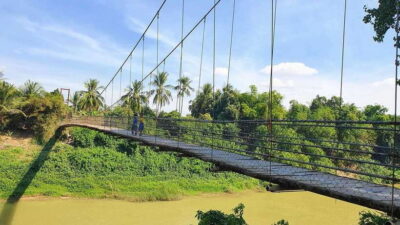
Tuk-Tuk, Bamboo Train, Killing/Bat Caves, Sunset
Read our review →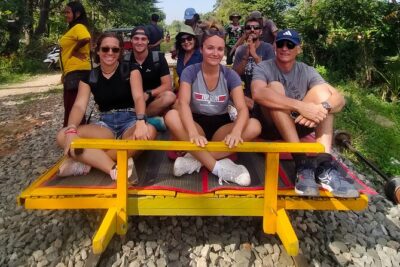
Battambang Tuk Tuk tour: Bambootrain, Killing & Bat Caves,Sunset
Read our review →
Afternoon tour by tuk tuk to bamboo train,bat cave,killing cave,countryside.
Read our review →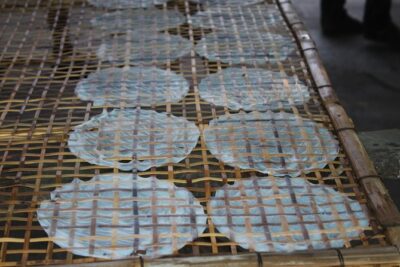
Local Livelihood Half Day Bike Tour in Battambang
Read our review →
Explore Battambang full day tour by Tuk Tuk (start from 9am-6:30pm)
Read our review →
Full Day tour .City tour.Countryside.Bamboo Train.Secret Bat Cave
Read our review →
Browse the lists this tour appears in