
Reviewed · COUNTRYSIDE BIKE TOURS
Angkor Cycling Tour
Angkor looks different from a bicycle. You move quietly beside the moat, slip onto forest tracks, and ride along the old wall of Angkor Thom instead of viewing each temple from a vehicle. The 70 percent off-road route is the real draw, especially around Bakheng Hill and the wooded paths near Ta Nie.
I like the patient, accommodating guiding style and the way the day mixes major monuments with calm stretches of jungle and countryside. I also like the practical setup: a properly fitted mountain bike, a helmet, lunch, water, snacks, and tuk tuk transfers are included. The main consideration is the heat. A 35 km ride in Cambodia is manageable for a reasonably active cyclist, but you should expect sun, sweat, and a few moderate sections.
Key points at a glance
- Ride Angkor’s old defensive wall: Cycle along sections of the Angkor Thom fortifications and stop at the atmospheric Ghost Gate.
- See the famous temples without staying on the main road: Ta Nie and the forest tracks around Bakheng Hill add quiet, rougher riding to the day.
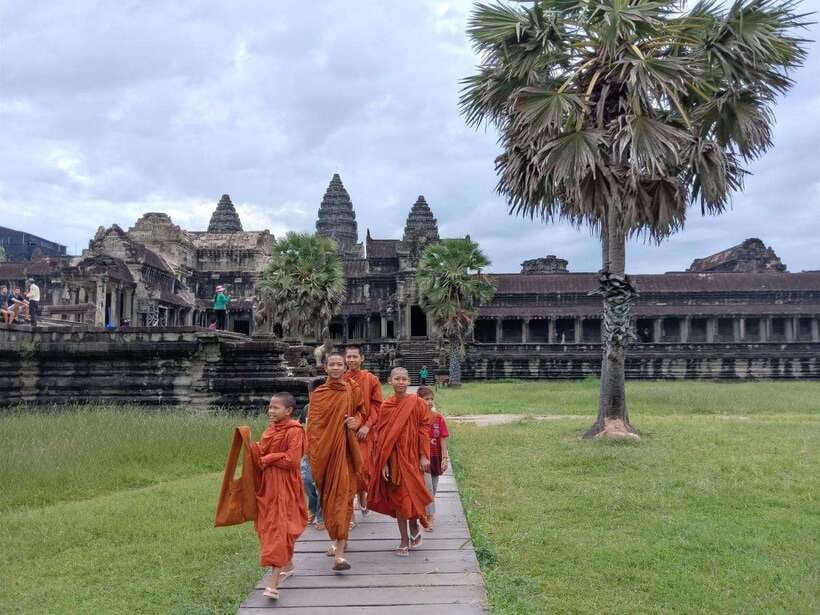
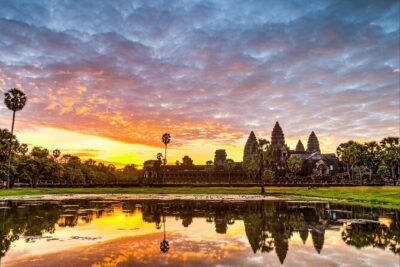
- Spend two hours at Angkor Wat: The guide helps connect the carvings, galleries, and grand design to the Khmer kingdom that built them.
- Watch for wildlife at Jayatataka Baray: Birds, butterflies, monkeys, and, with luck, freshwater otters can appear around the water and trees.
- Get a full day for $65: The price includes the bicycle, helmet, guide, lunch, drinks, snacks, first aid, spare parts, and free tuk tuk transfers, but not the temple pass.
- Expect a medium-level ride: Most sections are easy to moderate, but closed-toe shoes, sunscreen, sunglasses, and breathable clothing will make the day much more comfortable.
Why a bicycle changes the Angkor experience
The Angkor complex is huge. Temple hopping by car or tuk tuk is efficient, but it can make the sites feel like separate stops on a schedule. Cycling connects them. You notice the shade changing, hear birds in the trees, and get a better sense of the space between the monuments.
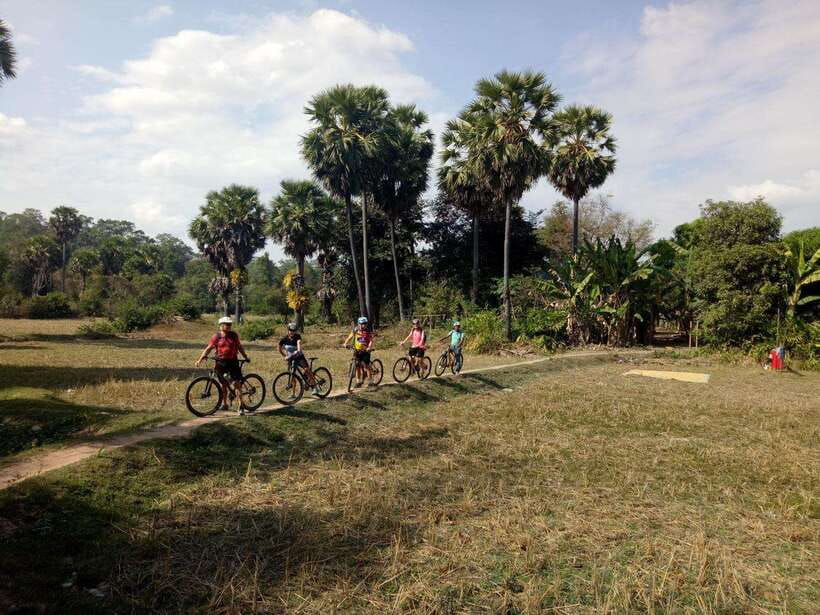
This is not a race or a technical mountain-bike outing. The route covers about 35 km, with roughly 30 percent on paved roads and 70 percent on dirt or forest tracks. You will ride along smooth lanes, uneven single tracks, sandy sections, and quiet paths through the trees.
The pace is intended to be balanced rather than punishing. A rider who is comfortable with a full day outdoors should be fine, though the Cambodian sun can make an ordinary distance feel longer. The tour is not suitable for pregnant women, and anyone unused to cycling should think carefully about the distance and temperature.
The starting point is in Siem Reap, with hotel, apartment, and Airbnb pickup about 15 minutes before the 7:45 AM start. A tuk tuk or minivan is used depending on group size. After a quick bike fitting at the shop, you head toward Angkor Wat by way of the Siem Reap River and rainforest trails.
More Bike Tours in Siem Reap
- Siem Reap Countryside Bike Tour / E-Bike or Tuk Tuk
★ 5.0 · 935 reviews - Angkor Sunrise Bike Tour / E-Bike or Tuk Tuk
★ 5.0 · 615 reviews - Siem Reap: Bike the Angkor Temples – Full-Day 30km Tour
★ 5.0 · 463 reviews
Angkor Wat by bike and on foot
Angkor Wat comes early, which is sensible. The earlier start gives you a cooler first ride and puts the day’s most famous temple near the beginning, when your legs are fresh.
You spend about two hours exploring the temple with your guide. That time matters. Angkor Wat is too large to appreciate through a rushed walk to the central towers and a few photographs. Its galleries, courtyards, bas-reliefs, towers, and long approach all reward a slower look.
Your bicycle remains part of the experience even when you are walking. You ride beside the ancient moat and arrive through the wider Angkor setting rather than simply being dropped at the entrance. The shift from cycling to walking also gives your body a useful break before the more adventurous forest sections.
Dress for both cycling and temple visits. Shorts are acceptable during the ride, but you should bring spare clothing for the temples and wear modest clothing at sacred sites. Closed-toe shoes are required. Loose clothing is not allowed, so choose practical clothes that will not catch on the bicycle.
Bakheng Hill and the wall of Angkor Thom
After Angkor Wat, the route follows the moat and turns toward the forest around Bakheng Hill. This is one of the more appealing parts of the day for riders who want to get away from the main temple traffic. The tracks bring you through trees and countryside, with fewer hard surfaces and more changes in pace.
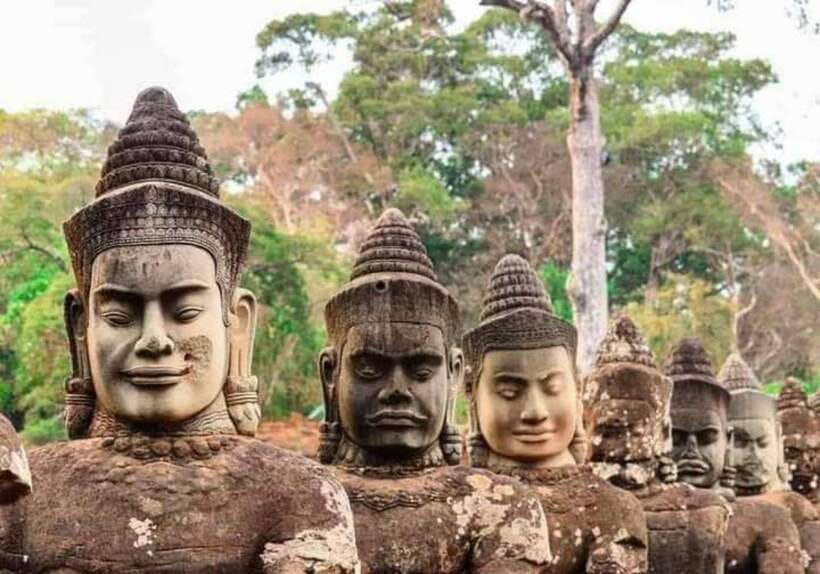
The route then enters Angkor Thom through the South Gate. One unusual feature is the chance to cycle along the ancient city wall. From a bicycle, the fortification becomes more than a stone structure in the distance. You experience its length and position as part of a defensive city.
The wall ride is also one of the sections where you should pay attention to your footing and steering. It is an historic surface rather than a modern cycle path, and the tour description rates the overall route as medium. Follow the guide’s pace and be ready for uneven ground.
At the Ghost Gate, you stop for photographs and stories. The name gives the gate a slightly mysterious character, but the practical value of the stop is simple: it breaks up the ride and gives you a good place to understand the city’s entrances before continuing to Bayon.
Bayon’s stone faces and lunch near the Elephant Terrace
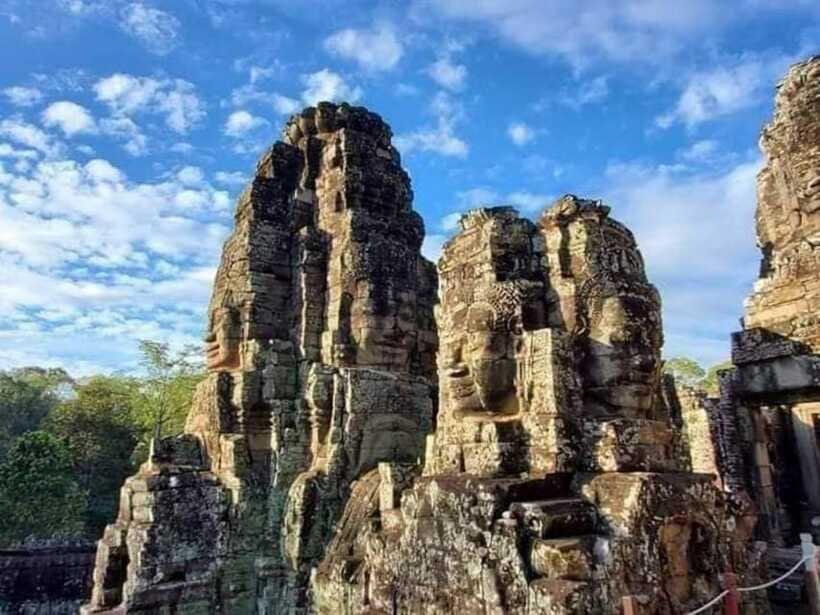
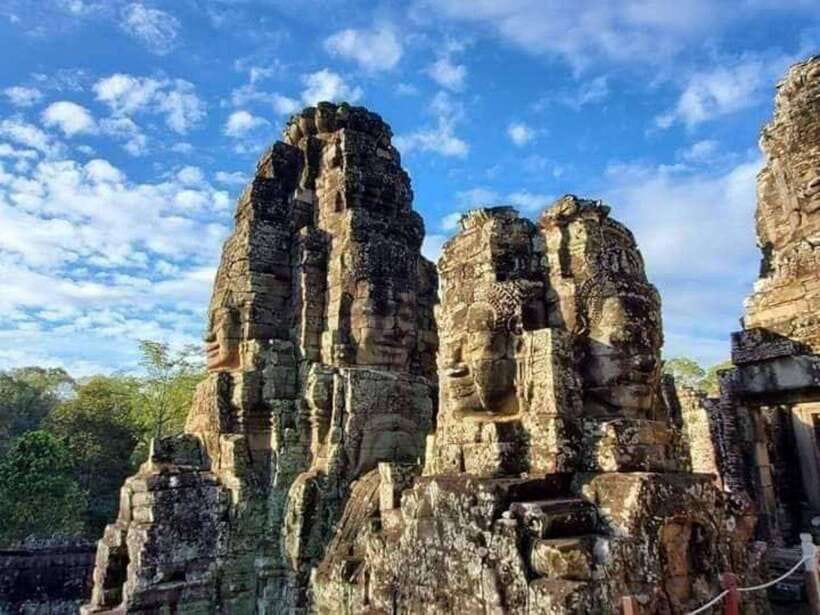
Bayon is only about 1 km from the Ghost Gate, but it feels like a change of mood. The temple is famous for its large stone faces, which look down from the towers with calm, unreadable expressions. They are best viewed from several angles, since the faces appear and disappear as you move through the tight corridors.
The guide can help you slow down here. Bayon is not a place to understand from one wide photograph. Look up at the towers, then step back and notice how the temple’s crowded structure differs from Angkor Wat’s long lines and open approach.
Lunch comes at a local restaurant in front of the Elephant Terrace. This is a useful pause in the middle of a hot day, rather than an elaborate dining stop. You get a taste of Khmer specialties, with the terrace providing a memorable setting.
The Elephant Terrace was used as a grand platform for royal processions and public ceremonies. Its carved elephants and long stone frontage are easier to appreciate after seeing the city wall and Bayon, because you have already begun to understand Angkor Thom as a planned royal center.
Water, snacks, and seasonal fruit are supplied through the day. Cold drinks at temple stops are not a minor perk in Cambodia. They help you keep riding comfortably and avoid turning the second half of the route into a test of endurance.
More rides through the countryside near Siem Reap:
- Siem Reap: Angkor Wat Sunrise Bike Tour & Jungle Breakfast
★ 5.0 · 415 reviews - Siem Reap: Guided Countryside Bike Tour
★ 4.9 · 294 reviews - Siem Reap Countryside Sunset Bike Tour / E-Bike or Tuk Tuk
★ 5.0 · 173 reviews - Siem Reap: Bike the Angkor Temples – Full-Day 30km Tour
★ 4.9 · 159 reviews
Ta Nie and the quieter side of Angkor
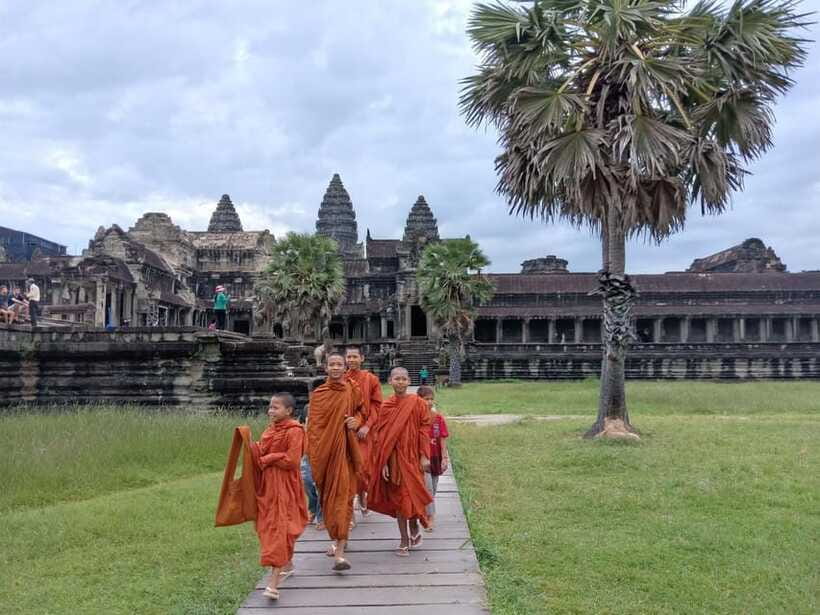
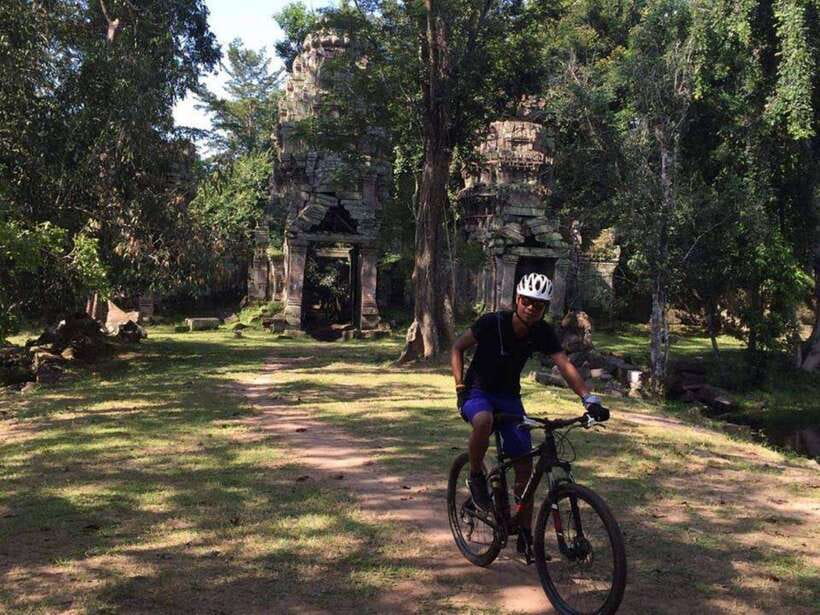
Ta Nie is one of the strongest reasons to choose this tour over a standard temple circuit. It is smaller and more secluded than Angkor Wat, Bayon, or Ta Prohm, and the approach takes you onto forest tracks rather than a busy paved route.
The temple feels less formal and more exposed to the surrounding trees. You can look closely at the stonework without the same sense of movement around you found at the major monuments. For me, this is where the bicycle route earns its keep. The ride is not just transport between famous sites. The track and the temple work together.
You should also adjust your expectations. Ta Nie is not a large spectacle, and it may not satisfy someone who wants every stop to be monumental. Its appeal is quiet discovery, shade, and the feeling of reaching a place that is less polished and less crowded.
The guide can point out how nature has gradually claimed the edges of the sanctuary. This is not the dramatic tree-and-stone collision seen at Ta Prohm, but it gives you a more restrained view of how the forest shapes the ruins.
Birdwatching at Jayatataka Baray
Jayatataka Baray provides one of the day’s best pauses. The water and surrounding vegetation create a change from temple corridors and bicycle tracks. Bring patience here. Wildlife sightings are possible, not guaranteed.
You might see cranes, egrets, lesser whistling ducks, kingfishers, butterflies, monkeys, and freshwater otters. The birds are a particularly good reason to keep your eyes away from the road for a while. A peaceful tree nursery garden adds another gentle stop to the day.
This part of the route gives you a better sense of Angkor as a living environment rather than a collection of stone monuments. The ancient city depended on water management, and the baray helps connect the temples to that wider system.
Do not expect a formal wildlife tour. The stop is a chance to watch and listen, with luck playing a major role. If you enjoy nature photography, carry your camera or phone where it can be reached easily, but protect it from dust on the off-road sections.
Ta Prohm, the temple shaped by trees
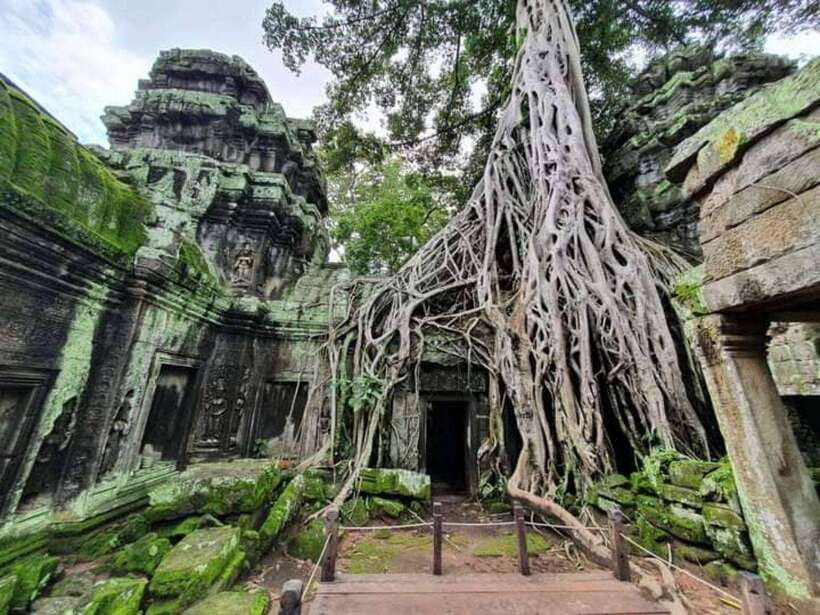
Ta Prohm is the grand finale for good reason. It is the temple associated with the Tomb Raider film, but the movie connection is only part of its appeal. The real attraction is the uneasy balance between architecture and forest.
Large roots press over walls and doorways. Stone galleries disappear into shadow, then open into courtyards where trees rise above the ruins. The effect is dramatic, but Ta Prohm is also one of the most popular stops in Angkor, so the experience may feel busier than Ta Nie or the forest tracks.
Arriving by bicycle gives the visit a satisfying rhythm. You have spent hours moving through living trees, stopped at a water site, and visited temples in different conditions. Ta Prohm then brings those ideas together in a place where the forest is impossible to ignore.
Take your time with the details rather than rushing straight to the most photographed roots. The temple has carved doorways, galleries, and smaller corners that reward a slower walk. Your guide can help you focus on the parts that are easy to miss when the main route is crowded.
The 12 km ride back to Siem Reap
After Ta Prohm, the return covers about 12 km on winding single tracks and smoother bike lanes. This is where the tour’s mix of challenge and comfort becomes useful. You still have riding to do, but the route ends with a blend of softer forest paths and easier surfaces rather than one long push on rough ground.
By this point, the heat will be more noticeable. Drink before you feel thirsty, use sunscreen again, and keep your pace steady. The supplied water and snacks help, but you should still carry personal essentials such as sunscreen and sunglasses.
The support is reassuring for a full-day ride. A first aid kit and spare bike parts are included, and the guide can help with basic mechanical problems. Free tuk tuk transfers also mean the day is not dependent on riding every metre between your accommodation and the cycling base.
What $65 includes, and what it does not
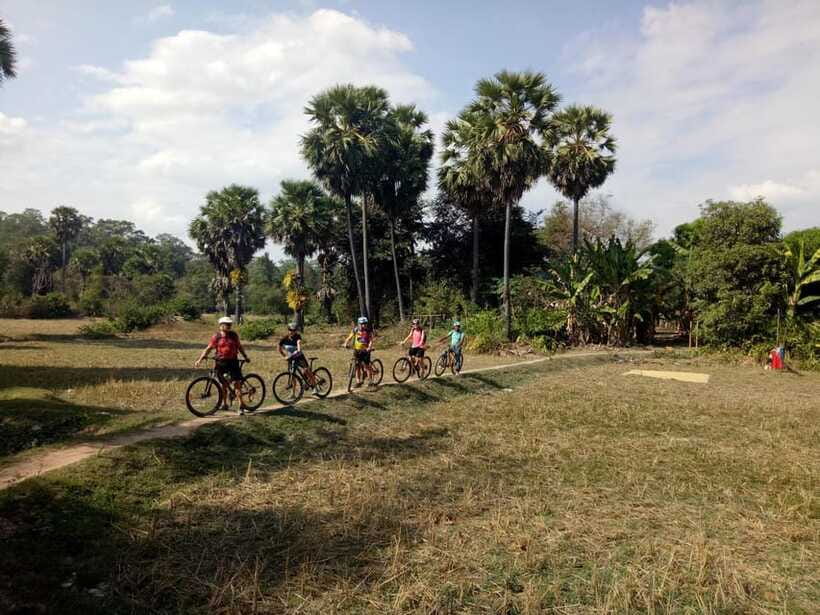
At $65 per person, this is a strong value if you want a full day rather than a short temple ride. The fee includes:
- Mountain bike in all sizes
- Helmet
- English or Spanish-speaking guide
- Lunch at a local restaurant
- Water, snacks, and seasonal fruit
- First aid kit and spare bike parts
- Free tuk tuk transfers
The temple pass is not included, and you need to budget for it separately. Personal expenses and travel insurance are also your responsibility. That distinction matters because the tour price may look like the complete cost until you add the required Angkor admission.
The value comes from the amount of support packed into seven hours. You are not simply renting a bicycle. You get a route through major temples and less-used tracks, a guide, meals and refreshments, equipment, and transport support. If you would rather move quickly between monuments, a standard vehicle tour may be easier. If you want the journey between the temples to matter, this price is reasonable.
You can cancel up to 24 hours in advance for a full refund, and the reserve-now, pay-later option keeps your plans flexible.
Who should book this ride
I would choose this tour if you like history but do not want to spend the entire day walking on temple stone. It suits active couples, friends, solo riders, and families with older children who can manage a medium-level 35 km route.
It is especially good for you if:
- You want a slower, quieter way to see Angkor
- You enjoy forest tracks and countryside riding
- You want both famous temples and smaller sanctuaries
- You like adding birdwatching and nature to a cultural day
- You prefer a guide who can adjust the pace and explain the sites
- You are comfortable cycling in heat for several hours
Think twice if you dislike uneven paths, need a fully paved route, or want a short and easy temple outing. This is also not suitable for pregnant women. The ride is described as medium, but Cambodian heat can be the harder part, not the distance.
What to bring for a better day
Wear light, breathable clothing that fits close enough for cycling. Closed-toe shoes are required, and sturdy footwear will help on dirt paths and old stone surfaces.
Bring spare clothing for temple visits, since shorts may be fine for riding but modest dress is required at sacred sites. Sunscreen and sunglasses are strongly recommended. A small personal bag should hold your phone, wallet, and any extra clothing without getting in the way.
Most important, start hydrated and keep drinking. The tour supplies water, but a full day outdoors calls for steady attention to fluids. Your day will be much more enjoyable if you treat the heat seriously from the first kilometre.
Should you book the Angkor Cycling Tour?
Book it if you want Angkor to feel like a place rather than a checklist. The strongest parts are the ride along Angkor Thom’s wall, the forest tracks near Bakheng Hill and Ta Nie, the wildlife pause at Jayatataka Baray, and the final visit to Ta Prohm.
The required temple pass adds to the total cost, and 35 km is not nothing in the Cambodian sun. Still, the included bike, guide, lunch, refreshments, safety kit, spare parts, and transfers make $65 a fair price for a full day of active sightseeing.
Choose this tour for a mix of monuments, nature, and personal space. Choose a vehicle-based tour instead if your priority is maximum comfort or the shortest route between temples.
FAQ
How long is the Angkor Cycling Tour?
The tour lasts 7 hours, including cycling, temple visits, lunch, breaks, and the return to Siem Reap.
How far do you cycle?
The route covers about 35 km. The return section is approximately 12 km.
What level of fitness is required?
The route is rated medium. It includes paved roads, forest tracks, single tracks, and some moderate sections, so you should be comfortable cycling for several hours in a hot climate.
Is the temple pass included?
No. The Angkor temple pass is required but is not included in the tour price.
What equipment is provided?
A mountain bike, helmet, first aid kit, and spare bike parts are provided. Bikes are available in all sizes.
Is lunch included?
Yes. Lunch is served at a local restaurant in front of the Elephant Terrace. Water, snacks, and seasonal fruit are also included.
What languages are available for the guide?
The tour offers live guiding in English or Spanish.
Is hotel pickup available in Siem Reap?
Yes. Pickup is included from hotels, apartments, and Airbnb accommodation in Siem Reap city, usually about 15 minutes before the 7:45 AM start.
Just added in Siem Reap
- Twilight Tastes of Siem Reap Include Dinner★ 5.0 · 13 reviews
- Ultimate Sunrise to Angkor Wat, Angkor Thom and Bayon Temple★ 5.0 · 3 reviews
- Trekking Tour at Phnom Kulen National Park from Siem Reap★ 5.0 · 3 reviews
- Full-Day Private Tour of Angkor Wat with Pick Up★ 5.0 · 12 reviews
- Private Day Trip to Angkor Temples with Expert Guide★ 5.0 · 4 reviews
- Siem Reap City Tour with War Museum and Killing Field★ 5.0 · 27 reviews
- Waterfall & River of 1000 Siva Linga- Kulen Mountain Private Tour★ 5.0 · 3 reviews
- Angkor Wat Experience Temple Pass and Siem Reap Food Tour★ 5.0 · 13 reviews
Countryside Bike Tours, compared.
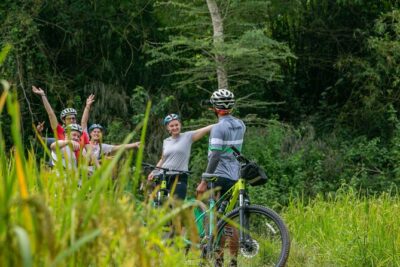
Siem Reap Countryside Bike Tour / E-Bike or Tuk Tuk
Read our review →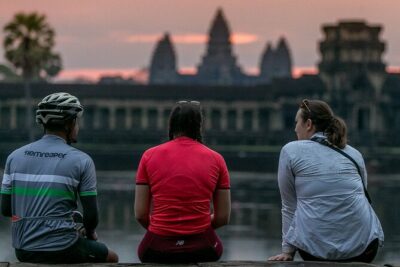
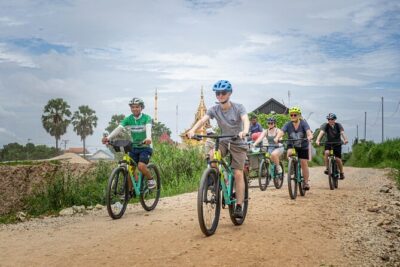
Phnom Penh Silk Island Bike Tour/ E-Bike or Tuk Tuk
Read our review →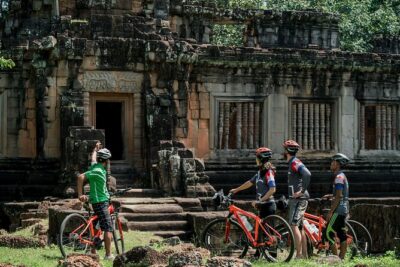
Angkor Wat Sunrise Bike Tour & Jungle Breakfast
Read our review →
Local Livelihood Half Day Bike Tour in Battambang
Read our review →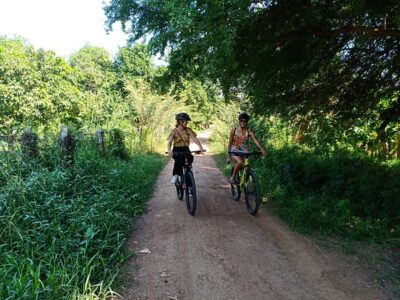
Silk Island Cycling Adventure & lunch with locals
Read our review →Browse the lists this tour appears in