Reviewed · TOURS IN SIEM REAP
Angkor Wat 2-Day Tour
Angkor Wat may be the headline, but the real pleasure of this two-day private tour is the range of places around it. You move from the grand scale of Angkor Wat to the smiling stone faces of Bayon, then into the tree-covered ruins of Ta Prohm. I like the private format, and I like the small comforts: cold drinking water and chilled towels after each temple visit.
The main thing to clarify is the second day. The description names the jewel of Angkorian art and the River of a Thousand Lingas, but the detailed stop list mostly covers the small circuit around Angkor Thom. The price is listed as $360, yet it is not clear if that is per person or for the private group. Ask for both points in writing before you pay.
Key points at a glance
- Private touring for your own group: You are not combined with strangers, and the route can allow some flexibility.
- A full Angkor circuit: Expect Angkor Wat, Angkor Thom, Bayon, Baphuon, the royal terraces, Ta Prohm, Banteay Kdei, and Srah Srang.
- Several English-speaking guides and drivers have been used: Names connected with past arrangements include Vutha, Ly, Ly Hol, Pheach, Bunanal, and Ten, though your assigned team should be confirmed.
- Sunset comes with a choice: You may watch from Angkor Wat or Bakheng Mountain, depending on the final plan.
- Useful extras are included: Transportation, drinking water, cold towels, and an English-speaking guide are covered.
- Budget for major extras: Temple tickets, lunch near the temples, and personal spending are not included.
What the $360 price really covers
At $360, this is not a simple transport-only outing. You are paying for roughly two days of private transportation and an English-speaking guide, with your group kept together rather than placed on a shared coach. That can be a good deal for a family or small group, especially if you want to set the pace and stop for questions.
The value is harder to judge if you are alone. A solo visitor pays the same listed price unless the company offers a different rate, and the listing does not explain if $360 is charged per person or per booking. Get that answer before booking. The same question applies to the vehicle: transportation is included, but the exact type is not stated.
Temple tickets are extra. Lunch near the temples is also extra, as are personal expenses. That matters because a low headline price can rise once you add admission and meals. The tour does include water and cold towels, small items that become genuinely useful in Cambodia’s heat.
The booking includes a mobile ticket and free cancellation up to 24 hours before the start time. Changes or cancellations inside that 24-hour window are not accepted for a refund. The start point is in Siem Reap, with an 8:00am departure.
A few more things to do in Siem Reap worth a look
- Siem Reap: Angkor Wat 2-Day Tour with Sunrise and Sunset
★ 4.9 · 4,429 reviews - Angkor 2-Day Sunset & Sunrise Small-Group Tour
★ 5.0 · 2,567 reviews - 2 Days Exclusive Temple Highlights with Sunset and Sunrise Tour
★ 5.0 · 1,157 reviews
Angkor Wat at the start of the day
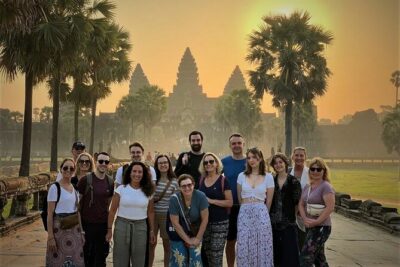
The day begins with a short drive from Siem Reap to Angkor Wat. This is the right place to begin: the temple’s scale is hard to grasp until you are close to its towers, galleries, and long approach.
The tour description calls Angkor Wat the largest religious building in the world. You will have time to see more than the famous front view, with its reflecting pool and central towers. An English-speaking guide can help explain the carvings, layout, and religious purpose, which is useful because the complex can otherwise feel like a maze of stone corridors.
The practical drawback is that this is a major sight with a lot of walking. You should follow the required temple dress code, and you should expect the day to involve heat, steps, and uneven surfaces. Water is supplied, but you still need to pace yourself.
Entering Angkor Thom through the South Gate
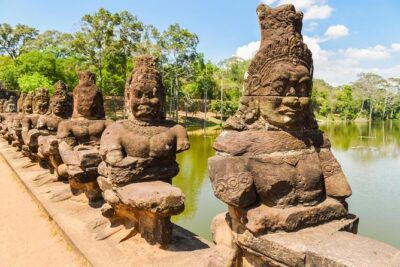
From Angkor Wat, the route continues to Angkor Thom, the great city enclosed by walls and entered through monumental gates. The South Gate is one of the most memorable approaches in the park.
Two rows of devas and asuras line the causeway, drawn from the Hindu story of the Churning of the Sea of Milk. The figures pull at a serpent, creating a visual line toward the gate. It is an excellent place to pause for an explanation, since the scene is more than decoration. It is a religious story built into the entrance to the city.
The gate itself was designed to protect Angkor Thom. In practice, you will probably see it from the vehicle as you enter, then stop for photographs. Ask your guide how much time is planned here. The detailed description lists many temples, and a rushed stop at every one can make the day feel like a checklist.
Bayon and its 216 stone faces
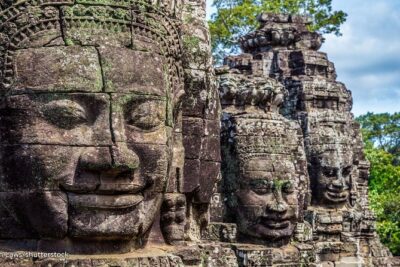
About 1 kilometer inside Angkor Thom, Bayon serves as the emotional center of the city. Its 54 towers carry 216 smiling faces of Avalokiteshvara, a Buddhist figure linked with compassion and with the power of King Jayavarman VII.
Bayon does not reveal itself in one clean view. You walk among towers and narrow passages, with faces appearing above you at different angles. I like this stop because it feels more personal than Angkor Wat. Angkor Wat is grand and ordered. Bayon is crowded, odd, and wonderfully hard to read at first.
The guide is especially useful here. Without some explanation, it can be difficult to understand how the temple’s faces, corridors, and upper levels fit together. Give yourself time to look up. Many people focus on the famous face towers and miss the carved scenes lower down.
Same base, a different kind of day out:
- Angkor Wat Sunrise or Sunset Tour with Guide from Siem Reap
★ 5.0 · 12,109 reviews - Siem Reap: Angkor Wat: Small-Group Sunrise or Sunset Tour
★ 5.0 · 9,444 reviews - From Siem Reap: Kampong Phluk Floating Village Tour by Boat
★ 4.9 · 6,979 reviews - Sunset tour of Kampong Phluk stilts home village on the Tonle Sap
★ 5.0 · 4,865 reviews
Baphuon, the royal terraces, and a long ceremonial stage
Baphuon is the second-largest temple in Angkor Thom. King Udayadityavarman II built it in the mid-11th century as a state temple to Shiva. Its three-tiered pyramid shape gives it a different feel from Bayon.
This is a stop for architecture rather than a quick photograph. The rising levels show how Angkorian builders used height to create a sacred mountain. Depending on the route and access on the day, you may spend time walking around the base and looking up toward the upper structure.
Nearby are the Terrace of Elephants and the Terrace of the Leper King. The Terrace of Elephants stretches about 350 meters along the front of the former royal palace. It functioned as a viewing stage for public ceremonies and as a place where the king could watch military training.
The Terrace of the Leper King sits just north of it and contains detailed carvings. These two terraces are easy to underestimate because they are long, low structures rather than towering temples. I like them as a reminder that Angkor was a working capital, not just a collection of religious monuments.
Chau Say Tevoda, Thommanon, and Takeo
The route then reaches three temples outside Angkor Thom: Chau Say Tevoda, Thommanon, and Takeo. They are smaller than Angkor Wat and Bayon, but that is part of their appeal. You can often get a clearer sense of a temple’s layout when you are not dealing with such a huge complex.
Chau Say Tevoda and Thommanon are close together, making comparison easy. Their smaller scale lets you focus on doorways, towers, and carved details. Takeo is a pyramid temple with a strong, block-like form. It lacks the polish of some other monuments, yet its unfinished quality helps you see the basic construction more plainly.
This part of the itinerary will appeal to anyone who wants more than the three famous names. The tradeoff is time. With two days, the guide should explain how long you will spend at each site so that the smaller temples do not squeeze out the places you most want to see.
Ta Prohm, where trees meet stone
Ta Prohm is the most theatrical stop on the route. It began as a Buddhist monastery and university during the Angkor Period, and its ruins are tangled with large trees. The setting helped make it famous as the Tomb Raider temple.
The tree roots are the obvious attraction, but do not rush through looking only for the best photograph. Ta Prohm shows how the forest can become part of a ruin once maintenance stops. Corridors, doorways, and carved walls appear and disappear behind roots and shadows.
It is also one of the busiest-feeling stops in the itinerary. The private format gives you a better chance to control your pace, but it cannot guarantee quiet. Ask your guide to point out less obvious carvings and allow time to look beyond the main tree scene.
Banteay Kdei and the water at Srah Srang
Banteay Kdei is another Buddhist temple surrounded by forest. It has been restored and remains open, yet it keeps a quieter, more mysterious character than the largest monuments.
The forest setting is the reason to include it. After the scale of Angkor Thom and the fame of Ta Prohm, Banteay Kdei offers a slower stop. You may find it easier to study the walls and entrances here without feeling that you need to hurry to the next major sight.
Across from Banteay Kdei is Srah Srang, a baray, or reservoir. The water gives the stop a welcome change of mood. It is especially attractive around sunrise and sunset, although this tour’s listed sunset choice is Angkor Wat or Bakheng Mountain.
Because the two sites are connected, your guide can help you understand how temples and waterworks fit together. The reservoir is not simply a photo stop. It also shows the scale of planning behind Angkor.
Sunset at Angkor Wat or Bakheng Mountain
The day ends at one of two sunset locations. At Angkor Wat, you watch the light change around the largest monument in the park. At Bakheng Mountain, the temple sits high above the surrounding area and offers a different view.
The choice matters. Angkor Wat gives you the most iconic setting, while Bakheng offers the feeling of looking out from a hilltop temple. The description does not promise which place you will visit, so confirm the choice and any access arrangements with the company.
Sunset is also the moment when the day can feel most tiring. You will already have seen many temples, and the final stop may involve more walking or waiting. I would choose based on what you value more: a direct view of Angkor Wat or a higher viewpoint from Bakheng.
What day two appears to include
The overview says the second day brings you to the jewel of Angkorian art and the River of a Thousand Lingas. Those descriptions generally point to a different group of sites from the detailed small-circuit list, but the supplied itinerary does not name the stops clearly.
That gap is the most important planning issue. Do not assume that the second day automatically includes every site associated with those descriptions. Ask for the exact day-two temple names, departure time, and route before booking.
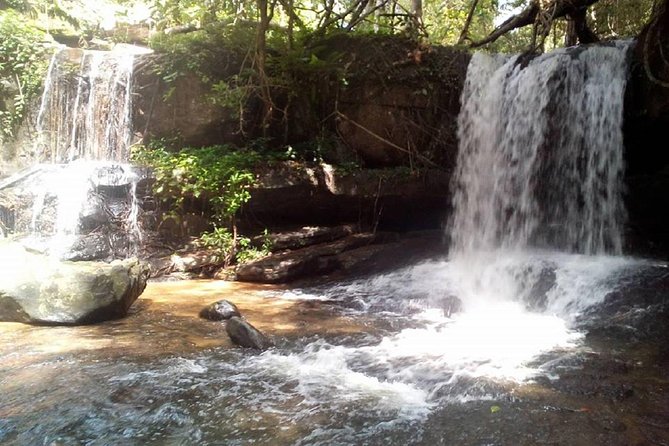
Past arrangements have also included additions such as Tonle Sap Lake and a boat ride to a fishing village on stilts, but that should not be treated as part of this package. If that experience interests you, ask if it is available and what extra charge applies.
Guides, drivers, and the private format
The most praised part of the experience is the personal service from the driving and guiding team. Names connected with past arrangements include Vutha, Ly, Ly Hol, Pheach, Bunanal, and Ten. Vutha was described as flexible and good with children, while Ly and Ly Hol were noted for punctual, helpful driving. One guide also worked as a photographer, which may appeal to solo visitors or couples who want help with temple portraits.
Your assigned guide is not guaranteed by name, so confirm who will lead the tour and how strong their English is. The listing promises an English-speaking guide, but it does not promise a particular person.
A private tour is a good fit for families, couples, and anyone who dislikes fixed group schedules. It can also help if you are traveling alone and want a guide focused on your questions. The downside is cost. A private vehicle and guide usually offer better control, but the $360 price needs to be shared across enough people to feel worthwhile.
Who should book this Angkor tour?
You should consider it if you want the major temples handled in a private setting, value an English-speaking guide, and prefer having transportation arranged for both days. It is also a sensible choice for families, since the private setup can be easier with children and the cold towels are welcome after long temple walks.
I would be more cautious if you want a tightly defined two-day route. The day-one stops are clear, but the day-two description is not. Confirm the exact plan, the ticket cost, the vehicle, the guide’s name, and whether the $360 price is per person or per group.
Should you book it?
Book this tour if private service, flexible pacing, and a broad Angkor circuit matter more to you than a fully itemized package. The combination of Angkor Wat, Bayon, Ta Prohm, the royal terraces, smaller temples, water views, and sunset gives you a strong first look at the park.
Hold off until the operator clarifies day two and the price basis. Once those details are settled, the included guide, transport, water, and cold towels make the package practical, especially for a small group sharing the cost.
FAQ
Where does the tour start?
The tour starts in Siem Reap, in Siem Reap Province.
What time does the tour begin?
The stated start time is 8:00am.
Is this a private tour?
Yes. Only your group participates in the activity.
Is an English-speaking guide included?
Yes. An English-speaking guide is included.
Is transportation included?
Yes. Transportation is included, but the specific vehicle type is not stated.
Are temple tickets included?
No. Temple tickets are not included in the price.
Is lunch included?
No. Lunch near the temples is not included.
Are drinking water and cold towels provided?
Yes. Drinking water and cold towels are included.
Can I cancel for a full refund?
Yes, if you cancel at least 24 hours before the experience start time. Cancellations or changes made less than 24 hours in advance are not accepted for a refund.
Just added in Siem Reap
- Twilight Tastes of Siem Reap Include Dinner★ 5.0 · 13 reviews
- Ultimate Sunrise to Angkor Wat, Angkor Thom and Bayon Temple★ 5.0 · 3 reviews
- Trekking Tour at Phnom Kulen National Park from Siem Reap★ 5.0 · 3 reviews
- Full-Day Private Tour of Angkor Wat with Pick Up★ 5.0 · 12 reviews
- Siem Reap City Tour with War Museum and Killing Field★ 5.0 · 27 reviews
- Waterfall & River of 1000 Siva Linga- Kulen Mountain Private Tour★ 5.0 · 3 reviews
- Private Day Trip to Angkor Temples with Expert Guide★ 5.0 · 4 reviews
- Angkor Wat Experience Temple Pass and Siem Reap Food Tour★ 5.0 · 13 reviews
Tours in Siem Reap, compared.
Angkor Wat Sunrise or Sunset Tour with Guide from Siem Reap
Read our review →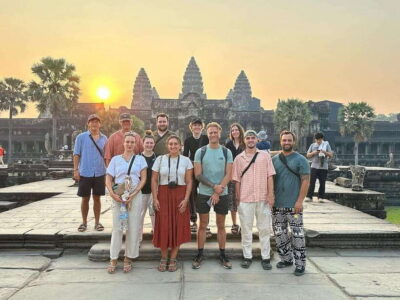
Angkor Wat: Small-Group Sunrise or Sunset Tour
Read our review →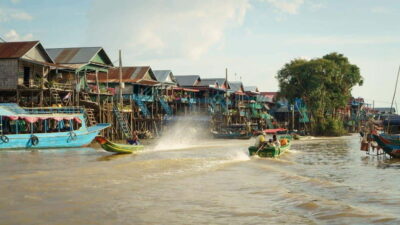
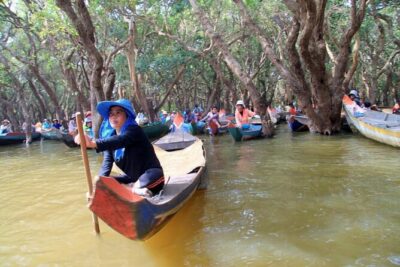
Sunset tour of Kampong Phluk stilts home village on the Tonle Sap
Read our review →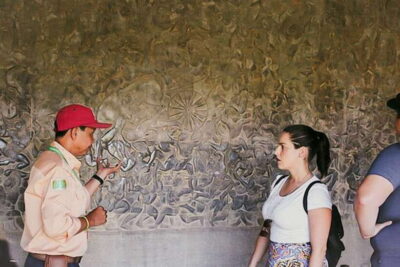
Angkor Wat 2-Day Tour with Sunrise and Sunset
Read our review →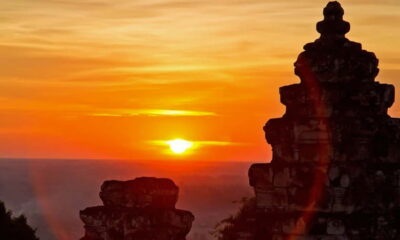
Angkor Wat Sunrise tour with Small – Group and Guide tours
Read our review →