Reviewed · TOURS IN SIEM REAP
Angkor Wat & Banteay Srey Tour
Angkor Wat is only the opening act here. This full-day private outing adds the smiling towers of Bayon, tree-covered Ta Prohm, finely carved Banteay Srei, and quieter Banteay Samre. Banteay Srei’s pink sandstone carvings are the special prize, while the drive through the countryside gives you a look beyond Siem Reap’s temple circuit.
I like the private format, which lets you set the pace with your own group, and I like the small comforts: air-conditioning, cold drinking water, and cool towels after long walks. The company’s guides, including Kosorl Oun, Bros, and Sinann, are praised for clear explanations, patience, Cambodian history, and help with photographs. The main drawback is simple: the advertised $50 price does not include the temple pass, meals, or the extra charge for sunrise.
Key points before you book
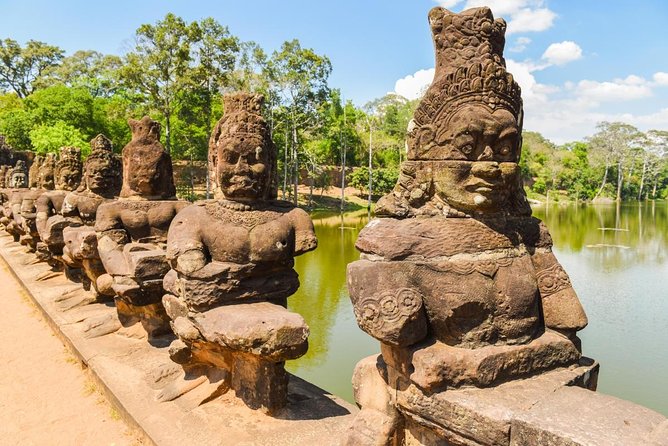
- Five major temple stops: Angkor Wat, Bayon, Ta Prohm, Banteay Srei, and Banteay Samre fill a long but worthwhile day.
- A private tour for your group: You are not placed with unrelated participants, so breaks and walking speed can be adjusted.
- Banteay Srei is 35 kilometers from the main Angkor area: Expect a substantial drive, but it brings a different style of temple and countryside scenery.
- Angkor admission is extra: You stop at the ticket office before visiting the temples, and the listed price does not include entrance fees.
- Comfort is handled well: Air-conditioned transport, drinking water, and cool towels are included.
- Sunrise is not part of the standard price: Ask about the added charge if you want to see Angkor Wat before dawn.
A long temple day that covers the essential contrasts
This is the sort of tour to choose when you have one full day and want more than the usual Angkor Wat, Bayon, and Ta Prohm loop. The day lasts about seven to ten hours, depending on pickup time, temple traffic, walking speed, and how long you spend at each site.
Your guide or driver collects you from your hotel lobby at the time selected during booking. The first practical stop is the ticket office, where you buy your temple pass. Since the pass is not included, allow for that extra cost when comparing this tour with other options.
The five-stop plan has a sensible rhythm. Angkor Wat provides the grand beginning, Bayon brings intricate faces and Buddhist design, Ta Prohm supplies the atmospheric tree roots, and the two Banteay temples add detailed stonework and a quieter setting. The final two stops also take you farther from the main cluster, so this is not simply a short circuit around central Angkor.
Other trips people book in Siem Reap:
- Angkor Wat Sunrise or Sunset Tour with Guide from Siem Reap
★ 5.0 · 12,109 reviews - Siem Reap: Angkor Wat: Small-Group Sunrise or Sunset Tour
★ 5.0 · 9,444 reviews - From Siem Reap: Kampong Phluk Floating Village Tour by Boat
★ 4.9 · 6,979 reviews
Angkor Wat: give the grand entrance three hours
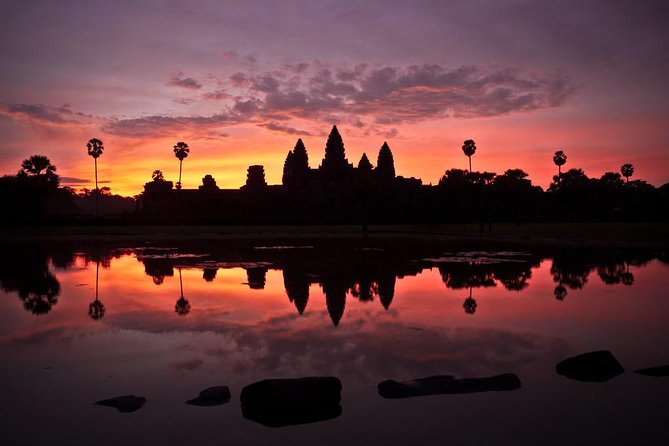
Allow about three hours at Angkor Wat, the largest and most famous Khmer temple in the program. Built between 1113 and 1150 during the reign of Suryavarman II, it reaches 65 meters and is enclosed by a large moat known as Ko Tek.
The scale is the first thing you notice. The moat, towers, galleries, and long approach make the temple feel like a planned city rather than a single monument. Take time to look at the base-reliefs on both the exterior and interior walls. A rushed walk through the central area would miss much of what makes Angkor Wat important.
This is also the stop most likely to shape your view of the whole day. Your guide can explain the temple’s date, royal connection, Hindu setting, and the stories carved into the stone. Guides connected with Easy Angkor Trip are repeatedly praised for bringing Cambodian history into the visit rather than simply pointing out buildings.
The practical catch is that Angkor Wat involves extended walking and some uneven surfaces. The tour description does not promise special access or a shortened route, so wear shoes you can use for several hours. If your knees or stamina are concerns, say so early. One guide, Kosorl Oun, is specifically praised for helping a visitor with arthritic knees manage the steep temple steps, but you should still judge your own limits.
Bayon: two hours among 54 towers and smiling faces
The next major stop is Bayon, scheduled for about two hours. It was built in the late 12th or early 13th century during the reign of Jayavarman VII and is described as a Buddhist-style temple.
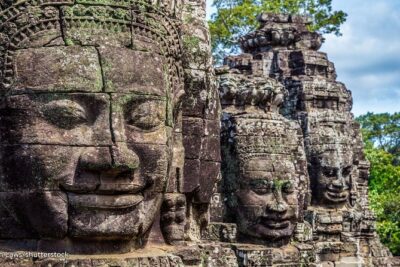
Bayon’s signature feature is its forest of towers. The temple has 54 towers, associated with the 54 provinces of the Khmer Empire, and more than 200 carved smiling faces look out from them. These faces change as you move through the passages, appearing suddenly between blocks of stone and then disappearing again around a corner.
The site is more enclosed and visually complicated than Angkor Wat. This is where a speaking guide earns the fee. Without context, you may see a maze of towers. With clear explanations, the carvings, royal program, and religious changes become easier to follow.
The historical account provided for the tour also notes damage from Cham invaders in 1811. That detail helps explain why parts of the temple feel incomplete or weathered. Do not expect every wall to be intact. Bayon’s appeal comes partly from its unusual faces and partly from reading the surviving structure carefully.
Bayon is listed with free admission within this tour, but you still need the overall temple pass purchased earlier. The price distinction matters when you are working out your total budget.
Ta Prohm: two hours beneath the Spung trees
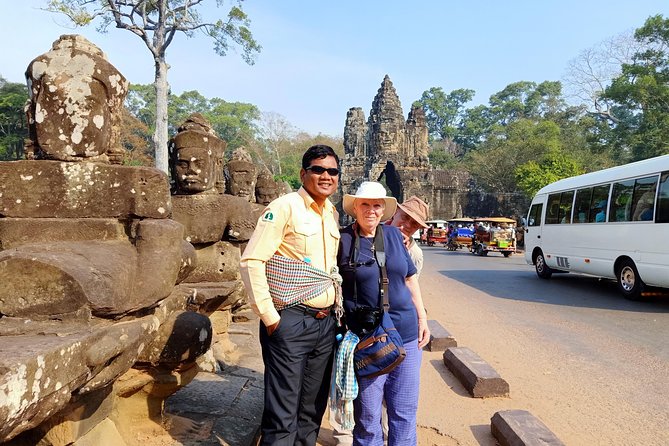
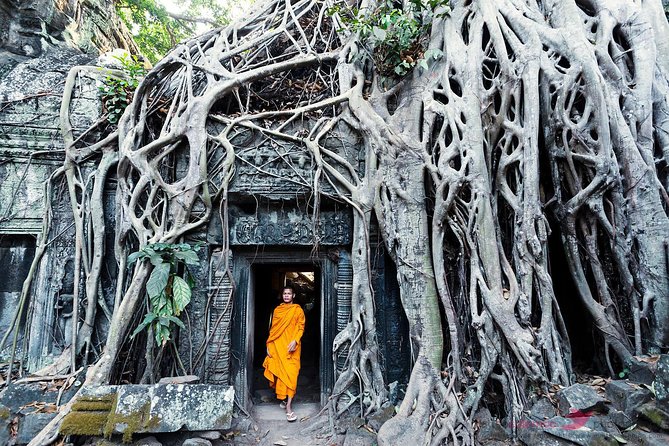
Ta Prohm gets about two hours, which is enough time to appreciate its famous mix of architecture and nature. Built in the late 12th century by Jayavarman VII, the temple was dedicated in 1186 to his mother.
The most memorable sight is the Spung tree, whose roots grow up, on, and over sandstone walls. The trees do not merely decorate the ruins. They press against galleries and blocks, making the temple look as if the forest has taken back the structure.
Ta Prohm began with a Buddhist background and was later converted to Hindu use. Some Buddhist galleries were destroyed and replaced with Hindu symbols such as the yoni and lingam. A guide can point out these changes so you see more than the famous tree roots.
The temple lies about 1.5 kilometers from Bayon through the Victory Gate, making it a natural continuation of the central Angkor route. It is also another place where patience helps. The best details may be in side galleries rather than in the first open courtyard you reach.
If you are expecting a quiet ruin with no other people, adjust that expectation. Ta Prohm is one of the program’s best-known stops. The private format helps because your guide can suggest a sensible pace, but it cannot remove the site’s popularity.
Same base, a different kind of day out:
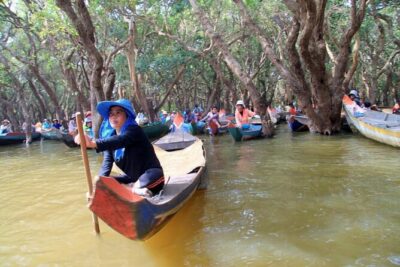
- Sunset tour of Kampong Phluk stilts home village on the Tonle Sap
★ 5.0 · 4,865 reviews - Siem Reap: Angkor Wat 2-Day Tour with Sunrise and Sunset
★ 4.9 · 4,429 reviews - Siem Reap: Full-Day Angkor Wat Guided Tour with Sunset
★ 4.9 · 3,803 reviews - Angkor Wat Sunrise tour with Small – Group and Guide tours
★ 5.0 · 3,655 reviews
Banteay Srei: the day’s finest stone carving
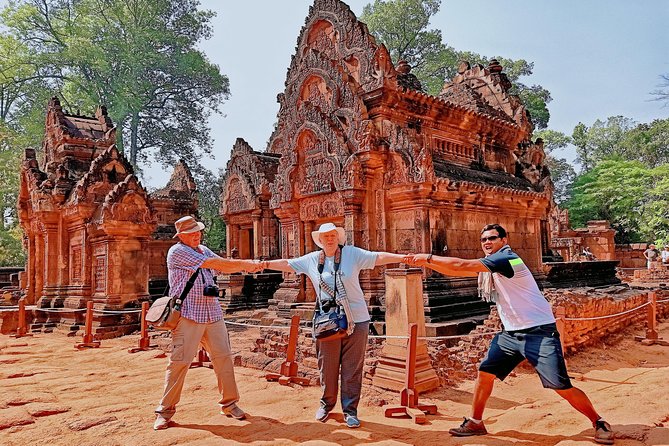
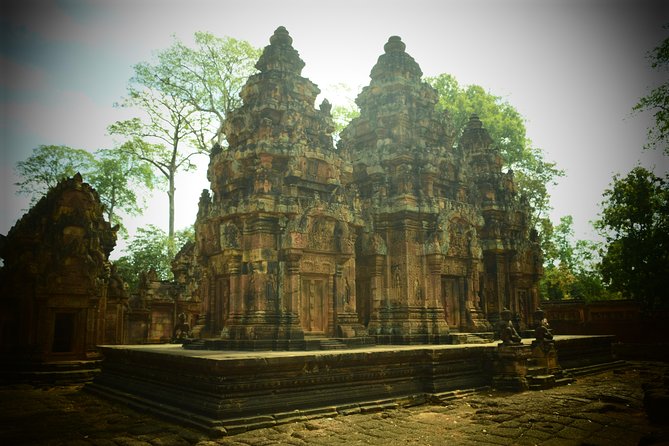
Banteay Srei is about 35 kilometers from the main Angkor area, so reaching it adds road time. That distance is the main tradeoff, but it is also why this stop feels different from the central temple circuit.
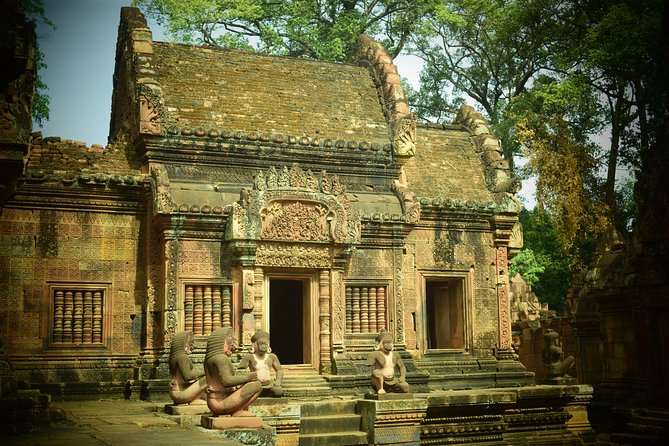
The temple is built from pink sandstone and is known for exceptionally detailed carving. It is often called the Lady Temple. The smaller scale and fine decoration contrast sharply with Angkor Wat’s vast galleries and Bayon’s tower-filled interior.
Look closely at the carving rather than standing back for a single wide photograph. The stone allows for delicate work, and the details are the reason Banteay Srei earns such a long drive. This is the stop I would protect if you are choosing between a quick central loop and a longer day.
The route may include a stop to see local people making natural sugar products from the sugar palm. This is a useful addition because it connects the temple visit with present-day rural life. It is not a guaranteed fixed-length demonstration, so think of it as an opportunity along the way, not a separate workshop.
The schedule allows about two hours at Banteay Srei. That gives you time to study the carvings, hear the temple’s story, and take photographs without treating the site as a quick roadside stop.
Banteay Samre: a quieter final temple
Banteay Samre receives about one hour. Located 400 meters east of the East Baray, it was built during the reigns of Suryavarman II and Yasovarman II in the early 12th century.
This is a Hindu temple in the Angkor Wat style. After Angkor Wat, Bayon, Ta Prohm, and Banteay Srei, it provides a smaller final chapter rather than another giant headline sight.
The one-hour visit is short, but that may be welcome late in the day. You can focus on the structure and design without trying to absorb another enormous complex. If you are already tired, tell your guide. The private setup means your group has more room to balance curiosity with the need for a break.
Banteay Samre is also part of the value calculation. A cheaper tour that stops only at the famous central temples may suit someone with limited time, but this program gives you a broader sense of Angkor-era design and a farther-reaching day around Siem Reap.
What the $50 price really covers
At $50 per person, this tour offers good value if you want a private vehicle, a guide, and five temple stops in one day. The price is not an all-inclusive admission package, so compare the final cost rather than the headline figure.
Included are:
- Air-conditioned transportation
- A speaking guide and driver
- Cool drinking water
- Cool towels
- Hotel pickup
- A private tour for your group
Not included are the temple entrance fees, meals, personal expenses, travel insurance, and any sunrise surcharge. You should also plan for food during a day that may last up to ten hours, since breakfast, lunch, and dinner are not included.
Group discounts are offered, but the experience is described as private, with only your group participating. That combination may make the tour particularly useful for couples, families, or a small group who want to split transport and guiding costs while keeping control of the day.
The guide can make or break this schedule
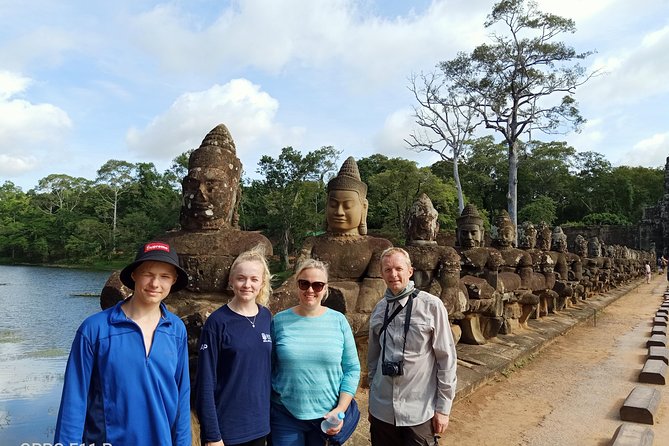
Five temple stops are a lot to absorb. A good guide helps you decide what deserves detail and what can be seen more quickly.
Kosorl Oun is associated with the company and is praised for his enthusiasm, Cambodian history knowledge, friendly manner, patience, and photography skills. Other guide names connected with past bookings include Bros and Sinann. You should not assume a specific person is guaranteed unless the company confirms it, but these names give you a sense of the guiding style offered.
The strongest praise centers on personal attention. Guides are described as helping with steep steps, adapting to physical needs, explaining both temple history and Cambodia’s recent past, and taking creative photographs. That last point can be useful if you are traveling as a couple or group and want photographs of everyone together.
You can also ask for a village visit if the temple pace begins to feel repetitive. The company has accommodated requests for more local experiences, though the supplied details do not promise a village stop on this particular tour. Treat it as a request, not an included feature.
Who should book this Angkor day?
I would choose this tour if you have one full day in Siem Reap and want the major temples plus Banteay Srei. It suits people who value explanations, prefer a private vehicle, and do not want to organize transport between several widely separated sites.
It is also a good match for couples and families. The private format gives you more control over breaks, walking speed, and photography. The included water, cool towels, and air-conditioning matter in Cambodia’s heat, especially on a day with several hours outside.
You may want a different plan if you dislike long road journeys or prefer to explore only two or three temples at a slow pace. Banteay Srei is 35 kilometers from the main Angkor area, and the complete schedule can reach ten hours. A shorter central Angkor visit would be easier on anyone with limited stamina.
At booking, state your preferred pickup time clearly. Sunrise is an extra-cost option, not part of the standard tour. Also tell the company about mobility concerns before the day begins, since some temple steps are steep.
Free cancellation is available if you cancel at least 24 hours before the experience starts. Cancellations within 24 hours are not refunded, and changes made inside that period are not accepted. The cut-off follows local Cambodian time.
Should you book it?
Book this tour if you want a full Angkor introduction with a private guide and are willing to pay temple admission and food costs separately. The mix of famous monuments, fine Banteay Srei carving, rural views, and the less celebrated Banteay Samre makes the $50 starting price reasonable for a long day.
I would be cautious if you want a relaxed schedule or if you mainly care about sunrise photography. Sunrise costs extra, and five temples can feel demanding. For most visitors with limited time in Siem Reap, though, this is a practical way to see the region’s main architectural contrasts while getting useful historical context and personal help along the way.
FAQ
What is included in the $50 tour price?
The price includes hotel pickup, air-conditioned transportation, cool drinking water, cool towels, and a speaking guide and driver.
Are temple entrance fees included?
No. Entrance fees are not included. You stop at the ticket office before visiting the temples to buy your temple pass.
How long does the tour last?
The tour lasts approximately seven to ten hours, depending on the day’s timing and pace.
Is this a private tour?
Yes. Only your group participates in the private activity.
Which temples are included?
The planned stops are Angkor Wat, Bayon Temple, Ta Prohm Temple, Banteay Srei, and Banteay Samre.
Is sunrise at Angkor Wat included?
No. Sunrise requires an extra charge.
Are meals included?
No. Breakfast, lunch, dinner, and other meals are not included.
Can I cancel for a full refund?
Yes, if you cancel at least 24 hours before the experience start time. Cancellations within 24 hours and changes made within 24 hours are not refunded or accepted.
Just added in Siem Reap
- Twilight Tastes of Siem Reap Include Dinner★ 5.0 · 13 reviews
- Ultimate Sunrise to Angkor Wat, Angkor Thom and Bayon Temple★ 5.0 · 3 reviews
- Trekking Tour at Phnom Kulen National Park from Siem Reap★ 5.0 · 3 reviews
- Full-Day Private Tour of Angkor Wat with Pick Up★ 5.0 · 12 reviews
- Private Day Trip to Angkor Temples with Expert Guide★ 5.0 · 4 reviews
- Siem Reap City Tour with War Museum and Killing Field★ 5.0 · 27 reviews
- Waterfall & River of 1000 Siva Linga- Kulen Mountain Private Tour★ 5.0 · 3 reviews
- Angkor Wat Experience Temple Pass and Siem Reap Food Tour★ 5.0 · 13 reviews
Tours in Siem Reap, compared.
Angkor Wat Sunrise or Sunset Tour with Guide from Siem Reap
Read our review →
Angkor Wat: Small-Group Sunrise or Sunset Tour
Read our review →
Sunset tour of Kampong Phluk stilts home village on the Tonle Sap
Read our review →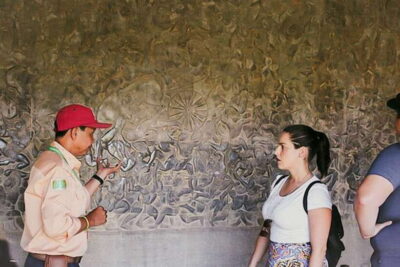
Angkor Wat 2-Day Tour with Sunrise and Sunset
Read our review →
Angkor Wat Sunrise tour with Small – Group and Guide tours
Read our review →