
Reviewed · COUNTRYSIDE BIKE TOURS
Angkor Wat Cycling Tour
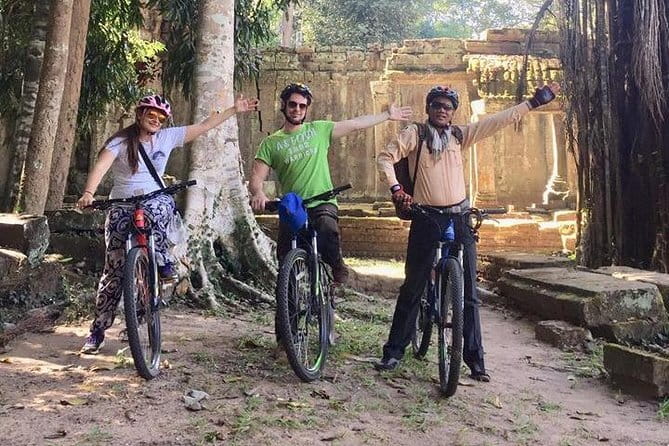
Angkor Wat is best understood at bicycle speed. You leave Siem Reap by bike at 7:30 am, follow quiet roads through the forest, and reach famous temples by routes that feel more personal than a standard vehicle tour. I like the back roads and jungle paths, and I like that the private format lets the guide adjust the pace. The main catch is simple: you must add the $37 temple pass to the $45 tour price.
I also like the chance to see rural life around the park rather than moving from one monument to the next in an air-conditioned car. Guide K, also called Kosorl in one account, receives especially warm praise for his friendly manner, good timing, and care. Still, this is a long morning and afternoon on a bike in Cambodia, so it suits you best if you enjoy steady exercise and heat.
Key Points
- Quiet cycling routes: Use paved paths and lesser-used back roads around Angkor rather than staying only on the main roads.
- Six to eight hours: Set aside most of the day, with major temple stops lasting up to two hours.
- Private experience: Only your group takes part, giving the guide room to adapt the ride.
- Strong guide reputation: Ask if Mr K is available if you want the guide most often singled out for friendly service and local insight.
- Major and minor temples: See Angkor Wat, Bayon, Ta Prohm, Chau Say Tevoda, Ta Nei, and Angkor Thom’s East Gate.
- Extra cost to plan for: The $45 price does not include the $37 Angkor Temple Pass.
Why Cycling Changes Your Angkor Day
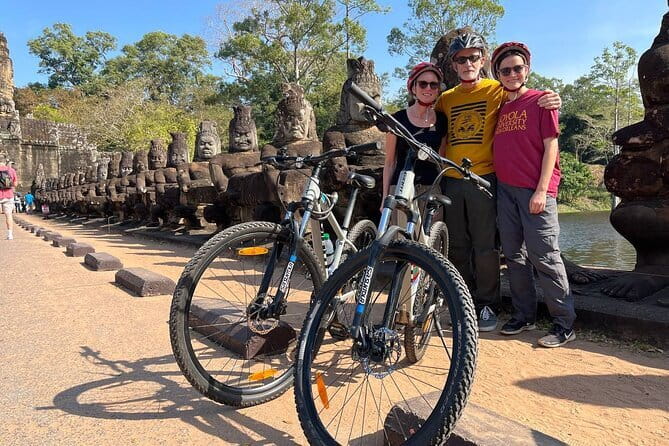
The usual way to see Angkor is by car, tuk-tuk, or a large group vehicle. A bicycle gives you a different rhythm. You can hear the forest, notice village life near the park, and stop without dealing with vehicle doors, parking, or engine noise.
This tour is not just a bicycle ride to Angkor Wat. It uses the bike to connect the major monuments with quieter sections of the complex. The supplied route description includes back roads, forest trails, and smaller temples that many visitors skip. That makes the experience useful for anyone who wants more than the standard three-temple circuit.
I also like the environmental side of the trip, though you should not mistake it for an easy stroll. The ride is described as leisurely, but the full day lasts six to eight hours. You will spend much of that time moving between sites, walking inside temple compounds, and climbing or crossing uneven stone in places.
The tour is private, so your group does not have to match the pace of strangers. That matters on a bicycle. If you want to pause for photos, ride more slowly, or spend more time at a favorite ruin, your guide has more flexibility than a large scheduled group.
More Bike Tours in Siem Reap
- Siem Reap Countryside Bike Tour / E-Bike or Tuk Tuk
★ 5.0 · 935 reviews - Angkor Sunrise Bike Tour / E-Bike or Tuk Tuk
★ 5.0 · 615 reviews - Siem Reap: Bike the Angkor Temples – Full-Day 30km Tour
★ 5.0 · 463 reviews
Leaving Siem Reap at 7:30 am
Hotel pickup begins at 7:30 am. This early start gives you a useful head start on a full day, although it does not promise empty temples at every stop. Angkor Wat and Ta Prohm remain popular, and the experience still includes the major sights that draw the largest crowds.
Your guide supplies the mountain bike, helmet, and cold drinking water. The bike equipment is an important part of the value here. Several accounts specifically praise the quality of the bicycles and the sense of safety provided by good helmets.
The opening ride takes you through the rural area around Angkor. You can expect to see everyday life outside the main monuments, then move onto the park’s cycling routes. The exact amount of riding depends on your group and the pace you choose. Guide K is praised for adapting the amount of cycling, which is helpful if one person in your party is stronger on a bike than another.
The tour includes hotel drop-off at the end. Since the day can run as long as eight hours, you should keep your schedule open afterward rather than booking a tight evening plan.
Angkor Wat: Two Hours at Cambodia’s Great Temple
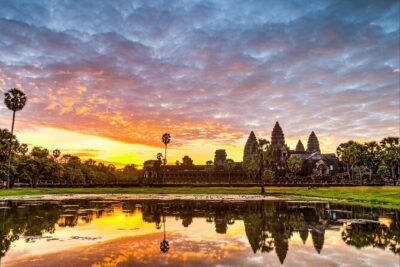
Angkor Wat is the first major stop and receives about two hours. Built between 1113 and 1150 during the reign of Suryavarman II, it is the largest and most famous Khmer temple.
The complex is more than a single building. Its towers, galleries, courtyards, and broad surrounding moat create a long visit, even before you account for the approach by bicycle. Two hours lets you see the main structure without turning the stop into a rushed photo break.
The bicycle adds a useful sense of arrival. You approach through the park rather than simply stepping out of a vehicle. After locking or leaving the bike as directed, you can explore on foot while the guide explains the temple’s design and history.
This is also where your admission pass matters. The tour price is $45 per person, but the Angkor Temple Pass costs another $37 per person. That brings the basic listed cost to $82 each before any other personal spending.
You should treat Angkor Wat as the most structured stop of the day. It is famous for good reason, but it is not the quietest part of the ride. The smaller ruins later in the route provide more of the solitude that makes this cycling tour different.
Bayon and the Faces of Angkor Thom
The next major stop is Bayon Temple, with about two hours set aside. The route description calls it a Buddhist temple built in the late 12th or early 13th century under Jayavarman VII. Its many towers and carved faces make it one of Angkor’s most memorable sites.
Bayon is inside Angkor Thom, the ancient city enclosed by walls and gates. The temple can feel compact and maze-like compared with Angkor Wat. That gives your guide an important role. Without some explanation, it is easy to admire the faces and miss how the temple fits into the wider city.
The two-hour stop allows time for both the central temple and the surrounding setting. You can study the stone carvings, pass through narrow galleries, and take in the way the forest presses close to the monument.
Because Bayon is one of the big names on the Angkor route, expect it to be more active than Ta Nei or Chau Say Tevoda. The bicycle still helps with the larger journey, but it cannot make every popular temple quiet.
More rides through the countryside near Siem Reap:
- Siem Reap: Angkor Wat Sunrise Bike Tour & Jungle Breakfast
★ 5.0 · 415 reviews - Siem Reap: Guided Countryside Bike Tour
★ 4.9 · 294 reviews - Siem Reap Countryside Sunset Bike Tour / E-Bike or Tuk Tuk
★ 5.0 · 173 reviews - Siem Reap: Bike the Angkor Temples – Full-Day 30km Tour
★ 4.9 · 159 reviews
Chau Say Tevoda and a Smaller Temple Pause
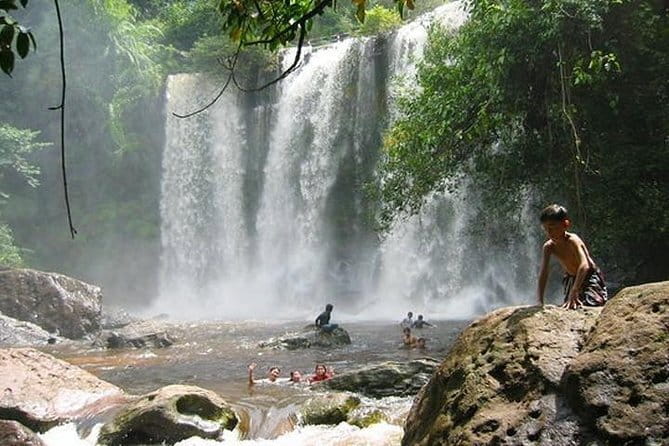
Chau Say Tevoda receives about 30 minutes. It sits just east of Angkor Thom, south of Thommanon across Victory Way, and dates from the mid-12th century Angkor Wat period.
This is a Hindu temple, making it a useful contrast with the Buddhist background of Bayon and Ta Prohm. Half an hour is enough for an overview, a few photos, and a short explanation, but not a detailed archaeological study.
I see this stop as one of the tour’s better choices for people who want range. You get the famous monuments, but also smaller structures that show how broad the Angkor complex really is. If you prefer to spend every available minute at the biggest temples, the short stop may feel less important. If you enjoy seeing how different ruins relate to one another, it adds welcome variety.
Ta Prohm and the Temple in the Trees
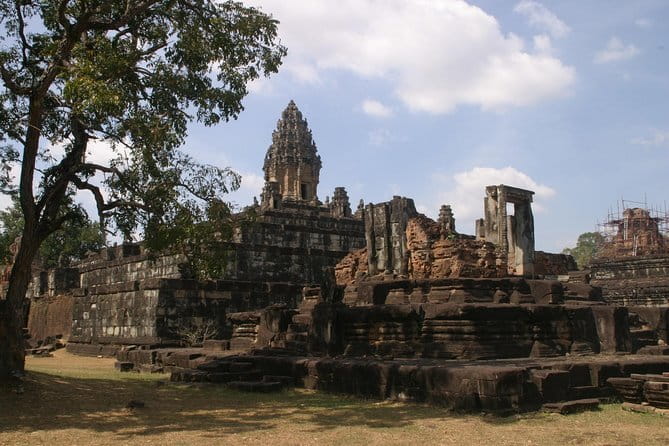
Ta Prohm receives about two hours. Jayavarman VII built it in the late 12th century and dedicated it in 1186 to his mother. It began with a Buddhist purpose and was later changed to Hindu use.
The temple is known for its trees and partly overgrown stonework. Here, the forest is not just a backdrop. Roots and branches interact with the galleries, courtyards, and walls, creating the atmospheric setting most people picture when they imagine Angkor.
Two hours gives you enough time to move beyond the first dramatic view. You can look at the carvings, see the layout of the complex, and notice the difference between restored sections and areas left closer to their overgrown condition.
Ta Prohm is also one of the busiest stops on the route. The cycling approach may help you avoid some of the feel of a vehicle convoy, but it will not remove the popularity of the temple. Be ready for a slower visit here, especially if your group wants photos.
Ta Nei: A Quieter Ruin Near the East Baray
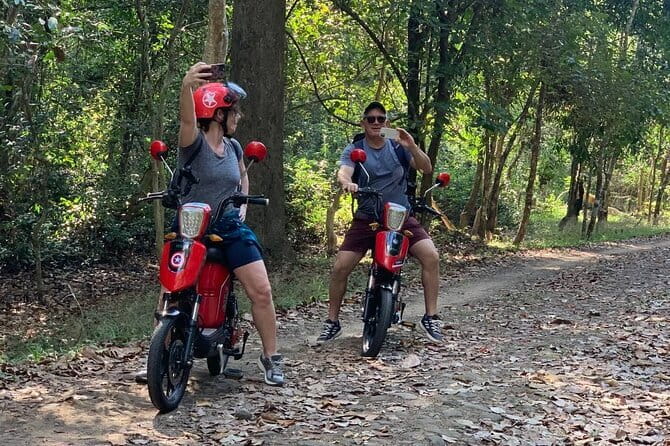
Ta Nei gets about one hour and is one of the strongest reasons to choose this ride instead of a basic Angkor circuit. It is a late 12th-century stone temple built under Jayavarman VII and dedicated to the Buddha.
The temple lies near the northwest corner of the East Baray, a large sacred reservoir. It is smaller and less prominent than Angkor Wat, Bayon, or Ta Prohm. That makes the bicycle approach feel worthwhile, since the route connects you with a part of Angkor that is less central to the usual first visit.
You should come here for atmosphere and scale rather than a huge monument. Ta Nei gives you time to look closely at stonework without trying to cover a vast building. The one-hour stop also prevents the day from becoming a series of hurried drive-by photographs.
The route description refers to jungle areas and unusual sites that are not usually reached by standard tourist routes. Ta Nei fits that purpose well. Exact trail conditions can vary, so listen to the guide and ride at a pace that feels controlled.
Angkor Thom’s East Gate
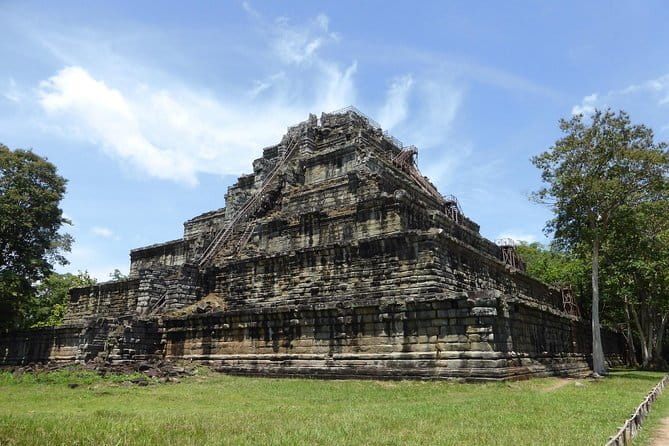
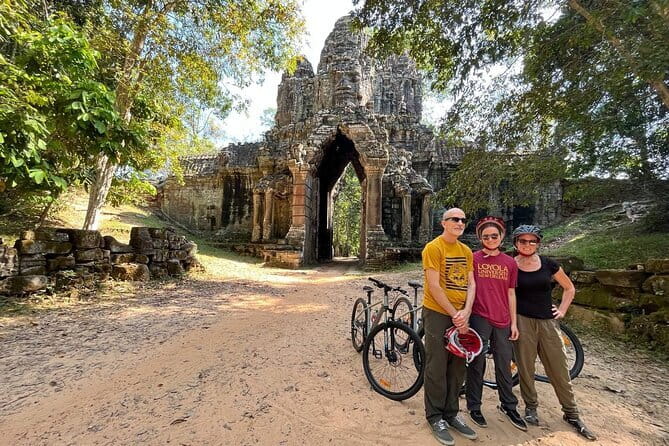
The final listed stop is the East, or Death, Gate of Angkor Thom, with about 30 minutes. It is one of five gates guarding the ancient city and was built under Jayavarman VII during the city’s reconstruction in the late 12th century.
A half-hour is enough to see the gate and understand its place in the city’s defenses. It is also a fitting end to a bicycle route because the gate gives you a clear sense of scale. Angkor Thom was not simply a collection of temples. It was a planned city with walls, entrances, and major religious buildings within its boundaries.
The itinerary labels this stop as Bayon Temple in one place, but the description clearly identifies the East Gate. When booking, I would confirm the precise final route with Easy Angkor Trip if the gate is especially important to you.
What the $45 Price Really Includes
At $45 per person, the tour offers solid value for a private full-day experience. You receive hotel pickup and drop-off, an English-speaking guide, mountain bike, helmet, and cold drinking water. The private format is the biggest value point because it gives your group a more adjustable day.
The temple admission changes the calculation. Add $37 for the Angkor Temple Pass, bringing the stated total to $82 per person. That is still reasonable for a six to eight-hour private tour with equipment and transport, but you should not compare the $45 price with tours that include admission unless you check what each one covers.
The tour also offers group discounts, though the exact discount is not provided. Ask for the current price if you are booking for several people. Confirmation arrives at booking, and mobile tickets are offered.
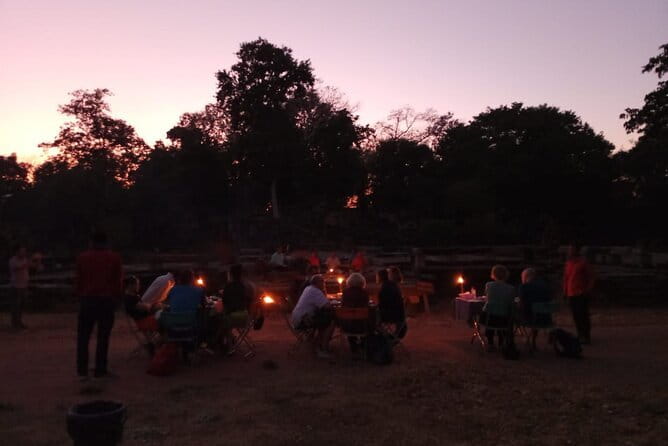
A meal is not listed as an inclusion. One account describes a private restaurant and a massage as part of a memorable day, but those extras are not included in the stated package, so confirm before assuming they are part of your booking.
Who Will Like This Ride Most
This is a strong match for you if you like moving under your own power and want more than the most famous temples. It also suits couples, families, and small private groups who want the guide to adjust the pace.
The ride is particularly appealing if you have already seen Angkor by vehicle and want a closer look at the park’s back roads. It can also work well on a first visit if you would rather trade some speed for a more connected day.
You should think twice if you dislike cycling in heat, prefer a short temple visit, or want a tightly scheduled plan. Six to eight hours is a serious commitment, even when the pace is described as leisurely.
The tour is described as suitable for most people, but no detailed accessibility information is provided. If anyone in your group has mobility concerns or cannot comfortably ride for several hours, ask the operator for current route details before booking.
Helpful Booking and Cancellation Details
The experience is offered as a private activity, so only your group takes part. Pickup and drop-off are included, and the tour begins at your hotel at 7:30 am.
Free cancellation is available if you cancel at least 24 hours before the start time. Cancel within 24 hours, or make changes during that period, and the payment is not refunded. The cut-off uses local time in Siem Reap.
If you want the guide most often praised by name, request Mr K when you book, but availability is not guaranteed in the information provided. His strengths are described as friendly care, good timing, local knowledge, and an ability to adjust the amount of cycling.
Should You Book the Angkor Cycling Tour?
Book it if the idea of reaching Angkor by quiet paths appeals more than sitting in a vehicle all day. The best parts are the mix of major temples and smaller ruins, the private pace, the supplied equipment, and the chance to see rural surroundings near the park.
The main decision is not the $45 headline price. Plan for the extra $37 temple pass, then decide if a six to eight-hour private bicycle day suits your energy and interests.
I would choose this tour for an active couple, a small family, or anyone who wants Ta Nei, back roads, and a closer feel for Angkor beyond the standard highlights. If your priority is comfort, air conditioning, or a short list of only the biggest temples, choose a vehicle tour instead.
FAQ
How long does the Angkor Cycling Tour last?
The tour lasts approximately 6 to 8 hours, including the cycling and temple visits.
What time does the tour begin?
Hotel pickup is scheduled for 7:30 am.
Is hotel pickup included?
Yes. Hotel pickup and drop-off are included in the tour.
Is the Angkor Temple Pass included in the $45 price?
No. The Angkor Temple Pass costs an additional $37 per person.
What equipment is provided?
A mountain bike, helmet, and cold drinking water are included.
Is this a private tour?
Yes. Only your group participates in the activity.
Can I cancel for a full refund?
Yes, if you cancel at least 24 hours before the experience starts. Cancellations or changes made within 24 hours are not refunded.
Just added in Siem Reap
- Twilight Tastes of Siem Reap Include Dinner★ 5.0 · 13 reviews
- Ultimate Sunrise to Angkor Wat, Angkor Thom and Bayon Temple★ 5.0 · 3 reviews
- Trekking Tour at Phnom Kulen National Park from Siem Reap★ 5.0 · 3 reviews
- Full-Day Private Tour of Angkor Wat with Pick Up★ 5.0 · 12 reviews
- Private Day Trip to Angkor Temples with Expert Guide★ 5.0 · 4 reviews
- Siem Reap City Tour with War Museum and Killing Field★ 5.0 · 27 reviews
- Waterfall & River of 1000 Siva Linga- Kulen Mountain Private Tour★ 5.0 · 3 reviews
- Angkor Wat Experience Temple Pass and Siem Reap Food Tour★ 5.0 · 13 reviews
Countryside Bike Tours, compared.
Siem Reap Countryside Bike Tour / E-Bike or Tuk Tuk
Read our review →
Phnom Penh Silk Island Bike Tour/ E-Bike or Tuk Tuk
Read our review →
Angkor Wat Sunrise Bike Tour & Jungle Breakfast
Read our review →
Local Livelihood Half Day Bike Tour in Battambang
Read our review →
Silk Island Cycling Adventure & lunch with locals
Read our review →Browse the lists this tour appears in