
Reviewed · ANGKOR TEMPLE TOURS
Angkor Wat, Ta Promh, Banteay Srei, Bayon temples Private Tour
Angkor Wat gives this private tour its grand opening, but the day becomes more memorable as you move from its vast galleries to Ta Prohm’s tree-covered ruins and the tiny carvings at Banteay Srei. A private guide helps turn a long list of temples into a story you can follow.
I like the comfort of a private air-conditioned vehicle and the freedom of touring with only your own group. I also like the mix of major sights and smaller details, from Angkor Wat’s bas-reliefs to Bayon’s stone faces. The main drawback is the pace: seven stops in one day can feel full, especially with the drive to Banteay Srei and the time needed for the Angkor Pass.
Key points at a glance
- Angkor Wat begins the day with two hours for its scale, galleries, symmetry, and carvings.
- Ta Prohm brings the famous jungle ruins with a planned one-and-a-half-hour visit.
- Banteay Srei adds fine pink sandstone carving and a different feel from the larger temples.
- Bayon and Angkor Thom provide two hours of major sightseeing among the face towers and former royal capital.
- Private transport, hotel pickup, cold water, and towels are included, while the temple pass and lunch are extra.
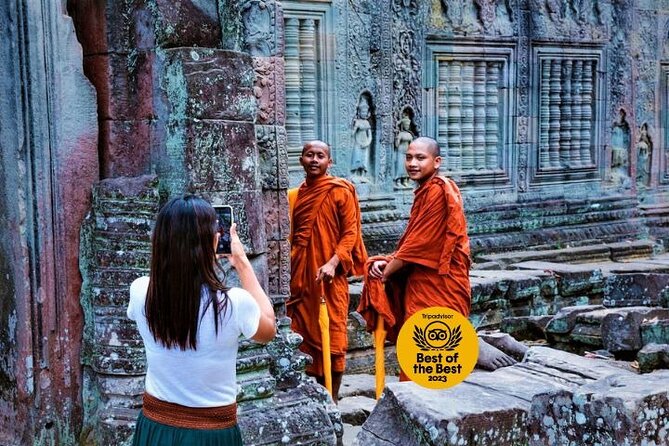
- Mr. Lorn Leap is one named guide associated with the tour, and the guide is licensed, English-speaking, and assigned to your group.
Why the private format matters at Angkor
A private tour is useful here because Angkor is not one building. It is a large archaeological park with different temples, gates, courtyards, galleries, and viewpoints spread across the area. You need transport between stops, and a guide can explain what you are looking at before the details begin to blur together.
The private setup means only your group participates. That gives you a better chance to ask questions, pause at a carving, or keep moving when your attention fades. It also makes the long day less rigid than a large coach outing.
The guide is an English-speaking licensed professional. One guide named in the tour’s praise is Mr. Lorn Leap, described as patient and attentive to important temples, carvings, and statues. If you want Leap specifically, confirm his availability before booking rather than assuming he will lead every departure.
You are collected from your hotel and travel in a private air-conditioned vehicle. That matters in Siem Reap, where the heat can make a full temple day tiring. Cold drinking water and cold towels are also supplied. These are small comforts, but after walking across exposed stone they become welcome ones.
Other outlying temples from Siem Reap:
- Siem Reap: Kulen Mountain, Beng Mealea and Tonle Sap Tour
★ 5.0 · 1,483 reviews - Full-Day Banteay Srei & 4 Temples – Grand Tours Join-in Tour
★ 5.0 · 1,155 reviews - Siem Reap Tour: Angkor Wat Sunrise, Bayon, Ta Prohm, Banteay Srei
★ 5.0 · 931 reviews
Angkor Wat: a powerful first two hours
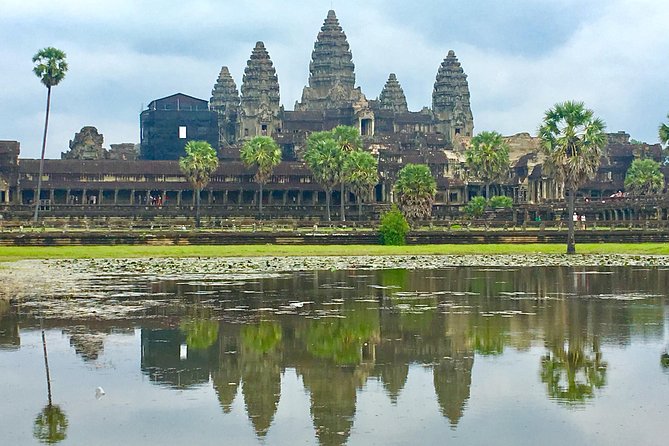
Angkor Wat is the natural first stop. Built in the first half of the 12th century as a Hindu temple, it later became a Buddhist site. Its scale is hard to grasp from photographs. The complex covers more than 400 acres, with broad approaches, galleries, towers, and long stretches of carved stone.
Plan to spend about two hours here. That is enough time for a useful introduction, though not enough to examine every detail. I would use your guide’s help to understand the main layout first, then focus on selected bas-reliefs and statues instead of trying to see everything.
The temple’s symmetry is one of its great pleasures. From the formal approach to the central towers, the design feels measured and deliberate. The bas-reliefs reward slow looking, but the stone walls can also become visually overwhelming. A guide helps you know which scenes and features deserve your attention.
This is also where the day’s scale announces itself. Angkor Wat is not a quick photo stop. You will walk, stand, and climb around historic stone structures, so comfortable footwear and water are sensible choices. The tour supplies water, but you should still dress for a warm outdoor day.
The Angkor Pass is not included in the tour price. Your guide assists with buying it at the entrance to Angkor Park before sightseeing begins. Since the pass covers the temples in the program, remember that the advertised $65.55 per person is not the final cost of the day.
Ta Prohm: trees, stone, and a different mood
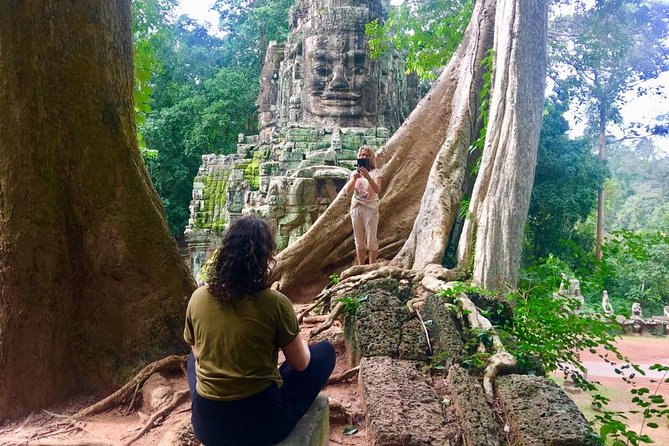
After Angkor Wat, the tour continues to Ta Prohm for about an hour and a half. This temple is known for its trees and partially overgrown stonework. The vegetation and ruins create a mood very different from Angkor Wat’s formal geometry.
Ta Prohm has not been cleared back to a completely bare archaeological site. Paths have been opened for visitors, and structural work has been done to make the area safer. The result is a temple where you can see how roots, walls, doorways, and galleries meet in uneasy balance.
I like this stop because it makes the park feel less like a set of polished monuments. You can see the force of nature alongside the work of Khmer builders. At the same time, the rougher setting means footing and movement deserve attention. Stay with the guide’s route and take care around uneven surfaces.
An hour and a half gives you time to look beyond the most photographed tree-covered sections. Ask your guide to point out carvings and architectural details that might disappear behind the larger spectacle. Ta Prohm is easy to remember for its trees, but its stonework is just as important.
Banteay Srei and its unusually fine carving
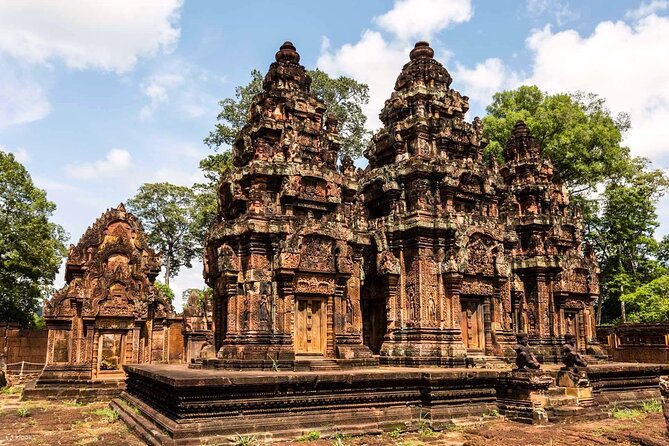
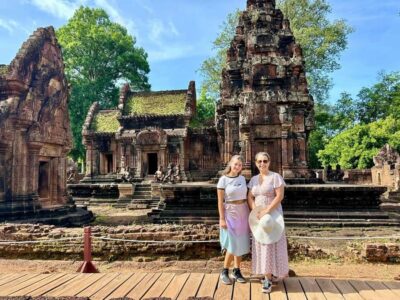
Banteay Srei is the day’s most distinctive change of scale. This 10th-century temple is dedicated to Shiva and is celebrated for detailed sculptures, lintels, and friezes. It is often called the Citadel of Women.
The temple uses pink sandstone, and its carvings are notably delicate. After the monumental spaces of Angkor Wat and Ta Prohm, Banteay Srei can feel more intimate. You are looking closely at carved surfaces rather than mainly taking in huge courtyards and towers.
The planned visit is one hour. That is a good amount of time for a focused stop, but the drive to this outlying temple adds to the day. This is an important trade-off. If you want Banteay Srei, the private vehicle makes the trip practical, but the schedule becomes more demanding than an Angkor Wat and Angkor Thom day alone.
Your guide’s role is especially helpful here. Fine carving is easy to admire without understanding what makes it unusual. Ask for explanations of the figures, lintels, and friezes, then take time to inspect the repeated patterns and small details.
More temples within reach of Siem Reap:
- Siem Reap: Bike the Angkor Temples – Full-Day 30km Tour
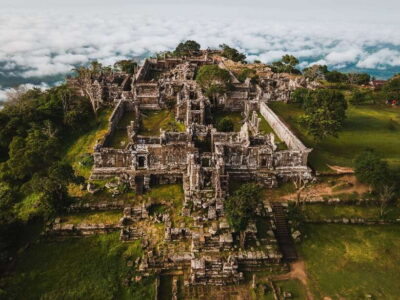
★ 5.0 · 463 reviews - Preah Vihear: Full-Day Preah Vihear and Koh Ker Temple Tour
★ 4.9 · 263 reviews - From Siem Reap: Banteay Srei Temple & Grand 5 Temple Tour
★ 4.8 · 262 reviews - Angkor Wat one Day Private Tour for All Highlight Angkor Temples
★ 5.0 · 199 reviews
Pre Rup and the question of sunset timing
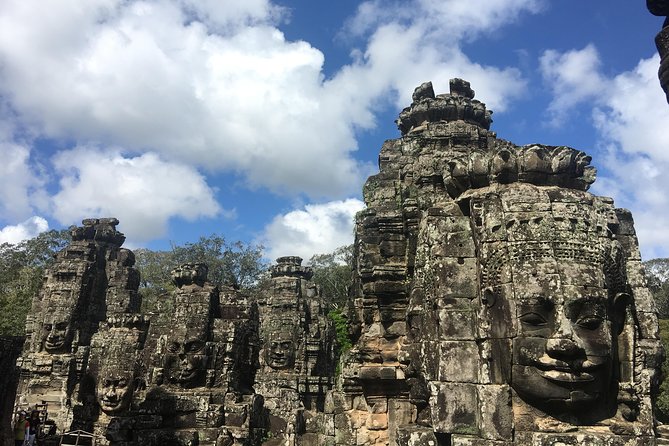
Pre Rup is scheduled for about 40 minutes and is presented as the day’s sunset stop. Its elevated temple form offers a different kind of view from the enclosed galleries and jungle ruins. The appeal is partly architectural and partly visual, as the stone setting changes with late-day light.
Sunset plans are always worth treating as approximate. The exact experience depends on the day’s timing, weather, site conditions, and how long earlier stops take. Since the tour includes several major temples, you may want to confirm with the operator how the schedule is handled on your date.
Still, Pre Rup gives the itinerary a quieter pause before the final major sites. Forty minutes is not long, so use it for the view and the overall structure rather than expecting a full temple study.
The Victory Gate and Angkor Thom
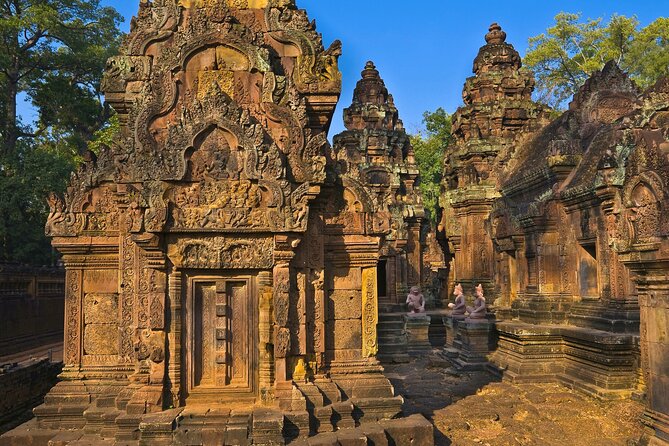
The Victory Gate receives about 30 minutes. It is one of the well-known gates within Angkor Thom, the former Khmer capital. A short stop here works well because the gate is mainly a passage and architectural landmark rather than a large temple complex requiring several hours.
Angkor Thom itself is scheduled for another 30 minutes. Its name is commonly translated as Great City or Great Capital, and it was the last capital of the Khmer Empire. The city walls and gates help you understand the scale of the former capital before you focus on Bayon.
These two stops are easy to rush through, especially after Banteay Srei and Pre Rup. I would listen closely as the guide explains how the gate fits into the larger city. The value is not just the photograph. It is seeing Bayon as part of a planned capital rather than an isolated ruin.
Bayon Temple and the famous stone faces
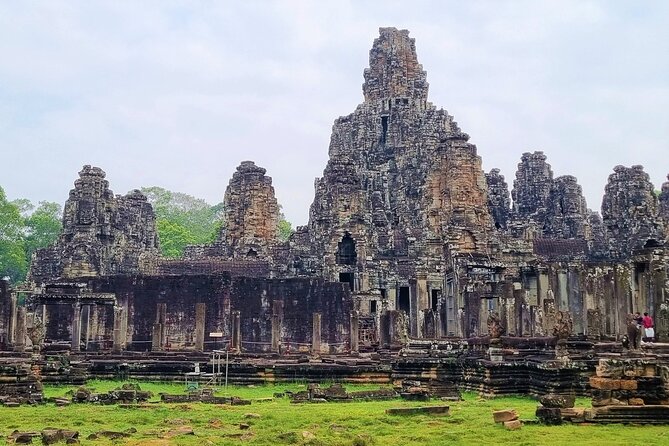
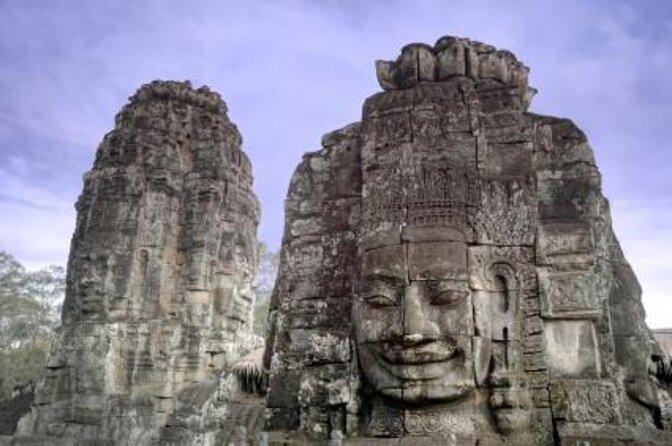
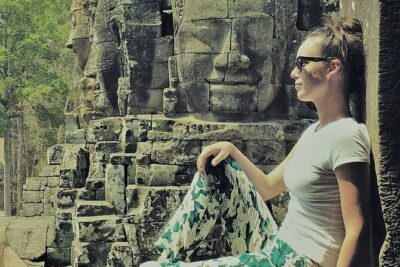
Bayon receives about two hours, making it one of the day’s main visits. Built during the reign of Jayavarman VII, it is described as the only Buddhist state temple and the last temple built in the Angkor Empire. Its face towers give it an identity unlike Angkor Wat.
Bayon is a place where the view changes as you move. From one angle, faces emerge above the galleries. From another, towers and corridors seem to overlap. The building can feel confusing at first, which is precisely why a guide helps.
Use the two hours to move slowly through the structure rather than stopping only at the best-known face tower. Look at the bas-reliefs and the way the towers are arranged. Bayon’s appeal comes from the combination of grand ideas and close-up detail.
By this point, you will have seen Hindu and Buddhist monuments, monumental symmetry, tree-covered ruins, a finely carved sanctuary, city gates, and a former capital. That range is the strongest reason to choose this tour over a shorter temple visit.
What the $65.55 price really covers
At $65.55 per person, the price is best judged as a private transport and guide package, not as an all-inclusive entrance ticket. You receive hotel pickup and drop-off, a private air-conditioned vehicle, a professional English-speaking licensed guide, cold drinking water, cold towels, service charges, and current government VAT.
The Angkor Pass is extra and covers the temples in the itinerary. Lunch is also extra. Local restaurants offer vegetarian and non-vegetarian choices, with menu prices listed at about $3 to $10 per dish.
That separation keeps the base price clear, but you should budget for both additions. Tips for the guide and driver are not included either. The final amount depends on the temple pass, what you order for lunch, and the gratuity you choose.
For a couple or small group, the private format can offer good value because the cost buys dedicated transport and guiding rather than a seat on a shared bus. For one person, the per-person price feels less attractive, though the convenience remains substantial.
The pace, timing, and practical trade-offs
The advertised duration is about seven to nine hours. The listed visits add up to roughly seven hours and 40 minutes, before allowing for hotel pickup, driving, ticket purchase, lunch, and movement between sites. In practice, this is a full day.
The itinerary includes seven stops, with the longest visits at Angkor Wat and Bayon. Banteay Srei adds travel time, while the gates and Pre Rup are shorter stops. You get variety, but not much room for a slow lunch or an unplanned extra temple.
Most travelers can participate, according to the activity information, and the tour is near public transportation. Still, the day involves walking around temple grounds and historic stone structures. The information provided does not promise step-free access or describe the exact walking surfaces, so ask the operator if you have mobility concerns.
The tour offers group discounts, mobile tickets, and pickup. You need to provide your hotel name when booking so the pickup can be arranged. Confirmation is received at booking, and cancellation is free if you cancel at least 24 hours before the start time. Changes or cancellations inside that window are not accepted for a refund.
Who will get the most from this day
I would choose this tour if you want the major Angkor sights in one organized day and prefer not to arrange transport between them. It suits first-time visitors who want context at each stop rather than simply moving from one photo point to another.
It is also a good fit for couples, families, and small private groups that value flexibility and air-conditioning. The private format means you are not sharing the day with strangers, and the guide can spend time answering your questions.
I would hesitate if you prefer a slow, unhurried temple day. Seven stops can be demanding, and Banteay Srei makes the route longer. If your main goal is careful photography or extended study of carvings, consider asking if the schedule can be adjusted, though the supplied tour details do not promise custom timing.
The guide is central to the value. The strongest praise attached to this experience focuses on Mr. Lorn Leap’s patience, explanations, and attention to important carvings and statues. If historical context matters to you, confirm the guide arrangement before you pay.
Should you book this Angkor tour?
Book it if you want a private, well-filled introduction to Angkor with the park’s best-known names in one day. Angkor Wat, Ta Prohm, Banteay Srei, Bayon, and Angkor Thom give you a broad look at Khmer architecture, while Pre Rup and the Victory Gate add useful variety.
Go in knowing that the $65.55 price excludes the Angkor Pass, lunch, and tips. Expect a long day, plenty of walking, and a schedule that favors coverage over lingering. For a first visit, the private vehicle and licensed guide make that trade-off worthwhile, especially if you can secure a guide such as Mr. Lorn Leap.
FAQ
How long does the private Angkor tour last?
The tour lasts approximately seven to nine hours, depending on the timing of hotel pickup, temple visits, transport, lunch, and other stops.
Which temples and sites are included?
The route includes Angkor Wat, Ta Prohm, Banteay Srei, Pre Rup, the Victory Gate, Bayon Temple, and Angkor Thom.
Is hotel pickup included?
Yes. Pickup and drop-off at your hotel are included. You need to provide your hotel name when booking.
Is the Angkor Pass included in the price?
No. The Angkor Pass is not included. The guide assists you with purchasing it at the entrance to Angkor Park.
Is lunch included?
No. Lunch is at your own expense. Local restaurants offer vegetarian and non-vegetarian dishes, with listed prices of about $3 to $10 per dish.
Is transportation private?
Yes. Transfers are provided in a private air-conditioned vehicle, and only your group participates in the activity.
Is a tour guide included?
Yes. A professional, English-speaking licensed guide is included. Mr. Lorn Leap is one guide named in the tour information, but you should confirm guide availability if you specifically want him.
Are drinks provided?
Yes. Cold drinking water and cold towels are included.
Can I cancel for a full refund?
Yes, if you cancel at least 24 hours before the experience start time. Cancellations or changes made less than 24 hours before the start time are not accepted for a refund.
Just added in Siem Reap
- Twilight Tastes of Siem Reap Include Dinner★ 5.0 · 13 reviews
- Ultimate Sunrise to Angkor Wat, Angkor Thom and Bayon Temple★ 5.0 · 3 reviews
- Trekking Tour at Phnom Kulen National Park from Siem Reap★ 5.0 · 3 reviews
- Full-Day Private Tour of Angkor Wat with Pick Up★ 5.0 · 12 reviews
- Siem Reap City Tour with War Museum and Killing Field★ 5.0 · 27 reviews
- Waterfall & River of 1000 Siva Linga- Kulen Mountain Private Tour★ 5.0 · 3 reviews
- Private Day Trip to Angkor Temples with Expert Guide★ 5.0 · 4 reviews
- Angkor Wat Experience Temple Pass and Siem Reap Food Tour★ 5.0 · 13 reviews
Angkor Temple Tours, compared.
Siem Reap Tour: Angkor Wat Sunrise, Bayon, Ta Prohm, Banteay Srei
Read our review →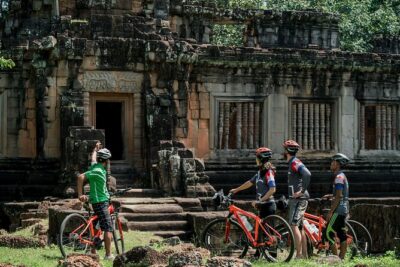
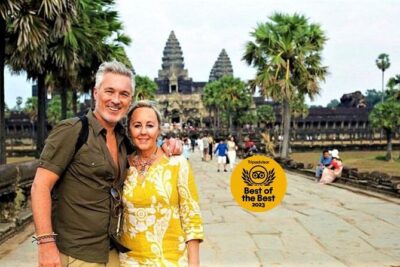
Angkor Wat one Day Private Tour for All Highlight Angkor Temples
Read our review →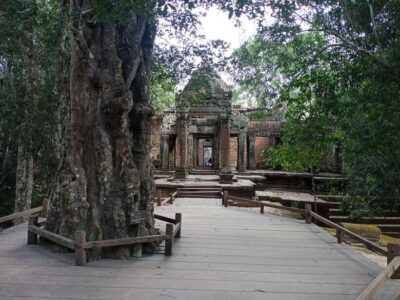
1-Day private Angkor Temple Tour from Siem Reap
Read our review →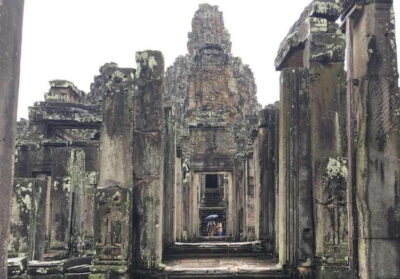
Private one-day tuktuk ‘small tour’ of the oldest Angkor temples
Read our review →Browse the lists this tour appears in