
Reviewed · TONLE SAP & FLOATING VILLAGE TOURS
Bakong Temples & Floating Village Tour
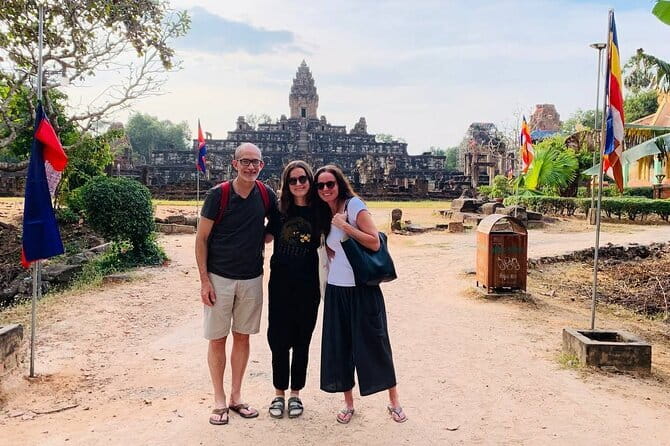
Bakong is the star here: a five-level sandstone temple-mountain built in 881 AD, with guardian elephants, lions, moats, and an early Naga causeway. I like that this tour pairs an important but less-visited temple group with Kampong Phluk’s water-based community, where homes, schools, and shops adapt to changing lake levels.
I also like the private format, air-conditioned vehicle, and the chance to spend real time at three Roluos temples instead of rushing through one famous site. The catch is cost: the $45 price does not include the $37 Angkor Pass, Lolei admission, or the floating-village boat, so your final bill will be higher.
Key points to know before booking
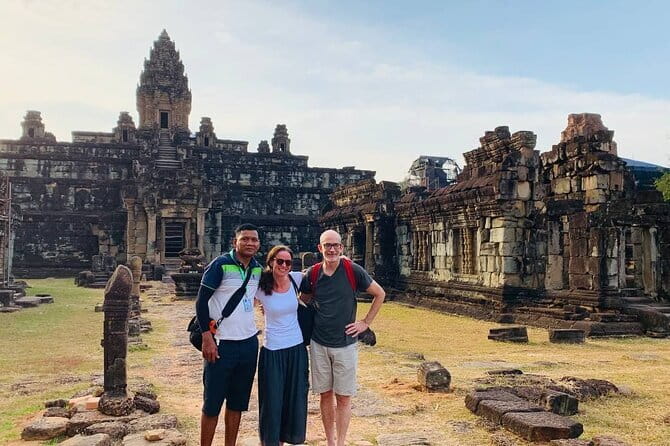
- Bakong is the main historical prize: This was the first Khmer temple-mountain and a model for later monuments, including Angkor Wat.
- The Roluos group gives you three different temple stops: Lolei, Preah Ko, and Bakong each show an earlier phase of Khmer building.
- Kampong Phluk is a working water community: Homes may float directly on the water, or rise on tall stilts during the dry season.
- The tour is private: Your group travels alone, with an English-speaking guide and hotel pickup and drop-off.
- Plan for extra admission costs: The $45 tour fee excludes the $37 Angkor Pass and other stated admission charges.
- Guide quality is central: Mr Oun Kosorl, also referred to as Mr K, is praised for his temple explanations, local context, charm, and help at the village.
Why Bakong deserves the main afternoon
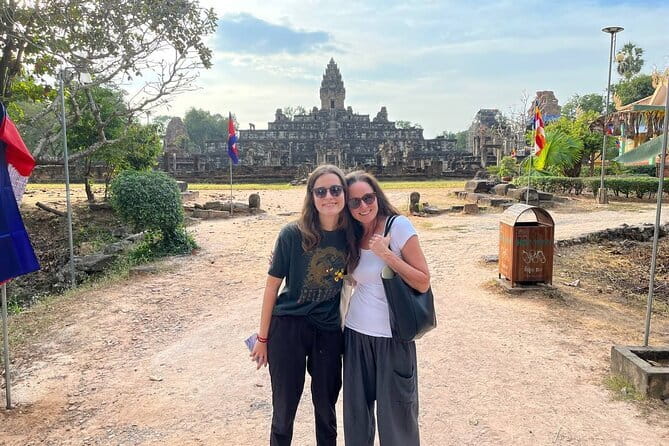
Many people come to Siem Reap focused on Angkor Wat, but Bakong gives you a clearer look at how Khmer temple design developed. Built by King Indravarman I in 881 AD, it was the first sandstone temple-mountain of the Khmer Empire.
The basic idea is symbolic. The pyramid represents Mount Meru, the sacred mountain at the center of Hindu and Buddhist cosmology. Moats and enclosing walls mark the temple’s protected inner world, while the five rising levels draw your eye toward the summit.
You can also see details that later Khmer builders developed on a larger scale. Bakong has preserved stone elephants and lions guarding the lower levels. It also has one of the earliest known Naga causeways in Khmer architecture. Those details give your guide plenty to explain, and they make the temple more than a pile of old stones.
I like Bakong because its design is easy to read. From the outside, you can see the moat, enclosure, causeway, pyramid, and upper shrine working as one planned structure. At Angkor Wat, the size can overwhelm you. Here, the original concept is easier to grasp.
The two-hour stop is also useful. You have enough time to look closely rather than taking a quick photograph and moving on. Expect temple steps, open courtyards, stone guardians, and a strong sense of symmetry. The supplied information does not specify the exact walking conditions, so wear practical footwear and be ready for a substantial temple visit.
Other trips out on the lake from Siem Reap:
- From Siem Reap: Kampong Phluk Floating Village Tour by Boat
★ 4.9 · 6,979 reviews - Sunset tour of Kampong Phluk stilts home village on the Tonle Sap
★ 5.0 · 4,865 reviews - Kompong Phluk Floating Village Half-Day Tour ( Morning / Sunset )
★ 5.0 · 1,494 reviews
Lolei begins the Roluos story
Lolei is the northernmost of the three Roluos temples. It belongs to the late ninth century and helps place the area in the early development of Khmer religious architecture.
The planned stop is about one hour. Admission is not included, so you should check the separate charge when arranging your budget. The tour fee covers transport and guiding, but not every site entrance.
Lolei is a good first stop because it gives you an early point of comparison. You can then see how Preah Ko and Bakong differ in age, scale, and design. If you are mainly seeking the most impressive structure, Lolei may feel quieter and less dramatic than Bakong. Its value is in the sequence.
A guide matters here. Without context, an early temple can seem modest beside the grander monuments around Siem Reap. With an explanation of its place in the Roluos group, you get a better sense of the architectural progression that follows.
Preah Ko and the first temple of Hariharalaya
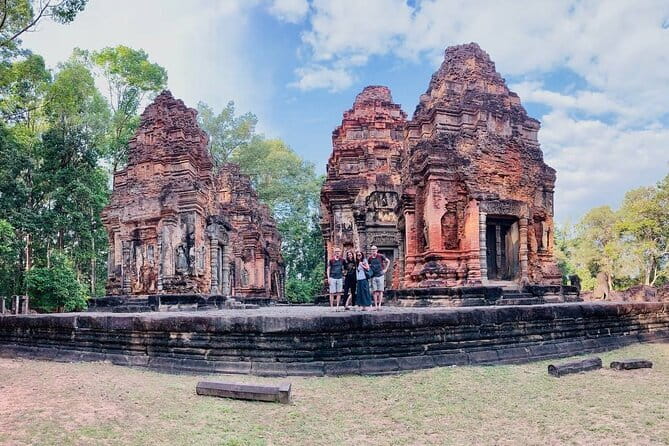
Preah Ko was the first temple built in Hariharalaya, an ancient city located about 15 kilometers southeast of the main Angkor temple group. The name means Sacred Bull, and the temple belongs to the early Khmer period.
The scheduled visit lasts about one hour, and the listed admission is free. The stop works well between Lolei and Bakong because it gives you another early example before reaching the larger temple-mountain.
I would pay attention to the layout and guardian figures here rather than expecting the scale of Angkor Wat. This is an architectural lesson in stages. Lolei, Preah Ko, and Bakong are not three unrelated ruins. Together, they show the development of a major Khmer religious center.
The tour allows enough time at Preah Ko to hear the story rather than simply passing through. That is especially helpful if you are new to Cambodian temple architecture. Mr Oun Kosorl, known as Mr K in the tour details, is praised for explaining Siem Reap and its temples in a friendly, engaging way.
Three hours at Kampong Phluk Floating Village
After the temples, the tour turns from stone monuments to a living community on the water. Kampong Phluk is built around Tonle Sap Lake, the largest lake in Southeast Asia and a body of water covering parts of five Cambodian provinces.
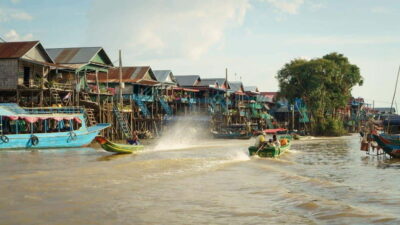
The village is not just a line of floating houses. Its community structure includes homes, schools, and shops. Some buildings float directly on the water. Others are built on tall stilts, rising high above the ground during the dry season and responding to the large seasonal changes in water level.
That contrast gives the afternoon its strongest point. At the temples, you study a carefully planned sacred center from centuries ago. At Kampong Phluk, you see people adapting everyday life to the lake. The two parts of the tour feel very different, which helps prevent the day from becoming one long procession of ruins.
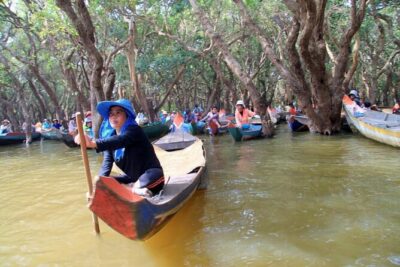
A boat ride takes you along the river toward the village. The three-hour visit gives you time to see the water-based setting and the way the community is arranged. One reported visit included a school where young children were learning English. If that forms part of your route, approach it with care and respect. This is a functioning community, not a stage set built for sightseeing.
The village can also be emotionally difficult. You may notice the hard conditions in which some families live, even while the community appears lively and content. A thoughtful guide can help you understand what you are seeing without turning people’s homes into a spectacle.
Weather matters here. One account described poor conditions that reduced the enjoyment of the village visit. You should expect the outdoor portion to be more exposed than the temple stops, and the quality of the boat ride will depend on the day’s weather. The supplied details do not state the type of boat, comfort level, or exact extra charge, so confirm the village fee before departure.
Same base, a different kind of day out:
- Angkor Wat Sunrise or Sunset Tour with Guide from Siem Reap
★ 5.0 · 12,109 reviews - Siem Reap: Angkor Wat: Small-Group Sunrise or Sunset Tour
★ 5.0 · 9,444 reviews - Siem Reap: Angkor Wat 2-Day Tour with Sunrise and Sunset
★ 4.9 · 4,429 reviews - Siem Reap: Full-Day Angkor Wat Guided Tour with Sunset
★ 4.9 · 3,803 reviews
What the private format changes
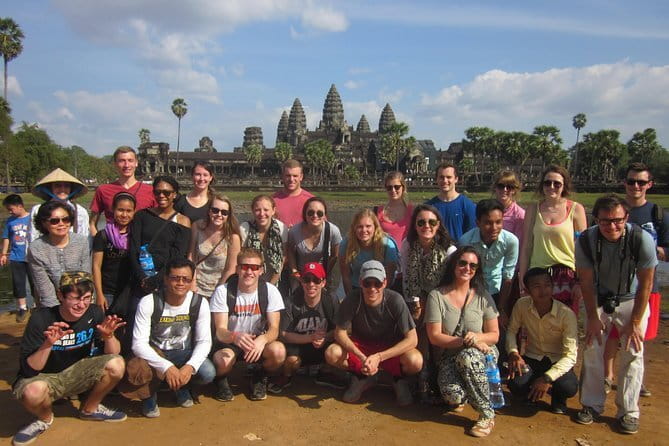
This is a private tour, so only your own group participates. That gives you more control than a large shared coach. You can ask questions about a temple, request a little more explanation, or move through a stop at your group’s pace.
The tour lasts about six to eight hours. That is a full day, but the schedule makes sense: one hour at Lolei, one hour at Preah Ko, two hours at Bakong, and three hours at Kampong Phluk. Add driving time between locations, and the day can fill quickly.
Pickup and drop-off are included. You also get an air-conditioned vehicle and cold drinking water, both practical benefits in Cambodia’s heat. These details matter more after several hours outside, especially when the final stop is near open water.
An English-speaking guide is included. The strongest part of the guiding, based on the information available, is the combination of temple interpretation and local explanation. Mr Oun Kosorl, also called Mr K, receives particular praise for his charm and ability to explain the temples and Siem Reap. Since the guide shapes both the historical and village portions, this is not a tour where the transport alone carries the value.
Is $45 a fair price?
The advertised price is $45 per person, but you should not treat it as the final cost. The Angkor Pass is listed separately at $37 per person, while Lolei admission and the Kampong Phluk boat or admission are also excluded.
That means the package is best judged as a private transport and guiding service, not as an all-inclusive ticket. For one person, the extra admission costs make the day notably more expensive. For a private group, the value improves because the vehicle, guide, pickup, and drop-off are shared among your party.
Group discounts are offered, though the amount is not specified. Ask for the exact total before booking. The tour is commonly booked about 12 days ahead, so reserving early is sensible if your Siem Reap dates are fixed.
I see the value in the pairing. You get three early Khmer temples, a two-hour visit at the most important one, and a substantial village visit rather than a quick stop. If you only want the famous Angkor highlights, another temple-focused plan may suit you better. If you want history and present-day life in one day, the extra costs are easier to justify.
Who will enjoy this day most
I would recommend this tour to you if you want more than the standard Angkor Wat circuit. Bakong is especially useful for anyone interested in how Khmer temple design developed, while Kampong Phluk offers a different kind of cultural experience.
It also suits you if you prefer a private day with a guide rather than a large group. Families, couples, and small groups can ask questions freely and avoid being tied to strangers’ schedules. Most people can participate, according to the available booking information, though the day includes temple walking and a boat-based village visit.
You may want to reconsider if you dislike paying separate admission charges or if you want a slow, unstructured day. Six to eight hours is a serious outing, and the plan includes four stops. The village section may also feel uncomfortable if you prefer sightseeing that avoids visible poverty or working communities.
Practical advice for a smoother visit
Confirm the full price before setting off, including the Angkor Pass, Lolei admission, and the Kampong Phluk charge. The basic tour price includes cold water, but carrying your own refillable bottle is still sensible for a long day.
Wear clothing suited to heat and outdoor walking. The tour provides an air-conditioned vehicle, but you will spend much of the scheduled time outside the vehicle at temples and near the water.
Give the village the same respect you would give any neighborhood. You are looking at homes, schools, shops, and daily routines, not a theatrical performance. If a school visit is included, follow the guide’s lead and avoid treating children as photo props.
Allow some flexibility for weather. The village portion can be less comfortable in poor conditions, and the boat ride is the part most directly affected. If you have only one spare day in Siem Reap, this is worth remembering when choosing your date.
Cancellation is free if you cancel at least 24 hours before the start time. Changes or cancellations inside that window are not refunded or accepted.
Should you book the Bakong and floating village tour?
Book it if you want a private, well-paced day that links early Khmer architecture with a living Tonle Sap community. Bakong is the strongest historical stop, and the three-hour Kampong Phluk visit gives the day a human scale that temple hopping alone cannot provide.
Skip it if your priority is only Angkor Wat and the biggest monuments, or if you want one simple price with all tickets included. Before committing, ask for the complete cost and confirm the village boat arrangements.
For the right kind of visitor, this is a thoughtful Siem Reap day: three early temples, a guide who can bring the stones to life, and a close look at a community shaped by water.
FAQ
How long does the tour last?
The tour lasts approximately six to eight hours, including visits to Lolei, Preah Ko, Prasat Bakong, and Kampong Phluk Floating Village.
Is hotel pickup included?
Yes. Pickup and drop-off are included in the tour.
Is this a private tour?
Yes. Only your group participates in the activity.
Is the Angkor Pass included in the $45 price?
No. The Angkor Pass is listed separately at $37 per person.
Are admission fees for every stop included?
No. Lolei admission and the Kampong Phluk admission or boat fee are not included. Preah Ko and Prasat Bakong are listed with free admission, while the Angkor Pass remains a separate cost.
Is an English-speaking guide provided?
Yes. An English-speaking tour guide is included, along with an air-conditioned vehicle and cold drinking water.
Just added in Siem Reap
- Twilight Tastes of Siem Reap Include Dinner★ 5.0 · 13 reviews
- Ultimate Sunrise to Angkor Wat, Angkor Thom and Bayon Temple★ 5.0 · 3 reviews
- Trekking Tour at Phnom Kulen National Park from Siem Reap★ 5.0 · 3 reviews
- Full-Day Private Tour of Angkor Wat with Pick Up★ 5.0 · 12 reviews
- Private Day Trip to Angkor Temples with Expert Guide★ 5.0 · 4 reviews
- Siem Reap City Tour with War Museum and Killing Field★ 5.0 · 27 reviews
- Waterfall & River of 1000 Siva Linga- Kulen Mountain Private Tour★ 5.0 · 3 reviews
- Angkor Wat Experience Temple Pass and Siem Reap Food Tour★ 5.0 · 13 reviews
Tonle Sap & Floating Village Tours, compared.
Sunset tour of Kampong Phluk stilts home village on the Tonle Sap
Read our review →
Siem Reap Floating Village Kampong Phluk Sunset with Boat
Read our review →
Kompong Phluk Floating Village Half-Day Tour ( Morning / Sunset )
Read our review →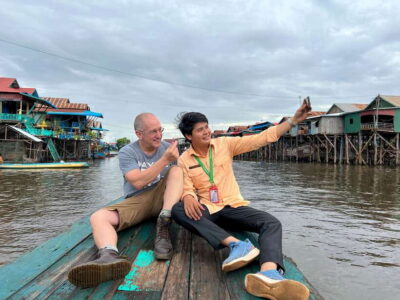
Kulen Mountain, Beng Mealea and Tonle Sap Tour
Read our review →
Tonle Sap Lake & Kampong Phluk Village Half-Day Tour
Read our review →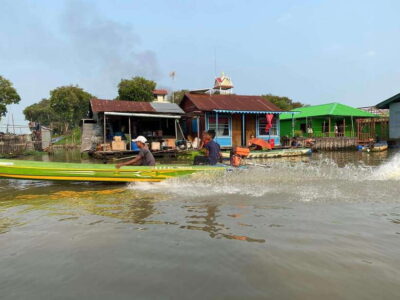
Tonle Sap, Kampong Phluk & Floating Village Tour
Read our review →
Sunset Dinner Tour: Tonle Sap Lake Floating Village
Read our review →Browse the lists this tour appears in