Reviewed · TOURS IN SIEM REAP
Discover Cambodia 8 Days from Siem Reap to Koh Trong -Phnom Penh
Angkor Wat may be Cambodia’s headline act, but this eight-day trip gives you much more than temple photographs. You move from the stone faces of Bayon and the tree roots of Ta Prohm to a quiet Mekong island, small-town markets, and Phnom Penh’s most important historic sites. The private format means your guide and driver can shape the pace around your group.
I especially like two things here: the route breaks long drives with real stops, and it reaches Koh Trong, where bicycles replace cars and daily life feels far removed from Siem Reap. The main consideration is pace. Days 2 and 7 pack in many sights, while the road journey between Siem Reap and Kratie takes much of a day.
Key points at a glance
- Angkor in one concentrated day: Angkor Thom, Bayon, Ta Prohm, and Angkor Wat receive the most time, with smaller monuments added along the way.
- A quieter Mekong stop: Koh Trong offers island cycling, village views, and a stay near Kratie.
- Private transport throughout: An air-conditioned vehicle and driver handle the road sections, with a boat crossing to Koh Trong.
- Cambodia beyond the temples: You visit Tonle Sap, Kampong Phluk, a rubber plantation, Cheung Kok Village, and the Skun spider market.
- A serious Phnom Penh finale: The Royal Palace and Silver Pagoda share the final full day with Tuol Sleng and Choeung Ek.
- Strong guide-and-driver service: Past departures have used guides including Sara, Pysedh, Tokk, Leap, and Sarat, with repeated praise for clear explanations, flexibility, safe driving, cold water, and cold towels.
From Siem Reap airport to the temples of Angkor
Your guide and driver meet you at Siem Reap Angkor International Airport, then take you to a city-center hotel. The first transfer lasts about two hours, giving you a gentle start rather than sending you straight into a packed sightseeing program.
The listed accommodation is the Regency Angkor Hotel or a similar four-star property. Since the exact hotel can change, I would confirm the final name before booking if location or room facilities matter to you. Seven breakfasts are included, but other meals are not specified, so you should budget separately for lunch, dinner, drinks, and snacks.
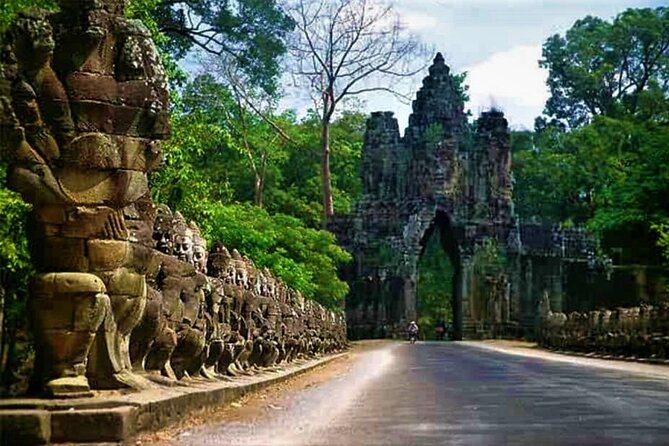
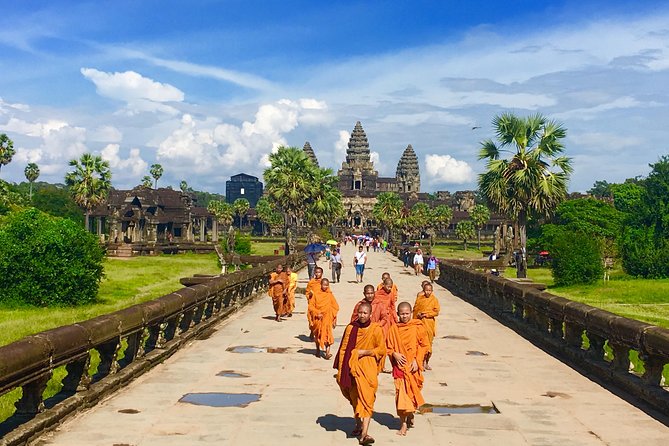
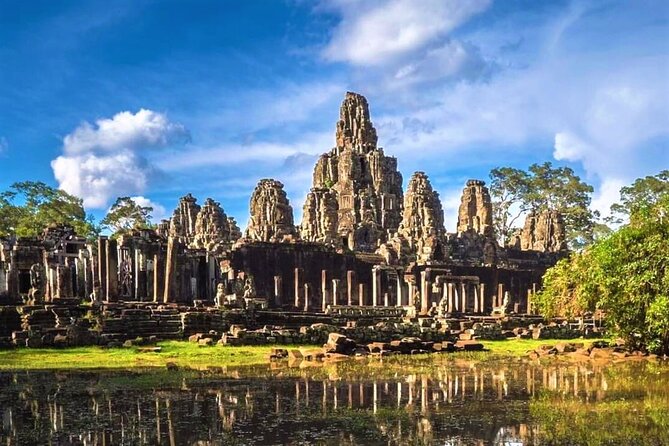
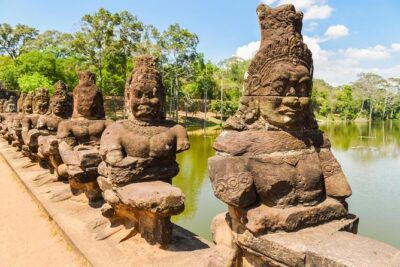
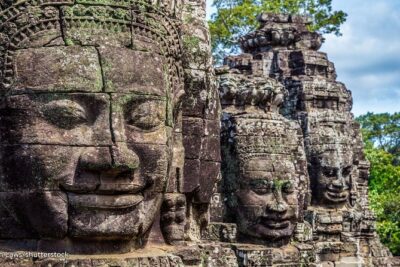
The next morning is the tour’s biggest temple day. It begins at the South Gate of Angkor Thom, where restored stone faces still line the approach. From there, you continue to Bayon, the temple famous for its huge carved faces. Your guide is especially useful here because the monument can feel confusing at first. A good explanation helps you connect the temple’s plan with the wider royal city around it.
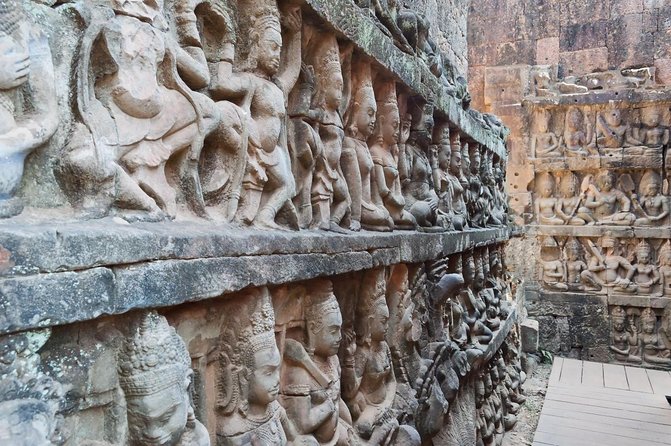
The day continues through Angkor Thom, Baphuon, Phimeanakas, the Terrace of the Elephants, and the Terrace of the Leper King. These stops vary in mood. Baphuon gives you a strong sense of scale, while the terraces are better for carved detail and the setting along the old ceremonial route.
Ta Nei is a welcome change. This smaller temple sits in the forest and receives less attention than Angkor Wat and Ta Prohm. The program allows about 40 minutes there, enough for a look without turning the stop into a major hike.
Ta Prohm is the atmospheric favorite for many people, with trees growing around and over the stonework. It is not simply a photo stop. Your guide can point out the difference between areas left in a more natural state and sections strengthened for safety.
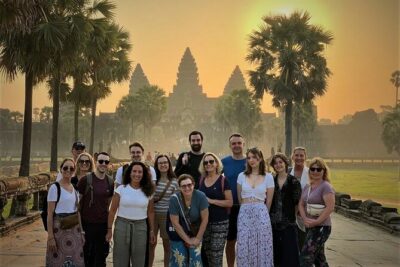
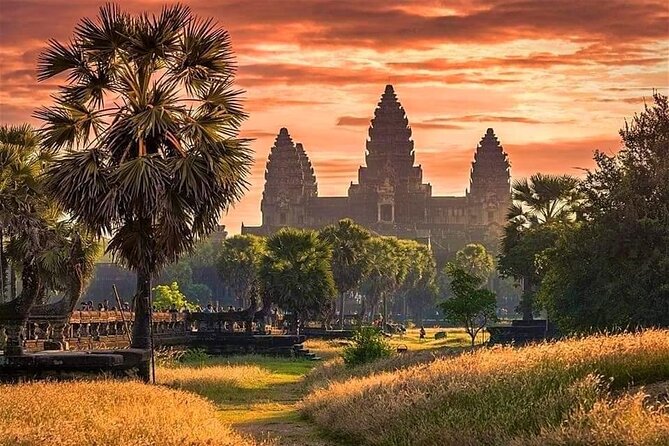
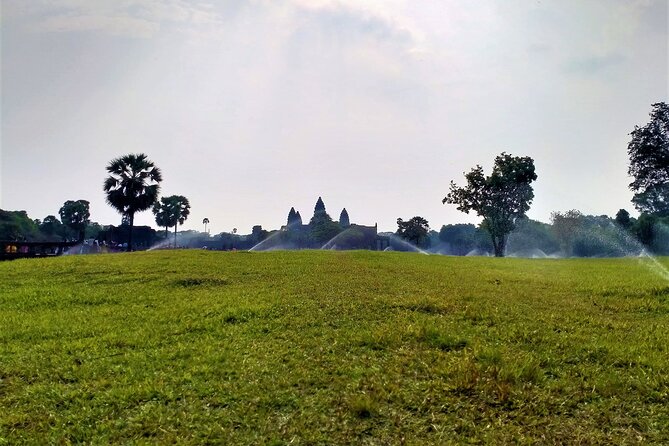
The final major stop is Angkor Wat, with about two hours allowed. That is enough for the central galleries and the main exterior views, though not every corner. Temple days involve uneven ground, steps, heat, and plenty of walking. The stated fitness requirement is moderate, but comfortable shoes and water are essential.
Other trips people book in Siem Reap:
- Angkor Wat Sunrise or Sunset Tour with Guide from Siem Reap
★ 5.0 · 12,109 reviews - Siem Reap: Angkor Wat: Small-Group Sunrise or Sunset Tour
★ 5.0 · 9,444 reviews - From Siem Reap: Kampong Phluk Floating Village Tour by Boat
★ 4.9 · 6,979 reviews
Tonle Sap, Kampong Phluk, and working Khmer craft
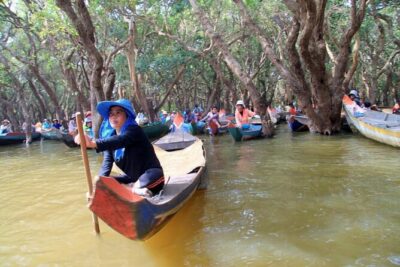
Day 3 shifts from royal monuments to present-day life around Tonle Sap Lake. You spend about 90 minutes at the lake and then take a traditional wooden boat through Kampong Phluk, a floating village about 35 kilometers southeast of Siem Reap.
The village is home to more than 3,000 Khmer residents. The attraction here is not a staged show. It is the chance to see homes, waterways, and transport shaped by the lake’s changing water levels. Conditions differ between monsoon and dry seasons, so the appearance of the village can change substantially during the year.
Back in Siem Reap, Wat Preah Prom Rath adds a colorful temple visit beside the river. It is a shorter stop, about 40 minutes, with wall paintings and modern religious statues.
Artisans Angkor offers a different kind of cultural visit. This Cambodian social business creates jobs for young people in rural areas while supporting traditional craft skills. I like its place in the program because it connects culture with current work, not only ancient monuments. The stop lasts about an hour.
The day ends at West Baray, a huge man-made reservoir from the Angkor period. It is a brief visit, but it helps you understand that the Angkor world depended on large-scale water management as much as on temples.
You return to the same Siem Reap hotel for a third night. That makes the first section easy to manage, since you do not have to repack after every outing.
The road to Kratie and a quieter Mekong rhythm
Day 4 is the longest transfer section. You leave Siem Reap for Koh Trong Island near Kratie, stopping at Spean Praptos, an old Angkor-era bridge often called Naga Bridge. It is a short stop, but it gives the drive a useful historical marker.
The route continues through Kampong Thom, where you pass a stone-cutting village with large sandstone statues. You also stop near Stueng Trang to see a large rubber-tree plantation. These stops matter because they show Cambodia outside the headline attractions: agriculture, road life, and village work.
At Kratie, you take a boat across the Mekong to Koh Trong. The arrival includes a walk along the riverside, and this crossing is one of the trip’s nicest changes of pace. You leave the private vehicle behind for a while and reach the island by water.
The accommodation is listed as the Mekong Dolphin Hotel or a similar property. The overview also describes two nights in a traditional Khmer house, while the daily schedule names a hotel, so I would ask the operator to clarify the exact room style before paying. That detail could make a real difference if you are choosing the tour partly for local accommodation.
Cycling Koh Trong and looking for Mekong dolphins
Koh Trong is about seven kilometers long and one kilometer wide, with roughly 500 families living on the island. There are no cars, and the morning activity is a three-hour bicycle ride around the island.
This is one of the tour’s strongest ideas. Cycling lets you see the island at a human pace, with time to notice homes, paths, river views, and ordinary routines. You are not simply passing through a provincial town in an air-conditioned vehicle.
Later, you visit Kratie Samaki Market, where local products fill the stalls and colonial-era buildings surround the market area. The stop gives you a practical look at daily commerce rather than another formal monument.
Phnom Sambok Pagoda follows, with about an hour to see the temple and its hilltop setting. Then you continue to the 100-Column Pagoda, located about 36 kilometers north of Kratie. The unusual column-filled interior makes it a worthwhile stop, though the extra driving means this is another full day.
The final outing is by boat to the Mekong dolphin conservation area. These freshwater dolphins are critically endangered, so the visit carries more weight than a standard wildlife excursion. Sightings are not guaranteed in the information provided, and you should treat the boat ride as a chance to visit the conservation area, not as a promise of a close encounter.
You spend a second night at the Mekong Dolphin Hotel or a similar property. The sequence works well: one day to arrive and cross to the island, then one day to explore the island and nearby Mekong sites.
Same base, a different kind of day out:
- Sunset tour of Kampong Phluk stilts home village on the Tonle Sap
★ 5.0 · 4,865 reviews - Siem Reap: Angkor Wat 2-Day Tour with Sunrise and Sunset
★ 4.9 · 4,429 reviews - Siem Reap: Full-Day Angkor Wat Guided Tour with Sunset
★ 4.9 · 3,803 reviews - Angkor Wat Sunrise tour with Small – Group and Guide tours
★ 5.0 · 3,655 reviews
Kampong Cham, a village visit, and the Skun market
Day 6 takes you toward Phnom Penh, with stops in and around Kampong Cham. The route offers a useful middle ground between rural Cambodia and the capital.
Dei Doh Pagoda is a brief temple visit known for two well-preserved sandstone lions. Cheung Kok Village follows. It is a traditional village supported by the French organization Amica, which works with residents on a more sustainable rural economy. The stop lasts about an hour and gives you a chance to see rice farming and village life in a setting where only one rice crop can be harvested each year.
Then comes Skun Spider Sanctuary, an unusual market stop. Skun is known for selling fried spiders, an experience that is certainly not for everyone. You can look, taste if you want, or simply treat it as a memorable example of local food culture. The important point is that this stop is optional in spirit, even if it appears in the route: nobody should feel pressured to eat something unfamiliar.
You finish in Phnom Penh at the Sun & Moon Urban Hotel or a similar four-star property. Like the other hotel changes, the exact replacement should be confirmed if you care about a particular neighborhood or room category.
Phnom Penh’s royal monuments and difficult history
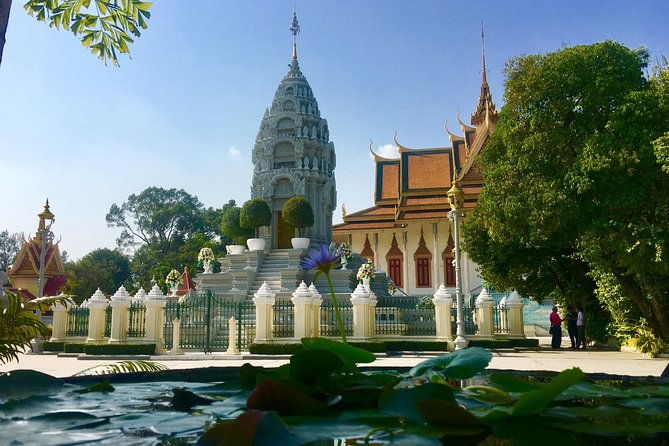
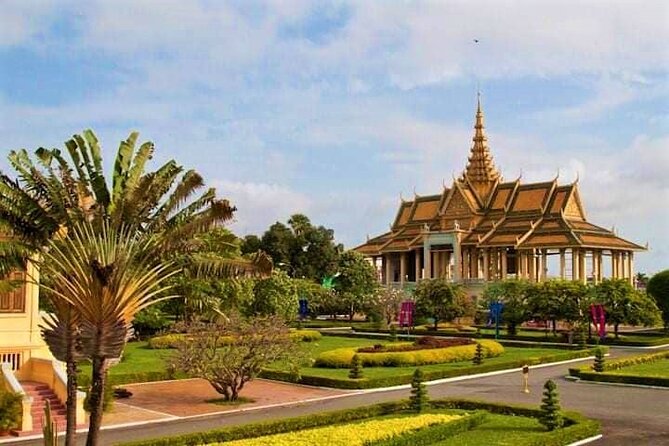
The final full day is packed, but it covers the capital’s main sights. The Royal Palace and Silver Pagoda come first. The palace complex dates from the late nineteenth century, when King Norodom moved the royal capital to Phnom Penh. The Silver Pagoda is known for its decorated interior and peaceful garden.
Wat Phnom provides a shorter hilltop visit connected with the origin story of the city. The Independence Monument and the memorial to King Father Norodom Sihanouk are brief roadside or public-square stops, useful for understanding modern Cambodia’s national identity.
Wat Ounalom, one of Phnom Penh’s five original monasteries, sits near the riverfront and the Royal Palace. It adds religious context to a day otherwise split between royal buildings, civic monuments, and museums.
The emotional center of the day is Tuol Sleng Genocide Museum, followed by Choeung Ek Genocidal Center. Tuol Sleng occupies a former secondary school used as Security Prison 21 during the Khmer Rouge period. Choeung Ek, about 17 kilometers south of Phnom Penh, was a site of mass graves.
I appreciate that the schedule gives both places substantial time, about 70 minutes at Tuol Sleng and 90 minutes at Choeung Ek. These are difficult visits, and they deserve attention rather than a rushed photo stop. Your guide’s role matters here. Past guides named Sara, Pysedh, Tokk, Leap, and Sarat have been praised for clear explanations, care, and strong English, but the assigned guide can vary.
The day ends at Central Market, an Art Deco market built in 1937. It is a lighter final stop after the genocide sites, with stalls arranged beneath a large central dome. You return to the same Phnom Penh hotel for the last night.
What the private format adds
The tour is private, so only your own group participates. That gives you more control than a large coach trip, especially on temple days when you may want a slower explanation at Bayon or a shorter stop at a smaller monument.
The package includes an English-speaking guide, private air-conditioned vehicle, entrance fees, accommodation, and seven breakfasts. Tips for the guide and driver are not included. Airport pickup is included on arrival, and the final transfer to Techo International Airport is provided without a guide.
The drivers receive especially useful praise in the supplied feedback. Cold water and cold towels were prepared after temple visits, and safe, courteous driving was repeatedly valued. Those small details matter in Cambodia’s heat, particularly after long walks over stone.
The tour costs $1,223.10 per person. I see reasonable value if you are traveling alone or as a couple and want private transport, a guide, hotels, entrance fees, and a carefully connected route without arranging each transfer yourself. The value is less clear if you prefer slow travel, local buses, or choosing your own restaurants and hotels.
Who should book this eight-day route
I would choose this trip if you want Cambodia’s major sights plus a taste of provincial life. It suits first-time visitors who want one booking to cover Siem Reap, Kratie, Koh Trong, Kampong Cham, and Phnom Penh.
It is also a good fit for people who care about explanation. The temples are far more rewarding when someone can place Bayon, Angkor Thom, and Angkor Wat in context. The same applies to Tuol Sleng and Choeung Ek, where a sensitive guide can help you understand what you are seeing.
I would hesitate if you want long mornings in bed, unplanned afternoons, or several days at the beach. The route has long drives and several early starts. Day 2 and Day 7 are especially full, and the road sections leave limited time for spontaneous wandering.
The tour requires moderate fitness. You will walk through temple compounds, climb some steps, cycle on Koh Trong, board boats, and spend hours in a vehicle. Ask about the exact hotels and the traditional Khmer house wording before booking, since the accommodation description is not fully consistent.
Should you book it?
Book this tour if you want a private, well-supported introduction to Cambodia that reaches beyond Angkor Wat. The combination of Angkor, Tonle Sap, Koh Trong, the Mekong dolphins, and Phnom Penh’s genocide sites gives you a broad view of the country in only eight days.
Skip it if you dislike tightly scheduled days or long transfers. For the right person, the route’s best feature is its range: monumental temples, quiet island cycling, working villages, serious history, and the practical comfort of a private driver.
FAQ
Where does the tour begin?
The tour begins with pickup at Siem Reap Angkor International Airport in Siem Reap, Cambodia.
Where does the tour finish?
The final airport transfer goes to Techo International Airport for your departure from Phnom Penh.
How long is the experience?
The tour lasts approximately eight days.
Is this a private tour?
Yes. Only your own group participates, with private transfers by air-conditioned vehicle.
Is an English-speaking guide included?
Yes. An English-speaking tour guide is included. Guide assignments can vary, with Sara, Pysedh, Tokk, Leap, and Sarat among the guides associated with past departures.
Are hotel stays included?
Yes. Accommodation is included on a double or twin sharing basis, with triple sharing also available. Listed properties include the Regency Angkor Hotel, Mekong Dolphin Hotel, and Sun & Moon Urban Hotel, or similar hotels. The description also refers to traditional Khmer house accommodation, so confirm the exact arrangement before booking.
Are meals included?
Seven breakfasts are included. Lunches, dinners, and tips for the guide and driver are not included.
What fitness level is required?
A moderate level of physical fitness is recommended. The program includes temple walking, steps, a three-hour bicycle outing on Koh Trong, boat rides, and long road transfers.
Just added in Siem Reap
- Twilight Tastes of Siem Reap Include Dinner★ 5.0 · 13 reviews
- Ultimate Sunrise to Angkor Wat, Angkor Thom and Bayon Temple★ 5.0 · 3 reviews
- Trekking Tour at Phnom Kulen National Park from Siem Reap★ 5.0 · 3 reviews
- Full-Day Private Tour of Angkor Wat with Pick Up★ 5.0 · 12 reviews
- Siem Reap City Tour with War Museum and Killing Field★ 5.0 · 27 reviews
- Waterfall & River of 1000 Siva Linga- Kulen Mountain Private Tour★ 5.0 · 3 reviews
- Private Day Trip to Angkor Temples with Expert Guide★ 5.0 · 4 reviews
- Angkor Wat Experience Temple Pass and Siem Reap Food Tour★ 5.0 · 13 reviews
Tours in Siem Reap, compared.
Angkor Wat Sunrise or Sunset Tour with Guide from Siem Reap
Read our review →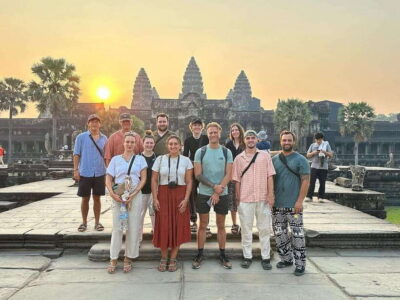
Angkor Wat: Small-Group Sunrise or Sunset Tour
Read our review →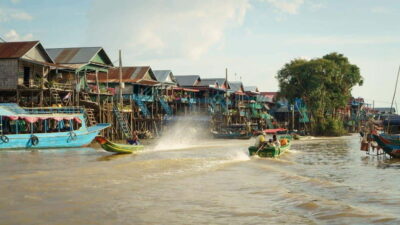
Sunset tour of Kampong Phluk stilts home village on the Tonle Sap
Read our review →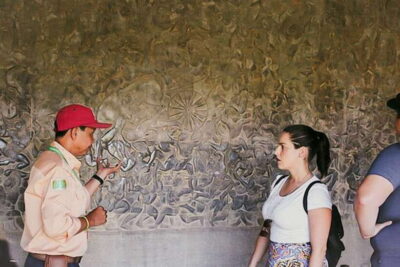
Angkor Wat 2-Day Tour with Sunrise and Sunset
Read our review →
Angkor Wat Sunrise tour with Small – Group and Guide tours
Read our review →