
Reviewed · BATTAMBANG & BAMBOO TRAIN TOURS
Exploring Battambang History (Walking Tour)
Battambang’s past is written across its streets: French-era shop houses, old trading buildings, religious sites, and places tied to Cambodia’s wars and political upheaval. This four-hour walking tour links those stops with the stories that make them meaningful, rather than leaving you to guess what you are looking at.
I like the chance to see the city through a local guide such as Sothea or Sothai, both praised for clear English and a strong grasp of local history. I also like the modest $25 price, which includes water, taxes, and a private window into Battambang’s French, Chinese, Buddhist, Hindu, Christian, and Muslim influences. The main consideration is that the description also refers to cycling and countryside stops, so confirm the exact format when booking if you specifically want a walking tour.
Key points to know before you book
- French colonial Battambang: See the Central Market, old French-style buildings, and a group of roughly 300 colonial-era houses.
- A serious look at Cambodia’s past: The route covers French rule, civil war, the Khmer Rouge period, and the difficult years connected with the Governor’s House.
- Several faiths in one city: Hindu, Buddhist, Christian, Muslim, and Chinese religious influences are part of the story.
- Local guides matter: Sothea, Sothai, and Reaksa are named guides associated with the experience, with English ability and local history as key strengths.
- Easy half-day timing: The tour starts at 7:30 am, lasts about three to four hours, and includes bottled water and hotel pickup and drop-off from Battambang hotels.
- Check the activity format: Some details describe walking, while others describe cycling to the countryside, temples, and a crocodile farm.
Battambang’s story begins at the Central Market
The tour starts at 7:30 am, a useful hour for seeing Battambang before the heat builds. Your guide takes you into the city’s older core, where the Central Market provides an immediate lesson in how Battambang grew as a trading center.
The market is described as French style, so you are not simply looking at stalls and shop fronts. You are also looking at the structure of a city shaped by colonial planning and commerce. Battambang became important because of its connection to rice production and regional trade, and the market helps explain how goods and money moved through the city.
I like this opening because it gives the tour a practical starting point. You begin with trade, then move into architecture, politics, religion, and war. That order helps the city make sense. Instead of treating each old building as an isolated sight, the guide can show how the pieces fit together.
Bring a camera, but use it with care. The value of the market is not only its appearance. It is also the daily activity around it. Your guide can point out details you might miss while walking alone, including how older commercial buildings relate to Battambang’s role as a rice-producing center.
Other Battambang outings from Battambang:
- Battambang: Tuk-Tuk, Bamboo Train, Killing/Bat Caves, Sunset
★ 4.9 · 1,436 reviews - Battambang Tuk Tuk tour: Bambootrain, Killing & Bat Caves,Sunset
★ 5.0 · 799 reviews - Afternoon tour by tuk tuk to bamboo train,bat cave,killing cave,countryside.
★ 5.0 · 344 reviews
The French colonial streets and 300 old houses
One of the most distinctive parts of the route is a group of about 300 houses built during the French colonial period. These buildings offer a quieter way to understand Battambang than a formal museum would.
The appeal is in the details: the shape of the facades, the arrangement of shop houses, and the way homes and businesses once worked together. With a guide, you can ask how French design mixed with local life and why the city developed this particular look.
Do not expect every building to be restored or presented as a polished monument. That is part of the point. Older urban areas often show wear, repairs, and changes in use. The guide’s explanation gives you a better way to read what remains.
If architecture is your main interest, this may be the strongest reason to book. The tour offers a close look at Battambang’s built past without requiring a full day or a long journey outside town. It is also a good first activity after arriving, since it helps you recognize the city’s main historical threads before exploring on your own.
White elephants, Naga Peace, and changing power
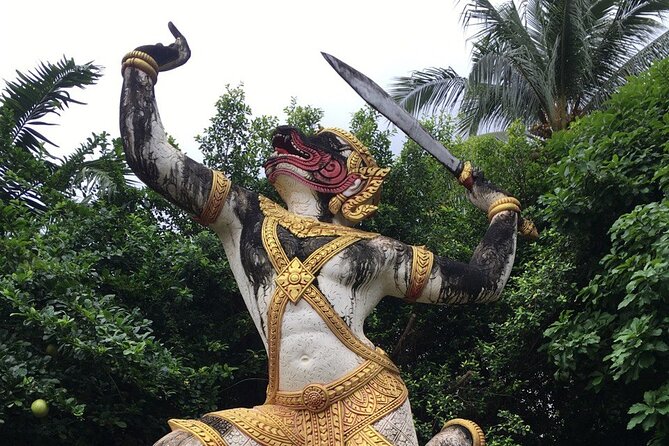
The route includes a white elephant site connected with the period when Battambang was under Thai control. That detail broadens the story beyond the French colonial years. Battambang’s identity was shaped by shifting regional power, not just by one European administration.
You also visit Naga Peace, a symbol connected with the end of war in Cambodia. This is an important change of tone. The tour is not only about attractive old buildings or market life. It also asks you to think about conflict, recovery, and the hope for a country without war.
Your guide’s role is especially useful at these stops. Symbols can be easy to pass without understanding. A local explanation gives them context, and it helps connect Battambang’s public spaces to Cambodia’s wider past.
The history may feel heavy at times. The itinerary includes civil war and the Khmer Rouge period, so this is not a light sightseeing walk with no difficult subjects. If you prefer only food, architecture, and photographs, you may find parts of the tour sobering. I see that as a strength, provided you are ready for an honest account of the city.
The Governor’s House and Battambang’s hardest years
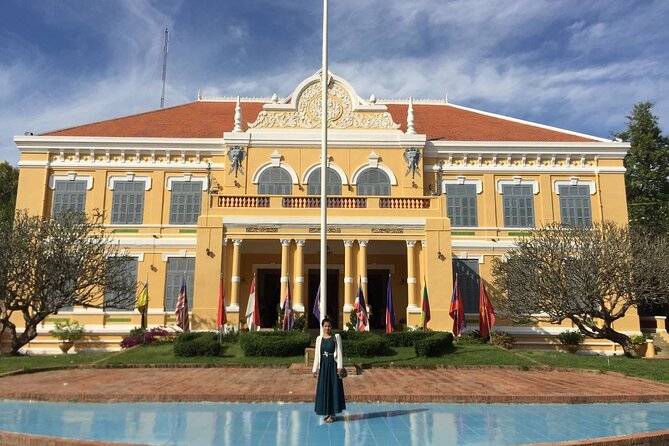
The Governor’s House is one of the more serious stops. It is linked to a very difficult period in Battambang’s history, and it gives the guide a place to discuss the political conditions that affected the city.
The supplied information does not set out every detail of the building’s story, so you should treat the guide’s explanation as the main reason to visit. Ask questions. This is the kind of stop where a few minutes of local context can matter more than the building itself.
The tour covers French colonial rule, civil war, and the Khmer Rouge period. Those subjects are not presented as separate textbook chapters. They are part of Battambang’s urban story, and the Governor’s House helps show how power was felt at a local level.
I value this kind of stop because it keeps the tour from becoming a parade of handsome old facades. Battambang’s history includes pain as well as trade and culture. A good guide can explain that without turning the walk into a lecture. Guides named in connection with the tour, including Sothea and Sothai, are described as friendly, clear in English, and comfortable explaining the past.
A few more things to do in Battambang worth a look
- 2 Days Guided Historical Tour in Angkor
★ 5.0 · 855 reviews - Siem Reap: Banteay Srei and Grand Circuit Heritage Tour
★ 4.9 · 163 reviews - Banteay Srei and Grand Circuit Heritage Tour from Siem Reap
★ 5.0 · 142 reviews - Bokor Mountain Adventure – History, Sights and Waterfalls
★ 5.0 · 65 reviews
A Chinese temple and the city’s many faiths
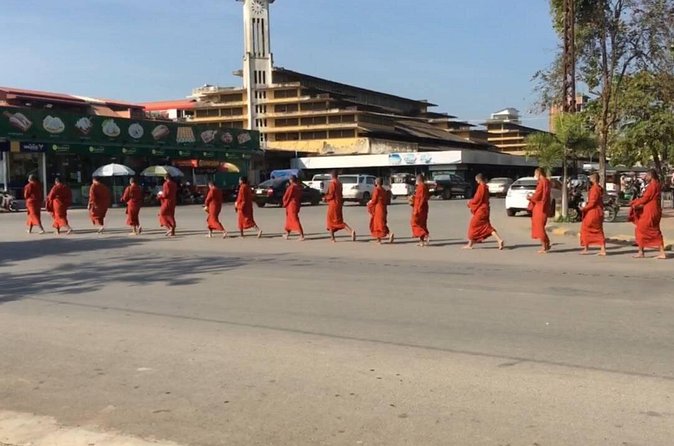
A Chinese temple adds another layer to the route. It shows how Chinese communities and beliefs influenced Battambang, especially in a city shaped by trade.
The wider tour explains the presence of Hinduism, Buddhism, Christianity, and Islam as well. That range is one of the experience’s best features. You are not given a single explanation for Cambodian culture. You see how different religious and cultural traditions have shared the same city.
At the temple, dress with respect and follow your guide’s instructions. The supplied details do not specify a strict dress code, but flexible, comfortable clothing is recommended. Sun lotion and sunglasses are also sensible for a morning spent outdoors.
This part of the tour suits anyone who wants more than a standard architectural walk. You can ask how religious traditions affected daily life, family customs, buildings, and community identity. The guide’s local perspective is especially valuable here, since religious sites are often difficult to understand from appearance alone.
The former Indochina Bank and Battambang as a trading center
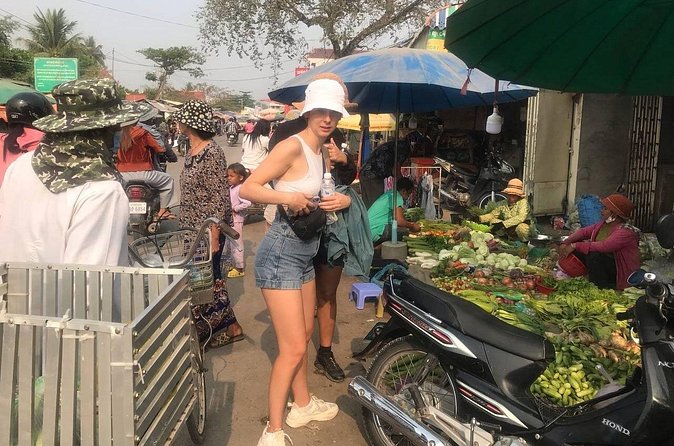
The Indochina Bank is included to explain how money moved through the city. This may sound less exciting than a temple or old market, but it is a useful stop because banks reveal how a trading center functioned.
Battambang’s importance was tied to rice and commerce. The bank helps connect the local economy with the larger systems that supported trade during the colonial period. It also shows why certain buildings were placed in the city center and why the market district mattered.
I like the way this stop makes the tour practical. You learn not only who ruled Battambang, but also how people bought, sold, stored, and financed goods. That kind of detail can make the city’s history easier to remember.
The tour is strongest when it links ordinary places to larger events. A market, a bank, a house, and a temple can tell you a great deal when someone explains their role. Without that context, you might walk past them without giving them a second look.
Walking, cycling, or both?
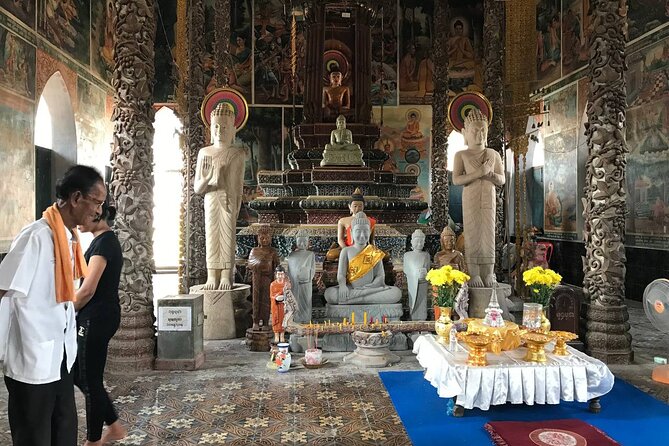
There is an important point to clear up before booking. The experience is presented as Exploring Battambang History, with a walking itinerary through the city. Yet the description also promotes a cycling tour that leaves the city for the countryside, with visits to a temple, a crocodile farm, rice fields, farms, and villages.
Some of the supplied tour details also describe cycling with guides such as Reaksa and Sothea. Those outings include countryside roads, village meetings, paddy fields, cows, and a closer look at daily life outside the center.
That sounds like a related experience, but it is not the same plan as a focused historical walk. If you want old buildings, the Central Market, the Governor’s House, the Chinese temple, and the Indochina Bank, ask for the walking version. If you want rural scenery and cycling, confirm that the countryside route is included.
This distinction matters for comfort as well as expectations. A walking tour of three to four hours is different from a bike ride through villages. The listing says pickup is offered, and hotel pickup and drop-off from Battambang hotels are included in the tour description, but confirm the transport details when booking.
What the $25 price really buys you
At $25 per person, the main value is not admission to major paid attractions. The itinerary states that admission is free, and the price includes a local English-speaking guide, bottled drinking water, and all fees and taxes.
You are paying for interpretation and convenience. A map can show you the Central Market and colonial streets, but it cannot explain the link between French planning, rice trade, Chinese commerce, regional power, civil war, and religious life. A good guide turns a walk into a connected story.
The price also makes sense for solo visitors. Several people who took the experience alone found the half-day format worthwhile, and the guides are described as friendly and easy to talk with. You do not need to organize transport between scattered points or spend time working out what each building means.
The group limit is 15 people. That is small enough for a guide to speak with the group, but it is not a private tour. If you want long personal conversations at every stop, ask about the group size for your date. If you prefer a social outing at a reasonable price, the maximum is manageable.
Personal expenses and insurance are not included. Bring some money for anything you may wish to buy, and arrange your own insurance. The tour includes water, but you should still use sun protection and wear comfortable clothes.
How much energy does the tour require?
The walking version is described as easy and suitable for most people. It lasts only part of the day, and the route focuses on urban sights rather than a strenuous trek.
You still need to prepare for heat. Bring sunglasses, sun lotion, a camera, and flexible or sports clothing. Comfortable shoes are the sensible choice, even though the booking details do not specify a required type of footwear.
The early start helps. A 7:30 am beginning gives you a cooler part of the morning and leaves the afternoon free. You can use that later time to rest, explore independently, or consider another Battambang activity.
Service animals are allowed, and the tour is near public transportation. Most people can participate according to the supplied details. Since the description combines walking and cycling information, anyone with mobility or activity concerns should confirm the exact route before paying.
Guides who shape the experience
The strongest part of this tour is the guide. Names connected with the experience include Sothea, Sothai, and Reaksa. Sothea and Sothai are described as speaking good English and explaining Battambang’s history, culture, and traditions with confidence. Reaksa is described as a gentle English-speaking guide on the cycling side of the experience.
That personal connection matters in Battambang. The city’s story includes sensitive subjects, including war and the Khmer Rouge period. A guide who can explain the past in clear, human terms is more useful than a guide who simply recites dates.
You should ask questions as you go. Ask how French colonial buildings were used, how Chinese influence shaped trade, why the white elephant matters, and what Naga Peace represents. The more you engage, the more value you get from the half-day.
The guide also helps you notice daily life. The cycling version includes meetings with villagers and views of farms and rice fields. The walking version offers a closer look at city life. In both cases, the local point of view is the reason to choose a guided experience instead of simply following a map.
Booking details and who should choose it
Confirmation is provided at booking. Free cancellation is available if you cancel at least 24 hours before the local start time. A cancellation within 24 hours, or a late change, does not receive a refund.
I would choose this tour if you want a short, affordable introduction to Battambang and care about the reasons behind what you see. It is especially useful for first-time visitors, solo visitors, architecture fans, and anyone interested in Cambodia’s political and religious past.
I would choose the cycling version instead if your priority is rice fields, village life, countryside scenery, a temple, and a crocodile farm. Just make sure you are booking that route rather than the city history walk.
Should you book the Battambang history tour?
Yes, if you want Battambang to become more than a pleasant town with old buildings. The Central Market, French colonial houses, Chinese temple, Indochina Bank, Governor’s House, white elephant, and Naga Peace each offer a different piece of the city’s story.
The tour is fairly priced, short enough to fit into a busy visit, and led by guides whose English and local history skills are central to the experience. Its one real weakness is the unclear mix of walking and cycling details. Confirm the route, transport, and stops before booking.
Choose it for context, conversation, and a grounded look at Battambang. Choose the countryside cycling option if you want a more active morning outside the city.
FAQ
Where does the tour take place?
The experience takes place in Battambang, Cambodia. The history route includes the Central Market, French colonial buildings, the Governor’s House, Naga Peace, a Chinese temple, and the former Indochina Bank.
How long does the experience last?
It lasts about three to four hours. The itinerary gives four hours as the approximate duration.
What time does the tour start?
The stated start time is 7:30 am.
Is hotel pickup available?
Yes. Pickup is offered, and the tour description says hotel pickup and drop-off from Battambang hotels are included.
What is included in the price?
The price includes a local English-speaking guide, bottled drinking water, and all fees and taxes.
Are personal expenses and insurance included?
No. Personal expenses and insurance are not included.
How many people can join the tour?
The maximum group size is 15 people.
What should I bring?
Bring a camera, flexible or sports clothing, sun lotion, and sunglasses. Comfortable clothing is recommended for the activity.
More walks around Battambang
- Customs and Culture Half Day Walk and Bike Tour in Battambang
★ 5.0 · 23 reviews - Siem Reap: City Walking Tour
★ 4.6 · 583 reviews - Siem Reap City Walking Tour
★ 4.5 · 114 reviews - Siem Reap Walking Tour: Landmarks & Hidden Gems
★ 5.0 · 15 reviews
Just added in Battambang
- Bamboo Train, Banann Temple, Fruit Bat, Bat Cave, Sunset★ 4.2 · 3 reviews
- Afternoon tour to Original Bamboo train. Bat cave. Killing cave★ 5.0 · 25 reviews
- Private Taxi Transfer From Battambang – Siem Reap City★ 5.0 · 4 reviews
- Private Taxi Transfer Battambang from/to Phnom Penh★ 5.0 · 7 reviews
- Private Boat from Battambang to Siem Reap via Tonle Sap Lake★ 4.5 · 3 reviews
- Tuk Tuk Tour (Full-Day)★ 5.0 · 7 reviews
- Explore local livelihood & countryside (Half-Day Cycling Tour)★ 5.0 · 19 reviews
- Afternoon Tour BambooTrain & Bat Cave★ 5.0 · 57 reviews
Battambang & Bamboo Train Tours, compared.
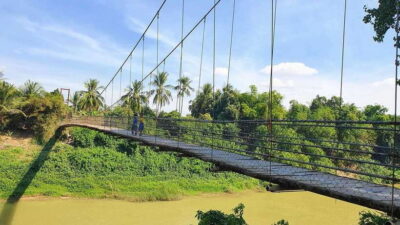
Tuk-Tuk, Bamboo Train, Killing/Bat Caves, Sunset
Read our review →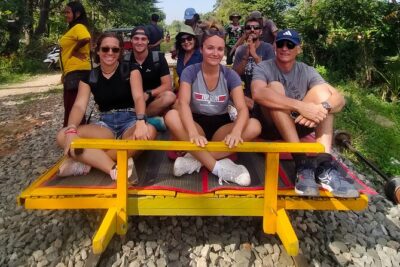
Battambang Tuk Tuk tour: Bambootrain, Killing & Bat Caves,Sunset
Read our review →
Afternoon tour by tuk tuk to bamboo train,bat cave,killing cave,countryside.
Read our review →
Local Livelihood Half Day Bike Tour in Battambang
Read our review →
Explore Battambang full day tour by Tuk Tuk (start from 9am-6:30pm)
Read our review →
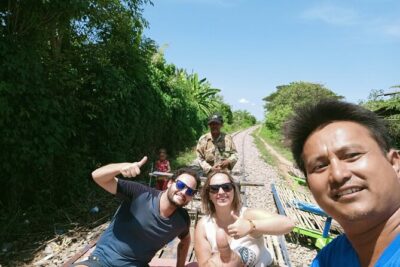
Full Day tour .City tour.Countryside.Bamboo Train.Secret Bat Cave
Read our review →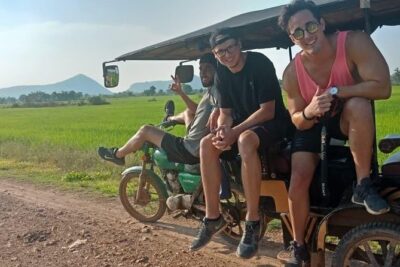
Battambang Full Day Tour from Siem Reap – Bamboo Train, Killing Cave & Sunset
Read our review →Browse the lists this tour appears in