
Reviewed · CITY TOURS
Full-Day private Tour in Lost City & Angkor Wat from Siem Reap
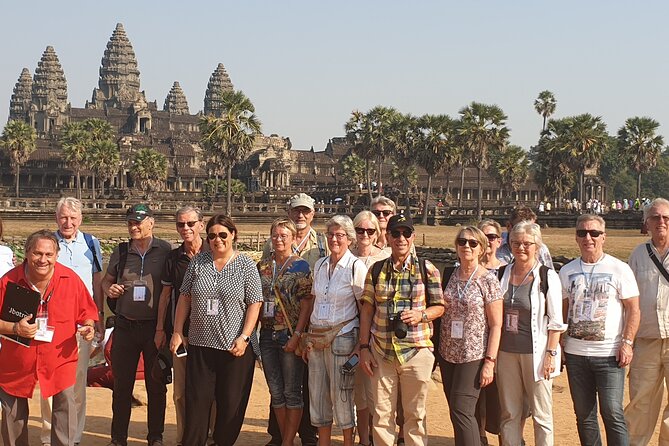
The most memorable part of this private Angkor tour is the route through Angkor Wat from the eastern side, followed by a jungle path toward the temple chambers. You get the grand monument, the giant faces of Bayon, the royal terraces of Angkor Thom, and Ta Prohm’s tree-covered ruins in one long day.
I like the flexible pace and the fact that your guide can explain the carvings instead of leaving you to guess at them. I also like the quieter corners, including a lesser-seen stop inside Angkor Thom, plus hotel pickup in a private vehicle. The main drawback is the heat and the amount of walking, and the $30 price does not include your Angkor temple pass or lunch.
Key points at a glance
- Eastern-side Angkor Wat entry: Begin away from the most familiar approach and follow a jungle path toward the temple.
- Private pace: Your group travels alone, with guides such as Sim or Rith able to adjust the order and timing.
- Three major temple experiences: See Angkor Wat, Bayon’s stone faces, and Ta Prohm in one approximately eight-hour outing.
- Angkor Thom in detail: Go beyond the South Gate with Baphuon, Phimeanakas, the Terrace of the Elephants, and the Terrace of the Leper King.
- Good value at $30: Hotel transport, a private vehicle, an English-speaking guide, and bottled water are included, but admission and lunch are extra.
- Plan for Cambodia’s heat: Wear flat walking shoes and clothing covering your knees and shoulders where required.
One day, three very different Angkor experiences
This tour works because it groups together the temples that first-time visitors most want to see, while adding several places that are easy to skip. Angkor Wat gives you scale and fine stone carving. Angkor Thom adds royal ceremony and city planning. Ta Prohm supplies the moody jungle setting made famous by modern films.
You begin with pickup at your Siem Reap hotel. A private vehicle means you do not need to wait for other groups, and your guide can shape the day around your energy. The schedule is listed as about eight hours, though temple visits can feel longer when walking time, traffic inside the park, and lunch are included.
The strongest part of the experience is the guiding. Sim is described as flexible and able to adjust the order when the weather or your energy calls for a change. Rith is also named as a guide who brings clear explanations and enthusiasm to the day. Since Angkor can blur into a parade of stone walls without context, this makes a real difference.
A few more things to do in Siem Reap worth a look
- Siem Reap: Full-Day Angkor Wat Guided Tour with Sunset
★ 4.9 · 3,803 reviews - Full-Day Angkor Wat Sunrise Private Tour with Guide from Siem Reap
★ 5.0 · 2,920 reviews - Siem Reap: Angkor Wat Sunrise and Full-Day Sightseeing Tour
★ 4.9 · 2,828 reviews
Entering Angkor Wat from the eastern side
Angkor Wat is the anchor of the day. Built in the early 12th century, it is the largest religious monument in the world and the best-preserved major temple in the Angkor area. It has remained an important religious site since its foundation, a rare continuity in a complex that has seen centuries of change.
Instead of approaching only by the famous front causeway, you enter from the less-used eastern side. The route leads on foot through a jungle path toward an old library pool. This is a smart way to begin. It gives you a quieter approach and lets the monument reveal itself in stages rather than presenting the standard postcard view at once.
Allow about two hours here. Your guide explains the temple’s layout, then points out the stone bas-reliefs, myths, and scenes from Khmer culture. Angkor Wat’s carvings stretch for an extraordinary distance, so a guide helps you focus on key panels rather than trying to inspect every figure.
The central chambers and upper terraces require walking and some effort. The visit is not simply a quick photo stop. You move through galleries, courtyards, and stairways, with time to look closely at the stonework and hear how the temple functioned.
You should know that the Angkor admission ticket is not included. The guide will send a link so you can purchase the temple entrance e-ticket in advance. Keep this cost in your budget when comparing the tour with other options.
The South Gate and Bayon’s stone faces
The South Gate of Angkor Thom is a brief but striking stop. A row of 54 stone figures lines each side of the approach, leading toward the fortified royal city. The gate was one of five entrances to Angkor Thom, which was once the capital of the Khmer Empire.
The stop is scheduled for about 20 minutes, enough to see the gate and take photographs. It can be busy, so your guide’s timing matters. The line of figures also introduces a theme that appears throughout Angkor Thom: the relationship between kingship, religion, protection, and ceremony.
Bayon follows, with about an hour to explore. Built in the 13th century as the state temple of King Jayavarman VII, it occupies the center of Angkor Thom. Its most famous feature is the collection of serene stone faces on the towers. More than 200 enormous faces look out from the upper levels, creating one of the most recognizable scenes in Cambodia.
Bayon is not only about the faces. Two sets of bas-reliefs show both religious stories and ordinary life. You can see scenes of battles, royal events, markets, and daily Khmer activity alongside mythological images. I find this combination especially useful because it connects the grand royal setting with the people who lived in it.
The temple can feel confusing at first. Towers overlap, galleries turn sharply, and the faces appear from unexpected angles. Your guide’s explanation gives the place order, while the private format lets you pause for photographs without holding up a large group.
Baphuon and the royal heart of Angkor Thom
Baphuon is a three-tiered temple mountain northwest of Bayon. Built in the mid-11th century, it served as a state temple before Jayavarman VII’s time. Its base measures about 120 meters from east to west and 100 meters from north to south, so this is a substantial structure even before you climb it.
Plan for about an hour here. The approach and raised levels make it more physical than a quick roadside stop. From the temple, you get a better sense of Angkor Thom as a planned royal center rather than a collection of isolated ruins.
The tour then moves into less obvious parts of Angkor Thom. A short stop is set aside for a place that many visitors miss, though the exact location is not specified in the tour details. This is one reason a private guide can be useful: you are not limited to the same two or three views everyone else sees.
Phimeanakas, also called Vimeanakas, sits inside the former Royal Palace enclosure. The temple began in the late 10th century under Rajendravarman and was completed under Suryavarman I. Its three-tier pyramid form once supported a tower, with galleries around the upper platform.
The scheduled visit is about an hour. The site is less immediately famous than Angkor Wat or Bayon, but it helps you understand the royal center of Angkor Thom. You see where sacred architecture and palace life were closely linked, even though much of the former palace complex has disappeared.
Same base, a different kind of day out:
- Angkor Wat Sunrise or Sunset Tour with Guide from Siem Reap
★ 5.0 · 12,109 reviews - Siem Reap: Angkor Wat: Small-Group Sunrise or Sunset Tour
★ 5.0 · 9,444 reviews - From Siem Reap: Kampong Phluk Floating Village Tour by Boat
★ 4.9 · 6,979 reviews - Sunset tour of Kampong Phluk stilts home village on the Tonle Sap
★ 5.0 · 4,865 reviews
The ceremonial terraces of the Khmer kings
The Terrace of the Elephants stretches about 350 meters along the Royal Palace area. Built in the 13th century under Jayavarman VII, it served as a reviewing stand for public ceremonies and as a base for royal audiences.
Allow roughly 40 minutes. The terrace’s scale matters more than a single dramatic chamber. You walk along carved stone elephants and other figures while imagining the platform filled with ceremonies, processions, and formal audiences. It is a place where the political power of the Khmer court becomes easy to picture.
Nearby, the Terrace of the Leper King has another purpose and mood. The U-shaped structure may have served as a royal cremation site. Its modern name comes from a 15th-century statue found there, though the figure represents Yama, the Hindu god of death.
The terrace is famous for its carved inner walls. Take time to look into the narrow passages rather than only photographing the outside. The stop lasts about 40 minutes, and the shaded, enclosed spaces can feel welcome after the open walk along the larger terrace.
The long list of Angkor Thom stops is both a strength and a caution. You see much more than the standard South Gate and Bayon circuit, but the day can become tiring. If you already know you have limited stamina, tell your guide early. The private format makes it easier to shorten a stop or change the order.
Ta Prohm and the trees growing through the ruins
Ta Prohm is usually the emotional finish. Built in the 13th century, it was a religious temple at the center of the ancient Khmer University. UNESCO added it to the World Heritage List in 1992.
The temple is famous for its trees, roots, galleries, and broken stonework. Unlike many restored sites, Ta Prohm retains much of the appearance that made it famous when the ruins were first recorded. Trees grow through and over parts of the structure, creating a setting that feels more enclosed and mysterious than the open terraces of Angkor Wat.
You have about an hour here. The temple is also known as the Tomb Raider temple, which helps explain its popularity. That fame means you should expect a strong interest in the main photographic spots. Your guide can help you look beyond the best-known tree and notice the galleries, carved figures, and signs of the temple’s original scale.
Ta Prohm is not an untouched jungle ruin. Paths and conservation work make the site manageable, but the combination of roots and stone remains powerful. Wear shoes with a good grip, especially if the ground is uneven.
What the $30 price really covers
At $30 per person, the tour offers solid value if you want a private guide and door-to-door transport. The price covers an English-speaking guide, a private comfortable vehicle, hotel pickup and drop-off, and bottled water.
That is useful in Siem Reap’s heat. You are not arranging several separate rides, and your group can move directly between the temples. A private vehicle also gives you somewhere to cool down between long walks.
The price does not cover the Angkor admission fee. Lunch is described as a stop at a restaurant near the temple, but it is not listed among the included items, so plan to pay for your own meal. Cold drinks and additional refreshments should also be treated as extra unless confirmed directly before booking.
The low base price therefore works best for someone who already understands that the main ticket and food sit outside the tour cost. Compare the full day’s total, not just the advertised $30.
Heat, clothing, and walking demands
Cambodia’s heat is the main practical challenge. One of the day’s strongest advantages is the guide’s ability to adjust the timing, but no schedule can remove the need to walk around large temple compounds in hot weather.
Wear flat, comfortable shoes. You will walk through galleries, paths, courtyards, and temple grounds, with some uneven surfaces and stairways. Bring sun protection and use the bottled water provided, though the tour details do not specify other equipment or refreshments.
Dress modestly. Knees and shoulders must be covered when entering certain sacred areas. Casual clothing is fine as long as it meets that requirement.
The listed timing adds up to a full day of stops, even though the overall duration is about eight hours. That means the schedule may feel brisk at some sites and more relaxed at others. The private format is valuable here. Guides such as Sim have shown flexibility, including changing the order and adding a rest at a coffee place near Angkor Wat when temple fatigue sets in.
Who should book this private Angkor day
This tour suits a first visit to Siem Reap when you want the major temples covered without joining a large group. It is also a good match for couples, families, or friends who prefer to set their own pace.
You should book it if you value explanations of carvings and temple function. Angkor Wat and Bayon are much easier to understand when someone points out the stories and tells you how each building fit into Khmer religious and royal life.
It is less suitable if you want a slow, highly specialized study of only one temple. The route covers a lot of ground. You may also find it tiring if you dislike walking or struggle in strong heat.
The experience has a perfect five-star rating from 17 submitted ratings, with all recommending it. The praise centers on guide quality, clear explanations, flexibility, and the ability to keep the day enjoyable despite the humidity. Those are the traits that matter most on a long Angkor circuit.
Should you book it?
Book this tour if you want an efficient private introduction to Angkor, with the essential temples plus the less famous parts of Angkor Thom. The eastern-side entry at Angkor Wat, the flexible guiding, and the chance to see Ta Prohm in the same day make the route especially appealing.
Before you commit, budget separately for the Angkor pass, lunch, and extra drinks. Also be honest about your tolerance for heat and walking. If you are prepared for both, $30 is a sensible starting price for private transport, an English-speaking guide, hotel service, and a full day of Cambodia’s finest temple sites.
Cancellation is free up to 24 hours before the start time for a full refund. Changes or cancellations inside 24 hours are not accepted for a refund.
FAQ
Is hotel pickup included?
Yes. Hotel pickup and drop-off in Siem Reap are included.
How long does the tour last?
The tour lasts approximately eight hours.
Is this a private tour?
Yes. Only your group participates in the activity.
Is the Angkor temple admission fee included?
No. The Angkor admission fee is not included. The guide sends a link for purchasing the temple entrance e-ticket in advance.
Is lunch included?
No. Lunch is not listed among the included services. The itinerary includes a restaurant stop near the temple, so you should plan to pay for your meal.
Which temples and sites are included?
The route includes Angkor Wat, the South Gate of Angkor Thom, Bayon, Baphuon, Phimeanakas, the Terrace of the Elephants, the Terrace of the Leper King, and Ta Prohm, along with two brief lesser-seen stops in Angkor Thom.
What should I wear?
Wear flat shoes that are comfortable for walking. Clothing must cover your knees and shoulders when entering certain sacred areas.
Can I cancel for a full refund?
Yes, if you cancel at least 24 hours before the experience start time. Cancellations made less than 24 hours ahead are not refundable.
Just added in Siem Reap
- Twilight Tastes of Siem Reap Include Dinner★ 5.0 · 13 reviews
- Ultimate Sunrise to Angkor Wat, Angkor Thom and Bayon Temple★ 5.0 · 3 reviews
- Trekking Tour at Phnom Kulen National Park from Siem Reap★ 5.0 · 3 reviews
- Full-Day Private Tour of Angkor Wat with Pick Up★ 5.0 · 12 reviews
- Private Day Trip to Angkor Temples with Expert Guide★ 5.0 · 4 reviews
- Siem Reap City Tour with War Museum and Killing Field★ 5.0 · 27 reviews
- Waterfall & River of 1000 Siva Linga- Kulen Mountain Private Tour★ 5.0 · 3 reviews
- Angkor Wat Experience Temple Pass and Siem Reap Food Tour★ 5.0 · 13 reviews
City Tours, compared.
Full Day tour .City tour.Countryside.Bamboo Train.Secret Bat Cave
Read our review →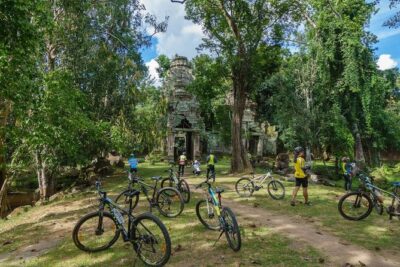
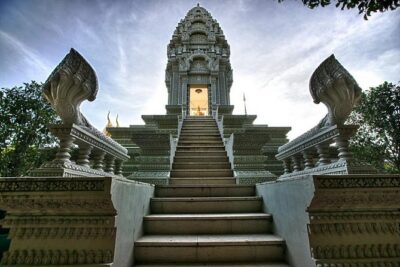
Phnom Penh City Tour, Silver Pagoda, Genocide Museum, Killing Fields
Read our review →
Siem Reap City Hidden Gems (Private Guided Tour)
Read our review →
Siem Reap City to Siem Reap Angkor Airport by Shuttle Bus
Read our review →
Private Airport Transfer: Siem Reap Angkor (SAI) ↔ City Hotels
Read our review →Browse the lists this tour appears in