
Reviewed · CITY TOURS
Full-Day private Tour with Sun Rise in Lost City & Angkor Wat from Siem Reap
The best part of this day comes before breakfast: you enter Angkor Wat in darkness, walk a jungle path, and wait beside the north pool as the temple slowly appears in the first light. Then you have the cool morning hours for the major sights before heat and crowds build.
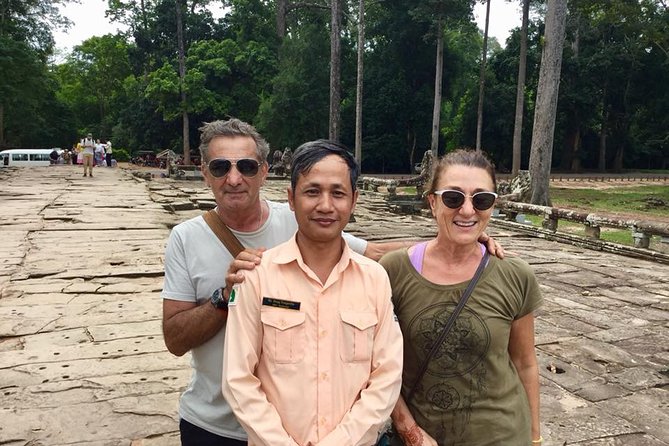
I like the private format, which lets you ask questions, linger for photos, or adjust the pace. I also like the guides’ personal touch. Rith is praised for clear English, useful stories, and finding quieter places, while Sen is noted for knowing good sunrise positions. The main catch is the early start and the extra $37 temple pass, which brings the stated total to about $73 per person before any group discount.
Key points to know before booking
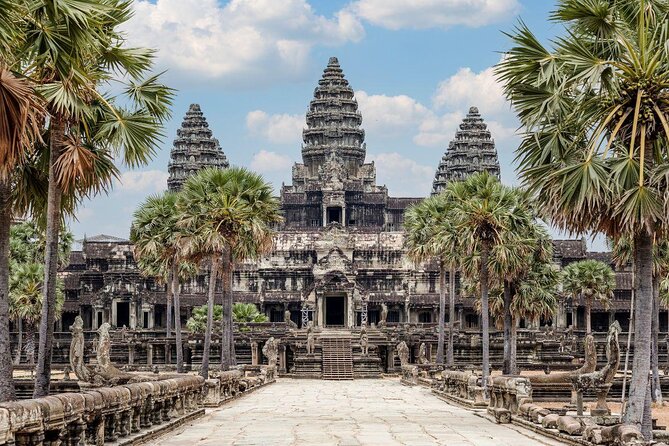
- Sunrise begins the day at Angkor Wat’s eastern gate, followed by a walk to the north pool.
- Rith and Sen are among the guides praised for this route, with clear English and helpful photo advice.
- The private vehicle, hotel pickup, bottled water, and drop-off are included in the $36 tour price.
- The Angkor temple pass costs another $37 per person, and it is not included.
- The route covers Angkor Wat, Angkor Thom, Bayon, Baphuon, Phimeanakas, the royal terraces, and Ta Prohm in about eight hours.
- A boxed breakfast from your hotel is a smart idea, since you can eat at a local cafe near Angkor Wat after sunrise.
Why the sunrise start is worth the lost sleep
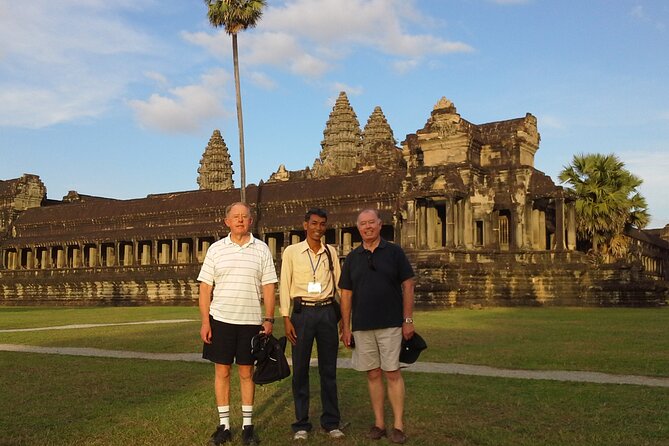
Angkor Wat at sunrise is the emotional hook, but the timing also has a practical purpose. You leave your hotel before dawn, enter through the eastern gate, and walk toward the north pool while the temple is still mostly hidden. You know the towers are ahead, but darkness and trees hold them back for a while.
That slow reveal gives the morning a sense of place that a later arrival cannot match. You are not simply stepping off a vehicle beside a monument. You are approaching it gradually, with the silhouette and reflection becoming clearer as the sky brightens.
The route then takes you into Angkor Wat’s central chambers and up toward the upper terraces. Your guide explains the temple’s role, design, history, and religious meaning as you walk. Since Angkor Wat is enormous, a guide helps you connect the courtyards, galleries, towers, and terraces instead of seeing them as a series of impressive stones.
There is a practical tradeoff. Sunrise is popular, and the temple grounds will not be empty. The private guide can help you find a better position and move away from the thickest clusters, but no early start can guarantee solitude.
Wear shoes you can walk in for several hours. Flat, comfortable shoes are specifically recommended, and some temple areas require clothing that covers your knees and shoulders. Bring a light layer if you are sensitive to the cool air before sunrise, though the day will warm quickly.
A few more things to do in Siem Reap worth a look
- Siem Reap: Full-Day Angkor Wat Guided Tour with Sunset
★ 4.9 · 3,803 reviews - Full-Day Angkor Wat Sunrise Private Tour with Guide from Siem Reap
★ 5.0 · 2,920 reviews - Siem Reap: Angkor Wat Sunrise and Full-Day Sightseeing Tour
★ 4.9 · 2,828 reviews
Angkor Wat: two hours with Cambodia’s great symbol
Angkor Wat is the largest religious monument in the world and was built in the 12th century. It remains the centerpiece of any first visit to Siem Reap, but its scale can be hard to grasp without someone explaining how its parts fit together.
The first stage is the exterior approach and sunrise. After that, you move into the temple itself. The guide can point out the way the galleries frame the inner towers, how the upper levels were reached, and why this was far more than a backdrop for photographs.
The temple is also the best-preserved major monument in the complex. It has continued as a religious center since its foundation, so you are looking at an active sacred place as well as an archaeological site. Keep that in mind when choosing clothing and behavior inside the galleries.
Two hours is enough for a useful first look, especially since the rest of the morning covers several other sites. It is not enough for every corridor or relief, so you should tell your guide if you care most about architecture, religious symbolism, photography, or historical stories.
After sunrise, you can eat the boxed breakfast from your hotel at a local cafe near Angkor Wat. This is a better plan than hoping to find a full meal at exactly the right moment. Cold drinks are also available at the local restaurant stop, but food purchases are not listed as part of the tour price.
Angkor Thom begins at the South Gate
After Angkor Wat, the route moves to Angkor Thom, the former capital of the Khmer Empire. The South Gate is a short stop, but it gives you one of the clearest visual introductions to the city’s fortified design.
A row of 54 stone figures lines each side of the approach. The gate itself is decorated with large faces, and the causeway leads into the walled city. Your guide can help you read the figures and the gate as part of a larger religious and political plan, rather than as an isolated photo stop.
This is one place where the guide’s storytelling matters. The day includes several monuments with similar stone colors and repeated architectural forms. Clear explanations help you tell a royal city gate from a temple entrance and understand why Angkor Thom was built on such a grand scale.
The stop is scheduled for about 30 minutes. That is enough for photos and an introduction, but it is not a long exploration of the walls or gates. If you become interested in the city’s layout, ask questions early so your guide can shape the next stops around your interests.
Bayon’s stone faces and Baphuon’s long approach
Bayon Temple sits at the center of Angkor Thom and was built in the 13th century as the state temple of King Jayavarman VII. Its most famous feature is the collection of large carved faces looking out from the towers.
Bayon feels different from Angkor Wat. Angkor Wat is ordered and expansive, while Bayon can feel close, layered, and slightly puzzling. Towers crowd around narrow passages, and faces appear from unexpected angles. The one-hour visit gives you time to walk through the central areas and study the carvings without rushing from one photograph to the next.
Your guide can explain what is known about the temple and point out how the structure changed over time. This is also a useful place to ask for help with photography. The faces look different depending on the light and your position, so a guide who knows the site can save you from taking the same picture repeatedly.
Next comes Baphuon, scheduled for about 40 minutes. The itinerary description repeats Bayon’s wording for this stop, but the actual site is a separate temple within Angkor Thom. Its raised form and long approach give you a different view of Khmer temple planning.
Baphuon can be more demanding under the sun because the approach and exposed stone offer limited shade. The early placement in the day helps. If you need a slower pace, say so. One advantage of a private tour is that the schedule can respond to your energy rather than forcing the whole group to move together.
Same base, a different kind of day out:
- Angkor Wat Sunrise or Sunset Tour with Guide from Siem Reap
★ 5.0 · 12,109 reviews - Siem Reap: Angkor Wat: Small-Group Sunrise or Sunset Tour
★ 5.0 · 9,444 reviews - From Siem Reap: Kampong Phluk Floating Village Tour by Boat
★ 4.9 · 6,979 reviews - Sunset tour of Kampong Phluk stilts home village on the Tonle Sap
★ 5.0 · 4,865 reviews
Phimeanakas and the royal heart of Angkor Thom
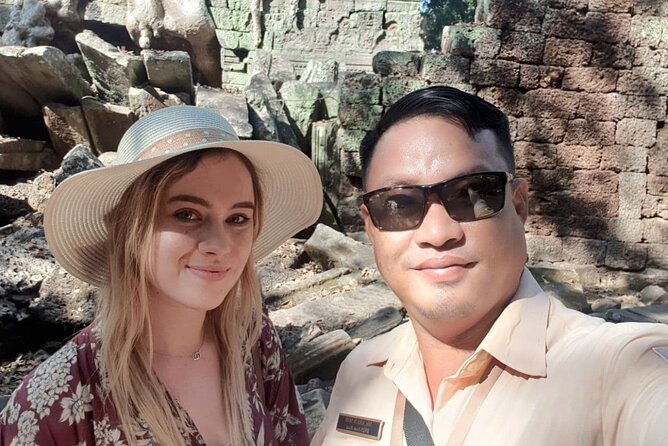
Phimeanakas, also called Vimeanakas, is known as the celestial temple. It was begun in the late 10th century during the reign of Rajendravarman and later completed by Suryavarman I. The temple sits inside the area associated with the former Royal Palace.
This stop adds an older layer to the morning. Bayon belongs to the time of Jayavarman VII, while Phimeanakas reflects an earlier period of Khmer construction. You begin to see Angkor Thom not as one single project, but as a royal capital that changed across generations.
About an hour is scheduled here. That allows time to look at the temple and the palace area, though the remains are less immediately dramatic than the faces of Bayon or the trees at Ta Prohm. This is a place for context and comparison. If you only want famous views, you may find the stop quieter than expected. If you want to understand how the capital worked, it earns its place.
The route also includes short stops described as secret or less-seen places within Angkor Thom. The details are not specified in advance, so treat these as flexible pauses rather than guaranteed headline sights. Their value is that your guide can respond to the day, your interests, and conditions at the better-known temples.
The royal terraces: elephants and the Leper King
The Terrace of the Elephants stretches about 350 meters and served as a viewing stand for public ceremonies. It also formed a base for the king’s grand audience. From the terrace, you are looking at a ceremonial space designed to display royal power, not simply a decorative wall.
The carved elephants are the obvious detail, but the length of the terrace helps explain its purpose. It was built for processions, gatherings, and public display. Your guide can help you imagine how the wall related to the wider royal center.
The Terrace of the Leper King comes next, with about 30 minutes planned. The U-shaped structure is thought by some to have been used as a royal cremation site. It was built in the 13th century under Jayavarman VII, though the modern name does not neatly explain the original purpose.
This is another stop where a guide can separate established information from later labels and theories. The carvings and enclosed passages reward a closer look, but the site may not make immediate sense if you walk through it alone.
Together, the two terraces give you a better feel for Angkor Thom as a capital and ceremonial center. They are less instantly famous than Angkor Wat, yet they help fill out the story of how the city functioned.
Ta Prohm saves the most atmospheric stop for last
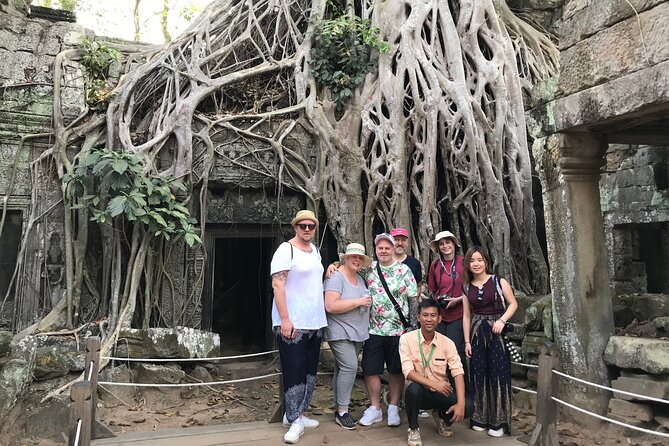
Ta Prohm is the final major temple and one of the most memorable stops of the day. Built in the 13th century, it is known for its jungle-enveloped walls and the trees growing around its stone structures. Its appearance also made it famous as the Tomb Raider temple.
Ta Prohm has a different mood from the open geometry of Angkor Wat and the crowded towers of Bayon. Root-covered walls, narrow passages, and broken galleries make it feel more intimate. You can see why it is so popular in photographs, but the real appeal is walking through a place where architecture and vegetation appear to have been left in an uneasy partnership.
The one-hour visit is long enough to see the main areas without making the day feel endless. By this point, heat and tired legs may affect your pace. The private setup helps here because you can ask for a slower walk or spend more time at the features that interest you most.
Ta Prohm can also be busy. The promise of avoiding crowds should be read as a smart timing and routing plan, not a guarantee that every famous doorway will be empty. Your guide’s local experience is most useful in choosing the order of the walk and helping with photos.
What the $36 price really covers
The stated tour price is $36 per person. It includes an English-speaking guide, a private comfortable vehicle, hotel pickup and drop-off, and bottled water. The Angkor temple admission fee is separate at $37 per person, so you should budget about $73 per person before any group discount.
That makes the temple pass slightly more expensive than the tour itself, but the comparison needs care. The tour price is paying for a full day of transport, guiding, and coordination across a large site. Hiring a vehicle and arranging a guide separately could be less convenient, especially for a pre-dawn departure.
The private format is the strongest value point for couples, families, or small groups. You are not paying for a large coach or following a fixed group pace. You can ask questions throughout the morning, stop for pictures, and tell the guide when you need a break.
The tour also advertises group discounts, though the exact discount is not stated. Ask for the current group price before booking if you are traveling with several people.
How the guides shape the day
The guide is central to this experience. Rith, also called Phorn Bunnarith, is repeatedly praised for clear English, useful answers, personal stories, and good photo help. He is also associated with helping visitors stay away from the thickest crowds and making the history of Cambodia easier to follow.
Sen is praised for being helpful and for knowing a good place to stand for sunrise. The provider may assign a different guide, so you should not assume a specific person is guaranteed unless you confirm it when booking.
A strong guide matters because the temples are not self-explanatory. Names, dates, royal titles, religious ideas, and architectural changes can blur together during a long morning. Good explanations turn the route into a connected story.
The private arrangement also lets you shape the conversation. Ask about the temple carvings, Cambodia’s past, the daily life of the capital, or the guide’s own experience of Siem Reap. The feedback about Rith highlights personal conversation as one of the tour’s strengths, not just formal facts.
Practical details for a smoother morning
The tour lasts about eight hours and includes hotel pickup and drop-off in Siem Reap. Confirmation is provided at booking, and the guide sends a link for purchasing the temple entrance e-ticket several days in advance.
Have your ticket arranged before the morning if possible. The tour does not include the $37 admission fee, and you do not want uncertainty about entry to slow down a pre-dawn start.
Bring your hotel’s boxed breakfast. The suggested plan is to eat at a local cafe near Angkor Wat after sunrise, which gives you a more useful break than waiting until the entire morning route is over.
Dress for temple rules. Clothing must cover your knees and shoulders at some temples, and comfortable flat shoes are recommended. Bottled water is included, but you may still want extra water, sun protection, and a small bag for personal items.
The tour is private, and most people can participate, but the itinerary involves walking over temple grounds, steps, and uneven surfaces. If you have mobility concerns, discuss them before booking so the guide can explain what can be adjusted.
Should you book this Angkor Wat day?
Book it if you want the major Angkor sights in one well-organized day and value a private guide more than a slow, independent visit. The combination of sunrise at Angkor Wat, the royal center of Angkor Thom, and Ta Prohm gives you a strong first look at the complex.
It is especially suitable for couples, families, first-time visitors, and anyone who wants clear explanations without joining a large group. The guides associated with the tour, especially Rith and Sen, are praised for communication, history, photo help, and thoughtful timing.
Skip it if you dislike pre-dawn starts, prefer spending a whole day at one temple, or want to explore without a set route. Also remember the real cost includes the $37 temple pass.
For most first visits, I would consider this a good-value introduction. Set your alarm, arrange the e-ticket, wear sensible shoes, and bring breakfast. The early start is hard, but it gives you the best chance to enjoy Angkor Wat before the hottest part of the day.
FAQ
What is included in the $36 tour price?
The price includes an English-speaking tour guide, private vehicle, hotel pickup and drop-off, and bottled water.
Is the Angkor temple admission fee included?
No. The Angkor Wat admission fee is listed separately at $37 per person.
How long does the tour last?
The experience lasts about eight hours.
What time does pickup take place?
Pickup is before dawn so you can enter Angkor Wat in darkness and watch sunrise. The exact pickup time is not stated and should be confirmed for your hotel and travel date.
Can I choose my guide?
Guides associated with the experience include Rith, also called Phorn Bunnarith, and Sen. A specific guide is not guaranteed in the provided details, so confirm this when booking if it matters to you.
What should I wear?
Wear comfortable flat shoes and clothing that covers your knees and shoulders. Some temples require this coverage for entry.
Can I cancel the tour for a full refund?
Yes. You can cancel at least 24 hours before the experience start time for a full refund. Cancellations or changes made less than 24 hours before the start time are not accepted for a refund.
Just added in Siem Reap
- Twilight Tastes of Siem Reap Include Dinner★ 5.0 · 13 reviews
- Ultimate Sunrise to Angkor Wat, Angkor Thom and Bayon Temple★ 5.0 · 3 reviews
- Trekking Tour at Phnom Kulen National Park from Siem Reap★ 5.0 · 3 reviews
- Full-Day Private Tour of Angkor Wat with Pick Up★ 5.0 · 12 reviews
- Private Day Trip to Angkor Temples with Expert Guide★ 5.0 · 4 reviews
- Siem Reap City Tour with War Museum and Killing Field★ 5.0 · 27 reviews
- Waterfall & River of 1000 Siva Linga- Kulen Mountain Private Tour★ 5.0 · 3 reviews
- Angkor Wat Experience Temple Pass and Siem Reap Food Tour★ 5.0 · 13 reviews
City Tours, compared.

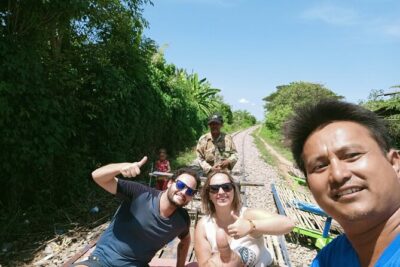
Full Day tour .City tour.Countryside.Bamboo Train.Secret Bat Cave
Read our review →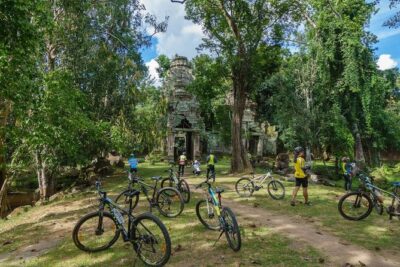
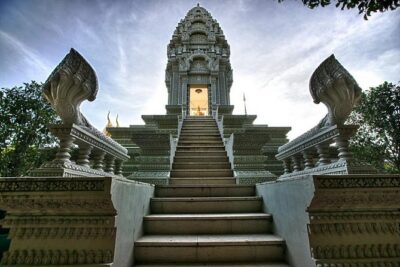
Phnom Penh City Tour, Silver Pagoda, Genocide Museum, Killing Fields
Read our review →
Siem Reap City Hidden Gems (Private Guided Tour)
Read our review →
Siem Reap City to Siem Reap Angkor Airport by Shuttle Bus
Read our review →
Private Airport Transfer: Siem Reap Angkor (SAI) ↔ City Hotels
Read our review →Browse the lists this tour appears in