
Reviewed · KOH KER & PREAH VIHEAR TOURS
Koh Ker & Preah Vihear
Koh Ker and Preah Vihear take you far beyond Siem Reap’s usual temple circuit. You’ll see remote Khmer ruins, winding country roads, rural daily life, and the striking rise of the Dongrek mountains. Koh Ker’s seven-tiered pyramid feels especially adventurous because it sits far from the crowds and familiar Angkor routes.
I like two things here: the small maximum of two people, which makes the long drive more personal, and the chance to see several very different sites in one trip. Guide Ry Vanra is described as patient, funny, polite, and fluent in English, while driver Mr. Buny is praised for careful driving and regular rest stops. The main drawback is simple: this is a long, active outing, and you must pay separately for entrance fees, food, and overnight accommodation.
Key points before you book
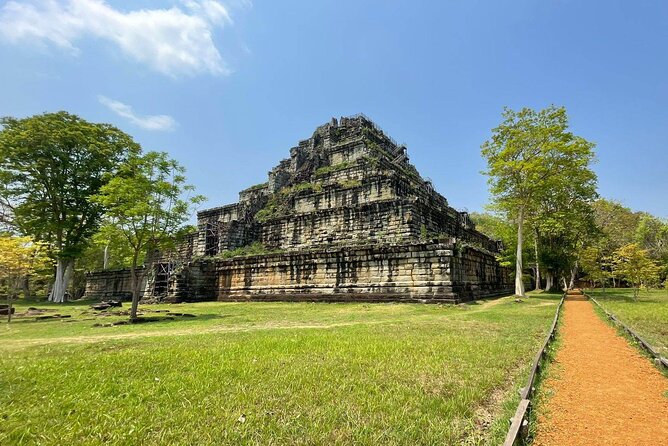
- Koh Ker is the visual centerpiece: Climb or view the seven-tiered Prang pyramid in a remote former Khmer capital.
- Preah Vihear brings mountain scenery: The temple sits high on the Dongrek range near the Cambodian and Thai border.
- Beng Mealea feels wonderfully unruly: Plants and fallen stone give this early 12th-century temple a less polished character.
- The group is very small: The experience accepts a maximum of two people, useful when you want flexible conversation and personal attention.
- The guide and driver matter here: Vanra provides temple and cultural context, while the driver’s safety and rest breaks are important on long road sections.
- The price is only part of the budget: The $100 tour price covers transport, guide service, and cold water, but not tickets, meals, lodging, or tips.
Why this is a different Siem Reap temple trip
Most visitors who base themselves in Siem Reap spend their temple time around Angkor Wat, Bayon, and Ta Prohm. This journey points in another direction. You’ll spend two days reaching sites that are farther away and less familiar, with more road time and a stronger connection to rural Cambodia.
The appeal is not just another set of carved stones. Along the way, you see how villages and countryside replace the hotel zone around Siem Reap. The scenery changes too. Cambodia is often pictured as flat, but this route brings you toward hillier country, especially around Kulen and the Dongrek range.
That variety gives the trip its value. One stop feels like an explorer’s discovery, another is a plant-covered ruin, another is a mountain sanctuary, and Ta Mok House adds a difficult modern chapter from Cambodia’s Khmer Rouge period.
Guide Ry Vanra is a central part of the experience. The information provided describes him as professional, punctual, polite, patient, humorous, and strong in English. He is also credited with explaining Cambodia’s culture, temples, and people in a way that goes beyond simply pointing out carvings.
More far-flung temple runs from Siem Reap:
- Koh Ker Temple Group & Beng Mealea Full-Day Join-in Tour
★ 5.0 · 710 reviews - From Siem Reap: Koh Ker and Beng Mealea Temples Tour
★ 4.9 · 293 reviews - Preah Vihear: Full-Day Preah Vihear and Koh Ker Temple Tour
★ 4.9 · 263 reviews
Day one: Koh Ker and the road into remote Cambodia
The first day begins at 8:30 in the morning. The schedule gives Koh Ker about six hours, which signals that this is not a quick photo stop. You have time to explore the main monument and the wider archaeological area at a slower pace.
Koh Ker was one of the Khmer Empire’s early capitals, built between AD 928 and 944. More than 10,000 people once lived here, a useful fact to keep in mind when you arrive. Today, the site’s quiet setting makes it hard to picture as a major center of power, but the scale of the pyramid shows that this was no minor outpost.
The seven-tiered Prang pyramid is the star. Its strong, stepped form is different from the broad galleries and towers associated with Angkor Wat. The setting adds to the feeling of discovery. You are not simply moving from one famous temple facade to another. You are seeing a major Khmer site in a more remote setting.
Koh Ker can require a moderate level of fitness. The itinerary does not promise an easy, flat visit, so bring practical footwear and be ready for time on your feet. The supplied information does not give current access details for every structure, so follow Vanra’s guidance about where you can safely walk.
The six-hour allocation also means the day includes road time and more than one point of interest around Koh Ker. That is useful for anyone who dislikes rushing, but it makes this a poor match if you want a compact half-day excursion. You should expect a full day rather than a short temple transfer.
Beng Mealea and the appeal of a rougher ruin
Beng Mealea follows Koh Ker, with about one hour at the site. It was built in the early 12th century under King Suryavarman II, the ruler associated with Angkor Wat.
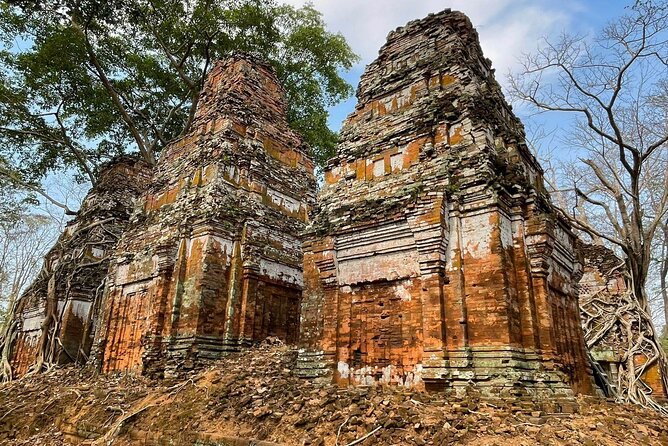
The mood here differs from Koh Ker. Beng Mealea is known for stone blocks, plants, and a less restored appearance. Vegetation grows around the temple, giving the place a rougher, more tangled look than the carefully presented central Angkor monuments.
I like this stop because it helps you picture how many Cambodian ruins might have looked before major conservation work. You see the effects of time more directly. Fallen sections and plant growth are part of the experience, not simply flaws to be cleaned away.
One hour is enough for an introduction, but it is not a long archaeological study. If Beng Mealea is your main reason for booking, check how the guide plans to use the available time. The trip gives much more time to Koh Ker overall, so the balance favors a broad two-day route rather than a detailed visit to every temple.
Entrance is not included at Beng Mealea or the other listed stops. Keep this in mind when comparing the $100 price with a basic private transfer. The package gives you more than a car ride, but your total cost will be higher once site tickets and meals are added.
Peung Kom Nuo in the Kulen hills
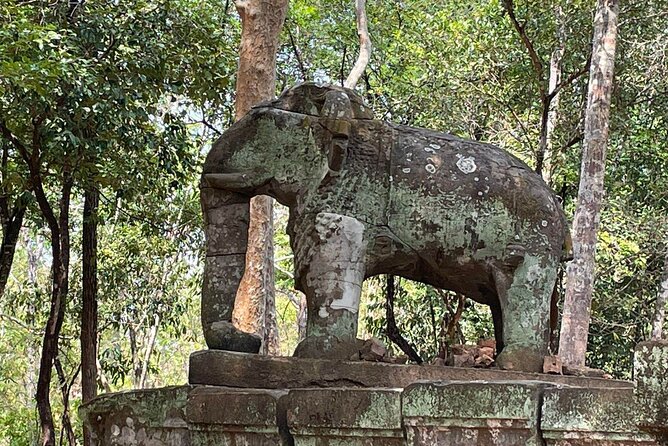
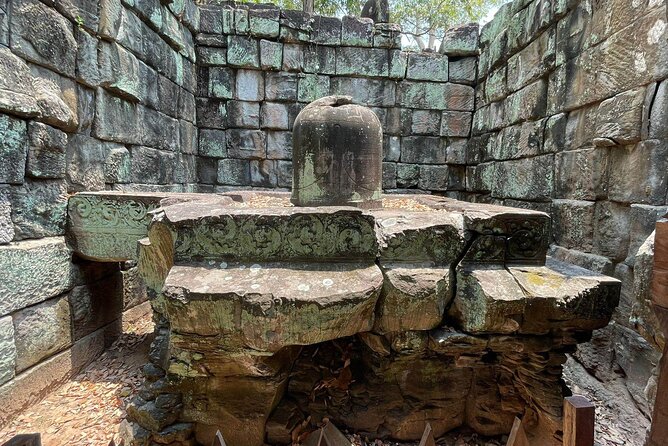
Peung Kom Nuo receives about an hour on day one. It is described as a lesser-known site in the Kulen mountain area, and its role is important because it adds a quieter stop to a day already centered on larger temples.
The exact features of the site are not described in the tour information, so I would not book this stop expecting a fully explained set of monuments or a large formal complex. Instead, think of it as part of the route’s local and rural character.
This is also where the physical side of the trip may become more noticeable. The tour calls for moderate fitness, and the Kulen area is hillier than the flat image many people have of Cambodia. Wear shoes that can handle uneven ground, and treat the hour as a chance to see a different side of the region rather than a guaranteed major highlight.
The value of Peung Kom Nuo is variety. After a large pyramid and a broad ruin, a quieter mountain stop slows the pace and keeps the day from becoming a simple checklist of famous names.
Same base, a different kind of day out:
- Angkor Wat Sunrise or Sunset Tour with Guide from Siem Reap
★ 5.0 · 12,109 reviews - Siem Reap: Angkor Wat: Small-Group Sunrise or Sunset Tour
★ 5.0 · 9,444 reviews - From Siem Reap: Kampong Phluk Floating Village Tour by Boat
★ 4.9 · 6,979 reviews - Sunset tour of Kampong Phluk stilts home village on the Tonle Sap
★ 5.0 · 4,865 reviews
Day two: Preah Vihear on the Dongrek range
The second day centers on Preah Vihear, with about three hours set aside for the temple. This is the most dramatic setting on the route. The sanctuary sits on top of the Dongrek mountain range near the Cambodian and Thai border.
Preah Vihear was built during the Khmer Empire as a Hindu temple. Its location gives it a different character from lowland ruins. You are not only studying architecture, but also seeing how the Khmer builders used a long mountain setting to shape the approach and experience of a sacred site.
The three-hour visit allows more time than a brief roadside stop. You can listen to Vanra’s explanation, take in the mountain views, and move at a reasonable pace. Still, the tour details do not specify every walking section, transport arrangement at the mountain, or current access rule. Ask the provider for the day’s exact procedure if mobility or steep paths are a concern.
Preah Vihear is also where the border location adds context. The temple’s position near Thailand makes this more than another stop among ruins. It helps explain the reach of the Khmer Empire and the importance of mountain passes and frontier areas.
The route may be especially rewarding if you have already seen the main Angkor temples. Instead of repeating familiar forms, Preah Vihear gives you a stronger sense of distance and terrain. You should also allow for the fact that remote mountain sites depend more on road conditions and local access than central Siem Reap attractions.
Ta Mok House and Cambodia’s difficult recent past
Ta Mok House is a short, 30-minute stop on the second day. Ta Mok was a Khmer Rouge leader from 1975 to 1979, and the site introduces a modern political chapter after a trip dominated by ancient temples.
This stop is brief, but it changes the tone. Cambodia’s story is not only about imperial architecture. The country also carries the marks of the Khmer Rouge period, and a visit connected with Ta Mok gives you a reminder of that painful past.
Do not expect a long museum visit based on the information provided. The stop lasts about half an hour, so its value comes from context rather than a full historical presentation. Vanra’s knowledge of Cambodian history and life can help place the house within the wider story, but you should ask questions if you want more detail.
For me, including Ta Mok House makes the route more honest. It prevents the trip from presenting Cambodia as only temples, scenery, and pleasant road stops. The site may be sobering, but it belongs in a serious look at the country.
What the $100 price really covers
The listed price is $100 per person. For a two-day trip covering remote temples, mountain roads, a guide, and transport, that can be a fair price, especially if two people share the experience and prefer private attention.
The included items are transport, a driver, a tour guide, and cold water. Pickup is offered, and a mobile ticket makes the booking simple. The small maximum of two people is a meaningful benefit. You are not being placed in a large coach group, and conversation with Vanra can remain focused on your interests.
The exclusions matter. You pay separately for:
- Temple entrance fees
- Food
- Accommodation
- Tips
- Other personal expenses
Because lodging is not included, confirm how the overnight stay is arranged before you pay. The tour is described as lasting about two days, but no hotel or guesthouse is named. You should also set aside money for meals and all admission tickets.
The value is strongest for someone who wants a guided route rather than a self-organized trip through remote areas. It is less compelling if you already have a car, driver, accommodation, and detailed plans for each site.
Vanra, the driver, and the small-group advantage
The information provided identifies Ry Vanra as the guide. His strengths are clear: good English, patience, humor, punctuality, and a broad grasp of Cambodian culture and history. Those qualities matter on a long trip because the road time is part of the experience.
The driver is also important. Mr. Buny is described as careful, safe, and attentive, with regular rest breaks at interesting places. That is a practical advantage on a route that includes long transfers. You should not underestimate how much comfort and confidence depend on safe driving when the trip moves far from Siem Reap.
With only two people allowed, you can ask for explanations, clarify the schedule, and discuss what interests you. The small format may also make the ride feel less tiring. It does not shorten the distances, but it gives the day a more personal rhythm.
The experience is best understood as a guide-led road journey, not a luxury tour. The information does not promise a high-end vehicle, included meals, or accommodation. Its strengths are personal service, cultural explanation, and access to a remote set of sites.
Who should book this two-day route
I would choose this trip if you have at least two days in Siem Reap and have already seen, or do not plan to focus only on, the central Angkor temples. It suits you if you want rural Cambodia, hill country, remote ruins, and a guide who can talk about more than architecture.
It is also a good match for couples, friends, or a pair of family members who value a private format. The review information specifically describes a successful trip for a mother and adult daughter, and the small group size makes the arrangement suitable for two people traveling together.
You should think twice if you dislike long drives, uneven walking, or basic planning around meals and lodging. The moderate fitness requirement is worth taking seriously. The route is not designed as an effortless sightseeing loop.
Book it if your priority is variety and local context. Skip it if your only goal is to see the most famous temple in the shortest possible time.
Practical details to settle before departure
The start time is 8:30 in the morning, and pickup is offered. Confirm the pickup point and overnight plan in advance, since the supplied information does not name the accommodation.
You receive booking confirmation at the time of booking, and the ticket is available on mobile. Free cancellation applies when you cancel at least 24 hours before the start time. Within 24 hours, no refund is provided, and changes are not accepted.
The tour requires a minimum number of people. If it is canceled because that minimum is not reached, you are offered another date or experience, or a full refund.
Bring water beyond the included cold water if you prefer to drink often, wear sturdy footwear, and keep your schedule flexible. The route covers remote areas, so a calm pace is more useful than trying to force every stop into a tight timetable.
Should you book Koh Ker and Preah Vihear?
Book this tour if you want Cambodia beyond the standard Siem Reap circuit. Koh Ker’s pyramid, Beng Mealea’s plant-covered ruins, Peung Kom Nuo, and Preah Vihear’s mountain setting give you four very different reasons to leave town.
The strongest case is the combination of a tiny group, careful driving, and Vanra’s personal guidance. The main caution is the extra cost and effort. Entrance fees, food, lodging, tips, long drives, and moderate walking all sit outside the $100 price.
For two people who want a private, history-focused road trip with rural scenery and a serious look at Cambodia’s past and present, this is a strong choice. For anyone seeking a short, inexpensive temple outing, choose a closer Siem Reap tour instead.
FAQ
How long does the Koh Ker and Preah Vihear tour last?
The experience lasts about two days. Day one includes Koh Ker, Beng Mealea, and Peung Kom Nuo. Day two includes Preah Vihear Temple and Ta Mok House.
What time does the tour start?
The stated start time is 8:30 in the morning.
Is pickup available?
Yes. Pickup is offered, though you should confirm the exact pickup point when booking.
What does the $100 price include?
The price includes transport, a driver, a tour guide, and cold water. Entrance fees, food, accommodation, tips, and other expenses are not included.
How many people can join the tour?
The tour has a maximum of two travelers.
Can I cancel for a full refund?
Yes, if you cancel at least 24 hours before the experience start time. Cancellations within 24 hours are not refunded, and changes within that period are not accepted.
Just added in Siem Reap
- Twilight Tastes of Siem Reap Include Dinner★ 5.0 · 13 reviews
- Ultimate Sunrise to Angkor Wat, Angkor Thom and Bayon Temple★ 5.0 · 3 reviews
- Trekking Tour at Phnom Kulen National Park from Siem Reap★ 5.0 · 3 reviews
- Full-Day Private Tour of Angkor Wat with Pick Up★ 5.0 · 12 reviews
- Private Day Trip to Angkor Temples with Expert Guide★ 5.0 · 4 reviews
- Siem Reap City Tour with War Museum and Killing Field★ 5.0 · 27 reviews
- Waterfall & River of 1000 Siva Linga- Kulen Mountain Private Tour★ 5.0 · 3 reviews
- Angkor Wat Experience Temple Pass and Siem Reap Food Tour★ 5.0 · 13 reviews
Koh Ker & Preah Vihear Tours, compared.
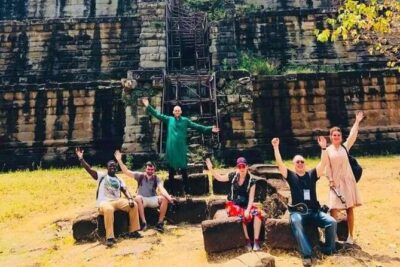
Koh Ker Temple Group & Beng Mealea Full-Day Join-in Tour
Read our review →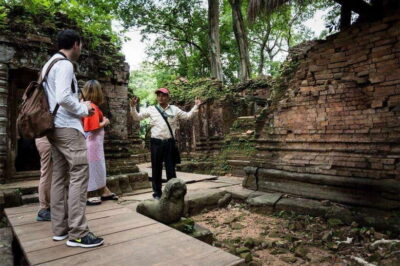
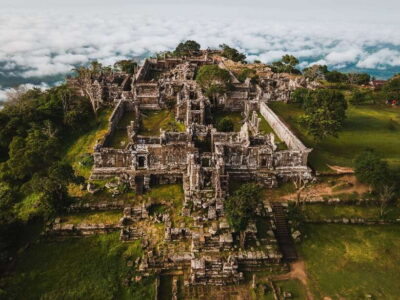
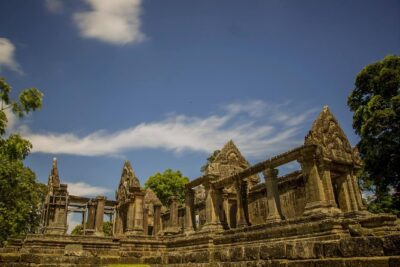
Full-Day Preah Vihear, Koh Ker and Beng Mealea Private Tour
Read our review →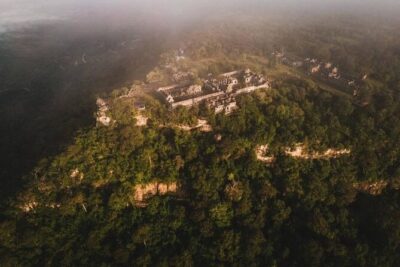
Preah Vihear temple – Koh Ker & Other temple with Small Group
Read our review →
4-Day Excursion of Angkor, Koh Ker, Beng Mealea, Tonle Sap and Waterfalls
Read our review →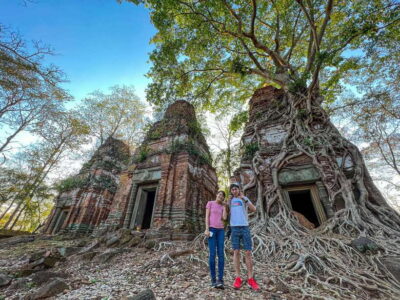
Koh Ker, Beng Mealea, & Banteay Srei Join-in Tour
Read our review →
Browse the lists this tour appears in