
Reviewed · KULEN MOUNTAIN & WATERFALL TOURS
Kullen Waterfall Park with Small Group included entrance fee
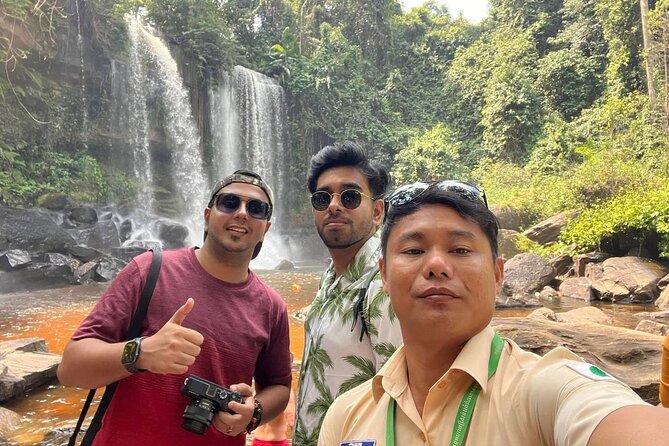
Phnom Kulen gives you a very different day from the temple circuit around Siem Reap. You’ll walk along a riverbed carved with One Thousand Lingas from about 800 AD, visit a pagoda with Cambodia’s largest reclining Buddha, and cool off at a waterfall regarded as holy water connected with Shiva.
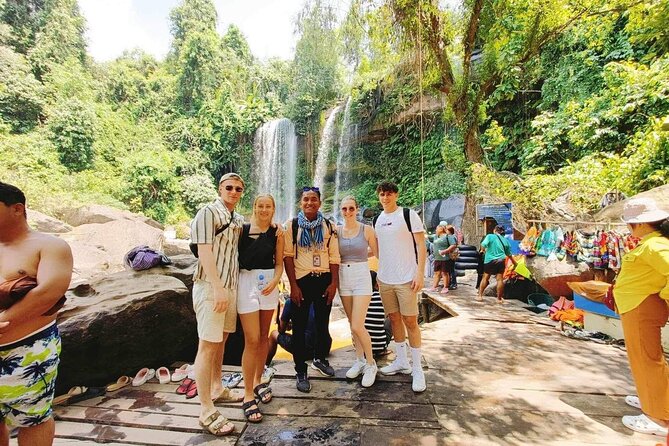
I like the small-group format, capped at 13 people, and the practical care provided along the way: an air-conditioned minivan, cold water, wet towels, and hotel pickup and drop-off. Guides including Chout and Makara are praised for clear explanations and for helping with photos. The main consideration is seasonal conditions. The waterfall can be far stronger from January through March, while low water may hide the lingas and make swimming less appealing.
Key points to know before booking
- The $20 Phnom Kulen park entrance fee is included, which makes the $45 price easier to justify.
- The 1000 Lingas are carved into a riverbed, so what you see depends heavily on water levels.
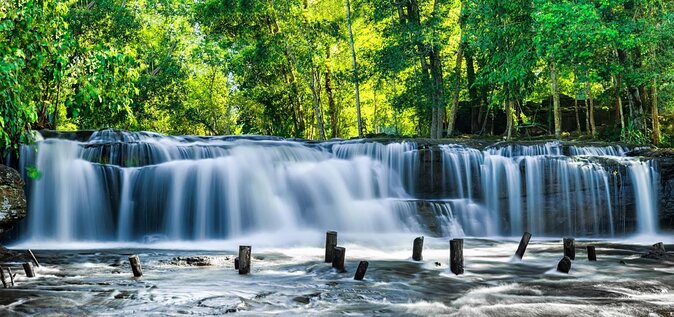
- The waterfall is a swimming stop, but conditions can change by season.
- Preah Ang Thom adds a meaningful cultural stop, with a large reclining Buddha on the hill.
- The small group has a maximum of 13 people, giving you more room to ask questions than on a large coach trip.
- The Landmine Museum costs extra, listed at USD 3, and is an optional part of the day.
Why Phnom Kulen makes a good break from Siem Reap
Phnom Kulen National Park lies away from Siem Reap’s better-known temple route. The day combines nature, religious sites, rural life, and Cambodia’s recent past, so you are not spending eight hours looking at one type of attraction.
The most unusual stop is the riverbed at Kbal Spean, known here as the One Thousand Lingas site. The lingas are carved into the rock and date to around 800 AD. Their connection with water matters: the river passes over the carvings, giving the site religious meaning linked to fertility and Shiva.
You should keep your expectations realistic. This is not a huge archaeological complex with grand buildings. It is a quiet river walk and an outdoor monument. The carvings can be difficult to see when the water is high or cloudy, and low water affects the waterfall in a different way. The timing of your visit matters more here than it does at a stone temple.
The tour costs $45 per person. That price includes the $20 park entrance fee, transport, an English-speaking guide, taxes, cold water, wet towels, and pickup and drop-off. Food is not included, and the Landmine Museum has a separate admission charge of USD 3. For a full day outside Siem Reap with transport and several major stops, the price is reasonable, especially if you value having the park entrance already handled.
More waterfall and mountain days from Siem Reap:
- Kulen Waterfall Join-in Tour (local Picnic lunch)
★ 5.0 · 2,434 reviews - Kulen Mountain: Small-Group Tour and Picnic lunch
★ 4.9 · 1,802 reviews - Siem Reap: Kulen Mountain, Beng Mealea and Tonle Sap Tour
★ 5.0 · 1,483 reviews
What the 8:30 a.m. departure is like
The meeting point is at Siem Reap Pub Hostel behind the Angkor Night Market. Pickup is offered, and the activity returns to the meeting point at the end of the day. The stated start time is 8:30 a.m., with the full outing lasting about eight hours.
You ride in an air-conditioned minivan, described as a limousine minivan in the tour details. That air-conditioning matters in Cambodia, particularly after walking on open ground or spending time near the waterfall. Guides and drivers also keep cold water and wet towels available. One guide, Makara, was especially praised for taking photos, while driver Toon was noted for keeping the vehicle cool and ready.
The van holds no more than 13 people. That is still a group, but it is small enough for the guide to answer questions and adjust explanations. If the vehicle fills, expect less personal space than you would have on a private tour. If fewer people book, the day can feel much more relaxed.
The quarry stop on the climb
As the vehicle climbs Phnom Kulen, the itinerary includes a stop at a quarry where local people cut stone. It is a short look at the practical side of the mountain, rather than a polished sightseeing site.
This stop helps you understand that Phnom Kulen is not only a place of old carvings and religious visits. Stone, forest, water, and local work are all part of the area. The quarry visit lasts about 1 hour and 15 minutes as part of the first park section, though the exact amount of time at the quarry itself is not specified.
Your guide provides the useful link between what you see and how the mountain has been used. This is a good point to ask about stone cutting, local communities, and the way people use mountain resources.
Reading the riverbed at the One Thousand Lingas
The 1000 Lingas stop lasts about two hours and includes admission. You follow a tranquil river walk to see carvings of lingas in different sizes, cut into the riverbed around 800 AD.
The site is valuable because the carvings are part of the water itself. Instead of viewing a statue inside a building, you are looking at religious symbols shaped into rock beneath flowing water. The description also refers to water emerging from the ground and mentions seven colors, though how clearly you see these features will depend on conditions.
This is the stop where season matters most. A guide, Chout, recommended January through March for stronger waterfalls and better visibility of the lingas. That advice is worth taking seriously, but it should not be treated as a guarantee. Rainfall and water levels vary, so you may find the carvings partly covered or hard to identify.
Wear shoes suited to a wet outdoor walk. The supplied information does not specify the exact trail surface, so you should not expect a paved temple approach throughout. Allow time to listen to the guide, look closely at the riverbed, and avoid rushing past carvings that may seem subtle at first.
Same base, a different kind of day out:
- Angkor Wat Sunrise or Sunset Tour with Guide from Siem Reap
★ 5.0 · 12,109 reviews - Siem Reap: Angkor Wat: Small-Group Sunrise or Sunset Tour
★ 5.0 · 9,444 reviews - From Siem Reap: Kampong Phluk Floating Village Tour by Boat
★ 4.9 · 6,979 reviews - Sunset tour of Kampong Phluk stilts home village on the Tonle Sap
★ 5.0 · 4,865 reviews
Preah Ang Thom and Cambodia’s large reclining Buddha
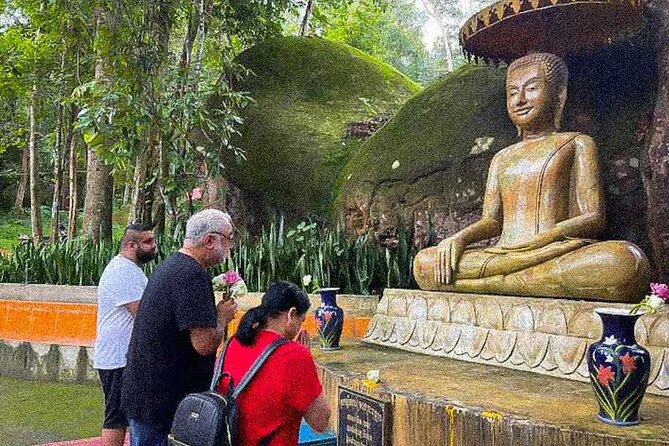
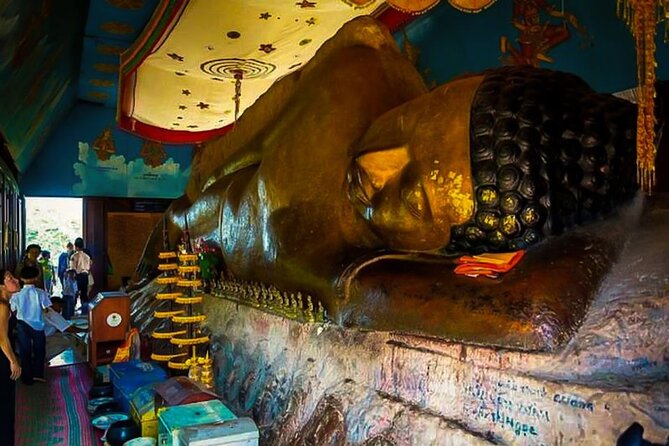
Preah Ang Thom pagoda sits near the 1000 Lingas area on Kulen Mountain. The main draw is a reclining Buddha statue described as the largest in Cambodia.
The pagoda gives the day a different rhythm. After the outdoor river stop, you move into a living religious setting. The site is not simply an old monument to photograph. Visitors may receive a blessing from a nun outside the pagoda, as one itinerary account describes, so dress and behave with the same respect you would show at any active place of worship.
This stop lasts about two hours and has no separate admission charge. The time includes more than a quick photograph of the Buddha. Your guide can explain the religious setting and the importance of the mountain to local worship.
You should also expect some walking and stairs around the hill. The supplied information does not give an accessibility rating or a precise stair count, so anyone with mobility concerns should ask the operator before booking.
The Kulen Waterfall swimming stop
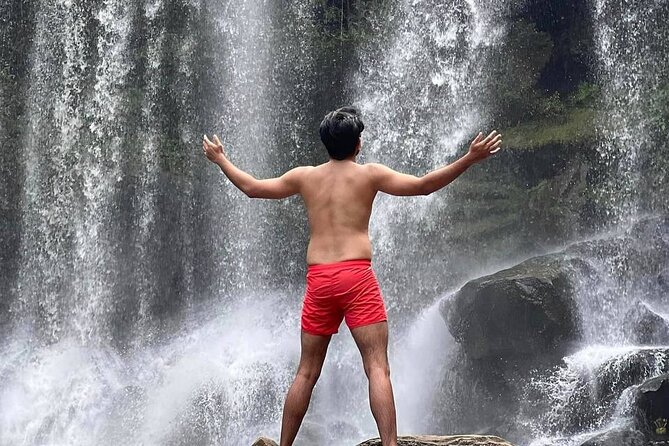
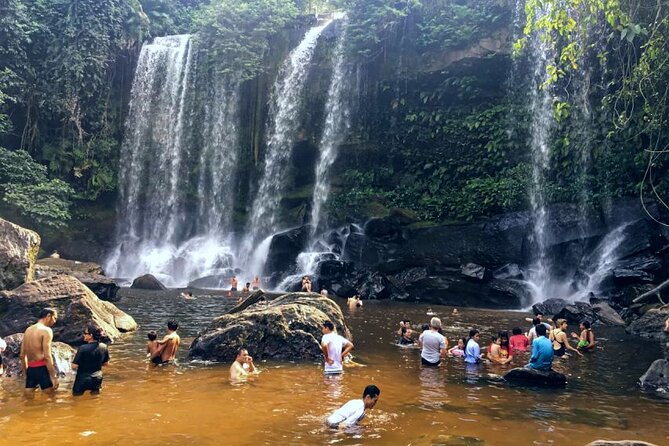
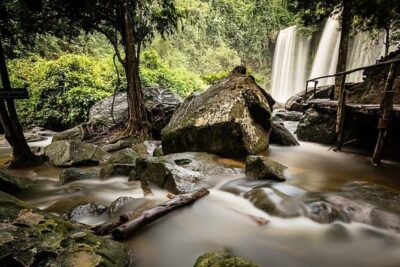
The waterfall is the most relaxed part of the day. You get about two hours at Phnom Kulen Waterfall, with admission included, and swimming is possible when conditions allow.
The water is regarded as holy water connected with Shiva and the linga carvings. That belief gives the swim more meaning than a simple stop at a recreational pool. You can cool off while keeping in mind that the falls are part of a sacred setting.
Water flow changes through the year. One account describes a lovely waterfall and an easy swim, while another says that swimming was not possible and the 1000 Lingas were not visible. The practical lesson is simple: do not book this tour only for a guaranteed swim or a guaranteed view of every carving.
The waterfall is also a useful break from the heat. Bring or wear suitable swim clothing, though the tour details do not specify changing facilities. The included wet towel is a thoughtful extra after time in the water, but you should not assume that meals, changing rooms, or other facilities are included.
Palm sugar and a look at rural work
Before the Landmine Museum, the route includes about an hour at a local palm sugar demonstration. You see palm sugar made by hand using traditional methods. Some visits also include local examples such as honey, medicines, grilled bananas, or other roadside food, though these are not listed as guaranteed inclusions.
This is one of the most grounded parts of the day. You are not only moving from one famous site to another. You get a look at a rural product and the work behind it. Palm sugar is also a chance to ask your guide about local food and household income.
If you buy a snack from a roadside vendor, pay for it yourself. Food is not included in the tour price. The stop should be viewed as a demonstration and cultural visit, not as a full meal.
The Landmine Museum and Aki Ra’s story
The final listed stop is the Cambodia Landmine Museum, with about 45 minutes set aside. The museum was established by Aki Ra, a former child soldier, and focuses on the country’s landmine legacy and relief work.
This is a serious stop, and it adds recent Cambodian history to a day otherwise focused on ancient monuments and nature. If you have time and interest, it can make the trip feel more complete by showing how Cambodia’s past continues to affect ordinary people.
Admission is not included. The listed price is USD 3. Some tour communication has caused confusion about the museum fee, so confirm the current charge when you book or before entering. The tour itself includes the stop, but you decide whether to pay the separate museum admission.
Forty-five minutes is enough for a focused visit, but not enough for a long museum study. If this subject matters greatly to you, you may want to return independently for more time. If you prefer a lighter day, you can treat it as an optional stop, but understand that it is an important part of the itinerary’s modern Cambodian context.
What the guides and driver add
The strongest personal element is the guide. Chout is praised for friendly explanations and for making the day memorable. Makara is noted for humor, historical explanations, help with photographs, and a warm welcome. Another guide, Caout, is described as adding useful context at the waterfall, pagoda, and 1000 Lingas.
Guide assignments can change, so you cannot assume you will receive a particular person. Still, the pattern is clear: expect an English-speaking guide who explains the religious and historical meaning of the stops rather than simply pointing them out.
The driver is part of the comfort equation. Air-conditioning is kept ready during hot periods, and the minivan is described as clean, with wipes, cold water, and wet towels available. Those details may sound small, but they matter after a humid walk or a swim.
Who should book this day trip
I would choose this tour if you have already seen some of Siem Reap’s major temples and want a day with more variety. It suits you if you like combining outdoor scenery, religious sites, local production, and difficult modern history.
It also works well if you want a guide but do not want a large bus group. The 13-person maximum gives you a better chance to ask questions and hear explanations clearly. The included park entrance fee and transport make the price easier to assess.
I would think twice if your main goal is a guaranteed waterfall swim. Water levels can make the swim impossible, and the same conditions can hide the river carvings. You may also find the day less satisfying if you want a private schedule or a long, unhurried visit at each location.
The tour requires a full day, but one account felt the sightseeing portion could seem closer to a half-day once driving and transitions were considered. That is a fair warning. You are getting several stops, yet some time is spent moving between them and waiting for the group.
Practical details before you go
The park entrance fee is included, as are all listed taxes, transport, an English-speaking guide, hotel pickup and drop-off, cold water, and a wet towel. Food is not included, and the Landmine Museum costs extra at the stated USD 3.
Most people can take part, but the operator does not provide a detailed accessibility description. Ask ahead if stairs, uneven paths, or walking near the river could be a problem.
The booking can be canceled for a full refund up to 24 hours before the start time. Changes or cancellations made inside that 24-hour period are not accepted for a refund. The tour also needs a minimum number of people, so if that minimum is not reached, you are offered another date or experience, or a full refund.
Should you book it?
Book this tour if you want Phnom Kulen in one organized day and value the combination of ancient carvings, a sacred pagoda, a waterfall, palm sugar making, and the Landmine Museum. At $45, the included $20 park ticket and air-conditioned transport give it solid value.
Go with flexible expectations about the water. January through March may offer better flow and clearer lingas, but conditions are not guaranteed. For the best fit, choose this trip for its range of Cambodian experiences, not for a single perfect swim or photograph.
FAQ
How much does the Phnom Kulen tour cost?
The tour costs $45 per person.
Is the Phnom Kulen park entrance fee included?
Yes. The $20 park entrance fee is included in the tour price.
What time does the tour start?
The tour starts at 8:30 a.m.
How long does the tour last?
The activity lasts approximately eight hours.
Where does the tour start and finish?
The meeting point is Siem Reap Pub Hostel behind Angkor Night Market. The activity ends back at the meeting point.
Is hotel pickup available?
Yes. Pickup and drop-off are included.
How large is the group?
The tour has a maximum of 13 travelers.
Is the Landmine Museum included in the price?
The stop is part of the route, but museum admission is not included. The listed admission price is USD 3.
Can you swim at Kulen Waterfall?
Swimming is possible when conditions allow. Water levels vary, and swimming may not be possible during some visits.
Just added in Siem Reap
- 1-Day Angkor Wat Private Tour with Spanish Tour Guide.★ 5.0 · 9 reviews
- Angkor Wat: Small-Group Tour with Balloon Ride and Lunch★ 4.6 · 13 reviews
- Sky Venture Microlight Siem Reap★ 4.9 · 18 reviews
- Angkor Wat plus Balloon Ride with Khmer Lunch★ 5.0 · 46 reviews
- 3-Day Angkor Wat with All Interesting Major Temples, Banteay Srei & Beng Mealea★ 5.0 · 70 reviews
- Kulen Mountain Tour with Picnic and Floating Village Sunset★ 5.0 · 63 reviews
- Private Temples Guided Tour (Angkor Wat, Ta Prom & Angkor Thom)★ 5.0 · 75 reviews
- Taxi Siem Reap to Phnom Penh-English Speaking Driver★ 5.0 · 62 reviews
Kulen Mountain & Waterfall Tours, compared.
Kulen Waterfall Join-in Tour (local Picnic lunch)
Read our review →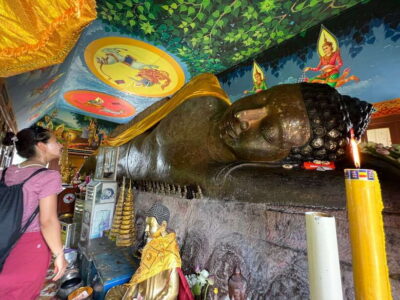
Kulen Mountain: Small-Group Tour and Picnic lunch
Read our review →
Kulen Mountain, Beng Mealea and Tonle Sap Tour
Read our review →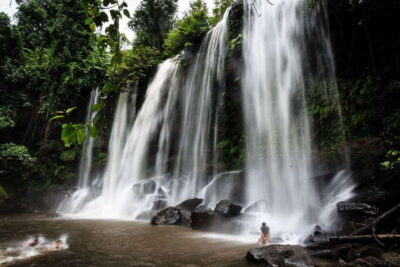
Phnom Kulen Waterfall & the Sacred 1000 Lingas (with Lunch)
Read our review →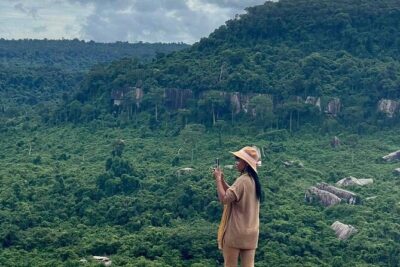
Guided Small-Group Tour in Kulen Mountain Park Waterfall
Read our review →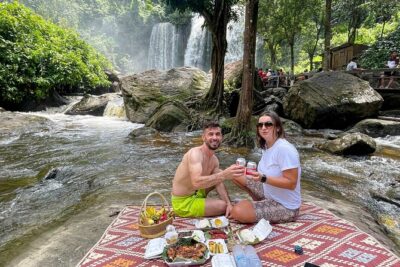
Kulen Mountain Waterfall Tour with Picnic Lunch from Siem Reap
Read our review →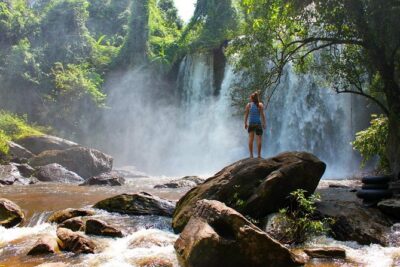
Kulen Waterfall & 1000 Linga River Small-Group Tours
Read our review →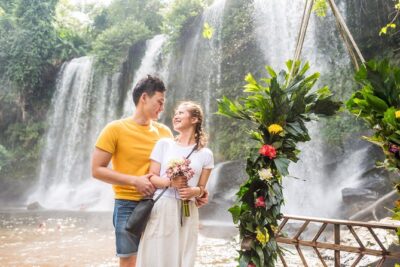
3-Days Discovery Of Angkor: Waterfalls,Floating Village and Banteay Srei temple
Read our review →Browse the lists this tour appears in