Reviewed · TOURS IN SIEM REAP
One day normal Angkor tour
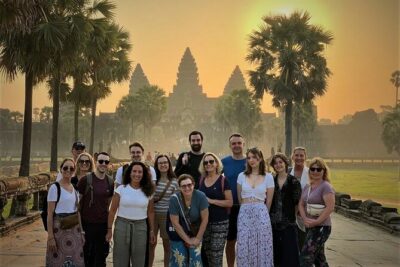
Angkor Wat is only the beginning of this one-day temple tour. Starting around 7:30 AM, you move through Angkor Wat, Ta Prohm, Bayon, Angkor Thom, and smaller monuments before the worst heat sets in. The private air-conditioned vehicle matters here. It gives you a cool break between long stretches of stone, sun, and steps.
I like the mix of major sights and useful interpretation. Guide Bun Leat is praised for explaining Hindu and Buddhist ideas, temple construction, restoration, and good photo angles. I also like that hotel pickup, bottled water, and transport are included. The catch is cost: the $45 tour price does not include the $37 one-day temple ticket, lunch, or a tip.
Key points at a glance
- Early start at 7:30 AM: You reach Angkor Wat while the day is still cooler and the crowds are more manageable.
- Private transport for your group: Travel between temples in an air-conditioned car or minivan, with hotel pickup and drop-off.
- A guide with art and religious context: Bun Leat is praised for explaining Hinduism, Buddhism, temple design, restoration, and the stories carved into the stone.
- The essential Angkor circuit: The day includes Angkor Wat, Ta Prohm, Bayon, Angkor Thom, Baphuon, Phimeanakas, the Royal Palace area, and the Royal Terraces.
- Budget beyond the headline price: Add the $37 temple ticket and allow extra money for lunch and an optional tip.
- A physically active day: Expect walking in heat, uneven surfaces, and temple steps. Knees and shoulders must be covered.
Why this one-day Angkor plan works
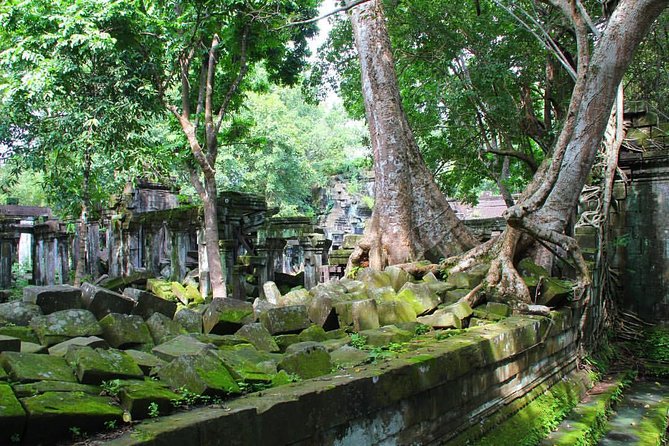
Angkor Archaeological Park is too large to understand from a single temple. Angkor Wat gives you the grand ceremonial entrance, Ta Prohm brings a more tangled and atmospheric setting, and Bayon offers the famous stone faces. Together, these sites show how much the Khmer capital changed over time.
This tour keeps the focus on the park’s best-known monuments. That is useful if you have only one day in Siem Reap or want a first look before deciding if you need a second temple day. You will not see every corner of Angkor, but you will cover the sites most people hope to see.
The pace is active rather than leisurely. In roughly seven to eight hours, you will ride between temples, walk through large compounds, climb some steps, and listen to explanations. I would not choose this plan if you want long periods of quiet photography at every stop. I would choose it if you want a clear route and a guide to help make sense of what you are seeing.
The early start is one of the smartest parts of the schedule. It is not advertised as a sunrise tour, so do not book it expecting to watch the sun come up over Angkor Wat. Instead, think of 7:30 AM as a practical compromise: early enough to avoid some heat and heavy foot traffic, but not an exhausting pre-dawn departure.
A few more things to do in Siem Reap worth a look
- 1-Day Amazing Angkor Wat Tour with Sunset & All Interesting Major Temples
★ 5.0 · 308 reviews - Angkor Wat one Day Private Tour for All Highlight Angkor Temples
★ 5.0 · 199 reviews - 1-Day private Angkor Temple Tour from Siem Reap
★ 4.9 · 178 reviews
Angkor Wat first, while the stone is still cool
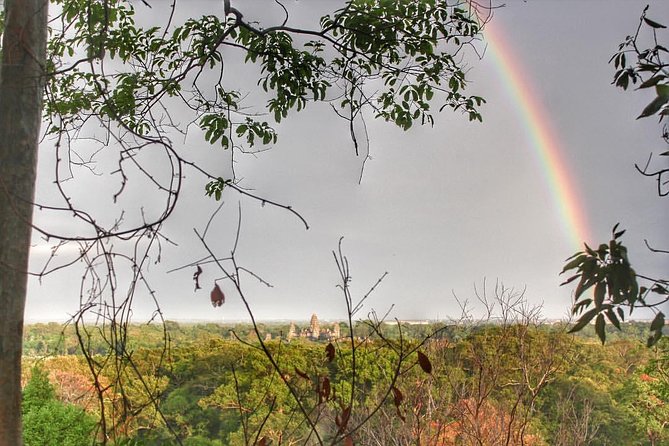
The morning begins with transport to Angkor Wat, the park’s most famous monument. This is the place where scale does the talking. Long galleries, towers, courtyards, and carved surfaces make it easy to see why the temple is the symbol of Cambodia.
A guide adds value here because Angkor Wat can feel overwhelming at first. Bun Leat is praised for explaining the temple’s background before pointing out details inside the complex. That order helps. You get the main idea first, then smaller features have a place in the story.
Another useful service is help with photographs. The guide is known for suggesting angles and locations, and for taking pictures when needed. That sounds minor, but it can save time and spare you from leaving with only the same front-facing temple shot as everyone else.
Allow for a lot of walking. Angkor Wat is not a quick roadside stop. You will cross open areas and move through enclosed galleries, and the stone can become hot as the morning progresses. Wear sturdy shoes, bring clothing that covers your knees and shoulders, and use the bottled water provided.
Baksei Chamkrong and the shift from grand temple to smaller monument
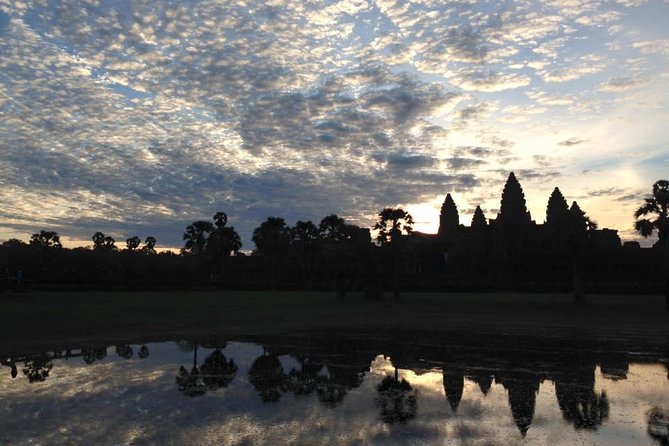
The route then heads north toward Baksei Chamkrong, identified in the itinerary as Basei ChamKrong. This pyramid temple was built in 947 AD by Harshavarman I and completed by Rajendravarman II. It was dedicated to Shiva, placing it firmly in the Hindu chapter of Angkor’s story.
Baksei Chamkrong is smaller than Angkor Wat, which is exactly why it can be useful. After a huge monument, a compact pyramid lets you focus on structure. The temple’s stepped form also invites comparison with the ancient Maya pyramid at Tikal, a detail the guide can use to discuss how different cultures built monumental religious sites.
Do not expect the same visual scale as Angkor Wat. The value here is the contrast. You see a more compact temple form and get a clearer sense of how sacred architecture could be arranged around a central rise.
Bayon and the faces at the center of Angkor Thom
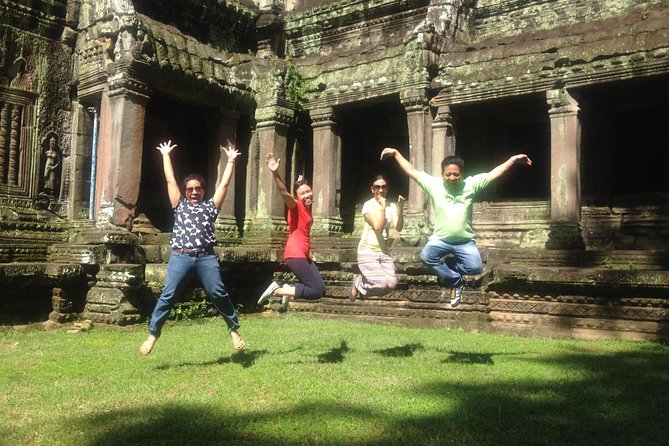
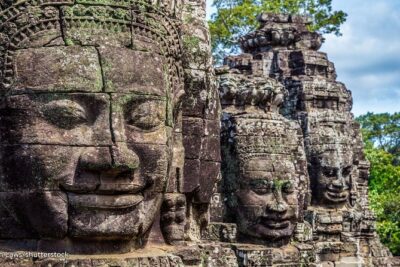
Next comes Bayon, located in the middle of Angkor Thom, the ancient city. Its carved faces are among the most memorable sights in the park. Towers appear close together, and the faces emerge at different heights and angles as you walk through the temple.
Bayon rewards a guide who can explain what you are looking at. Without context, the faces are striking but easy to treat as a single photo stop. With commentary, you can pay attention to the temple’s religious setting, the arrangement of the towers, and the way the carvings work at close range.
This is also one of the places where patience helps. You may want to stop often for pictures, but the passageways can feel tight and the surfaces uneven. Listen for instructions about where to walk and take your time on steps.
The tour’s guide commentary is one of its strongest features. Bun Leat is described as having more than ten years of experience guiding at Angkor Wat, and his explanations cover history, religion, culture, building methods, and restoration. Those subjects turn Bayon from a face-filled monument into part of a larger story.
Same base, a different kind of day out:
- Angkor Wat Sunrise or Sunset Tour with Guide from Siem Reap
★ 5.0 · 12,109 reviews - Siem Reap: Angkor Wat: Small-Group Sunrise or Sunset Tour
★ 5.0 · 9,444 reviews - From Siem Reap: Kampong Phluk Floating Village Tour by Boat
★ 4.9 · 6,979 reviews - Sunset tour of Kampong Phluk stilts home village on the Tonle Sap
★ 5.0 · 4,865 reviews
Baphuon, Phimeanakas, and the Royal Palace area
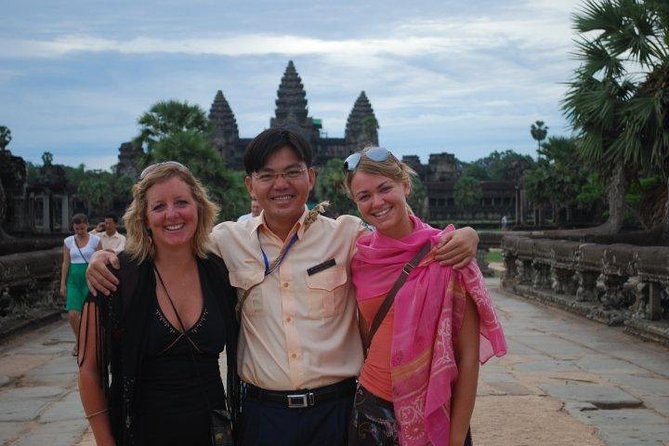
After Bayon, the tour continues around Angkor Thom, including Baphuon, Phimeanakas, and the former Royal Palace area. These stops help fill in the picture of Angkor as a city, not just a collection of separate temples.
Baphuon has a strong architectural presence and gives you another chance to see how temple pyramids were built upward in levels. It also adds a different mood from Bayon. The focus is less on repeated faces and more on height, structure, and movement through a large sacred complex.
Phimeanakas and the Royal Palace area offer a quieter counterpoint to the park’s headline monuments. The remains are not as instantly recognizable as Angkor Wat or Bayon, so the guide’s explanation matters here. You can better understand these sites as parts of a royal center rather than isolated ruins.
The itinerary also includes the Royal Terraces. These long carved platforms are easy to pass too quickly, but they help show how public and royal spaces were arranged within Angkor Thom. If you are interested in sculpture and city planning, this portion may be more rewarding than you expect.
Ta Prohm and the appeal of a less orderly ruin
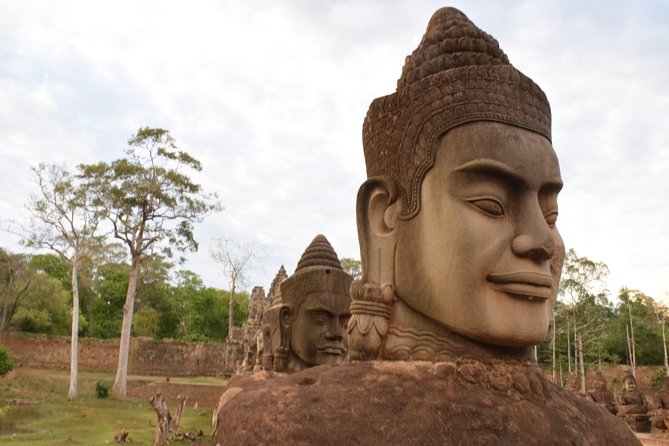
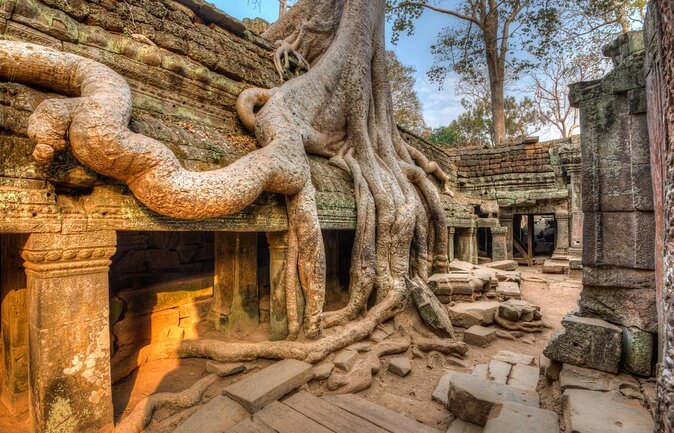
Ta Prohm is one of the tour’s essential stops. It is famous for the way trees and roots press against the temple ruins, creating a setting that feels more tangled than the carefully restored areas elsewhere in the park.
The attraction is not simply that nature has grown around the stone. Ta Prohm also shows the problems of conserving a large, old monument while keeping its character. Your guide can explain restoration work and point out details that are easy to miss when you are focused on the roots.
This is a popular place, and the famous sections can become crowded. The early start helps, but you should still expect to share the pathways. Ta Prohm is especially good for photographs, though the best shots may require waiting your turn and looking beyond the first obvious root-covered doorway.
I like that Ta Prohm follows the more formal spaces of Angkor Thom. After the faces of Bayon and the orderly terraces, the overgrown corridors change the mood. It is one of the clearest examples of how different Angkor’s monuments can feel within the same day.
Lunch is flexible, but it is not included
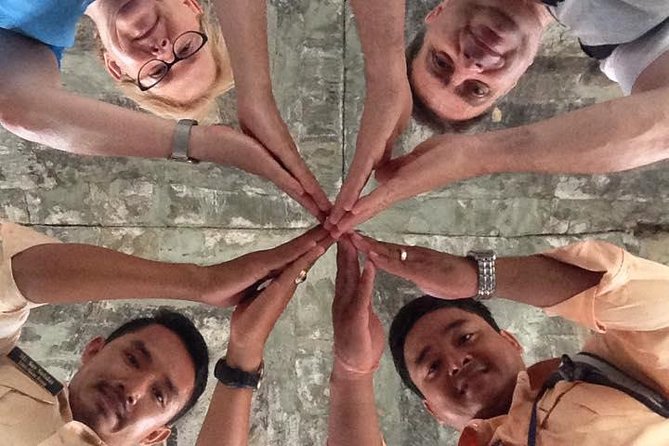
The tour stops at a restaurant where you can purchase lunch. This keeps the schedule flexible, but the meal is your responsibility. The $45 price includes transport, bottled water, guide service, local taxes, and hotel pickup and drop-off, but not food.
A vegetarian option is available if you request it when booking. Since lunch is separate, ask your guide about the timing and available choices on the day. Do not assume a meal is part of the package.
The pause is welcome. A full morning among temples can be tiring, especially in Cambodia’s heat. You will appreciate having time to eat, cool down, and refill your energy before continuing.
What the $45 price really covers

At first glance, $45 per person looks like a low-cost way to see Angkor. The important detail is the separate $37 one-day ticket, which brings the basic combined cost to $82 per person before lunch and any tip.
That total can still be reasonable for a private experience. You are paying for a vehicle, driver service, hotel pickup and drop-off, bottled water, and a professional art historian guide. A private group also means you are not sharing the day with strangers or following a large bus schedule.
The value depends on how much you want interpretation. If you only need transport from temple to temple, a cheaper arrangement may suit you. If you want someone to explain the religious symbols, compare temple designs, discuss restoration, and help with photos, the guide fee has a clearer purpose.
Group discounts are offered, though the exact terms are not provided. Ask before booking if you are traveling with several people. Since the activity is private, only your own group participates.
Transport, clothing, and the physical demands
Hotel pickup and drop-off are included, and the tour uses an air-conditioned private car or minivan. The listed meeting point is Royal Angkor Resort on National Road 6 in Siem Reap, but the experience also advertises hotel pickup. Confirm the pickup point when booking so there is no confusion in the morning.
The vehicle is important because the temples are spread across a large area. You will repeatedly move from hot stone and open courtyards into a cool vehicle. Bottled water is included, and the guide may be able to offer practical help with photo stops and the order of the day.
You should have a moderate level of physical fitness. Expect substantial walking and some uneven ground. Temple visits are not a good match for anyone who needs a fully flat, low-effort route.
Dress rules are strict at places of worship and selected museums. Men and women must cover knees and shoulders. Shorts and sleeveless tops can lead to refused entry, so wear light clothing that still meets the rules.
Who should book this Angkor tour
I would recommend this tour to a first-time visitor with one full day in Siem Reap. It covers the major monuments without requiring you to plan transport, temple order, or a guide on your own.
It also suits anyone who wants cultural and religious explanation rather than a simple ride around the park. The strongest guide feedback centers on clear history, Hindu and Buddhist context, temple construction, restoration, and photo advice. That is the difference between seeing old stone and understanding why the stone was placed there.
Families and small groups may appreciate the private format, though the physical demands still matter. Couples and photography-minded visitors may also like the help with angles and taking pictures.
I would be more cautious if you dislike busy sightseeing days. Seven to eight hours is a lot of temple viewing. A second day would allow a slower pace, but this one-day route is a sound introduction.
Cancellation and booking details
Free cancellation is available if you cancel at least 24 hours before the experience begins. Cancellations made less than 24 hours in advance are not refunded, and changes inside that window are not accepted.
Booking confirmation is normally issued at once. If you book within three days of departure, confirmation can take up to 48 hours and remains subject to availability. The listed operating hours are 7:00 AM to 3:00 PM daily.
Should you book it?
Book this tour if you want the major Angkor temples in one organized day, with private transport and a guide who can explain more than names and dates. The strongest reasons are the early start, hotel pickup, air-conditioned vehicle, and the quality of commentary associated with Bun Leat.
Think carefully about the added cost of the temple ticket and lunch. The tour is not an all-inclusive $45 day. Still, once you account for the guide, car, water, and private schedule, it offers fair value for a first visit.
If you want a practical introduction to Angkor and do not mind a busy walking day, I would book it. If you prefer slow photography, remote temples, or long breaks, choose a longer itinerary instead.
FAQ
How long does the Angkor tour last?
The tour lasts approximately seven to eight hours.
What time does the tour begin?
The itinerary begins at about 7:30 AM. The listed operating hours are 7:00 AM to 3:00 PM daily.
Is hotel pickup included?
Yes. Hotel pickup and drop-off are included. The listed meeting point is Royal Angkor Resort in Siem Reap, so confirm your exact pickup details when booking.
Is the Angkor temple ticket included in the $45 price?
No. The one-day ticket costs $37 per person and is not included in the tour price.
Is lunch included?
No. The tour stops at a restaurant where you can purchase lunch. A vegetarian option is available if requested when booking.
What should I wear to the temples?
Knees and shoulders must be covered for both men and women. Shorts and sleeveless tops are not allowed at places of worship and selected museums.
Can I cancel for a full refund?
Yes, if you cancel at least 24 hours before the experience begins. Cancellations or changes made less than 24 hours before the start time are not refunded or accepted.
Just added in Siem Reap
- Twilight Tastes of Siem Reap Include Dinner★ 5.0 · 13 reviews
- Ultimate Sunrise to Angkor Wat, Angkor Thom and Bayon Temple★ 5.0 · 3 reviews
- Trekking Tour at Phnom Kulen National Park from Siem Reap★ 5.0 · 3 reviews
- Full-Day Private Tour of Angkor Wat with Pick Up★ 5.0 · 12 reviews
- Private Day Trip to Angkor Temples with Expert Guide★ 5.0 · 4 reviews
- Siem Reap City Tour with War Museum and Killing Field★ 5.0 · 27 reviews
- Waterfall & River of 1000 Siva Linga- Kulen Mountain Private Tour★ 5.0 · 3 reviews
- Angkor Wat Experience Temple Pass and Siem Reap Food Tour★ 5.0 · 13 reviews
Tours in Siem Reap, compared.
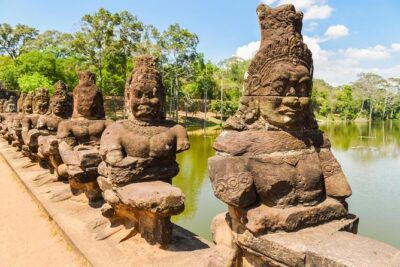
Angkor Wat Sunrise or Sunset Tour with Guide from Siem Reap
Read our review →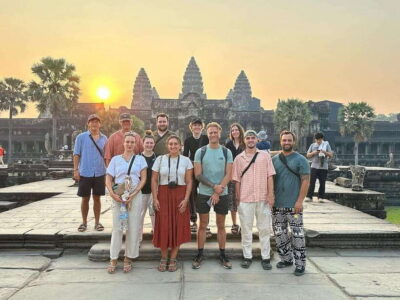
Angkor Wat: Small-Group Sunrise or Sunset Tour
Read our review →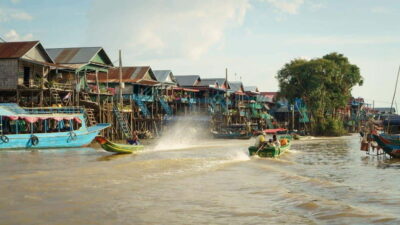
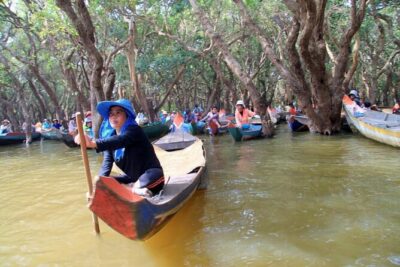
Sunset tour of Kampong Phluk stilts home village on the Tonle Sap
Read our review →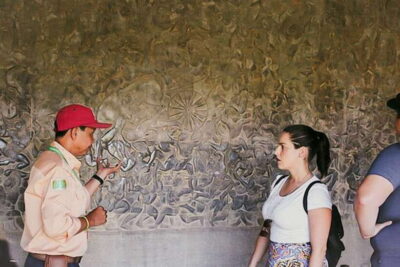
Angkor Wat 2-Day Tour with Sunrise and Sunset
Read our review →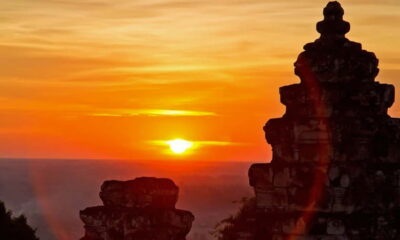
Angkor Wat Sunrise tour with Small – Group and Guide tours
Read our review →