
Reviewed · ANGKOR TEMPLE TOURS
Preah Khan, Neak Pean and Pre-Rup Private Tour
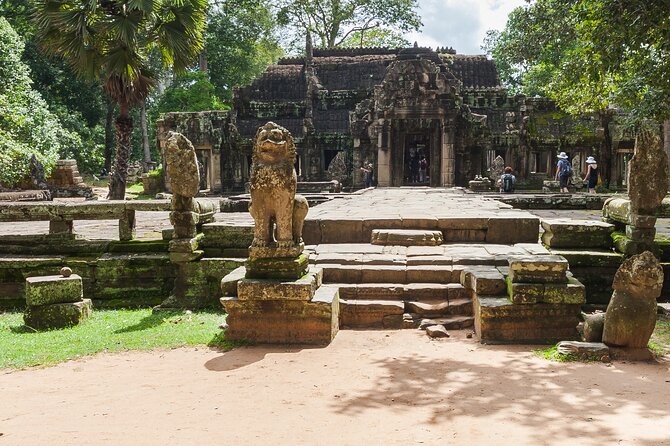
Preah Khan, Neak Pean, Ta Som, East Mebon, and Pre Rup give you a good look at the parts of Angkor that many first-time visitors skip. You move from a vast 12th-century temple to a small island shrine, a forest temple, and two brick-built temple mountains, all in one half-day.
I like the private format, since your group gets its own guide and air-conditioned vehicle. I also like the mix of famous and quieter sights, especially the tree-framed entrance at Ta Som and the broad water views at Srah Srang. The main catch is the extra $37 Preah Khan admission fee, which makes the $41 tour price less than the full amount you will pay.
Key points
- Six distinct stops in four to five hours: The route covers Preah Khan, Neak Pean, Ta Som, East Mebon, Srah Srang, and Pre Rup.
- Private touring with guide Sim sometimes assigned: Only your group takes part, and past bookings praised Sim for helpful explanations and flexible planning.
- Air-conditioned transport matters: You return to a cool vehicle between temple visits instead of spending the entire half-day on foot.
- Preah Khan is the main event: Allow about an hour for this large, layered complex built by Jayavarman VII for his father.
- The route has variety: Expect galleries, reservoirs, forest growth, brick towers, causeways, and a lakeside stop rather than six similar temples.
- The listed price is not the final temple cost: The tour is $41 per person, with a stated $37 Preah Khan entrance fee not included.
Why this half-day route works after Angkor Wat
This tour is best understood as a second look at Angkor. If you have already seen Angkor Wat and the central temple circuit, the eastern and northeastern temples give you a different sense of scale and style. You are not spending four hours at one monumental site. Instead, you get a moving lesson in how Khmer rulers built temples, reservoirs, artificial islands, and ceremonial spaces across the region.
The pace is fairly brisk. The planned visits add up to about four hours: one hour at Preah Khan, one hour at Neak Pean, 30 minutes at Ta Som, 40 minutes at East Mebon, 20 minutes at Srah Srang, and 40 minutes at Pre Rup. With driving between sites, the full outing runs about four to five hours.
That timing suits you if you want to keep part of the day free. It also helps if temple fatigue has begun to set in. A private vehicle, bottled water, and hotel pickup and drop-off make the route easier than arranging separate transport for every stop.
More temples within reach of Siem Reap:
- Siem Reap Tour: Angkor Wat Sunrise, Bayon, Ta Prohm, Banteay Srei
★ 5.0 · 931 reviews - Siem Reap: Bike the Angkor Temples – Full-Day 30km Tour
★ 5.0 · 463 reviews - Preah Vihear: Full-Day Preah Vihear and Koh Ker Temple Tour
★ 4.9 · 263 reviews
Preah Khan brings the scale
Your first stop is Preah Khan, whose name means Royal Sword. King Jayavarman VII built it in the 12th century in honor of his father. The temple follows a broad, flat plan made of successive rectangular galleries, so the experience is less about climbing a single tower and more about moving through layers of stone corridors and courtyards.
Give this stop the full hour if you can. Preah Khan is large enough to reward slow looking, yet its repeated galleries can become confusing without some guidance. An English-speaking guide can help you understand how the sections fit together and point out the relationship between the temple’s religious purpose and its royal setting.
The price needs careful attention here. The tour costs $41 per person, but the stated entrance charge for Preah Khan is an additional $37 per person. Since the other stops are listed without separate admission charges, Preah Khan is the key extra cost to budget for.
The supplied tour details do not explain whether the $37 charge is part of a wider Angkor admission arrangement, so confirm the exact ticket process before you pay. That small check can prevent an unpleasant surprise at the entrance.
Neak Pean turns water into part of the temple

Neak Pean, also called Neak Poan, sits on an artificial island in the middle of a large reservoir associated with Preah Khan. Its name refers to entwined serpents. The reservoir measures about 3.5 kilometers by 1 kilometer, a scale that helps you see how water management was tied to Khmer building projects.
The approach is part of the visit. Rather than walking straight into a compact temple courtyard, you make your way toward a shrine surrounded by water. The setting gives Neak Pean a calmer feel than the long corridors of Preah Khan, and the reservoir makes the design easier to understand from a distance.
Plan on about an hour here. The site may look modest beside Preah Khan, but the artificial island and water setting are the point. Your guide can connect the shrine to the wider engineering project, including the way reservoirs supported both practical needs and religious ideas.
This is one place where the quality of the explanation matters. The temple itself is small, so you may finish quickly if you only want photographs. With context, the stop becomes a lesson in how Khmer architects used water as a central part of a sacred complex.
Ta Som is small, quiet, and easy to remember
Ta Som was built near the end of the 12th century for Jayavarman VII and dedicated to his father Dharanindravarman II. It lies northeast of Angkor Thom and east of Neak Pean, making it a natural next stop on this route.
You have about 30 minutes here. That is enough for a focused visit, though not enough for a slow wander through every corner. Ta Som is a useful contrast to Preah Khan: smaller, more intimate, and closely tied to forest growth.
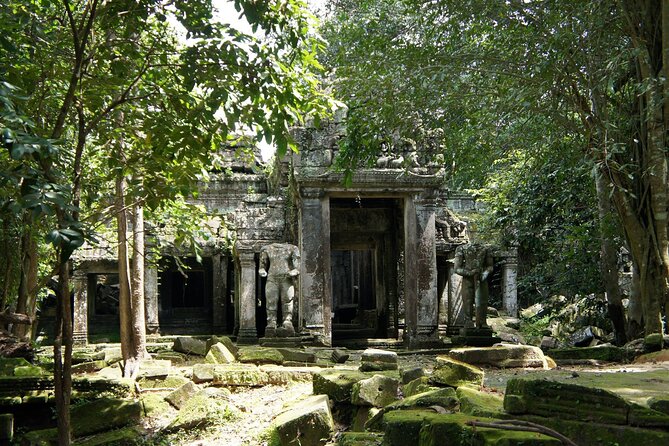
The temple is particularly appealing if you like the way Angkor’s stonework meets the surrounding trees. Keep your expectations sensible, though. This is not another vast complex. Its value comes from the compact setting and the change of mood after the larger temples.
The route description uses the phrase forests and jungles for Ta Som. That captures the feel of the stop, but remember that the tour schedule gives you only half an hour. Follow your guide’s route first, then use any remaining time for photographs and a closer look at the carvings.
A few more things to do in Siem Reap worth a look
- Full-Day Angkor Wat Sunrise Private Tour with Guide from Siem Reap
★ 5.0 · 2,920 reviews - Siem Reap: Angkor Wat Private Tuk-Tuk Tour
★ 4.9 · 2,222 reviews - Angkor Wat Private Day Tour from Siem Reap
★ 5.0 · 834 reviews - Angkor Wat Private Tuk-Tuk Tour (sunrise Option) & more
★ 5.0 · 439 reviews
East Mebon shows the power of a vanished reservoir
East Mebon was built in the 10th century by King Rajendravarman. It originally sat on an artificial island in the center of the East Baray, a reservoir measuring about 7.5 kilometers by 1.8 kilometers. The reservoir is now dry, so the temple’s location gives you a clear reminder that Angkor’s water systems changed over time.
You have about 40 minutes at East Mebon. The temple’s brick, laterite, and sandstone construction adds another visual change to the route. After the galleries and water setting of the earlier stops, the older temple feels more like a solid architectural block rising from open ground.
This stop is valuable because it gives you historical range. The route is not limited to Jayavarman VII and his 12th-century projects. East Mebon takes you back to the 10th century and the reign of Rajendravarman, helping you see Angkor as a long series of building campaigns rather than one single period.
The dry reservoir can make the site feel less dramatic than the original island setting. That is not a flaw in the tour, but it is worth knowing. You are seeing the temple in its present setting while learning to picture the vanished waterway around it.
Srah Srang offers a short pause by the water
Srah Srang was dug in the mid-10th century at the initiative of Kavindrarimathana, a Buddhist minister of Rajendravarman II. Jayavarman VII modified it around the year 1200 and added the landing area.
The stop lasts about 20 minutes, making it the shortest visit on the route. You will not have time for a long walk around the reservoir, but the brief pause breaks up the temple sequence. After several enclosed or elevated structures, open water gives your eyes a rest.
Srah Srang works well as a transition before Pre Rup. Its importance is not only scenic. Like Neak Pean and the East Baray, it shows how water shaped daily and ceremonial life at Angkor.
If you want a long, quiet sit beside the reservoir, this itinerary may feel hurried. If you prefer a quick stop with a change of scenery, 20 minutes is enough to understand why the site belongs on the route.
Pre Rup ends the tour with brick and height
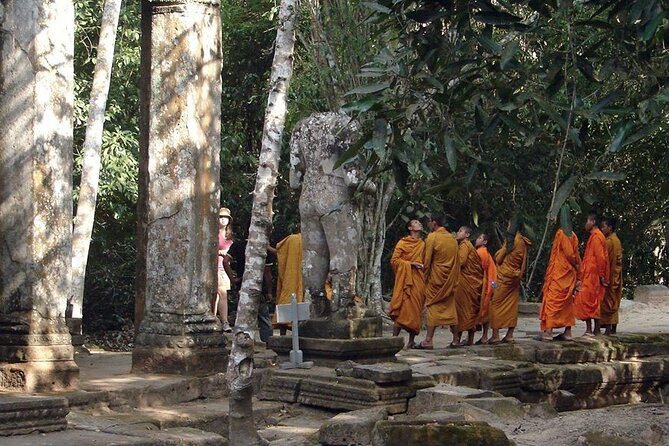
Pre Rup was built by King Rajendravarman in the 10th century. It is a temple mountain made from brick, laterite, and sandstone. The name is comparatively modern and means something connected with turning or changing the body.
The planned visit lasts about 40 minutes. Pre Rup gives the half-day a strong finish because the design rises above the surrounding ground, unlike the flatter layout of Preah Khan. You can compare the materials and form with East Mebon, which also belongs to Rajendravarman’s period.
The temple’s height may require more effort than the flatter stops. The supplied details do not specify stair conditions or access arrangements, so judge your own comfort on arrival. You do not need to treat every stop as a climb, but Pre Rup is best appreciated by looking at how the upper levels relate to the lower structure.
Ending here also gives the route a clear architectural arc: a vast gallery temple, a water shrine, a compact forest temple, an older island temple now on dry ground, a reservoir, and finally a temple mountain.
A private vehicle changes the day
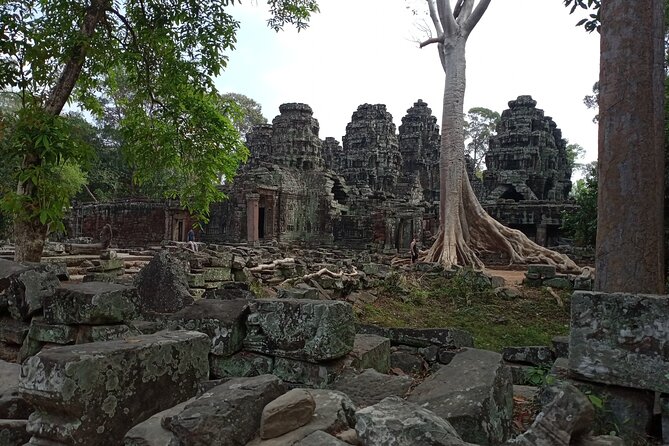
The private arrangement is one of the strongest reasons to choose this experience. Only your group takes part, and the vehicle is air-conditioned. That matters in Siem Reap, where a temple route can feel tiring even when the walking distances at each site are moderate.
Hotel pickup and drop-off are included, along with bottled water. You do not need to arrange a separate ride between each temple, and you can discuss the pace with your guide during the day. The itinerary is planned, but the private format gives you more room to explain if you need a little longer at one site or less time at another.
The guide speaks English and covers ancient and modern Cambodian history, culture, and daily life. Sim is one guide associated with this experience. Past bookings specifically praised his explanations, helpful manner, and willingness to adjust the plan when one temple had already been visited.
That last point is useful. If you have already seen one of the listed stops, tell the operator before the tour or tell your guide at the start. The route may be able to accommodate that, though the supplied information does not promise a replacement stop.
What $41 really buys you
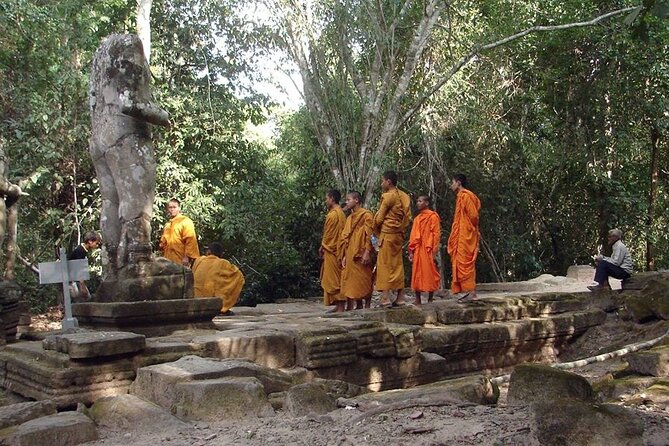
At $41 per person, the tour offers a private vehicle, an English-speaking guide, bottled water, and hotel transport for four to five hours. That is a reasonable package if you value having a driver and guide rather than piecing together transport yourself.
The headline price does not include the stated $37 Preah Khan admission fee. Add that to your planning, and remember that the extra cost is per person. The remaining stops are marked as having no separate admission fee in the supplied details.
The value is strongest for two or more people who want a private outing and do not want to organize the eastern temple route on their own. Solo visitors should compare the total cost with other transport options, since a private tour price can feel less attractive when paid by one person.
The tour is booked, on average, 23 days ahead. That is not a rule, but it suggests that you should reserve early if your Siem Reap dates are fixed, especially if you want a particular guide such as Sim.
Who should choose this temple route
I would choose this tour if you have already visited Angkor Wat or the main Angkor Thom sights and want a well-organized half-day beyond the usual first visit. The range of temple types keeps the outing from feeling repetitive.
It also suits families and small groups who value hotel pickup, a cool vehicle, and a guide who can explain what you are seeing without making you manage the route. The private format means only your own group participates, which is helpful if your interests or walking pace differ from those of a larger tour.
You may want another plan if you want long, unhurried visits at every stop. The schedule is tight, especially at Ta Som and Srah Srang. It may also be a poor fit if you are counting on the $41 price to include all entrance costs.
Confirmation is provided when you book. Most people can participate, and the tour is near public transportation, though hotel pickup and drop-off are already included. Free cancellation is available if you cancel at least 24 hours before the local start time. Within 24 hours, the payment is not refunded, and changes are not accepted.
Should you book the Preah Khan and Pre Rup tour?
Book it if you want variety, private transport, and clear historical context in one half-day. Preah Khan gives you the scale, Neak Pean gives you the water setting, Ta Som brings forest growth close to the stone, East Mebon adds an earlier building period, Srah Srang offers a short pause, and Pre Rup closes with a taller temple form.
Skip it if your priority is a slow visit at just one or two temples, or if the extra $37 Preah Khan fee pushes the total beyond your budget. For everyone else, this is a sensible way to see the outer Angkor sites without spending the day arranging cars, routes, and explanations yourself.
FAQ
How long does the private temple tour last?
The tour lasts approximately four to five hours.
Which temples are included?
The route includes Preah Khan, Neak Pean, Ta Som, East Mebon, Srah Srang, and Pre Rup.
Is hotel pickup and drop-off included?
Yes. Hotel pickup and drop-off are included in the tour.
Is the entrance fee included in the $41 price?
No. The stated entrance fee for Preah Khan is $37 per person and is not included. The other stops are listed without separate admission fees.
Is this a group tour?
No. It is a private activity, so only your group participates.
What happens if I cancel?
You receive a full refund if you cancel at least 24 hours before the local start time. Cancellations or changes made within 24 hours are not accepted, and the payment is not refunded.
Just added in Siem Reap
- Twilight Tastes of Siem Reap Include Dinner★ 5.0 · 13 reviews
- Ultimate Sunrise to Angkor Wat, Angkor Thom and Bayon Temple★ 5.0 · 3 reviews
- Trekking Tour at Phnom Kulen National Park from Siem Reap★ 5.0 · 3 reviews
- Full-Day Private Tour of Angkor Wat with Pick Up★ 5.0 · 12 reviews
- Private Day Trip to Angkor Temples with Expert Guide★ 5.0 · 4 reviews
- Siem Reap City Tour with War Museum and Killing Field★ 5.0 · 27 reviews
- Waterfall & River of 1000 Siva Linga- Kulen Mountain Private Tour★ 5.0 · 3 reviews
- Angkor Wat Experience Temple Pass and Siem Reap Food Tour★ 5.0 · 13 reviews
Angkor Temple Tours, compared.

Siem Reap Tour: Angkor Wat Sunrise, Bayon, Ta Prohm, Banteay Srei
Read our review →

Angkor Wat one Day Private Tour for All Highlight Angkor Temples
Read our review →
1-Day private Angkor Temple Tour from Siem Reap
Read our review →

Private one-day tuktuk ‘small tour’ of the oldest Angkor temples
Read our review →Browse the lists this tour appears in