Reviewed · TOURS IN SIEM REAP
Private Angkor Wat Tour with English-Speaking Guide
Angkor Wat is only the opening act here. This private half-day outing also takes you through the enormous gates of Angkor Thom, beneath Bayon’s serene stone faces, and into the tree-wrapped ruins of Ta Prohm. I especially like the one-group format, since you can spend more time at a carving or move along when the heat sets in. The included car, van, or tuk-tuk transport also makes a big difference in Cambodia’s midday sun.
I like the English-speaking guide option, too. Ben receives repeated praise for explaining what you are seeing instead of simply pointing out buildings, while drivers including John and Pheakdey are noted for safe, reliable service. The main drawback is cost planning: the $90 tour price covers up to three people, but admission is extra at $37 per person, and a sunrise start adds $15 per booking.
Key points at a glance
- Three major temple areas in one private outing: Angkor Wat, Angkor Thom, and Ta Prohm form the core of the day.
- A guide who adds context: Ben is specifically praised for making the temples easier to understand, though the assigned guide may vary.
- Private transport included: Choose among a car, minivan, or tuk-tuk, with hotel pickup and a return transfer.
- More than a quick photo stop: The route includes Bayon, Baphuon, Phimeanakas, the Royal Enclosure area, the Terraces, and Banteay Kdei.
- Plan for extra fees: Angkor admission is $37 per person, and sunrise costs an additional $15 per booking.
- Good fit for small groups: The $90 rate covers up to three people, making the price more attractive when shared.
What this Angkor tour does well

The strength of this experience is its balance of famous sights and useful explanation. You are not simply driven to Angkor Wat, handed a map, and left to work out the carvings on your own. An English-speaking guide accompanies you through the temples, explaining the places in front of you and helping connect separate ruins into a larger picture.
That matters at Angkor. The buildings are enormous, but signs alone do not always explain why a doorway, gallery, terrace, or face tower matters. The difference between a Hindu temple and a later Buddhist monument can blur together after several hours in the heat. A guide gives you a better chance of noticing the details that make each site different.
The private setup is another real advantage. You are paying $90 per group of up to three, not $90 per person. For three people, that is $30 each before temple admission. For one person, the value is weaker, but you still gain a private vehicle, a personal guide, and the ability to set the pace within the planned route.
The company uses cars, minivans, or tuk-tuks. Reviews of the wider service praise John for arriving early, driving carefully, and providing a clean, comfortable vehicle. Pheakdey is also praised for thoughtful service, including helping with an umbrella during a sudden downpour. The exact driver is not guaranteed, so treat those names as examples rather than promises.
A few more things to do in Siem Reap worth a look
- Full-Day Angkor Wat Sunrise Private Tour with Guide from Siem Reap
★ 5.0 · 2,920 reviews - Siem Reap: Angkor Wat Private Tuk-Tuk Tour
★ 4.9 · 2,222 reviews - Angkor Wat Private Day Tour from Siem Reap
★ 5.0 · 834 reviews
Starting from Siem Reap at 7:30 AM
Pickup is scheduled from your accommodation around 7:30 to 8:00 AM. You should be ready in the hotel lobby, since the stated pickup window is short. Breakfast before departure makes sense, as meals are not included and the route lasts about five to seven hours.
The standard start is later than a classic sunrise visit. That can be a plus if you prefer sleep and a calmer beginning, but Angkor is hot and busy as the day progresses. You can request an early sunrise outing for an added $15 per booking. The sunrise option is especially useful if Angkor Wat’s reflection pools and front view are a top priority.
The route is private, so you avoid waiting for a large group to gather at every stop. You also have bottled drinking water and fresh towels included. Those are modest extras, but they are practical in Cambodia’s heat, especially after walking across wide temple grounds.
Angkor Wat: allow two full hours
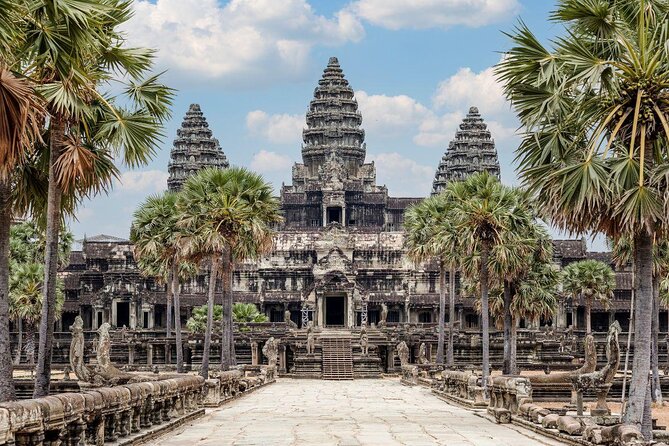
Angkor Wat receives about two hours, which is appropriate for a first visit. It is the largest and best-preserved monument on the route, with long galleries, towers, sculpted walls, and carefully planned proportions. The scale can be hard to grasp from photographs. You need time to walk, pause, and look upward.
Your guide can help you read the reliefs rather than treating them as decoration. The temple’s carvings and sculptures are part of the building’s meaning, not just attractive backgrounds for photographs. Ask your guide to point out details you might miss while moving from the entrance toward the central towers.
Two hours is useful, but it is not unlimited. If you want a slow architectural study, extensive photography, and every gallery, you may find the schedule tight. The private format gives you some flexibility, but the remaining temples still need time. Tell your guide early if Angkor Wat is your main reason for coming.
Admission is not included. The stated price is $37 per person for Angkor Wat. Since the tour covers several sites within the Angkor area, confirm the current ticket arrangement when booking so you know exactly what your entrance fee covers.
Angkor Thom and the South Gate
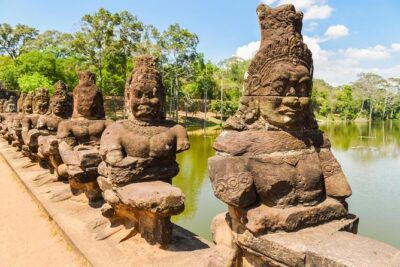
After Angkor Wat, the route moves to Angkor Thom, the former Khmer capital. The South Gate gets about 30 minutes, enough to appreciate the approach and the monumental gateway before entering the old city.
This is a good place to understand the difference between a temple visit and an entire city complex. Angkor Thom is not one building. It is a large enclosed area containing Bayon, Baphuon, Phimeanakas, terraces, and other remains. The gate gives you a sense of the city’s scale before the smaller details begin.
The half-hour stop can feel brief if you want to linger over every statue lining the approach. Still, it works well as part of a packed first-day route. The guide can explain the gate’s role and point out the figures along the causeway, giving the next stops more context.
Same base, a different kind of day out:
- Angkor Wat Sunrise or Sunset Tour with Guide from Siem Reap
★ 5.0 · 12,109 reviews - Siem Reap: Angkor Wat: Small-Group Sunrise or Sunset Tour
★ 5.0 · 9,444 reviews - From Siem Reap: Kampong Phluk Floating Village Tour by Boat
★ 4.9 · 6,979 reviews - Sunset tour of Kampong Phluk stilts home village on the Tonle Sap
★ 5.0 · 4,865 reviews
Bayon Temple and its many faces
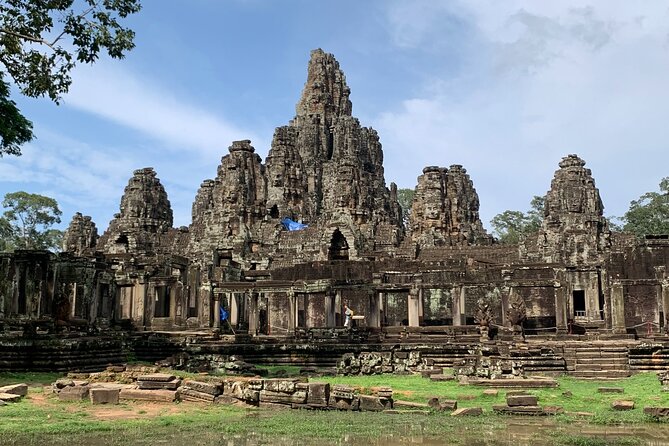
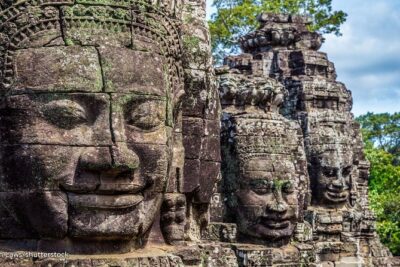
Bayon receives about an hour. It sits near the center of Angkor Thom and is known for its towers carved with large faces. The itinerary describes 49 towers and four faces on each, though the exact number visible can depend on how the towers are counted and what survives. The important point is the effect: faces appear from different angles as you walk through the temple.
Bayon is one of the places where a guide earns the fee. The corridors and towers can feel confusing at first, with narrow passages, stone blocks, and faces appearing above you. A good explanation helps you understand how the temple was arranged and why its imagery differs from Angkor Wat.
You will also find reliefs that show everyday scenes and events. Do not rush only to the famous face towers. Give yourself time to look at the lower walls, where human activity and historical scenes offer a different view of the Khmer world.
Baphuon, Phimeanakas, and the Royal Enclosure
The next part of the route moves through several sites in Angkor Thom. Baphuon receives about 30 minutes. It was a Hindu temple built before Angkor Wat, in the 11th century, and its steep form gives it a different feel from Bayon’s crowded towers.
Behind Baphuon is a large reclining Buddha added in the 16th century. That later addition is a useful reminder that these sites changed over time. The temples were not frozen in one moment. Religious practice and local use shifted, leaving layers from different periods.
Phimeanakas receives about 20 minutes. This pyramid-shaped Hindu temple dates to the 10th century and sits near the old Royal Palace area. You also pass along the ancient Royal Enclosure Wall. Twenty minutes is enough for a look, but not for a long exploration. The stop works best as part of the larger Angkor Thom picture rather than as the day’s main event.
The guide can help you separate the dates and purposes of these structures. Without that help, Baphuon, Phimeanakas, and the wall may blur into one long sequence of stone. With context, you can see that Angkor Thom was a working capital with religious, royal, and civic spaces.
The Terraces of the Elephants and Leper King

About 30 minutes is set aside for the Terraces of the Elephants and Leper King. These long raised platforms were connected with the ceremonial center of Angkor Thom. Their carved surfaces reward a slower look, especially if your guide points out the animals, figures, and repeated patterns.
This stop also gives you a useful break from enclosed temple corridors. You can walk along the open terraces and picture how the area once functioned as part of a royal city. The schedule groups several nearby features together, so expect a walking visit rather than a long private examination of every carving.
The heat becomes more noticeable by this stage. Comfortable shoes, water, and the included fresh towel matter here. The itinerary includes a fair amount of walking, although the vehicle helps you avoid long stretches between the main sites.
Ta Prohm and the power of atmosphere
Ta Prohm receives about an hour, and this is likely to be one of the day’s most memorable stops. Trees grow through and around the stonework, creating the famous jungle-covered appearance. The temple once housed 2,740 monks, and its damaged walls, roots, and shaded passages give it a mood unlike the formal order of Angkor Wat.
Ta Prohm is atmospheric, but the uneven stone and narrow areas require care. Move slowly and watch your footing. The tree roots are striking, yet the temple is more than a photograph. Look at the carvings, doorways, and surviving layout while your guide explains how the religious complex once operated.
The description of Ta Prohm as looking much as it did when French explorer Henri Mouhot encountered it in the early 1850s should be treated as a broad image, not a claim that nothing has changed. Conservation work and visitor access have altered parts of the site. Even so, it remains one of the most distinctive stops on the route.
Banteay Kdei adds a quieter final temple
The final listed stop is Banteay Kdei, with about 45 minutes. This Buddhist temple dates to the 12th century and shares features with Ta Prohm and Bayon. It is a useful ending because it lets you compare styles you have already seen.
Banteay Kdei may not have the same name recognition as Angkor Wat or Ta Prohm, but that is part of its value. By this point, you can look at the structure with more confidence. You have seen earlier examples, heard the basic story of the Angkor complex, and can notice similarities in stonework and layout.
The drawback is simple: after several hours of temples, you may be tired. If your group prefers a shorter day, ask about pacing before departure. The published route is full, and the total duration can reach seven hours once transport and walking are counted.
Transport, guide quality, and group comfort
The company provides an English-speaking driver and an English-speaking tour guide. That distinction matters. The driver handles the roads and transfers, while the guide explains the temple sites. Reviews of the service repeatedly praise clear communication, friendly treatment, and safe driving.
Ben is the guide named most often in the supplied feedback. He is described as well educated in the subject and good at explaining the significance of the temples. You should not assume Ben will be assigned to every booking, but you can ask about guide availability if having him matters to you.
John is praised for reliable pickups, careful driving, and comfortable vehicles. Kim Yong is also described as kind and helpful while explaining Cambodia and the temples. These comments suggest a service culture that values personal care, but the final driver and vehicle can vary.
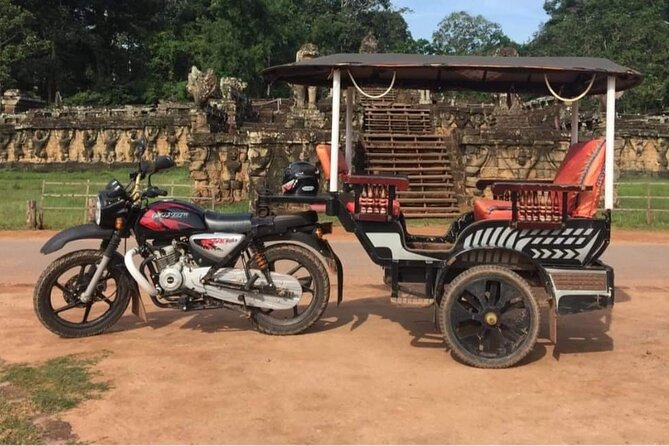
Tuk-tuk transport may suit you if you want open-air movement between sites. A car or minivan gives more shelter from sun and rain. Because the booking includes vehicle choice among car, minivan, or tuk-tuk, ask what is planned for your group before the day begins.
Is $90 good value for three people?
At $90 per group of up to three, the price is attractive for a small group that wants a guide and private transport. Split three ways, the tour costs $30 per person before admission. Add the $37 temple fee per person and the total becomes $67 per person for three people, before any sunrise supplement.
For one person, the value is less obvious. You are still paying for a private vehicle, guide, water, towels, and a return transfer, but the group price is not shared. A solo visitor who wants a personal guide may still find it worthwhile, while someone focused only on transport could prefer a simpler arrangement.
Meals are not included. Bring breakfast money or eat before pickup. Sunrise adds $15 per booking, not per person, which makes that option more reasonable for a full group.
Free cancellation is available up to 24 hours before the start time. Inside that window, no refund is offered, and changes are not accepted. The experience requires good weather, with a different date or full refund offered if poor weather causes cancellation.
Who should book this temple day?
I would choose this tour if you want the main Angkor sights in one organized day and prefer explanations over a self-guided walk. It suits couples, families, and small groups of up to three who value a private vehicle and a flexible feel.
It is also a good first introduction to Angkor. You see the grandest monument, the most famous face towers, the royal-city remains, the jungle temple, and a related Buddhist site. That range helps you decide if you want a second day for less famous temples.
I would be more cautious if you dislike early starts, long walks, or full sightseeing days. The itinerary packs in many stops, and some are brief. If you want extensive photography or quiet time at each temple, ask the guide to help you prioritize rather than trying to give every stop equal time.
Should you book this Angkor Wat tour?
Book it if you want private transport, a dedicated English-speaking guide, and the major Angkor highlights without arranging each stop yourself. The best value comes when three people share the $90 group price.
The strongest reasons to choose it are the private format, the wide range of temples, and the practical service details such as water, towels, hotel pickup, and a return transfer. Ask in advance who will guide and drive you, especially if you hope to work with Ben or John.
Skip it if you want a very slow temple study, a meal-inclusive day, or a tour with entrance fees built into the advertised price. For most first-time visitors to Siem Reap, though, this is a well-planned way to get your bearings at Angkor while still having room for personal questions and a few unscheduled pauses.
FAQ
How much does the private Angkor Wat tour cost?
The tour costs $90 per group of up to three people. Temple admission and optional sunrise service cost extra.
Is the temple entrance fee included?
No. The stated Angkor Wat entrance fee is $37 per person.
How much does the sunrise option cost?
An early sunrise start costs an additional $15 per booking.
How long does the tour last?
The experience lasts approximately five to seven hours.
What time is hotel pickup?
Pickup is scheduled around 7:30 to 8:00 AM. You should be ready in the hotel lobby.
Is transportation included?
Yes. Transport is provided by car, minivan, or tuk-tuk, with pickup and a return transfer.
Is an English-speaking guide included?
Yes. An English-speaking tour guide and an English-speaking driver are included.
Are water and towels provided?
Yes. Drinking water and fresh towels are included.
Which temples are included?
The route includes Angkor Wat, Bayon, Angkor Thom South Gate, Baphuon, Phimeanakas, the Terraces of the Elephants and Leper King, Ta Prohm, and Banteay Kdei.
Can I cancel for a refund?
You can cancel up to 24 hours before the start time for a full refund. Cancellations or changes made within 24 hours are not refunded or accepted.
Just added in Siem Reap
- Twilight Tastes of Siem Reap Include Dinner★ 5.0 · 13 reviews
- Ultimate Sunrise to Angkor Wat, Angkor Thom and Bayon Temple★ 5.0 · 3 reviews
- Trekking Tour at Phnom Kulen National Park from Siem Reap★ 5.0 · 3 reviews
- Full-Day Private Tour of Angkor Wat with Pick Up★ 5.0 · 12 reviews
- Private Day Trip to Angkor Temples with Expert Guide★ 5.0 · 4 reviews
- Siem Reap City Tour with War Museum and Killing Field★ 5.0 · 27 reviews
- Waterfall & River of 1000 Siva Linga- Kulen Mountain Private Tour★ 5.0 · 3 reviews
- Angkor Wat Experience Temple Pass and Siem Reap Food Tour★ 5.0 · 13 reviews
Tours in Siem Reap, compared.
Angkor Wat Sunrise or Sunset Tour with Guide from Siem Reap
Read our review →
Angkor Wat: Small-Group Sunrise or Sunset Tour
Read our review →
Sunset tour of Kampong Phluk stilts home village on the Tonle Sap
Read our review →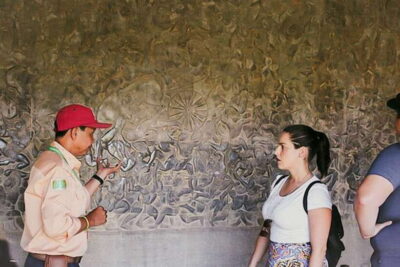
Angkor Wat 2-Day Tour with Sunrise and Sunset
Read our review →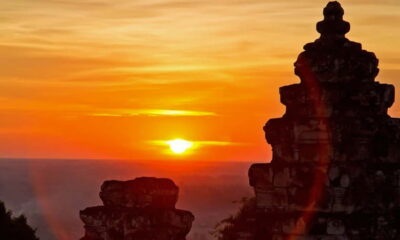
Angkor Wat Sunrise tour with Small – Group and Guide tours
Read our review →