Reviewed · TOURS IN SIEM REAP
Private Guided Tour To Angkor Wat & Its Surrounding-Angkor Park
Angkor Wat is only the beginning. This private Siem Reap tour gives you a full day among Cambodia’s great temple sites, moving from the grand scale of Angkor Wat to Bayon’s carved faces, quiet Ta Nei, and the tree-covered ruins of Ta Prohm. The range of temples is the main draw.
I like the private vehicle and flexible pace. Your English-speaking guide can adjust the day to suit your energy, interests, and the heat. I also like the mix of famous sights and quieter corners, especially Ta Nei. The main drawback is a packed schedule, and the Angkor entrance ticket plus lunch cost extra.
Key points to know before booking
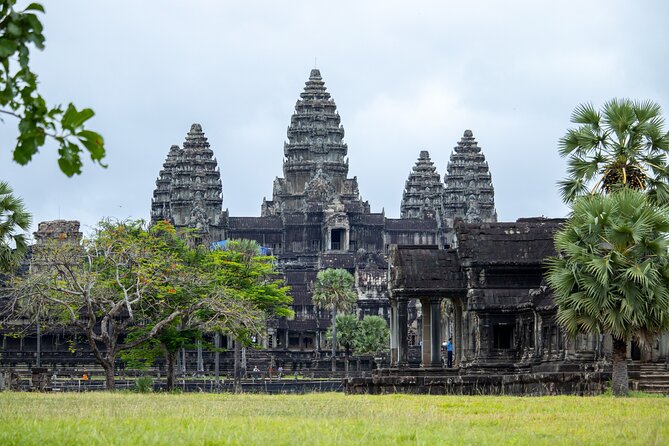
- Angkor Wat gets about two hours: Enough for a useful first visit, though not enough for every gallery and carving.
- Bayon sits inside Angkor Thom: You see the famous stone faces as part of a wider ancient city visit.
- Ta Nei brings a quieter pause: This modest jungle temple receives only about 20 minutes on the schedule.
- Ta Prohm gets a generous visit: Plan on roughly 90 minutes among its collapsed walls and huge trees.
- Your guide matters: Ben is praised for matching pace and route to the group, while Bo has guided the temple circuit as well.
- The $65 price covers the essentials: Private transport, an English-speaking guide, hotel pickup, and water are included, but park entry and lunch are separate.
A full day built around Angkor’s greatest contrasts
For $65, you get a private tour lasting about seven to eight hours. That price is attractive if you value door-to-door transport and a guide who can explain what you are seeing instead of simply dropping you at the gate.
The day starts with pickup at your hotel in Siem Reap. From there, you ride in a private minivan to the Angkor Archaeological Park. Since this is a private activity, only your group takes part. That makes a real difference at a site where heat, walking, and attention span can shape the day.
The route covers six stops, though Angkor Thom and Bayon are closely linked. You visit the park’s best-known monument, its former capital, one of its most striking temples, a quiet jungle ruin, a reservoir, and the famous Ta Prohm.
That is a lot for one day. You will see the main sights, but this is not a slow archaeological study. If you want to examine every carving or spend long stretches photographing each tower, you may need to shorten another stop or arrange a more specialized visit.
A few more things to do in Siem Reap worth a look
- Full-Day Angkor Wat Sunrise Private Tour with Guide from Siem Reap
★ 5.0 · 2,920 reviews - Siem Reap: Angkor Wat Private Tuk-Tuk Tour
★ 4.9 · 2,222 reviews - Angkor Wat Private Day Tour from Siem Reap
★ 5.0 · 834 reviews
Starting at Angkor Wat with two hours of scale and detail
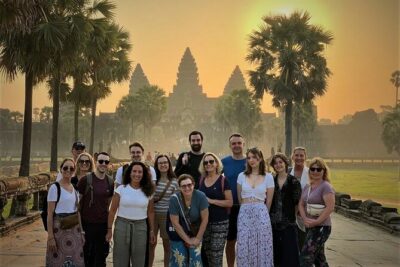
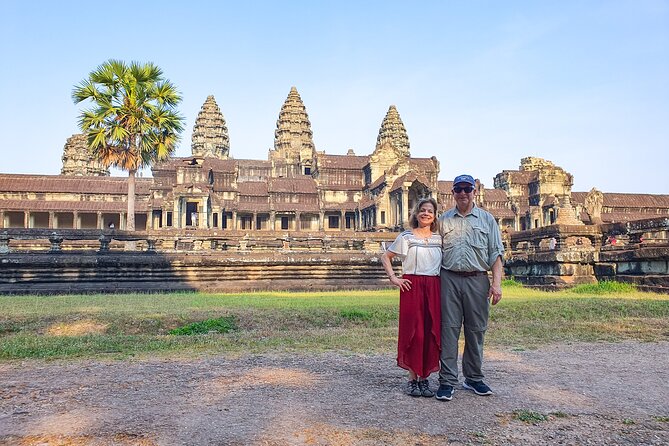
Angkor Wat is the natural anchor of the day. It is the largest religious monument in the world and one of the great achievements of Khmer architecture. Its appeal comes from more than size. The layout, balance, towers, galleries, reliefs, and sculptures work together on a vast scale.
You have about two hours here. That is enough to understand the main design, walk through important sections, and listen as your guide explains the carvings and architecture. A good guide helps you see the building as more than a famous photo stop, pointing out how the design expresses religious ideas and royal power.
This is also where the guide’s role becomes especially useful. Angkor Wat can feel overwhelming at first. There are walls, courtyards, stairways, galleries, and carved scenes competing for your attention. A guide such as Ben can help you set a sensible pace and choose which details deserve your time.
Two hours is the right length for a broad introduction, but it has limits. You will not see everything. If you already know Angkor Wat well, tell your guide what you want to focus on. The private format gives you a better chance of adjusting the route than a fixed group outing.
The entrance fee is not included, so you need to budget for admission to Angkor Archaeological Park separately. The supplied information does not state the current ticket price, so check that before booking.
Angkor Thom, an ancient city rather than one single temple
The next major stop is Angkor Thom, the last and longest-lasting capital of the Khmer Empire. It covers about nine square kilometers and contains several important structures from different periods.
That scale changes how you read the site. Angkor Thom is not simply one temple with a neat entrance and exit. It was a city, and its roads, walls, gates, and monuments help you picture the former capital as a working royal center.
You have about an hour here. That gives you time to get a sense of the city and visit key structures, especially Bayon. It is a useful contrast with Angkor Wat. Angkor Wat feels ordered and ceremonious, while Angkor Thom gives you a broader sense of urban space and royal planning.
The stop can involve walking and exposure to the sun. Wear practical shoes and use the drinking water provided throughout the day. Since the tour lasts many hours, small comforts matter more than they might on a short temple visit.
Bayon and its famous stone faces
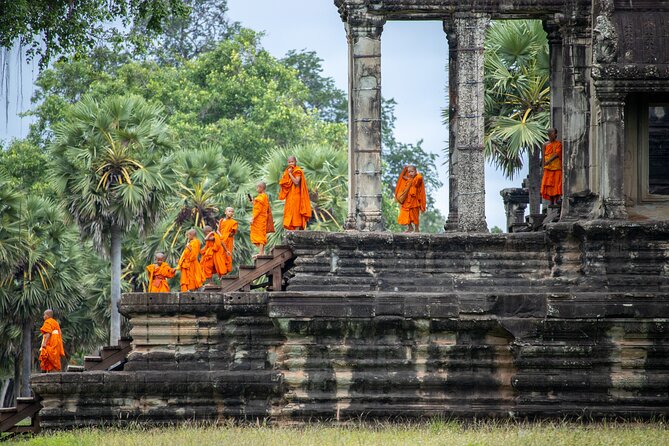
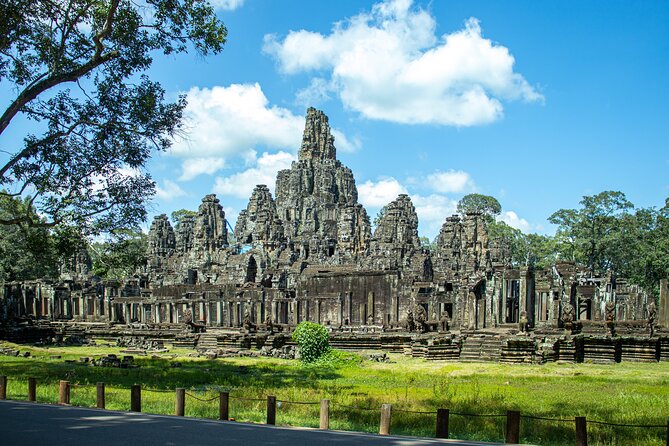
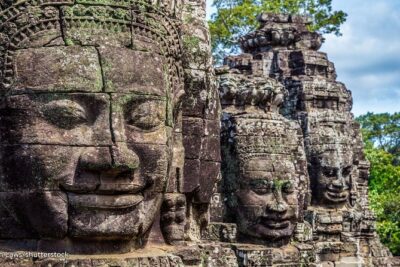
Bayon is at the heart of Angkor Thom and receives about an hour on the schedule. Built in the 12th century as a state temple for King Jayavarman VII, it is known for its towers carved with large stone faces.
The faces are the reason many people remember Bayon most clearly. They appear from different angles as you move through the temple, creating a slightly mysterious effect. The structure is also visually complex, with galleries, towers, passages, and carvings that can be hard to make sense of without guidance.
Your guide can provide the context that turns the stonework into a readable place. You can ask about the temple’s purpose, the king who built it, and how Bayon fits into the larger city around it.
Heat is the key practical issue here. One visitor specifically suggested seeing Bayon earlier, before the day became too hot, and ending with Angkor Wat instead during the summer. That is useful advice, though the exact order of this tour may be set by the provider or adjusted by your guide.
If heat affects you strongly, tell your guide at the start. A private tour should give you more room to discuss pace and timing than a large group would. Ben, in particular, is noted for managing pace, expectations, and the preferred route.
Same base, a different kind of day out:
- Angkor Wat Sunrise or Sunset Tour with Guide from Siem Reap
★ 5.0 · 12,109 reviews - Siem Reap: Angkor Wat: Small-Group Sunrise or Sunset Tour
★ 5.0 · 9,444 reviews - From Siem Reap: Kampong Phluk Floating Village Tour by Boat
★ 4.9 · 6,979 reviews - Sunset tour of Kampong Phluk stilts home village on the Tonle Sap
★ 5.0 · 4,865 reviews
Ta Nei offers a short break from the famous circuit
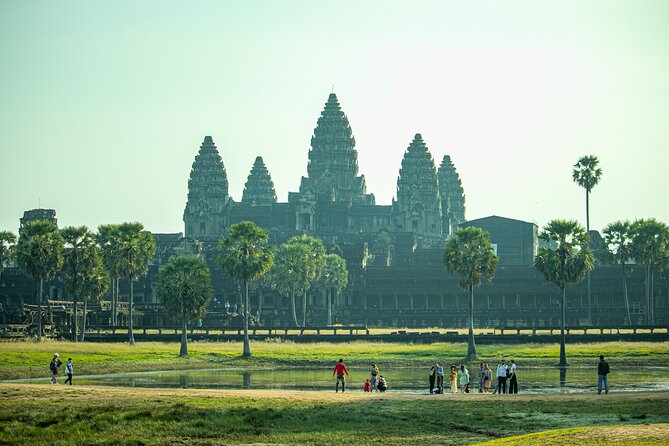
Ta Nei is a modest, secluded temple in the jungle, with about 20 minutes set aside for the visit. It does not have the scale of Angkor Wat or the instantly recognizable faces of Bayon. Its appeal is the quieter setting and the sense of seeing a less visited corner of the park.
That short stop works well as a change of rhythm. After two major monuments and the broad space of Angkor Thom, Ta Nei gives you a brief pause. You can look at the weathered stone, take a few photographs, and enjoy a less crowded atmosphere if conditions allow.
The tradeoff is time. Twenty minutes passes quickly, especially if you want to study the site. Think of Ta Nei as a compact side visit rather than a full temple exploration. If small, quiet ruins interest you more than famous landmarks, ask your guide whether the timing can be adjusted.
Srah Srang brings lunch and a welcome pause
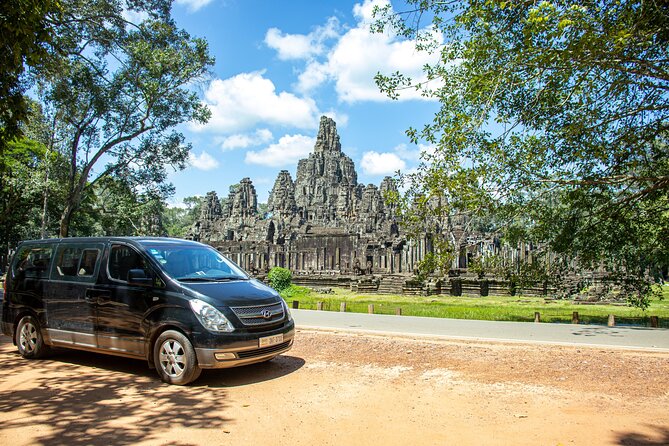
After the morning temples, the tour stops at Srah Srang for about an hour and a half. This reservoir provides a calmer setting after the stone corridors and exposed courtyards of the earlier stops.
The schedule includes a Cambodian lunch break with a view of the water. Lunch itself is not listed among the tour inclusions, so plan to pay for your meal separately. That is worth clarifying before you set out, especially if you are traveling on a strict budget.
This pause is practical as well as scenic. A full day in the park can become tiring, and sitting down before Ta Prohm helps you keep some energy for the final major temple. You can also use the break to tell your guide if you want more explanation, fewer photographs, or a quicker finish.
The 90-minute stop may feel long if you prefer to keep moving. For most people, though, a proper break makes the rest of the tour more enjoyable. The schedule is full, and rushing from one temple to the next would make the day feel like a checklist.
Ta Prohm delivers the jungle-and-ruins moment
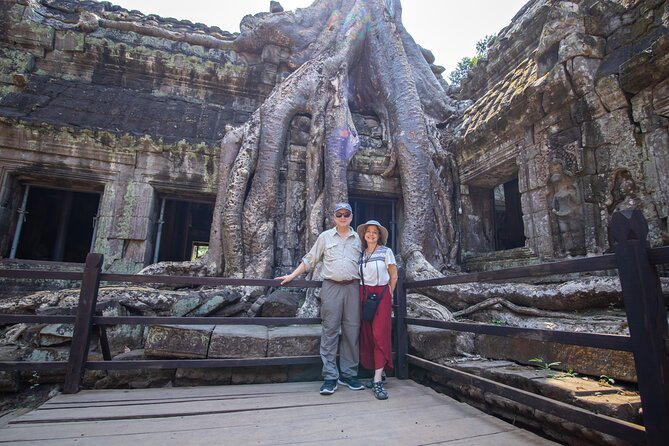
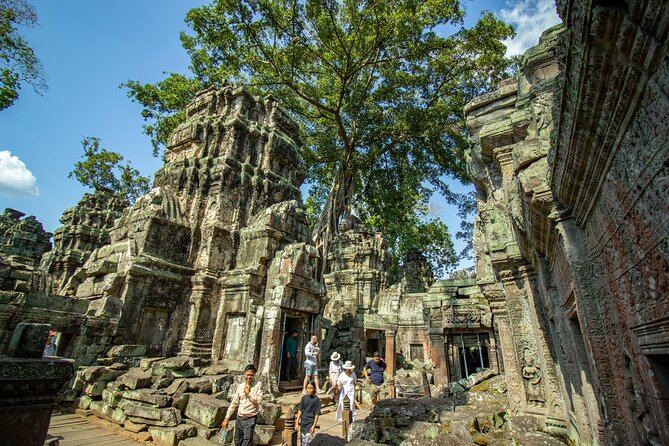
Ta Prohm is the final temple and receives about an hour and a half. It is famous for its ruined walls, corridors, and enormous trees growing over the stone. International visitors often know it as the Tomb Raider temple because it appeared in a film starring Angelina Jolie.
The film connection explains some of its fame, but the place has more to offer than a movie backdrop. Ta Prohm shows what happens when a monumental site is left in a state of partial ruin, with roots, fallen stones, and narrow passageways shaping the visit.
You have more time here than at Ta Nei, which is welcome. The extra 30 minutes allows you to see more of the temple and pause for photographs without treating every stop as a race. Still, the site can feel demanding if you are tired by the afternoon.
Ta Prohm is also a good place to listen carefully to your guide. The most memorable details may not be the obvious tree roots. Architectural fragments, carved surfaces, and the relationship between the forest and the remaining buildings help explain why the temple feels so different from Angkor Wat.
Why the private format is worth considering
The private setup is the strongest practical feature of this tour. You travel by private minivan, and only your group participates. That means you are not waiting for strangers who want different photo stops or a slower walking pace.
You also get an English-speaking guide. The best evidence of the guide’s value comes from the specific praise for Ben, who adjusted the route, pace, and expectations to suit the group. That is exactly what you want on a long temple day. Bo is another guide connected with this experience, and the feedback about his guiding was favorable, though less detailed.
A private tour does not guarantee that every guide will be equally strong. Guide quality can shape your day, so it is sensible to request a guide who explains architecture and history clearly. If you have special interests, such as carvings, photography, or quieter ruins, mention them at booking or pickup.
The tour provides drinking water throughout the day. That sounds minor, but it is useful in a hot park where you spend hours walking between stone structures. Hotel pickup is also offered, which removes the need to arrange separate transport to the park.
The $65 value, and the costs not included
At $65, this is a solid value for a private seven to eight-hour outing. The price includes round-trip transport in a private minivan, an English-speaking guide, hotel pickup, and drinking water.
The comparison to a self-guided visit is not simply the cost of transport. You are also paying for a planned route and explanations at sites that can be confusing without context. If you are comfortable arranging transport and reading about the temples yourself, a private tour may cost more than an independent day. If you want the logistics handled, the price is easier to justify.
You need to add the Angkor Archaeological Park entrance fee. Lunch is also a separate expense, since it is not included among the listed inclusions. The tour description does not provide the admission price or specify a lunch menu, so confirm both before departure.
Group discounts are available, which may improve the value for families or friends traveling together. Since the activity is private, the cost can make more sense when shared among several people.
Who will enjoy this temple day most
I would recommend this tour to first-time visitors who want the major Angkor sites in one organized day. It suits you especially well if you want a guide but do not want to join a large group.
It is also a good fit for people who value flexibility. You can discuss pace with your guide, ask for more detail at one temple, or keep a stop shorter if the heat becomes too much. The schedule remains full, but it is less rigid than a group outing.
Families and small groups may appreciate the private minivan and shared cost. People who prefer a slow, highly detailed visit to each temple may find the route too ambitious. In that case, a two-day plan would give you more time, but this particular experience is designed as a strong one-day overview.
Practical details before you go
The experience lasts about seven to eight hours, so plan for a full day rather than a quick morning outing. Wear footwear suitable for walking around uneven temple grounds, and bring sun protection even though drinking water is provided.
The tour is near public transportation, but hotel pickup is offered, so most people will not need to arrange their own way to the starting point. Confirmation is received at booking, and most people can participate.
The activity has a free cancellation policy up to 24 hours before the start time. Canceling less than 24 hours ahead, or making changes inside that window, does not qualify for a refund. Cutoff times follow local time in Siem Reap.
Should you book this Angkor tour?
Book it if you want Angkor’s essential temples in one private day, with hotel pickup, a minivan, water, and an English-speaking guide included. The combination of Angkor Wat, Bayon, Ta Nei, Srah Srang, and Ta Prohm gives you both the famous sights and a quieter stop.
The best reason to choose it is control over your day. A guide such as Ben can adjust the pace and route, and the private format avoids the delays of a large group. The main caution is the heat and the amount of ground covered. Tell your guide early if you want Bayon before the hottest part of the day, and remember to budget separately for park entry and lunch.
FAQ
How long does the private Angkor tour last?
The tour lasts approximately seven to eight hours.
What temples and sites are included?
The route includes Angkor Wat, Angkor Thom, Bayon Temple, Ta Nei Temple, Srah Srang reservoir, and Ta Prohm Temple.
Is hotel pickup offered?
Yes. Pickup is offered from your hotel in Siem Reap.
Is the tour private?
Yes. Only your group participates in the activity.
Is the Angkor Archaeological Park entrance fee included?
No. The entrance fee to Angkor Archaeological Park is not included in the tour price.
Is lunch included?
No. The tour includes a lunch stop at Srah Srang, but lunch is not listed among the included services.
What does the $65 price include?
The price includes round-trip transport by private minivan, an English-speaking guide, and drinking water throughout the day.
Just added in Siem Reap
- Twilight Tastes of Siem Reap Include Dinner★ 5.0 · 13 reviews
- Ultimate Sunrise to Angkor Wat, Angkor Thom and Bayon Temple★ 5.0 · 3 reviews
- Trekking Tour at Phnom Kulen National Park from Siem Reap★ 5.0 · 3 reviews
- Full-Day Private Tour of Angkor Wat with Pick Up★ 5.0 · 12 reviews
- Private Day Trip to Angkor Temples with Expert Guide★ 5.0 · 4 reviews
- Siem Reap City Tour with War Museum and Killing Field★ 5.0 · 27 reviews
- Waterfall & River of 1000 Siva Linga- Kulen Mountain Private Tour★ 5.0 · 3 reviews
- Professional Photo Shoot in Angkor Archaeological Park, Siem Reap★ 5.0 · 42 reviews
Tours in Siem Reap, compared.
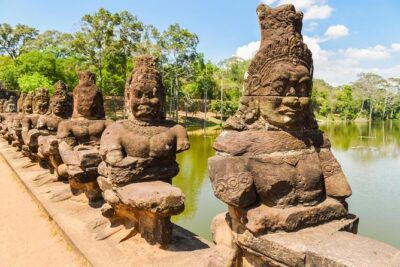
Angkor Wat Sunrise or Sunset Tour with Guide from Siem Reap
Read our review →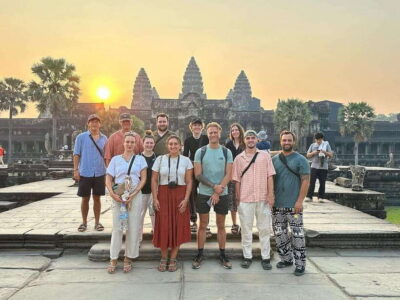
Angkor Wat: Small-Group Sunrise or Sunset Tour
Read our review →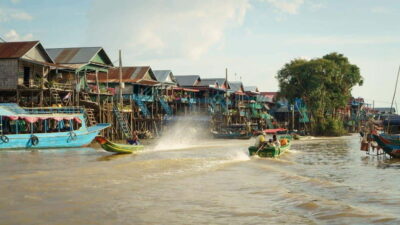
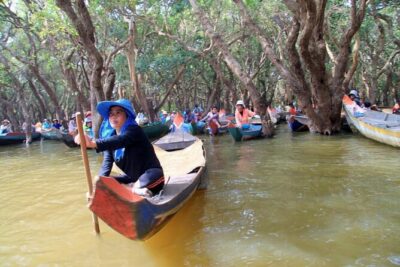
Sunset tour of Kampong Phluk stilts home village on the Tonle Sap
Read our review →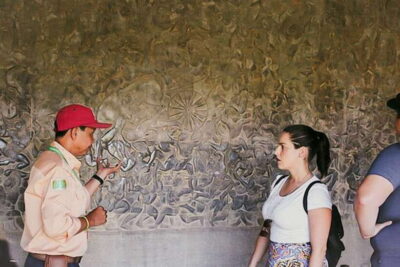
Angkor Wat 2-Day Tour with Sunrise and Sunset
Read our review →
Angkor Wat Sunrise tour with Small – Group and Guide tours
Read our review →