
Reviewed · TUK TUK TOURS
Private Tuk Tuk Tour to Angkor Wat and Small Circle with Two Extras
Angkor Wat is only the beginning here. This long private tuk tuk outing follows the Small Circle through major temples, quiet ruins, jungle roads, city gates, and Wat Thmey, a memorial to victims of the Khmer Rouge. You see Angkor Wat twice, first in morning light and again late in the day when its towers reflect in the ponds.
I like the private pace, since you can skip a stop or spend longer at a favorite ruin. I also like the range: Ta Prohm and Bayon bring the famous carvings, while Ta Nei and Prasat Bat Chum offer quieter corners. The main drawback is the length. With 9 to 10 hours on the road and many short stops, this is a full day in the heat, and the Angkor ticket costs an extra $37.
Key points to know before booking
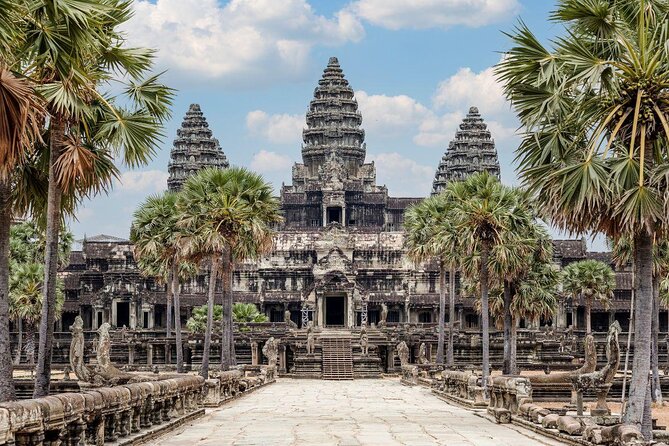
- Angkor Wat appears twice: Enter through the less-used East Gate in the morning, then return for late-afternoon photos from the familiar side.
- Ta Nei adds a rougher temple stop: Gravel roads lead to this jungle ruin, which sees fewer people than the major temples.
- The route mixes famous and modest sites: Ta Prohm, Bayon, and Angkor Thom share the day with Prasat Bat Chum, Spean Thma, and Chau Say Tevoda.
- The tour is private: Only your group takes part, so the driver can adjust the pace within the day’s route.
- Wat Thmey adds modern Cambodian history: The small memorial and killing field provide a sober final stop.
- The real cost is higher than $15: Add the one-day Angkor pass at $37 per person, plus lunch and any optional extra transfers.
Why this Small Circle tour works
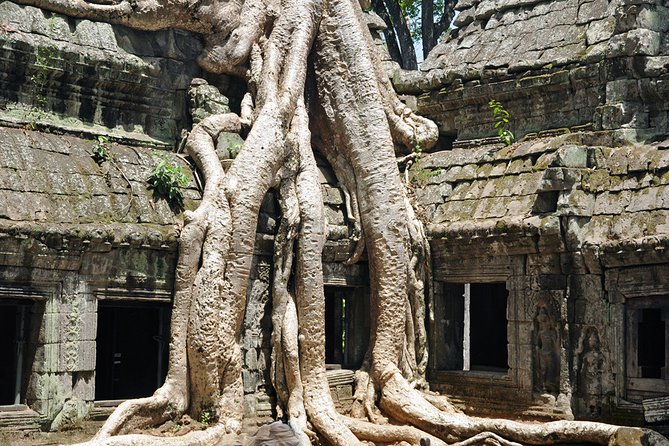
Many Angkor visits focus on three names: Angkor Wat, Bayon, and Ta Prohm. Those are essential, but they can leave you with a narrow picture of the temple area. This route adds smaller structures and less-visited corners, helping you see how varied Angkor’s architecture can be.
The day begins at 7 a.m. with pickup in Siem Reap. Your transport is a private tuk tuk, and bottled drinking water is provided. The driver speaks English and handles the road connections between the sites, while the temple visits themselves may be self-guided. A guide named Vannak has also been connected with this service, and drivers named Pin, Sina, and Kim have handled past outings, but your assigned staff can vary.
The private format matters. You are not tied to the walking speed or photo habits of a large group. If one temple feels less interesting to you, you can move on. If Ta Prohm catches your attention, you have a better chance of using its 75-minute visit well.
There is a tradeoff. A driver is not the same as a dedicated temple guide. One account of the experience notes that the driver could not accompany the visitor inside the temple grounds, though he could still explain the sites from outside. If detailed architectural interpretation is your main reason for visiting Angkor, confirm before booking whether a separate guide is included.
More Tuk Tuk Tours in Siem Reap
- Siem Reap: Angkor Wat Private Tuk-Tuk Tour
★ 4.9 · 2,222 reviews - Siem Reap Countryside Bike Tour / E-Bike or Tuk Tuk
★ 5.0 · 935 reviews - Angkor Sunrise Bike Tour / E-Bike or Tuk Tuk
★ 5.0 · 615 reviews
Angkor Wat from the East Gate in the morning
The first stop lasts about two hours. Instead of beginning at the famous West Gate, the tuk tuk approaches Angkor Wat from the less-used East Gate. This changes your first view and can make the arrival feel calmer.
The morning light is useful for photographs, especially as it touches the temple’s towers and long galleries. You still get a chance to see the better-known West Gate later, so the tour does not force you to choose between atmosphere and the classic view.
Use this first visit to get a sense of the scale. Angkor Wat is not a quick photo stop. Its galleries, courtyards, towers, and carved surfaces reward a steady pace, but two hours can still feel brief if you inspect every detail.
Your Angkor ticket is not included. The one-day pass costs $37 per person and is valid for all the temples on this route. It is the largest extra expense, so add it to the advertised $15 before comparing this tour with other day trips.
Prasat Kravan and Prasat Bat Chum
After Angkor Wat, the route turns to two smaller sites. Prasat Kravan takes about 20 minutes and is made up of five brick towers set in a line. Its importance comes from the large brick carvings, a feature that gives it a different look from the stone reliefs found at many better-known temples.
This is a short stop, but it helps you notice that Angkor is not built from one standard design. Brickwork, carved stone, stepped platforms, and later additions all appear across the temple zone.
Prasat Bat Chum follows, with another 20-minute visit. Three towers sit on a shared platform, and large inscriptions point to the growing role of Buddhism at Angkor. It is small compared with Angkor Wat, but that is part of its value. You can take in the layout without facing the vast distances of the largest complexes.
These stops are best for people who enjoy details and comparison. If you only want the most famous ruins, they may feel like padding. In a private tuk tuk, though, you can keep the visit short and save energy for Ta Prohm.
Srah Srang and Banteay Kdei
Srah Srang is a quick 10-minute stop at a large artificial basin with an ornamental terrace and animal sculptures. The site is less about climbing through ruins and more about seeing how water shaped the design of Angkor.
The distinction between a srah and a baray is useful: a srah is an artificially deepened basin, while a baray is a reservoir. You do not need to become an expert in Khmer water systems to enjoy the view, but this stop gives the day a change of rhythm after several temple towers.
Next comes Banteay Kdei, with about 45 minutes to explore. It is often described as a smaller counterpart to Ta Prohm, though it remains a large complex. Its flat layout and maze-like passages make it a good place to slow down and look at doorways, galleries, and worn carvings.
The uneven, twisting plan may be tiring in the heat. Keep water with you, wear practical footwear, and do not assume that a smaller temple means an easy walk.
Other tuk tuk trips around Siem Reap:
- Angkor Wat Private Tuk-Tuk Tour (sunrise Option) & more
★ 5.0 · 439 reviews - Old Siem Reap Sunset Food Tour by Tuk-tuk
★ 5.0 · 311 reviews - Siem Reap: Street Food Experience by Tuk-Tuk
★ 4.9 · 310 reviews - Siem Reap: Apsara Dance Show & Dinner with Tuk-Tuk Transfers
★ 4.4 · 254 reviews
Ta Prohm, the day’s major jungle temple
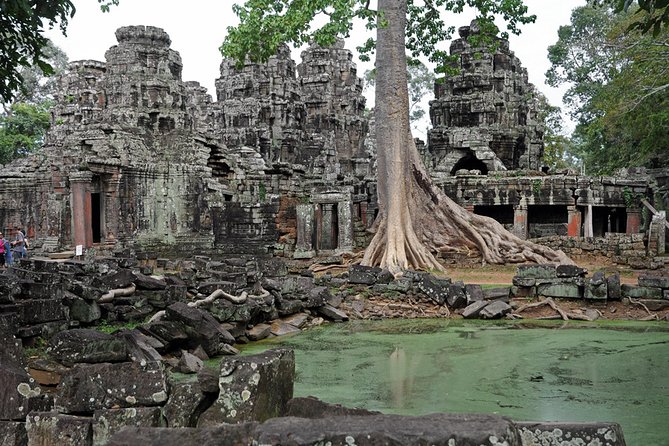
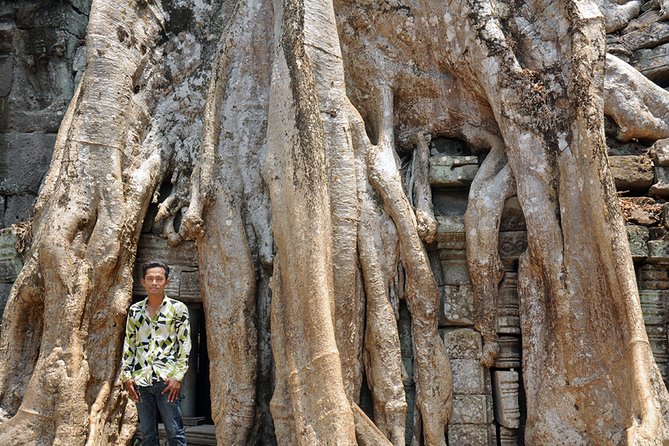
Ta Prohm receives about 75 minutes, making it one of the longest visits of the day. This is the temple associated with enormous strangler figs growing across the ruins and with the film Tomb Raider.
The trees are the obvious attraction, but do not rush past the carved galleries. The contrast between organized stone architecture and roots that have pushed through it is what gives Ta Prohm its particular mood. You can also take playful photographs recreating scenes from the film, though the site deserves more than a quick movie reference.
Ta Prohm is a large compound, so 75 minutes will not cover every corner. Use the time for a clear route rather than trying to see everything. The private arrangement helps here, since you are not waiting for a whole bus group to regroup at each turn.
This is also one of the busiest parts of the Small Circle. The tour does not promise an empty temple, and the famous setting naturally draws attention. The next stop, Ta Nei, offers a quieter contrast.
Ta Nei and Ta Keo, from jungle track to stone pyramid
Ta Nei takes about 30 minutes and requires a gravel road. Its rougher access is the reason many people miss it. The ruin remains in a more wooded setting, giving you an Indiana Jones feeling without the scale or polish of Angkor Wat.
Do not expect a large, fully restored complex. Ta Nei is valuable because of its setting and relative quiet. It gives you a glimpse of how quickly the temple zone can feel remote once you leave the main road.
Ta Keo follows with about 40 minutes. This former state temple is built as an artificial mountain, a stepped pyramid with five towers on the upper platform. The stairs are notably steep. If climbing is uncomfortable for you, take your time and decide how high you want to go.
The contrast between Ta Nei and Ta Keo is one of the better pairings in the day. One feels tucked into the trees, while the other expresses power through height, symmetry, and a hard upward climb.
Three compact stops near Angkor Thom
The route then strings together several shorter visits. At Spean Thma, you have about five minutes for a photograph of a late-Angkor stone bridge. Its stones were taken from older temples, and the riverbed has shifted east, so the bridge no longer serves the waterway it was built to cross.
Five minutes is enough for a look and a photo, not a full study. Think of it as a useful pause between larger temple visits.
Chau Say Tevoda receives about 20 minutes. This medium-sized temple has an impressive eastern processional route and pediment carvings showing mythological scenes. Its scale makes it easier to understand than Angkor Wat, and the carved details deserve a close look.
Thommanon takes about 15 minutes. It is the companion temple to Chau Say Tevoda and dates to the Angkor Wat period. Its towers use a similar style, so visiting the two together lets you compare related designs without a long ride between them.
These three stops are short by design. You will not have time for a slow, scholarly examination, but they keep the day moving and add variety to the route.
Victory Gate, Bayon, and Angkor Thom’s South Gate
The Victory Gate is the second eastern gate of Angkor Thom and one of the best-preserved city gates in the area. You have about 10 minutes here, including the chance to climb the wall for a view toward the giant carved faces of the gate.
It is a good reminder that Angkor Thom was not simply a collection of temples. It was a planned city with entrances, walls, roads, and ceremonial routes.
At Bayon, the plan calls for a 10-minute photo stop rather than a full temple visit. That is the clearest limitation in the itinerary. Bayon’s famous towers and serene stone faces deserve more than a quick look, especially if you enjoy carved details.
If Bayon is high on your list, ask to adjust the schedule. Since this is a private tour, you may be able to trade time from one of the smaller stops, though the overall day remains fixed and the driver may need to keep the route moving.
The Angkor Thom South Gate receives about 15 minutes. Rows of giant figures line the approach, with gods and demons pulling at the serpent, while the gate tower carries the large face that has become one of Angkor’s most familiar images.
This stop is excellent for photographs. Give yourself time to look beyond the central road, where the statues and gate structure create strong views from several angles.
Returning to Angkor Wat in the late afternoon
The second Angkor Wat stop lasts about 30 minutes. The aim is different from the morning visit: late-afternoon light and reflections in the temple ponds and moats.
Half an hour is enough for a focused return to the most familiar viewpoints, but not enough for another full exploration. Think of it as a photography session. If the water is still, the towers mirrored in the ponds can provide the picture many people hope to take on their first day at Angkor.
The two-visit plan is smart because the temple changes with the light. Morning gives you a fresh arrival and more time inside. Late afternoon gives you a final look at the towers from the water. You do not need to make one visit carry the whole experience.
Wat Thmey and a serious final note
The final listed stop is Wat Thmey, a small memorial and killing field connected to victims of the Khmer Rouge genocide. You spend about 10 minutes here, seeing a memorial stupa, photo boards, open grounds, and a prayer hall.
This is not a temple spectacle. It is a sober reminder of Cambodia’s recent past, and the mood shifts sharply after a day of ancient stonework. Allow yourself to take the stop seriously rather than treating it as another quick photograph.
The visit is free. Its short length means it cannot explain every part of the Khmer Rouge period, but it offers a direct memorial site within Siem Reap. For many people, this final stop gives the day a more complete sense of Cambodia, linking the ancient kingdom to the country’s painful modern history.
What the $15 price really covers
At $15 per person, the tour is inexpensive for a private full-day vehicle. The price includes private transportation, an English-speaking driver, pickup, and bottled water. Group discounts may also be available.
The temple pass changes the calculation. Add $37 for the one-day Angkor ticket, bringing the basic cost to $52 per person before lunch. Lunch is not included, and optional transfers, such as going somewhere other than Srah Srang for a meal break, can cost extra.
That is still useful value if you want a private tuk tuk and a planned route through 14 key Angkor sites, along with Wat Thmey. The value is weaker if you want a full guide inside every temple, a long lunch, or generous time at Bayon and Angkor Wat.
Pickup is offered in Siem Reap, and drop-off can be at your hotel or a point in the town centre. The activity begins at 7 a.m. and lasts about 9 to 10 hours, so plan for a full day rather than an easy morning outing.
Who should book this tour?
I would choose this tour if you want the practical help of a planned route but still want control over the day. It suits first-time visitors who want the famous temples plus smaller stops, and it works well for couples, families, or friends who prefer not to share a vehicle with strangers.
It is also a good fit if you like photographs. The East Gate arrival, Ta Prohm, Victory Gate, South Gate, and late-afternoon return to Angkor Wat create several distinct photo settings.
I would think twice if your main goal is detailed interpretation. The included service clearly centers on private transport and an English-speaking driver, not a guaranteed guide walking through every ruin. I would also think twice if you dislike long vehicle days or steep temple stairs.
The cancellation terms are forgiving: you can receive a full refund if you cancel at least 24 hours before the start time. Changes or cancellations inside that window are not accepted for a refund.
Should you book it?
Book it if you want a flexible private tuk tuk day that covers far more than the three headline temples. The route has real variety, the two Angkor Wat visits are well planned, and Ta Nei gives the day a quieter edge.
Before paying, budget for the $37 temple pass and lunch, and ask how much temple explanation your assigned driver will provide. If you want more time inside Bayon or Angkor Wat, request that adjustment at the start. With those expectations clear, this is a strong low-cost way to see the Small Circle at your own pace.
FAQ
What is included in the tour price?
The price includes private transportation, an English-speaking driver, pickup, and bottled drinking water. Lunch and the Angkor temple ticket are not included.
How much is the Angkor temple ticket?
The one-day Angkor ticket costs $37 per person. It is valid for all the temples visited on this tour.
What time does the tour start?
The tour starts at 7 a.m. and lasts approximately 9 to 10 hours.
Is this a private activity?
Yes. Only your group takes part in the private tour.
Does the tour include hotel pickup?
Pickup is offered in Siem Reap. Drop-off can be at your hotel or at a point of your choice in the town centre.
Does the tour include a guide inside the temples?
The included service lists an English-speaking driver. A dedicated guide inside the temples is not clearly listed as included. Vannak is identified as a guide connected with the service, so confirm guide arrangements when booking.
Is lunch included?
No. Lunch is not included. Optional transfers for a lunch stop at a location other than Srah Srang may also cost extra.
Is the Angkor Wat visit only in the morning?
No. You visit Angkor Wat first in the morning through the East Gate and return for about 30 minutes in the late afternoon for photographs.
Can I cancel for a full refund?
Yes, if you cancel at least 24 hours before the experience begins. Cancellations or changes made less than 24 hours before the start time are not refunded.
Just added in Siem Reap
- Twilight Tastes of Siem Reap Include Dinner★ 5.0 · 13 reviews
- Ultimate Sunrise to Angkor Wat, Angkor Thom and Bayon Temple★ 5.0 · 3 reviews
- Trekking Tour at Phnom Kulen National Park from Siem Reap★ 5.0 · 3 reviews
- Full-Day Private Tour of Angkor Wat with Pick Up★ 5.0 · 12 reviews
- Siem Reap City Tour with War Museum and Killing Field★ 5.0 · 27 reviews
- Waterfall & River of 1000 Siva Linga- Kulen Mountain Private Tour★ 5.0 · 3 reviews
- Private Day Trip to Angkor Temples with Expert Guide★ 5.0 · 4 reviews
- Angkor Wat Experience Temple Pass and Siem Reap Food Tour★ 5.0 · 13 reviews
Tuk Tuk Tours, compared.
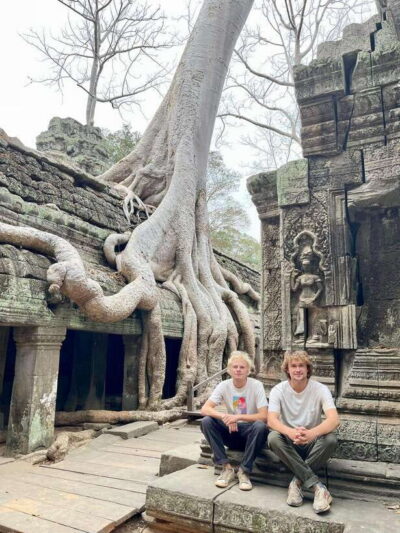
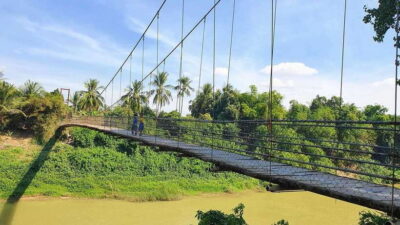
Tuk-Tuk, Bamboo Train, Killing/Bat Caves, Sunset
Read our review →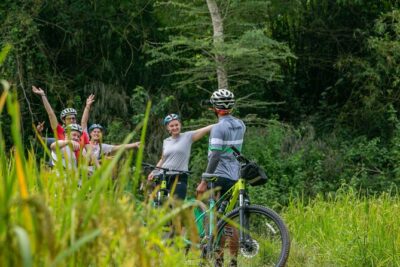
Siem Reap Countryside Bike Tour / E-Bike or Tuk Tuk
Read our review →
Battambang Tuk Tuk tour: Bambootrain, Killing & Bat Caves,Sunset
Read our review →
Phnom Penh Silk Island Bike Tour/ E-Bike or Tuk Tuk
Read our review →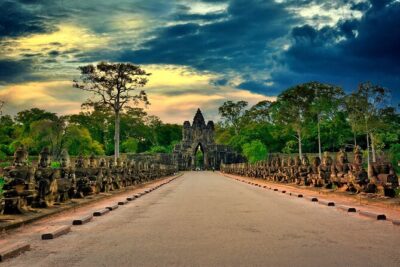

Ultimate Phnom Penh Food Tour by Tuk Tuk: 20 Tastings and Drinks
Read our review →Browse the lists this tour appears in