Reviewed · TOURS IN SIEM REAP
Shared day tour with Spanish-speaking guide at Angkor Temple.
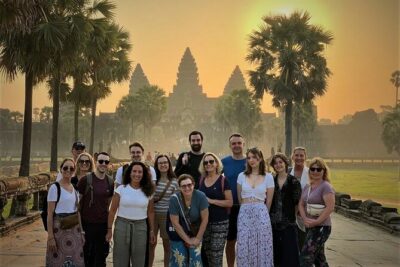
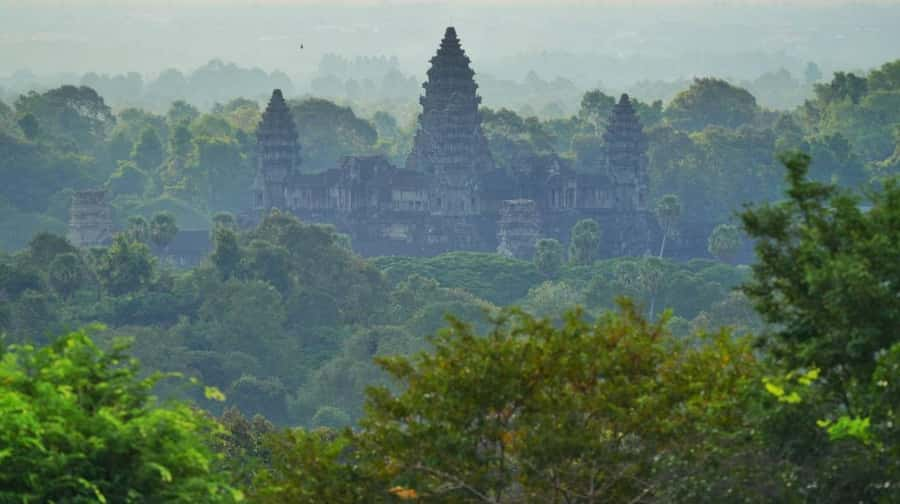
Angkor is not a single temple you can tick off in an hour. It is an enormous former capital, and this tour gives you a useful first look at its grandest sites in one long day. You enter through Angkor Thom’s South Gate, meet Bayon’s giant stone faces, walk among the trees at Ta Prohm, and finish at Angkor Wat.
I like the small maximum of nine people, which should make it easier to hear your guide and ask questions. I also like the live Spanish option, especially since one recent booking singled out guide Sem for explaining the temple stories in detail. The main drawback is the pace: four major stops in eight hours leaves limited time for slow wandering, photography, or rest.
Key points to know before booking
- Four major Angkor sites in one day: Angkor Thom, Bayon, Ta Prohm, and Angkor Wat form a classic first visit.
- A Spanish-speaking guide is available: Portuguese and English are also offered, with guide Sem named in one especially positive booking.
- Small group of up to nine: This is more personal than a large coach tour, though it is still a shared outing.
- Eight hours from Siem Reap: Hotel pickup starts the day, with the most famous temple saved for the afternoon.
- The price is $50 per person: That is reasonable if you value transport, a guide, and a tightly planned route.
- Flexible booking terms: You can reserve now, pay later, and cancel up to 24 hours before departure for a full refund.
Why this route makes sense for a first Angkor visit
This tour follows a sensible order. You begin with Angkor Thom, the old fortified capital, then move through Bayon and the royal terraces before reaching Ta Prohm. Angkor Wat comes later, when you can give the day’s biggest monument your full attention.
I like this arrangement because the sites feel different from one another. Angkor Thom introduces the scale of the old city. Bayon brings you close to its famous carved faces. Ta Prohm gives you a more atmospheric temple setting among trees. Angkor Wat then provides the grand architectural finale.
The route is also practical for anyone with only one full day in Siem Reap. You will not see every temple in the Angkor area, but you will cover the names most visitors want to understand first. That matters because Angkor is too large to approach casually without losing time to roads, gates, and confusing temple layouts.
The tradeoff is clear. This is an efficient introduction, not a leisurely archaeological study. You should expect a full schedule, walking, heat, and repeated exposure to stone steps and open courtyards. If you want long pauses at every carving, a private tour or two-day plan may suit you better.
A few more things to do in Siem Reap worth a look
- Angkor Wat Sunrise or Sunset Tour with Guide from Siem Reap
★ 5.0 · 12,109 reviews - Siem Reap: Full-Day Angkor Wat Guided Tour with Sunset
★ 4.9 · 3,803 reviews - Angkor Wat Sunrise tour with Small – Group and Guide tours
★ 5.0 · 3,655 reviews
From Siem Reap to Angkor Thom’s South Gate
Your morning begins with pickup at your hotel in Siem Reap. The first major stop is Angkor Thom, an ancient capital enclosed within a fortified city covering about 10 square kilometers.
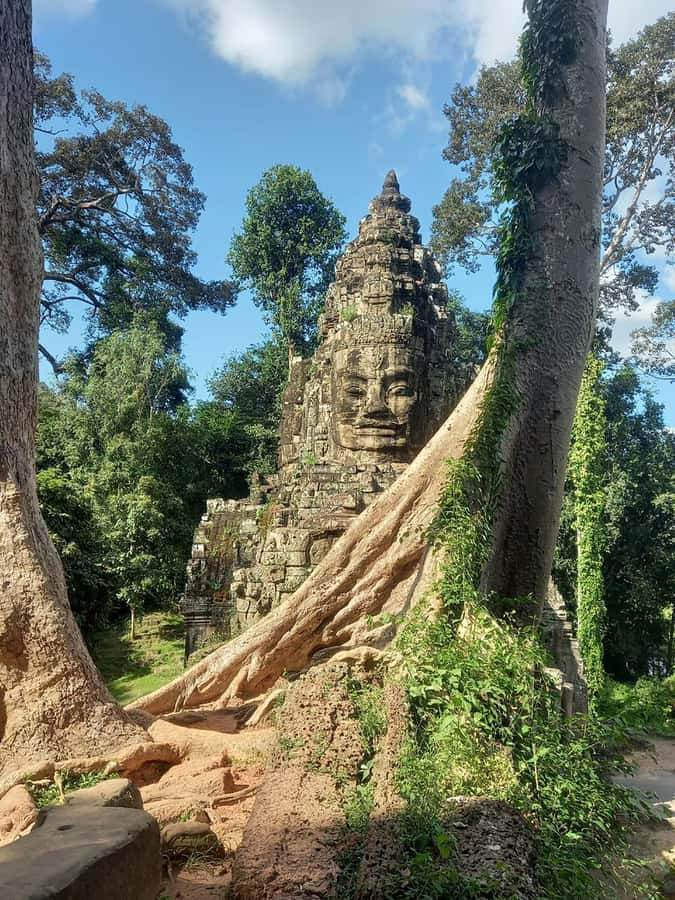
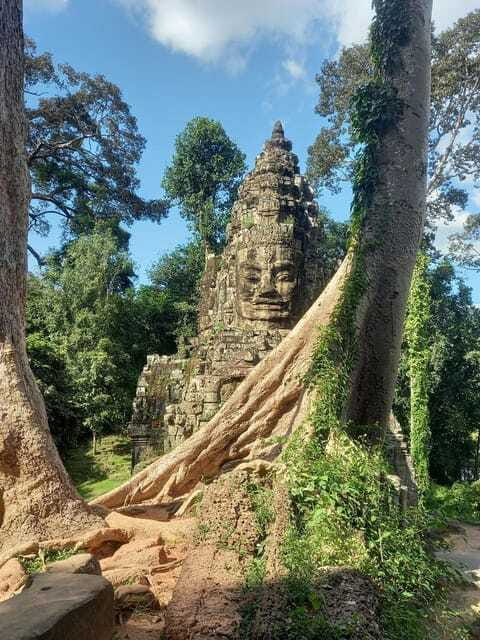
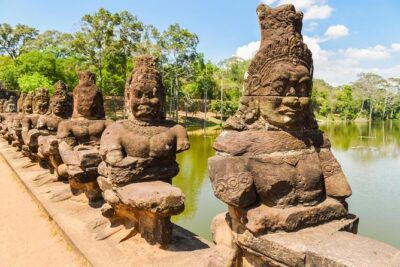
The entrance itself is one of the day’s memorable moments. You cross the monumental South Gate on a causeway lined with statues of gods and demons. Each side holds a giant naga, giving the approach a strong sense of ceremony before you even reach the temple area.
This is where a guide adds real value. Without context, the causeway can look like a line of worn statues leading to a gate. With an explanation, you can pay attention to the opposing figures, the naga, and the way the entrance announces the power of the old city.
Take your time looking up as you approach. The gate is not just a practical opening in a wall. It is part of the message of Angkor Thom, presenting the capital as a controlled, symbolic world.
Since the tour is shared, the exact amount of time here may depend on the group and the morning schedule. Keep your camera ready, but do not let the first photo stop you from noticing the full approach. The gate is best understood from the causeway, not only from directly underneath it.
Bayon and its many carved faces
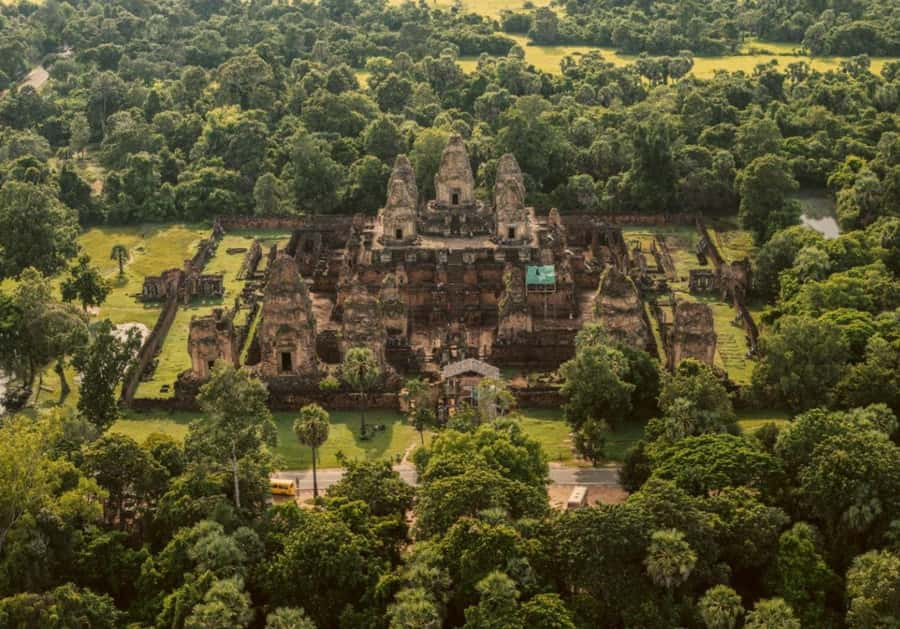
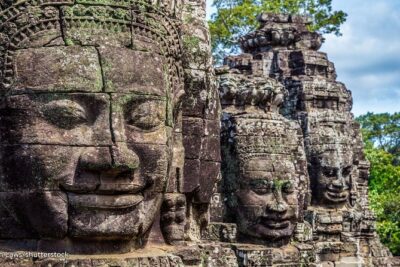
Inside Angkor Thom, you continue to Bayon, the temple best known for its enormous carved faces. These calm faces appear on the temple towers and create the strange feeling that the monument is watching you from every direction.
Bayon is more enclosed and visually confusing than Angkor Wat. Towers, passages, and carved walls press together, and it can be hard to know where to look first. This is another point where the guide’s role matters. A good explanation helps you read the temple instead of simply circling it for photographs.
One Spanish-speaking booking specifically praised Sem for explaining everything in detail. That is useful information if you want more than a quick name and a few dates. The tour offers Spanish, Portuguese, and English, so check your selected language carefully when booking.
I would give Bayon your full attention. The faces are the obvious feature, but the temple also rewards close inspection of its reliefs and changing views between the towers. You might find that the best sight is not the first face you notice, but the way several faces appear at different heights as you move through the complex.
The drawback is that Bayon can feel crowded and cramped during a busy part of the day. The small group limit should help your guide keep everyone together, but it cannot make the temple quiet or empty.
The Elephants and Leper King terraces
Next come the Terrace of the Elephants and the Terrace of the Leper King. These are not enclosed temple buildings in the same way as Bayon. They are long ceremonial platforms, and their importance becomes clearer when you understand how they fit into Angkor Thom.
The Terrace of the Elephants is known for its elephant carvings and its broad, formal frontage. It gives you a sense of the city as a place for public display and royal ceremony. You are looking at the edge of a much larger urban center, not an isolated ruin.
The Terrace of the Leper King has its own carved details and a more enclosed feel. A guide can point out features that are easy to miss when you are moving quickly. I like having these stops included because they break up the temple sequence and show that Angkor Thom was more than Bayon alone.
Do not expect a long independent visit at each terrace. They are part of a tightly arranged morning, and the tour needs to keep moving toward Ta Prohm. If you enjoy architectural details, listen closely and use the short stops to ask focused questions.
Same base, a different kind of day out:
- Siem Reap: Angkor Wat: Small-Group Sunrise or Sunset Tour
★ 5.0 · 9,444 reviews - From Siem Reap: Kampong Phluk Floating Village Tour by Boat
★ 4.9 · 6,979 reviews - Sunset tour of Kampong Phluk stilts home village on the Tonle Sap
★ 5.0 · 4,865 reviews - Siem Reap: Angkor Wat 2-Day Tour with Sunrise and Sunset
★ 4.9 · 4,429 reviews
Ta Prohm among the trees
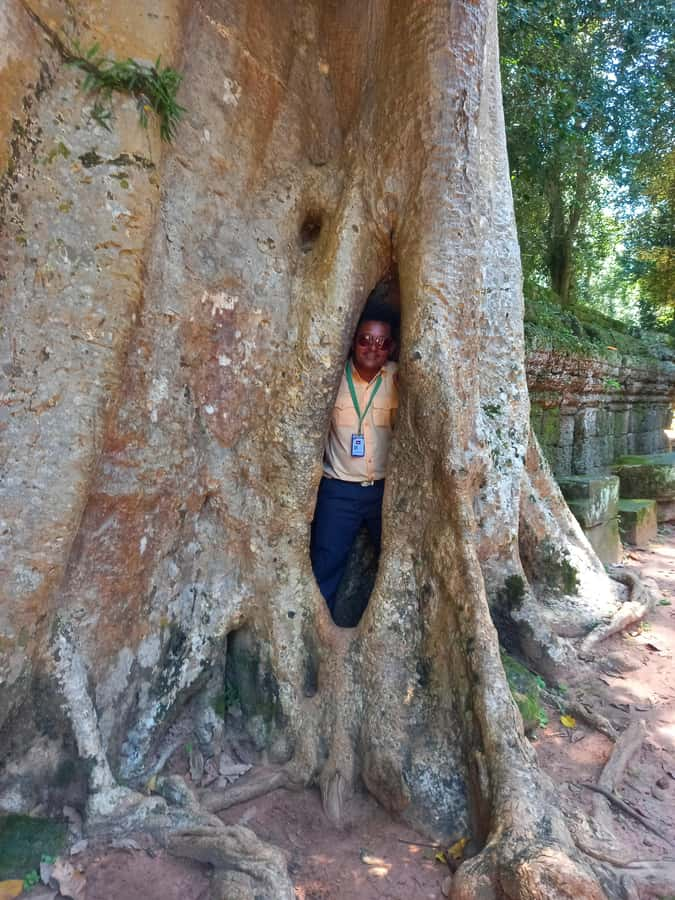
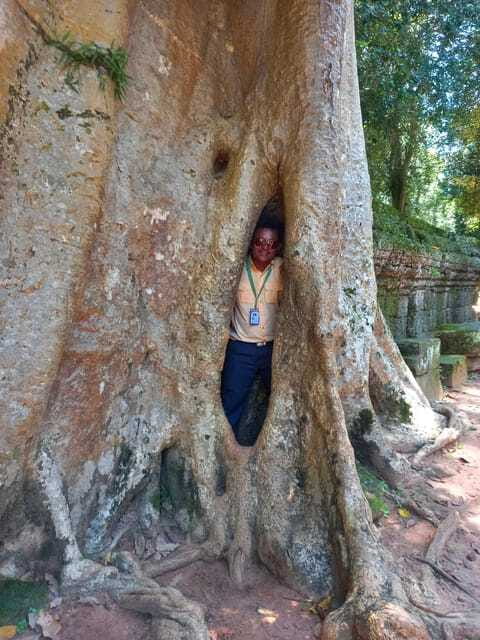
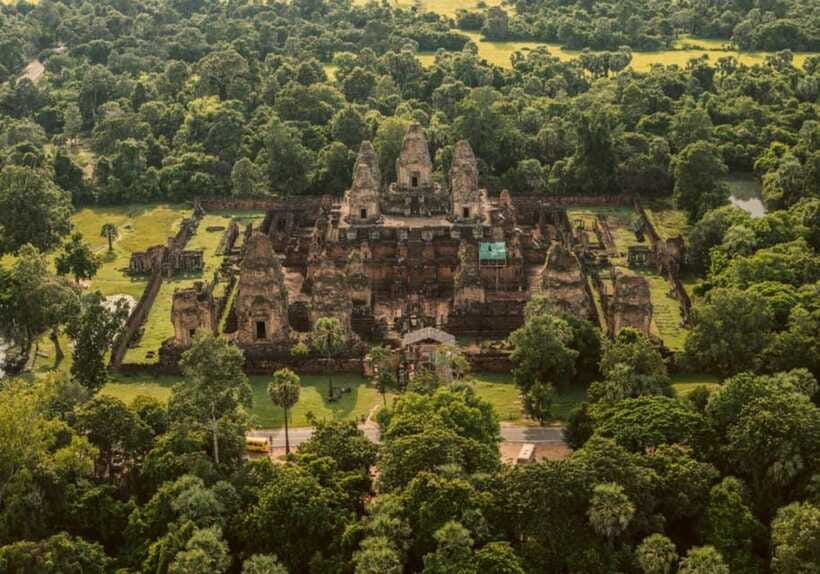
Ta Prohm changes the mood completely. It is a temple in the jungle that has remained relatively untouched since its discovery, and its trees and stonework create a more enclosed, atmospheric setting than the open approaches at Angkor Thom.
This is likely to be one of the most memorable stops for first-time visitors. Walls, galleries, and tree growth overlap in a way that makes the temple feel caught between nature and architecture. The appeal is not only visual. Ta Prohm shows you how a large monument can look when vegetation and time remain part of the scene.
I like the contrast between Ta Prohm and Bayon. Bayon asks you to study carved faces and formal temple design. Ta Prohm asks you to notice texture, shadow, broken sections, and the relationship between stone and trees.
Still, the setting can make movement awkward. Uneven surfaces and narrow passages may slow the group, and your attention will be pulled in several directions at once. Wear practical shoes and keep a drink with you. The supplied advice also recommends bringing a jacket, internet access, and a GPS or map, which can be useful for a long day away from your hotel.
Ta Prohm is also a good place to follow your guide rather than wander off. In a shared group, staying close saves time and prevents confusion when the party moves on.
Afternoon at Angkor Wat
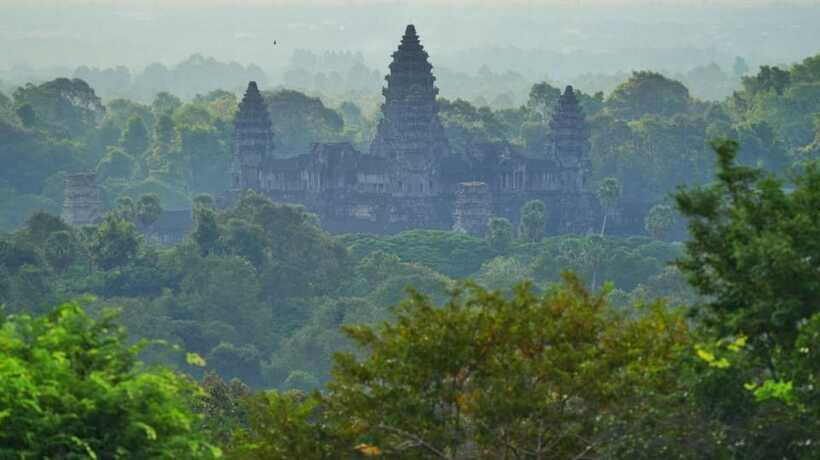
After the morning circuit, the tour reaches Angkor Wat in the afternoon. This is the largest and most famous stop, and the schedule gives you a chance to see it as the culmination of the day rather than rushing through it first.
Angkor Wat covers 81 hectares, about the size of Beijing’s Imperial Palace complex. That comparison helps explain why this is not a quick photo stop. The scale is immense, and the temple’s impact comes from the way its composition, balance, proportions, and sculptural detail work together.
You will have time to understand the complex as a complete design. Look beyond the best-known views and notice how the buildings relate to the wider grounds. The setting gives the monument room to unfold, with long approaches, large courtyards, and carefully arranged architectural lines.
A guide can help you make sense of that size. Without direction, you may spend your time walking from one impressive view to another without seeing how the parts connect. With a live guide, you can ask about the layout, the carvings, and the purpose of features that might otherwise seem decorative.
The afternoon timing has both strengths and limits. Saving Angkor Wat for later gives the day a strong finish, but you will not get the popular sunrise experience offered by separate tours. If sunrise photography is your main goal, compare this outing with a sunrise or sunset option instead.
You should also expect some tiredness by this point. Four major sites and a full day of walking take effort. Carry drinks, keep your pace sensible, and resist the urge to hurry through the final monument simply because it is the last stop.
What $50 buys you
At $50 per person, this tour is priced as a practical shared introduction to Angkor. Its value comes from combining hotel pickup, an eight-hour route, a live guide, and a small group capped at nine people.
That price makes the most sense if you want help with the big picture. You are not only paying to reach the temples. You are paying for a planned route and explanations in Spanish, Portuguese, or English. For many first-time visitors, that can prevent a day of confusion across a huge temple area.
The value is less clear if you prefer total freedom. A shared group follows a set schedule, and you may have to leave a place just when you want another ten minutes. You also do not get the flexibility of choosing every stop or changing the order.
The group size is a good middle ground. Nine people is small enough for a guide to speak directly to the group, but it is not the same as a private outing. If you want personal attention throughout the day, a private Angkor tour may justify its higher cost.
The activity has a rating of 4.3 from four submitted ratings, with two full-score bookings specifically praising the experience and the guide’s explanations. That is a small sample, so I would treat it as encouraging rather than definitive. The useful point is that detailed guiding, especially in Spanish, appears to be a major reason to choose this option.
Who should choose this Angkor day tour?
I would recommend it to you if this is your first visit to Siem Reap and you want the essential Angkor route in one day. It suits people who prefer a guide to explain what they are seeing instead of walking through the ruins with only a map.
It is especially suitable for Spanish-speaking visitors, since a live Spanish option is available and Sem has been praised for clear, detailed explanations. Portuguese and English speakers also have language choices.
The tour fits couples, solo visitors, and small parties who do not need a private vehicle or a custom itinerary. The nine-person limit keeps the group more manageable than a large bus, while the shared format helps control the price.
I would hesitate to recommend it to you if you dislike fixed schedules, have difficulty with a long day of walking, or want to photograph each site at a slow pace. I would also compare other options if sunrise or sunset is essential to your Angkor plans.
For packing, bring drinks and a jacket. Keep internet access and a GPS or map available, and remember that pets are not allowed. The activity is not suitable for people over 331 pounds, or 150 kilograms.
Booking flexibility and language choices
You can reserve now and pay later, which is useful when your Siem Reap plans are still shifting. Cancellation is allowed up to 24 hours before the tour for a full refund.
The tour is operated by Camboya Travel. Starting times depend on availability, so check the date and time before you confirm. The description also notes that some content is shown in its original language, so your selected guide language may not cover every piece of displayed material.
Choose the language that will make temple explanations easiest for you. Angkor has plenty of visual drama, but the day becomes more rewarding when you understand why the gates, faces, terraces, and towers were placed where they are.
Should you book it?
Book this tour if you want Angkor Thom, Bayon, Ta Prohm, and Angkor Wat covered in one organized eight-hour day, with a small group and a Spanish-speaking guide available. The route is well suited to a first visit, and the $50 price is fair for guided transport and a planned schedule.
Skip it in favor of a longer or private tour if you want sunrise, a slower pace, or control over every stop. For everyone else, this is a sensible way to meet the main monuments without spending your first day trying to organize Angkor on your own.
FAQ
How long does the Angkor temple tour last?
The tour lasts eight hours, including hotel pickup in Siem Reap and visits to the listed Angkor sites.
What temples and monuments are included?
The route includes Angkor Thom, the South Gate, Bayon, the Terrace of the Elephants, the Terrace of the Leper King, Ta Prohm, and Angkor Wat.
Is a Spanish-speaking guide available?
Yes. Live guides are available in Spanish, Portuguese, and English.
How large is the group?
This is a small-group tour limited to nine participants.
How much does the tour cost?
The listed price is $50 per person.
Can I pay later?
Yes. You can reserve your place and pay later.
What happens if I need to cancel?
You can cancel up to 24 hours before the tour for a full refund.
Just added in Siem Reap
- Twilight Tastes of Siem Reap Include Dinner★ 5.0 · 13 reviews
- Ultimate Sunrise to Angkor Wat, Angkor Thom and Bayon Temple★ 5.0 · 3 reviews
- Trekking Tour at Phnom Kulen National Park from Siem Reap★ 5.0 · 3 reviews
- Full-Day Private Tour of Angkor Wat with Pick Up★ 5.0 · 12 reviews
- Private Day Trip to Angkor Temples with Expert Guide★ 5.0 · 4 reviews
- Siem Reap City Tour with War Museum and Killing Field★ 5.0 · 27 reviews
- Waterfall & River of 1000 Siva Linga- Kulen Mountain Private Tour★ 5.0 · 3 reviews
- Unveiling 2 Days Private Angkor Wat/Beyond In Sunrise/Sunset Tour★ 5.0 · 48 reviews
Tours in Siem Reap, compared.
Angkor Wat Sunrise or Sunset Tour with Guide from Siem Reap
Read our review →
Angkor Wat: Small-Group Sunrise or Sunset Tour
Read our review →
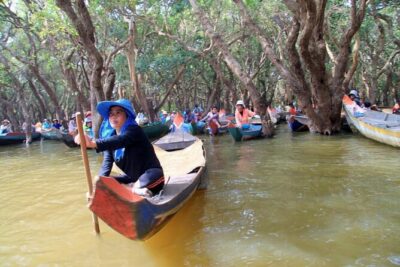
Sunset tour of Kampong Phluk stilts home village on the Tonle Sap
Read our review →
Angkor Wat 2-Day Tour with Sunrise and Sunset
Read our review →
Angkor Wat Sunrise tour with Small – Group and Guide tours
Read our review →