
Reviewed · TOURS IN SIEM REAP
Siem Reap: 1-Hour Cambodian Buddhist Water Blessing
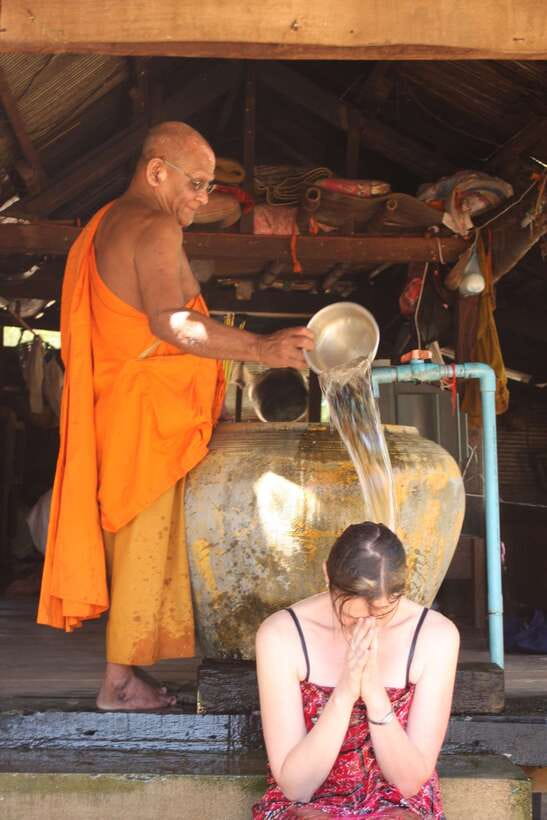
A Buddhist water blessing is a direct, living tradition, not a museum display. At Wat Arang Pagoda, south of Siem Reap, monks chant for good luck, safe travel, and long life while sprinkling or pouring blessed water over you. The ceremony is intimate, simple, and likely to be one of the more personal moments of your Cambodia visit.
I like the local market stop, which adds a useful glimpse of ordinary Cambodian life, and the way guides such as Sokha and Lee explain the ritual before it begins. You also receive red wrist ties at the end, a small keepsake with real meaning.
The main consideration is the water. The longer blessing can leave you completely soaked, and one review noted that the sound of the pouring water made the chanting hard to hear. Bring spare underwear, and do not schedule this just before an important dinner unless you enjoy drying your hair in a tuk-tuk.
Key points to know before you go
- Two different blessings: Choose a shorter sprinkling ceremony or a longer ritual with blessed water poured over your head.
- Wat Arang Pagoda: The ceremony takes place at a working countryside pagoda south of Siem Reap, not at an Angkor ruin.
- English-speaking guidance: Guides including Sokha and Lee have explained the ritual, Buddhist beliefs, temple life, and proper etiquette clearly.
- A market with local purpose: The visit includes a market where people buy meat, fish, vegetables, and even gold.
- Sarong and donation included: A sarong is supplied for the full water ritual, and the price includes a donation to the pagoda.
- Allow two hours: The blessing itself lasts about an hour or less, but the full outing includes tuk-tuk transport, explanations, the market, and time at the pagoda.
Wat Arang Pagoda, a working place of worship
This experience takes you away from Siem Reap’s famous temple circuit and into the countryside south of town. The destination is Wat Arang Pagoda, an active Buddhist site where monks live and carry out the blessing ceremony.
That difference matters. At Angkor, your attention usually goes to carved stone, collapsed galleries, and grand royal plans. Here, you are visiting a place still used for prayer, ritual, shelter, and community support. Several people who took part found the change refreshing after a day of ruins. I can understand why. A functioning pagoda gives you a look at Cambodian Buddhism as part of daily life, not only as ancient art.
Your English-speaking guide helps you enter the space with the right manners. Guides named Sokha and Lee have been especially praised for explaining what to do, answering questions, and translating the monk’s words. The exact guide depends on the day, so do not assume you will receive one particular person, but the tour is designed around personal explanation rather than leaving you to guess.
The ride from Siem Reap takes about 15 minutes according to one detailed account. Pickup is provided from your hotel at the booked time, using a tuk-tuk. This is a practical way to reach the pagoda, and it gives the outing a more local feel than a private car. The tradeoff is that a tuk-tuk offers less shelter from heat, dust, and weather, so dress for Cambodia rather than for an air-conditioned temple tour.
Other trips people book in Siem Reap:
- Angkor Wat Sunrise or Sunset Tour with Guide from Siem Reap
★ 5.0 · 12,109 reviews - Siem Reap: Angkor Wat: Small-Group Sunrise or Sunset Tour
★ 5.0 · 9,444 reviews - From Siem Reap: Kampong Phluk Floating Village Tour by Boat
★ 4.9 · 6,979 reviews
The market stop adds ordinary Cambodia to the visit
The included market visit is not just filler before the ceremony. You walk through a place used by local residents to buy everyday goods, including meat, fish, vegetables, and gold.
Your guide can explain what you are seeing and how the market fits into local life. The stop is useful because Siem Reap’s main sightseeing often centers on major monuments and tourist areas. Here, you get a short look at the practical side of the town and its surrounding communities.
Keep your expectations in check. This is described as a market visit, not a food tour or a long shopping session. Personal expenses are not included, so any purchase is your responsibility. If you prefer carefully arranged attractions, the market may feel informal. If you want a quick look at where people shop for daily needs, it gives the experience more substance.
The market also helps set up the pagoda visit. You are not being taken straight from a hotel to a staged ceremony and then back again. The outing connects a local public place, a religious site, and a traditional ritual in one short trip.
What happens before the water blessing
At the pagoda, your guide explains the ceremony and the behavior expected around the monk. You make an offering, supplied as part of the activity, before the blessing begins. This is an important detail because it gives the visit a proper ceremonial shape and supports the pagoda.
You then select one of two forms of blessing. The shorter option involves chanting, good wishes, and a light sprinkling of water. It is the better choice if you want to keep your clothing dry, have limited time, or feel unsure about a full water ritual.
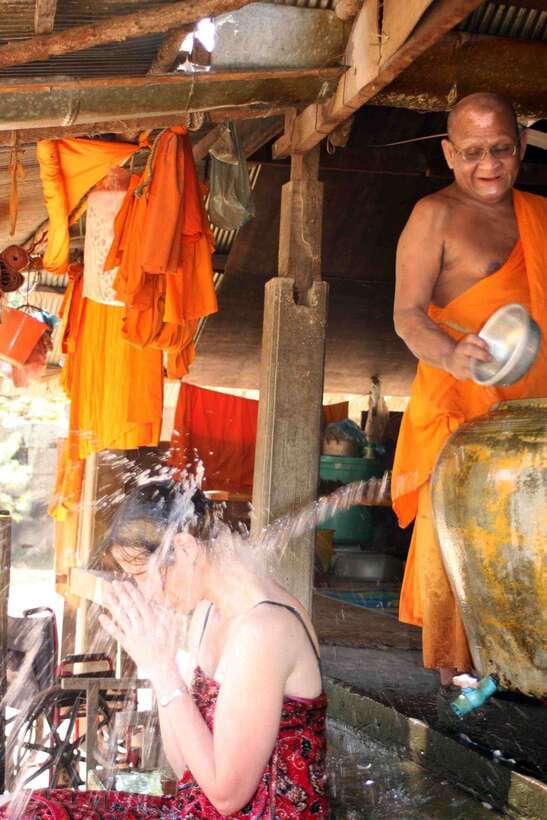
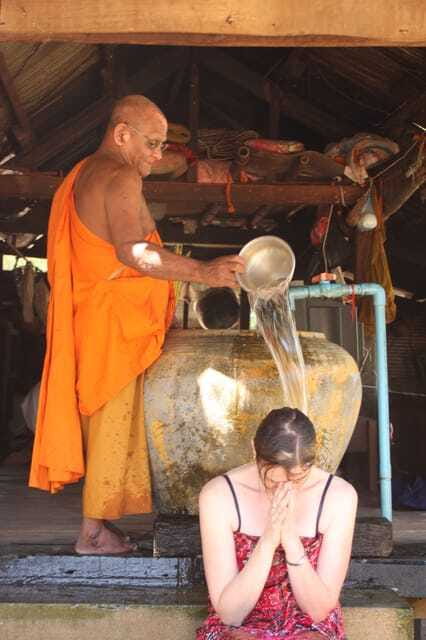
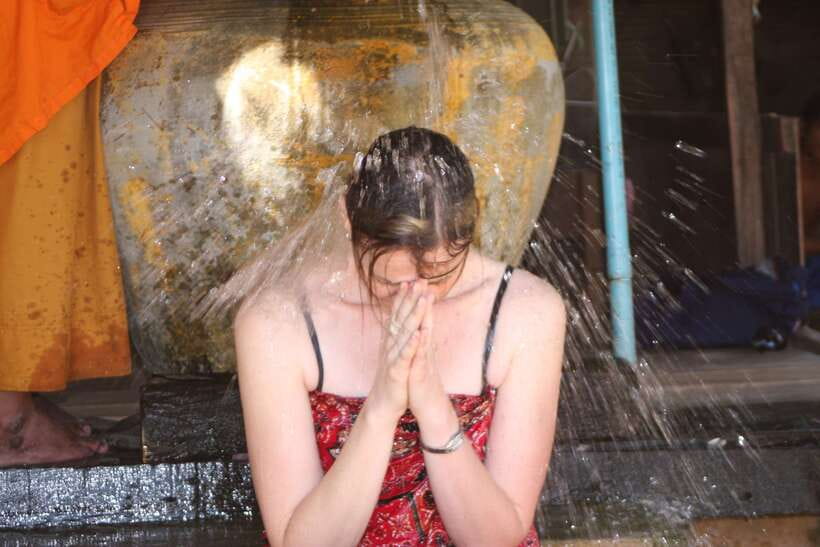
The longer option uses vessels of blessed water poured over your head while the monk chants. A sarong is provided so your everyday clothing does not get soaked. You change before the ceremony, and a towel is supplied afterward. Still, bring extra underwear and, if you have long hair, an additional towel can help.
The supplied sarong is practical, but this is not a polished spa treatment. You are taking part in a traditional ceremony, and the water may be plentiful. One person described being surprised by the buckets that followed the initial sprinkling. That surprise became part of the fun, but you should know what you are choosing before you sit down.
Chanting, water, and the red wrist ties
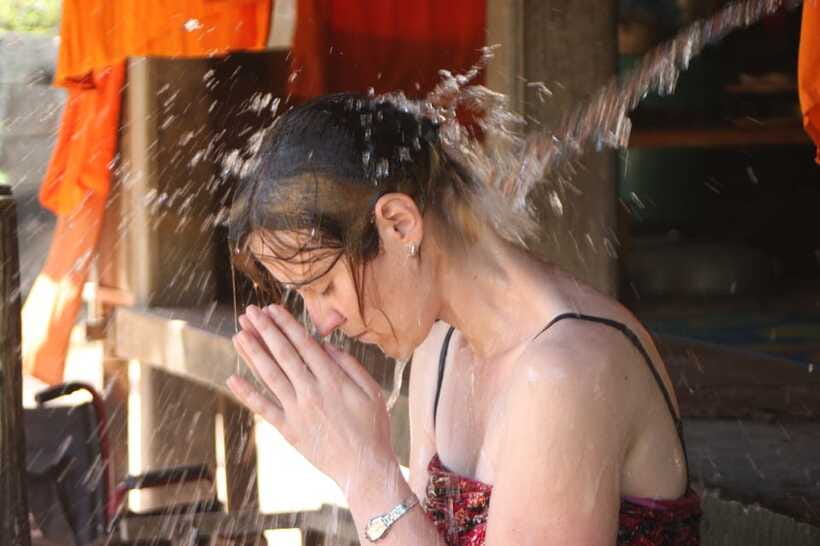
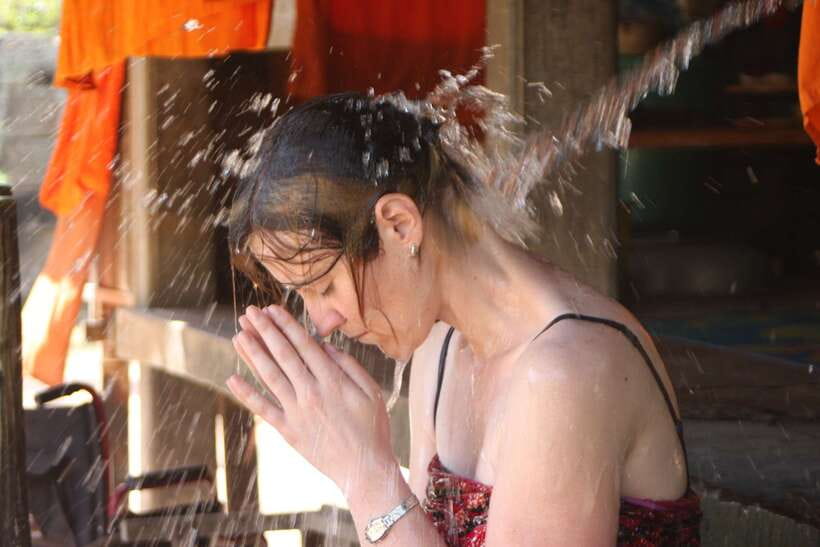
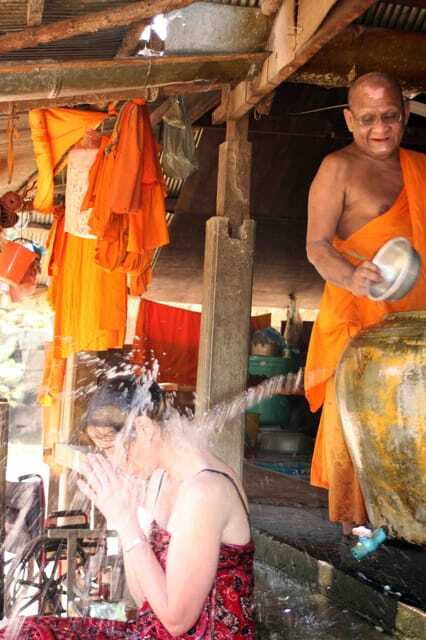
The central ritual is quiet and focused at first. The monk chants while wishing you good fortune, safe travel, and a long life. With the shorter blessing, water is lightly sprinkled over you. In the longer version, water is poured over your head as the chanting continues.
The ceremony is often described as spiritual, peaceful, refreshing, and moving. Those words make sense, but your response will depend on what you expect. If you approach it as a guaranteed life-changing event, you may find the organized tourism element more noticeable. If you approach it with respect and an open mind, the ritual can feel personal even though it is part of a paid excursion.
The full pouring ritual is also physical. You may laugh, feel startled, or simply sit quietly under the water. One account noted that the water itself drowned out the chanting, which is worth remembering. You may not hear every word, particularly during the heaviest part of the ritual. The meaning comes from the ceremony as a whole, not from understanding each chant.
At the end, the monk ties special red strings around your wrist. These ties mark the blessing and give you a small reminder to carry away. Your guide may also explain their meaning and help translate the monk’s comments. One person was told about the monk’s spiritual observations after the ceremony through the guide, though you should not treat this as a guaranteed personal reading.
Your guide can take photos and videos during the ritual. That is a real advantage because you cannot take your own pictures while being sprinkled or soaked. It also lets you stay present instead of worrying about where to put your phone. Ask the guide before the ceremony if you want photos, and keep in mind that the ritual itself should remain your main focus.
Same base, a different kind of day out:
- Sunset tour of Kampong Phluk stilts home village on the Tonle Sap
★ 5.0 · 4,865 reviews - Siem Reap: Angkor Wat 2-Day Tour with Sunrise and Sunset
★ 4.9 · 4,429 reviews - Siem Reap: Full-Day Angkor Wat Guided Tour with Sunset
★ 4.9 · 3,803 reviews - Angkor Wat Sunrise tour with Small – Group and Guide tours
★ 5.0 · 3,655 reviews
Time with the monk and a look around the pagoda
After changing back into dry clothes, you have time to ask questions. The monk may speak with you through the guide, and your guide can translate. You can ask about Buddhist practice, the monastery, the blessing, or the daily work connected with the pagoda.
The pagoda visit can include a walk around the grounds. Guides have explained how the monastery operates and the work monks do for older, sick, or vulnerable people. The activity also includes a donation to the pagoda. Some descriptions explain that food donations help people who rely on the monastery for shelter and assistance, giving the payment a community purpose beyond the ceremony itself.
This part is especially valuable if you want context. Without it, the water blessing could feel like a pleasant but isolated ritual. With an explanation of the religious setting and the monastery’s role, you get a better sense of why the ceremony matters.
The visit is not presented as a formal academic lesson, and the amount of discussion depends on the guide and your questions. Guides such as Sokha and Lee have been praised for explaining Buddhism and Cambodian culture in clear English. Ask questions as you go. This is where much of the educational value comes from.
How much time and money does it take?
The price is $37 per person, and the advertised duration is two hours. The blessing itself is described as a one-hour experience, though individual accounts suggest the ceremony may take less time, with the rest used for transport, the market, temple explanations, changing, and conversation.
For the price, you receive an English-speaking guide, tuk-tuk transport, the sarong, a donation to the pagoda, and the market stop. Personal expenses are not included. The value is strongest if you want interpretation and help with local etiquette, not just the blessing itself.
You could presumably find a pagoda independently, but the guide solves several practical problems. You do not have to work out what to wear, how to make the offering, when to sit, or what the monk is saying. The guide also helps with photographs and translation. For a first visit to Cambodia, that support can make the ceremony feel respectful rather than awkward.
The price may seem high for a short ritual, particularly if you choose the simple sprinkling. One person considered it expensive for what was provided. That is a fair concern. You are paying for a small cultural outing, not an all-day tour with multiple major sights.
The cost feels more reasonable if you count the tuk-tuk ride, guide, market visit, pagoda access, donation, supplied clothing, and personal instruction. It is a specialist experience, so compare it with the kind of memory you want. If you are collecting major monuments, the money may be better spent elsewhere. If you want a personal cultural encounter, it offers something the Angkor temples cannot.
Clothing, etiquette, and practical preparation
Wear clothing that is easy to change out of. You will be given a sarong for the longer blessing, but modest dress remains appropriate at a pagoda. Your guide will explain the local protocol, so you do not need to arrive as an expert.
Bring spare underwear. This is the most useful practical tip from the available details. An extra towel is also sensible if you have long hair, even though a towel is provided.
Keep valuables protected from water, and ask where to leave your phone before changing. The guide may take photos, but you should not assume every personal item will stay dry. Since the longer ceremony can involve a serious amount of water, dress and pack accordingly.
The activity is listed as wheelchair accessible. Because specific details about surfaces and changing arrangements are not provided, contact the operator if you need precise assistance at the pagoda. Hotel pickup is included, and the driver collects you at the time shown on your booking.
You can cancel up to 24 hours in advance for a full refund. The reserve-now, pay-later option also helps if your Siem Reap schedule may change. Starting times vary, so check availability before choosing the day.
Who will enjoy this experience most?
I would choose this for someone who wants a small, personal encounter with Cambodian culture rather than another grand monument. It suits curious visitors who enjoy asking questions, learning religious customs, and taking part in a ritual with care.
It also works well after several temple visits. One person put it neatly: when you cannot face another ruin, visit a functioning temple. The change of pace is useful, especially during a hot Siem Reap itinerary.
Couples may enjoy sharing the ceremony, and the activity can also work for solo visitors because the guide handles the practical details and photographs. It is suitable for people of different faiths. The ceremony is Buddhist in setting, but it is offered as a blessing for anyone, not as a demand that you adopt a religion.
I would hesitate to recommend it to anyone who dislikes being wet, feels uncomfortable with religious rituals, or wants a fully private, self-directed visit. The paid-tour structure is present, and the water ritual is not optional once you select it. Ask questions before you begin and choose the light sprinkling if the full ceremony feels too intense.
Should you book the Wat Arang blessing?
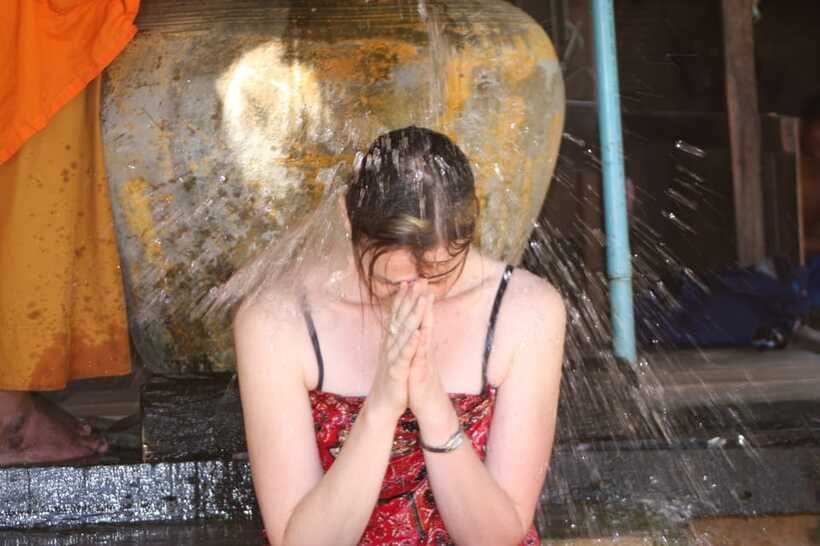
Book it if you want a respectful look at living Cambodian Buddhist practice, a short local market visit, and a ritual that feels very different from sightseeing at Angkor. The guide’s explanations, the donation, the tuk-tuk ride, and the photo help make the $37 price easier to justify.
Choose the shorter blessing if you want to stay mostly dry. Choose the longer pouring ritual if you are ready to change into a sarong, bring spare underwear, and accept a very wet few minutes. Either way, ask the guide to explain the options clearly before the monk begins.
I would not make this your only cultural activity in Siem Reap, but I would add it to an itinerary already covering the major temples. It gives you a functioning pagoda, a local market, a monk-led ritual, and time to ask questions. That is a worthwhile counterpoint to Cambodia’s monumental past.
FAQ
Where does the Buddhist water blessing take place?
It takes place at Wat Arang Pagoda, an ancient pagoda in the countryside south of Siem Reap.
How long does the whole activity last?
The total activity lasts about two hours. The water blessing itself is described as a one-hour experience, with the remaining time used for transport, the market visit, explanations, and time at the pagoda.
What kinds of blessings can I choose from?
You can choose a shorter blessing with chanting and light water sprinkling, or a longer ritual in which blessed water is poured over your head while the monk chants.
Will I get completely wet?
You may get completely wet during the longer blessing. A sarong is provided so your regular clothing remains dry, and a towel is supplied afterward.
Should I bring spare clothes?
Bring extra underwear, particularly if you choose the longer water ritual. An additional towel may also help if you have long hair.
Is a guide included?
Yes. An English-speaking guide is included, and the guide explains the ceremony, Buddhist beliefs, and the correct procedure.
Is transportation included?
Yes. Tuk-tuk transportation and hotel pickup are included. The driver picks you up at the time shown on your booking.
Is the market visit included?
Yes. The activity includes a visit to a local market. Personal expenses, including anything you choose to buy, are not included.
Is the activity wheelchair accessible?
The activity is listed as wheelchair accessible. Specific details about the pagoda’s surfaces and changing arrangements are not provided.
Can I cancel for a refund?
You can cancel up to 24 hours in advance for a full refund. The activity also offers a reserve-now, pay-later option.
Just added in Siem Reap
- 1-Day Angkor Wat Private Tour with Spanish Tour Guide.★ 5.0 · 9 reviews
- Angkor Wat: Small-Group Tour with Balloon Ride and Lunch★ 4.6 · 13 reviews
- Sky Venture Microlight Siem Reap★ 4.9 · 18 reviews
- Angkor Wat plus Balloon Ride with Khmer Lunch★ 5.0 · 46 reviews
- Siem Reap: 3-Hour Ancient Trails Motorbike Tour★ 4.8 · 71 reviews
- Angkor Wat Sunrise Tour By E-Bike Experience With Breakfast Included★ 5.0 · 76 reviews
- Angkor Silk Farm & Lotus Silk Farm: Siem Reap Discovery Tour★ 4.8 · 68 reviews
- Angkor Wat Sunrise Private Experience with Guide from Siem Reap★ 5.0 · 62 reviews
Tours in Siem Reap, compared.
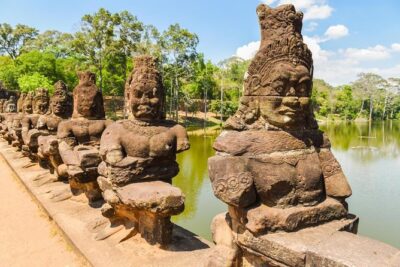
Angkor Wat Sunrise or Sunset Tour with Guide from Siem Reap
Read our review →
Angkor Wat: Small-Group Sunrise or Sunset Tour
Read our review →
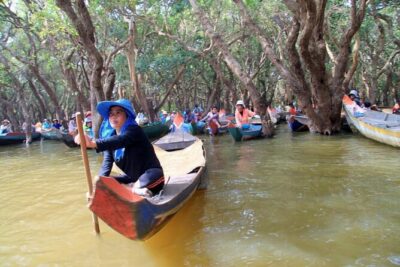
Sunset tour of Kampong Phluk stilts home village on the Tonle Sap
Read our review →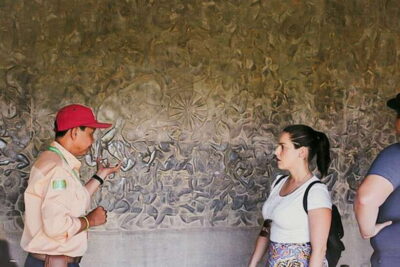
Angkor Wat 2-Day Tour with Sunrise and Sunset
Read our review →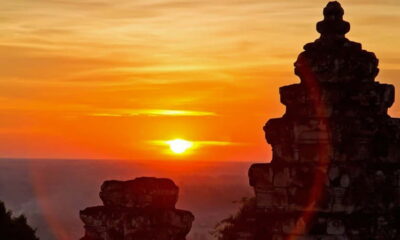
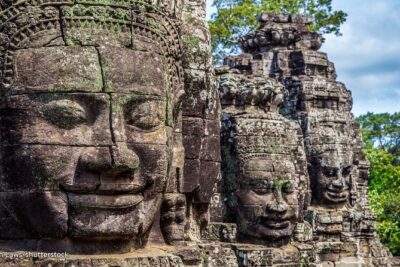
Angkor Wat Sunrise tour with Small – Group and Guide tours
Read our review →
Angkor Wat Highlights and Sunrise Guided Tour from Siem Reap
Read our review →Browse the lists this tour appears in