
Reviewed · ANGKOR WAT SUNRISE TOURS
Siem Reap: Angkor Sunrise 1- or 2-Day Guided Temples Tour
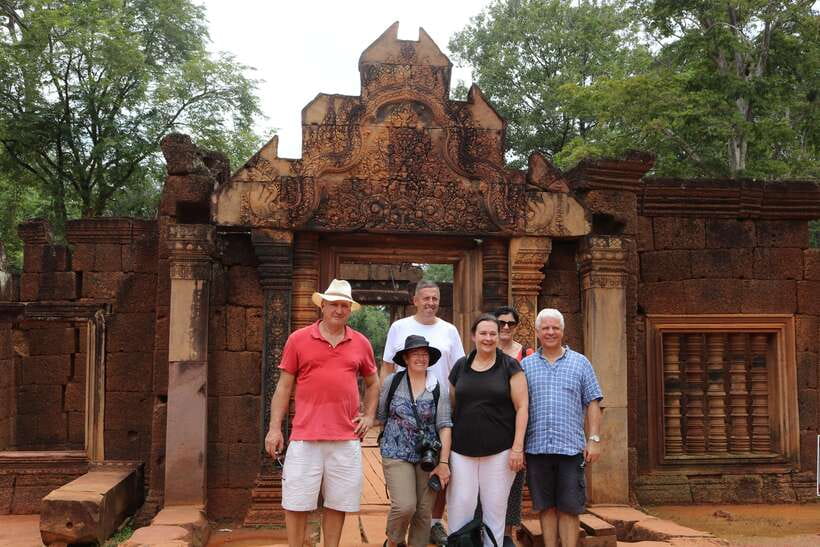
Angkor Wat at sunrise is the headline, but the smartest part of this tour is the way it spreads the temples across two very different days. You see the famous monuments before the heat builds, then reach quieter and more atmospheric places such as Banteay Srei and jungle-framed Preah Khan.
I like the small groups, limited to 15 people, and the steady supply of cold water and cool towels. Guides such as Sak, Pal Saruon, Sokpee, and Pi are praised for clear English, local stories, and knowing good photo spots. The catch is the schedule: sunrise means a hotel pickup around 4:20 AM, and the two-day plan covers a lot of ground.
Key points to know before booking
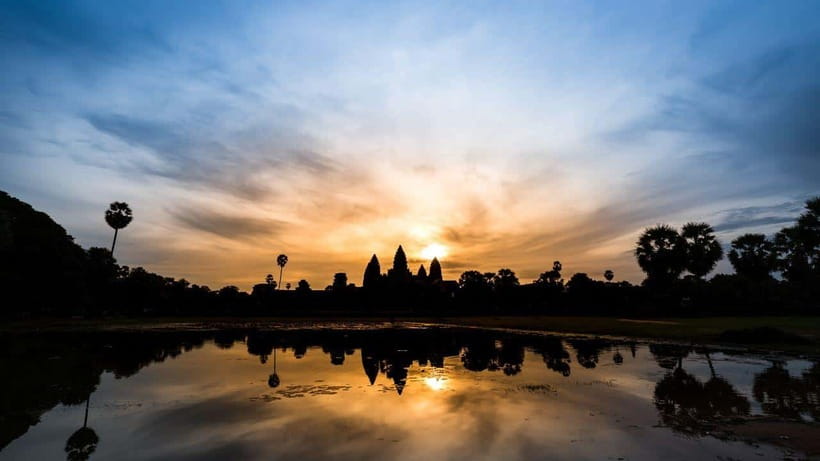
- Sunrise starts very early: Pickup is usually between 4:20 and 4:35 AM on the Angkor Wat day.
- The two-day plan is the better buy: It adds Banteay Srei, Preah Khan, Neak Pean, Pre Rup, and sunset to the major central temples.
- Cold towels matter: Drivers regularly meet you at the vehicle with bottled water and refreshing towels after temple walks.
- Guides help with more than dates: Sak, Pal Saruon, Sokpee, Pi, and others are praised for stories, cultural context, and taking photos.
- The temple pass costs extra: Allow $62 per person for the two to three-day pass, plus money for meals.
- Expect real walking: Uneven ground, steps, rubble, and sun make comfortable shoes and modest clothing essential.
Why the two-day format works so well
Angkor is not one temple. It is a huge archaeological area, and the famous names sit at different distances from Siem Reap. Trying to see everything in one long day can turn a great morning into a hot afternoon of rushing from one stone entrance to the next.
The two-day option gives the itinerary a useful rhythm. Day one reaches farther out to Banteay Srei and the Grand Circuit temples. Day two focuses on Angkor Wat, Angkor Thom, Bayon, and Ta Prohm. You still cover a lot, but the sites feel less like a checklist.
The one-day sunrise option is aimed at the main highlights. You get Angkor Wat before breakfast, then Angkor Thom and Ta Prohm before returning to Siem Reap around 12:30 to 1:30 PM. It suits a short stay, but you will miss the more distant temples and the sunset.
At $19 per person, the tour price looks remarkably low, but it is not the full cost. The temple pass is separate at $62, and meals are not included. Add those expenses before comparing this tour with a private guide or another group outing. Even so, the package includes hotel pickup and drop-off, an air-conditioned vehicle, an English-speaking guide, water, and cool towels, which makes it strong value for a small group.
Other early starts at the temples from Siem Reap:
- Angkor Wat Sunrise or Sunset Tour with Guide from Siem Reap
★ 5.0 · 12,109 reviews - Angkor Wat Sunrise tour with Small – Group and Guide tours
★ 5.0 · 3,655 reviews - Full-Day Angkor Wat Sunrise Private Tour with Guide from Siem Reap
★ 5.0 · 2,920 reviews
Day one: Pre Rup and the road to Banteay Srei
The first day begins around 7:40 to 8:10 AM, depending on the final pickup notice. The drive heads beyond Angkor Thom, where the crowds usually thin and the temples take on a more remote feel.
Pre Rup is an early stop. Built in 961 or 962, this Hindu temple combines laterite and sandstone. Its stepped form gives you a clear sense of Khmer temple design, while the worn stone and open setting make it a good place to start before the strongest heat.
Your guide can help you notice details that are easy to miss when you are alone. The tour is not just about naming a monument and moving on. Guides explain the religious setting, the building dates, and the wider Khmer Empire, then allow time to look around and take photographs.
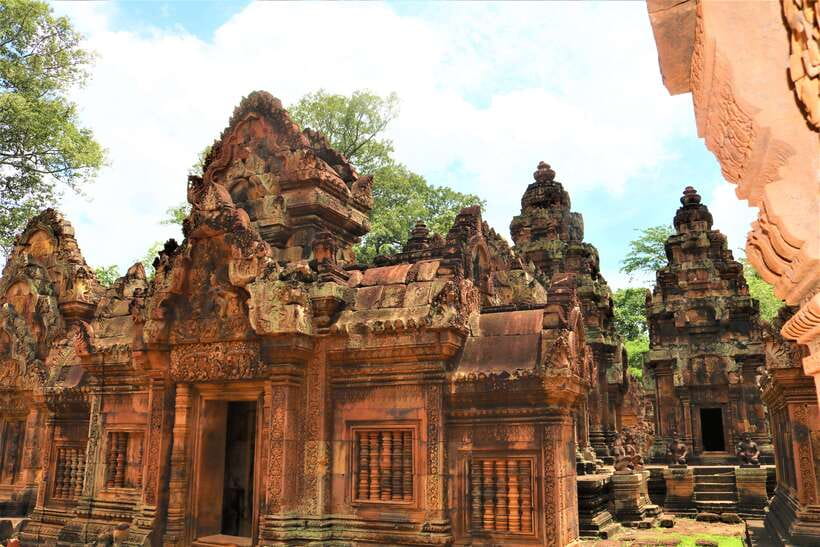
Banteay Srei is the day’s special stop. It is smaller than Angkor Wat, but its sandstone carvings are unusually fine. The relief work is so precise that you may spend more time studying a doorway or lintel than walking through the temple itself.
The smaller scale also changes the mood. Angkor Wat can feel monumental and grand, while Banteay Srei feels intimate and detailed. It is a long drive from the central temples, so this stop makes the most sense on a two-day plan. If you choose only one day, you will not get this contrast.
Bring water, sun protection, and patience for the road time. Banteay Srei is worth reaching, but it is not a quick add-on beside Angkor Wat.
Neak Pean and atmospheric Preah Khan
The return route includes Neak Pean, a Buddhist temple built on a circular artificial island within the Jayatataka Baray reservoir. The approach across the water gives this stop a different visual character from the large stone temples.
Neak Pean is not about size. Its setting and layout are the attraction, and your guide can explain how the island and surrounding water relate to the temple complex. It is also a useful change of pace after the detailed carvings at Banteay Srei.
Preah Khan follows. This ruined temple was commissioned by Jayavarman VII in honor of his father. It is a rewarding place for anyone who likes atmospheric ruins, with tree roots, broken stone, corridors, and sections that still show careful restoration.
The World Monuments Fund is restoring parts of Preah Khan, and some areas are in notably good condition. The site offers a different experience from the polished grandeur of Angkor Wat. You see how the forest and weather have become part of the monument, while the remaining carvings and rooms still show its original importance.
This is one place where a guide adds real value. Without context, a partly collapsed complex can look like a maze of stones. With a guide, the ruins become easier to read, and you can understand why the temple was built and how its design fits into Jayavarman VII’s building program.
Sunset and the long first day
The first day ends with a sunset stop before the return to Siem Reap. Exact timing can vary, but the day may run until roughly 6:00 to 7:30 PM depending on the schedule and conditions.
That makes day one long. You leave in the morning, spend hours walking over stone and uneven ground, and then stay out for the evening light. The reward is a fuller day with a slower sense of discovery, but you should not plan a demanding evening afterward.
The sunset is weather-dependent. Clouds can soften the light or block the view, and one person may get a dramatic sky while another gets a muted finish. Treat it as a pleasant extra rather than the sole reason to choose the two-day option.
You will have meal stops near the temples, but food is at your own expense. Local restaurants are available, and the guide or driver can direct you to a place during the day. Carry some cash and expect the meal break to be practical rather than a formal part of the tour.
A few more things to do in Siem Reap worth a look
- Siem Reap: Angkor Wat 2-Day Tour with Sunrise and Sunset
★ 4.9 · 4,429 reviews - Angkor 2-Day Sunset & Sunrise Small-Group Tour
★ 5.0 · 2,567 reviews - 2 Days Exclusive Temple Highlights with Sunset and Sunrise Tour
★ 5.0 · 1,157 reviews - 2 Days Guided Historical Tour in Angkor
★ 5.0 · 855 reviews
Day two: Angkor Wat before breakfast
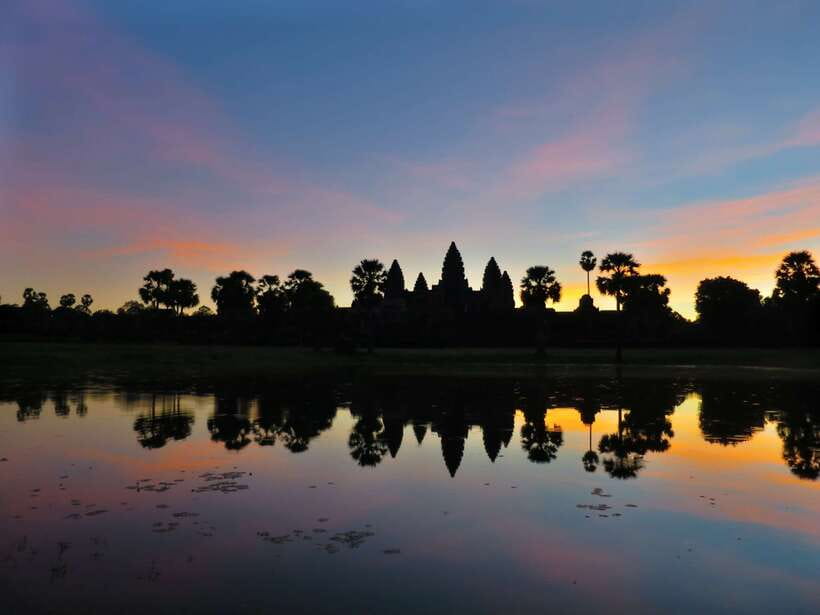
The second morning begins before dawn, usually with pickup between 4:20 and 4:35 AM. This is the part of the tour that requires the most discipline. You need to sleep early, prepare clothes the night before, and accept that the first hour or two may be quiet and sleepy.
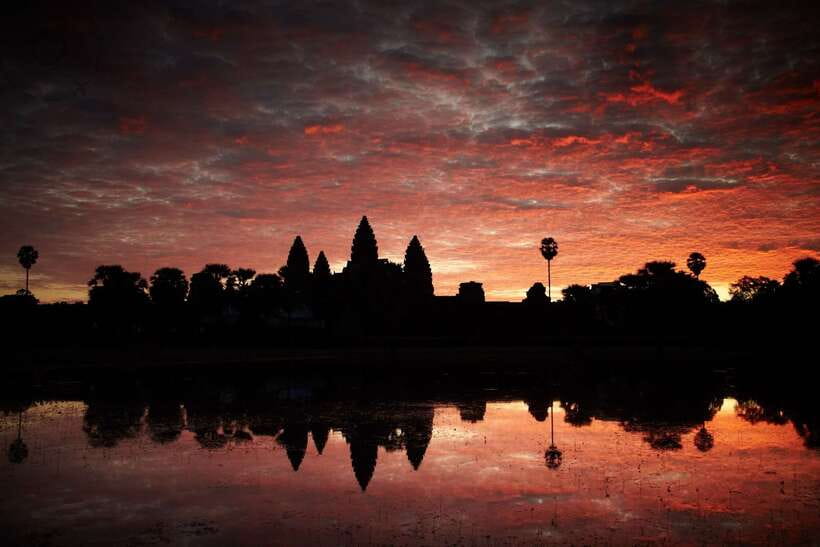
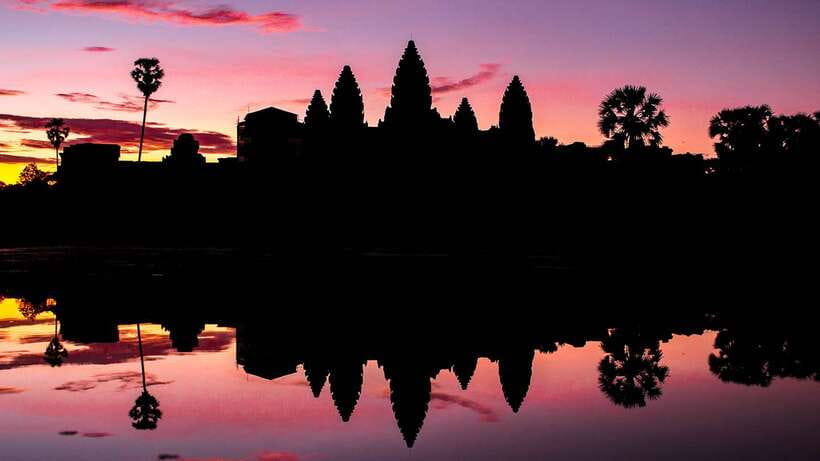
The reward is Angkor Wat in the changing light. The temple is widely recognized for its towers and reflection, but the sunrise visit also lets you enter before the day becomes hot. Guides such as Sak have been praised for choosing less crowded viewing places, including positions along the outer wall rather than forcing everyone into the tightest area beside the moat.
Arriving early matters. It gives you more choice of where to sit or stand, and it can make photography less stressful. A sunrise is never guaranteed to be dramatic, though. Cloud cover can soften or hide the sun. The temple remains impressive even when the sky does not cooperate.
After the sunrise, the tour spends about two hours inside Angkor Wat. This is not a quick walk to the central tower. You explore corridors, chambers, upper terraces, and bas-reliefs while the guide explains Hindu and Buddhist themes, scenes from Khmer history, and details of life during the empire.
There are steps, uneven surfaces, and exposed sections. Cover your knees and shoulders, as required at the temples, and wear shoes with a firm grip. Shorts are not allowed under the stated rules, so choose light, respectful clothing that also works in the heat.
Breakfast comes near the temple after the main visit. It is not included, but stopping nearby saves you from waiting until the group reaches Siem Reap. Bring money and expect to buy food locally.
Angkor Thom and the many faces of Bayon
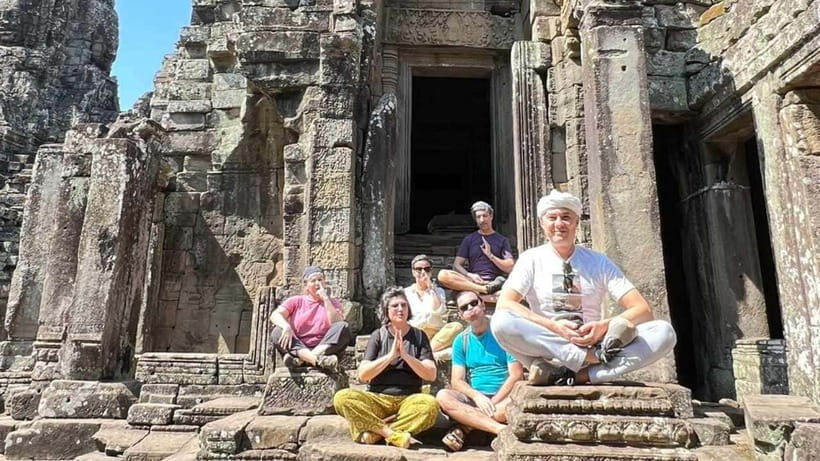
The route continues to the Southern Gate of Angkor Thom. The entrance is flanked by 54 stone figures on each side, gods to the left and demons to the right. It is a striking approach, and the guide can explain the symbolism rather than leaving you to guess which side is which.
Angkor Thom was a fortified city, not simply another temple. Once inside, you see how the complex was arranged as a major royal center. The scale helps explain why Angkor is best understood as a city and religious zone, not a single isolated monument.
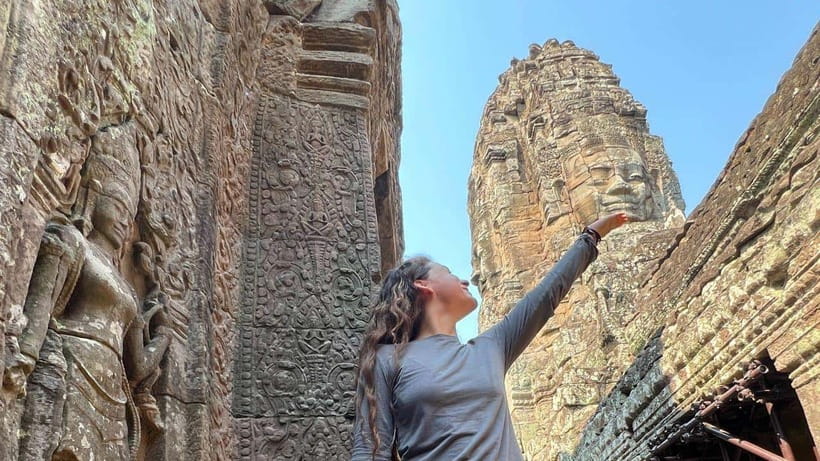
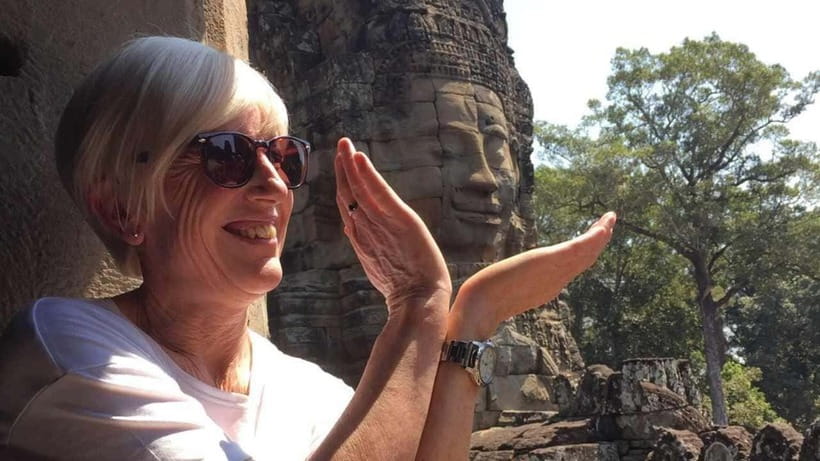
Bayon is the central temple and one of the most memorable stops. Its towers carry more than 200 enormous carved faces. The expressions and angles change as you move around them, so your guide’s route through the temple can save time and help you find good views.
The central terraces also receive attention. The Terrace of the Elephants and the Terrace of the Leper King show a different side of Khmer art, with long sculpted galleries and carved figures rather than the towering profile of Angkor Wat.
This part of the morning can feel busy, especially at popular photo points. A small group helps, but it does not remove the crowds. The guides are often praised for choosing quieter angles and for balancing explanation with time to explore independently. That balance matters. You want the story, but you also need a few quiet minutes to look without someone talking over every stone.
Ta Prohm, where the jungle frames the ruins
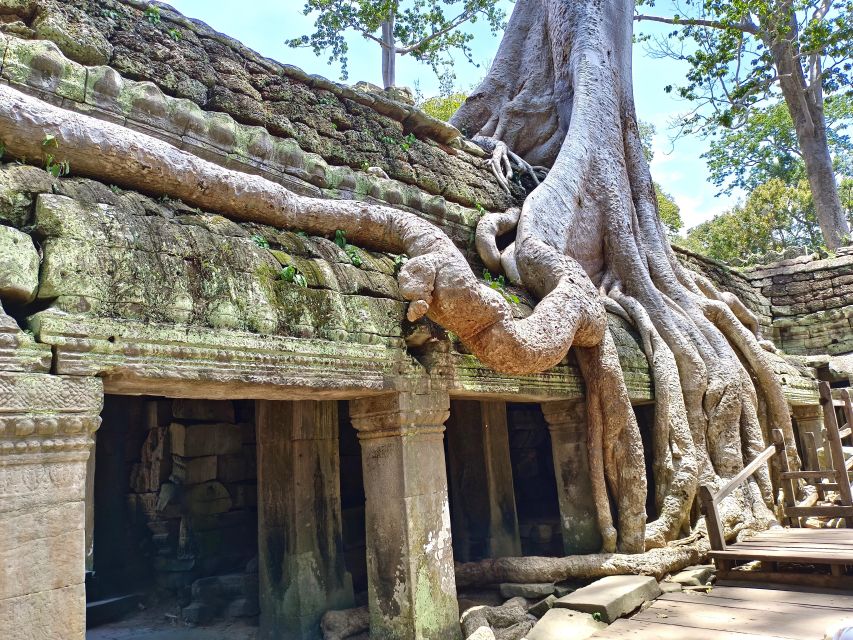
Ta Prohm is the final major stop on day two and the temple many people remember most clearly after Angkor Wat. It was once home to almost 3,000 monks, and its ruined courtyards and tree roots give it a powerful sense of age.
The trees are not a special effect added for visitors. They are part of the reason Ta Prohm feels so different from the other temples. Stone galleries, roots, collapsed passages, and shaded corners create a more enclosed visit.
Ta Prohm is also one of the places where a guide can help you avoid walking past the important details. The route is not only about finding a famous tree. Look for carvings, hidden courtyards, and the relationship between the remaining walls and the forest.
The ground can be rough, and the stones may be slippery or uneven. Keep your pace steady and follow advice on steep sections. The tour is not suitable for wheelchair users, and children under eight are not accepted. Those limits are worth taking seriously because the temple walks involve real physical effort.
After Ta Prohm, the vehicle returns you to your hotel around 12:30 to 1:30 PM. That early finish is useful after the pre-dawn start. You can eat, rest, and still have part of the afternoon in Siem Reap.
Guides, drivers, and the small-group advantage
The guide can make or break an Angkor visit. Names frequently assigned to this experience include Sak, Pal Saruon, Sokpee, Pi, Bun, and Saruon, though your guide will depend on the departure. The strongest guide qualities here are clear explanations, humor, local insight, and help with photos.
Several guides are also happy to take pictures, which is especially useful if you are traveling alone. Sak and Pal Saruon are particularly noted for finding good angles and less crowded spots. That service is not the main product, but it can save you from returning home with only selfies.
The driver’s role is just as important in Cambodia’s heat. Drivers such as Vichet, Naro, Mao, Ro, and Seyha are praised for safe driving and for keeping water and cool towels ready at the vehicle. After a hot walk, a chilled towel is not a minor luxury. It helps you reset before the next temple.
The group is capped at 15, although actual departures may be smaller. Some groups have been as small as five or six people. A small group makes it easier to hear the guide, leave the vehicle promptly, and keep the pace together.
Still, this is a shared tour. You cannot set every stop to your own schedule, and the two-day plan is tightly organized because it covers many temples. One person specifically noted that keeping to time is important. If you want to linger for an hour at every site or change the route completely, book a private arrangement instead.
What to pack and what to expect
Wear comfortable shoes with good grip. You will walk over uneven paths, steps, rubble, and stone terraces. Sunglasses, a sun hat, insect repellent, and a camera are useful, but modest clothing is essential too.
Cover your knees and shoulders at the temples. Avoid shorts, and choose breathable clothing that is respectful without making the heat harder to manage. Bottled water and cool towels are supplied, but you should still drink regularly.
The vehicle is air-conditioned, a major benefit during the hottest parts of the day. Meals are not included, though food can be purchased at restaurants near the temples. The tour does not require a passport.
Free cancellation is available up to 24 hours before the start, and general last-minute date changes can be made up to seven hours before departure without an added cost. Confirm your hotel pickup details, since the exact time is sent the day before.
Should you book this Angkor tour?
Book the two-day option if Angkor is a main reason for your time in Siem Reap. It gives you the major sights, the finely carved Banteay Srei, atmospheric Preah Khan, Neak Pean, Pre Rup, and both sunrise and sunset opportunities. The cost of the temple pass and meals raises the total, but the included transport, guide, water, and towels make the $19 tour price good value.
Choose the one-day sunrise version if your schedule is tight and you mainly want Angkor Wat, Bayon, Angkor Thom, and Ta Prohm. You will still get the key experience, but you give up the distant temples and the slower contrast between grand monuments and forest ruins.
I would not choose this tour if you dislike early mornings, shared schedules, or substantial walking. For most first-time visitors who want the stories, the major temples, and practical support in the heat, the two-day plan is the stronger choice.
FAQ
Is the temple pass included in the tour price?
No. The two to three-day temples pass costs $62 per person and must be purchased separately.
Are meals included?
No. Meals are not included, but you can buy breakfast and other food at local restaurants near the temples.
What time does the sunrise day begin?
Hotel pickup is usually between 4:20 and 4:35 AM. The exact pickup time is provided one day before the tour.
What time does the sunrise day finish?
Return to your hotel is usually between 12:30 and 1:30 PM.
What time does the first day begin and end?
Pickup is generally between 7:40 and 8:10 AM. The day includes sunset and may finish between about 6:00 and 7:30 PM, depending on the schedule.
Is hotel pickup included?
Yes. Hotel pickup and drop-off in Siem Reap are included on both days.
What language is the tour conducted in?
The live tour is conducted in English by an English-speaking guide.
How large is the group?
The tour is described as a small-group experience limited to 15 participants. Some departures may be smaller.
What should I wear to the temples?
You must cover your knees and shoulders. Shorts are not allowed, and comfortable walking shoes are strongly recommended.
Is the tour suitable for children or wheelchair users?
The tour is not suitable for children under eight or for wheelchair users. The temple routes include uneven ground, steps, and rubble.
Just added in Siem Reap
- 1-Day Angkor Wat Private Tour with Spanish Tour Guide.★ 5.0 · 9 reviews
- Angkor Wat plus Balloon Ride with Khmer Lunch★ 5.0 · 46 reviews
- Angkor Wat: Small-Group Tour with Balloon Ride and Lunch★ 4.6 · 13 reviews
- Sky Venture Microlight Siem Reap★ 4.9 · 18 reviews
- Private Angkor Wat Temple Tour★ 5.0 · 76 reviews
- Siem Reap: 3-Hour Ancient Trails Motorbike Tour★ 4.8 · 71 reviews
- Angkor Wat Private Tour in a Tuk Tuk★ 5.0 · 69 reviews
- Angkor Silk Farm & Lotus Silk Farm: Siem Reap Discovery Tour★ 4.8 · 68 reviews
Angkor Wat Sunrise Tours, compared.
Angkor Wat Sunrise or Sunset Tour with Guide from Siem Reap
Read our review →
Angkor Wat Sunrise tour with Small – Group and Guide tours
Read our review →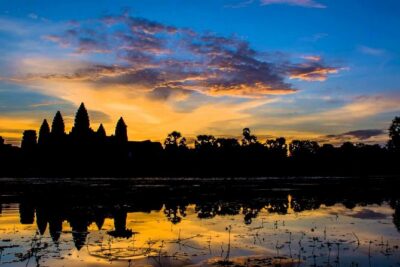
Full-Day Angkor Wat Sunrise Private Tour with Guide from Siem Reap
Read our review →
Angkor Wat Sunrise & 3 Main Temples with Breakfast – Small Group
Read our review →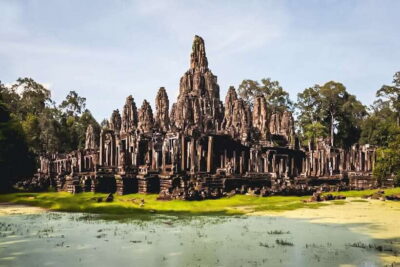
Angkor Wat Sunrise and Full-Day Sightseeing Tour
Read our review →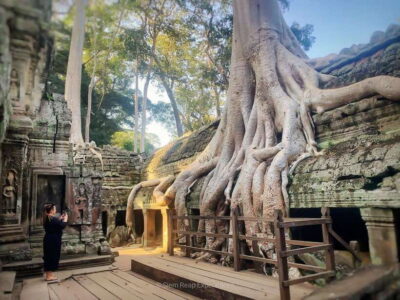
2 Days Exclusive Temple Highlights with Sunset and Sunrise Tour
Read our review →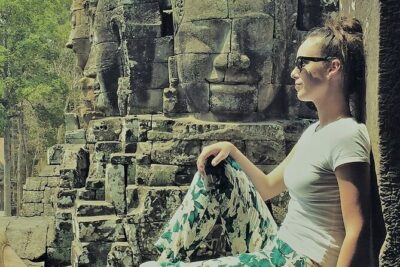
Siem Reap Tour: Angkor Wat Sunrise, Bayon, Ta Prohm, Banteay Srei
Read our review →Browse the lists this tour appears in