Reviewed · TOURS IN SIEM REAP
Siem Reap: Angkor Wat 2day Big and Small Circuit Guided Tour
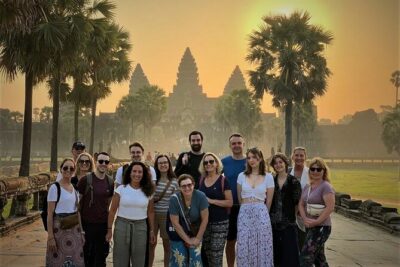
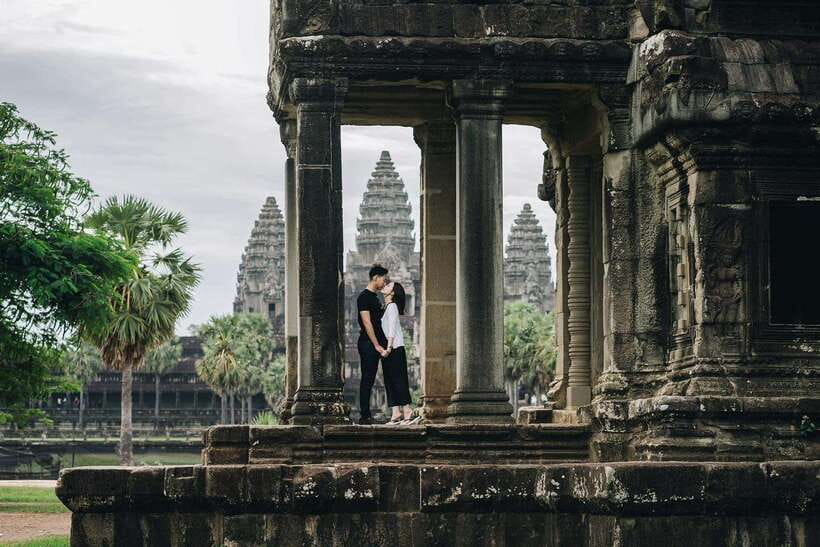
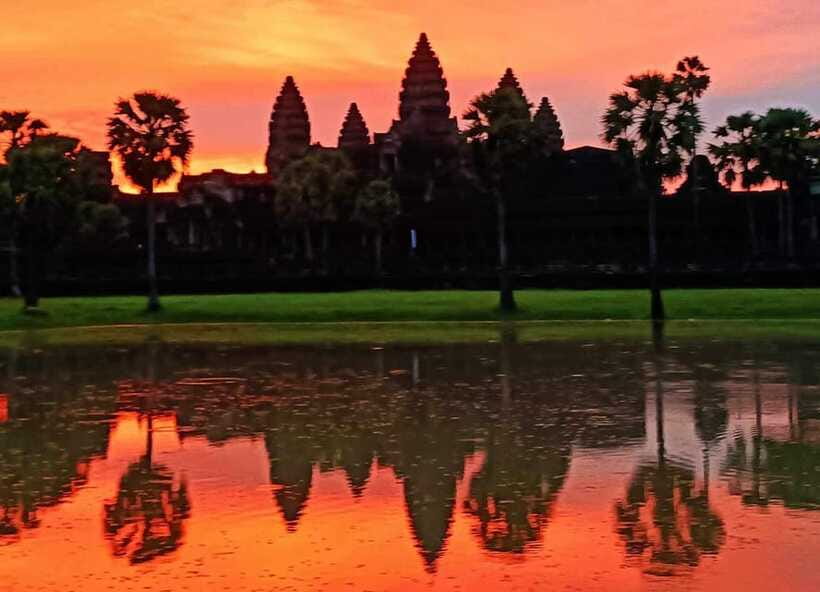
Angkor Wat at sunrise is the headline, but the real pleasure of this two-day temple tour is the range. You see the famous places, then move on to quieter ruins where carvings, trees, monks, and weathered stone have more room to speak. I especially like the sunset start on day one and the early temple visits on day two, when the heat is kinder.
I also like the practical setup: an air-conditioned van, hotel pickup, cool water, and a wipe towel. Guides Sayon and Sam have been praised for clear explanations and genuine enthusiasm for Cambodian history. The main drawback is the pace and physical demand. You need to walk, climb steps, rise early, and handle full sun. Food and the temple pass are not included, so the advertised $39 is not your complete cost.
Key points to know before you book
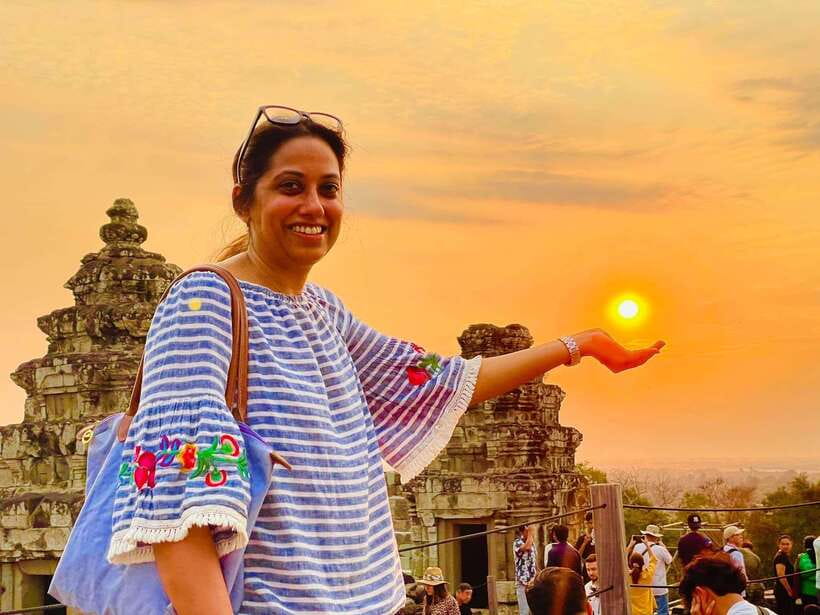
- Sunset begins the two-day plan: Day one starts with sunset viewing before the circuit of temples.
- Angkor Wat comes early on day two: You see the temple at sunrise, then continue while the morning is cooler.
- The route covers famous and quieter ruins: Ta Prohm and Bayon share the schedule with Ta Som, Neak Pean, and Banteay Kdei.
- Guides add cultural context: Sayon and Sam explain temple purpose, Khmer rulers, carvings, and local history in English.
- The $39 price covers the touring service, not admission: Buy your Angkor pass separately, and plan for your own meals.
- Walking ability matters: The experience is not suitable for children under 12, wheelchair users, or people with mobility impairments.
Why this two-day Angkor route works
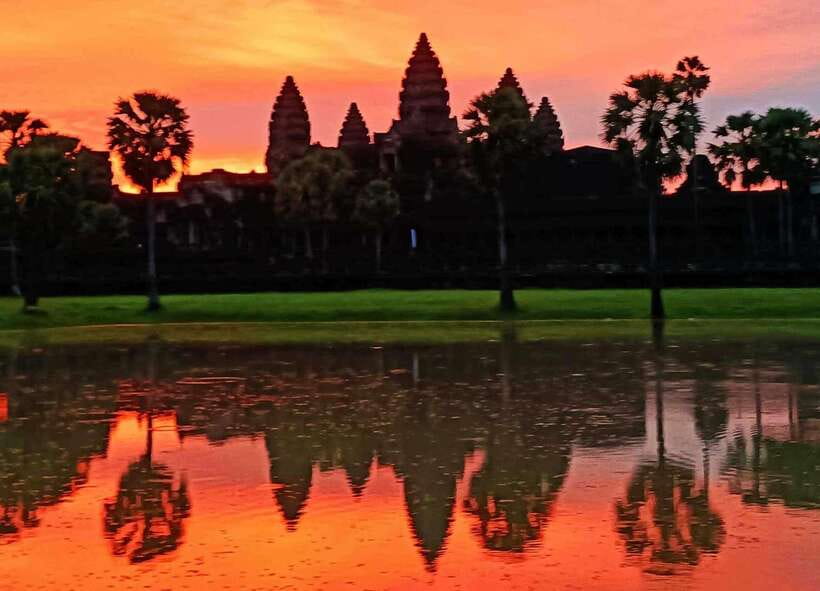
Angkor is not one building. It is a large archaeological area filled with temples from different periods and rulers. A short visit can easily become a blur of towers and carved faces. This tour gives you two days to compare the grand scale of Angkor Wat with smaller, stranger, and less restored sites.
The split between sunset and sunrise is useful. You do not spend every hour of both days inside temples, and the opening evening gives you a first look before the major morning push. Day two begins very early, but that trade is worthwhile. The light is softer, the temperature is lower, and the famous temple is easier to appreciate before the day gets harsh.
You travel by air-conditioned van, with hotel pickup and drop-off included. That matters in Cambodia, where a temple circuit can mean repeated exposure to heat and dust. The breaks, bottled water, and cool wipe towel are simple touches, but they help when you have spent hours walking over stone.
This is offered as a private or small-group trip. The exact group arrangement matters: a small group usually gives you more room to ask questions, while a private outing may suit you better if you want a slower rhythm. The supplied details do not promise a fixed group size, so check the available option before paying.
A few more things to do in Siem Reap worth a look
- Siem Reap: Angkor Wat 2-Day Tour with Sunrise and Sunset
★ 4.9 · 4,429 reviews - Angkor 2-Day Sunset & Sunrise Small-Group Tour
★ 5.0 · 2,567 reviews - 2 Days Exclusive Temple Highlights with Sunset and Sunrise Tour
★ 5.0 · 1,157 reviews
Day one: sunset and the temples beyond Angkor Wat
The first day begins at sunset, then takes you around several temples on the circuit. The exact sunset viewpoint can affect the feel of the evening, but the important point is that you start with a cooler, more atmospheric part of the day before focusing on the larger temple stops.
Preah Khan and the scale of an ancient royal complex
Preah Khan is described as the largest temple on this loop. It was built by King Bayon for his father, giving the site a personal connection as well as a royal one. You can expect long stone passages, carved details, and the feeling of moving through a substantial religious complex rather than simply stopping at a single tower.
The size makes Preah Khan a good early lesson in Angkor’s scale. It also means you should wear shoes with a firm sole. Surfaces can be uneven, and the value of this stop comes from walking through its spaces rather than taking one photograph at the entrance.
Neak Pean and the old healing waters
Neak Pean sits on an island and is linked with water used for bathing and health during the Angkor period. The temple is different from the enclosed, maze-like structures elsewhere on the route. Its setting and water system give your guide a chance to explain how religion, royal planning, and ideas about well-being came together.
Do not expect a huge complex here. Neak Pean is more about design and meaning than sheer size. It is a useful pause in a busy temple day, especially when your guide explains why water mattered so much to Khmer builders.
Same base, a different kind of day out:
- Angkor Wat Sunrise or Sunset Tour with Guide from Siem Reap
★ 5.0 · 12,109 reviews - Siem Reap: Angkor Wat: Small-Group Sunrise or Sunset Tour
★ 5.0 · 9,444 reviews - From Siem Reap: Kampong Phluk Floating Village Tour by Boat
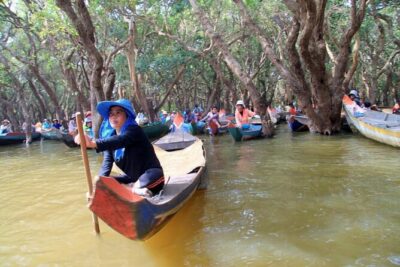
★ 4.9 · 6,979 reviews - Sunset tour of Kampong Phluk stilts home village on the Tonle Sap
★ 5.0 · 4,865 reviews
Ta Som and its famous tree
Ta Som has a large tree growing over its eastern gate. The roots and stone create the kind of scene people often picture when they think of temples reclaimed by the forest, but this stop is not only about the tree.
The temple includes many sculptures of dancers with long hair and was built for the king’s sister. That detail gives the structure a human connection. Look beyond the most photographed gate and pay attention to the carving program. The stop is compact compared with Preah Khan, but it rewards a slower look.
East Mebon, once surrounded by water
East Mebon was built for the ancestors and dates as early as the 10th century. It once sat in the middle of a reservoir, a fact that changes how you read the site today. The surrounding ground no longer gives you the same immediate sense of an island temple, so the guide’s explanation is particularly useful.
This is one of the places where a guided visit adds real value. Without context, East Mebon can look like another stepped ruin. With the reservoir and ancestor worship explained, its location and purpose become much clearer.
Pre-Rup and a misunderstanding about cremation
Pre-Rup was built by a king for himself. It is sometimes mistaken for a crematorium because one stone structure resembles a coffin. The explanation offered here is different: Hindus used the structure for meditation during the full moon.
That small correction is worth hearing on site. Angkor’s symbolism can be easy to misread through modern eyes, and a guide can help separate later assumptions from the intended use. Pre-Rup also involves steps and elevated platforms, so take your time rather than treating it as a quick photo stop.
Phnom Bakheang and the end of the day
Phnom Bakheang sits on a hill, and its 33 towers represent the heavens. The climb adds physical work at the end of an already active circuit. If you are tired or unsteady on steps, this is a point to discuss with the guide before setting off.
The hilltop setting gives the sunset stop its sense of occasion. The temple’s symbolism also makes it more than a scenic viewpoint. You are looking at a planned image of the universe, built in stone. Keep in mind that sunset light and viewing conditions can vary, and the tour information does not promise a particular sky.
Day two: Angkor Wat before the heat arrives
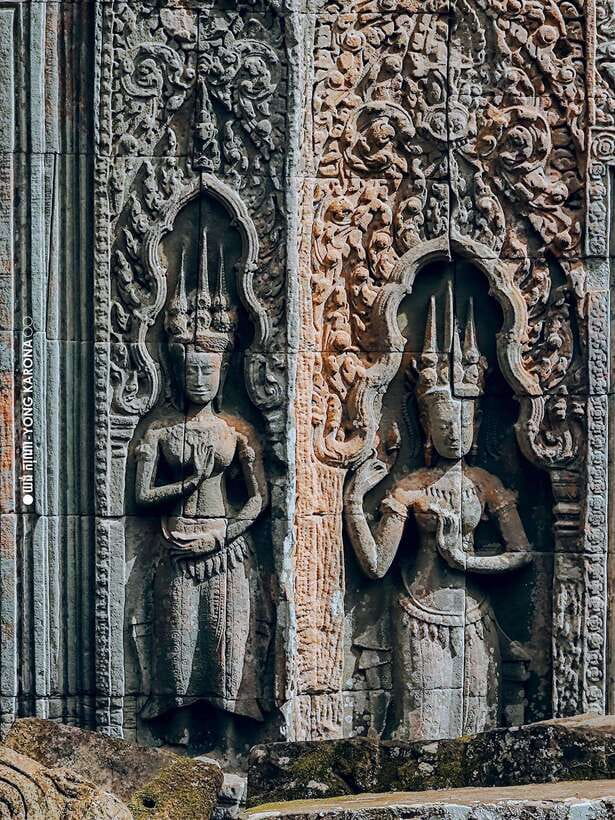
Day two starts early for sunrise at Angkor Wat. You should be prepared for a very early pickup, even though the exact start time depends on the booking schedule and availability. Bring a hat, sunscreen, water, and a camera, but remember that flash photography is not allowed.
Sunrise is a popular moment, so do not expect solitude. The reason to go anyway is the changing light over one of Cambodia’s most important monuments. After sunrise, you continue while the weather is still more manageable, then take rest and food breaks as the day goes on.
Angkor Wat was built as a major religious monument and remains the best-known site in the complex. Its towers, galleries, and scale need more than a quick walk past. Your English-speaking guide can help you understand the temple’s design and the Khmer Empire that created it, rather than leaving you to count towers and move on.
The sunrise is only one part of the experience. I find the quieter details more rewarding after the first crowd has shifted: carved scenes, long galleries, and the way the building is arranged around its central towers. Give yourself room to look closely, even if the larger route keeps you moving.
Ta Prohm, where trees share the stone
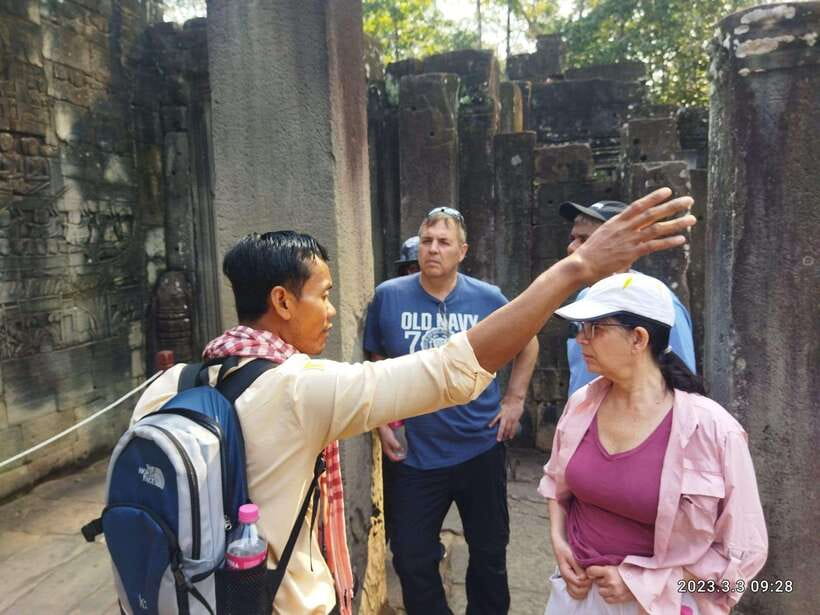
Ta Prohm is the jungle temple made famous by the Tomb Raider movie. Its appeal comes from the collision between carved stone and large trees, with roots pressing against walls and doorways.
The movie connection may be what gets you interested, but the temple is worth seeing on its own terms. It shows how a major religious site can feel vulnerable, enclosed, and partly reclaimed by nature. It is also one of the busier stops, so you may need patience around the best-known sections.
The ground is uneven and the temple requires walking. Comfortable shoes are not a minor suggestion here. If you want time for photographs and close inspection, ask how long you have at the stop rather than assuming you can see every corner.
Angkor Thom and the smiling faces of Bayon
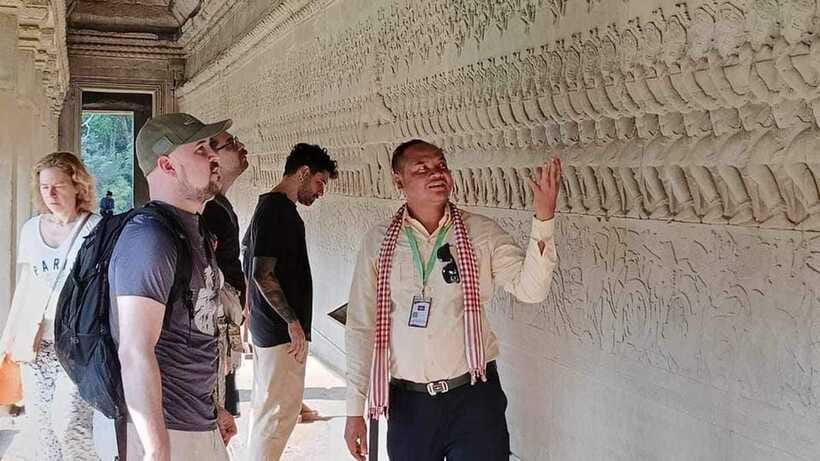
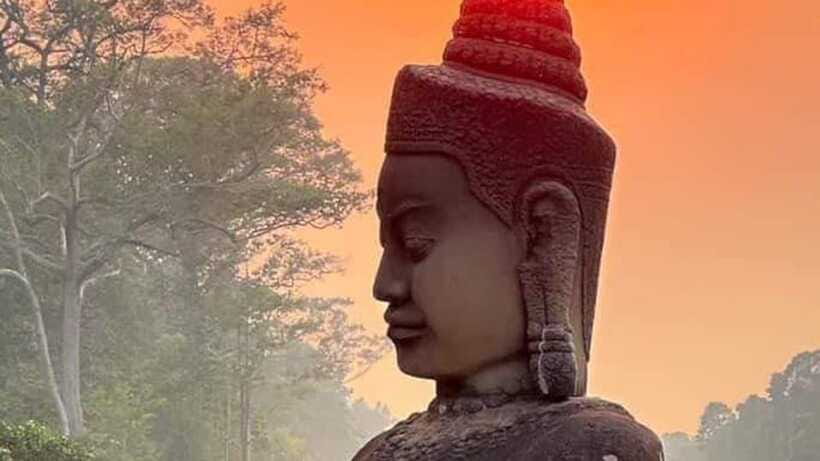
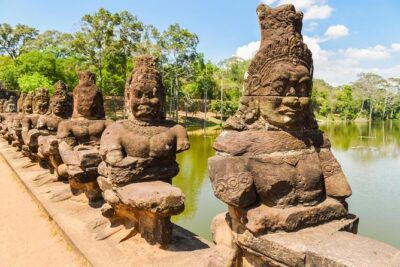
The South Gate of Angkor Thom is marked by a bridge lined with statues of gods. This approach gives you a strong sense of arrival, with the figures forming a symbolic passage into the walled city.
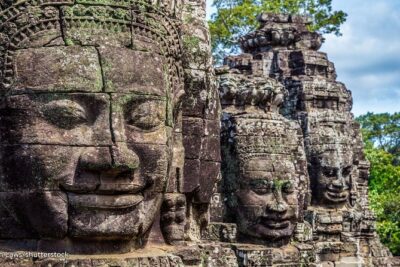
Inside, Bayon is known for its large smiling faces. The effect changes as you walk around the towers: faces appear from different angles, sometimes close enough to feel personal and sometimes high above you. Your guide can connect the imagery to Khmer power, religion, and the ruler who commissioned the city.
Bayon is visually busy. Without guidance, it is easy to miss how the faces, towers, and reliefs fit together. This is one of the stops where a guide such as Sayon or Sam can make the visit more than a series of photographs. Both have been praised for explaining the temples, the city, and the country with energy and care.
Banteay Kdei and Ta Keo, two different kinds of temple
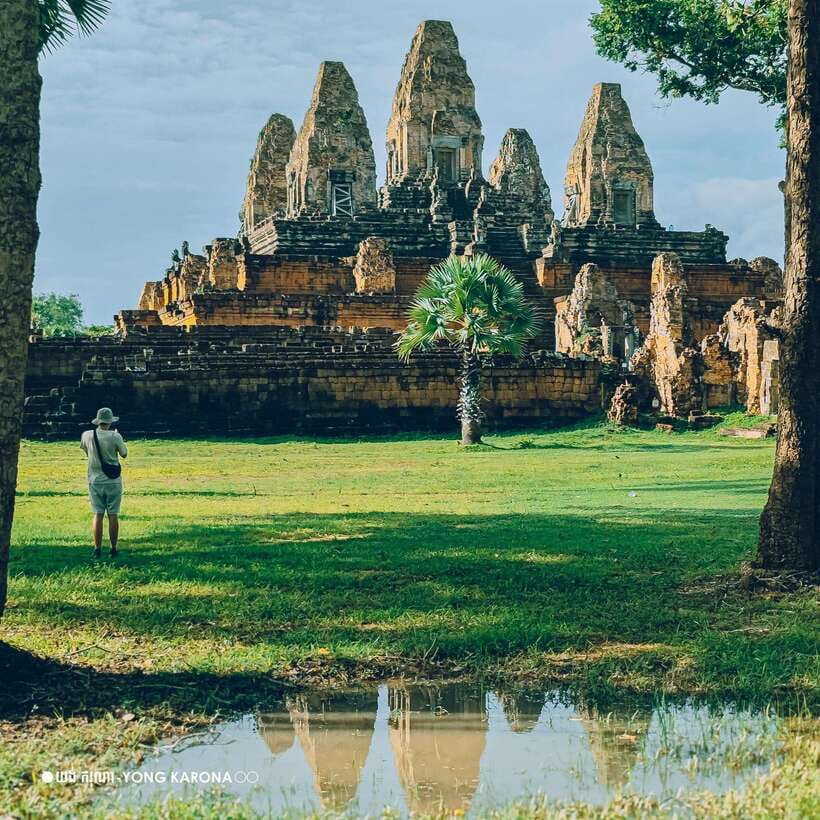
Banteay Kdei is a Buddhist temple that is largely unrestored and used by monks. Its less polished condition gives you a different view of Angkor. You can see a site that has not been made tidy for the camera, with weathered stone and a stronger sense of ongoing religious use.
For me, this is the kind of stop that keeps the tour from becoming a checklist of famous names. Banteay Kdei invites you to notice decay, repair, and present-day worship together. Be respectful around monks and remember that the temples remain important cultural and religious places.
Ta Keo is a 10th-century mountain temple. You walk up between the ancient structure and the modern world around it, using steep stone levels to reach the higher parts. The climb may be short compared with the full day, but it can feel demanding after several hours in the sun.
The reward is architectural rather than mysterious. Ta Keo shows how Khmer builders used height and repetition to create a mountain image in stone. If you have trouble with steps, this is another stop to approach carefully. The tour is not suitable for wheelchair users or people with mobility impairments.
What the guide adds to the stone
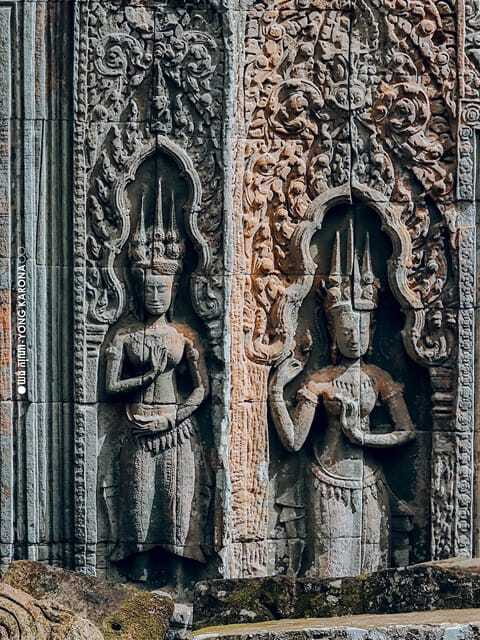
A guide is most useful at Angkor when the explanation stays tied to what you can see. The strongest parts of this route include the story behind East Mebon’s reservoir, the purpose of Neak Pean’s water, the ancestor connection at Preah Khan and East Mebon, and the meaning attached to Phnom Bakheang’s 33 towers.
The available guide language is English. Sayon and Sam are named guides associated with the experience, and the comments about them point to two qualities worth looking for: strong historical explanation and an upbeat approach. A good guide can also help you pace the day, identify rest points, and explain how to behave respectfully in active temple areas.
Do not expect the guide to remove every challenge. You still face an early morning, heat, steps, uneven surfaces, and long periods on foot. The guide improves the meaning of the visit, but comfortable clothing and realistic stamina matter just as much.
The real cost of a $39 temple tour
At $39 per person, the tour offers strong value if you want transport, a guide, sunset, sunrise, and two days of organized temple visits. Hotel pickup and drop-off save you from arranging separate rides, while the van’s air conditioning becomes increasingly useful as the day warms.
The price does not include the Angkor temple pass. You must buy that separately online through Angkor Enterprise or at the ticket office. Food is also extra, so budget for meals and snacks in addition to the advertised tour price.
This separate-ticket arrangement is common sense for a flexible booking, but it is easy to overlook. Buy or arrange the pass before the first temple visit, and keep a passport or identity card with you. A copy is accepted according to the tour information.
Free cancellation is available up to 24 hours before the activity for a full refund, and you can reserve now and pay later. Those terms help if your Siem Reap plans are still shifting, though you should still check the booked start time carefully because the sunrise portion demands an early beginning.
Who will enjoy this, and who should choose something else
I would choose this tour if you have two days in Siem Reap and want the major temples explained in context rather than visited alone. It suits adults and older teenagers who can walk for long periods, manage steps, and stay focused through a full sightseeing schedule.
It is less suitable for children under 12, people with mobility impairments, and wheelchair users. Anyone who dislikes early starts, heat, or organized pacing may prefer a shorter private arrangement, if available, or a simpler temple day.
Bring comfortable shoes, light clothing suitable for walking, a hat, sunscreen, water, and a camera. Do not use flash photography, and do not litter. Above all, treat the temples as active cultural places, not just backdrops for photographs.
Should you book this Angkor tour?
Book it if you want broad coverage and clear historical explanation at a modest price. The mix is well judged: Angkor Wat and Ta Prohm give you the famous images, while Preah Khan, Neak Pean, Ta Som, East Mebon, Banteay Kdei, and Ta Keo show how varied the complex can be.
The main decision is physical, not financial. You must accept an early sunrise, two demanding days, temple steps, and separate costs for admission and food. If that suits you, this is a practical way to see far more than Angkor Wat alone, with the added help of guides such as Sayon or Sam.
FAQ
How long does the Angkor tour last?
The experience lasts two days. Day one begins with sunset viewing and temple visits, while day two begins early for sunrise at Angkor Wat and continues with more temples.
Is hotel pickup and drop-off included?
Yes. Transportation by air-conditioned van, hotel pickup, and hotel drop-off are included.
Is the Angkor temple pass included in the $39 price?
No. Temple entrance fees must be purchased separately. The pass can be bought online through Angkor Enterprise or at the ticket office.
Are meals included?
No. Food is not included. The tour does provide breaks for rest, along with cool water and a wipe towel.
Is the tour private or shared?
Private and small-group options are available. Check the available option when booking.
What language does the guide speak?
The live guide speaks English. Guides named in connection with the experience include Sayon and Sam.
What should I bring?
Bring comfortable shoes, a hat, sunscreen, water, a camera, and a passport or identity card. A copy of the passport or identity card is accepted.
Can children under 12 or wheelchair users join?
No. The experience is not suitable for children under 12, people with mobility impairments, or wheelchair users.
Just added in Siem Reap
- Twilight Tastes of Siem Reap Include Dinner★ 5.0 · 13 reviews
- Ultimate Sunrise to Angkor Wat, Angkor Thom and Bayon Temple★ 5.0 · 3 reviews
- Trekking Tour at Phnom Kulen National Park from Siem Reap★ 5.0 · 3 reviews
- Full-Day Private Tour of Angkor Wat with Pick Up★ 5.0 · 12 reviews
- Private Day Trip to Angkor Temples with Expert Guide★ 5.0 · 4 reviews
- Siem Reap City Tour with War Museum and Killing Field★ 5.0 · 27 reviews
- Waterfall & River of 1000 Siva Linga- Kulen Mountain Private Tour★ 5.0 · 3 reviews
- Angkor Wat Experience Temple Pass and Siem Reap Food Tour★ 5.0 · 13 reviews
Tours in Siem Reap, compared.
Angkor Wat Sunrise or Sunset Tour with Guide from Siem Reap
Read our review →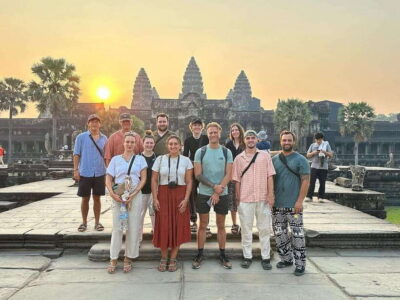
Angkor Wat: Small-Group Sunrise or Sunset Tour
Read our review →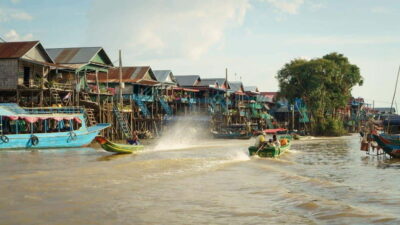
Sunset tour of Kampong Phluk stilts home village on the Tonle Sap
Read our review →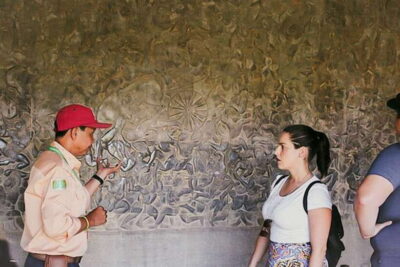
Angkor Wat 2-Day Tour with Sunrise and Sunset
Read our review →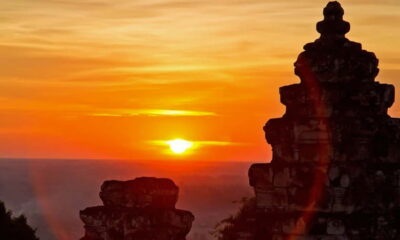
Angkor Wat Sunrise tour with Small – Group and Guide tours
Read our review →