Reviewed · TOURS IN SIEM REAP
Siem Reap: Angkor Wat Private full Day Tour
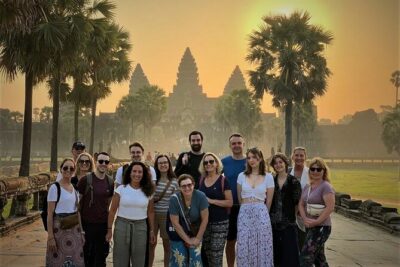
Angkor Wat is the star, but this private eight-hour tour gives you the wider Angkor picture: the giant temple, the carved faces of Bayon, the royal terraces of Angkor Thom, and Ta Prohm’s tree-covered ruins. I like the built-in flexibility, especially in Cambodia’s heat, and I like having an English-speaking guide who can answer questions instead of sending you through the temples alone. The main drawback is the long, hot day, with a $37 temple pass and lunch added to the advertised $57 price.
I also like the practical touches: an air-conditioned vehicle, bottled water, cold towels, and hotel pickup in Siem Reap. Guide Sopheaprath is praised for keeping a brisk pace and adjusting the schedule, which matters if you want to see the major sites without spending every last minute in the sun. Just be ready in the lobby by 7:30 to 8 a.m., and wear shoes suited to uneven temple paths.
Key points at a glance
- Two full hours at Angkor Wat: Enough time for the corridors, central chambers, upper terraces, and long carved galleries.
- A private guide and vehicle: You can ask questions, change the pace, and avoid being tied to a large group.
- Four major Angkor sights in one day: Angkor Wat, Angkor Thom, Bayon, and Ta Prohm give you a strong first look at the temple complex.
- Water and cold towels included: Small comforts that become very useful in the Cambodian heat.
- The real cost is about $94 before lunch: The $57 tour price does not include the $37 temple pass.
- An early start helps: Pickup is scheduled between 7:30 and 8 a.m., with a return to Siem Reap after roughly eight hours.
What this Angkor Wat day actually gives you
This is a classic first-day Angkor tour, built around the four places most people want to see. You leave Siem Reap in a private, air-conditioned vehicle, visit the best-known temples with a local English-speaking guide, stop for lunch, and return to town in the afternoon.
The private format is the important part. You are not simply following a flag through a crowd. You can ask why a carving matters, request a slower explanation, or move along when the heat becomes too much. Guide Sopheaprath, named in one booking, was praised for moving quickly and changing the schedule to suit the conditions. That kind of flexibility is valuable here.
The advertised price is $57 per person. Add the $37 temple entrance fee, and the basic cost becomes $94 per person before lunch and drinks. For that, you receive a guide, driver, private transport, hotel pickup and drop-off, sightseeing at the listed temples, bottled water, and towels. It is not the cheapest possible way to see Angkor, but it is a fair choice if you value a private vehicle and explanations at the sites.
A few more things to do in Siem Reap worth a look
- Siem Reap: Full-Day Angkor Wat Guided Tour with Sunset
★ 4.9 · 3,803 reviews - Full-Day Angkor Wat Sunrise Private Tour with Guide from Siem Reap
★ 5.0 · 2,920 reviews - Siem Reap: Angkor Wat Sunrise and Full-Day Sightseeing Tour
★ 4.9 · 2,828 reviews
The 7:30 a.m. pickup from Siem Reap
Pickup takes place at your hotel lobby between 7:30 and 8 a.m., depending on where you are staying in Siem Reap. Be ready before the early end of that window. The guide and driver are expected to collect you at the lobby, not search for you inside the hotel.
The ride to the ticket office takes about 15 to 30 minutes. After you buy the temple pass, expect another 15 minutes before reaching Angkor Wat. These transfers are not wasted time. The air-conditioned vehicle gives you a chance to cool down before the first major walk, and the guide can explain how the day will work.
The pass costs $37 per person and covers all the temples on this route. It is not included in the tour price, so budget for it separately. Breakfast is also not included, and lunch at a local restaurant is paid at your own expense.
Angkor Wat: two hours inside Cambodia’s great temple
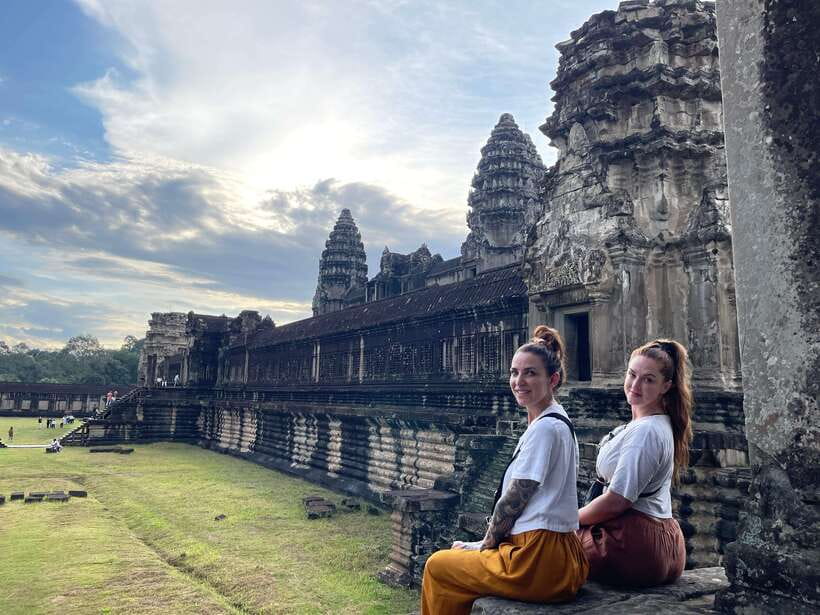
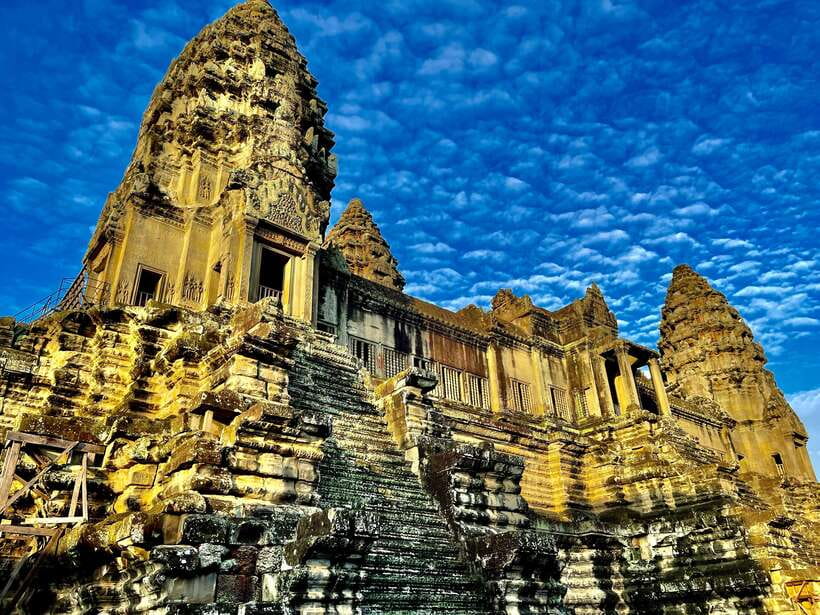
Angkor Wat receives the longest stop, about two hours, and rightly so. This is not just a quick photo stop outside the towers. You have time to walk through the interior, see the corridors and central chambers, and reach the upper terraces if conditions and access allow.
The guide’s role matters most here. Angkor Wat is large enough to feel confusing, with carvings, stairways, galleries, and chambers competing for your attention. A good explanation helps you understand the stories in the long base-relief carvings and gives meaning to the temple beyond its famous front view.
You will also hear about daily life during the height of the Khmer Empire. That context turns the carved walls into something more than decoration. You can ask questions as you go, which is a major benefit of the private arrangement.
Two hours is enough for a strong introduction, but it is not enough to examine every gallery closely. If you are an art specialist or want to photograph every detail, you may wish for more time here. For a first visit, though, the schedule gives Angkor Wat the attention it deserves while leaving room for the other major temples.
Expect heat, stairs, and plenty of walking. Carry the bottled water provided, use the towel when you need to cool your face, and do not treat the upper terraces as a casual climb. The day becomes more pleasant when you pace yourself from the start.
Angkor Thom and the South Gate
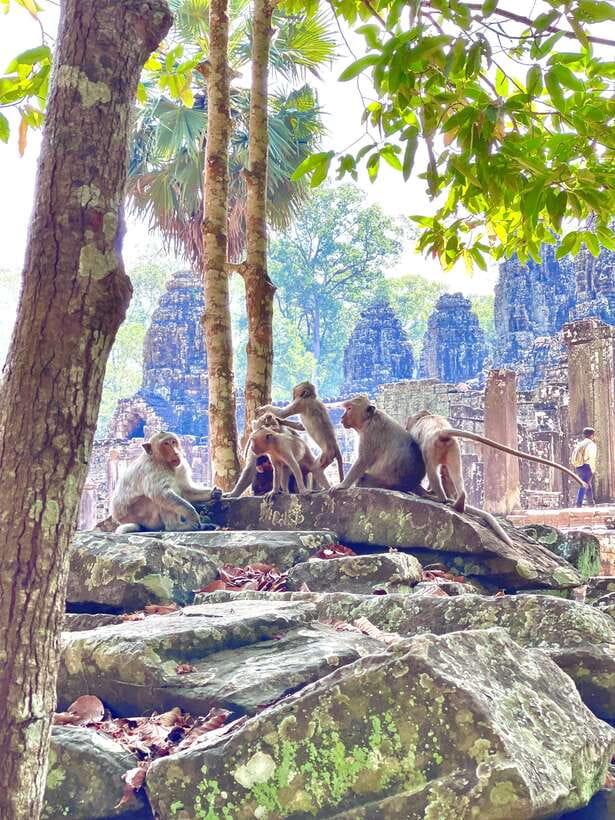
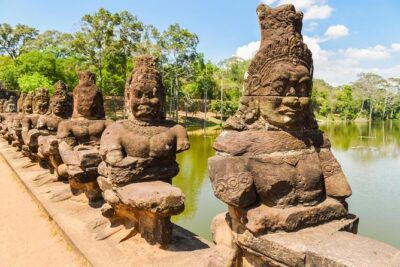
From Angkor Wat, the route continues to Angkor Thom, the great walled city area. The South Gate is the main approach described for this tour and has been restored more extensively than the other gates.
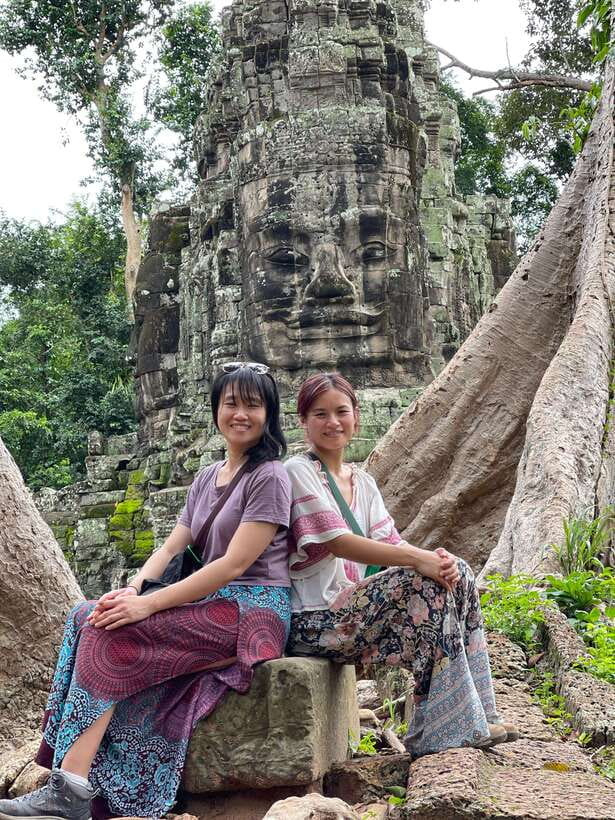
Your guide spends about 20 minutes explaining the gate before you continue to Bayon. That pause is useful because the entrance is not just a gateway in the modern sense. It sets up the royal city that follows and helps you notice the sculpted figures and overall design rather than simply passing through in the vehicle.
This is a short stop, so do not expect a long walk around the entire city. The value comes from the guide’s explanation and the chance to see one of the most complete approaches into Angkor Thom. If you are keen on photography, tell your guide early. The tour includes a guide with photo and video clip skills, but lighting and traffic can affect how long you have at each point.
Same base, a different kind of day out:
- Angkor Wat Sunrise or Sunset Tour with Guide from Siem Reap
★ 5.0 · 12,109 reviews - Siem Reap: Angkor Wat: Small-Group Sunrise or Sunset Tour
★ 5.0 · 9,444 reviews - From Siem Reap: Kampong Phluk Floating Village Tour by Boat
★ 4.9 · 6,979 reviews - Sunset tour of Kampong Phluk stilts home village on the Tonle Sap
★ 5.0 · 4,865 reviews
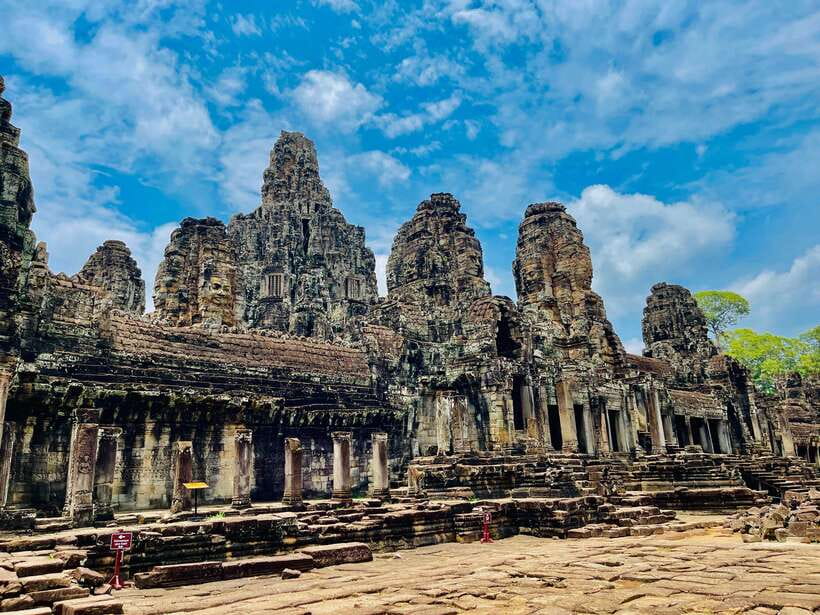
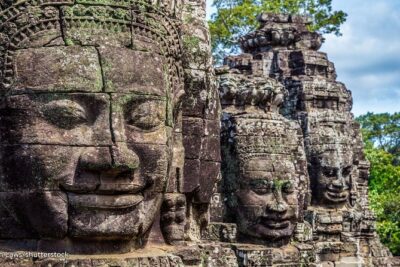
Bayon’s maze of corridors and stone faces
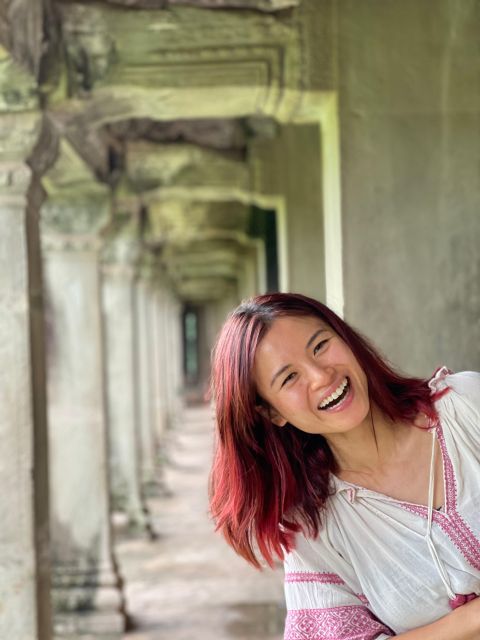
Bayon receives about an hour. This is a very different experience from Angkor Wat. Instead of broad galleries and a clear central plan, Bayon feels compact, enclosed, and maze-like.
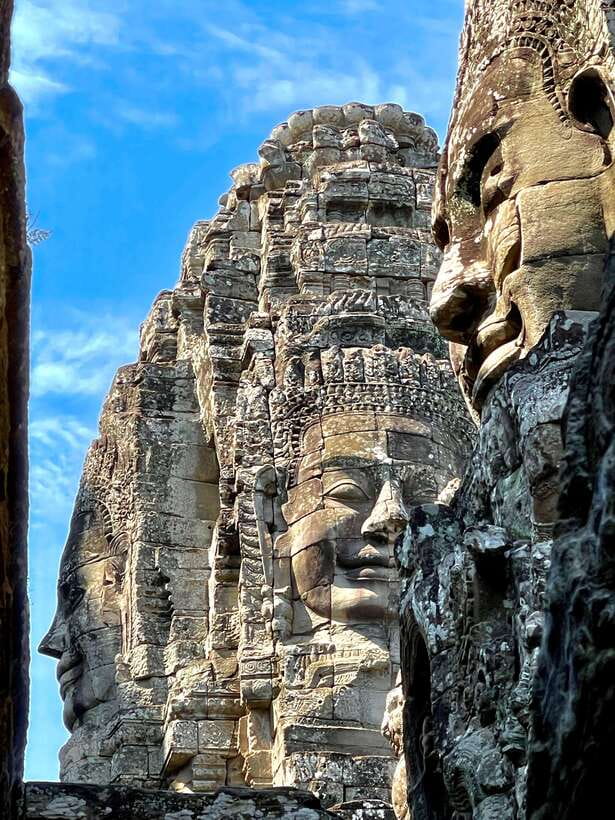
You move through narrow chambers, corridors, and stairways. The famous stone faces appear in unexpected openings, sometimes close enough to make the encounter feel personal. The absence of a surrounding wall makes it easy to enter and move through the temple, but the inner sections can still feel confusing without a guide.
An hour is a sensible amount of time for a first look. You can see the main structure, hear the stories behind the faces, and pause for photographs without using up the whole afternoon. If you want every carving explained, the time will pass quickly.
This is another place where a private guide earns the price. You can stop to ask about what you are seeing, rather than waiting while a large group gathers. The guide can also help you keep track of the route inside the tight spaces.
The Terrace of the Elephants from the road
The Terrace of the Elephants is a pass-by stop lasting about 15 minutes. It was used as a reviewing stand for public ceremonies and as the base for the king’s audience hall.
The retaining wall has carvings of elephants, lions, and Garuda figures. The elephant procession, complete with Khmer mahouts, is the detail to watch for. The terrace stretches about 350 metres, so a short stop cannot cover every section in depth.
Think of this as a useful introduction rather than a full visit. You will see the scale and the main carvings, but the schedule gives more time to Bayon and Ta Prohm. If this terrace is a personal priority, ask your guide how much walking time is possible within the day.
Lunch and a needed break from the sun
Lunch takes about an hour at a local restaurant and is not included in the price. You choose and pay for your meal and drinks, so keep cash available if needed. The supplied details do not specify a fixed menu or restaurant, which gives the stop a practical rather than formal character.
This break is important. By midday, you have already spent hours walking through stone courtyards and exposed temple areas. Eat, drink, and use the pause to cool down before Ta Prohm.
Breakfast is also not included. If you need food early in the morning, arrange it at your hotel or bring something with you. The pickup window is early enough that you may not have time for a relaxed hotel breakfast.
Ta Prohm after lunch
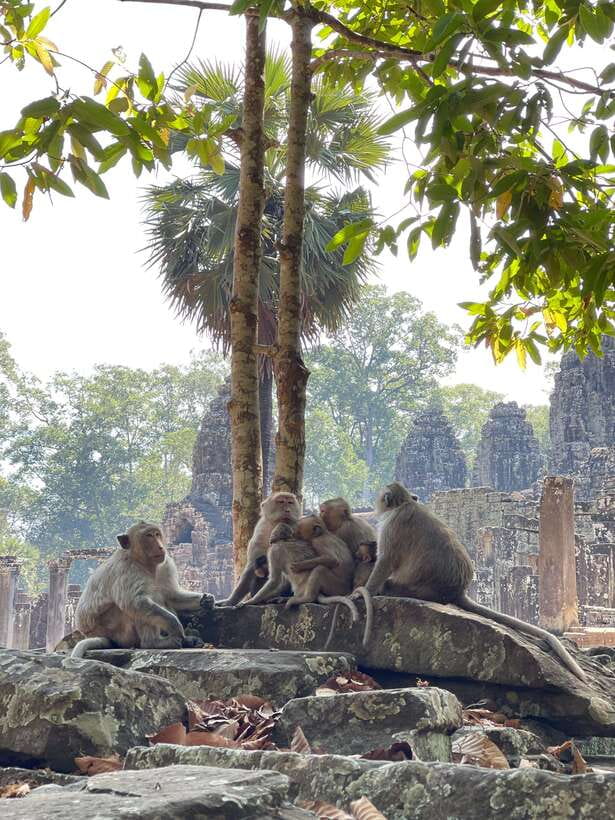
Ta Prohm is the final major temple and one of the day’s most atmospheric stops. About 2,740 monks once lived here, while the site later became known for its crumbling walls and trees growing around the stonework.
The temple still has much of the appearance recorded by French explorer Henri Mouhot in the 1850s. Its maze-like interior feels different from the more ordered spaces at Angkor Wat. Here, roots, galleries, doorways, and fallen stone compete for your attention.
You receive about an hour to explore. That is enough to see the main interior and understand why Ta Prohm has such a strong hold on the imagination. It is not enough to wander every path slowly, especially after a full day of walking, but the timing is realistic.
Ta Prohm can be the most physically tiring stop because you arrive after Angkor Wat, Angkor Thom, Bayon, and lunch. This is where the private schedule helps. If the temperature is punishing, you can discuss the pace with the guide. One booking specifically praised the ability to adjust the schedule and return a little earlier.
Heat, pace, and what to bring
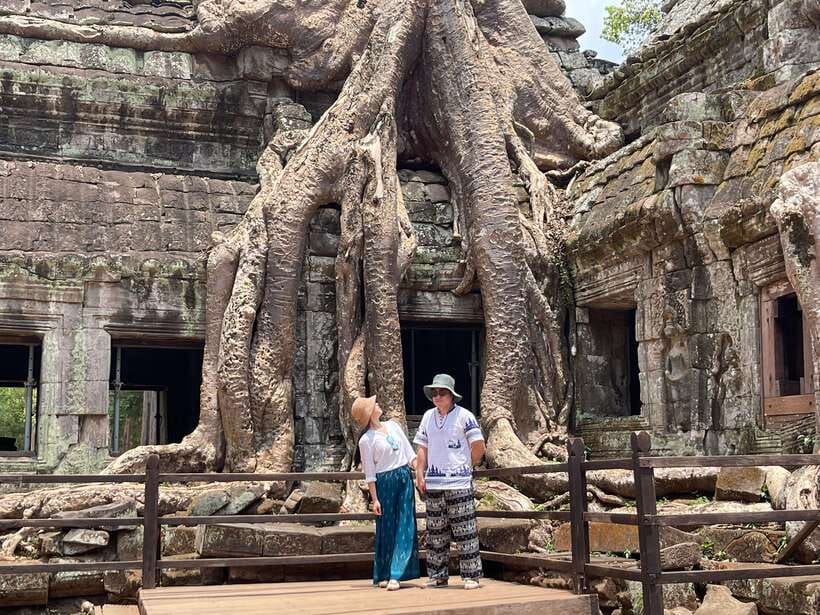
Cambodia’s heat is the main practical challenge. The tour runs for about eight hours, and most temple visits involve walking outdoors, uneven surfaces, and steps. The air-conditioned vehicle offers relief between stops, but it cannot make the temple grounds cool.
Wear comfortable walking shoes. Bring sun protection and enough personal drinking water in addition to the supplied bottles if you prefer to drink often. The towels are a welcome touch, especially after the longer walks at Angkor Wat and Bayon.
The schedule is active, but not frantic. You spend two hours at Angkor Wat, one hour at Bayon, one hour at Ta Prohm, 20 minutes at Angkor Thom, 15 minutes passing the Elephants Terrace, and an hour at lunch. Transfers and ticketing fill out the rest of the day.
If you want to linger at one temple for half a day, this is not the right format. If you want a well-paced first look at the major sites, it makes good use of limited time.
How good is the guide support?
The guide speaks English and provides explanations throughout the route. The focus is on Khmer history, temple design, carvings, and the role of each place during the Khmer Empire.
The private setup lets you ask questions whenever something catches your eye. You can also request help with photos and short video clips. The tour description specifically highlights those skills, which may be useful if you want more than a quick snapshot of yourself standing outside a tower.
Guide Sopheaprath received particular praise for being friendly, fast, and adaptable in very hot weather. That does not guarantee that he will lead your departure, so ask Angkor Buddy if you want to request him. The more general point is clear: an adaptable guide is a real asset on a hot temple day.
The driver and guide are separate roles, and transport is by air-conditioned vehicle. You receive free pickup and drop-off at city hotels, plus bottled water and towels.
Who should book this private day?
I would choose this tour if you have one full day in Siem Reap and want to cover the main temples without arranging transport, tickets, and explanations yourself. It also suits you if you enjoy asking questions or want the freedom to adjust the pace.
It works well for people with limited time. The route covers the sites most often placed at the top of a first visit, and the schedule can be tightened if the heat or your return plans demand it.
I would think twice if your main goal is quiet photography or detailed study. Four major temple areas in one day means you will see a lot, but you will not explore every corner at leisure. You also need to pay extra for the temple pass, lunch, breakfast, and drinks.
The cancellation terms are useful for uncertain plans: you can cancel up to 24 hours ahead for a full refund, and you can reserve now and pay later. Check the available start time when booking, since the activity lasts eight hours and pickup is fixed around the morning window.
Should you book it?
Book this tour if you want a private, practical introduction to Angkor with a guide who can explain what you are seeing and adjust the day when the heat becomes too much. The combination of Angkor Wat, Bayon, Angkor Thom, the Elephants Terrace, and Ta Prohm gives you a satisfying first survey.
The value is strongest when you count the private vehicle, guide, water, towels, and hotel service alongside the $57 price. Once you add the $37 temple pass and lunch, the day costs more than the headline figure, but it removes much of the planning work.
Skip it if you want to spend long, unhurried hours at one temple or if you are trying to keep every cost to a minimum. For most first-time visitors with one open day in Siem Reap, I would book it, arrive ready for the heat, and ask in advance about requesting Sopheaprath.
FAQ
How long does the Angkor Wat private tour last?
The tour lasts eight hours, including hotel pickup, temple visits, lunch, transport, and return to Siem Reap.
What time is hotel pickup?
Pickup takes place between 7:30 and 8 a.m., depending on your hotel location. You should be ready in the hotel lobby before the tour begins.
Is the Angkor temple entrance fee included?
No. The temple pass costs $37 per person and covers the temples included in the day.
Is lunch included?
No. Lunch is taken at a local restaurant and must be paid for separately. Breakfast and drinks are also not included.
Which temples does the tour visit?
The route includes Angkor Wat, Angkor Thom, Bayon Temple, the Terrace of the Elephants, and Ta Prohm Temple.
What is included in the $57 price?
The price includes an English-speaking guide, transport by air-conditioned vehicle, the listed sightseeing, hotel pickup and drop-off in the city, bottled water, and towels.
Can I cancel the booking?
Yes. You can cancel up to 24 hours before the activity for a full refund. You can also reserve now and pay later.
Just added in Siem Reap
- Twilight Tastes of Siem Reap Include Dinner★ 5.0 · 13 reviews
- Ultimate Sunrise to Angkor Wat, Angkor Thom and Bayon Temple★ 5.0 · 3 reviews
- Trekking Tour at Phnom Kulen National Park from Siem Reap★ 5.0 · 3 reviews
- Full-Day Private Tour of Angkor Wat with Pick Up★ 5.0 · 12 reviews
- Private Day Trip to Angkor Temples with Expert Guide★ 5.0 · 4 reviews
- Siem Reap City Tour with War Museum and Killing Field★ 5.0 · 27 reviews
- Waterfall & River of 1000 Siva Linga- Kulen Mountain Private Tour★ 5.0 · 3 reviews
- Angkor Wat Experience Temple Pass and Siem Reap Food Tour★ 5.0 · 13 reviews
Tours in Siem Reap, compared.
Angkor Wat Sunrise or Sunset Tour with Guide from Siem Reap
Read our review →
Angkor Wat: Small-Group Sunrise or Sunset Tour
Read our review →
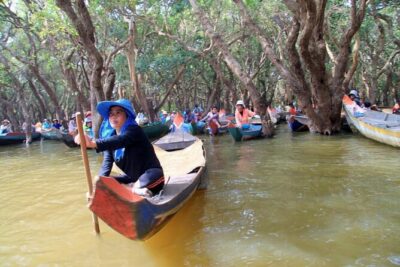
Sunset tour of Kampong Phluk stilts home village on the Tonle Sap
Read our review →
Angkor Wat 2-Day Tour with Sunrise and Sunset
Read our review →
Angkor Wat Sunrise tour with Small – Group and Guide tours
Read our review →