Reviewed · TOURS IN SIEM REAP
Siem Reap Morning Culinary & Culture Tour – (Vego also available)
The best part of this three-hour Siem Reap food tour is its range. You move from a colorful local market to a pagoda walk, then to a mother-and-daughter street stall and finally to a more polished dining spot. The food gives you a useful introduction to Khmer cooking, while the walking stops explain how cuisine connects with daily life, history, and current affairs.
I like the small maximum of six people, which should make it easier to ask questions and follow the guide through the city. I also like the chance to taste several breakfast dishes rather than sit down for one large meal. The main drawback is the early start and breakfast focus, so this may not suit anyone looking for a relaxed afternoon food crawl or a tour centered on lunch and dinner.
Key Points
- Four different settings: Visit a local market, walk through city streets and a pagoda, stop at a family-run stall, and finish at an up-market dining spot.
- Several Cambodian breakfast dishes: The food follows a morning theme, with dishes linked to Cambodian history and everyday life.
- Small-group format: The tour accepts no more than six people, allowing for a more personal pace.
- Vegetarian option available: A meat-free version can be requested when booking.
- Two surprises at the end: The final part of the morning includes an unexpected extra element.
- Simple meeting plan: Meet at 9:00 am at the Sombai Liqueur Stall in Made in Cambodia Market, and return to the same point.
Why This Siem Reap Breakfast Tour Works
Cambodian food can be overlooked by visitors who arrive expecting familiar Thai or Vietnamese dishes. This tour tackles that problem at breakfast, when local eating habits are especially easy to connect with ordinary life.
You are not simply handed a plate and told what it is. The morning begins at a market, where ingredients and cooking traditions provide the setting for the first dish. From there, the route keeps changing. You get food, city orientation, a pagoda visit, a family-run stall, and a final meal in a more refined setting.
I like that structure because it gives you useful context before the day gets hot. A three-hour morning outing also leaves plenty of time for other plans in Siem Reap, including an afternoon at your hotel or a visit to Angkor.
The tour starts at 9:00 am. You should arrive ready to eat, walk, listen, and try dishes that may be unfamiliar. Since the group is limited to six people, the guide can likely keep the pace reasonably personal, though the exact walking distance and dish names are not specified.
Other trips people book in Siem Reap:
- Angkor Wat Sunrise or Sunset Tour with Guide from Siem Reap
★ 5.0 · 12,109 reviews - Siem Reap: Angkor Wat: Small-Group Sunrise or Sunset Tour
★ 5.0 · 9,444 reviews - From Siem Reap: Kampong Phluk Floating Village Tour by Boat
★ 4.9 · 6,979 reviews
Starting at Made in Cambodia Market
The meeting point is the Sombai Liqueur Stall at Made in Cambodia Market on Achar Sva Street. This gives you a clear local starting point rather than a generic hotel pickup, and it places the opening of the tour among Cambodian-made products and small businesses.
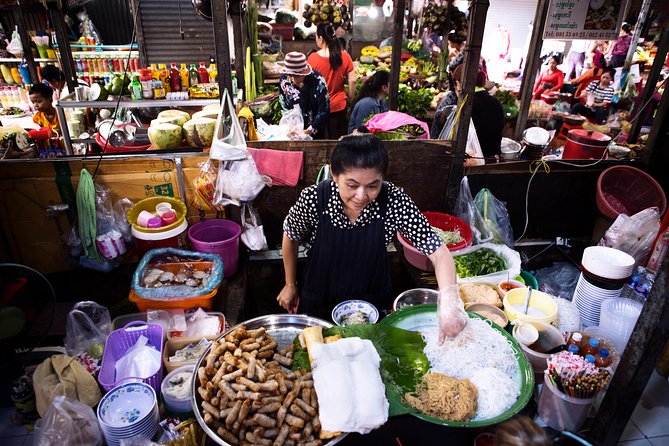
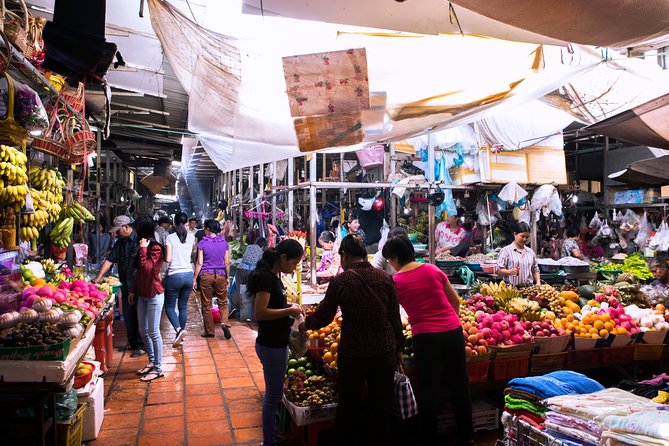
The first stop is a colorful local market. Expect the market to work as both a food stop and a lesson in ingredients. The guide introduces Khmer cuisine, which is often less familiar to international visitors, and explains how ingredients fit into Cambodian cooking.
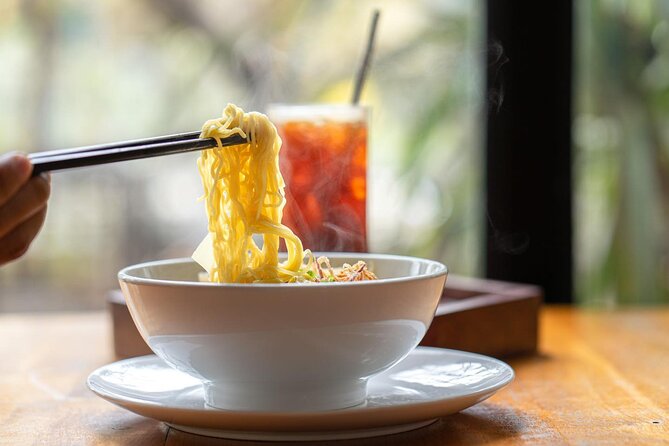
Your first breakfast dish has roots reaching back to the 13th century. The specific dish is not named in the information provided, so you should not book this expecting one particular famous recipe. The useful point is that breakfast begins with a dish tied to a long Cambodian food tradition, not a generic international meal.
Markets can be lively and sensory, but they are not always calm or polished. You may find close quarters, strong food smells, and a less predictable pace than in a restaurant. That is part of the value here. If you prefer spotless dining rooms and a fixed menu, this opening may feel rough around the edges.
For me, the market is also where the tour earns its cultural purpose. You begin to see food as something bought, prepared, and eaten in a community, rather than as a separate performance prepared only for visitors.
A Pagoda Walk Between Breakfast Stops
After the market, the group heads into Siem Reap’s streets for a short city orientation and a walk at a local pagoda. This break matters. A food tour with several tastings can become a steady march from one plate to the next, so the walking section gives your stomach a rest and your mind a chance to connect the dishes with the city around you.
The pagoda stop adds a cultural layer without turning the morning into a full temple excursion. It is not a replacement for Angkor, and you should not treat it as one. Instead, it gives you a look at a religious and community space within the city.
The exact pagoda, walking distance, and dress requirements are not specified. You should use sensible clothing for a place of worship and follow the guide’s instructions. Since this is a guided walk, the stop is likely intended to explain the setting rather than provide a long formal temple tour.
The city orientation is useful at the start of a Siem Reap stay. You get a feel for the streets, the relationship between food and neighborhood life, and the location where the tour ends. I would consider booking this for your first or second morning in town if you want some local bearings before making bigger plans.
A Family-Run Street Stall and Cambodia’s Famous Breakfast
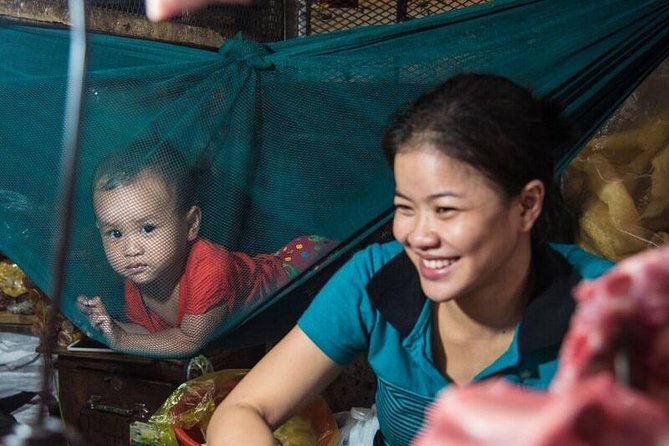
The next food stop is a street stall run by a mother and daughter. This is one of the most appealing details of the morning because the setting feels personal and rooted in daily business. You are not just tasting a dish in a restaurant designed for a tour group. You are stopping at a small family operation that serves a Cambodian breakfast favorite.
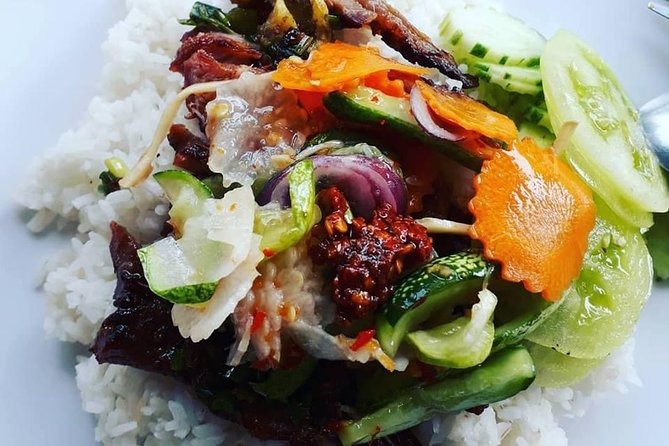
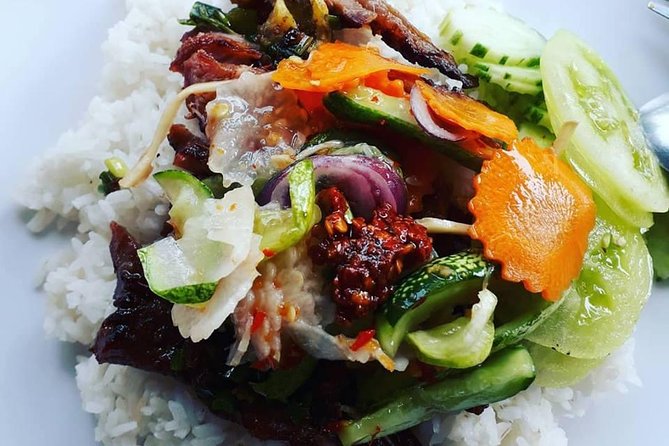
The dish is described as arguably the most famous of all Cambodian breakfasts, though its name is not provided. That leaves some room for surprise, but it also means you cannot assess the tour by a precise menu in advance. The food is presented as part of the country’s everyday breakfast culture, not as an unusual stunt.
I like the change in setting from the market. At the first stop, the ingredients and broader cuisine take center stage. Here, the focus shifts to a dish prepared and served in a family-run street setting. The contrast helps explain that Khmer cooking exists at several levels, from market produce to quick neighborhood meals to modern dining.
Street food can be less predictable than a restaurant meal. Portions, seating, and surroundings may be simple. That is worth knowing if you need a highly controlled food environment. The tour does, however, keep the stop within a guided route, and a vegetarian version is available for the experience overall.
Same base, a different kind of day out:
- Sunset tour of Kampong Phluk stilts home village on the Tonle Sap
★ 5.0 · 4,865 reviews - Siem Reap: Angkor Wat 2-Day Tour with Sunrise and Sunset
★ 4.9 · 4,429 reviews - Siem Reap: Full-Day Angkor Wat Guided Tour with Sunset
★ 4.9 · 3,803 reviews - Angkor Wat Sunrise tour with Small – Group and Guide tours
★ 5.0 · 3,655 reviews
Finishing Beside Locally Grown Produce

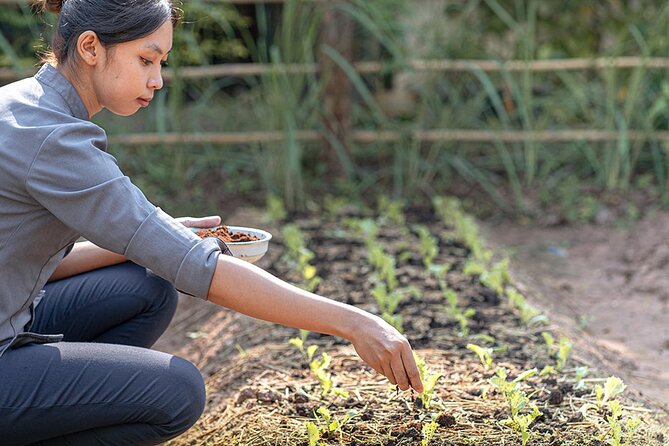
After another short walk, you settle in for the final breakfast at an up-market dining spot. The setting provides a contrast to the market and street stall, but it is still tied to local food production. The produce is grown next to the table, making the final stop a showcase for a more modern direction in Khmer cuisine.
This part is especially useful if you want to understand where Cambodian cooking may be heading. The tour does not present tradition as frozen in time. It links older breakfast habits with a dining space that pays attention to locally grown ingredients and presentation.
The phrase up-market suggests a more comfortable and polished finish, but the exact restaurant name, menu, and seating style are not included. You should think of this as a final tasting setting rather than a full restaurant meal with unlimited choices.
By the time you arrive here, you have tried food in three very different contexts. That makes the last stop more meaningful. You can compare the market dish, the family stall, and the produce-led dining experience instead of judging each one in isolation.
Culture, History, and Current Affairs on the Walk
Food tours are strongest when the guide explains why a dish matters. This experience aims to cover Khmer culture, Cambodian history, current affairs, and everyday life alongside the tastings.
That wider discussion is important because food does not exist apart from politics, economics, farming, religion, and family work. A street stall run by two generations can say something about household business. A market can show how ingredients reach the city. A dining space growing produce next to the table can point toward changing ideas about food and sustainability.
The quality of this part depends heavily on the individual guide, and no guide names are supplied. The experience provider is Urban Forage. You should ask questions as you walk, especially if you want more than a list of ingredients.
One previous rating gives the tour full marks and highlights the balance between food and culture. That is a useful clue about the intended experience: this is not designed as a nonstop eating contest. The walking and cultural discussion are there to give you breaks and help the food make sense.
What $45 Buys You
At $45 per person, this is more expensive than simply buying breakfast in Siem Reap. You are paying for several tastings, a small group, a guide, a market visit, a pagoda walk, a city orientation, and the work of arranging stops at places you might not easily identify on your own.
The small group helps the price feel more reasonable. With no more than six people, you are not joining a large coach group or waiting behind a crowd at every food stop. A guide can also explain dishes as they arrive and adjust the conversation to your questions.
The value is strongest for a first visit to Siem Reap, especially if you want food to be your introduction to the city. You may also save time by learning about several Cambodian dishes in one morning instead of searching for them separately.
The price is less compelling if you only want a large quantity of food or already know Khmer cuisine well. The experience is built around explanation, movement, and variety. It is not presented as a single long meal, and the exact number of dishes or portion sizes is not given.
Timing, Group Size, and Practical Details
The tour lasts about three hours and begins at 9:00 am. It ends back at the meeting point, so you do not need to arrange a separate return from the final stop.
A mobile ticket is provided, and confirmation is received when you book. The meeting point is near public transportation. There is no hotel pickup information, so you should plan to reach Made in Cambodia Market independently.
The tour allows service animals, and most people can participate. Since the route includes city walking, a market, a pagoda, and several food stops, you should be comfortable moving between locations for part of the morning.
The maximum group size is six. That is one of the clearest advantages of this experience, particularly if you want to ask about ingredients, cooking methods, or Cambodian customs without competing with a large crowd.
Vegetarians can take part because a vegetarian option is available. If you have other dietary needs, the supplied details do not explain how they are handled, so you should check before booking rather than assume substitutions are possible.
Who Should Book This Morning in Siem Reap?
I would choose this tour if you want a food and culture introduction rather than a simple list of restaurant stops. It suits first-time visitors, curious eaters, and anyone who wants a guided start to the day before exploring more of Siem Reap.
It also works well for people who like small businesses and everyday settings. The market and family-run street stall offer a more direct look at local food life than a standard restaurant meal.
You may want to skip it if you dislike walking, prefer to know every dish in advance, or want a late start. The tour is also not the best fit for someone searching for an evening food scene, cocktails, or a full restaurant lunch.
Free cancellation is available up to 24 hours before the start time. Changes or cancellations inside that window are not refunded. The tour also depends on good weather and a minimum number of participants. If poor weather or low enrollment cancels the experience, you are offered another date or a full refund.
Final Call: Book It for Context, Not Just Breakfast
Book this tour if you want Cambodian food explained through the places where it is bought, cooked, served, and discussed. The strongest features are the small group, the mix of market and street food with a more polished final stop, and the balance of eating with a pagoda walk and city orientation.
Skip it if your main goal is a large meal, a late morning, or a fixed menu of named dishes. For everyone else, $45 is a fair price for three hours of guided food tasting and cultural context, especially at the start of a Siem Reap stay.
FAQ
Where does the Siem Reap morning food tour start?
It starts at the Sombai Liqueur Stall at Made in Cambodia Market, on Achar Sva Street in Siem Reap.
What time does the tour begin?
The tour begins at 9:00 am.
How long does the experience last?
The experience lasts approximately three hours.
Where does the tour finish?
It ends back at the original meeting point.
How many people can join the tour?
The activity has a maximum of six participants.
Is a vegetarian option available?
Yes. A vegetarian option is available.
What does the tour include?
The morning includes a local market visit, several Cambodian breakfast dishes, a city orientation walk, a local pagoda visit, a family-run street stall, and a final breakfast at an up-market dining spot.
Is the tour suitable for most people?
Most people can participate. Service animals are allowed, and the meeting point is near public transportation.
Can I cancel for a full refund?
Yes, if you cancel at least 24 hours before the experience starts. Cancellations or changes made less than 24 hours before the start time are not refunded. If poor weather or insufficient enrollment cancels the tour, you are offered another date or a full refund.
Just added in Siem Reap
- Twilight Tastes of Siem Reap Include Dinner★ 5.0 · 13 reviews
- Ultimate Sunrise to Angkor Wat, Angkor Thom and Bayon Temple★ 5.0 · 3 reviews
- Trekking Tour at Phnom Kulen National Park from Siem Reap★ 5.0 · 3 reviews
- Full-Day Private Tour of Angkor Wat with Pick Up★ 5.0 · 12 reviews
- Private Day Trip to Angkor Temples with Expert Guide★ 5.0 · 4 reviews
- Siem Reap City Tour with War Museum and Killing Field★ 5.0 · 27 reviews
- Waterfall & River of 1000 Siva Linga- Kulen Mountain Private Tour★ 5.0 · 3 reviews
- Angkor Wat Experience Temple Pass and Siem Reap Food Tour★ 5.0 · 13 reviews
Tours in Siem Reap, compared.
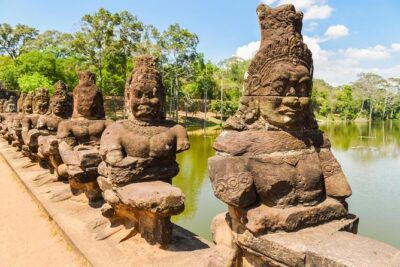
Angkor Wat Sunrise or Sunset Tour with Guide from Siem Reap
Read our review →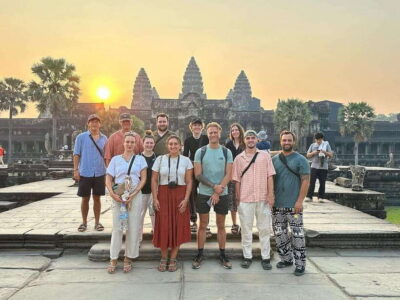
Angkor Wat: Small-Group Sunrise or Sunset Tour
Read our review →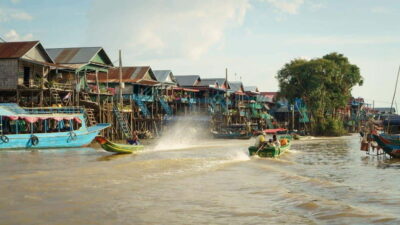
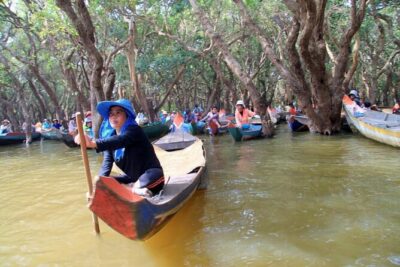
Sunset tour of Kampong Phluk stilts home village on the Tonle Sap
Read our review →
Angkor Wat 2-Day Tour with Sunrise and Sunset
Read our review →
Angkor Wat Sunrise tour with Small – Group and Guide tours
Read our review →