Reviewed · TOURS IN SIEM REAP
Siem Reap: Private Tour of Angkor Complex
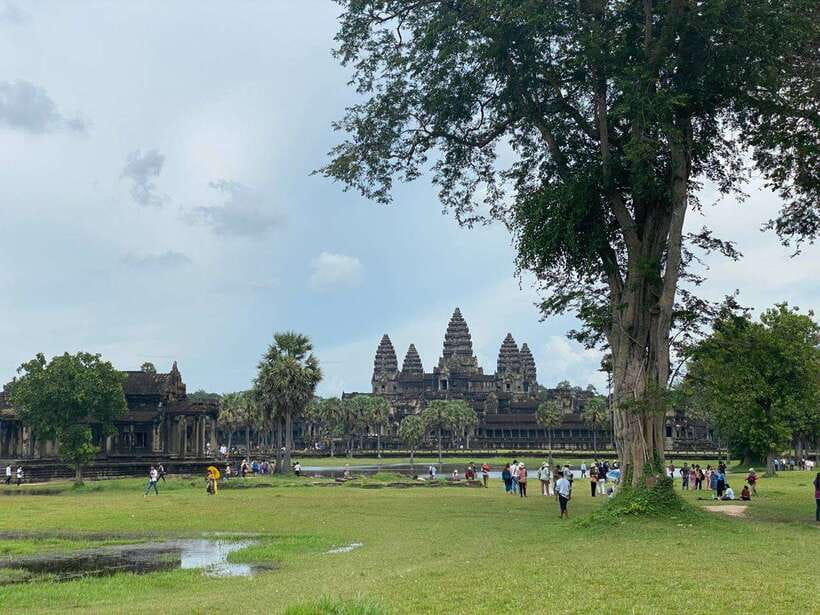
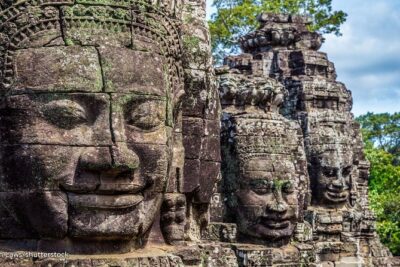
Angkor Wat is the headline, but the day’s real pleasure is seeing how the temples fit together. You begin at Angkor Thom, where Bayon’s carved faces, royal terraces, and old city gates give the ruins a sense of scale before you reach the famous main temple.
I like the private format and the practical touches: your own English-speaking guide and driver, hotel pickup in Siem Reap, air-conditioning, water, coconut juice, and a cool towel. I also like the route, which pairs the quiet, tree-covered remains of Ta Prohm with Angkor Wat’s grand symmetry.
The main caution is guide quality. One booking received a very strong guide and smooth service, while another had a guide who offered little explanation and ended the day around 2:30 p.m. instead of about 6:00 p.m. The private setup gives you a good chance to ask questions, but the experience depends heavily on who leads it.
Key points to know before booking
- Angkor Thom comes before Angkor Wat: You see Bayon, Baphuon, the Royal Enclosure, Phimeanakas, and both terraces in the morning.
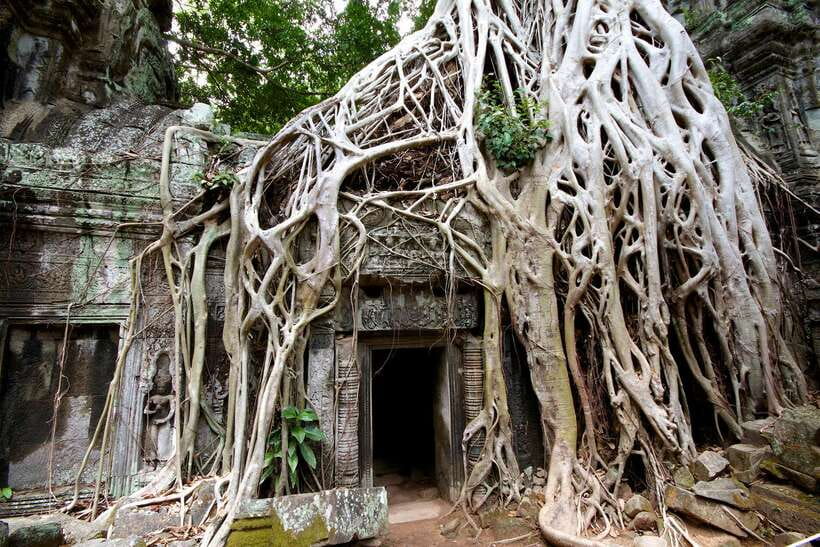
- Ta Prohm adds a different mood: Tree growth and worn stone make this stop feel less formal than Angkor Wat.
- Angkor Wat is visited after lunch: The grandest temple comes later, so you should be ready for a long afternoon.
- A private guide and vehicle are included: You travel by air-conditioned car or minivan, with pickup and return at your Siem Reap hotel.
- The $37 temple pass is extra: Lunch, soft drinks, beer, and personal expenses are also not included.
- Service can vary: The driver received especially warm praise, but the guide’s level of energy and detail may not be consistent.
Why this private Angkor day works
The Angkor complex covers about 60 square miles, so a private vehicle matters. This is not one temple beside another in a compact town center. The ruins are spread across the former Khmer capital, and moving between them under Cambodia’s heat can quickly drain your energy.
With a private car or minivan, you can leave your hotel in Siem Reap, travel between the main sites, and return without following a large group. The tour includes an English-speaking guide and driver, along with hotel pickup and drop-off within Siem Reap City.
I like this arrangement for a first visit. Angkor is too large to understand from a quick look at Angkor Wat alone. The route gives you an old city gate, a temple covered with faces, royal buildings, a ceremonial terrace, a jungle temple, and the great central monument. Each stop answers a different question about how the Khmer kings built and used this place.
The listed price is $72 per person. That is a fair price if you value a private vehicle, a dedicated guide, and a full day of transport. You still need to add the $37 temple pass, lunch, and any drinks beyond the supplied water and coconut juice, so calculate the total before booking.
One past booking referred to a price of $60 for a private driver and guide. Since the stated price here is $72 per person, treat that lower figure as a possible earlier rate rather than something to count on now. The value is strongest for couples or small groups who prefer their own vehicle and do not want to organize the route themselves.
A few more things to do in Siem Reap worth a look
- Full-Day Angkor Wat Sunrise Private Tour with Guide from Siem Reap
★ 5.0 · 2,920 reviews - Siem Reap: Angkor Wat Private Tuk-Tuk Tour
★ 4.9 · 2,222 reviews - Angkor Wat Private Day Tour from Siem Reap
★ 5.0 · 834 reviews
Angkor Thom through the South Gate
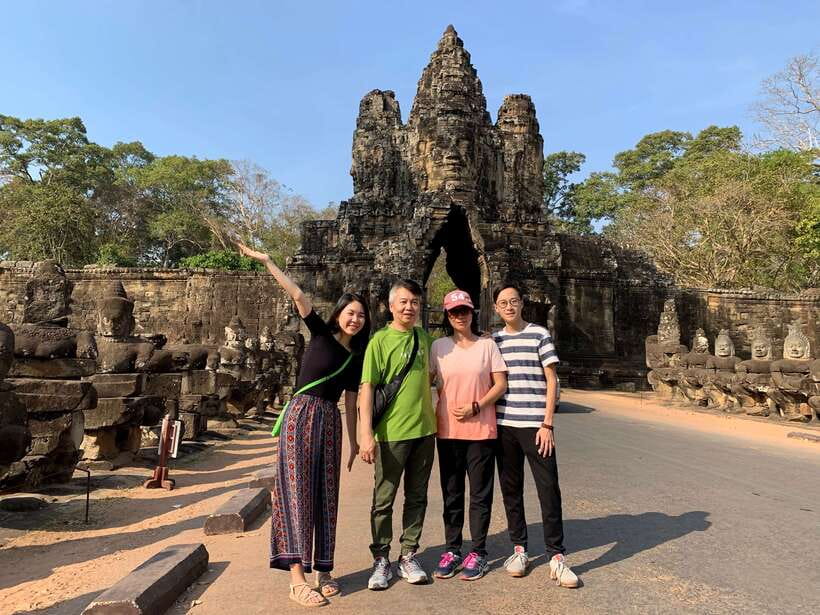
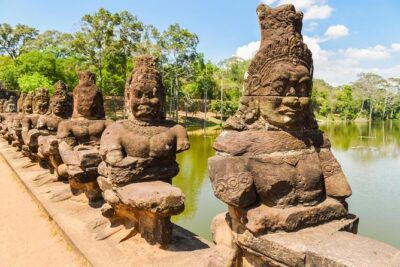
The morning begins at Angkor Thom, the ancient capital of the Khmer Empire. You enter through the South Gate, a fitting start because the approach gives you an immediate sense that this was once a planned royal city, not simply a group of isolated religious buildings.
The gate leads toward Bayon Temple, the first major stop inside Angkor Thom. Bayon is famous for its huge carved faces, which appear on the temple towers with a calm, unreadable expression. They are the kind of details that can look confusing at first glance, so this is where a guide can add real value by explaining what you are seeing and how the temple fits into the wider city.
The stonework is not polished in the way Angkor Wat can appear from a distance. Bayon feels more crowded and vertical, with towers, galleries, and carved surfaces packed into a smaller space. I would plan to move slowly here. Look up, then look across the walls and passages, since the strongest details are not always in front of you.
The private format should help if you want to pause for photographs or ask about a particular carving. It also gives you a chance to say when you need a breather. Still, do not assume the guide will automatically provide a long explanation at every corner. The feedback on this tour makes clear that guide involvement can vary, so ask direct questions early.
Baphuon, Phimeanakas, and the royal center
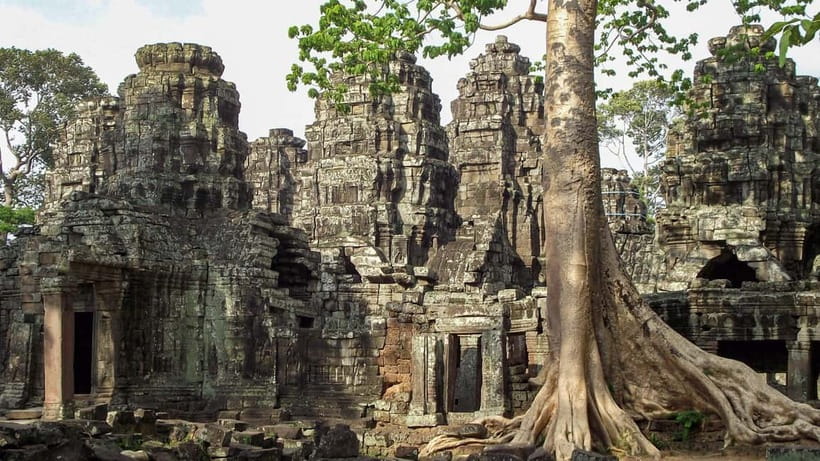
After Bayon, the route continues to Baphuon Temple, the Royal Enclosure, and Phimeanakas. These stops show a different side of Angkor Thom. Bayon captures attention with its faces, while this section helps you picture the city as a royal and administrative center.
Baphuon is part of the former capital’s monumental core. Its large stone structure gives you another example of Khmer building skill, but the experience is less instantly simple than Angkor Wat. Your guide’s explanation matters here because the ruins are easier to appreciate when you understand their place within the old capital.
The Royal Enclosure and Phimeanakas add more evidence of royal life. The route is not only a parade of famous temple names. It is a walk through the center of a city that served kings from the 9th to the 15th centuries. Angkor was later abandoned around 1430, and these remains are what survived from that long period of rule.
You should expect a full morning rather than a quick photo stop. The exact pace is not given, but the number of sites means you will be moving between several structures before lunch. Wear practical clothing and shoes, carry water, and keep some attention for the less famous places. They help make sense of Angkor Thom.
The Terraces of the Elephants and the Leper King
The Terrace of the Elephants is another reminder that Angkor Thom was a royal center built for ceremony and public display. Its name comes from the elephant carvings along the terrace, which are among the details to watch for as you walk beside it.
The Terrace of the Leper King follows on the route. Its carved surfaces and formal setting add another layer to the old capital. This is a good stop for travelers who want more than the best-known temples, since it shows how decoration and royal symbolism extended beyond the main sanctuaries.
I like the inclusion of both terraces because they prevent the day from becoming only a contest between Bayon and Angkor Wat. They may not deliver the same instant impact as the face towers or the central temple, but they give you a better idea of Angkor Thom’s scale and purpose.
This part can also be tiring. You are spending a morning among stone structures in a warm climate, and the tour continues after lunch. Use the private vehicle as a place to recover between stops rather than trying to rush every site.
Same base, a different kind of day out:
- Angkor Wat Sunrise or Sunset Tour with Guide from Siem Reap
★ 5.0 · 12,109 reviews - Siem Reap: Angkor Wat: Small-Group Sunrise or Sunset Tour
★ 5.0 · 9,444 reviews - From Siem Reap: Kampong Phluk Floating Village Tour by Boat
★ 4.9 · 6,979 reviews - Sunset tour of Kampong Phluk stilts home village on the Tonle Sap
★ 5.0 · 4,865 reviews
Ta Prohm, where stone meets jungle
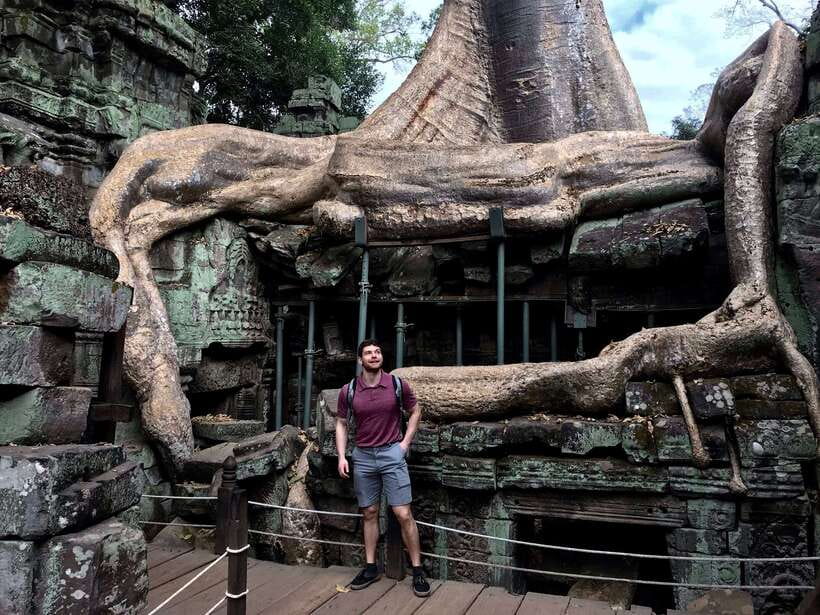
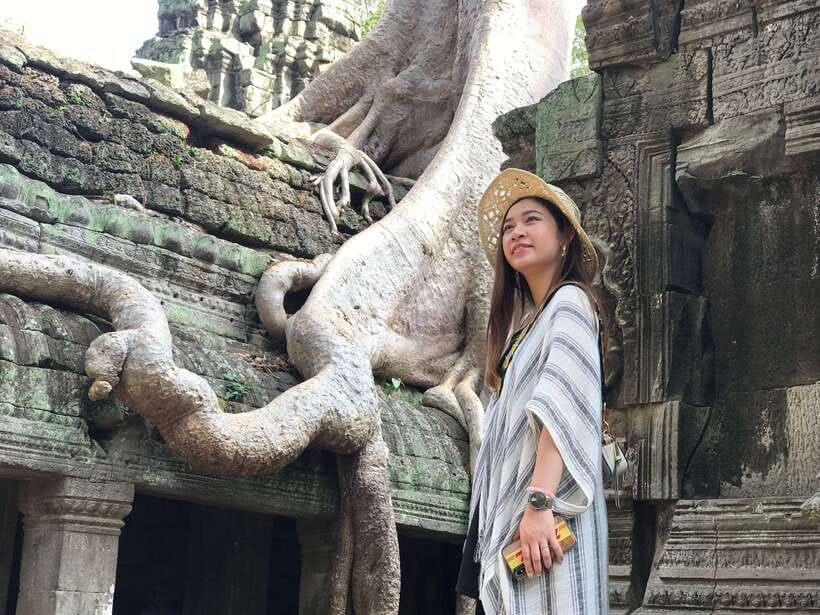
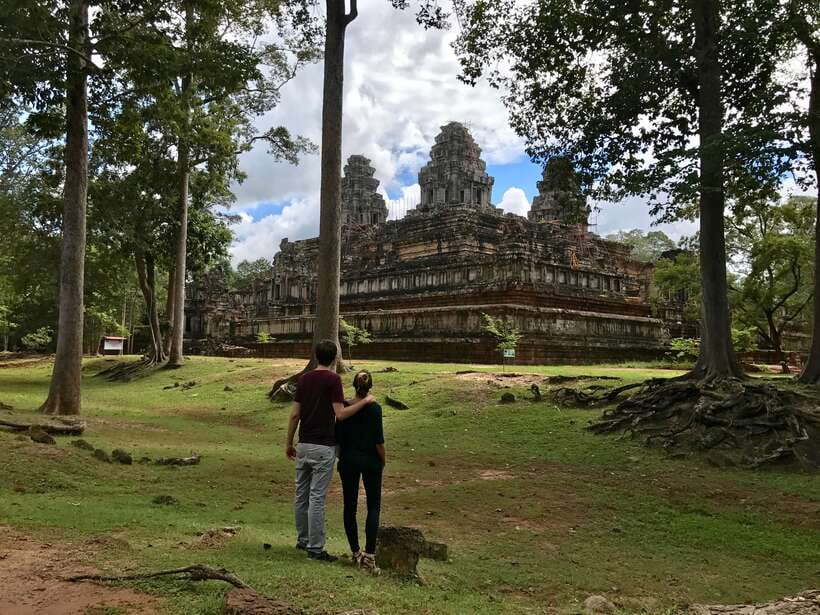
Ta Prohm is the most atmospheric stop on the morning route. It is described as a jungle temple that has remained relatively untouched since its discovery, and its appeal comes from the uneasy meeting of trees, roots, galleries, and crumbling stone.
This is not the same experience as Angkor Wat’s ordered composition. At Ta Prohm, you see the force of nature pressing into the architecture. Tree growth wraps around sections of the temple, while worn corridors and collapsed areas create a more unpredictable setting.
The phrase jungle temple can sometimes set up unrealistic expectations, so keep them in check. You are still visiting a major historic site with other people around, not finding an empty ruin in an untouched forest. The attraction is the contrast between the surviving stonework and the trees that have grown into and around it.
Ta Prohm is also a strong reason to choose this particular route. It gives you a visual break from the broad, formal spaces of Angkor Thom. I would give yourself time to notice the smaller carvings and the way light changes between open courtyards and covered passages.
Lunch and the afternoon visit to Angkor Wat
Lunch is not included, so you pay for your own meal and drinks. The timing is described as after the morning visits, followed by Angkor Wat in the afternoon. Since no restaurant or lunch location is specified, keep your plans flexible and confirm the timing with your guide at the start.
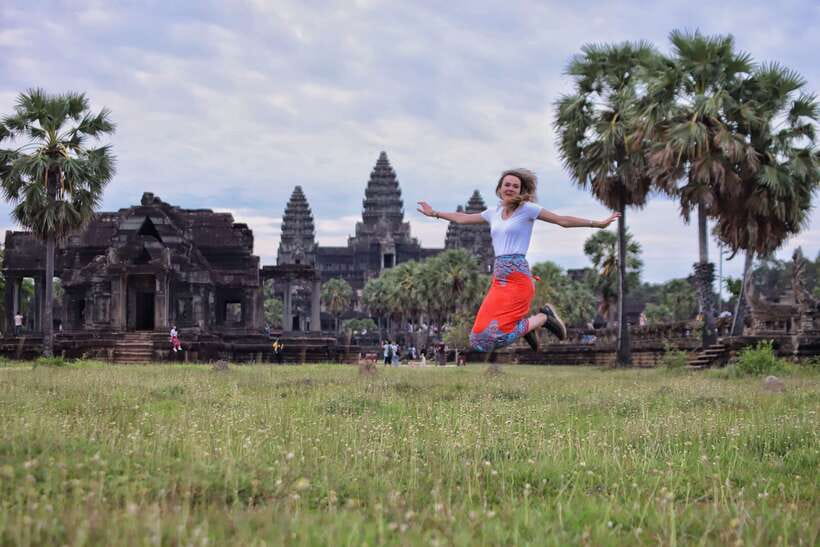
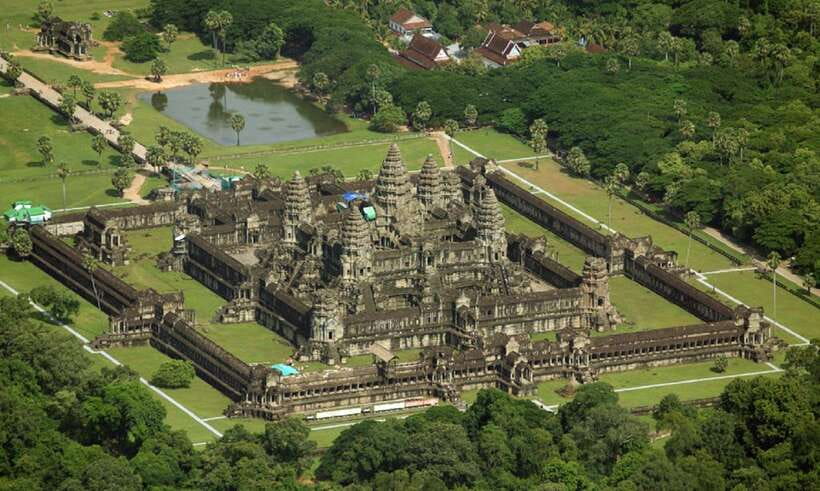
Angkor Wat is the largest and most famous stop of the day. The temple complex covers about 81 hectares, roughly 200 acres, and is comparable in size to Beijing’s Imperial Palace. That figure helps explain why you should not treat it as a quick final photo stop.
What makes Angkor Wat powerful is its balance. The towers, galleries, proportions, and sculptural detail work together in a way that can feel almost too orderly after Ta Prohm. The site was built under the Khmer kings, and its scale reflects a kingdom with the resources and ambition to construct on a massive scale.
You will want time to take in the full composition, but also to look closely. The outer galleries and sculpted details reward a slower pace. If your guide is engaged, ask about the carvings, the temple’s design, and how Angkor Wat differs from the other sites you saw in the morning.
The afternoon timing has one advantage: you have already learned the basic shape of the Angkor complex before reaching its most famous monument. You can now compare Angkor Wat with Bayon and Ta Prohm instead of seeing it as an isolated wonder.
The drawback is that the full day may feel long by this point. One booking ended around 2:30 p.m., well before the expected 6:00 p.m. return, because the guide did not provide much commentary. If you want the complete day, make your expectations clear at pickup and ask how much time is planned at Angkor Wat.
Guide quality and the private-tour question
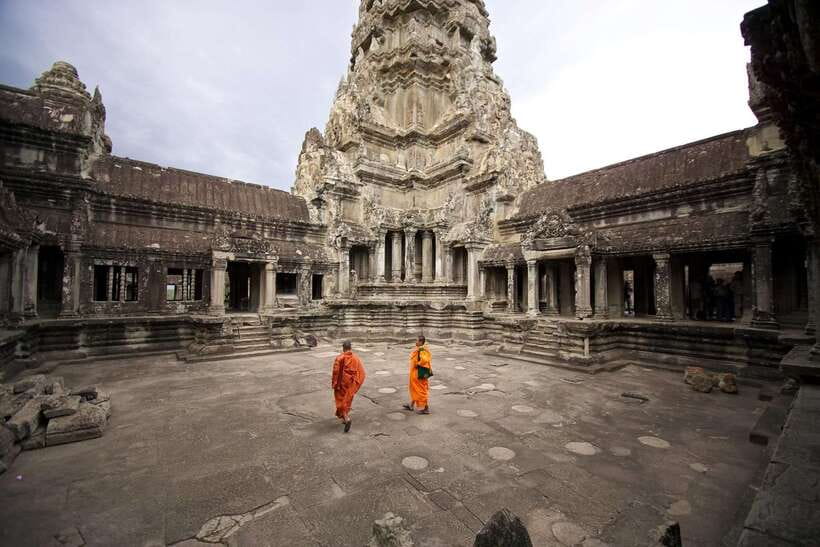
The tour includes a fully vaccinated English-speaking guide and driver. No guide names are provided, so you cannot choose a particular person in advance. That matters because the strongest positive feedback focused on careful arrangements and an informative experience, while the sharpest criticism concerned a quiet, unengaged guide.
A private tour gives you more control than a group outing. You can ask for clarification, request a slower look at a carving, and speak up if you need more historical context. But private does not automatically mean detailed. If the guide is quiet, the day can become a series of transfers and photo stops.
The driver appears to be a reliable part of the service. One booking specifically praised the driver as polite, friendly, and courteous. That is important in a long temple day, since your vehicle is where you rest between sites.
At the start, tell the guide what you want. You might say that you want clear explanations at Bayon, Ta Prohm, and Angkor Wat, not only transport and introductions. This is a small step, but it helps set the tone.
What the $72 includes, and what it does not
The package includes:
- An English-speaking guide and driver
- Air-conditioned car or minivan transport
- Pickup and drop-off at your Siem Reap City hotel
- Drinking water
- Fresh coconut juice
- A cool towel
The temple pass costs $37 per person and is not included. Lunch, soft drinks, beer, and personal expenses are also extra.
The water, coconut juice, and cool towel are modest additions, but they make sense here. You are spending hours outside and walking among stone temples, so small comforts have practical value. Do not mistake them for a full meal or a substitute for carrying what you need during the day.
You should provide your hotel or guesthouse name when booking so the guide and driver know where to collect you. The service is listed in English only.
Who should book this Angkor tour?
I would choose this tour if you want the classic Angkor route in one private day and prefer not to arrange transport between widely spaced sites. It suits couples, families, and small groups who value their own vehicle and a guide rather than a large coach.
It is also a good fit for a first visit. The route covers the essential contrasts: Angkor Thom’s old capital, Bayon’s carved faces, the royal terraces, Ta Prohm’s tree-covered ruins, and Angkor Wat’s grand design.
I would hesitate if you need a guaranteed specialist guide or a tightly enforced return time. The guide’s quality appears to be the main variable, and one booking did not receive the expected full afternoon. Ask at the beginning how the day will run, and speak up if the commentary is too brief.
Cancellation is flexible: you can cancel up to 24 hours in advance for a full refund, and the booking option allows you to reserve now and pay later. Those terms are useful if your Siem Reap plans are still changing.
Should you book it?
Book this private Angkor tour if you want the major temples covered without arranging a driver yourself, and if you value the comfort of an air-conditioned vehicle between sites. The route is well chosen, with enough variety to show why Angkor is more than Angkor Wat alone.
The $72 per-person price becomes more attractive when shared by a small party, though you should add the $37 pass, lunch, and personal costs. Go in with realistic expectations about the guide. The driver service and private format are strong advantages, but the depth of explanation may depend on the person assigned.
If clear historical storytelling is your top priority, confirm that expectation at pickup. If flexible transport, the essential Angkor sights, and a private day matter most, this is a sensible choice.
FAQ
Where does the tour take place?
The tour takes place in Siem Reap Province, Cambodia, at the Angkor temple complex.
How much does the tour cost?
The stated price is $72 per person. The $37 temple pass is not included.
Is the temple entrance fee included?
No. You must pay the $37 temple pass separately.
Is hotel pickup provided?
Yes. Pickup and drop-off are provided from hotels in Siem Reap City. You need to provide your hotel or guesthouse name.
What transport is used?
Transfers are provided in an air-conditioned car or minivan.
Is lunch included?
No. Lunch, soft drinks, beer, and personal expenses are not included.
What language is the tour offered in?
The tour is offered in English, with an English-speaking guide and driver.
Just added in Siem Reap
- Twilight Tastes of Siem Reap Include Dinner★ 5.0 · 13 reviews
- Ultimate Sunrise to Angkor Wat, Angkor Thom and Bayon Temple★ 5.0 · 3 reviews
- Trekking Tour at Phnom Kulen National Park from Siem Reap★ 5.0 · 3 reviews
- Full-Day Private Tour of Angkor Wat with Pick Up★ 5.0 · 12 reviews
- Private Day Trip to Angkor Temples with Expert Guide★ 5.0 · 4 reviews
- Siem Reap City Tour with War Museum and Killing Field★ 5.0 · 27 reviews
- Waterfall & River of 1000 Siva Linga- Kulen Mountain Private Tour★ 5.0 · 3 reviews
- Angkor Wat Experience Temple Pass and Siem Reap Food Tour★ 5.0 · 13 reviews
Tours in Siem Reap, compared.
Angkor Wat Sunrise or Sunset Tour with Guide from Siem Reap
Read our review →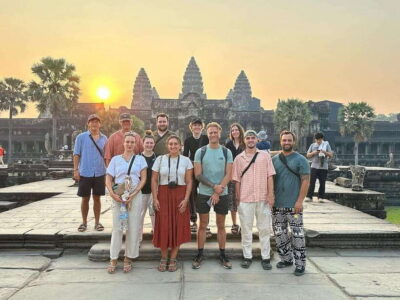
Angkor Wat: Small-Group Sunrise or Sunset Tour
Read our review →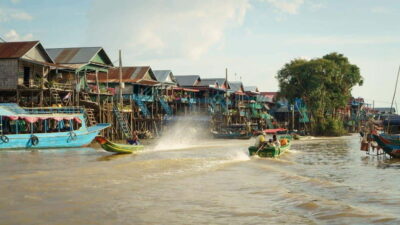
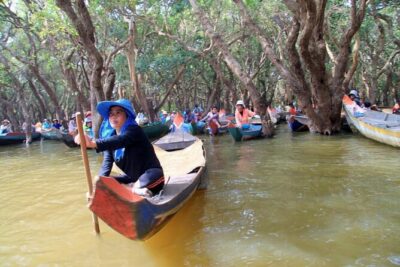
Sunset tour of Kampong Phluk stilts home village on the Tonle Sap
Read our review →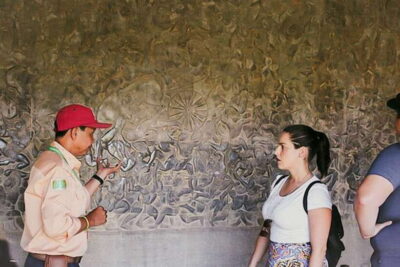
Angkor Wat 2-Day Tour with Sunrise and Sunset
Read our review →
Angkor Wat Sunrise tour with Small – Group and Guide tours
Read our review →