Reviewed · TOURS IN SIEM REAP
Traditional Khmer Water Blessing by Monk and Lotus Farm Visit
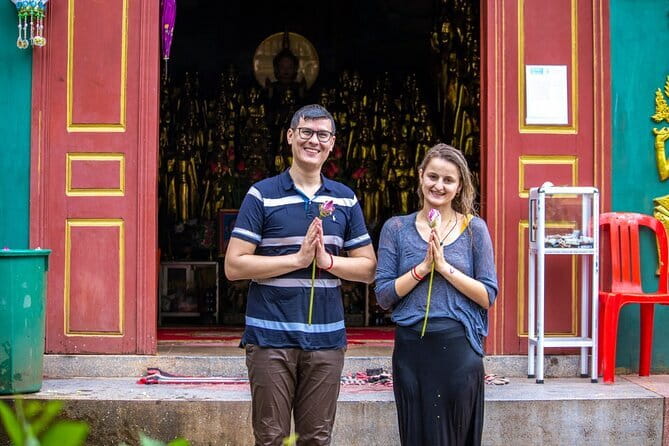
The heart of this Siem Reap outing is a traditional Khmer water blessing, where a monk chants and sprinkles or pours holy water over you. It is a quiet chance to ask for health, good fortune, or happiness, with your guide explaining the Buddhist beliefs behind the ritual.
I like the mix of spiritual ceremony and everyday local life: you visit a temple, stop for fried banana and sweet potato, and see lotus farming on the road toward Tonle Sap Lake. I also like the small-group feel and open-air remork, Cambodia’s practical tuk-tuk.
The main thing to consider is that this is not a fast sightseeing loop. The blessing is the focus, and you may need to change clothes afterward. If you prefer major monuments and nonstop activity, this gentle half-day outing may feel slow.
Key points to know before you book
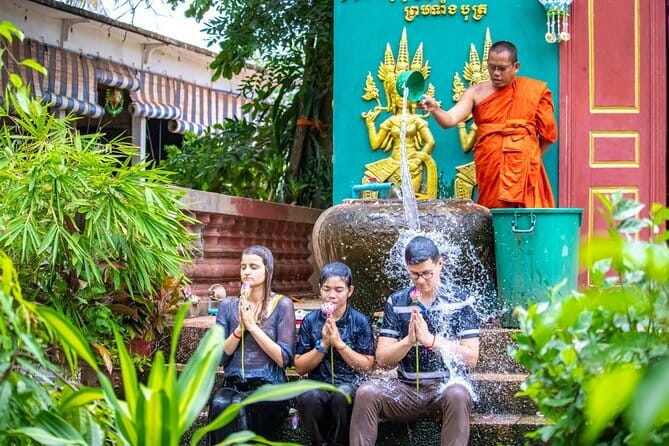
- Receive a traditional monk’s blessing: Holy water is paired with chanting and a chance to make personal wishes for health, pleasure, or good fortune.
- Visit Wat Po Banteaychey: You learn about Buddhist beliefs, temple life, and the role of the pagoda before the ceremony begins.
- See lotus farming near Tonle Sap Lake: A local guide explains how lotus plants are grown, harvested, and used.
- Meet local life in central Siem Reap: The route includes the Royal Residence, the spiritual house of Phreah Ang Chek and Phreah Ang Chom, and Old Market snacks.
- Ride in a remork: The open-air tuk-tuk keeps the outing local in feel and makes the road between stops part of the experience.
- Plan on three to four hours: Pickup, transport, temple time, the blessing, food tasting, and the lotus farm make this longer than a simple temple visit.
Why the water blessing is the real centerpiece
Many Siem Reap tours revolve around Angkor’s monumental stone temples. This one turns to a different part of Cambodian life: the Buddhist ceremony that still has meaning for local people.
At Wat Po Banteaychey, you first learn what the temple does and how Buddhist beliefs shape daily life. The guide helps explain the setting before you meet the monk, which matters. Without that context, the water blessing could seem like a brief photo stop. With it, you can better understand why people seek blessings for health, happiness, and good fortune.
The monk chants while holy water is sprinkled or poured over you. The ceremony is personal rather than theatrical. You should approach it with quiet attention and respect, since this is a religious act, not simply a cultural performance.
The experience also gives you a chance to speak with a monk. That can be one of the most useful parts for anyone curious about Buddhism in Cambodia. Your guide can help with questions about beliefs, temple activities, and the role of the pagoda.
Bring an open mind, and dress in a way that suits a religious site. The supplied details do not set out a strict dress code, but modest clothing is the sensible choice for a temple visit. Since you may need to change after the blessing, wear something comfortable and bring any personal items you need for changing.
Other trips people book in Siem Reap:
- Angkor Wat Sunrise or Sunset Tour with Guide from Siem Reap
★ 5.0 · 12,109 reviews - Siem Reap: Angkor Wat: Small-Group Sunrise or Sunset Tour
★ 5.0 · 9,444 reviews - From Siem Reap: Kampong Phluk Floating Village Tour by Boat
★ 4.9 · 6,979 reviews
Starting with the Royal Residence and a spiritual house
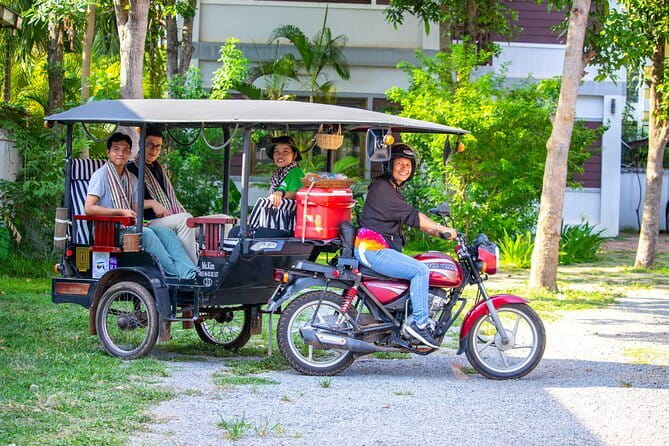
Pickup begins at your Siem Reap hotel in a remork, with the exact time based on your location. From there, the first substantial stop is the Royal Residence and the nearby spiritual house known as Phreah Ang Chek and Phreah Ang Chom.
This is a useful opening because it introduces Cambodian spirituality before the main ceremony. Your guide explains the site and its religious importance, giving you a frame for the rest of the morning or afternoon.
The visit lasts about 30 minutes. That is enough for an introduction without making this stop the main event. If you have already seen the Royal Residence area, you may find it familiar, but the focus here is the spiritual house and the local explanation rather than a long architectural tour.
A guide makes a real difference at this stop. Places connected with religious belief can be easy to pass without understanding what you are seeing. Guides such as Hong and Bo are described as especially warm and eager to explain Cambodian culture. Hong grew up near the lotus farm, adding a personal connection to the countryside portion of the route.
A five-minute Old Market snack stop
The Old Market, or Psar Chaa, comes next, but this is not a full market tour. You meet one of Siem Reap’s fried banana business owners, whose shop has been open for more than 20 years, and try fried banana and sweet potato.
The stop takes about five minutes, so think of it as a taste of local street food rather than a chance to browse stalls. That short pause is still worthwhile. Food gives you a quick connection to ordinary life, and the snack breaks up the ride before the quieter rural stops.
The included food is a small but useful touch. You do not need to budget for it separately, although personal spending is not included if you decide to buy something else. The tour also provides cold water and local snacks.
Lotus fields on the road to Tonle Sap Lake
The route then heads toward a lotus farm. You can see lotus fields along the road, with the ponds becoming part of the scenery before you reach the farm itself.
This stop lasts about 30 minutes. The guide explains how lotus plants are farmed and harvested, as well as how different parts of the plant are used. That practical detail gives the stop more substance than a quick picture opportunity.
For me, this is where the outing gains its best sense of place. The Royal Residence and temple connect you with Cambodia’s spiritual life, while the lotus farm shows a working side of the countryside. The stop is modest, but it helps you see how local food and farming fit into the area around Siem Reap.
The lotus farm may be especially appealing if you have already spent several days among temples. It offers a change of pace without abandoning the cultural focus. You are not simply looking at scenery. You are learning how the plants are grown and used.
The farm visit also benefits from a personal guide. Hong’s connection to the area near the lotus farm means the explanation can include local knowledge rather than only general facts. The supplied information does not promise a particular harvest season or a set number of farm activities, so treat this as a visit and explanation, not a hands-on agricultural workshop.
Same base, a different kind of day out:
- Sunset tour of Kampong Phluk stilts home village on the Tonle Sap
★ 5.0 · 4,865 reviews - Siem Reap: Angkor Wat 2-Day Tour with Sunrise and Sunset
★ 4.9 · 4,429 reviews - Siem Reap: Full-Day Angkor Wat Guided Tour with Sunset
★ 4.9 · 3,803 reviews - Angkor Wat Sunrise tour with Small – Group and Guide tours
★ 5.0 · 3,655 reviews
Learning the temple’s role before the ceremony
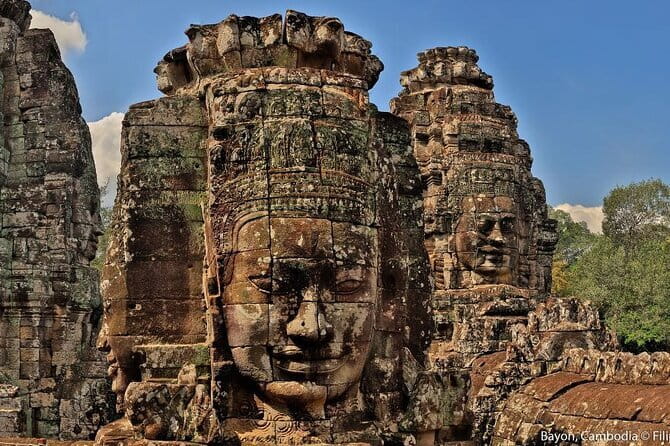
Wat Po Banteaychey is the longest stop, at about one hour. That time includes an introduction to Buddhist belief, the structure and role of a local temple, and activities that take place at the pagoda.
This preparation is one of the tour’s strongest features. You get a chance to ask questions before the blessing, rather than being rushed straight into the ritual. The guide is there to explain the setting and help you understand what is happening.
The temple visit also makes the experience more than a single ceremonial moment. You see how a local religious site functions and how the water blessing fits into a wider Buddhist setting. If you are curious about Cambodian culture but do not want a lecture-heavy tour, the format should suit you: the information is tied to the places you are seeing.
The ceremony itself involves the monk’s chanting and holy water. You can make a wish for health, good fortune, or pleasure. The experience is not presented as a promise that a wish will come true. Its value is in taking part respectfully in a living tradition and understanding why people seek this kind of blessing.
Keep your expectations grounded. This is not a staged show with elaborate entertainment. It is a quiet religious encounter, and the mood may depend on the temple and the day’s schedule. That is part of its appeal, but it also means the experience will suit you best if you are comfortable with a slower pace.
Changing clothes and taking time around the pagoda
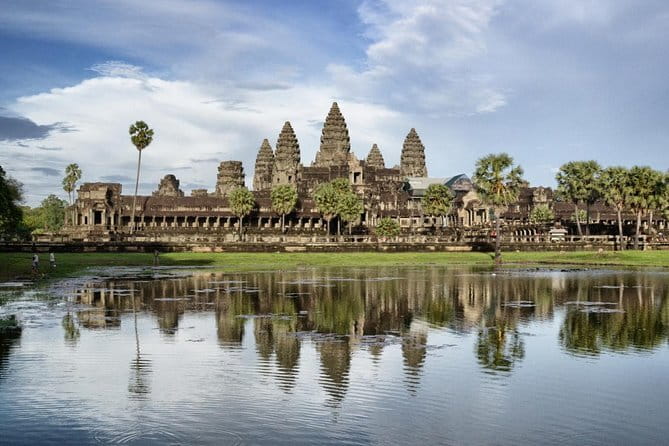
After the blessing, you are asked to change your clothes and then spend more time walking around the pagoda area. The tour concludes after about another 30 minutes, with transport back to Siem Reap.
This is the point where practical planning matters. Wear clothes that are easy to change, and avoid treating this like a formal evening outing. The supplied information does not specify changing facilities, so you should be prepared to ask your guide for help with the arrangements on the day.
The extra time around the pagoda is useful. You can ask follow-up questions while the ceremony is still fresh in your mind. If you have been wondering about the monk’s role, the temple’s activities, or Cambodian Buddhist practices, this is the natural moment to ask.
You also have time to slow down. The tour is not designed to squeeze a dozen attractions into half a day. The final temple period gives the experience room to breathe, though some people may prefer a shorter visit.
What the $70 price covers
At $70, this is not the cheapest way to spend three or four hours in Siem Reap. The value depends on what you want from the outing.
You are paying for hotel pickup, a private-feeling remork ride within a group capped at 15 people, an English-speaking local guide, the monk’s offering and donations, the lotus farm entrance fee, cold water, and local snacks. The included donation is important because you do not have to guess what is appropriate to give during the blessing.
The price also pays for interpretation. You could visit a temple independently, but you would miss much of the explanation about Buddhist belief, the pagoda’s role, and lotus farming. Guides such as Hong and Bo are a major part of the experience, especially if you want to ask questions rather than simply take photographs.
The value is strongest for a first visit to Cambodia, solo visitors, couples, and anyone who wants a cultural activity away from the main Angkor circuit. It is less compelling if your main goal is shopping, nightlife, or a full-scale food tour.
The group limit of 15 is reasonable, but it does not guarantee a private tour. One person previously had the experience alone, which made the outing feel especially personal, but group size can vary. If you are looking for a fully private ceremony, confirm that before booking.
The remork ride and the pace of the day
The remork is part of the charm. Instead of traveling in a sealed van, you ride in an open-air tuk-tuk and see more of the road between Siem Reap, the lotus fields, and the temple.
That choice also shapes the comfort level. A remork is practical and local, but it is not a luxury vehicle. You should be ready for an outdoor ride and changing conditions. The tour is dependent on good weather, so poor conditions can lead to a new date or a refund.
The three to four-hour length works well as a morning or afternoon plan. Pickup timing depends on your hotel, so you should keep some flexibility around the start. The itinerary includes several short stops, but the temple and blessing take most of the meaningful time.
The route is paced for conversation and observation. It is not ideal if you want to cover as much ground as possible. It is a better choice if you want to spend time understanding a few places.
Who will enjoy this experience most
I would recommend this tour to you if you want a personal look at Cambodian spirituality and daily life. It suits visitors who are curious about Buddhism, interested in local food and farming, or ready for a quieter alternative to a standard temple circuit.
It is also a good fit for solo visitors. The guide can answer questions throughout the trip, and the remork keeps the outing informal. Families may enjoy the fried banana, sweet potato, and lotus farm, though the blessing requires respectful behavior and patience.
The tour may not suit you if you dislike religious ceremonies, do not want to change clothes, or prefer large monuments and formal museum visits. It also offers only a brief Old Market stop, so do not book it expecting extended shopping time.
The female-led element may matter to some visitors. The operator is described as women-owned and operated, and guides such as Hong bring a clear personal interest in sharing Cambodian culture. That does not replace the importance of the ceremony itself, but it adds a thoughtful local perspective.
Booking advice and final verdict
I would book this if you want more than photographs from Siem Reap. The water blessing, temple explanation, lotus farming, and small food stop create a varied half-day with a clear cultural purpose.
Book it after your main Angkor visits if you want a change of rhythm, or early in your stay if you want your guide’s explanations to shape the rest of your time in Cambodia. Allow three to four hours, wear practical clothes, and remember that the blessing is a religious experience, not a performance.
You can cancel for a full refund up to 24 hours before the start time. Changes made inside that window are not accepted, and poor weather or failure to reach the minimum group size can lead to a different date or a refund.
For $70, this is a fair choice when the guide and the ceremony matter to you. It is not a bargain transport loop, but it offers context, local contact, and a respectful look at a side of Siem Reap that the big temples cannot provide.
FAQ
How long does the Traditional Khmer Water Blessing tour take?
The experience lasts approximately three to four hours, including hotel pickup, the Royal Residence, the Old Market snack stop, the lotus farm, Wat Po Banteaychey, and the return to Siem Reap.
Is hotel pickup included?
Yes. Pickup is offered from your Siem Reap hotel, and the exact time depends on your location.
What happens during the water blessing?
A monk chants and sprinkles or pours holy water over you. You can make a wish for good fortune, pleasure, or health.
Will I visit a lotus farm?
Yes. The tour visits a lotus farm near the road toward Tonle Sap Lake. The guide explains lotus farming, harvesting, and how the plant is used.
Is transportation included?
Yes. Transportation is provided by remork, the Cambodian-style tuk-tuk, with a local English-speaking guide.
Are snacks and drinks included?
Yes. Cold water and local snacks are included. The Old Market stop includes fried banana and sweet potato.
What is the cancellation policy?
You can cancel at least 24 hours before the experience for a full refund. Cancellations or changes made less than 24 hours before the start time are not accepted. If bad weather or an insufficient number of participants causes cancellation, you will be offered another date or a refund.
Just added in Siem Reap
- Twilight Tastes of Siem Reap Include Dinner★ 5.0 · 13 reviews
- Ultimate Sunrise to Angkor Wat, Angkor Thom and Bayon Temple★ 5.0 · 3 reviews
- Trekking Tour at Phnom Kulen National Park from Siem Reap★ 5.0 · 3 reviews
- Full-Day Private Tour of Angkor Wat with Pick Up★ 5.0 · 12 reviews
- Private Day Trip to Angkor Temples with Expert Guide★ 5.0 · 4 reviews
- Siem Reap City Tour with War Museum and Killing Field★ 5.0 · 27 reviews
- Waterfall & River of 1000 Siva Linga- Kulen Mountain Private Tour★ 5.0 · 3 reviews
- Angkor Wat Experience Temple Pass and Siem Reap Food Tour★ 5.0 · 13 reviews
Tours in Siem Reap, compared.
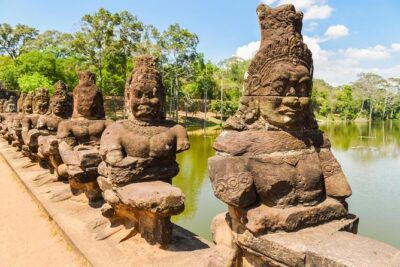
Angkor Wat Sunrise or Sunset Tour with Guide from Siem Reap
Read our review →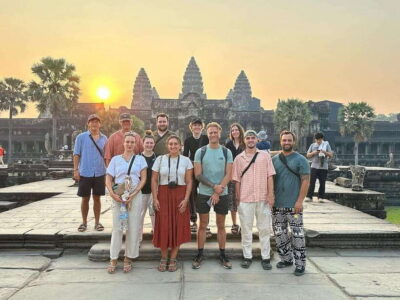
Angkor Wat: Small-Group Sunrise or Sunset Tour
Read our review →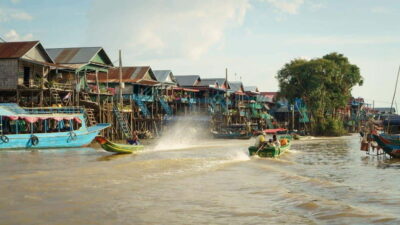
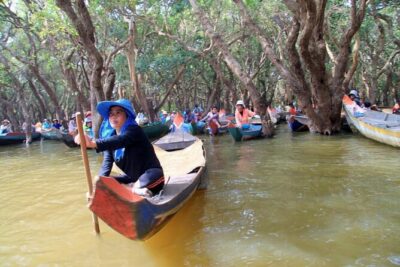
Sunset tour of Kampong Phluk stilts home village on the Tonle Sap
Read our review →
Angkor Wat 2-Day Tour with Sunrise and Sunset
Read our review →
Angkor Wat Sunrise tour with Small – Group and Guide tours
Read our review →