
Reviewed · TONLE SAP & FLOATING VILLAGE TOURS
Two-days tour discovering Angkor Wat and Floating Village
The best part of this two-day Siem Reap tour is the mix: one full day among Cambodia’s great temple ruins, followed by a quieter look at life on Tonle Sap lake. You see the famous places, but you also get the floating village, a museum, an old market stop, and a stone-carving workshop.
I like the private format, since your group gets its own guide and vehicle rather than being tied to strangers. I also like the air-conditioned transport, cold water, and cold towels, small comforts that matter in Cambodia’s heat. The main catch is price planning: the $92 fee does not include temple, museum, village, or other entrance tickets, and meals are also extra.
Key points to know before booking
- Bayon and Ta Prohm receive proper time: The first day allows about two hours at each major temple, rather than treating them as quick photo stops.
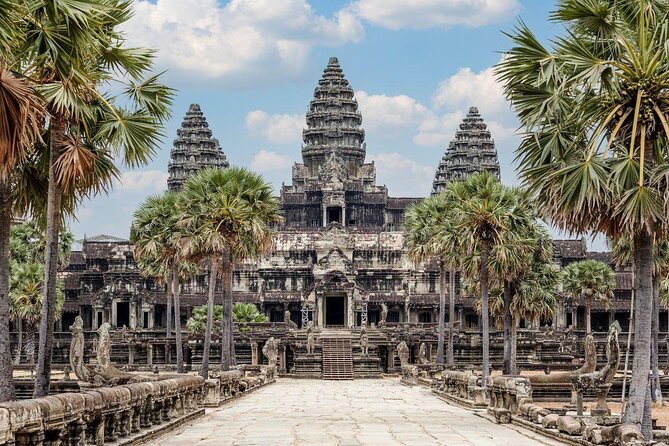
- Sunset at Angkor Wat is built into day one: You finish among Cambodia’s most famous towers at the best-known hour for soft light.
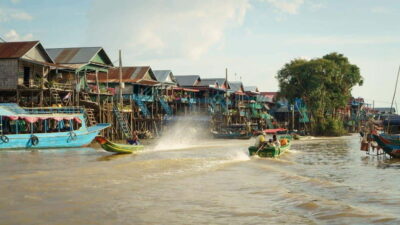
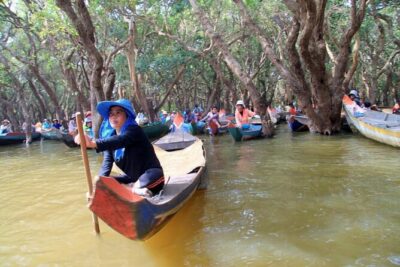
- Kompong Phluk changes the pace: Four hours are set aside for stilted homes, floating buildings, fishing life, and the lake environment.
- You travel privately: Only your own group participates, with an English-speaking guide and air-conditioned vehicle.
- The price has important exclusions: Entrance tickets and all meals are not included, so add those costs before comparing tours.
- Guide service gets high marks: Sen is named in one especially positive booking experience, with praise for easy communication and an upbeat approach.
Two days that balance temples and daily life
Siem Reap can turn into a checklist if you rush from one ruin to the next. This plan gives you a better rhythm. Day one is devoted to the Angkor complex, with Bayon, Ta Prohm, Banteay Kdei, and Angkor Wat. Day two moves beyond the stone temples to Kompong Phluk, then adds art and museum context.
The tour begins at 8:30 a.m. and includes pickup. Since this is a private activity, the day can feel less crowded in a practical sense: you are not waiting for a large bus group to gather at every stop. The stated plan also aims to avoid busy queues with an English-speaking guide, though the temples themselves can still be busy.
One booking specifically praised the easy communication with Sen and the driver. Another described the guide as positive, knowledgeable, and upbeat. The guide’s name may vary by departure, but that gives you a useful sense of the intended service: active explanation, help with the day’s flow, and a friendly presence rather than a bare transfer.
Other trips out on the lake from Siem Reap:
- From Siem Reap: Kampong Phluk Floating Village Tour by Boat
★ 4.9 · 6,979 reviews - Sunset tour of Kampong Phluk stilts home village on the Tonle Sap
★ 5.0 · 4,865 reviews - Kompong Phluk Floating Village Half-Day Tour ( Morning / Sunset )
★ 5.0 · 1,494 reviews
Bayon and Angkor Thom, faces in the stone
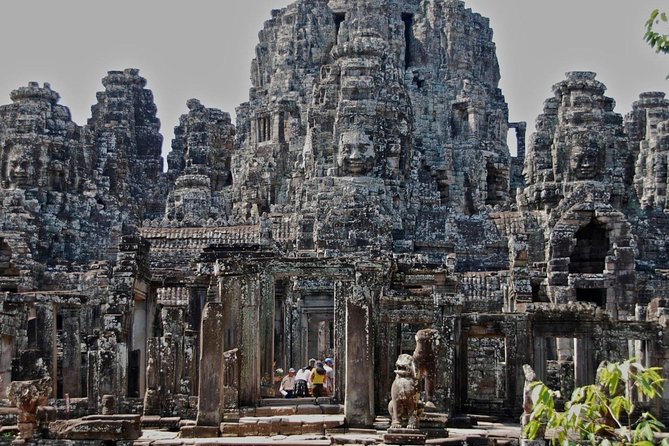
The first stop is the south gate of Angkor Thom, followed by Bayon and Baphuon. Plan on about two hours here. That is enough time to examine the central temple area without reducing it to a quick walk around the outside.
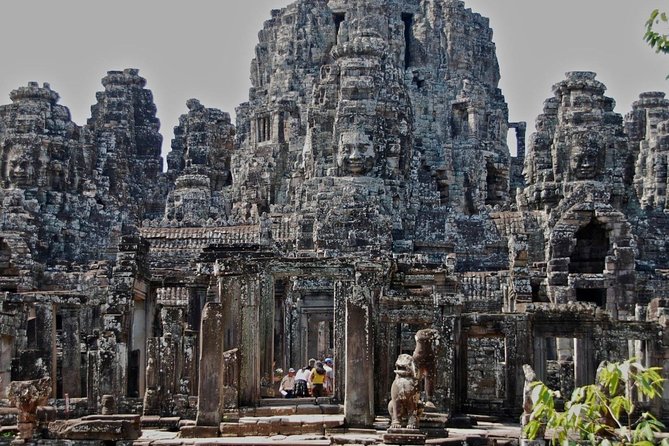
Bayon is famous for its towers carved with large serene faces associated with Avalokitesvara. The supplied description counts 54 towers and 216 faces, though exact counts can vary depending on how the towers are counted. The useful point for you is that Bayon rewards slow looking. Faces appear from different angles, and narrow passageways bring you close to the stonework.
Angkor Thom adds scale around the temple itself. The fortified city setting helps you understand that Bayon was not an isolated monument. Baphuon gives the stop another layer, with a different shape and feel from Bayon’s face towers.
This portion is best for anyone who likes architecture, carved details, and a guide who can explain what you are seeing. If you prefer long uninterrupted walks, the planned two hours may feel short. If heat is a concern, the vehicle between stops and the included cold water make the pace easier.
Ta Prohm, where roots meet ruins
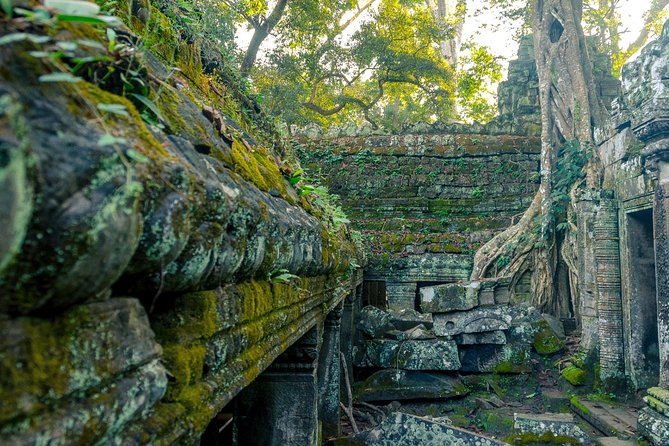
Ta Prohm receives another two-hour visit, making it one of the best-supported stops on the first day. The temple is often called the jungle temple or tree temple because large roots grow around and over sections of the stone ruins.
The appeal is visual, but it is not only about taking a famous photograph. The roots and walls show how the temple has been shaped by time, vegetation, conservation work, and the elements. You can look at doorways, galleries, and fallen blocks while the guide helps separate the original design from later damage.
Ta Prohm is likely to be one of the busiest stops on the route, so the private arrangement helps with your own pace, but it cannot guarantee quiet. Wear shoes suited to uneven temple surfaces and bring sun protection. The tour supplies cold water and a cold towel, but you still need to dress for an outdoor day.
Banteay Kdei, a quieter afternoon stop
After Ta Prohm, the schedule turns to Banteay Kdei for about one hour. Built by King Jayavarman VII in the late 12th century, it gives you another example of the period’s temple design without repeating Bayon exactly.
An hour is a sensible amount of time here. You can see the main structure, study the galleries, and compare its condition and atmosphere with Ta Prohm. The stop also helps break up the first day. You are not spending every hour at the largest and most crowded monument.
Do not expect Banteay Kdei to carry the same instant recognition as Angkor Wat or Ta Prohm. Its value is in the comparison. I like this kind of stop because it gives you more than a greatest-hits tour and helps the temples feel connected rather than isolated.
Same base, a different kind of day out:
- Angkor Wat Sunrise or Sunset Tour with Guide from Siem Reap
★ 5.0 · 12,109 reviews - Siem Reap: Angkor Wat: Small-Group Sunrise or Sunset Tour
★ 5.0 · 9,444 reviews - Siem Reap: Angkor Wat 2-Day Tour with Sunrise and Sunset
★ 4.9 · 4,429 reviews - Siem Reap: Full-Day Angkor Wat Guided Tour with Sunset
★ 4.9 · 3,803 reviews
Angkor Wat at the end of day one
The final temple stop lasts about three hours, including a sunset visit to Angkor Wat. This is the day’s centerpiece, and the timing gives you room to see more than the front view and central towers.
Angkor Wat was built by King Suryavarman II and is recognized as a UNESCO World Heritage Site. Its scale becomes clearer as you move through the approach, galleries, courtyards, and carved surfaces. A guide is useful here because the complex can seem almost too large to take in without some direction.
Ending with sunset is a strong choice. The light can soften the stone and give the towers a memorable finish, though sunset conditions are never guaranteed to produce dramatic color. You should also expect this to be a long day outdoors. The tour provides transport back to your accommodation or meeting point, but dinner is not included.
The plan lists the temple admission as extra. Be sure to budget for required entrance fees before deciding that $92 is the complete cost. The tour price pays for the vehicle, guide, and structure of the experience, not every expense once you arrive.
Kompong Phluk and life on Tonle Sap
Day two moves away from temple stone and into the floating village of Kompong Phluk, about 30 kilometers from Siem Reap. The planned visit lasts four hours, making it the longest single stop on the tour.
Kompong Phluk is described as a traditional Khmer floating village with tall stilted houses, a floating hospital, fishing activity, and older local ways of life. The village sits above or upon the water of Tonle Sap, Southeast Asia’s largest freshwater lake. That setting gives you a look at how homes and work adapt to changing water conditions.
This is the part of the experience that adds social and environmental context to the temple visits. You are not only looking at monuments built by kings. You are also seeing how fishing communities make a living and organize daily life around the lake.
The four-hour allocation allows time for the village itself and the journey around it, but the exact feel can depend on water conditions and the day’s local operation. The listing does not include meals, so plan for food separately. It also identifies entrance tickets as extra, which applies here as well.
You should approach this stop with respect. It is a living community, not a stage set. Follow your guide’s instructions about where to walk, what to photograph, and how to behave around homes, workplaces, and public buildings.
Angkor National Museum, one hour of context
After the lake, the tour visits Angkor National Museum for about one hour. The museum presents a large collection of Buddha statues and relics in a single gallery.
This is a useful follow-up to the temple day because it gives you a closer look at sculpture and religious objects. At the temples, carvings are attached to architecture and spread across large areas. In a museum, you can focus on individual statues and details.
One hour is enough for a focused visit, but not for every display in depth. I would treat this as a supporting stop rather than the main event. It works best if you want more background after seeing the monuments, or if the heat makes an indoor hour welcome.
Museum admission is not included in the tour price. Ask your guide about the ticket cost and what the visit covers before entering, since the supplied tour details do not give a separate fee.
Artisans Angkor and a chance to carve stone
The final listed stop is Artisans Angkor, a local nonprofit organization that works to improve the lives of disadvantaged Cambodians from rural areas. You spend about one hour at the workshop and can try crafting your own stone carving.
This is more hands-on than the museum and gives the second day a practical finish. You are not only looking at finished Khmer art. You get a small sense of the patience and control required to shape stone.
The stop may suit you especially well if you like craft demonstrations and want a connection to present-day Cambodian work. It is less important for someone who wants every available minute at the ancient temples, but the two-day plan already gives you a substantial first day among the ruins.
The workshop also gives you a chance to support a local social purpose, though the tour information does not specify whether purchases or donations are included. Treat any shopping or extra activity as separate from the $92 fee.
What the $92 price really covers
At $92 per person, this tour offers solid value if you want a private two-day structure without arranging transport and a guide yourself. You receive an air-conditioned vehicle, an English-speaking guide, pickup, cold water, and cold towels. You also avoid the uncertainty of finding separate transport for the temples, lake, museum, and workshop.
The private format matters most for couples, families, and small groups. You travel only with your own party, so the guide can explain details at a suitable pace. Group discounts are available, which may improve the value for larger bookings.
Still, do not compare the $92 price with an all-inclusive package. Temple and attraction tickets are not included, and neither are breakfast, lunch, or dinner. You should also allow for any personal purchases at Artisans Angkor and other optional costs.
The tour is booked, on average, six days ahead. That is not a rule, but it suggests you should not wait until the last minute if you want a particular date. Confirmation is provided at booking, and free cancellation is available if you cancel at least 24 hours before the start time. Changes or cancellations inside that window are not accepted for a refund.
Who will get the most from this tour
I would choose this experience if you want the main Angkor temples but also want to see a side of Siem Reap that is not made of carved stone. It suits first-time visitors who prefer one organized plan, families who benefit from private transport, and small groups that want to stay together.
It is also a good fit if you value interpretation. Bayon, Ta Prohm, Banteay Kdei, and Angkor Wat can be visited independently, but an English-speaking guide can connect the buildings, rulers, religious ideas, and carved details.
You may want another option if your priority is a very slow temple schedule with long breaks at each site. Day one includes four major stops and sunset, so it is full. You may also prefer to arrange the floating village separately if you want more control over the lake portion, since four hours is a substantial commitment.
Children can participate when accompanied by an adult. The additional information says most people can take part, but it does not give specific mobility details. If anyone in your group has access needs, ask the provider before booking.
Should you book this two-day plan?
Book it if you want private transport, a personal guide, the essential temples, and Kompong Phluk in one package. The strongest features are the sensible two-day split, long visits at Bayon and Ta Prohm, sunset at Angkor Wat, and the chance to see local life on Tonle Sap.
Before paying, calculate the full cost with admission tickets and meals. If that total still fits your budget, this is a practical and well-rounded way to organize a first visit to Siem Reap. Ask who your guide will be, since Sen has received especially warm praise for communication and an upbeat approach, but assignments may differ.
FAQ
How long is the tour?
The experience lasts approximately two days. Day one covers the main Angkor temples, and day two includes Kompong Phluk, Angkor National Museum, and Artisans Angkor.
What time does the tour start?
The stated start time is 8:30 a.m.
Is hotel pickup available?
Pickup is offered. The exact meeting or pickup arrangements are confirmed when you book.
Is this a private tour?
Yes. Only your own group participates in the activity.
Is transportation included?
Yes. An air-conditioned vehicle is included for both days.
Is an English-speaking guide included?
Yes. An English-speaking tour guide is included. Sen guided at least one departure, though the guide may vary.
Are entrance tickets included?
No. All entrance tickets are excluded from the tour price.
Are meals included?
No. Breakfast, lunch, and dinner are not included.
Just added in Siem Reap
- Twilight Tastes of Siem Reap Include Dinner★ 5.0 · 13 reviews
- Ultimate Sunrise to Angkor Wat, Angkor Thom and Bayon Temple★ 5.0 · 3 reviews
- Trekking Tour at Phnom Kulen National Park from Siem Reap★ 5.0 · 3 reviews
- Full-Day Private Tour of Angkor Wat with Pick Up★ 5.0 · 12 reviews
- Siem Reap City Tour with War Museum and Killing Field★ 5.0 · 27 reviews
- Waterfall & River of 1000 Siva Linga- Kulen Mountain Private Tour★ 5.0 · 3 reviews
- Private Day Trip to Angkor Temples with Expert Guide★ 5.0 · 4 reviews
- Angkor Wat Experience Temple Pass and Siem Reap Food Tour★ 5.0 · 13 reviews
Tonle Sap & Floating Village Tours, compared.
Sunset tour of Kampong Phluk stilts home village on the Tonle Sap
Read our review →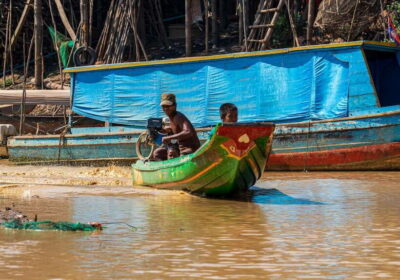
Siem Reap Floating Village Kampong Phluk Sunset with Boat
Read our review →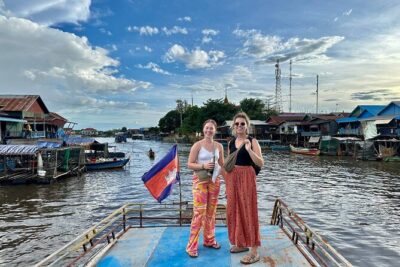
Kompong Phluk Floating Village Half-Day Tour ( Morning / Sunset )
Read our review →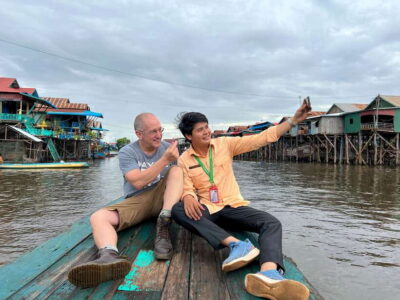
Kulen Mountain, Beng Mealea and Tonle Sap Tour
Read our review →
Tonle Sap Lake & Kampong Phluk Village Half-Day Tour
Read our review →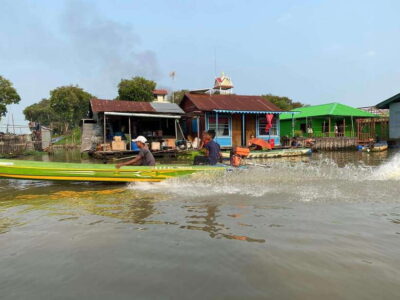
Tonle Sap, Kampong Phluk & Floating Village Tour
Read our review →
Sunset Dinner Tour: Tonle Sap Lake Floating Village
Read our review →Browse the lists this tour appears in