
Reviewed · ANGKOR TEMPLE TOURS
2 Days Angkor temples with Sunrise & Sunset
Angkor is best seen in layers, and this private two-day tour gives you both the famous faces and the quieter corners. You begin with Ta Prohm, Angkor Thom, and Phnom Bakheng, then return before dawn for Angkor Wat at sunrise and a full day among Banteay Srei, Preah Khan, and several smaller temples.
I like the private format, which lets your group travel with an English-speaking guide rather than follow a fixed large-group schedule. I also like the mix of major sights and less-visited temples, plus the practical touches of air-conditioned transport and cold drinking water. The main catch is the pace: 15 temple stops in two days is a lot, and the $115 price does not include the required $62 three-day Angkor Pass.
Key points to know before booking
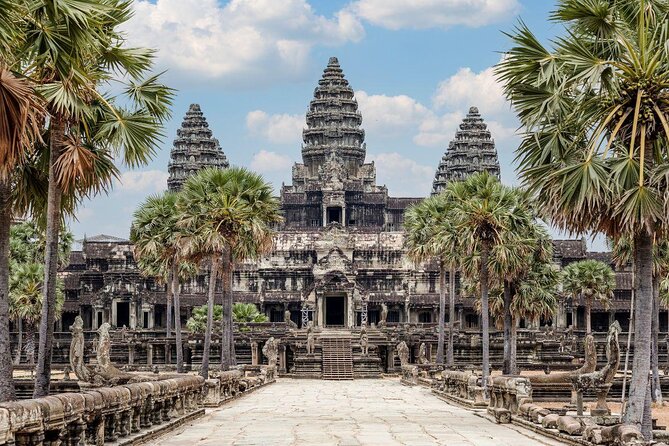
- Sunrise at Angkor Wat: Expect a 4:30 or 5 a.m. start, depending on the season.
- Private touring: Only your group participates, with transport by car, minivan, or minibus.
- Strong guide feedback: Bunpheng, also spelled Bunphen in one account, is praised for clear explanations, flexibility, professionalism, and photography help.
- Excellent temple range: You visit Ta Prohm, Bayon and Angkor Thom, Banteay Srei, Preah Khan, Neak Pean, and several smaller sites.
- Real cost: Add the required $62 three-day Angkor Pass to the $115 tour price, before food and drinks.
- Dress code matters: Cover your shoulders and thighs or you may be refused entry to the temple complex.
What two days in Angkor really give you
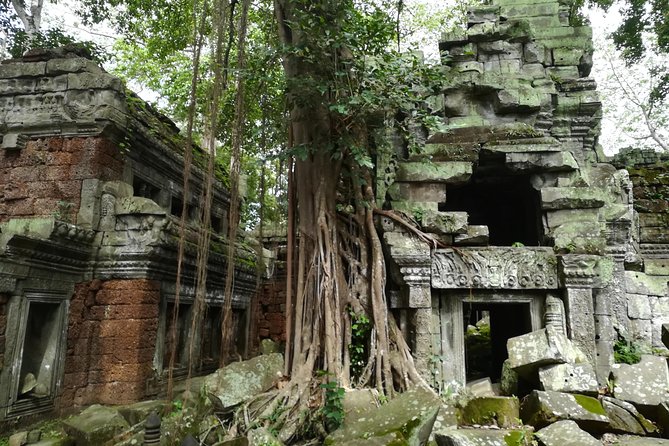
This is not a slow, single-temple outing. It is a full survey of the Angkor Archaeological Park, built for someone with limited time who wants to see the major monuments while still reaching temples beyond the standard circuit.
The tour is private, so you are not locked into the rhythm of a large coach. That matters in Angkor. One person may want ten minutes for photos, while another wants a careful explanation of a doorway or carving. The supplied information also points to a useful strength: the company has adapted routes for people with only 48 hours in Siem Reap, including airport pickup and hotel transfers when arranged.
The schedule is ambitious. You will spend much of both days walking, standing, climbing steps, and moving between sites. The air-conditioned vehicle gives you a welcome break from the heat, and cold water is included. Food, drinks beyond the supplied bottles, and accommodation are your responsibility.
More temples within reach of Siem Reap:
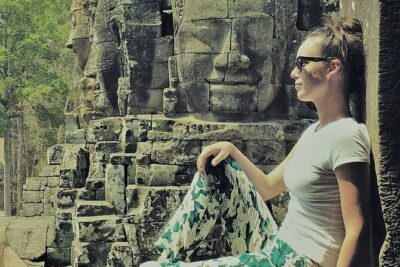
- Siem Reap Tour: Angkor Wat Sunrise, Bayon, Ta Prohm, Banteay Srei
★ 5.0 · 931 reviews - Siem Reap: Bike the Angkor Temples – Full-Day 30km Tour
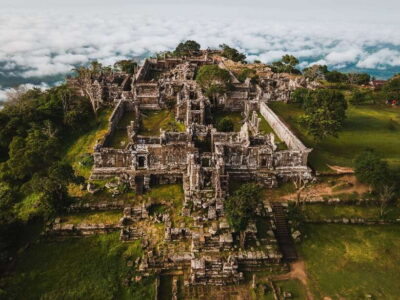
★ 5.0 · 463 reviews - Preah Vihear: Full-Day Preah Vihear and Koh Ker Temple Tour
★ 4.9 · 263 reviews
Day one: brick towers, jungle ruins, and Angkor Thom
Prasat Kravan, a short first look
The day begins at Prasat Kravan, a small 10th-century temple made of five reddish brick towers on a raised terrace. Its original Sanskrit name is not known, and the modern Khmer name is Prasat Kravan.
You get about 20 minutes here, so think of it as a compact introduction rather than a major stop. The brick reliefs are the reason to pay attention, but the brief visit also helps keep time for the larger monuments later in the day.
The admission fee is not included at this stop, and the Angkor Pass covers the temple visits as required by the park.
Banteay Kdei, a quieter Buddhist complex
Banteay Kdei means Citadel of Chambers. King Jayavarman VII built this Buddhist temple in the late 12th or early 13th century, and you have about 40 minutes to explore it.
The name hints at the feel of the place. Rather than one vast, instantly recognizable structure, Banteay Kdei gives you galleries, courtyards, and passageways. It is a useful contrast with Angkor Wat, where the scale can make you feel small from the first view.
The route then moves to Ta Prohm, one of the day’s main prizes.
More sunset outings from Siem Reap:
- Angkor Wat Sunrise or Sunset Tour with Guide from Siem Reap
★ 5.0 · 12,109 reviews - Siem Reap: Angkor Wat: Small-Group Sunrise or Sunset Tour
★ 5.0 · 9,444 reviews - Sunset tour of Kampong Phluk stilts home village on the Tonle Sap
★ 5.0 · 4,865 reviews - Siem Reap: Angkor Wat 2-Day Tour with Sunrise and Sunset
★ 4.9 · 4,429 reviews
Ta Prohm, where trees share the walls
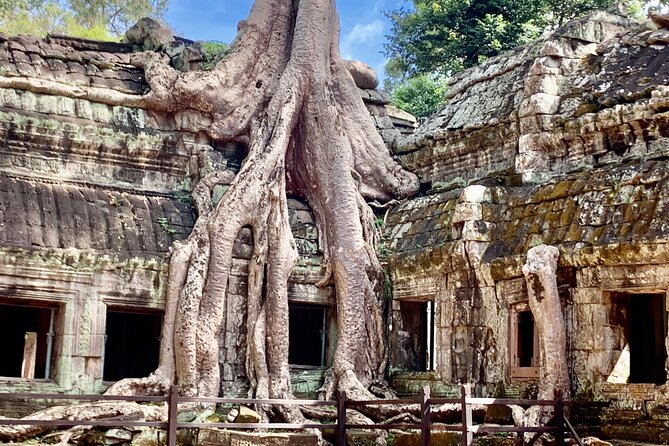
Ta Prohm was built in the Bayon style in the late 12th and early 13th centuries as a Buddhist monastery and university. Its best-known feature is the way large trees grow through and around the stonework.
You have one hour here, enough time to look beyond the most photographed corners. The temple is popular for good reason, but the same fame can make it feel busy. Your guide can help place the ruined galleries and carved stones in context, so you are not left with only the tree-and-stone photo.
Ta Prohm also shows why a two-day plan helps. After seeing one of Angkor’s most famous sites, you still have several very different monuments ahead.
Ta Keo, the unfinished mountain temple
Ta Keo was begun around 975 by King Jayavarman V as a state temple. It was never completed, and the reason remains tied to several stories rather than one clear explanation.
The stop lasts about 30 minutes. Its unfinished condition is part of its appeal. You see the structure as a bold project interrupted, with strong geometric mass rather than the fine decorative finish found at Banteay Srei. Depending on current access and your comfort with steps, your guide can help you judge how much climbing makes sense.
Angkor Thom, an ancient capital in one long stop
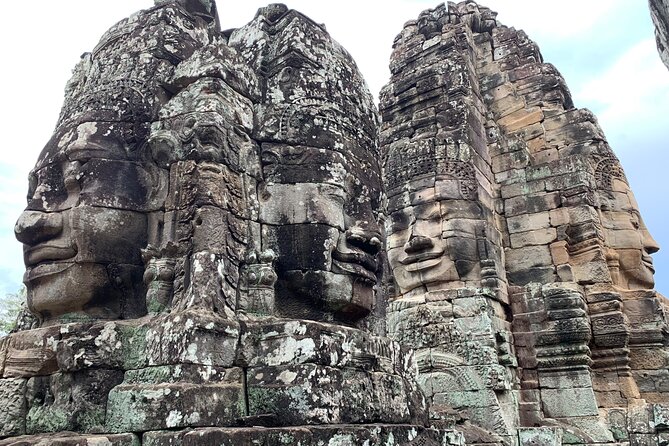
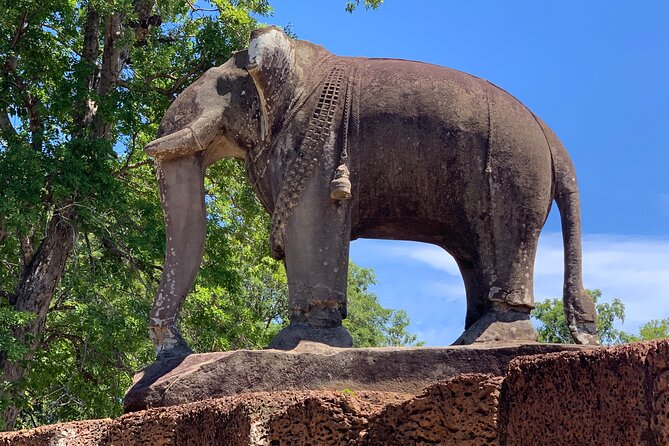
Two hours are set aside for Angkor Thom, the ancient capital of the Khmer Empire. This is not a single temple visit. The area includes the South Gate, Bayon, the Royal Palace area, the Terrace of the Elephants, and the Terrace of the Leper King.
The South Gate makes a memorable entrance, with a bridge and monumental figures leading toward the walled city. Inside, Bayon is the major focus. Its stone faces and close-packed towers reward a slow look, but the site can be confusing without help. A guide is useful here because the carvings are easy to pass without understanding what you are seeing.
The two-hour block sounds generous, yet Angkor Thom contains enough to fill it. You may need to choose between a careful look at Bayon and a fuller walk around the terraces and palace area. Since the tour is private, this is one of the places where you can discuss your priorities with the guide.
Phnom Bakheng, sunset with a practical caveat
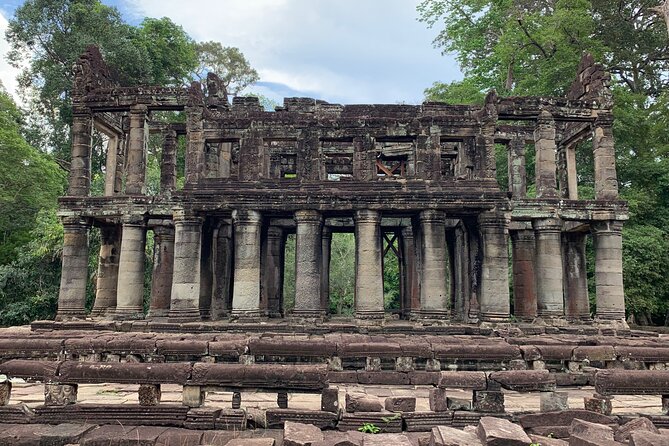
The first day ends at Phnom Bakheng, a temple mountain dedicated to Shiva and built by King Yasovarman near the end of the ninth century. Phnom means hill or mountain, and this temple sits on top of a rise.
The listed visit lasts about 40 minutes. The site is included as a sunset option, while the tour overview also says sunset may be watched at the South Gate of Angkor Thom or Phnom Bakheng. Confirm the exact sunset plan and access arrangements with Angkor Doors, since the day’s timing can affect what you see.
Sunset after a full day of temples can be pleasant, but you should not expect a quiet finish automatically. The combination of a famous viewpoint and limited daylight can make this a busy part of the schedule. If you prefer a less demanding end to the day, ask whether the South Gate is the better choice for your group.
Day two: sunrise at Angkor Wat and the outer temples
Angkor Wat before dawn
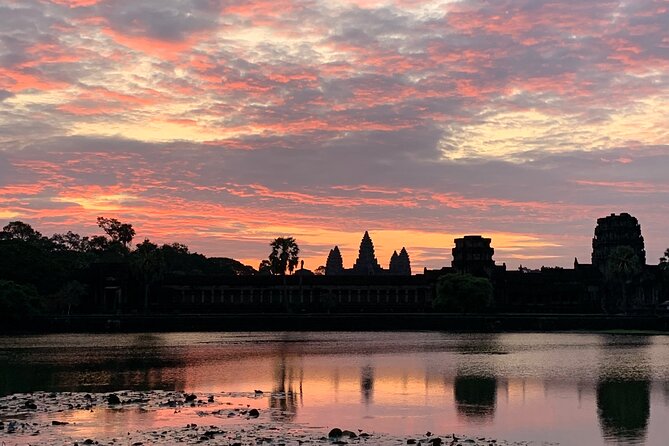
The second day begins early, with pickup at about 4:30 or 5 a.m., depending on the season. This is the tour’s defining moment: reaching Angkor Wat in time for sunrise, then spending about three hours exploring the main temple.
Angkor Wat is the largest religious monument in the world, and dawn gives you a different first impression than a midday visit. The changing light makes the towers and reflection pools feel less fixed and formal. You will need to be ready for an early start, followed by several hours on foot.
The tour description gives a general start time of 9 a.m., while the sunrise plan clearly requires a much earlier departure. Confirm your actual pickup time before the day begins. That small check prevents the kind of morning confusion that no one wants before sunrise.
Three hours allows room for the broad approach, galleries, courtyards, and central areas, though it is still possible to feel rushed if you try to inspect every carving. Your guide can help you decide where to spend your limited attention.
Pre Rup and Eastern Mebon, a naming detail to clarify
The next portion of the schedule needs a quick check. One stop is labeled Pre Rup, but its description refers to East Mebon. Later, Eastern Mebon appears as a separate 20-minute stop, while the earlier description again calls it East Mebon.
That means you should ask Angkor Doors to confirm whether Pre Rup is included, whether East Mebon is intended at that point, or whether both are planned. The two temples are not the same site, so this is more than a spelling issue.
The descriptions identify Eastern Mebon as a good example of early Khmer architecture from the 10th century. If both temples are included, you get a useful comparison of early temple design. If the schedule is tight, the shorter 20-minute visit suggests a quick orientation and photo stop rather than a long study.
Banteay Srei, the pink sandstone highlight
Banteay Srei is often called the Citadel of the Women. It is known for fine, delicate carvings and pink sandstone, and the tour gives you about one hour here.
This temple feels different from the huge state monuments. The scale is smaller, but the surface detail is the point. Look closely at the lintels, pediments, and figures rather than simply walking around the outside. Stories about women carving the delicate work are part of the temple’s popular identity, but your guide can help separate local tradition from what is firmly known.
Admission to Banteay Srei is listed as free within this tour, though the overall Angkor Pass remains required for each visitor.
Banteay Samre, a smaller echo of Angkor Wat
Banteay Samre is a Hindu temple built in the early 12th century by Suryavarman II and Yasovarman II, dedicated to Vishnu. It is described as a smaller replica of Angkor Wat, and you have about 40 minutes to see it.
That comparison is useful, but do not expect a miniature copy in every detail. The value is in noticing similar ideas of enclosure, towers, and formal planning on a smaller scale. After Banteay Srei’s fine carvings, Banteay Samre gives you another look at how Khmer builders handled a more compact temple compound.
Ta Som, a brief and atmospheric stop
Ta Som is a Buddhist temple built by Jayavarman VII in the late 12th century and dedicated to Lokesvara Buddha. The visit lasts about 20 minutes.
This is a short stop, so use it to notice the relationship between stone, vegetation, and narrow temple corridors. You will not have time for a leisurely study of every structure, but Ta Som adds another example of Jayavarman VII’s building program without requiring a long detour.
Neak Pean, a temple on a man-made island
Neak Pean means Entwined Serpents. It is a 12th-century Buddhist temple built by Jayavarman VII on a man-made island in a man-made lake.
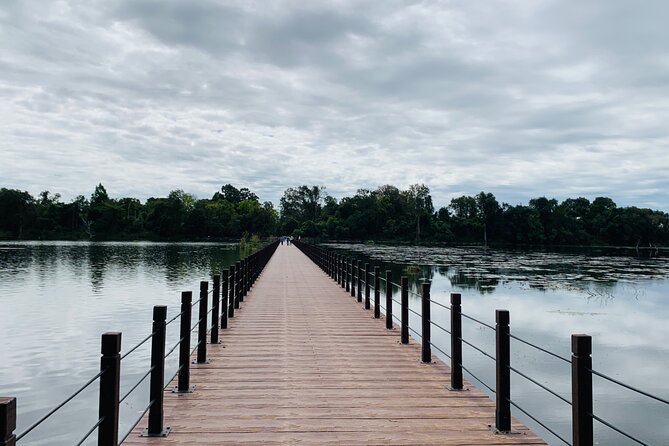
The 30-minute visit gives you time to walk out toward the central structure and take in the water setting. This stop breaks up the day’s procession of stone towers and enclosed galleries. It is also a good reminder that Angkor’s designers worked with water as part of the religious and urban plan, not merely as scenery.
Preah Khan, a fitting final major temple
Preah Khan means Royal Sword. Jayavarman VII built it in the 12th century and dedicated it to his late father. The temple lies about one kilometer north of Angkor Thom, and the schedule gives you 50 minutes.
Preah Khan is a strong final stop because it combines scale, corridors, courtyards, and a sense of partial ruin. You can still read the plan of the complex, but you also see how time and vegetation have changed it. Fifty minutes is enough for a focused walk, though not for every side passage.
By this point you will have seen several temples built under Jayavarman VII, including Ta Prohm, Banteay Kdei, Ta Som, Neak Pean, and Preah Khan. Your guide’s explanations matter here because the monuments begin to blur together unless you understand how their purposes and layouts differ.
The guide, transport, and private format
The tour includes an English-speaking guide and transport in an air-conditioned car, minivan, or minibus. You also receive bottles of cold drinking water, a small but welcome benefit in Siem Reap’s heat.
Bunpheng is the guide named most often in the supplied feedback, with one spelling variation, Bunphen. The strongest comments about his work point to punctuality, professionalism, clear explanations about Cambodia, flexibility, and help with photography. One account describes a tour adapted for a visitor traveling with a Cambodian mother, with communication adjusted to suit the group.
You should not assume Bunpheng will be assigned to every booking. If having him matters to you, request him when booking and ask for confirmation. The private format itself is the more reliable advantage: only your own group takes part, and the route can be adjusted to your needs within the two-day plan.
Is $115 a good value?
At $115 per person, the tour covers two days of private guiding, vehicle transport, and bottled water. That is a fair package for someone who wants an organized route across many temples and does not want to arrange a guide and driver separately.
The required three-day Angkor Pass costs an additional $62 per person. That brings the known total to $177 per person before food and drinks. Accommodation is also separate.
The value is strongest for a first visit, a short stay, or a small group that wants personal attention. Group discounts may improve the price for larger parties, but the tour’s main benefit is not simply admission to temples. It is the time saved in planning, the air-conditioned transfers, and the chance to ask questions as you go.
What to wear and what to bring
Temple access requires covered shoulders and thighs. If your clothing does not meet the rules, you may be refused entry, so pack a shirt with sleeves and bottoms that cover your thighs.
You should also plan for the 4:30 or 5 a.m. departure on the sunrise day, long walking periods, and repeated movement between hot outdoor areas and the vehicle. Cold water is supplied, but food and other drinks are not, so arrange your own meals and refreshments.
Confirmation is received at booking. Free cancellation is available until 24 hours before the experience start time. Changes or cancellations inside that window are not accepted for a refund.
Who should book this Angkor tour?
I would choose this tour if you have two days in Siem Reap and want the broadest possible look at Angkor without handling every detail yourself. It suits couples, families, honeymooners, and small groups who value a private guide and a flexible feel.
It is less suited to you if you want slow photography, long unplanned breaks, or a deep study of only two or three temples. The schedule is packed, and the early sunrise start demands energy. Before booking, clarify the exact meeting time, the sunset location, and the confusing Pre Rup and Eastern Mebon entries.
FAQ
How much does the tour cost?
The tour costs $115 per person. The required three-day Angkor Pass costs an additional $62 per person. Food, drinks, and accommodation are not included.
Is the tour private?
Yes. Only your group participates in this private tour or activity.
What time does the sunrise day begin?
The sunrise departure is scheduled for approximately 4:30 a.m. or 5 a.m., depending on the season. The stated 9 a.m. start time should be confirmed with the provider because it does not match the sunrise schedule.
Is an Angkor Pass included?
No. Each visitor must purchase a three-day Angkor Pass. The listed price is $62 per person.
What is included in the tour?
An English-speaking guide, air-conditioned transportation by car, minivan, or minibus, and bottles of cold drinking water are included.
What clothing is required?
You must cover your shoulders and thighs when entering the temple complex. Visitors wearing unsuitable clothing may be refused entrance.
More 2-Day Experiences in Siem Reap
- Angkor 2-Day Sunset & Sunrise Small-Group Tour
★ 5.0 · 2,567 reviews - 2 Days Exclusive Temple Highlights with Sunset and Sunrise Tour
★ 5.0 · 1,157 reviews - Siem Reap: Angkor Sunrise 1- or 2-Day Guided Temples Tour
★ 4.9 · 1,132 reviews - 2 Days Guided Historical Tour in Angkor
★ 5.0 · 855 reviews
Just added in Siem Reap
- Twilight Tastes of Siem Reap Include Dinner★ 5.0 · 13 reviews
- Ultimate Sunrise to Angkor Wat, Angkor Thom and Bayon Temple★ 5.0 · 3 reviews
- Trekking Tour at Phnom Kulen National Park from Siem Reap★ 5.0 · 3 reviews
- Full-Day Private Tour of Angkor Wat with Pick Up★ 5.0 · 12 reviews
- Private Day Trip to Angkor Temples with Expert Guide★ 5.0 · 4 reviews
- Siem Reap City Tour with War Museum and Killing Field★ 5.0 · 27 reviews
- Waterfall & River of 1000 Siva Linga- Kulen Mountain Private Tour★ 5.0 · 3 reviews
- Angkor Wat Experience Temple Pass and Siem Reap Food Tour★ 5.0 · 13 reviews
Angkor Temple Tours, compared.
Siem Reap Tour: Angkor Wat Sunrise, Bayon, Ta Prohm, Banteay Srei
Read our review →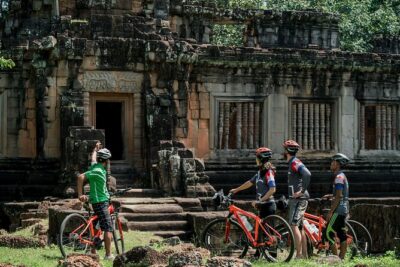
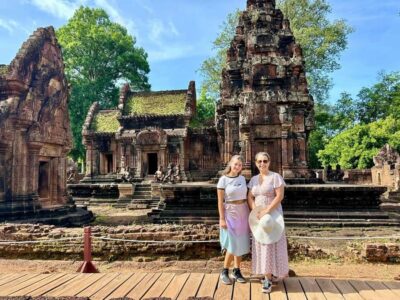
Angkor Wat one Day Private Tour for All Highlight Angkor Temples
Read our review →
1-Day private Angkor Temple Tour from Siem Reap
Read our review →
Private one-day tuktuk ‘small tour’ of the oldest Angkor temples
Read our review →Browse the lists this tour appears in