
Reviewed · ANGKOR WAT SUNRISE TOURS
2 Days Angkor Wat Sunrise and Sunset Private Tour
Angkor Wat is only the beginning here. Over two days, you visit the main temples inside the Angkor complex, smaller ruins away from the busiest routes, and the sunset viewpoint at Phnom Bakheng. The private format gives your group its own guide and air-conditioned vehicle, a useful comfort in Cambodia’s heat.
I like the sensible spread of famous and lesser-known sites, especially Ta Nei, Preah Khan, and the quiet corners around the ancient reservoirs. I also like the practical sunrise plan: ask your hotel for a breakfast pack, then eat after sunrise rather than rushing back for the morning meal.
The main catch is cost clarity. The $134 tour price does not include the required $62 three-day Angkor Pass, meals, drinks, or tips. Also, the written schedule places Angkor Wat on Day 1 and Phnom Bakheng on Day 2, so confirm the exact sunrise and sunset order before booking.
Key points to know before booking
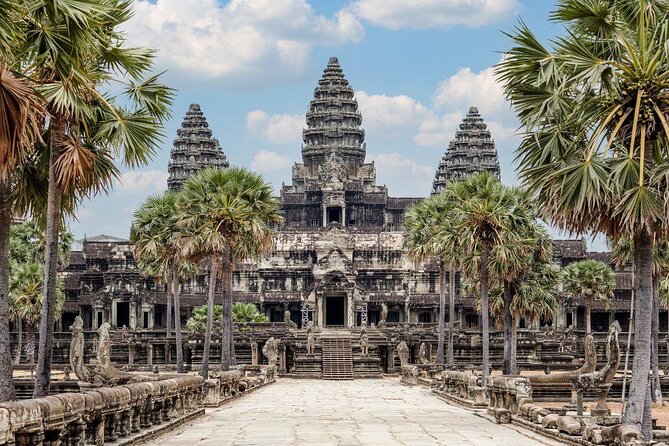
- Two private days cover both main temple circuits: You visit Angkor Wat, Angkor Thom, Bayon, Ta Prohm, Banteay Srei, Preah Khan, and several smaller ruins.
- Sunrise and sunset are built into the plan: Angkor Wat is scheduled on one day, while Phnom Bakheng provides the sunset stop on the other, though you should confirm the final timing.
- The $134 price is not the full cost: Add the $62 three-day Angkor Pass, meals, drinks, and recommended tips.
- Ta Nei adds a quieter temple stop: This small late-12th-century ruin gives you a break from the headline sites.
- Private transport keeps the day practical: Hotel pickup, drop-off, bottled water, and an air-conditioned vehicle are included.
- Ask about guide Tann: A guide named Tann is specifically praised for careful preparation and service, but guide assignment is not guaranteed.
Two days that make Angkor easier to understand
Angkor is too large for a quick temple checklist. The archaeological area contains major state temples, royal city gates, smaller shrines, reservoirs, terraces, and long forest roads. This two-day plan works because it gives you time to see the celebrated monuments without limiting the whole visit to Angkor Wat.
You get a private tour rather than joining a large group. That matters when you want to slow down at a carving, ask about a confusing architectural detail, or move on when the heat becomes tiring. The guide can also help connect the temples to the Khmer kings who built them, including Jayavarman VII and Rajendravarman.
The schedule is full, but not absurdly packed. Most stops last between 15 minutes and two hours. Angkor Wat receives the longest visit, while smaller sites such as Neak Pean and Ta Som are shorter stops. You should expect early starts, a fair amount of walking, uneven stone, and hot outdoor conditions.
The tour is offered at $134 per person, with discounts for groups. That is a useful price for a private two-day service with an English-speaking guide, vehicle, hotel transfers, and water. But you need to calculate the actual cost as roughly $196 per person before food, drinks, and tips because the required three-day pass costs another $62.
Other early starts at the temples from Siem Reap:
- Angkor Wat Sunrise or Sunset Tour with Guide from Siem Reap
★ 5.0 · 12,109 reviews - Angkor Wat Sunrise tour with Small – Group and Guide tours
★ 5.0 · 3,655 reviews - Full-Day Angkor Wat Sunrise Private Tour with Guide from Siem Reap
★ 5.0 · 2,920 reviews
Day 1: Angkor Wat, Bayon, and the jungle temples
Angkor Wat in the early light
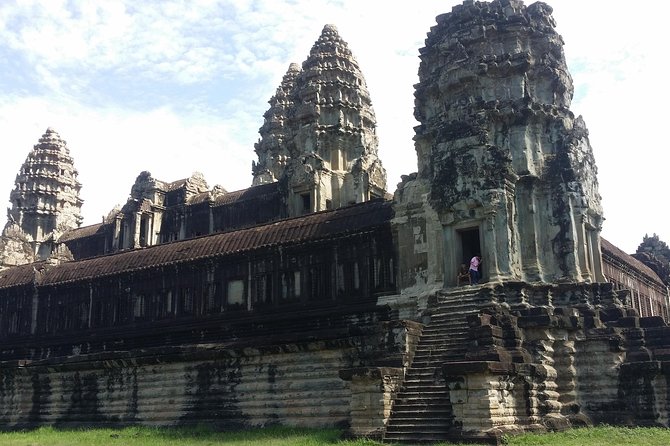
Angkor Wat is the anchor of the experience. Built as a Hindu temple dedicated to Vishnu, it covers an enormous site and is the world’s largest religious monument. Two hours lets you see the main approach, galleries, towers, courtyards, and carved details without treating the visit as a quick photo stop.
The light around sunrise is the reason to begin early. The temple’s towers and reflecting pools can look especially striking as the sky brightens, although exact conditions are never guaranteed. Carry water, wear practical shoes, and keep your shoulders and knees covered. A scarf alone is not accepted as a substitute for respectful clothing.
The schedule says admission is not included, and the Angkor Pass can be bought on the day of the tour before sunrise. Visa cards are accepted at the entrance. Since the tour uses a three-day pass even though the guided program lasts two days, you receive an extra day of access if you decide to return independently.
If your hotel includes breakfast, request a packed breakfast in advance. That is a better fit than returning to town immediately after sunrise, and it lets you eat after the first temple visit.
Angkor Thom South Gate and Bayon
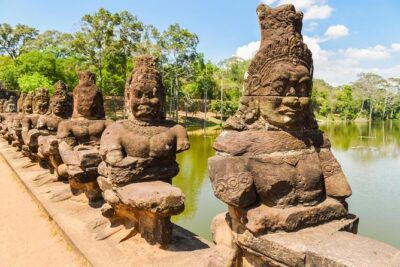
The South Gate of Angkor Thom is a short stop, but it helps you understand the scale of the old capital. Angkor Thom was the last and longest-lasting capital of the Khmer Empire, established in the late 12th century by King Jayavarman VII.
The gate is lined with stone figures, and the approach gives you a strong sense of entering a planned royal city rather than simply finding another isolated temple. Fifteen minutes is enough for photographs and a short explanation, though you may wish the schedule allowed more time if the traffic is heavy or the guide is explaining the carvings in detail.
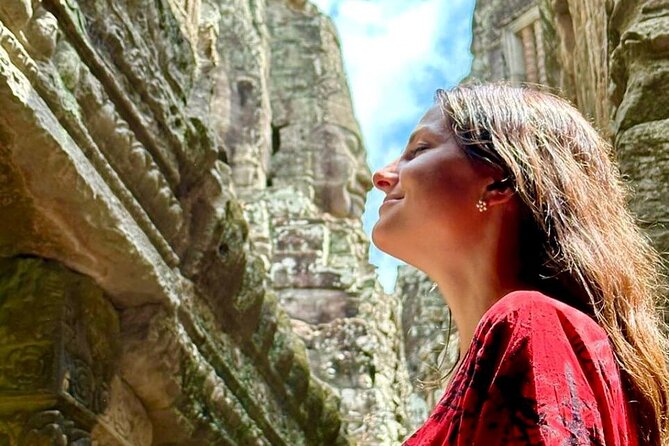
Inside Angkor Thom, Bayon receives about an hour. This was Jayavarman VII’s state temple and a major Buddhist monument. Its famous stone faces appear from different towers as you move through the tight central structure.
Bayon is one of the places where a guide adds real value. The layout can feel confusing, and the faces, bas-reliefs, galleries, and upper levels compete for your attention. An English-speaking guide can help you focus on the details instead of simply circling the monument and taking pictures.
More sunset outings from Siem Reap:
- Siem Reap: Angkor Wat: Small-Group Sunrise or Sunset Tour
★ 5.0 · 9,444 reviews - Sunset tour of Kampong Phluk stilts home village on the Tonle Sap
★ 5.0 · 4,865 reviews - Siem Reap: Angkor Wat 2-Day Tour with Sunrise and Sunset
★ 4.9 · 4,429 reviews - Siem Reap: Full-Day Angkor Wat Guided Tour with Sunset
★ 4.9 · 3,803 reviews
Ta Prohm and Ta Nei
Ta Prohm is the day’s familiar movie-star temple, known for its trees growing around and over sections of the stone structure. It was built in the Bayon style in the late 12th and early 13th centuries and was originally called Rajavihara.
You have about an hour here. That is enough to see the main courtyards and carved doorways, but the temple can feel crowded, particularly at popular photo points. The appeal is not only the trees. Ta Prohm also shows how a large religious complex looks when stone, roots, collapsed galleries, and forest share the same space.
Ta Nei offers a useful contrast. It is a smaller late-12th-century Buddhist temple built during the reign of Jayavarman VII, near the northwest corner of the East Baray. The 40-minute stop gives the day a quieter pause after the famous sites.
Do not expect Ta Nei to match Angkor Wat in scale. Its value is the opposite: you can pay attention to the stonework and setting without the same sense of spectacle. It also shows why a private itinerary is useful. A large coach schedule tends to favor the most famous monuments, while this tour includes a smaller site that many short visits skip.
Terrace of the Elephants
The Terrace of the Elephants is a brief 15-minute stop in Angkor Thom. It served as part of the great city and is known for its carved elephant imagery and long ceremonial frontage.
This is mainly an orientation and photography stop rather than a full temple visit. Your guide can use it to explain how royal ceremonies and processions related to the city’s central area. Keep your expectations in proportion: the stop is short, but it fits well after Bayon and before leaving the Angkor Thom area.
Day 2: Banteay Srei and the temples beyond Angkor Thom
Banteay Srei’s detailed carvings
Banteay Srei is the most distant-feeling stop in this program, even though it remains within the wider Angkor area. This 10th-century temple was dedicated to Shiva and is especially known for its fine carved details and smaller scale.
The two-hour visit gives you time to appreciate the decorative work rather than treating it as a rushed side trip. Banteay Srei feels different from the giant royal temples. Its proportions are more intimate, and the ornament is the main event.
The tradeoff is travel time. The itinerary does not state the drive duration, but Banteay Srei is scheduled as a major morning outing rather than a quick stop between nearby ruins. That makes it worthwhile for anyone who wants more than the standard Angkor circuit, but less appealing if you prefer to spend every minute around Angkor Wat itself.
Preah Khan’s long corridors
Preah Khan receives about an hour. Jayavarman VII built it in the 12th century to honor his father, and it lies northeast of Angkor Thom, near the Jayatataka baray.
This is a large temple complex with long galleries, courtyards, doorways, and layers of religious symbolism. The hour gives you a proper look at the plan and the carved stone, though the site can reward an even longer visit for people who enjoy architectural detail.
Preah Khan is also a good place to listen carefully to the guide. Without context, its corridors can blur together. With an explanation of its connection to Jayavarman VII and the nearby reservoir, the site becomes easier to place within the larger Angkor system.
Neak Pean and the old water system
Neak Pean is a short, 30-minute visit built on an artificial island in the Jayatataka baray. The temple sits at the center of a circular island and was associated with Preah Khan.
The approach across the water is part of the experience. Neak Pean is not a massive building, so the stop is about its unusual setting and the way the temple relates to water. If you expect another towering monument, you may find the visit modest. If you enjoy how Khmer builders shaped sacred spaces around reservoirs and islands, it is a worthwhile change of pace.
Ta Som’s compact charm
Ta Som is another small temple built during Jayavarman VII’s reign. The tour allows about 35 minutes, enough to see the main structure without turning the stop into a long walk.
Like Ta Nei, Ta Som helps balance the day. You are not simply moving from one giant monument to another. The smaller scale lets you notice doorways, carvings, and the effects of time on the stone. It is also a practical stop because it breaks up the longer visits at Banteay Srei and Preah Khan.
Eastern Mebon’s elevated temple form
Eastern Mebon was built in the 10th century during the reign of Rajendravarman. It once occupied an artificial island at the center of a reservoir that is now dry.
You have about 40 minutes here. The temple’s position and form make the old water system easier to imagine, even though the reservoir no longer surrounds it. This stop is particularly useful if you want to see how Angkor’s religious architecture was linked to large-scale water management.
It is less instantly famous than Angkor Wat or Ta Prohm, but that is part of its appeal. The itinerary gives you enough time to walk around, look at the carvings, and hear why the original setting mattered.
Phnom Bakheng at sunset
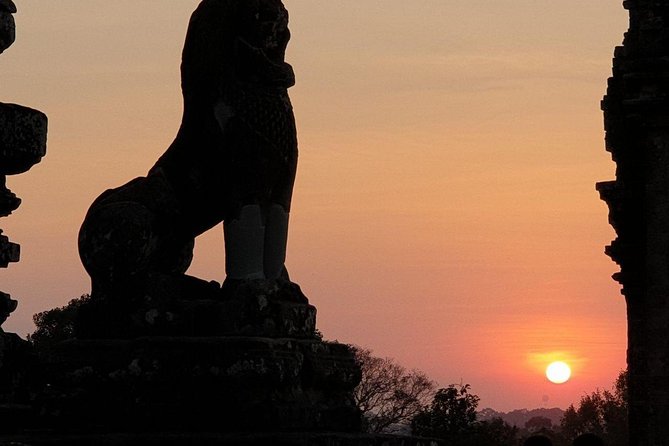
Phnom Bakheng is a temple mountain dedicated to Shiva, built near the end of the 9th century during the reign of King Yasovarman. The one-hour visit is intended to capture the evening view and the temple’s position above the surrounding area.
This is the tour’s sunset stop, but you should confirm the exact order when booking. The supplied schedule places Phnom Bakheng on Day 2, while the overview describes one day for sunrise and another for sunset. The timing can matter because sunset access and crowd levels may affect how long you actually have at the top.
Expect a climb and uneven surfaces. The stop is not just about the sun dropping behind the horizon. Phnom Bakheng shows an early temple-mountain design, which makes it an important contrast to the later monuments built under Jayavarman VII.
Transport, clothing, and the pace of the day
Hotel pickup and drop-off in Siem Reap are included, along with an air-conditioned vehicle and bottled water. That is valuable in a two-day temple program, especially after walking across open courtyards and climbing stone steps.
This is a private activity, so only your group participates. You can ask the guide to spend longer at a site or move along if the heat becomes difficult, although the total schedule still contains many stops. The tour is described as suitable for most people, but you should be comfortable with walking and outdoor conditions.
Wear clothing that covers your shoulders and knees. A regular scarf used as a quick cover is not accepted, so dress correctly before leaving the hotel. Food, breakfast, lunch, and drinks are not included. Arrange breakfast packs with your hotel if you plan to stay out after sunrise.
Drone use at the temples is not allowed unless permission is obtained from APSARA. This is an important rule to know before packing or planning aerial photography.
Is the $134 price good value?
The price makes sense if you want a private guide and transport rather than piecing together separate tuk-tuk rides, temple tickets, and explanations on your own. You receive two full days of sightseeing, an English-speaking guide, an air-conditioned vehicle, bottled water, and hotel transfers.
The value becomes less clear if you are traveling alone and mainly want a short Angkor Wat visit. The required pass adds $62, and you still pay for meals, drinks, and tips. On the other hand, the pass is valid for three days, so the extra day can be useful for independent exploring.
Group discounts may improve the per-person price. If you are traveling with family or friends, compare the total cost against hiring transport and a guide separately. The private format is particularly useful for people who want flexibility and clear explanations, rather than a fixed large-group schedule.
A guide named Tann is praised for preparation and service. You cannot assume Tann will lead every departure, but you can ask the provider if a specific guide is available.
Should you book this Angkor tour?
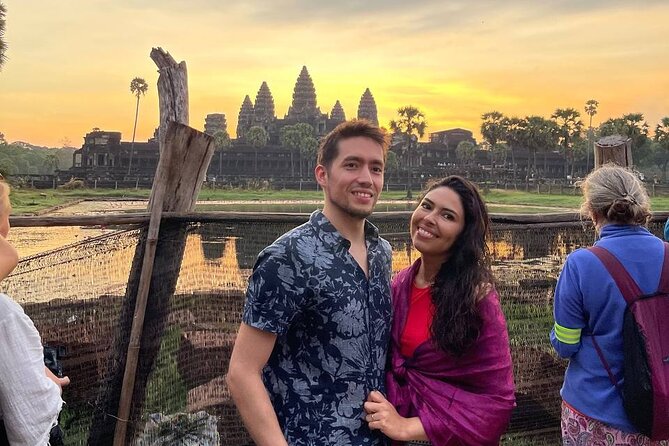
Book it if you want a well-rounded two-day introduction to Angkor, value a private vehicle, and prefer a guide to connect the temples rather than simply drive you between them. The mix of Angkor Wat, Bayon, Ta Prohm, Banteay Srei, Preah Khan, and smaller sites gives you a fuller picture than a one-day highlights trip.
Think twice if your priority is low cost, a relaxed pace, or spending nearly all your time at Angkor Wat. The program is active, admission costs extra, and the sunrise and sunset order needs confirming.
For most first visits, I would consider this a strong choice, provided you budget about $196 before food and tips, dress properly, request a breakfast pack, and verify the final timing for Phnom Bakheng.
FAQ
Is the Angkor entrance fee included?
No. The tour excludes admission, and the stated requirement is a three-day Angkor Pass costing $62 per person. The pass can be purchased on the tour day before sunrise, and Visa cards are accepted.
What does the $134 tour price include?
The price includes an English-speaking professional guide, air-conditioned transportation, sightseeing listed in the program, free pickup and drop-off at city hotels, and bottled water.
Are meals and drinks included?
No. Breakfast, lunch, and drinks are not included. If your hotel provides breakfast, you can request a packed breakfast to eat after the sunrise visit.
Is this a private tour?
Yes. Only your group participates in the activity, rather than joining a shared group.
What clothing is required?
You must wear respectful clothing that covers your shoulders and knees. A regular dress scarf used as a cover is not accepted.
Can I cancel the booking for a full refund?
Yes, if you cancel at least 24 hours before the experience start time. Cancellations or changes made less than 24 hours before the start time are not accepted for a refund.
More 2-Day Experiences in Siem Reap
- Angkor 2-Day Sunset & Sunrise Small-Group Tour
★ 5.0 · 2,567 reviews - 2 Days Exclusive Temple Highlights with Sunset and Sunrise Tour
★ 5.0 · 1,157 reviews - Siem Reap: Angkor Sunrise 1- or 2-Day Guided Temples Tour
★ 4.9 · 1,132 reviews - 2 Days Guided Historical Tour in Angkor
★ 5.0 · 855 reviews
Just added in Siem Reap
- Twilight Tastes of Siem Reap Include Dinner★ 5.0 · 13 reviews
- Ultimate Sunrise to Angkor Wat, Angkor Thom and Bayon Temple★ 5.0 · 3 reviews
- Trekking Tour at Phnom Kulen National Park from Siem Reap★ 5.0 · 3 reviews
- Full-Day Private Tour of Angkor Wat with Pick Up★ 5.0 · 12 reviews
- Private Day Trip to Angkor Temples with Expert Guide★ 5.0 · 4 reviews
- Siem Reap City Tour with War Museum and Killing Field★ 5.0 · 27 reviews
- Waterfall & River of 1000 Siva Linga- Kulen Mountain Private Tour★ 5.0 · 3 reviews
- Angkor Wat Experience Temple Pass and Siem Reap Food Tour★ 5.0 · 13 reviews
Angkor Wat Sunrise Tours, compared.
Angkor Wat Sunrise or Sunset Tour with Guide from Siem Reap
Read our review →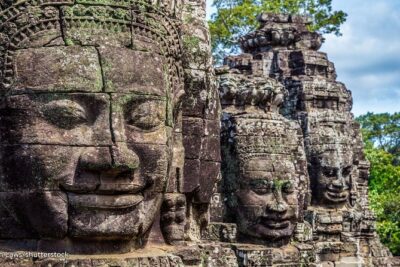
Angkor Wat Sunrise tour with Small – Group and Guide tours
Read our review →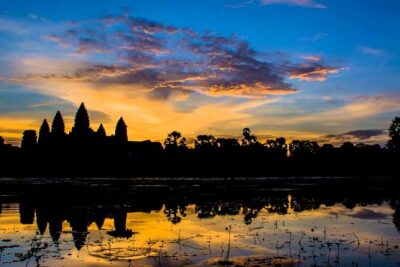
Full-Day Angkor Wat Sunrise Private Tour with Guide from Siem Reap
Read our review →
Angkor Wat Sunrise & 3 Main Temples with Breakfast – Small Group
Read our review →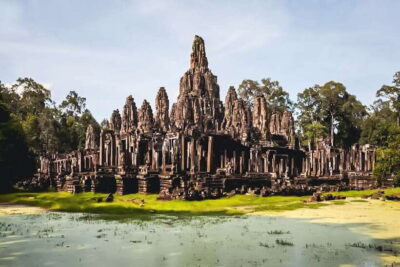
Angkor Wat Sunrise and Full-Day Sightseeing Tour
Read our review →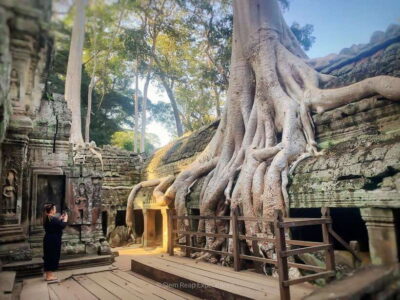
2 Days Exclusive Temple Highlights with Sunset and Sunrise Tour
Read our review →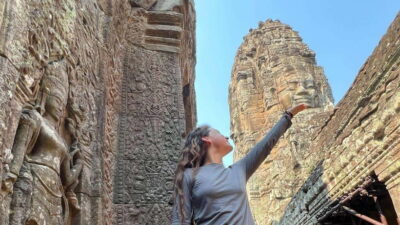
Angkor Sunrise 1- or 2-Day Guided Temples Tour
Read our review →Browse the lists this tour appears in