
Reviewed · HISTORICAL TOURS
3-Day Tour (The Historical of Khmer Empire)
The most appealing part of this three-day tour is its sweep. You move from the famous faces of Bayon and the grand scale of Angkor Wat to quiet forest ruins, early Khmer temples, and the remote pyramid of Koh Ker. It gives you a useful story of how Khmer architecture changed over time, rather than treating Angkor as one enormous pile of stones.
I like the private format, which lets your guide adjust the pace and photo stops. I also like the mix of major sights and less-visited places such as Ta Nei, Preah Palilay, and Beng Mealea. The main consideration is cost beyond the $250.50 tour price: temple admission, meals, and accommodation are not included, and Day 3 involves a long drive.
Key points to know before booking
- Three full days from 8 a.m. to 5 p.m. give you time for both famous temples and quieter sites.
- Private transport and an English-speaking guide make the long temple days easier to manage.
- Koh Ker and Beng Mealea add remote, atmospheric ruins that are quite different from central Angkor.
- Banteay Srei requires patience, but its finely carved sandstone details reward a slow visit.
- The Angkor pass is extra, and you must buy the correct pass in US dollars at the official entrance.
- Guides including Veasna, Sophia, and Sophea have been praised for clear explanations, flexible pacing, and help with family groups.
A three-day route through the Khmer Empire
This is not simply a temple checklist. The route links royal cities, state temples, religious changes, and the practical story of how Cambodia’s medieval rulers built and rebuilt their capitals.
You start at 8 a.m. each day and generally finish around 5 p.m. That makes for long days in the heat, but the air-conditioned vehicle, cool water, and wet towels help between stops. Since the tour is private, you can ask your guide to slow down at a carving, shorten a stop, or adjust the plan.
The company has used guides such as Mr. Veasna, Mr. Sophia, Mr. Sophea, and Mr. Vutha, with drivers including Mr. Sophan and Mr. Vandy. The strongest feedback centers on guides who explain the temples clearly, help with photographs, and pay attention to different ages and energy levels in a group.
A few more things to do in Siem Reap worth a look
- 2 Days Guided Historical Tour in Angkor
★ 5.0 · 855 reviews - Siem Reap: Banteay Srei and Grand Circuit Heritage Tour
★ 4.9 · 163 reviews - Banteay Srei and Grand Circuit Heritage Tour from Siem Reap
★ 5.0 · 142 reviews
Day 1: Angkor Thom, Banteay Srei, and Banteay Samre
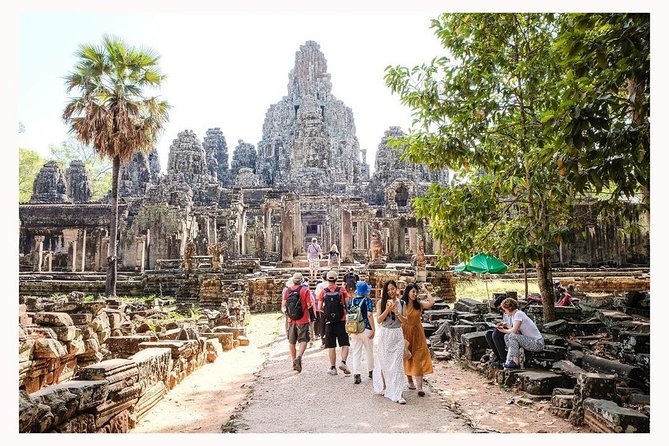
Bayon and the stone faces of Angkor Thom
Your first morning begins at Angkor Thom, the great walled city built under Jayavarman VII. Bayon is the star here, with its huge carved faces looking out from the towers.
You get about an hour at Bayon. That is enough to see the main structure and study the faces, though the narrow passages and uneven stones can slow you down. Ask your guide to point out the bas-reliefs around the lower galleries. They show scenes of daily life and warfare, giving the temple a human scale that the giant towers sometimes hide.
Baphuon and the royal terraces
Baphuon is a three-tiered temple mountain dedicated to Shiva. Its high causeway and steep upper levels make it feel more vertical than Bayon. The approach is part of the experience, but the stone surfaces can be uneven, so sensible shoes matter.
Next come the Terrace of the Elephants and the Terrace of the Leper King. The Elephant Terrace stretches roughly 300 meters and carries carved elephants and garudas along its wall. The Terrace of the Leper King is smaller but more enclosed, with multiple layers of carved figures and nagas.
These stops are close together, so Day 1’s morning has an efficient rhythm. You see major royal monuments without repeatedly returning to the vehicle.
Same base, a different kind of day out:
- Angkor Wat Sunrise or Sunset Tour with Guide from Siem Reap
★ 5.0 · 12,109 reviews - Siem Reap: Angkor Wat: Small-Group Sunrise or Sunset Tour
★ 5.0 · 9,444 reviews - From Siem Reap: Kampong Phluk Floating Village Tour by Boat
★ 4.9 · 6,979 reviews - Sunset tour of Kampong Phluk stilts home village on the Tonle Sap
★ 5.0 · 4,865 reviews
Preah Palilay and lunch near Angkor
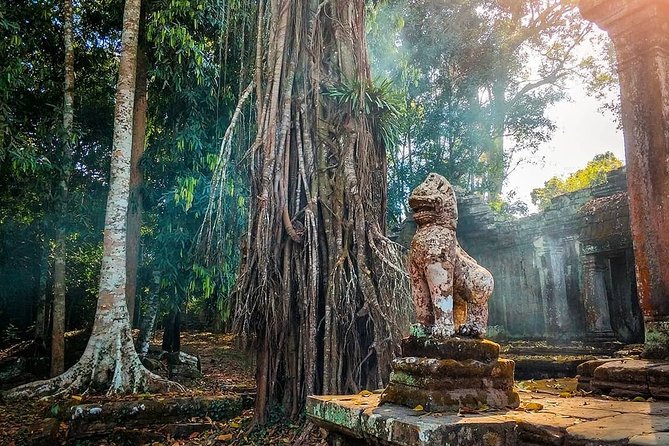
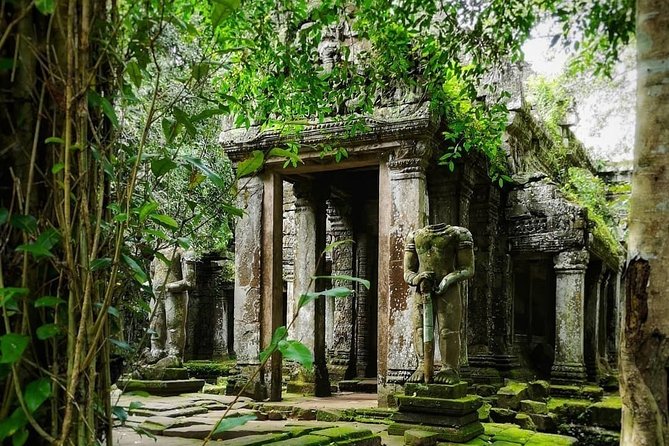
Preah Palilay offers a change of mood. This sandstone and laterite tower sits in a shaded forest setting, and its eastern entrance has Buddhist carvings. It is less grand than Bayon, but I like it precisely because it feels quieter and more tucked away.
Lunch is at your own expense at a local restaurant in the Angkor area. Since meals are not included, confirm your preferred lunch timing with the guide. The schedule leaves about 30 minutes for the meal, so this is not a long restaurant break.
Banteay Srei’s fine carvings
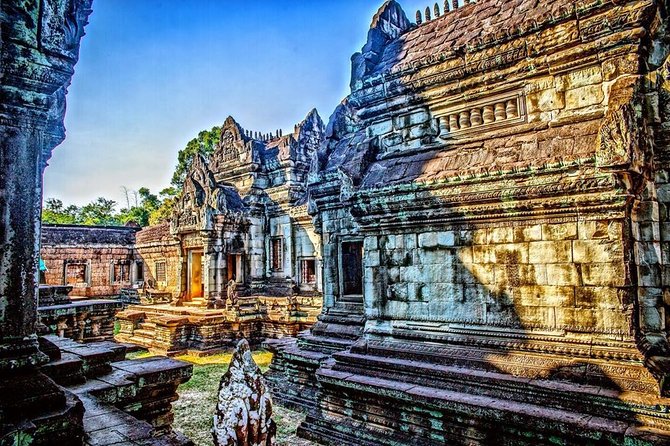
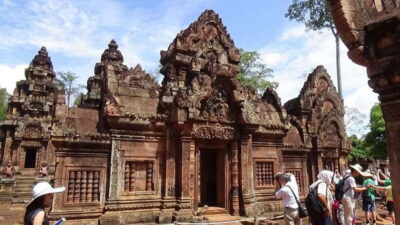
In the afternoon, you travel to Banteay Srei, often translated as citadel of women. The temple is smaller than Angkor Wat, but its pinkish sandstone carvings are exceptionally fine. Floral patterns, figures, and mythological scenes cover the surviving surfaces with detail that is easy to miss if you rush.
The planned visit is about two hours, which is sensible. Banteay Srei rewards close looking more than a quick walk around the main sanctuary. The drawback is distance: it takes you away from the central Angkor group, adding road time to an already full day.
Banteay Samre and the optional sunset
Banteay Samre is a broad, flat temple with architecture that recalls Angkor Wat. Its galleries and towers create a more orderly impression after the intricate carvings at Banteay Srei.
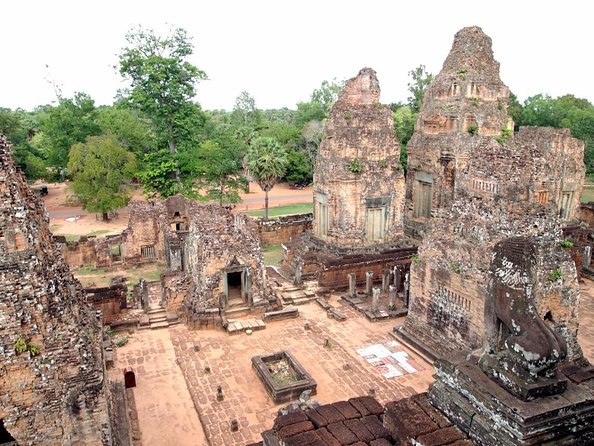
An optional sunset stop at Pre Rup may be offered. Pre Rup is a temple mountain with carved false doors on its upper level and views over the surrounding countryside. Sunset timing depends on the day’s pace, and it is not a guaranteed part of the core program, so treat it as a bonus rather than a promise.
Day 2: Angkor Wat, Ta Prohm, and the early Roluos temples
Angkor Wat before the smaller temples
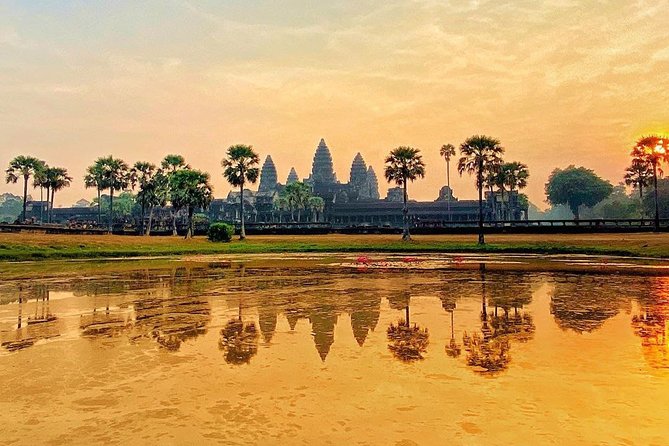
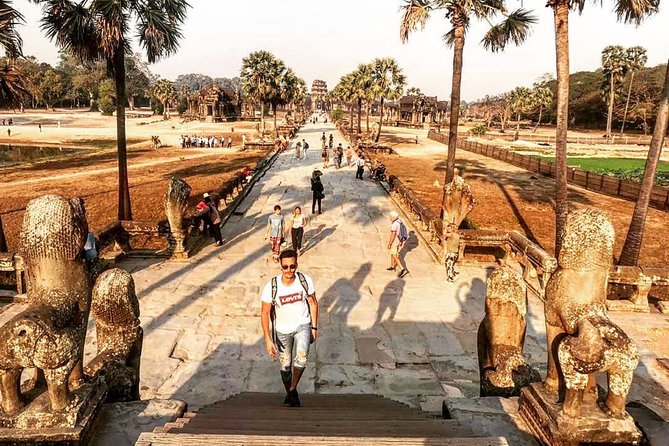
Day 2 begins with Angkor Wat, the enormous temple complex that defines most first visits to Siem Reap. You have about two hours here, enough to see the main approach, central galleries, towers, and important decorative details.
Two hours is useful but not exhaustive. Angkor Wat is large, and the walk from the entrance to the central areas takes time. Your guide can help you focus on the parts that best explain the building’s design and religious purpose.
Dress carefully. Shoulders and knees must be covered at several temples, and clothing with disrespectful or obscene images may lead to refusal at the entrance. Light clothing is sensible, but it still needs to meet the rules.
Ta Prohm and Ta Nei
Ta Prohm follows with about 90 minutes. It is known for trees growing through and around the masonry, but the temple is more than a photo stop. Its courtyards, galleries, and partially cleared jungle show how restoration teams work around a living forest.
The tree-covered sections can be crowded at popular points, so ask your guide to show you quieter corners and carved details away from the best-known views. The stone is uneven, and the roots can make some areas awkward underfoot.
Ta Nei is smaller and more secluded in feel. This jungle temple recalls Ta Som and includes carvings associated with the reign of Jayavarman VII. It gives you a useful contrast with Ta Prohm: less scale, less polish, and often a more direct sense of a ruin in the forest.
Bakong, Preah Ko, and Lolei at Roluos
After lunch, the tour moves to the Roluos Group, one of the most important early Khmer sites in the program.
Bakong is the largest and most impressive of the three temples here. Its pyramid form helps you see how the temple mountain idea developed before the later monuments at Angkor. The grounds also provide a change from the dense central temple circuit.
Preah Ko, or Sacred Bull, belongs to the early Khmer capital of Hariharalaya. Its name comes from the bull figures facing the sanctuary towers. The temple is more compact than Bakong, making it easier to study the arrangement of towers and guardian sculptures.
Lolei was built on an island in the now-dry Indratataka baray, one of the earliest large reservoirs made by a Khmer king. The waterworks matter because Khmer capitals were supported not only by temples, but also by major systems for managing water.
The order of the Roluos stops can vary. The day includes about 45 minutes at Bakong and roughly 40 minutes each at Preah Ko and Lolei, so you get an introduction rather than an exhaustive archaeological study.
Siem Reap’s Old Market
The final stop is Psar Chaa, or the Old Market, with about two hours to browse. It is the most shopping-focused part of the tour, offering souvenirs, curios, and everyday market goods.
This is a good place to compare prices and practice polite bargaining, but keep personal spending separate from the tour price. The market is included in the route, while meals, drinks, and shopping are not.
Day 3: The long road to Koh Ker and Beng Mealea
Koh Ker, the temporary royal capital
Day 3 is the most demanding and, for many people, the most distinctive. Koh Ker lies about 113 kilometers from Siem Reap and served as the temporary capital of King Jayavarman IV during a period of conflict within the Khmer kingdom.
The main temple visit lasts about two hours. Koh Ker feels different from the central Angkor sites because of its distance and its role as a separate royal center. The journey is a major part of the day, so this is not the right choice if you want three short, easy temple mornings.
The remote setting also gives the visit a different pace. You have more time to think about political change within the Khmer Empire, rather than only admiring the best-known monuments. Ask your guide to explain why the capital moved and how Koh Ker fits into the wider sequence of Khmer building.
Beng Mealea and the forest ruins
In the afternoon, you continue to Beng Mealea, around 60 kilometers from Siem Reap. This Hindu temple dates to around the end of the 11th century and covers a large area, with jungle growth among the ruins.
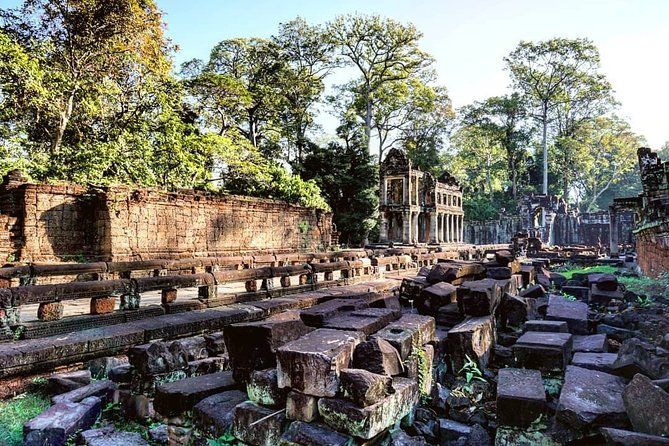
Beng Mealea is compelling because the structure is less tightly controlled than the restored central temples. Collapsed galleries, vegetation, and rough stone passages make it feel more exploratory. You should expect uneven footing and take care with cameras and phones, particularly around dust, moisture, and natural elements.
The planned visit lasts about two hours. That gives you enough time to see the main routes without treating the temple as a rushed photo stop. As with Koh Ker, the appeal comes partly from the road trip and the sense of leaving the standard Angkor circuit.
An optional Pre Rup sunset may again be possible if timing allows. After a long day on the road, some groups may prefer to return directly to Siem Reap. The private format makes that conversation easier.
What the $250.50 price really covers
At $250.50 per person, the tour is priced for private guiding and transport across three long days, not for an all-inclusive holiday. You receive an English-speaking professional guide, an air-conditioned vehicle with a professional driver, taxes and service charges, cool water, and cool wet towels.
The value is strongest for couples, families, or small groups that want a private vehicle and a guide who can respond to their pace. One guide can make a major difference at sites such as Bayon and Angkor Wat, where a short explanation can help you understand what you are looking at instead of seeing only walls and towers.
The price does not include:
- Angkor Archaeological Park admission
- Meals and drinks
- Hotel accommodation
- Personal purchases
- Travel insurance
The Angkor entrance pass is purchased separately in US dollars at the main gate. Children under 12 enter free, according to the stated conditions. Ask about the correct pass before your first temple day, and keep it visible during visits.
For a group of six or eight, the private arrangement can offer solid value because the cost is per person and the vehicle is reserved for your party. For one person, the same price may feel less attractive unless personal guiding and the remote Day 3 stops are priorities.
Comfort, clothing, and the pace of the days
You should plan for heat, walking, steps, and uneven stone. Wear light clothes that cover your shoulders and knees, bring sun protection, and choose shoes with a firm sole.
The schedule is full. Each day runs from roughly 8 a.m. to 5 p.m., and Day 3 includes substantial driving. The vehicle and cold towels are practical comforts, but they do not turn the experience into a relaxed resort outing.
Pickup is offered for people staying inside Siem Reap. The exact pickup time is confirmed when possible, though operational changes may be passed on the day before departure. Other languages can be requested, subject to availability and extra charges.
The tour is private, so only your group participates. That is especially helpful for families. The strongest guide feedback names Veasna, Sophia, and Sophea as patient, clear, and attentive to different ages. Still, guide assignment is not guaranteed, so request a preferred language or guide when booking.
Who should book this temple tour?
I would choose this tour if you want the major Angkor landmarks but also care about the wider Khmer story. The combination of Angkor Thom, Angkor Wat, Banteay Srei, the Roluos Group, Koh Ker, and Beng Mealea gives you far more range than a standard two-day circuit.
It suits families because the private format allows breaks and adjustments. It also suits couples who want help with photographs and explanations without joining a large group.
I would hesitate if you dislike long drives or prefer slow mornings. Koh Ker and Beng Mealea are valuable additions, but they make Day 3 tiring. I would also budget carefully, since the listed price leaves temple passes, food, accommodation, and personal expenses outside the package.
Free cancellation is available up to 24 hours before the start time. Changes or cancellations inside that window are not accepted for a refund, and poor weather may lead to a new date or full refund.
Should you book the three-day Khmer Empire tour?
Book it if you want a private, temple-heavy introduction with an English-speaking guide, dependable transport, and several sites beyond the usual Angkor highlights. The itinerary is strongest for people who enjoy ancient architecture, historical context, and the contrast between restored monuments and rough forest ruins.
Skip it if you want a light sightseeing schedule or have only a small appetite for driving. Before paying, add the Angkor pass and three days of meals to your budget, confirm pickup from your Siem Reap hotel, and ask which guide is assigned. With those points clear, this is a well-rounded way to see both the famous core of Angkor and the more remote chapters of Khmer history.
FAQ
Is the tour private?
Yes. Only your group participates in the activity.
What time does the tour run?
Each day is scheduled from approximately 8 a.m. to 5 p.m.
Is hotel pickup available?
Pickup and return transfers apply to customers staying inside Siem Reap.
Is the Angkor entrance pass included?
No. You must purchase the Angkor Archaeological site pass separately in US dollars at the main gate.
Are meals included?
No. Breakfast, lunch, dinner, drinks, and other personal food expenses are not included.
What should I wear?
Wear light clothing that covers your shoulders and falls below your knees. Clothing with obscene or disrespectful images, as well as brightly coloured clothing, may lead to refusal at some sites.
Are children under 12 charged for the Angkor pass?
Children under 12 are free of charge for the entrance pass under the stated conditions.
Can I cancel the tour for a full refund?
You can cancel at least 24 hours before the local start time for a full refund. Cancellations or changes made less than 24 hours before the start time are not accepted for a refund.
Just added in Siem Reap
- Ultimate Sunrise to Angkor Wat, Angkor Thom and Bayon Temple★ 5.0 · 3 reviews
- Twilight Tastes of Siem Reap Include Dinner★ 5.0 · 13 reviews
- Trekking Tour at Phnom Kulen National Park from Siem Reap★ 5.0 · 3 reviews
- Full-Day Private Tour of Angkor Wat with Pick Up★ 5.0 · 12 reviews
- Private Day Trip to Angkor Temples with Expert Guide★ 5.0 · 4 reviews
- Siem Reap City Tour with War Museum and Killing Field★ 5.0 · 27 reviews
- Waterfall & River of 1000 Siva Linga- Kulen Mountain Private Tour★ 5.0 · 3 reviews
- Angkor Wat Experience Temple Pass and Siem Reap Food Tour★ 5.0 · 13 reviews
Historical Tours, compared.
Bokor Mountain Adventure – History, Sights and Waterfalls
Read our review →
Angkor World Heritage with Sunrise – Small Group
Read our review →
Private Angkor Wat Tour & Angkor Park/Heritage With Local Guide
Read our review →
Kulen Mountain Waterfall and Historical Wonders Private Tour
Read our review →Browse the lists this tour appears in