
Reviewed · HISTORICAL TOURS
Oudong Mountain History and Pagoda Tour
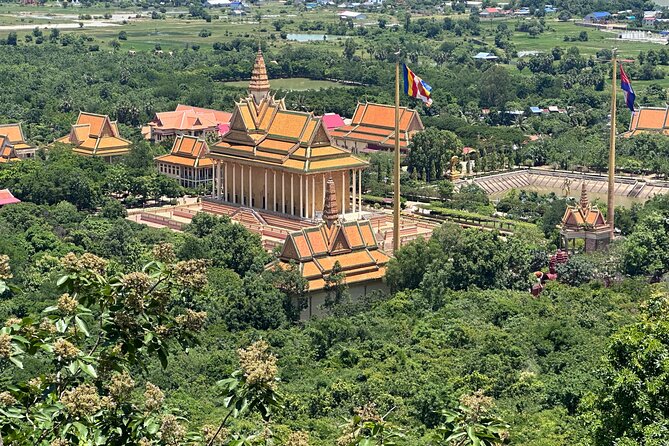
Phnom Oudong gives you Cambodia beyond Phnom Penh’s main sights. You’ll walk up a forested mountain that once held the royal capital, pass old and new stupas, and look across the flat countryside. The day also brings you close to daily life along the Tonle Sap River, from fish stalls to a working silversmith village.
I like the private format, since Sam Ang can adjust the pace and explain local customs without a larger group setting the schedule. I also like the mix of river life, craft work, food, and history. The main drawback is simple: this is an active day with climbing and plenty of walking, and the seven-hour schedule can feel long in Cambodia’s heat.
Key points to know before booking
- Former royal capital: Oudong was Cambodia’s royal capital before the court moved to Phnom Penh.
- A full route north: You visit Russey Keo, Kampong Luong, Arey Kasap, Phnom Oudong, and Chey Odam.
- Private guiding by Sam Ang: Sam is a licensed English-speaking guide who leads the day personally.
- Climbing is part of the experience: The mountain walk lasts about 90 minutes and includes an ascent to broad views.
- Lunch is local and relaxed: You eat at an outdoor restaurant in Chey Odam, with beer and soft drinks included.
- Best for active sightseers: Most people can take part, but you should be comfortable walking and climbing.
Why Oudong is worth a day away from Phnom Penh
Oudong offers a useful contrast to Phnom Penh. The capital gives you busy streets, museums, and grand city buildings. Oudong gives you open plains, village roads, religious sites, and a former seat of power reached on foot.
The old royal capital lies in today’s Oudong district, north of Phnom Penh. The main historical area is Mount Oudong, also called Phnom Oudong or Phreah Reach Throap Mountain. Its wooded slopes and religious monuments make the site feel quieter than the city, even though it is a popular day trip for people from Phnom Penh.
I especially like the way this excursion builds toward the mountain rather than driving straight there. You begin beside the Tonle Sap River, see food and trade at close range, stop at a traditional craft village, and only then move inland toward the former capital. That sequence helps you understand the area as a living place, not just a historic stop.
The private setup matters too. Sam Ang personally guides each tour, and his role goes beyond pointing out monuments. He explains Cambodian customs, local history, and the meaning of places along the route. One useful detail from his guiding style is his use of lesser-used walking paths around Oudong, which can give the visit a more personal feel.
A few more things to do in Phnom Penh worth a look
- Guided Phnom Penh Heritage Tour
★ 5.0 · 37 reviews - Phnom Penh Historical Tour
★ 5.0 · 13 reviews - Udong Historical Site Tour
★ 5.0 · 8 reviews
Russey Keo fish port and market
Your first stop is Russey Keo, beside the Tonle Sap River. You spend about 30 minutes at the fish port and market, where the river’s importance becomes clear.
The Tonle Sap River drains the large freshwater lake of the same name. Fishing supports communities along the water, so this stop gives you a practical look at one of Cambodia’s major food and work networks. It is not a polished attraction built for sightseeing. You are seeing a working market, which means the experience is likely to be more about observation than formal interpretation.
This short visit is well placed early in the day. It breaks up the drive and introduces the river before you reach Kampong Luong. If you prefer major monuments and air-conditioned stops, the market may feel basic. If you want ordinary Cambodian life included in your day, it is a worthwhile beginning.
Kampong Luong’s silversmith village
After continuing north beside the Tonle Sap, you stop at Bopha Kampong Luong Silversmith Village for about 45 minutes. Here, local artisans produce handmade silver items using traditional methods.
This is one of the more distinctive parts of the route. A monument shows you what Cambodia built in the past. A craft village shows you how skill and small-scale production remain part of life now. You can watch the work taking shape and better understand the time and handwork behind silver objects sold in Cambodia.
The stop also gives the day a change of pace. The fish market is tied to food and river trade. The silversmith village focuses on craft. Together, they make the drive north more interesting than a direct transfer to Oudong.
You should keep your expectations practical. The information provided does not promise a formal workshop or a chance to make your own piece. Treat this as a guided visit to see artisans at work. A small souvenir is included with the tour, though the exact item is not specified.
Viewing Kampong Luong’s floating village
The next stop takes about 15 minutes and offers a view of an extensive floating village at Kampong Luong. Floating communities are a familiar feature of the Tonle Sap and Mekong river systems, and this viewpoint gives you a quick look at how settlement adapts to life on the water.
Because the stop is short, you should think of it as an introduction rather than a full village tour. You will not have hours to explore every part of the community. Still, it adds useful context to the earlier fish market visit. The river is not just scenery here. It shapes transport, work, food, and where people live.
I like this pairing of stops because the day shows several sides of the Tonle Sap area: commerce at the port, production in the silversmith village, and settlement on the water. That variety makes the drive feel purposeful.
Same base, a different kind of day out:
- The Killing Field and Toul Sleng Genocide Museum (S21) Tour
★ 5.0 · 1,977 reviews - Phnom Penh: Sunset Cruise with Unlimited Beers & BBQ Buffet
★ 4.5 · 727 reviews - Aroma Therapy Massage, Relaxation therapeutic aromatherapy oil massages.
★ 5.0 · 645 reviews - Killing field and Toul Sleng genocide museum Tour
★ 5.0 · 610 reviews
Wat Arey Kasap and the first look at Oudong
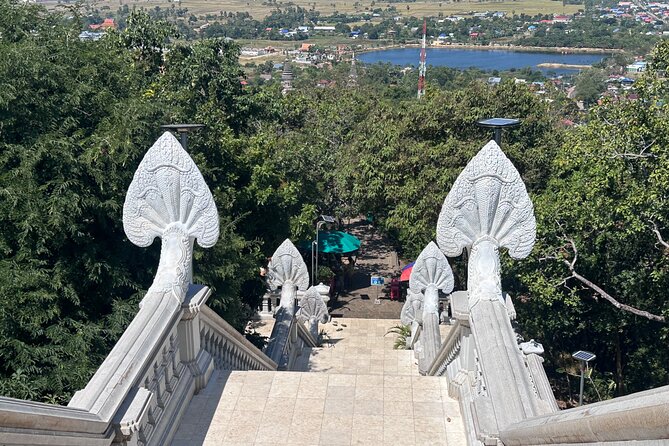
After leaving the river, you head inland into Oudong district and visit Wat Arey Kasap for about 45 minutes. This pagoda begins the historical part of the trip.
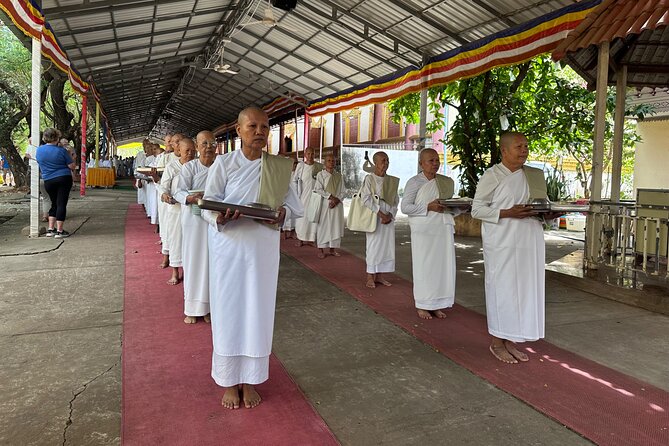
The visit helps you shift from everyday river life to Cambodia’s religious and royal past. Expect a temple setting where you should behave respectfully and dress with care. Shoulders, backs, and legs above the knee should be covered at temples and religious sites, so bring clothing that meets those requirements.
This is also a good point to ask Sam about the connection between the pagoda, Oudong, and Cambodian religious practice. One recent tour experience included joining Buddhist traditions with Sam’s help, so you may find that he offers useful guidance on how to act respectfully. The exact opportunity can depend on the day and the site.
Wat Arey Kasap is not the longest stop, but it gives the mountain visit a strong lead-in. You arrive at Oudong with some sense of the area’s sacred character rather than treating the climb as only a scenic walk.
Climbing Phnom Oudong for the main views
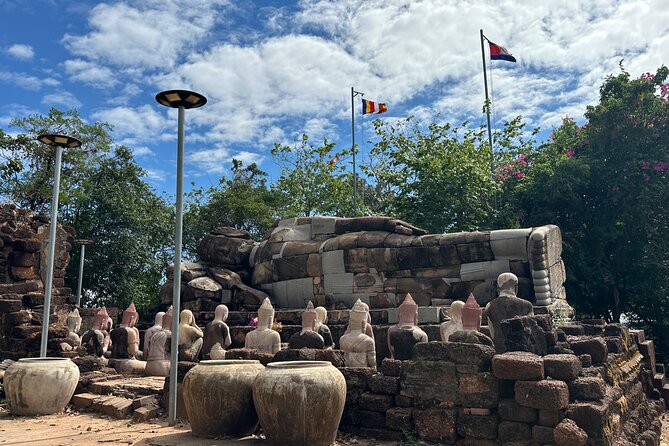
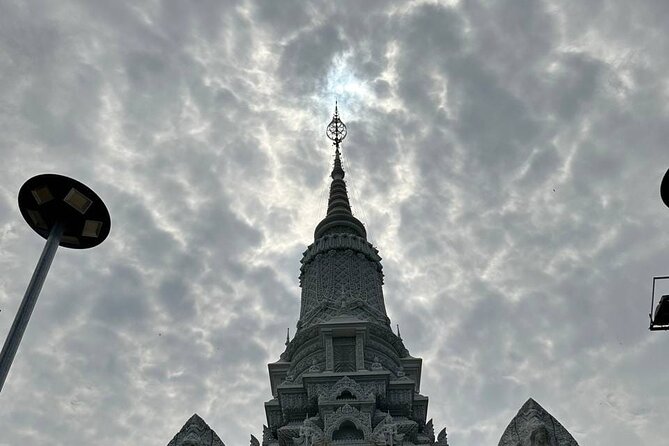
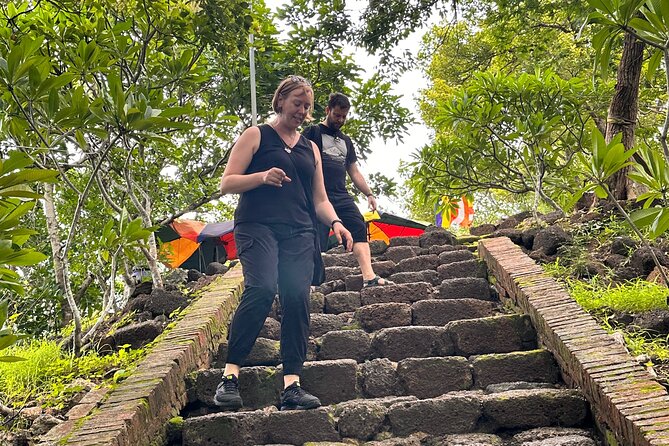
The central part of the day is the 90-minute visit to Phnom Oudong. The mountain is covered in forest, and the route takes you upward for broad views over the surrounding plains. You also walk through shaded areas to see ancient and modern temples and stupas.
This is where the tour earns its active rating. One person who completed the experience noted that it involved substantial walking and climbing, and that is important advice. You should not book this as a gentle vehicle-based sightseeing day. The route is manageable for most people according to the tour details, but you need to be comfortable with an uphill walk.
The forest shade helps, though Cambodia’s heat still matters. Water is included, and you should use it. Comfortable walking shoes are a sensible choice. The exact number of stairs or the surface underfoot is not specified, so I would plan for uneven outdoor conditions rather than a smooth city path.
The reward is the combination of setting and history. Oudong was once Cambodia’s royal capital, and the mountain still carries that sense of importance through its monuments and religious sites. At the same time, the views remind you that this was a capital surrounded by open countryside, not a dense modern city.
The ancient and modern structures also make the site more interesting than a single preserved ruin. You see how a historic place continues to be used and remembered. Sam’s explanations are especially useful here, since the meaning of a stupa or temple is not always obvious when you first see it.
The climb takes about an hour and a half, but the timing includes more than reaching the top. You will have time to walk through the wooded area, see monuments, pause for views, and hear about the site. If your group includes children or anyone who needs frequent breaks, tell Sam early. This is a private tour, so the pace can be more flexible than on a large group excursion.
Chey Odam market and a shaded Khmer lunch
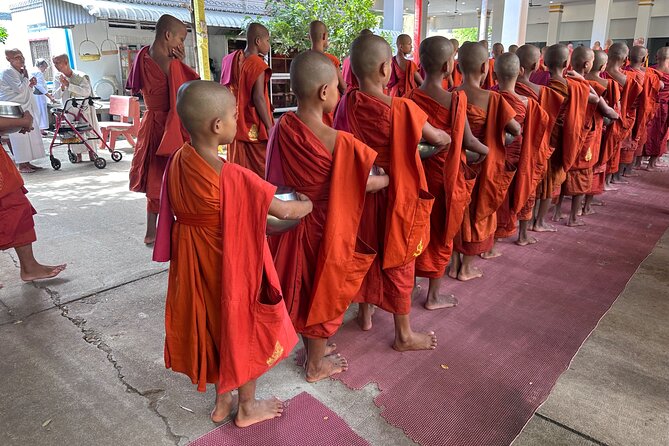
After the mountain, you go to Chey Odam village at the base of Phnom Oudong. You spend about 30 minutes browsing the market before lunch.
Chey Odam is a popular stop for people making day trips from Phnom Penh, so the village connects the historic site with the way Cambodians use it today. The market visit is brief, but it gives you time to look around rather than moving directly from the mountain into a restaurant.
Lunch lasts about 90 minutes at a local outdoor restaurant. The restaurants here serve traditional Khmer food in shady huts, offering a place to escape the sun after the climb. Roast chicken is among the food mentioned for the meal, and beer and soft drinks are included.
This is a generous lunch break for a seven-hour outing. I see that as a benefit after an active morning, especially in hot weather. It also gives you time to talk with Sam, ask about what you have seen, and enjoy the meal without rushing.
The menu is not presented as a fixed list, so you should not book this expecting a formal tasting course or a choice of named dishes. You can expect local food in a relaxed outdoor setting, with lunch, beer, and soft drinks covered in the price.
How the private format affects the day
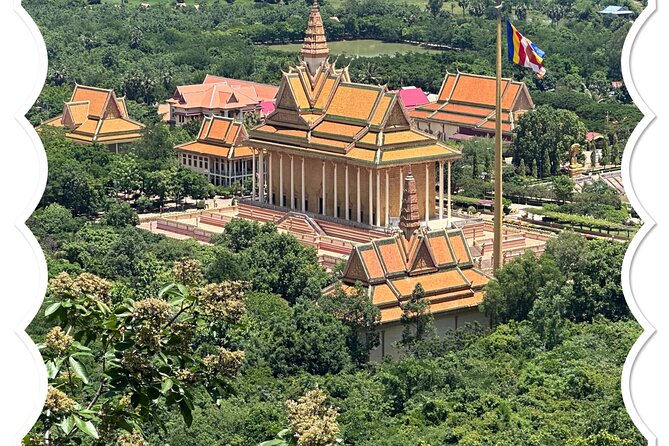
The tour starts at 8:00 a.m. and lasts about seven hours. Pickup and drop-off are included, with transport by tuk-tuk or car. The specific vehicle can vary, so you may want to confirm the arrangement when booking if that matters to you.
The private format means only your group takes part. That is useful for a route with several short stops and one longer climb. You are not waiting for a bus full of people at every market or pagoda, and Sam can give more attention to questions.
It also makes the tour a better choice for solo visitors, families, and small groups who want a guide without joining strangers. The pace is still shaped by a full route, so private does not mean slow or luxurious. You cover several places in one day.
The experience is often booked about 33 days ahead, which suggests planning early is sensible if your dates are fixed. Confirmation is provided at booking. Free cancellation is available up to 24 hours before the start time, while poor weather can lead to a different date or a full refund.
Is the $110 price fair?
At $110 per person, this is not the cheapest way to reach Oudong. The value depends on how much you want from the day.
You are paying for private transport, pickup and drop-off, a licensed English-speaking guide, water, snacks, lunch, beer and soft drinks, and a small souvenir. You also get a route that includes several stops before and after the mountain, rather than paying for a simple transfer to the historic site.
For a solo person, the price may feel high compared with joining a shared excursion. For two or more people, the private arrangement becomes easier to justify, especially if you value flexible pacing and direct attention from Sam. The included meal and drinks also reduce the number of extra costs during the day.
I would not choose this tour for a bargain-focused visit to one monument. I would choose it if you want a full cultural day with transport handled, a personal guide, local food, and a wider look at life north of Phnom Penh.
Who should book this Oudong day trip?
I would recommend it to active sightseers who want more than Phnom Penh’s central attractions. It suits people who enjoy mixing history with markets, craft work, religion, food, and rural views.
Families can take part, and the private format may help parents manage the pace. Still, the mountain climb means you should consider your group’s walking ability before booking. Solo visitors also gain from having a dedicated guide and arranged transport.
You should be comfortable with a long day outside, temple dress rules, walking in warm conditions, and climbing at Phnom Oudong. If your main goal is an easy ride with minimal walking, this is not the right choice.
My verdict on the Oudong Mountain tour
Book this tour if you want Oudong to be part of a broader Cambodian day, not just a quick monument stop. Sam Ang’s personal guiding, the private transport, the river and craft stops, and the local lunch give the excursion a clear sense of place.
Skip it if you want a short, low-effort outing or if climbing is a serious concern. For the right person, the $110 cost buys a well-filled day with history, local life, food, and time outdoors. The strongest reason to go is the combination: you see how people live along the Tonle Sap, then walk through the former royal capital and look out across the plains from its wooded mountain.
FAQ
What time does the Oudong Mountain tour start?
The tour starts at 8:00 a.m.
How long does the experience last?
The full experience lasts approximately seven hours.
Is pickup and drop-off included?
Yes. Pickup and drop-off are included.
Is this a private tour?
Yes. Only your group participates in the activity.
Who guides the tour?
The tour is personally guided by Sam Ang, a licensed English-speaking local guide.
What type of transportation is used?
Transportation is provided by tuk-tuk or car.
Is lunch included?
Yes. Lunch is served at a local outdoor restaurant in Chey Odam. Beer and soft drinks are included.
Do I need to be fit for the tour?
You should be comfortable with walking and climbing. The visit to Phnom Oudong includes about 90 minutes of walking and an ascent of the mountain.
What should I wear to the temples?
At temples and religious sites, your shoulders, back, and legs above the knee should be covered.
Can I cancel for a full refund?
Yes, if you cancel at least 24 hours before the experience starts. Cancellations made less than 24 hours before the start time are not refunded. If poor weather causes the tour to be canceled, you will be offered another date or a full refund.
Just added in Phnom Penh
- Watch Khmer Kickboxing with Free Beers by Ringside Seats★ 5.0 · 11 reviews
- Watch Live Khmer Traditional boxing in Phnom Penh★ 5.0 · 46 reviews
- The killing field and Toul Sleng Genocide museum (S21) Tour★ 4.5 · 19 reviews
- Udong Historical Site Tour★ 5.0 · 8 reviews
- Udong Old Capital Tour★ 4.5 · 3 reviews
- Warm Stone Massage★ 5.0 · 23 reviews
- Private Taxi Phnom Penh to Siem Reap-English Speaking Drivers★ 5.0 · 50 reviews
- Private Taxi Between Phnom Penh – Siem Reap Stop Sightseeing★ 5.0 · 23 reviews
Historical Tours, compared.
Bokor Mountain Adventure – History, Sights and Waterfalls
Read our review →
Angkor World Heritage with Sunrise – Small Group
Read our review →
Private Angkor Wat Tour & Angkor Park/Heritage With Local Guide
Read our review →
Kulen Mountain Waterfall and Historical Wonders Private Tour
Read our review →Browse the lists this tour appears in