Reviewed · TOURS IN SIEM REAP
3 Days Siem Reap Explorer – Small Group
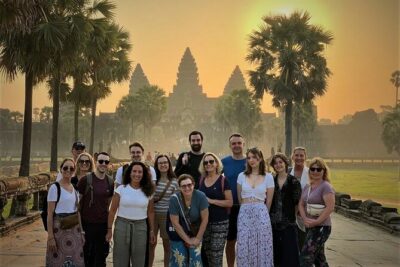
Angkor Wat at sunrise is the headline, but the smart part of this tour is the range. You’ll see Cambodia’s most famous temples, a traditional Tonlé Sap village, and either Phare Circus or a longer lake visit, all without arranging separate rides and guides. The early start gets you inside Angkor Wat before the day heats up, and the small group keeps the experience more personal than a large coach tour.
I like two things here: the careful spread of temples, from the vast Angkor Wat and Bayon to the delicate carvings at Banteay Srei, and the mix of stone ruins with present-day Cambodian life. A guide such as Sok, praised by name in the tour feedback, can add welcome context to a site that can otherwise feel like a long procession of walls and courtyards.
The main catch is cost and stamina. The advertised $129 price does not include the required $62 three-day temple pass, and Day 2 begins around 4:00 to 4:30 a.m. Add meals, and this is not the cheapest way to see Siem Reap. It is a practical choice if you value planning, transport, and a small group.
Key points to know before booking
- Sunrise begins around 4:00 to 4:30 a.m. on Day 2, so plan for a very early night before your Angkor Wat visit.
- The group is limited to 15 people, a useful middle ground between a private tour and a crowded bus.
- The $62 temple pass is extra, bringing the basic tour and temple admission to $191 per person before meals.
- Kampong Phluk and Phare Circus are seasonal alternatives, rather than two guaranteed inclusions on the same day.
- Banteay Srei adds finely carved sandstone, while Preah Khan, Neak Pean, and Pre Rup fill out the less famous side of Angkor.
- Shoulders and knees must be covered inside temples, and comfortable walking shoes are a must.
Day 1: Kampong Phluk and the older temples at Roluos
The first morning begins with hotel pickup, listed at about 7:30 a.m. The general meeting information gives an 8:00 a.m. start, so confirm the exact pickup time when you book. You’ll ride through the countryside toward Tonlé Sap Lake, the huge freshwater lake that expands dramatically during the wet season.
A few more things to do in Siem Reap worth a look
- From Siem Reap: Angkor Wat and Floating Village 3-Day Trip
★ 5.0 · 100 reviews - 3-Day Angkor Wat with All Interesting Major Temples, Banteay Srei & Beng Mealea
★ 5.0 · 70 reviews - 3-Day Angkor Wat & All Interesting Major Temples & Kulen Mount Waterfall
★ 5.0 · 63 reviews
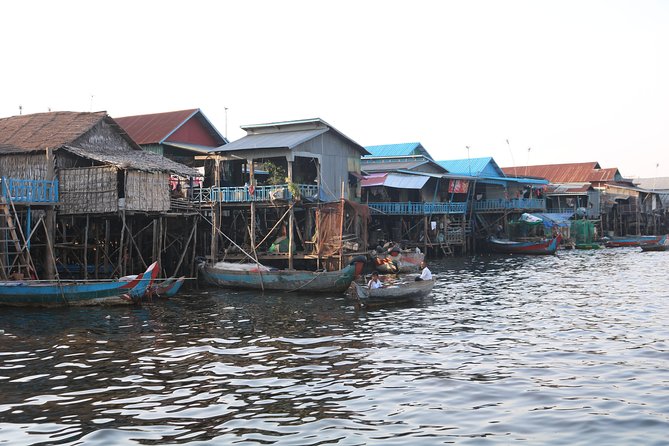
Kampong Phluk on Tonlé Sap Lake
Kampong Phluk is a traditional fishing village known for houses built on tall stilts. The height of those homes makes sense once you understand the lake’s changing water level. During the dry part of the year, Tonlé Sap covers about 2,500 square kilometers. In the wet season, it can swell to roughly 12,000 square kilometers.
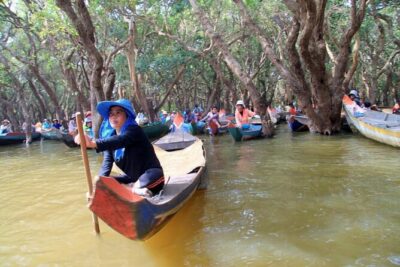
A boat cruise and entrance fee are included. This gives you a break from temple stone and lets you see how homes and villages adjust to the lake’s seasonal rhythm. The visit lasts about three hours, including the journey and village time, so it is not just a quick photo stop.
I like this opening because it puts the temples in a wider Cambodian setting. Angkor can feel sealed inside its own historical world. At Kampong Phluk, you get a look at life connected to water, fishing, and changing seasons.
The drawback is that the lake experience depends on conditions and season. Water levels affect the appearance of the village, and the tour does not promise a private boat or a particular type of wildlife sighting. Treat it as a cultural outing, not a nature expedition.
Bakong and the Roluos group
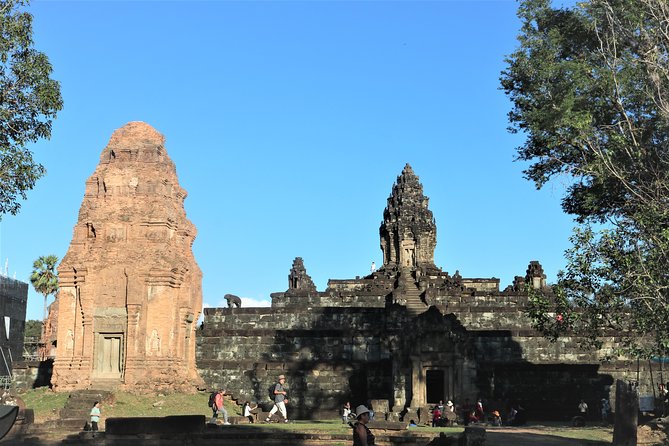
Next comes Bakong, one of the major ruins in the Roluos area. These temples date to the ninth-century reign of King Indravarman I, making them older than the better-known monuments closer to Angkor Wat.
Bakong helps you see how Khmer temple design developed. It has the classic temple-mountain idea, with a strong central structure and a layout meant to express a sacred center. The scale is more manageable than Angkor Wat, which gives your guide room to explain the design without competing with enormous crowds.
The stop is listed at about three hours, though the exact time may be shaped by the day’s transport and group pace. Admission is not included here as a separate item, so the required three-day temple pass covers the relevant temple visits.
This is a useful first temple day because it eases you into the subject. You begin with an early Cambodian monument, then see how later Khmer builders created grander and more complex sites. If you want only the biggest famous temples, Bakong may feel like a detour. If you enjoy seeing development over time, it earns its place.
Phare Circus as a seasonal alternative
From March 1 through August 31, the schedule gives Phare, the Cambodian Circus as an alternative to the Tonlé Sap visit. This is an important detail when comparing dates. You should not assume that the lake and the circus are both included in your version of the program.
Phare is a Cambodian performance with acrobatics and a story connected to the country’s post-Khmer Rouge recovery. A seat in section C is included, and the performance portion lasts about two hours. It offers a different kind of cultural context from the temples, using movement and stage work rather than carved stone.
This option may suit you better if you prefer an evening performance to a longer rural outing. It also gives the three days some variety. On the other hand, anyone hoping to see Kampong Phluk should check the seasonal schedule before paying, since the two experiences are alternatives.
Same base, a different kind of day out:
- Angkor Wat Sunrise or Sunset Tour with Guide from Siem Reap
★ 5.0 · 12,109 reviews - Siem Reap: Angkor Wat: Small-Group Sunrise or Sunset Tour
★ 5.0 · 9,444 reviews - From Siem Reap: Kampong Phluk Floating Village Tour by Boat
★ 4.9 · 6,979 reviews - Sunset tour of Kampong Phluk stilts home village on the Tonle Sap
★ 5.0 · 4,865 reviews
Day 2: Angkor Wat sunrise, Bayon, and Ta Prohm
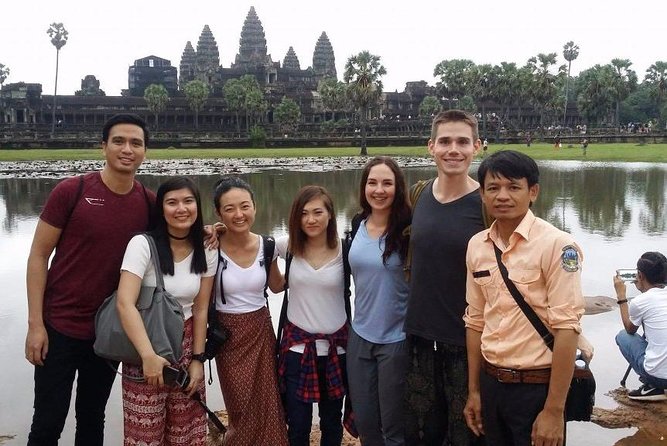
Day 2 is the demanding one. Pickup begins around 4:00 to 4:30 a.m., depending on the time of year, for sunrise at Angkor Wat. You’ll enter from the eastern side, described as a less-visited approach, and make your way through the temple before the main heat of the day.
Angkor Wat before breakfast
Watching first light at Angkor Wat is the tour’s defining moment. The temple’s towers and reflection pool give sunrise a strong visual setting, but the sky is never guaranteed to produce a perfect picture. Clouds, haze, and the size of the crowd all shape the experience.
Entering in darkness from the eastern side is a useful touch. It allows the approach to feel less direct and gives you time to notice the temple’s scale as the light changes. Once inside, your guide can point out the structure, galleries, courtyards, and religious purpose behind the monument.
The visit is scheduled for about three hours. That sounds generous, but Angkor Wat is vast. You’ll walk on uneven surfaces, climb steps in some areas, and spend time standing while the guide explains details. Wear shoes with good support and carry water, which is provided as part of the tour.
The temple pass is not included in the tour price. You must pay $62 directly for the three-day pass. Since the pass is needed for this day and the next temple visits, there is no practical way to skip it if you plan to complete the program.
South Gate and Angkor Thom
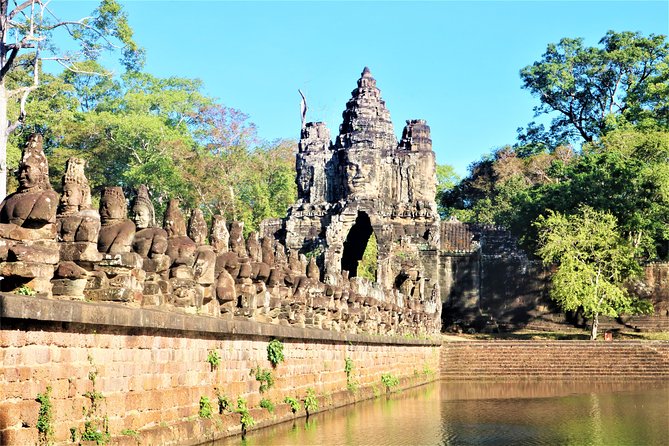
After Angkor Wat, you’ll visit the South Gate of Angkor Thom for about 30 minutes. This was the entrance to the Khmer Empire’s capital, and its approach gives you an immediate sense of the city’s ceremonial scale.
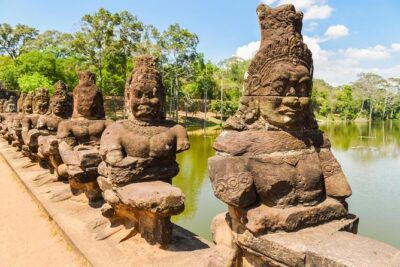
The gate is more than a quick roadside photo stop. Look at the long causeway and the figures lining the approach. Your guide can help you understand how the entrance framed arrival at the capital, rather than treating it as another isolated ruin.
Bayon and the royal capital
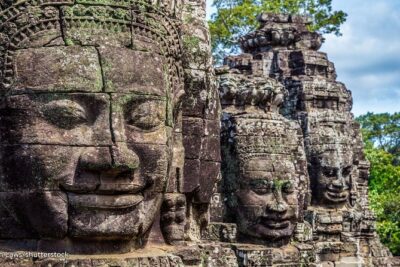
Inside Angkor Thom, the focus shifts to Bayon. The stop lasts about an hour and a half. Bayon is known for its serene carved faces, which appear on the towers and look in different directions across the temple.
Bayon is less orderly than Angkor Wat. Its passages can feel tight, and the layers of towers make it easy to lose your sense of direction. That is where a guide adds real value. Instead of wandering from face to face, you can follow the temple’s plan and understand how it fit within Angkor Thom.
You’ll also pass the Terrace of the Elephants and the Terrace of the Leper King. These are not listed as long separate stops, but they add important detail to the royal center. The reliefs and ceremonial platforms help you picture Angkor Thom as a functioning capital, not just a collection of abandoned buildings.
Ta Prohm, roots, and movie fame
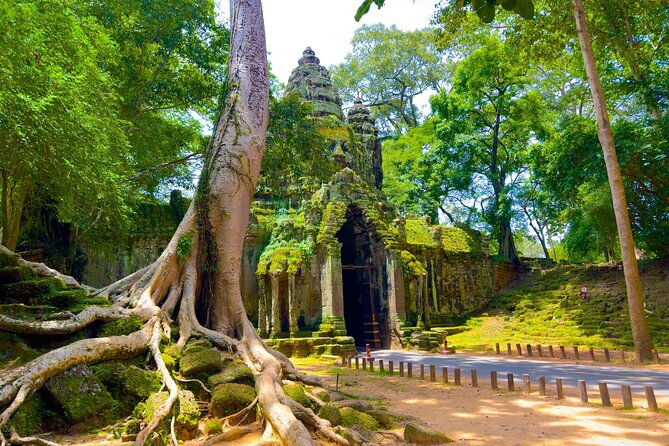
Ta Prohm is the atmospheric temple on the route. Tree roots push across walls and doorways, and the stone has a rougher, more overgrown appearance than Angkor Wat. The temple once housed 2,740 monks and was rediscovered by French explorer Henri Mouhot in the early 1850s.
Many people know Ta Prohm as the Tomb Raider temple. That connection brings visitors here, but the setting is more interesting than its movie role. The roots, collapsed galleries, and narrow passages show what happens when a large religious complex loses its caretakers.
You get about an hour here. That is enough for a meaningful visit, though not enough to explore every corner. Expect uneven ground and bottlenecks at the most photographed sections. Your guide can help you see beyond the famous tree and explain how the temple once worked as a religious institution.
By the end of Day 2, you will have covered several major sites and started before dawn. This is the point where the tour’s transport and planning matter most. You do not need to arrange separate drivers between each temple, and a small group makes it easier to keep moving without waiting for a full-size bus.
Day 3: Preah Khan, Neak Pean, Banteay Srei, and Pre Rup
The final day changes pace. It includes several temples that are less instantly famous than Angkor Wat but rewarding for different reasons. You’ll see tree-covered ruins, a small island sanctuary, detailed sandstone carving, and a temple mountain built from several materials.
Preah Khan and the remains of a large religious center
Preah Khan comes first, with about an hour at the site. Its corridors mix tree roots, crumbling stone, and long passages. The mood is quieter and more enclosed than the open terraces at Angkor Wat.
The temple was a major religious complex, and its size becomes clear as you move through the remaining structures. Preah Khan rewards slow looking. Instead of one grand view, you get a series of smaller details: doorways, carved stones, and sections where the forest and architecture meet.
The walk can be rough underfoot. If you want polished paths and wide open views, this may not be your favorite stop. If you enjoy ruins that retain a worn, unsettled character, it is one of the strongest parts of the third day.
Neak Pean on an artificial island
Neak Pean takes about 40 minutes. It sits on a circular island in the Jayatataka Baray, an artificial reservoir. The approach and the island setting make it different from the larger temple compounds.
The site is compact, so you will not spend hours here. Its value comes from the design and placement. You get a glimpse of how water, religious symbolism, and royal construction worked together in the Khmer period.
This is a good short stop between larger temples. It also gives your legs a break from the longer walks at Angkor Thom and Preah Khan, though you should still expect outdoor walking.
Banteay Srei and the finest carving on the route
Banteay Srei is about an hour and a half from the schedule and is one of the tour’s most distinctive stops. This smaller sandstone temple is known for exceptionally detailed reliefs, often regarded as some of the finest carving in Cambodia.
Unlike the giant scale of Angkor Wat, Banteay Srei rewards close viewing. Look at the decorative figures, borders, and careful patterns in the sandstone. The smaller size makes the workmanship easier to appreciate, because you are not trying to take in an entire city-sized complex at once.
Banteay Srei is also a reason to keep the third day in the program. A shorter Angkor visit could focus only on the major central temples, but this stop adds a different type of artistry. The tradeoff is driving time, since it sits beyond the core group of temples. The tour provides an air-conditioned vehicle, which makes that transfer more comfortable.
Pre Rup and the final temple mountain
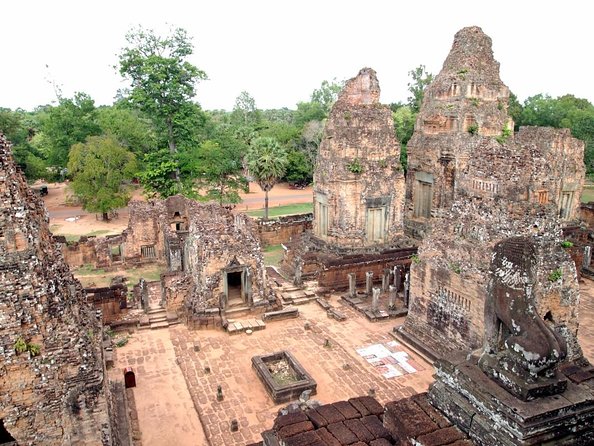
The final stop is Pre Rup, with about an hour and a half scheduled. Built as the state temple of King Rajendravarman and dedicated in 961 or early 962, it combines brick, laterite, and sandstone.
Pre Rup has the strong upward form of a temple mountain. Its materials and warm-toned surfaces give it a different appearance from the gray stone of several other Angkor sites. The location also makes it a natural place to end a full temple program, with a final look at Khmer religious architecture before returning to Siem Reap.
The day includes a lot of movement, and you may be tired by the time you reach Pre Rup. That is worth considering if you prefer slow travel. Still, the sequence makes sense: atmospheric ruin, compact water temple, fine carving, then a large architectural finish.
What $129 really covers
At first glance, $129 per person looks modest for three days of guided sightseeing. The required $62 temple pass changes the math. Your base cost becomes $191 per person before meals, although that still includes the main transport and guiding services.
Included are hotel pickup and drop-off, an air-conditioned vehicle, a licensed English-speaking guide, local tax, mineral water, and either the Tonlé Sap boat cruise with entrance fee or Phare Circus admission. Meals are not included, so you can choose your own food but should budget for it separately.
For me, the value depends on your priorities. If you want to arrange every temple ride yourself, the price may seem high. If you want a fixed route, hotel transport, a guide, and a group capped at 15, the cost is easier to justify. The group size is small enough for questions but not so small that you pay private-tour rates.
Who should book this three-day plan?

I would recommend it to first-time visitors who want the main Angkor temples plus a little more. You get the essential sunrise, Bayon, Ta Prohm, and Angkor Wat circuit, then add Banteay Srei, Preah Khan, Neak Pean, and Pre Rup.
It also suits you if you prefer a guide to explain the temples rather than simply provide a vehicle. The historical sequence, from the Roluos monuments to the later temple complexes, gives the visits a clearer shape.
You should think twice if you dislike pre-dawn starts, long temple walks, or fixed group schedules. The tour is not designed for leisurely late mornings. Families should note that children must be accompanied by an adult, and children under five are not allowed.
Wear clothing that covers your shoulders and knees inside the temples. Comfortable walking shoes are more important than fashionable ones. Free cancellation is available up to 24 hours before the start time, but changes or cancellations inside that period are not accepted.
Should you book it?
Book this tour if you want a well-organized first look at Siem Reap and prefer a small group to a private car. Its best features are the sunrise entry at Angkor Wat, the strong range of temples, and the chance to pair ancient sites with Tonlé Sap village life or Phare Circus.
Skip it if you want to set your own pace, avoid waking before dawn, or spend more time at fewer temples. Also check the seasonal substitute before booking: from March 1 through August 31, Phare Circus replaces the Tonlé Sap visit. With the extra $62 pass and meals added, compare the full cost with your budget, then book if the convenience and coverage fit.
FAQ
Is the $62 temple pass included?
No. The three-day temple pass costs $62 per person and is paid directly at the site on the day of the activity.
What time does the Angkor Wat sunrise day begin?
Pickup begins around 4:00 to 4:30 a.m., depending on the time of year. The first day’s hotel departure is listed at about 7:30 a.m., while the general meeting information gives an 8:00 a.m. start, so confirm your exact pickup time.
Is Tonlé Sap Lake always included?
The schedule gives Tonlé Sap Lake and Phare Circus as seasonal alternatives. From March 1 through August 31, the group visits Phare Circus instead of Tonlé Sap Lake.
Is the Phare Circus ticket included?
Yes. When Phare Circus is the scheduled alternative, admission for a section C seat is included.
How large is the tour group?
The maximum group size is 15 people.
Are meals included?
No. Meals are not included, so you pay for food separately and choose your own meals.
What should I wear and bring?
Wear comfortable walking shoes, and make sure your shoulders and knees are covered inside the temples. Mineral water is included, and children must be accompanied by an adult.
Just added in Siem Reap
- Twilight Tastes of Siem Reap Include Dinner★ 5.0 · 13 reviews
- Ultimate Sunrise to Angkor Wat, Angkor Thom and Bayon Temple★ 5.0 · 3 reviews
- Trekking Tour at Phnom Kulen National Park from Siem Reap★ 5.0 · 3 reviews
- Full-Day Private Tour of Angkor Wat with Pick Up★ 5.0 · 12 reviews
- Siem Reap City Tour with War Museum and Killing Field★ 5.0 · 27 reviews
- Waterfall & River of 1000 Siva Linga- Kulen Mountain Private Tour★ 5.0 · 3 reviews
- Private Day Trip to Angkor Temples with Expert Guide★ 5.0 · 4 reviews
- Angkor Wat Experience Temple Pass and Siem Reap Food Tour★ 5.0 · 13 reviews
Tours in Siem Reap, compared.
Angkor Wat Sunrise or Sunset Tour with Guide from Siem Reap
Read our review →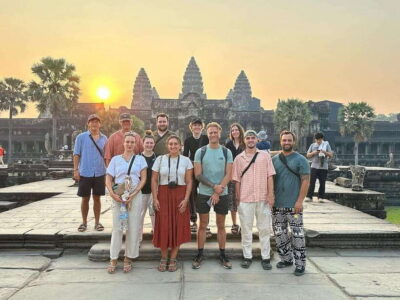
Angkor Wat: Small-Group Sunrise or Sunset Tour
Read our review →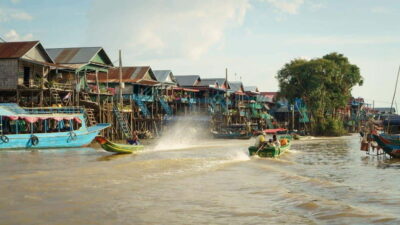
Sunset tour of Kampong Phluk stilts home village on the Tonle Sap
Read our review →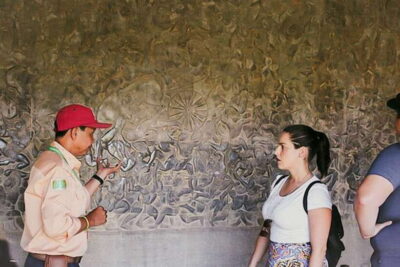
Angkor Wat 2-Day Tour with Sunrise and Sunset
Read our review →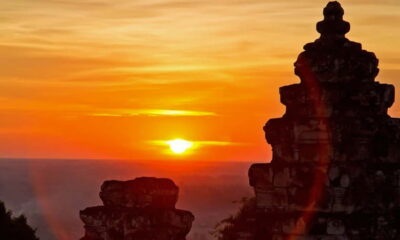
Angkor Wat Sunrise tour with Small – Group and Guide tours
Read our review →