
Reviewed · ANGKOR WAT SUNRISE TOURS
Angkor Wat Guided Sunrise Tour
Angkor Wat at sunrise is the main event here: dark temple towers, a lotus pond, and the sky slowly brightening behind one of Southeast Asia’s great monuments. You also get Angkor Thom, the many-faced Bayon, and Ta Prohm, where huge tree roots twist over old stone. I like the small group of up to 14 and the chance to return to your hotel for breakfast before the longer temple circuit.
I also like the guide’s stated more than 20 years of experience, plus hotel pickup, chilled water, and an air-conditioned minibus. The weak point is reliability: one January 2024 booking went badly, with no guide at the promised time, an unexpected $10 tuk-tuk cost, and a language mismatch. I would confirm the pickup details the day before and bring a little backup money.
Key points to know before booking
- Sunrise begins before dawn: Pickup starts around 4:45am, with the exact time based on your hotel.
- The $10 price is only the tour fee: Your Angkor temple pass costs an additional $37 per person.
- Breakfast is not included: You return to your hotel after sunrise, then pay for your own breakfast.
- Four major temple areas are covered: Angkor Wat, Angkor Thom, Bayon, and Ta Prohm form the core of the day.
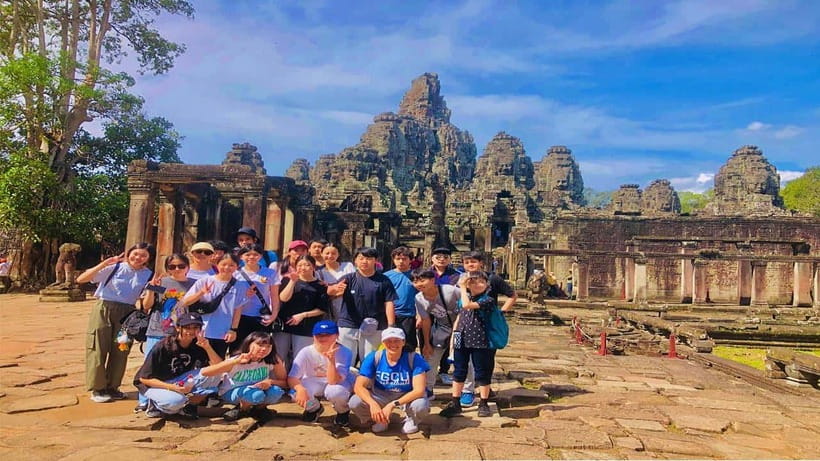
- The group is limited to 14 people: That is a better setup for questions and temple explanations than a large coach.
- Check the language carefully: English, French, and German are listed, but Japanese service was not available in one booking.
A 4:45am start for Angkor Wat sunrise
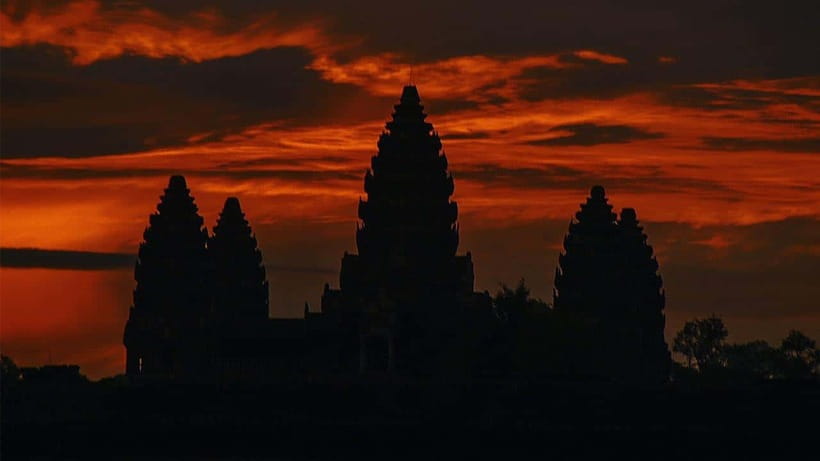
This is an early start by any measure. Your guide and driver are scheduled to meet you in your hotel lobby at about 4:45am, then take you to buy your Angkor temple pass before driving through the dark forest toward Angkor Wat.
The goal is to reach the reflection ponds before sunrise. From there, you can watch the towers change from shadow to warm morning light, with their shapes reflected in the water when conditions cooperate. It is one of the few moments when the temple feels quiet and spacious, even though this is a popular time to visit.
The tour description says you return to your hotel for breakfast after sunrise. That is a useful arrangement. You do not have to carry a full breakfast through the temples, and you get a short break before the main circuit. Breakfast is at your own expense, and the tour does not include food or drinks.
I would treat the pickup time as important, not casual. One customer reported that no guide appeared by 5:00am and that the office did not provide advance notice. That person eventually paid an extra $10 for a tuk-tuk to reach the sunrise area and met the guide later. This is not a reason to reject the tour outright, but it is a reason to confirm the hotel pickup time and the guide’s contact details one day ahead.
Other early starts at the temples from Siem Reap:
- Angkor Wat Sunrise or Sunset Tour with Guide from Siem Reap
★ 5.0 · 12,109 reviews - Angkor Wat Sunrise tour with Small – Group and Guide tours
★ 5.0 · 3,655 reviews - Full-Day Angkor Wat Sunrise Private Tour with Guide from Siem Reap
★ 5.0 · 2,920 reviews
Understanding the $10 price
At $10 per person, this is an unusually low price for a seven-hour temple tour with hotel transport and a live guide. The price makes sense if you want the basic structure handled for you: pickup, driving between sites, temple explanations, and return to Siem Reap.
The important catch is the Angkor pass. It costs $37 per person and is not included. You can buy it through the official Angkor Enterprise website, or the tour may take you to purchase it before entering the temple area. Add breakfast and any personal spending, and your real cost is higher than the advertised $10.
Even after those additions, the package can still offer good value for a first visit. Hiring transport separately, arranging a guide, and planning the temple order can take more work. Here, you are paying a small amount to join an organized route with transport and a guide.
The low price also means you should keep your expectations sensible. This is a shared minibus experience, not a private car with a custom schedule. The group can include up to 14 people, and the pace will be set by the planned route.
Angkor Wat after the first light
Angkor Wat was built by Suryavarman II in the 12th century and was dedicated originally to the Hindu god Vishnu. It later became a Buddhist religious site, which helps explain the mix of Hindu carvings and Buddhist statues you see inside.
The temple is much more than the famous front view. Your guide can point out the galleries, carvings, towers, and religious symbols that are easy to miss when you are focused on taking photographs. The walls carry scenes connected with Hindu stories and Khmer royal power, while later Buddhist use gives the monument another layer of meaning.
The plan gives Angkor Wat time at sunrise and again in the afternoon. That is useful because the temple looks different as the light changes, and the second visit gives you more time to examine the galleries. The stated timing is not perfectly clear, since one part of the schedule lists Angkor Wat for two hours and another places a three-hour visit around Bayon and sunrise. Ask the operator how the day is divided if exact temple time matters to you.
You should also remember that this is a religious site, not only an archaeological attraction. Modest clothing and respectful behavior are sensible. The focus is on learning about the monument’s religious role as well as its stonework.
Angkor Thom and the South Gate
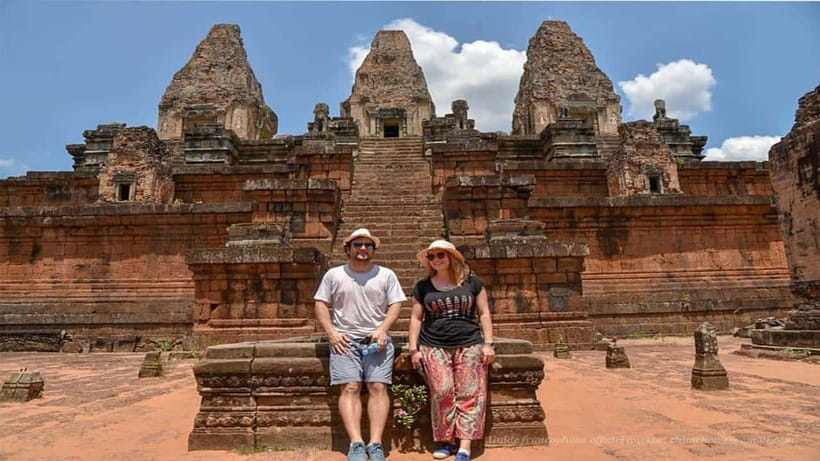
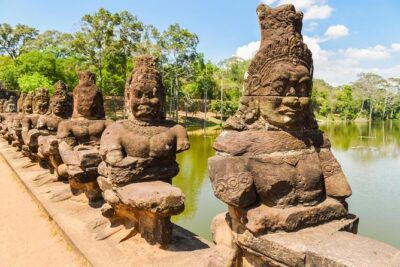
After breakfast, the route moves to Angkor Thom, the great walled city that surrounds several important monuments. Entry is through the South Gate, where giant stone faces look out from the gate towers.
The faces are connected with the Bayon style and are commonly associated with qualities such as compassion, sympathy, equanimity, and charity. Your guide is meant to explain the religious meaning behind these images rather than simply point them out as photo stops.
The approach to Angkor Thom is one of the more memorable parts of the day. You are not walking straight into a single temple. You are passing through an ancient urban center, with monumental gates and sacred buildings arranged within the wider enclosure.
The main drawback is time. Angkor Thom contains several important sites, and a short visit can feel like a quick introduction rather than a full study. The tour includes the South Gate, Bayon, Baphuon, Phimeanakas, the Terrace of the Leper King, and the Terrace of the Elephants. That is a strong list, but you should expect an overview.
A few more things to do in Siem Reap worth a look
- Siem Reap: Full-Day Angkor Wat Guided Tour with Sunset
★ 4.9 · 3,803 reviews - Angkor Wat Highlights and Sunrise Guided Tour from Siem Reap
★ 5.0 · 3,213 reviews - Siem Reap: Angkor Wat Sunrise or Sunset Guided Tour
★ 4.9 · 2,123 reviews - Angkor Wat: Highlights and Sunrise Guided Tour
★ 4.9 · 1,586 reviews
Bayon and its more than 200 stone faces
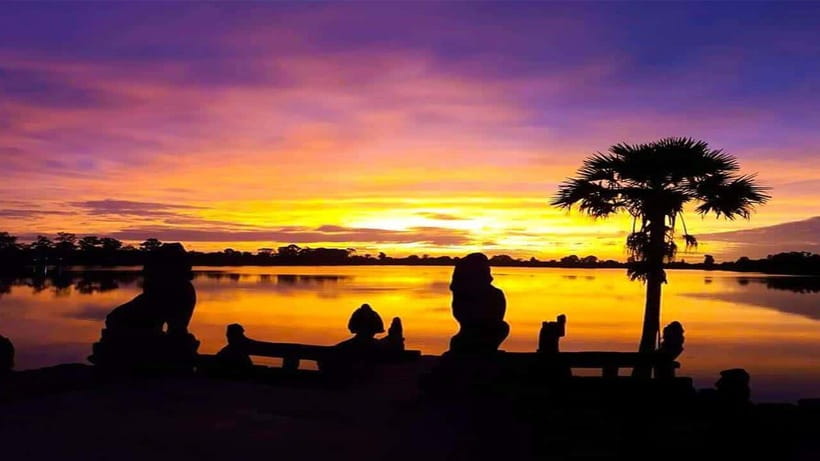
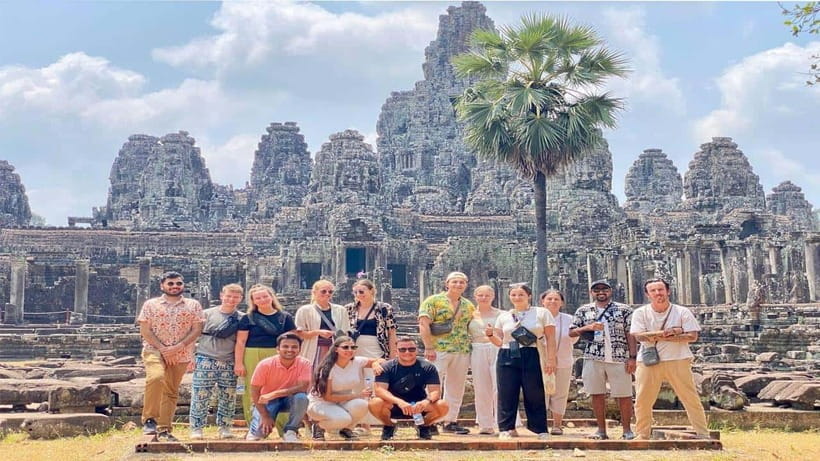
Bayon is the visual centerpiece of Angkor Thom. More than 200 large stone faces look down from its towers, creating a strange and powerful effect as you move through the narrow passages.
The faces are often described as smiling, though each one can look different depending on the angle and light. This is where a guide adds real value. Without context, you may see an impressive cluster of carved heads. With an explanation of the temple’s Buddhist symbolism and royal purpose, the design becomes easier to understand.
The interior is not neat or simple. Towers, corridors, galleries, and carved surfaces crowd together. Watch your footing and stay aware of the group as you move through the structure. A small group helps here because you can ask a question without trying to catch a guide’s voice across a large crowd.
The nearby Baphuon, Phimeanakas, and terraces broaden the picture. They show that Angkor Thom was not built around one isolated shrine. It was a major ceremonial center with several monuments serving different roles.
Ta Prohm and the famous tree roots
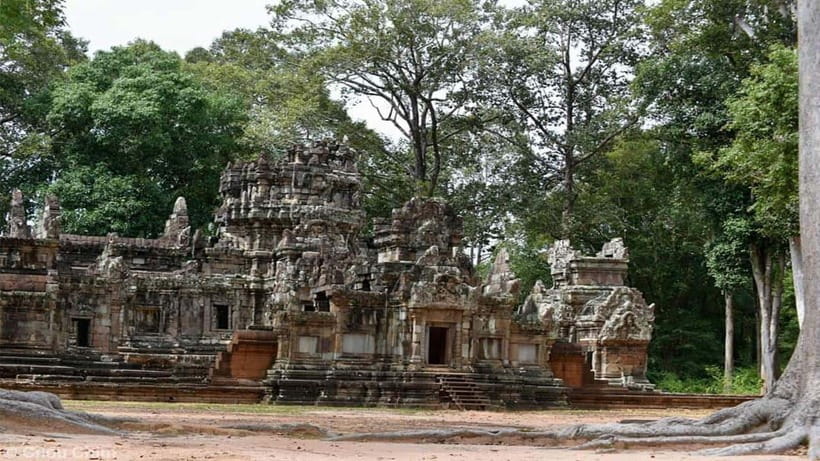
Ta Prohm is the temple most associated with the film Lara Croft Tomb Raider. Its appeal comes from the uneasy meeting of stone and forest. Large roots spread across walls, doorways, and galleries, making parts of the temple appear to be held together by the trees.
The roots are not decoration added for visitors. They are part of the site’s long story of abandonment, vegetation, and later conservation. That gives Ta Prohm a different mood from the more ordered geometry of Angkor Wat.
Your guide can help separate fact from movie image. The film connection is fun, but Ta Prohm is also a religious monument with its own layout, carvings, and sacred spaces. Look beyond the best-known root-covered doorway and notice how the surrounding galleries have been damaged, cleared, or supported.
Ta Prohm can be crowded and its pathways can feel tight. A two-hour visit gives you time to see the main sections, but not necessarily every corner. Stay close enough to hear the guide, especially when the group moves between narrow galleries.
A guide-led look at Khmer art and religion
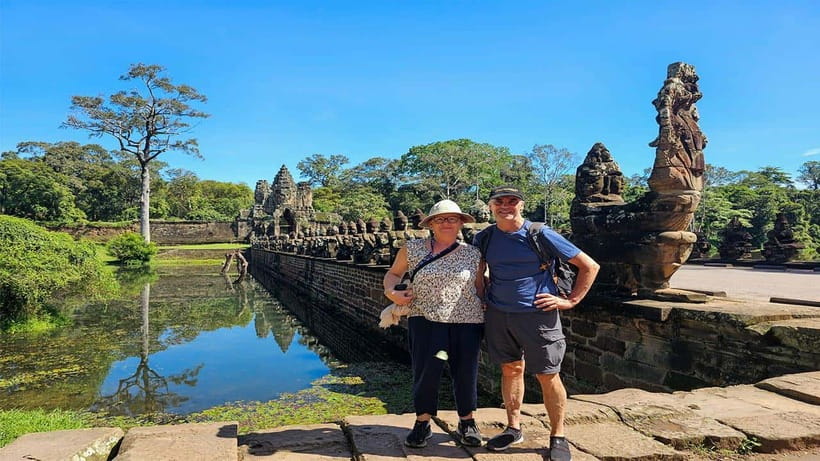
The strongest educational promise of this tour is the guide. The operator says the guide has more than 20 years of dedicated work, and the tour is built around explanations of Khmer history, architecture, Hindu carvings, and Buddhist images.
That matters at Angkor. The scale can be overwhelming, and many details are symbolic rather than obvious. You may notice a carved figure, a repeated face, or a strange arrangement of towers without knowing why it was made. A good explanation connects the detail to the temple’s religious purpose and the Khmer Empire’s power in Southeast Asia.
The listed guide languages are English, French, and German. If you need another language, confirm it before booking. One customer selected Japanese but received an English-speaking guide instead. There is no Japanese option listed in the supplied tour information, so do not assume it will be available.
The guide also provides a human connection to the modern site. You may see Buddhist monks among the ancient ruins, a reminder that Angkor is not only a historical monument but also part of living religious Cambodia.
Transport, group size, and the long morning
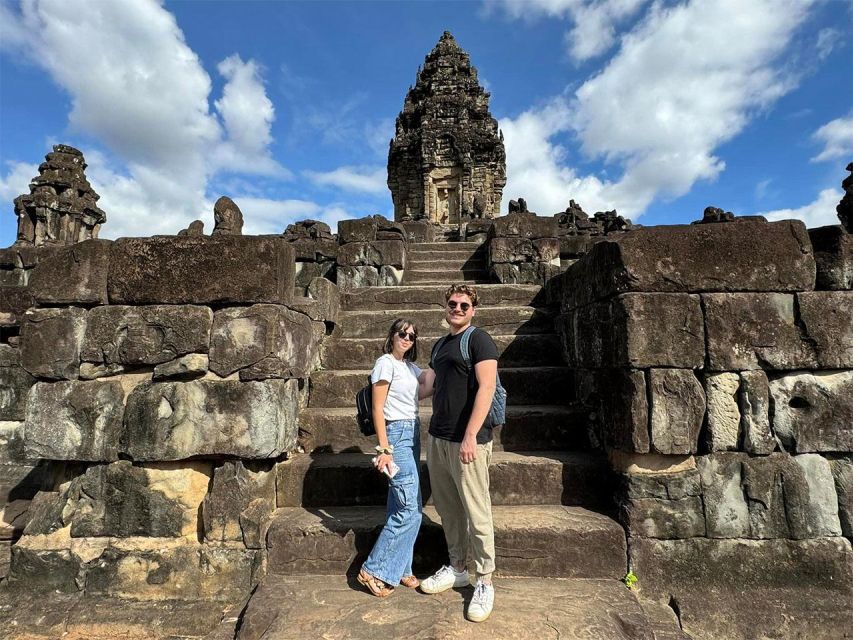
The tour uses an air-conditioned minibus and includes hotel pickup and drop-off in Siem Reap. That is valuable before dawn, when finding your own transport can be tiring and confusing.
Pickup is available from hotels in Krong Siem Reap, but the exact time depends on your location. The operator says the final pickup time will be provided one day before the tour. I would keep your phone available and ask your hotel to confirm the meeting point if needed.
Chilled bottled water is included. Food, drinks, breakfast, and other personal costs are not. Since the tour lasts about seven hours and begins so early, comfortable shoes and water beyond the supplied bottle are practical choices.
The schedule is full. You see sunrise, return for breakfast, then visit several large temple areas before heading back to Siem Reap. If you want long photography sessions or quiet time at each monument, a private tour with a slower pace may suit you better.
The reliability question
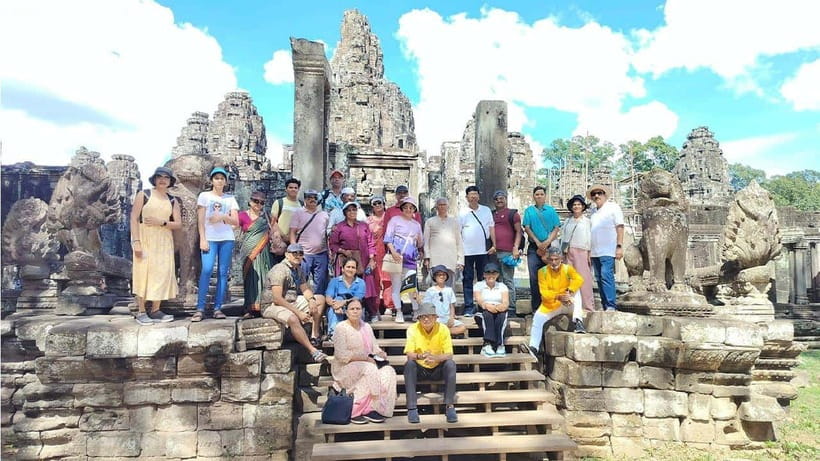
The available rating is 4 out of 5 from three reviews, but the small number of ratings means you should not treat that figure as a guarantee. One detailed booking had serious problems: the guide did not arrive by the stated time, the customer had to contact the office, a tuk-tuk cost an extra $10, the sunrise plan was put at risk, and the booked Japanese language was not provided.
The booking was also reported as canceled after the tour began, without the customer’s consent. That is a serious service concern, even though it may not reflect every departure.
You can reduce the risk by confirming four things the day before:
- Your exact hotel pickup time
- The guide’s name and phone contact
- The language of the tour
- How the temple pass will be purchased
The activity allows free cancellation up to 24 hours before departure and offers reserve-now, pay-later booking. Those terms give you some flexibility, but they do not remove the need to verify the morning arrangements.
Who will get the most from this tour?
I would choose this tour if you are visiting Angkor for the first time, want the major temples in one day, and prefer not to arrange a driver and guide separately. The route covers the essential monuments and gives you a useful introduction to both Hindu and Buddhist elements.
It also suits budget-minded visitors. The $10 fee is attractive once you understand that the $37 temple pass and breakfast are extra. A group of no more than 14 is small enough to feel more personal than a large coach, though it is not the same as a private visit.
I would think twice if you need Japanese service, want a slow and highly flexible schedule, or cannot tolerate uncertainty before dawn. The early start is fixed by the sunrise, and the one reported missed pickup is worth taking seriously.
Should you book the Angkor Wat Guided Sunrise Tour?
Book it if the low price, major temples, air-conditioned transport, and live guide are your priorities. The sunrise at Angkor Wat, the faces of Bayon, and the tree roots at Ta Prohm give you the classic Angkor experience in one organized day.
Before paying, confirm the pickup and language in writing. Budget another $37 for the temple pass, pay for your own breakfast, and keep enough cash for an emergency tuk-tuk. With those precautions, this can be a practical first look at Angkor, but the service warning means you should not book it blindly.
FAQ
Where does the tour begin?
Pickup is available from locations in Krong Siem Reap, Siem Reap Province. Hotel pickup and drop-off are included.
What time does pickup take place?
The guide and driver are scheduled to meet you at about 4:45am. The exact time depends on your hotel, and the operator says it will be provided one day before the tour.
How long does the experience last?
The tour lasts about seven hours.
Which temples are included?
The route includes Angkor Wat, Angkor Thom, Bayon Temple, Ta Prohm, Baphuon, Phimeanakas, the Terrace of the Leper King, and the Terrace of the Elephants.
Is the Angkor temple pass included?
No. The Angkor Wat temple pass costs $37 per person and must be paid separately.
Is breakfast included?
No. You return to your hotel for breakfast after the sunrise visit, but breakfast is at your own expense.
What languages are available?
Live guide service is listed in English, French, and German.
How large is the group?
The tour is described as a small-group experience with up to 14 participants.
Can I cancel the booking?
You can cancel up to 24 hours in advance for a full refund. The activity also offers reserve-now, pay-later booking.
Just added in Siem Reap
- Twilight Tastes of Siem Reap Include Dinner★ 5.0 · 13 reviews
- Ultimate Sunrise to Angkor Wat, Angkor Thom and Bayon Temple★ 5.0 · 3 reviews
- Trekking Tour at Phnom Kulen National Park from Siem Reap★ 5.0 · 3 reviews
- Full-Day Private Tour of Angkor Wat with Pick Up★ 5.0 · 12 reviews
- Private Day Trip to Angkor Temples with Expert Guide★ 5.0 · 4 reviews
- Siem Reap City Tour with War Museum and Killing Field★ 5.0 · 27 reviews
- Waterfall & River of 1000 Siva Linga- Kulen Mountain Private Tour★ 5.0 · 3 reviews
- Angkor Wat Experience Temple Pass and Siem Reap Food Tour★ 5.0 · 13 reviews
Angkor Wat Sunrise Tours, compared.
Angkor Wat Sunrise or Sunset Tour with Guide from Siem Reap
Read our review →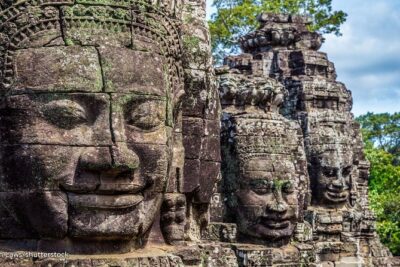
Angkor Wat Sunrise tour with Small – Group and Guide tours
Read our review →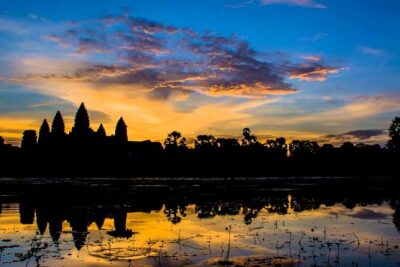
Full-Day Angkor Wat Sunrise Private Tour with Guide from Siem Reap
Read our review →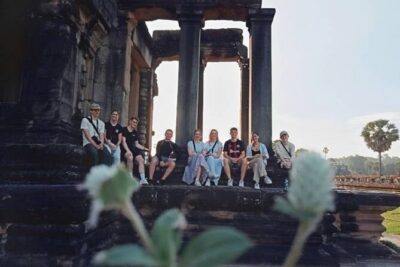
Angkor Wat Sunrise & 3 Main Temples with Breakfast – Small Group
Read our review →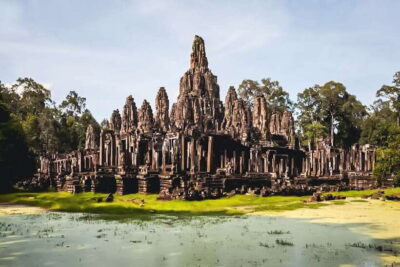
Angkor Wat Sunrise and Full-Day Sightseeing Tour
Read our review →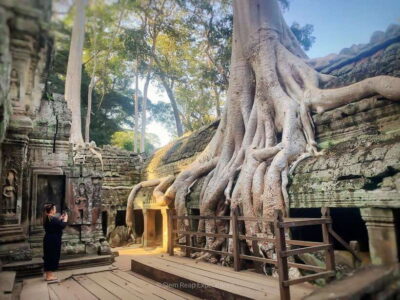
2 Days Exclusive Temple Highlights with Sunset and Sunrise Tour
Read our review →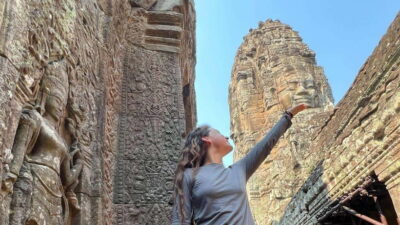
Angkor Sunrise 1- or 2-Day Guided Temples Tour
Read our review →Browse the lists this tour appears in