
Reviewed · TOURS IN PHNOM PENH
Oudong Mountain & Phnom Baset Private Tours from Phnom Penh
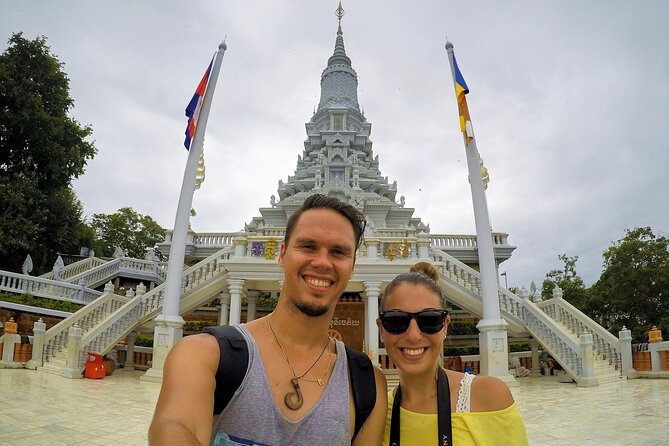
Oudong and Phnom Baset give you a very different Cambodia from the one you see in Phnom Penh. You’ll visit a former royal capital, climb sacred hills, look across rice fields from an eighth-century temple, and pause at working Buddhist centers. The private format lets your guide adjust the pace and answer your questions rather than moving you through a fixed group schedule.
I like the strong guide-and-driver team and the wide range of stops. Guides such as Makara, Tok, and Ching have been singled out for their patience, history knowledge, and clear explanations. I also like the small comforts: cold drinks and chilled towels have been provided during the hot drive.
The drawback is simple: this is a long, busy day with many short visits, and $135 per person is a serious price in Cambodia. You pay for private transport, a personal guide, entrance fees, and convenience. If you prefer to explore just one major site slowly, this tour may feel overpacked.
Key points to know before you book
- Oudong was Cambodia’s royal capital from 1618 to 1866, and its hilltop stupas remain visible from far across the countryside.
- Phnom Baset adds an older layer, with an eighth-century pre-Angkorian temple, a reclining Buddha, and broad views over plains and rice fields.
- The day includes more than temples, with meditation centers, royal tombs, pagodas, and a stop connected with Koh Chen’s silver-craft tradition.
- Your group stays private, with hotel pickup, private air-conditioned transport, and an English-speaking licensed guide.
- The itinerary is full, lasting about 7 to 9 hours, so expect plenty of road time and several brief stops.
- Lunch costs extra, usually $3 to $10 per dish at local restaurants, with vegetarian and non-vegetarian choices.
Why Oudong makes a worthwhile day beyond Phnom Penh
Oudong is the heart of this outing. It served as Cambodia’s royal capital for nearly 250 years, until the capital moved to Phnom Penh in 1866. That long royal period gives the site a different feel from the better-known Angkor temples. Here, the focus is on royal memory, sacred stupas, former capitals, and Buddhist practice.
The monuments spread across several hills. Their large stupas can be seen from a distance, which helps you understand why this was an important royal center. Your guide is especially useful here, because the remains are not arranged like a single polished museum complex. The story comes from connecting the hills, tombs, chedis, religious sites, and changing role of the capital.
Expect heat, steps, open ground, and some walking between monuments. The private vehicle matters because you can return to air conditioning between sections of the visit. Bring water, cover your shoulders and knees at religious sites, and wear shoes suited to uneven paths.
The schedule gives Oudong several separate visits rather than treating it as one quick photo stop. That is a strength, though the number of stops means you should not expect a slow archaeological study of every structure.
A few more things to do in Phnom Penh worth a look
- Phnom Penh Full Day Private Tour Included All Admission Tickets
★ 5.0 · 585 reviews - Phnom Penh to Siem Reap by Private Car or Minivan
★ 5.0 · 211 reviews - Private Half Day To Killing Field & S21 Genocidal Museum in Phnom Penh
★ 5.0 · 137 reviews
The royal hills: stupas, sacred relics, and old rulers
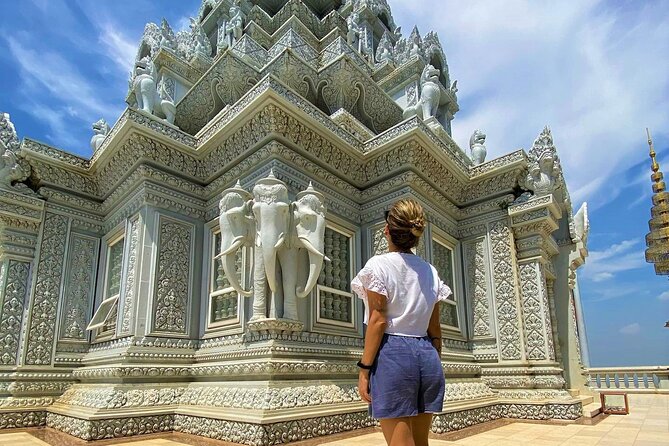
The first Oudong visit centers on the temple area, with about an hour set aside. You’ll see the large stupas and hear how the former capital developed across the hills. The scale is part of the appeal. These are not small village pagodas tucked beside a road. They form a broad royal and religious zone that makes more sense when viewed from different elevations.
Phnom Preah Reach Troap, also called Phnom Oudong, receives another 45 minutes. The mountain is regarded as sacred and is linked with relics and settlements from earlier periods. This is a good place to let your guide supply context, since the value comes as much from the religious meaning and layers of occupation as from the visible structures.
The Royal Tombs of Oudong take about 30 minutes. The tombs hold more than 200 years of Cambodian royal remains, with several stupas spread along the east-west ridge of Phnom Oudong. The stop is not about ornate interiors. It is about seeing how rulers were remembered and how royal burial sites shaped the hill.
Preah Sakyamoni Chedi gets another half hour. It is one of the best-preserved chedi structures in the Oudong area and is particularly appealing if you enjoy architectural photography. Give yourself time to look closely at its form rather than rushing to take one picture and move on.
These four Oudong stops work best as a set. You see the old capital from several angles: royal power, sacred ground, burial monuments, and surviving Buddhist architecture.
Meditation centers and modern Cambodian Buddhism
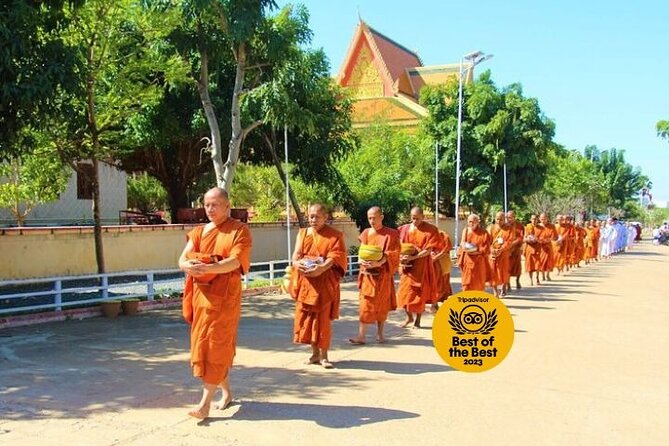
The day then shifts from old royal monuments to active Buddhist centers. At the Vipassana Dhurak Buddhist Centre of the Kingdom of Cambodia, you can walk through the gardens and see a complex whose main purpose is teaching Vipassana meditation. The public can visit, but remember that this is a place of practice, not simply a sightseeing attraction. Keep your voice low and follow local instructions.
Sontte Wan Buddhist Meditation Center receives more time, with the schedule allowing roughly 30 minutes at one point and another hour at a second stop. The information describes it as the largest Buddhist center in Cambodia, with elaborate decoration. The repeated stop may reflect separate parts of the complex or an extended visit, so ask your guide how the time will be divided on your day.
This is one of the tour’s more useful features. You are not only looking at old stones. You are also seeing how Buddhism functions in present-day Cambodia, through meditation, gardens, religious buildings, and decorative details. If your interest is limited to ancient temples, these visits may feel less essential. If you want a broader picture of Cambodian religious life, they add balance.
Moni Sakor, Koh Chen, and the countryside road
The Moni Sakor Pagoda stop connects with Koh Chen, an island in the Tonle Sap Lake known for silver crafts. The visit is listed at about 30 minutes, so do not expect a full craft workshop or a long island tour. Its value is in linking the Oudong area with a local tradition and showing that the countryside around Phnom Penh has more than temples.
Another short stop is listed along National Highway 5 near Kampong Luong Pagoda. This is described as a place of worship and includes a museum connection. The details are limited, so your guide will be the best source of information on what is open and what you will see during your visit.
These roadside and village stops make the day feel less like a parade of famous monuments. You’ll pass through areas where religious buildings, local crafts, farms, and transport routes are part of ordinary life. The trade-off is that the schedule may feel less predictable than a simple two-site excursion.
A private trip helps here. Your group is not tied to strangers who want to stop for different reasons. You can ask for more explanation at a pagoda, move along if a short stop has little interest for you, or spend longer with a particular building if time allows.
Same base, a different kind of day out:
- The Killing Field and Toul Sleng Genocide Museum (S21) Tour
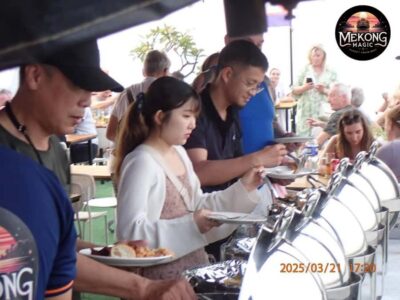
★ 5.0 · 1,977 reviews - Phnom Penh: Sunset Cruise with Unlimited Beers & BBQ Buffet
★ 4.5 · 727 reviews - Aroma Therapy Massage, Relaxation therapeutic aromatherapy oil massages.
★ 5.0 · 645 reviews - Killing field and Toul Sleng genocide museum Tour
★ 5.0 · 610 reviews
Phnom Baset and the eighth-century temple
Phnom Baset is the other major reason to choose this trip. The visit lasts about two hours, making it the longest single stop. You’ll see a pre-Angkorian temple from the eighth century, a reclining Buddha, and views across the surrounding plains and rice fields.
The site gives you a sense of Cambodia before the great Angkor period. The architecture is older and the setting is more open. Instead of arriving at a huge temple city, you are visiting a hill with religious remains and a view over the countryside.
The long visit is welcome. You have time to look at the temple, walk around, take photographs, and hear the story without being rushed out after 20 minutes. The hill setting also makes Phnom Baset a good contrast with Oudong’s royal stupas.
Expect the usual practical issues of a Cambodian temple hill: heat, sun, steps, and uneven ground. The information does not specify the exact number of steps or the walking difficulty, so ask your guide if you have concerns. Most travelers can participate, but the day is not designed as a low-walking tour.
Wat Sowann Thamareach adds a different architectural note
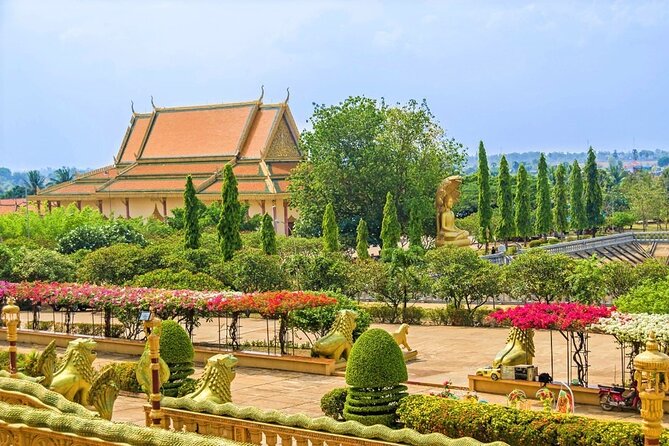
The final temple visit is Wat Sowann Thamareach, with about 30 minutes set aside. It is described as less frequently visited and architecturally different from a traditional Buddhist temple complex. That makes it a useful closing stop if you enjoy contemporary religious buildings and unusual decoration.
Do not expect another ancient royal site. This stop works because it broadens the day. After old stupas, royal tombs, meditation gardens, and an eighth-century temple, you see a newer expression of Cambodian Buddhist design.
Thirty minutes is enough for a look around and some photographs, but not a long study. If your energy is fading late in the day, this is also the sort of stop where a short visit can be welcome.
What the private vehicle and guide add
Hotel pickup and drop-off are included, along with private transport in a luxury air-conditioned vehicle. That is important in this part of Cambodia. The sites are spread out, and the heat can make a day on the road tiring even when the walking is moderate.
The guide is not just there to point out buildings. The strongest part of the experience is the explanation of Cambodia’s past, culture, and Buddhism as you move between places. Makara has been praised for being patient and clear, while Tok and Ching have also received strong praise for their background knowledge and care. The guide and driver pairing matters because a good explanation is easier to enjoy when the road portion is handled smoothly.
Cold drinks and chilled towels have been provided during the drive, a small detail that becomes valuable in hot weather. Lunch is not included, but local restaurants offer vegetarian and non-vegetarian dishes at roughly $3 to $10 per plate.
Because this is a private activity, only your group participates. That gives you more room to ask questions and may allow the guide to adjust the rhythm. The published duration is 7 to 9 hours, so plan for most of the day away from your hotel.
Is $135 per person fair?
At $135 per person, this is not a budget temple outing. Cambodia offers cheaper ways to reach Oudong, especially if you arrange transport yourself or join a larger group.
The price becomes easier to justify if you value convenience and interpretation. You receive hotel pickup and drop-off, a private air-conditioned vehicle, a licensed English-speaking guide, entrance fees, service charges, and government VAT. You also cover a large area in one day, with sites that would be awkward to combine without private transport.
The value is strongest for a small group that wants flexibility. If two or three people share the experience, private transport and a personal guide may feel worthwhile. Group discounts are offered, though the exact reduction is not provided.
The price is less convincing if you mainly want Oudong and Phnom Baset, without the additional pagodas and meditation centers. In that case, compare the cost with a simpler private transfer or a shorter tour. The full route is designed for people who want a broad day in the countryside, not just two headline stops.
Who will enjoy this day most?
I would choose this tour if you have already seen Phnom Penh’s main sights and want a full day outside the city. It suits you if you like history, Buddhist sites, older architecture, countryside views, and conversations with a guide.
It is also a good match for photographers. Preah Sakyamoni Chedi, the Oudong hills, Phnom Baset, and Wat Sowann Thamareach offer different subjects. The open views from Phnom Baset are especially useful after the more enclosed urban sights of Phnom Penh.
Families and couples may appreciate the private format, as long as everyone is comfortable with a long day and repeated temple visits. It also works well for first-time visitors who want someone to explain the difference between royal monuments, meditation centers, pagodas, and pre-Angkorian remains.
I would hesitate if you dislike heat, walking, or a busy schedule. The tour includes many stops, some lasting only 30 minutes. It is also not the right choice if you want a quiet, unhurried day at one archaeological site.
You can cancel for a full refund if you do so at least 24 hours before the experience begins. Changes or cancellations within 24 hours are not refunded, and lunch and tips for the guide and driver are extra.
Should you book Oudong and Phnom Baset?
Book it if you want a well-supported day outside Phnom Penh, with private transport and a guide who can connect Cambodia’s royal past with living Buddhist practice. The strongest reasons are the broad route, the two major hill sites, and the personal attention provided by guides such as Makara, Tok, and Ching.
Think twice if the $135 price feels high or if you prefer slow travel. The itinerary is ambitious, and some stops are brief. For the right person, that breadth is the point. You get old temples, royal tombs, meditation centers, village religious sites, and countryside views in one long day. For someone seeking only a quiet visit to Oudong, a shorter private outing may offer better value.
FAQ
How long does the Oudong and Phnom Baset tour last?
The tour lasts approximately 7 to 9 hours.
Is hotel pickup and drop-off included?
Yes. Pickup and drop-off at your hotel are included. You need to provide the hotel name for pickup.
Is this a private tour?
Yes. Only your group participates in the activity.
Is transportation included?
Yes. The tour includes private transfers in a luxury air-conditioned vehicle.
Is an English-speaking guide included?
Yes. A professional English-speaking licensed tour guide is included.
Are entrance fees included?
Yes. Entrance fees for the tour sites are included.
Is lunch included in the price?
No. Lunch is at your own expense. Local restaurants offer vegetarian and non-vegetarian choices, with dishes costing about $3 to $10.
Can I cancel for a full refund?
Yes. You can receive a full refund if you cancel at least 24 hours before the experience starts. Cancellations within 24 hours are not refunded.
Just added in Phnom Penh
- Watch Khmer Kickboxing with Free Beers by Ringside Seats★ 5.0 · 11 reviews
- Watch Live Khmer Traditional boxing in Phnom Penh★ 5.0 · 46 reviews
- The killing field and Toul Sleng Genocide museum (S21) Tour★ 4.5 · 19 reviews
- Udong Historical Site Tour★ 5.0 · 8 reviews
- Udong Old Capital Tour★ 4.5 · 3 reviews
- Warm Stone Massage★ 5.0 · 23 reviews
- S-21 Prison and Killing Fields★ 5.0 · 8 reviews
- Private Taxi Phnom Penh to Siem Reap-English Speaking Drivers★ 5.0 · 50 reviews
Tours in Phnom Penh, compared.
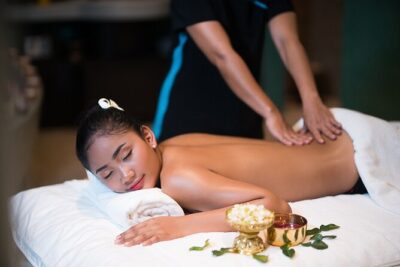
Aroma Therapy Massage, Relaxation therapeutic aromatherapy oil massages.
Read our review →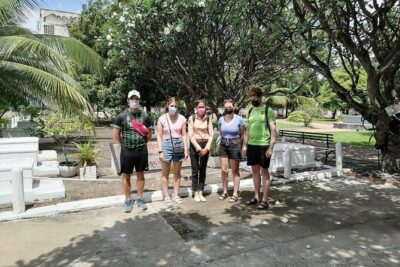
Killing field and Toul Sleng genocide museum Tour
Read our review →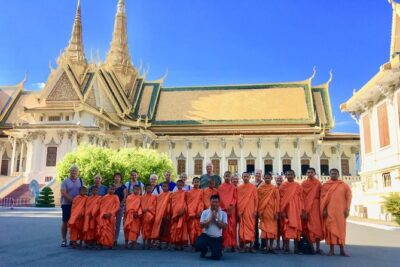
Phnom Penh Full Day Private Tour Included All Admission Tickets
Read our review →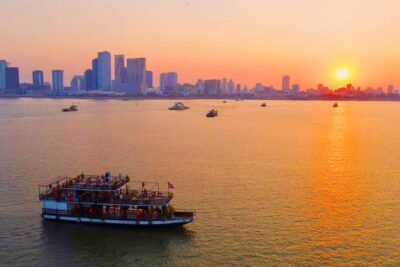
Sunset Cruise with Unlimited Beer &Fruit platter
Read our review →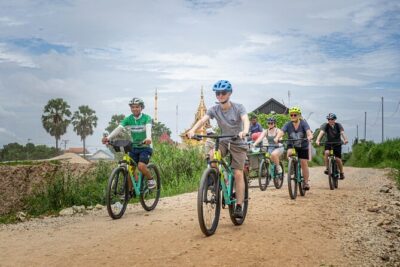
Phnom Penh Silk Island Bike Tour/ E-Bike or Tuk Tuk
Read our review →
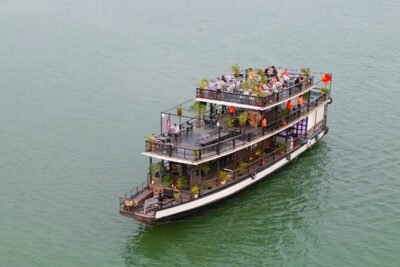
Sunset Cruise with unlimited beer & soft drinks -English speaking guide on board
Read our review →Browse the lists this tour appears in