
Reviewed · PHNOM PENH CITY TOURS
Half-Day Phnom Penh City Tours
Phnom Penh is a city where royal ceremony, Buddhist devotion, busy markets, and painful modern history sit close together. This private half-day tour lets you choose your focus: follow the Khmer Rouge story at Tuol Sleng and Choeung Ek, or see the Royal Palace, temples, museums, and Central Market.
I like the private vehicle and hotel pickup, since you avoid wasting part of a short visit arranging taxis between far-flung sights. I also like the chance to shape the day around your interests, with guides such as Kakada, Channy, Sam, Tom, Sina, and Jani praised for clear explanations, kindness, and flexibility. The main consideration is emotional and practical: the historical route is hard going, while the cultural route may feel rushed if you want long museum visits.
Five things to know before booking
- Two sharply different routes: Choose Khmer Rouge history at Tuol Sleng and Choeung Ek, or royal and religious Phnom Penh at the Palace, Wat Phnom, museums, and markets.
- Private means just your group: You are not sharing the vehicle with a large coach party, so the guide can adjust the pace and answer your questions.
- The historical route takes about four and a half hours: Allow around 90 minutes each at Tuol Sleng and Choeung Ek, plus driving and a market stop.
- The cultural route mixes major sights: The Royal Palace, Silver Pagoda, Wat Phnom, Central Market, Independence Monument, and a museum give you a quick city primer.
- The price covers the main costs: At $75 per person, you get hotel transport, a licensed local guide, bottled water, private service, and stated entrance fees.
Pick your Phnom Penh story
This is best understood as two tours under one name. The historical choice looks closely at Cambodia under the Khmer Rouge from 1975 to 1979. You visit Security Prison 21, now Tuol Sleng Genocide Museum, and Choeung Ek Genocidal Center, commonly called the Killing Fields.
The cultural route gives you a broader first look at the capital. It brings together the active Royal Palace, the Silver Pagoda, Wat Phnom, Central Market, Independence Monument, and a museum visit. The exact description names the National Museum, while the detailed stops also identify the Silver Pagoda, so I would confirm the final sequence when booking.
That choice matters. If you have only one afternoon and want to understand the country’s recent past, pick the historical route. If you are heading to Angkor Wat and want useful background on Cambodian religion, art, monarchy, and city life, the cultural option is the better fit.
The tour lasts roughly four to five hours. That is enough time for an introduction, not a complete study of Phnom Penh. I would treat it as a well-organized first chapter, then decide what deserves a longer visit later.
Other city walks and rides in Phnom Penh:
- Phnom Penh City Tour, Silver Pagoda, Genocide Museum, Killing Fields
★ 5.0 · 123 reviews - A Full Day Tour for Royal Palace, S21, Killing Fields & More
★ 5.0 · 115 reviews - A Half Day Tour in Phnom Penh City
★ 4.5 · 36 reviews
A private car makes a short visit easier
Hotel pickup and drop-off are included, along with private transport and a licensed local guide. Private means your own group, not a small section of a large bus. That distinction is important here, since several sights require quiet attention and the historical route benefits from a guide who can respond to your questions.
You also receive a cold bottle of water during the trip. It is a small touch, but useful during a half-day of moving between indoor museums, temple grounds, palace compounds, and open streets.
The guides bring different strengths. Kakada has been praised for excellent English, humor, and an easy manner. Channy has been described as attentive, professional, and well prepared. Sam has led both city and food outings, with personal insight into the country’s past. Tom, Sina, and Jani have also guided visitors through the city’s history and cultural sites.
Those names do not guarantee who will lead your tour, but they show the kind of service to expect: a local guide who can explain more than dates and building names. One especially useful feature is the room for personal requests. A guide has made an extra post office stop for stamps, and another escorted a group to a cooking class after the tour.
Independence Monument gives you the city’s frame
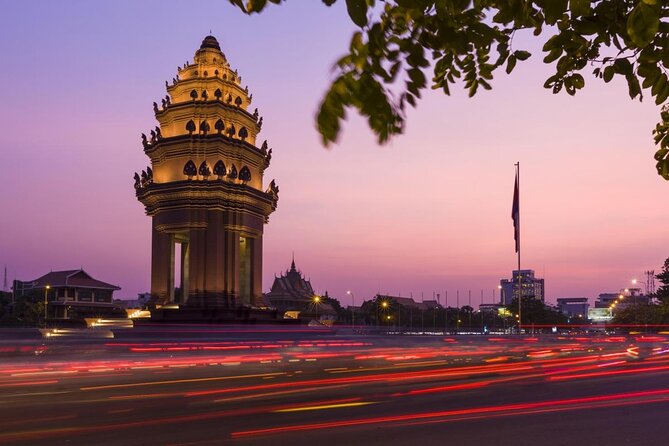
The Independence Monument is a natural orientation point, set at the meeting of Norodom Boulevard and Sihanouk Boulevard. Built in 1958, it commemorates Cambodia’s independence from France in 1953.
You may not spend a long time here, but the stop helps place Phnom Penh’s modern identity in context. It is also close to the central cultural route, so you can connect the national story with the royal and religious sites that follow.
I like this as an opening landmark because it is simple and legible. You see a major public monument first, then move into places with more layers and more time required.
The Royal Palace shows Cambodia’s living monarchy
The Royal Palace is not simply a former royal residence turned museum. It remains the king’s residence, and parts of the compound are active. That gives the visit a different feeling from walking through a preserved European palace.
The grounds include carefully maintained gardens and ceremonial buildings. Your guide can explain the role of the monarchy and point out how the compound functions today. One detail that has especially interested visitors is that the king and his elderly mother live on the grounds.
You receive about an hour here, with admission included. That is a sensible amount of time for the main courtyards and explanations, though it will not allow you to inspect every detail slowly. The Palace was one of the most consistently appreciated stops, and I can see why: it is beautiful, easy to understand visually, and tied directly to present-day Cambodia.
Expect the visit to feel more formal than a market walk. Listen to your guide, take in the architecture, and avoid treating the grounds as a quick photo stop.
A few more things to do in Phnom Penh worth a look
- Kompong Phluk Floating Village Half-Day Tour ( Morning / Sunset )
★ 5.0 · 1,494 reviews - Tonle Sap Lake & Kampong Phluk Village Half-Day Tour
★ 5.0 · 1,045 reviews - Siem Reap: Kompong Phluk Floating Village Half-Day Tour
★ 4.8 · 966 reviews - Angkor Sunrise Half-Day Tour with Private Vehicles & Tour Guide
★ 5.0 · 247 reviews
The Silver Pagoda adds art and ceremony
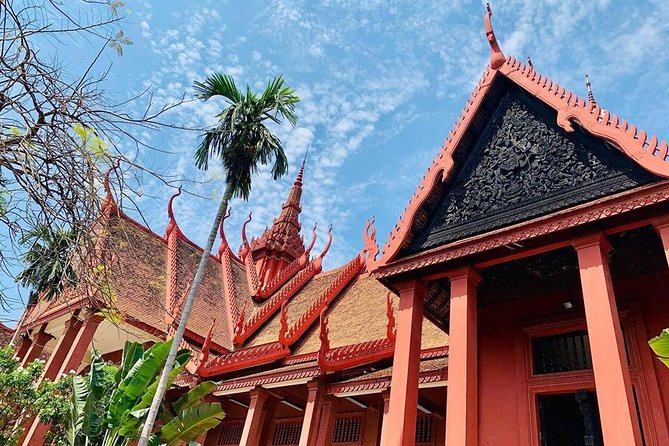
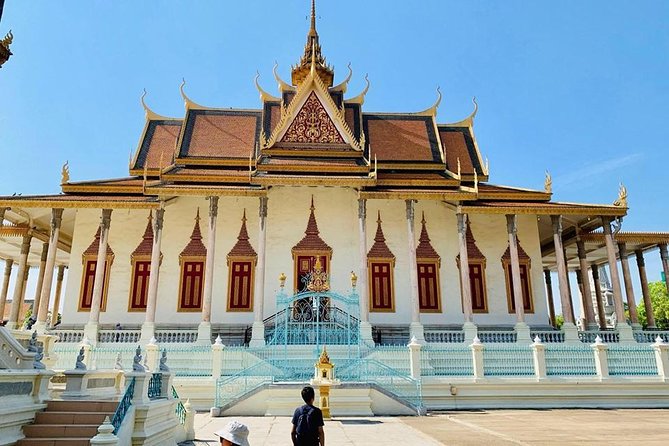
The Silver Pagoda sits on the south side of the Royal Palace compound. Its formal name is Wat Ubaosoth Ratanaram, also called Wat Preah Keo Morakot.
The pagoda is associated with royal worship and valuable religious objects. The tour allows about 30 minutes here, usually enough for an introduction and a look at the building’s most important features.
This is where a guide earns the entrance fee. Without explanation, you may see a series of images, decorations, and objects without knowing their place in Cambodian belief or royal tradition. With a good guide, the pagoda becomes more than an ornate room beside the Palace.
The short visit also keeps the tour moving. If you are especially interested in Buddhist art, you may want to return independently or allow more time on a longer cultural day.
Wat Phnom brings religion into the city streets
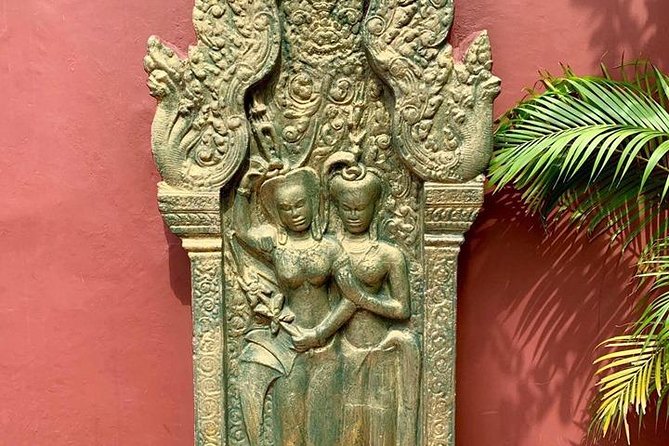
Wat Phnom dates to 1372 and rises about 27 metres above the surrounding city. It is described as Phnom Penh’s tallest religious structure.
The temple sits on a hill, giving the stop a change of pace after the Palace compound. You have about 30 minutes, enough to see the main religious setting and hear the story behind the temple’s name and founding tradition.
Wat Phnom is valuable because it shows how worship remains part of ordinary city life. It is not an isolated monument outside Phnom Penh. The surrounding streets, traffic, and daily activity remind you that this is a working capital, not a collection of museum sites.
Do not expect a long temple visit at this pace. The guide’s explanation is the key part, especially if you are using this tour as preparation for other Cambodian temples.
Central Market is the liveliest final stop
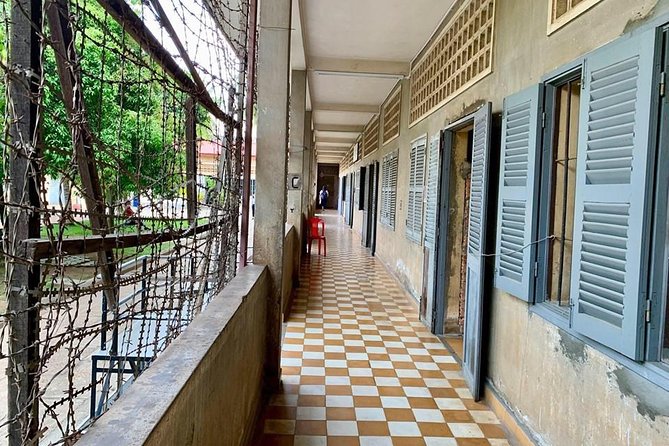
Central Market was built in 1937 around a large dome with four branching halls. Its plan makes it one of the city’s most recognizable public spaces.
You have about 30 minutes here. That is enough to walk through a section of the stalls, see the range of goods, and get a feel for local shopping. It is not enough for a relaxed meal, detailed bargaining session, or full market exploration.
The market works well at the end because it shifts the tour from royal compounds and formal museums to everyday commerce. If you want to eat, shop, or browse carefully, ask how much free time is possible. Food and other meals are not included, and any special food request may carry an extra charge.
A local market near Independence Monument is also described as part of the closing walk. The exact market may vary with the selected route and timing, so confirm the plan if this is a major reason for booking.
Tuol Sleng asks you to slow down
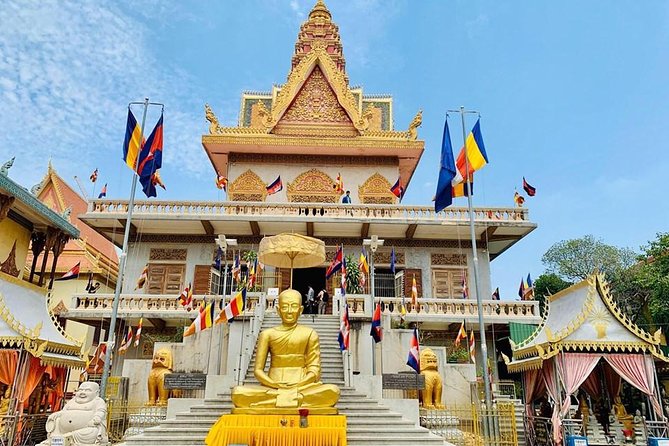
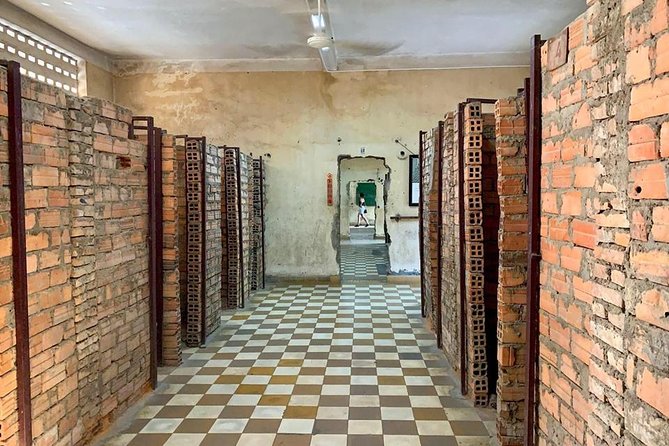
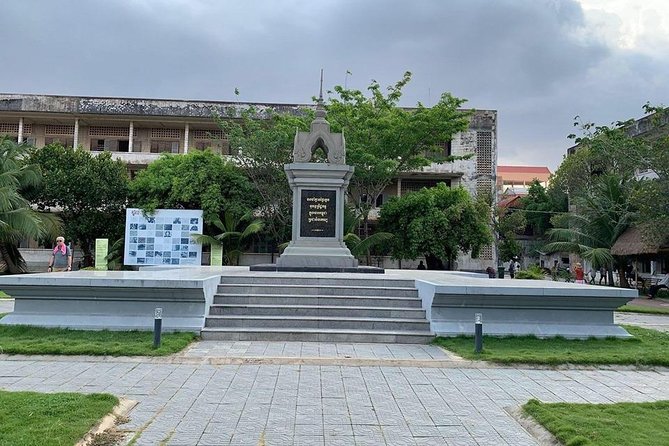
The historical route begins its hardest work at Tuol Sleng Genocide Museum, a former secondary school that became Security Prison 21 under the Khmer Rouge.
The visit lasts about 90 minutes. That length is appropriate. You need time to read, look carefully, and absorb the setting. The museum records the Cambodian genocide through the prison buildings, photographs, and surviving evidence of the people held there.
This is not a cheerful sightseeing stop, and it should not be treated like one. A good guide can provide context without turning suffering into a performance. Sam, in particular, has spoken from personal experience about the genocide, offering a human connection that written displays cannot provide. Guides such as him can also help you understand how the events affected Cambodian families and the country that followed.
I would choose this route only if you feel ready for difficult material. The visit is considered essential by many people who want to understand Cambodia, but it can leave you relieved when it ends. That reaction is normal.
Choeung Ek makes the history personal
Choeung Ek Genocidal Center is the site most people call the Killing Fields. It is one of many locations connected with mass executions and burials during Khmer Rouge rule. Collectively, these sites are associated with more than a million deaths.
The tour gives you about 90 minutes here. After Tuol Sleng, Choeung Ek shifts the focus from imprisonment to killing and burial. The setting is outside the dense center, and the visit allows you to follow the story at a slower pace.
The two sites belong together. Tuol Sleng shows the system of detention and interrogation. Choeung Ek shows what happened to many prisoners after they left the prison. Seeing only one site gives you part of the picture; seeing both makes the connection clearer.
This route demands emotional energy as well as time. I would not pair it with a packed evening schedule, especially if you have just arrived after a long flight. One family found the tour worthwhile with children because the guide adapted to short attention spans, but the subject remains serious. Parents should decide carefully based on their children’s age and temperament.
How much value do you get for $75?
At $75 per person, this is not the cheapest way to move around Phnom Penh. You are paying for more than admission. The price includes private transportation, hotel pickup and drop-off, a licensed local guide, entrance fees, and bottled water.
The value is strongest for a first-time visitor with only half a day. You avoid piecing together transport, entrance payments, and site order yourself. You also get a guide who can connect Cambodia’s past with life in Phnom Penh today.
The value is less clear if you are already comfortable arranging tuk-tuks, prefer to move slowly, or want to spend an entire afternoon in one museum. The cultural route covers a lot, so each stop is a sample. The historical route offers longer visits at its main sites, but its subject is emotionally demanding rather than relaxing.
Private service can also make the price reasonable for two or more people traveling together. Since the tour is for your group only, you are not paying for a large shared excursion while receiving little personal attention.
What may not suit every visitor
The biggest drawback is the compressed schedule. About 30 minutes at Wat Phnom, the Silver Pagoda, or Central Market gives you an introduction, not a thorough visit. The cultural route can feel ambitious, especially in the afternoon or after an international arrival.
The museum experience may also vary by personal taste. One person found the National Museum’s repeated Buddha displays and dusty presentation less engaging than the Palace. If you care strongly about museum quality, keep your expectations modest and let the guide provide the context.
The historical route has the opposite problem. Ninety minutes at each site is useful, but the content is painful. You may appreciate having private transport and a flexible guide so you can ask for a quieter pace.
The tour requires reasonable weather. If poor weather forces cancellation, you are offered another date or a full refund. You can cancel for a full refund up to 24 hours before the start time, but changes or cancellations inside that window are not refunded.
Who should book this Phnom Penh tour?
I would choose it for a first visit, a short stay, or anyone who wants a guide to handle the city’s logistics. It suits couples, families, and private groups that value flexibility over the lowest price.
Pick the historical option if you want a serious understanding of the Khmer Rouge period and are prepared for difficult sites. Pick the cultural option if you want royal architecture, Buddhist places, museums, and markets in one compact outing.
I would not book it for a slow museum day or for someone who dislikes moving between several sights. I would also confirm the exact cultural stops, since the description refers to the National Museum while the detailed schedule names the Silver Pagoda.
For most first-time visitors, this is a sensible introduction to Phnom Penh. The guides’ personal explanations, private transport, and clear choice of themes make the $75 price easier to justify. Just choose your route carefully: one tells the story of Cambodia’s wounds, the other introduces the city’s living traditions.
FAQ
What are the two tour options?
You can choose a historical route focused on Tuol Sleng Genocide Museum and Choeung Ek Genocidal Center, or a cultural route focused on the Royal Palace, museums, temples, and markets.
How long does the tour last?
The experience lasts approximately four to five hours. The historical stops are scheduled for about 90 minutes each, while shorter cultural stops are generally about 30 minutes to one hour.
Is this a private tour?
Yes. Only your own group participates, rather than a large shared group.
Is hotel pickup included?
Yes. Hotel pickup and drop-off are included in the tour.
Are entrance fees included?
Yes. The stated entrance fees for the tour are included.
What else is included?
The tour includes private transportation, a licensed local guide, and a cold bottle of water during the trip.
What happens if I need to cancel?
You can receive a full refund if you cancel at least 24 hours before the experience starts. Cancellations or changes made less than 24 hours before the start time are not refunded. If poor weather cancels the tour, you are offered another date or a full refund.
Just added in Phnom Penh
- Oudong Mountain And Floating Village Cycle Tour★ 5.0 · 25 reviews
- Phnom Penh To Siem Reap Private Transfer Mini-Van-Car★ 5.0 · 56 reviews
- A Half Day Tour in Phnom Penh City★ 4.5 · 36 reviews
- Phnom Penh Vital Discovery-Full Day Tour (Including all services)★ 5.0 · 67 reviews
- From Phnom Penh: Oudongk Mountain and Koh Chen Island Tour★ 4.8 · 68 reviews
- A day Trip Sightseeing Phnom Penh – Siem Reap – Private English Speaking Driver★ 5.0 · 67 reviews
- Bodia Classic Massage in Phnom Penh★ 5.0 · 71 reviews
- Phnom Penh Bike & Boat Sunset Tour / E-Bike Available★ 5.0 · 63 reviews
Phnom Penh City Tours, compared.
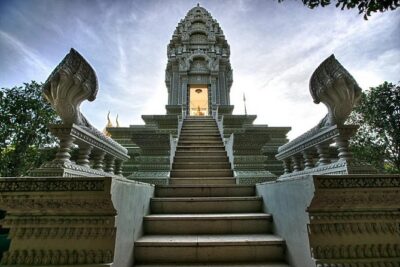
Phnom Penh City Tour, Silver Pagoda, Genocide Museum, Killing Fields
Read our review →
A Full Day Tour for Royal Palace, S21, Killing Fields & More
Read our review →
Browse the lists this tour appears in