

Reviewed · SILK FARM & ARTISAN WORKSHOPS
Silk Island Private Half-Day Tour from Phnom Penh
Silk Island is less about checking off a sight and more about seeing how Cambodian life works beyond Phnom Penh. You cross the Mekong by ferry, pass village homes and farm plots, then sit with silk makers who can show you the full process, from silkworm to loom. The personal guide makes these encounters easier, especially if you do not speak Khmer.
I like the private format, which lets your guide adjust the pace and explain small details instead of rushing a busload through a workshop. I also like the mix of activities: you see silk production, try your hand at organic farming, and travel through ordinary villages rather than spending the whole outing in a shop.
The main drawback is the short clock. Four to five hours gives you a useful taste of the island, but not an unhurried day in the countryside. You should also remember that lunch is not included, and a silk shop visit can test your budget if you are easily tempted.
Key points to know before booking

- The ferry ride is part of the experience: Your tuk-tuk or minivan crosses to Silk Island by ferry, adding a short slice of everyday river transport.
- You see the complete silk process: The visit can run from silkworms and thread preparation to weaving and finished scarves or other silk goods.
- Your group stays private: Pickup, transport, ferry fees, island entry, a guide, and tea, coffee, or chilled water are included.
- Siphat is a guide name worth noting: Several past departures were led by Siphat, who was praised for patience, clear explanations, and thoughtful help to solo visitors.
- The tour combines craft with farm life: You are not confined to a workshop. You also see crops, local houses, small villages, and working farmland.
- Allow about four hours, with some variation: The published duration is roughly four to five hours, so do not plan a tight appointment immediately afterward.
Leaving Phnom Penh for the Mekong
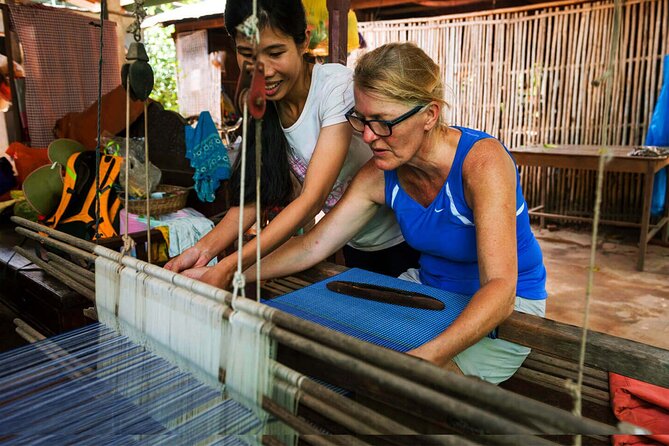
The outing begins with pickup at your Phnom Penh hotel. You travel through the city by tuk-tuk for one or two people, while groups of three or more use a minivan. That distinction matters if you are choosing this for comfort: the tuk-tuk gives a more open, local feel, while the minivan offers air conditioning and more room.
The city portion is not the main attraction, but a good guide can use it to point out parts of Phnom Penh as you head toward the dock. The ferry crossing then changes the mood. You are no longer threading through city streets. You are crossing the mighty Mekong toward an island where farming, homes, and small workshops shape the day.
One useful detail from past departures is that the tuk-tuk can drive onto the ferry. That can make the crossing more convenient, but it may also bring a few bumps and jolts. If you prefer a smooth ride, the minivan is the safer choice when available for your group.
The exact dock timing and traffic conditions are not specified, so treat the four-hour estimate as a guide rather than a guarantee. Phnom Penh traffic can affect both ends of a short excursion. I would avoid booking a flight, formal appointment, or long-distance transfer too close to the expected return.
More craft workshops around Phnom Penh:
- Phnom Penh Silk Island Bike Tour/ E-Bike or Tuk Tuk
★ 5.0 · 495 reviews - Silk Island Cycling Adventure & lunch with locals
★ 5.0 · 246 reviews - Phnom Penh Silk Island Vespa Tour / Tuk Tuk Available
★ 5.0 · 102 reviews
First impressions of Silk Island
Once you reach the island, the tour moves through small villages and countryside. You can expect traditional homes, farmers working their plots, and roads that feel far removed from Phnom Penh’s main streets. The value here is not a single grand monument. It is the chance to notice how people live and work in a place still tied closely to the soil and river.
Your guide helps explain what you are seeing. That support matters because a village house, crop, or farm tool can be easy to pass without context. A local guide can also handle introductions and translation, so you are not left trying to communicate through gestures.
The pace is generally more flexible than a large group tour. You can walk around the small villages and sunbaked countryside, pause at a farm, and ask questions as they occur to you. Still, this is not presented as a long country walk. The activity lasts only half a day, and transport connects the main stops.
You should dress for outdoor conditions. The information provided does not specify a dress code or walking distance, but the program includes village roads, farms, and open countryside. Comfortable shoes, sun protection, and water are sensible. Chilled water is included, along with tea or coffee, but food is not.
Trying farm work on Silk Island
One of the tour’s more unusual touches is the chance to try your hand at farming. This gives the visit more substance than a quick look at rural scenery. You are not only observing local life from a vehicle. You get a small sense of the physical work behind the crops that support island communities.
The farming activity is also useful for families and curious first-time visitors because it breaks up the silk demonstrations. Craft tours can become repetitive when every stop involves looking at finished products. Here, the farm offers another view of daily work and links the island’s economy to the land.
The description identifies the farm as organic, but it does not spell out which crops you will handle or how long the activity lasts. I would treat it as a brief hands-on introduction, not a full agricultural class. Your guide can explain the local plants and farming methods, as Siphat did on past visits, but the exact farm experience may vary.
This stop may be less appealing if you want a tightly timed sightseeing program with constant landmarks. Its strength is precisely its ordinary quality. You see a working place, not a staged attraction built around a dramatic photo.
Following silk from worm to loom
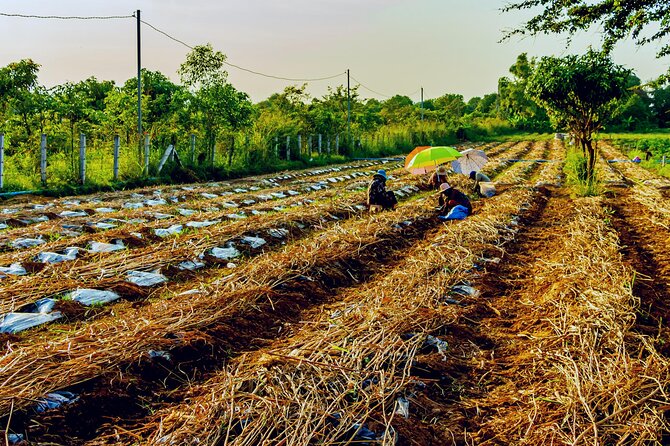
Silk is the heart of the outing. At a local weaving family or workshop, you can learn how the material is produced and see the steps that turn silk into scarves and other goods. The most memorable part is the full chain of work, described by past participants as running from the silkworm to the loom.
That sequence gives meaning to the finished products in the shop. You can see that a scarf is not simply a colorful souvenir. It represents breeding, preparing fibers, spinning or organizing thread, dyeing, weaving, and careful finishing. The exact stages shown may depend on the workshop operating that day, but the stated aim is to show the complete production cycle.
The visit also puts a human face on a traditional craft. A guide can translate questions and explain what the artisans are doing, which helps you understand the patience and handwork involved. Past departures with Siphat included close attention to the silk makers and clear explanations, making him a particularly useful guide for anyone interested in process rather than shopping alone.
You will have the option to buy handmade silk goods at the traditional shop. This is not an obligation, but you should plan for the possibility that the best souvenirs appear here. The price is not included in the tour, and one past visitor acknowledged spending more than expected. If you want to support the craft, buying directly from the workshop can be meaningful. If you are watching your budget, decide beforehand how much you want to spend.
The shop element is the point where the tour may feel less comfortable for people who dislike commercial stops. In this case, though, the shop follows a genuine production visit rather than replacing it. You see the work first, then decide if a purchase suits you.
A few more things to do in Phnom Penh worth a look
- Half-Day Phnom Penh City Tours
★ 5.0 · 22 reviews - Half-Day Tour of the Killing Field and S21
★ 4.5 · 12 reviews - Private Half-Day Silk Island Trip from Phnom Penh
★ 5.0 · 11 reviews - Private Half-Day Tour of Phnom Penh’s Traditional Markets
★ 4.5 · 8 reviews
What the private format changes
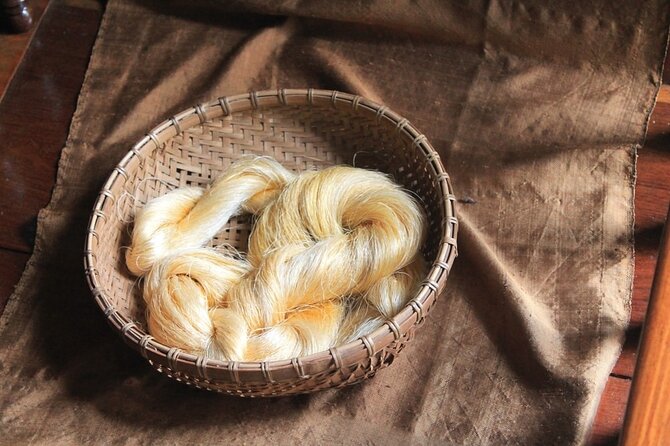
A private tour is a strong fit for this experience. Silk Island is made up of small communities and personal connections, so a guide who can introduce you properly is more useful than a large group leader working from a script.
The tour is limited to your own group, which lets you ask more questions about farming, silk, village homes, or Buddhism if a pagoda appears along the route. One past departure included a visit to a pagoda, though the supplied program does not guarantee it as a fixed stop. It is best to view such additions as possible choices rather than promised features.
Private transport also makes the day easier. Pickup and drop-off at your hotel are included, and ferry charges and island entry fees are covered. You do not need to negotiate separate fares at each stage. For a couple or small family, that convenience helps explain the $97 per person price.
The price is not cheap compared with a basic city transfer or an independent ferry ride. You are paying for a private guide, transport, translation, local introductions, ferry crossing, entry costs, and a structured visit to working artisans. The value is strongest when two or more people share the private arrangement and want context rather than simply a ride to the island.
Solo visitors should think carefully about the cost. A solo booking still receives the private service, but the per-person price has less opportunity to spread across a group. On the other hand, a solo guest may benefit more from the guide’s attention, especially during conversations with local families.
Guides, vehicles, and the feel of the day

Siphat is the guide most closely associated with the strongest personal accounts of this experience. He has been described as patient, friendly, attentive, and good at capturing moments for a solo guest. He also led trips that included local plants, a native home, a pagoda, and the silk farm.
A past departure also identified Chan Dy as the driver. The vehicle on that outing was a clean, roomy, air-conditioned van. Driver and vehicle details can change, so I would not book on the assumption that the same team will operate every date. Still, these details give you a useful picture of the service level reported for the tour.
The guide’s role is especially important here. Without translation and local introductions, you might see a farm and a loom but miss the reasons behind them. With a good guide, you can ask how the silk is made, understand what you are seeing in a home or field, and avoid turning a family visit into an awkward exchange.
The program is suitable for most people, and the supplied information says most participants can take part. It does not provide a detailed accessibility statement, walking-distance estimate, or specific vehicle-access information. If you need those details, ask the operator before booking.
Timing, cost, and what to bring

The tour lasts about four to five hours, with the core schedule described as four hours. That makes it a practical choice if you have a spare morning or afternoon in Phnom Penh. It is long enough to reach the island and see several aspects of life there, but short enough to combine with other city plans.
At $97 per person, this is best viewed as a guided cultural outing rather than a cheap transport option. The cost includes:
- Hotel pickup and drop-off
- Tuk-tuk transport for one or two people
- Minivan transport for groups of three or more
- Ferry crossing fees
- Island entry fees
- A private guide
- Tea or coffee and chilled water
Food and other drinks are not included. Travel insurance is also excluded. Bring cash if you may want silk products, since purchases at the workshop are separate from the tour price.
The activity is often booked well ahead, with the average booking made 37 days before departure. That does not prove every date sells out, but it is a useful signal if your Phnom Penh schedule is fixed. Free cancellation is available if you cancel at least 24 hours before the start time. Cancellations within 24 hours are not refunded, and late changes are not accepted.
Who should choose Silk Island

I would choose this tour if you want to see Cambodia outside the capital but have no time for a longer rural trip. It suits couples, small families, solo guests who value private guiding, and anyone interested in textiles or local livelihoods.
It is also a good match for people who prefer contact with working communities over a list of famous sights. The farm, village homes, ferry, and weaving family create a more grounded half-day than another round of city monuments.
I would hesitate if you want a luxury outing, a guaranteed long lunch, or a strict schedule with no shopping opportunity. The road and ferry portions are part of the experience, but they may feel slow if your only goal is to buy silk. The short duration also means you should not expect a full portrait of island life.
Should you book this half-day tour?
Book it if you want a well-supported trip into rural Cambodia and value the explanation behind what you see. The combination of Mekong ferry, farm visit, village roads, and silk production gives you more range than a simple workshop stop.
The strongest reason to book is the private guiding. A guide such as Siphat can make the difference between looking at a loom and understanding the people, skills, and time behind it. The main caution is cost: at $97 per person, this makes more sense when shared by a small group or when personal service matters to you.
If that sounds like your kind of afternoon, Silk Island offers a useful change of pace from Phnom Penh, with real craft and daily work at the center of the experience.
FAQ
How long is the Silk Island tour?
The tour lasts approximately four to five hours. The scheduled activity is described as four hours, but the total time can vary.
Where does the tour start and finish?
It starts in Phnom Penh, with pickup from your hotel, and ends back at the meeting point in Phnom Penh.
Is hotel pickup included?
Yes. Pickup and drop-off at your hotel are included.
What type of transport is used?
One or two participants travel by tuk-tuk. Groups of three or more travel by minivan.
Does the tour include the ferry crossing?
Yes. Ferry crossing fees are included, and the group crosses to Silk Island by ferry.
Is this a private tour?
Yes. Only your group participates in the activity.
Is food included?
No. Food and drinks are not included unless specifically stated. Tea or coffee and chilled water are included.
Can I buy silk products during the tour?
Yes. You visit a traditional shop where handmade silk products are available for purchase. These purchases are not included in the tour price.
Can I cancel for a full refund?
Yes, if you cancel at least 24 hours before the experience start time. Cancellations or changes made within 24 hours are not refunded or accepted.
Just added in Phnom Penh
- Watch Khmer Kickboxing with Free Beers by Ringside Seats★ 5.0 · 11 reviews
- Watch Live Khmer Traditional boxing in Phnom Penh★ 5.0 · 46 reviews
- The killing field and Toul Sleng Genocide museum (S21) Tour★ 4.5 · 19 reviews
- Warm Stone Massage★ 5.0 · 23 reviews
- Udong Historical Site Tour★ 5.0 · 8 reviews
- Udong Old Capital Tour★ 4.5 · 3 reviews
- Private Taxi Phnom Penh to Siem Reap-English Speaking Drivers★ 5.0 · 50 reviews
- Private Taxi Between Phnom Penh – Siem Reap Stop Sightseeing★ 5.0 · 23 reviews
Silk Farm & Artisan Workshops, compared.

Phnom Penh Silk Island Bike Tour/ E-Bike or Tuk Tuk
Read our review →

Siem Reap Lotus Silk Farm Discovery tour & Lake experience
Read our review →
Silk Island Cycling Adventure & lunch with locals
Read our review →

Phnom Penh Silk Island Vespa Tour / Tuk Tuk Available
Read our review →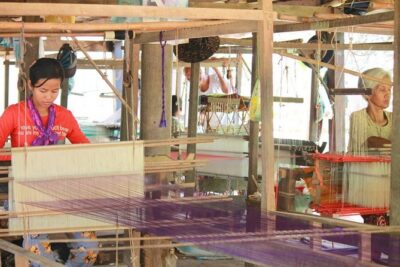
Mekong Silk Island Cruise – Unlimited Beer, Soft Drinks & Fresh Fruit Platter
Read our review →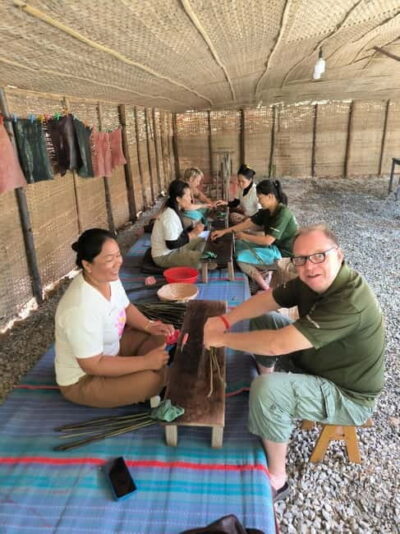
Browse the lists this tour appears in