
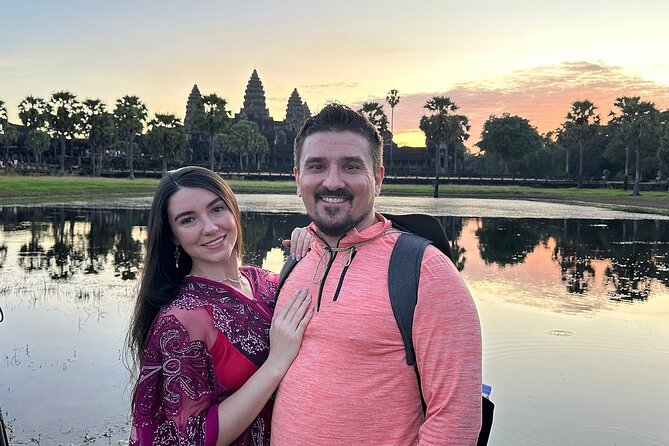
Reviewed · SUNSET TOURS & CRUISES
Angkor 2-Day Sunset & Sunrise Small-Group Tour
Angkor is at its most memorable before the heat and crowds take over. This two-day small-group tour pairs a sunset with an early Angkor Wat sunrise, then fills the hours between with major temples and quieter corners such as Preah Khan, Neak Pean, and Banteay Srei.
I like two things right away: the air-conditioned vehicle, which matters after hours on dusty temple paths, and the guides. Names vary, but guides such as Pal, Sak, Sopkee, Chhay, and Pi are praised for clear explanations and for taking photos at good viewpoints. The main drawback is the pace. Day one can run from 8 a.m. to about 7 p.m., while day two may begin at 4:10 or 4:30 a.m.
Key points to know before booking
- Sunrise at Angkor Wat: You leave before dawn and enter from the eastern side, arriving early enough to find a place before the main rush.
- Banteay Srei included: This finely carved sandstone temple lies well beyond the central cluster and adds a very different scale and style to the visit.
- Climate-controlled transport: The van gives you shade and a cool ride between long walks in Cambodia’s heat.
- Two distinct days: The first day is a full temple circuit with sunset. The second begins very early and usually finishes around noon.
- Temple pass costs extra: Add $62 per person for the 2 to 3 day Angkor pass, bringing the basic total to about $111 before meals.
- Small group, up to 15 people: The group size allows room for questions, though the actual number may be smaller.
Why two days work better than one
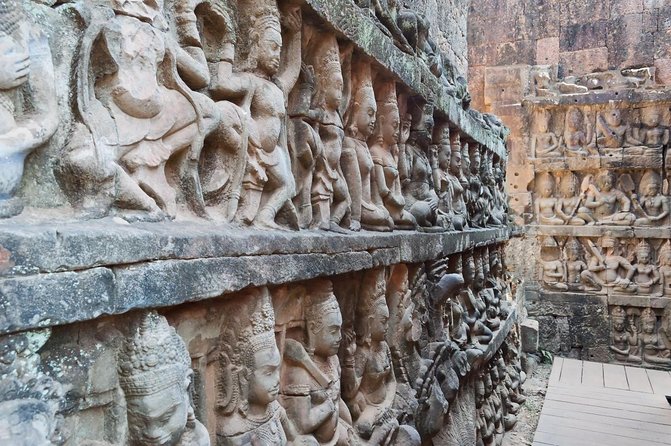
Angkor is not one temple. It is a huge archaeological area spread across roads, forest, reservoirs, terraces, and towers. Trying to see the headline sites in a single day can turn a great cultural visit into a hot race from one doorway to the next.
This tour gives you one long day for the outer and northern temples, then a second morning for the famous central sights. That division makes sense. Banteay Srei needs a drive into the countryside, while Angkor Wat, Angkor Thom, and Ta Prohm deserve time on foot.
You still need stamina. The paths are dusty, the stone surfaces can be uneven, and shade is not guaranteed. Comfortable walking shoes are a must. Shoulders and knees must be covered inside the temples, so pack light clothing that meets the dress rule.
More sunset outings from Siem Reap:
- Angkor Wat Sunrise or Sunset Tour with Guide from Siem Reap
★ 5.0 · 12,109 reviews - Siem Reap: Angkor Wat: Small-Group Sunrise or Sunset Tour
★ 5.0 · 9,444 reviews - Sunset tour of Kampong Phluk stilts home village on the Tonle Sap
★ 5.0 · 4,865 reviews
Day one: atmospheric ruins and Banteay Srei
Pickup begins around 8 a.m. from your Siem Reap hotel. The first day is not a gentle warm-up. It packs several temples into a long circuit and ends with sunset, so plan for a full day rather than a short morning outing.
Preah Khan: roots, corridors, and broken stone
Preah Khan is a strong opening stop because it feels atmospheric rather than polished. Tree roots press against crumbling walls, and long corridors lead you through a mixture of collapsed structures and surviving carvings.
You get about an hour here. That is enough to see the main character of the temple and hear the basic story from your guide, though it is not enough for a slow, solitary wander through every passage. Pal and other guides are known for pointing out details that are easy to miss, including carvings and religious images that can look like background decoration when you are on your own.
The site also gives you an early lesson in Angkor’s central tension: nature is both the reason these places feel magical and one of the forces that damaged them.
Neak Pean: a small temple on an artificial island
Neak Pean is a shorter stop, lasting about 40 minutes. Unlike the large temple mountains, this is a Buddhist temple on a circular island in the Jayatataka Baray reservoir.
The approach across the water gives the visit a different rhythm. You are not threading through a maze of galleries. Instead, you walk toward a compact structure surrounded by water and open views. It is a useful contrast after Preah Khan, and the shorter stop helps keep the day moving.
Do not expect a long temple exploration here. Neak Pean is about the setting, the design, and the idea of a sacred island within a wider water system.
A few more things to do in Siem Reap worth a look
- Siem Reap: Angkor Wat 2-Day Tour with Sunrise and Sunset
★ 4.9 · 4,429 reviews - 2 Days Exclusive Temple Highlights with Sunset and Sunrise Tour
★ 5.0 · 1,157 reviews - Siem Reap: Angkor Sunrise 1- or 2-Day Guided Temples Tour
★ 4.9 · 1,132 reviews - 2 Days Guided Historical Tour in Angkor
★ 5.0 · 855 reviews
Banteay Srei: the finest carving of the day
Banteay Srei is the day one highlight for many people. It is smaller than Angkor Wat, but its sandstone reliefs are exceptionally detailed and carefully cut. The temple sits deep in the countryside, so reaching it takes time, yet that distance is part of the appeal.
You have about 90 minutes to look around. The scale is more intimate than at the great state temples, and the carvings reward slow viewing. Look closely at the figures, decorative borders, and scenes cut into the warm-colored stone.
The long ride also explains why this temple is best included in a two-day plan. A rushed one-day circuit might force you to choose between Banteay Srei and the central temples. Here, the outer visit gets its own place in the schedule.
Pre Rup and the sunset portion
Pre Rup is a Hindu temple mountain built for King Rajendravarman and dedicated in 961 or early 962. Its brick, laterite, and sandstone construction gives it a different appearance from the finely carved Banteay Srei.
The steep climb and exposed upper levels require care, especially after a hot day. One sunset viewpoint involves an uphill walk, and air pollution or heavy smog can reduce the colors and clarity. That is the honest sunset warning: the experience depends on weather and air conditions.
Still, the end-of-day timing gives you a chance to see Angkor in softer light after a demanding circuit. Bring water, move slowly on the steps, and do not treat sunset as guaranteed theater. Some evenings are muted. That is part of the deal with outdoor sightseeing.
The air-conditioned van is more than a small comfort
The tour uses a climate-controlled vehicle rather than an open-air tuk-tuk. At Angkor, this changes the practical feel of the day.
You walk in direct heat, then return to a cool vehicle with bottled water and a cold towel. Drivers such as Naro, Mao, Ha, Keal, Vichet, and Sha are repeatedly praised for being punctual, driving safely, and having refreshments ready after temple stops.
The roads can be rough in places, and the van is not a luxury coach. Still, reclining seats, air conditioning, water, and cool towels are exactly the kind of simple comforts that matter here. Solo visitors also benefit because the driver handles the route and transport while the guide manages the site explanations.
Meals are not included. You can buy lunch at your own choice, and one reported lunch stop was inexpensive and decent, but the tour does not bundle food into the price. Carry a small snack if you know you need regular fuel.
Day two: the 4:10 a.m. Angkor Wat start
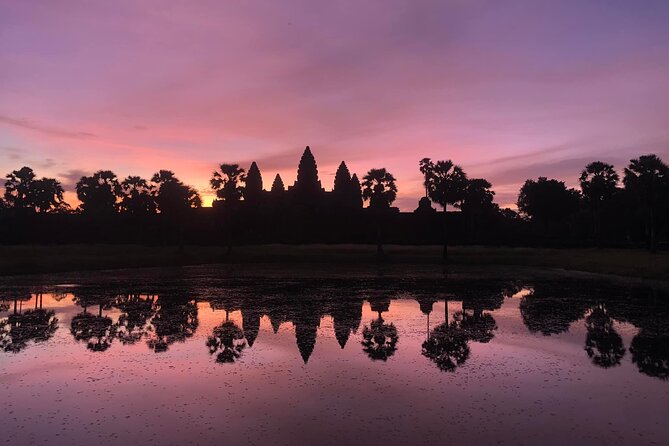
The second day begins before dawn, generally between 4:10 and 4:30 a.m., depending on the season. You leave your hotel in darkness and approach Angkor Wat from the less-used eastern side.
This is the part of the tour that asks the most from you. You may arrive well before sunrise and wait on the ground for roughly 90 minutes. A phone flashlight can help on the walk in, and a small personal light is sensible. The early arrival improves your chance of getting a good position, but it does not remove the waiting.
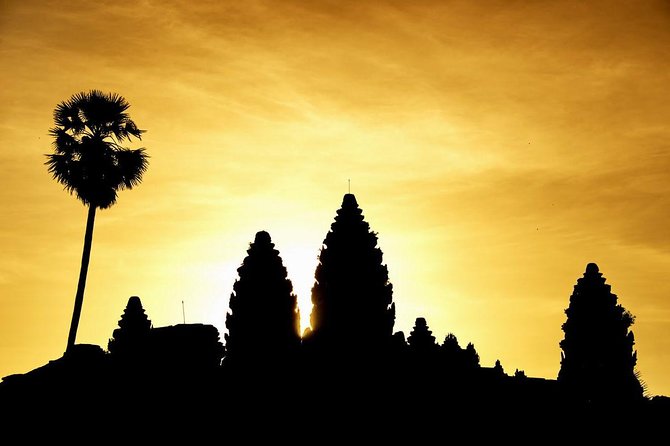
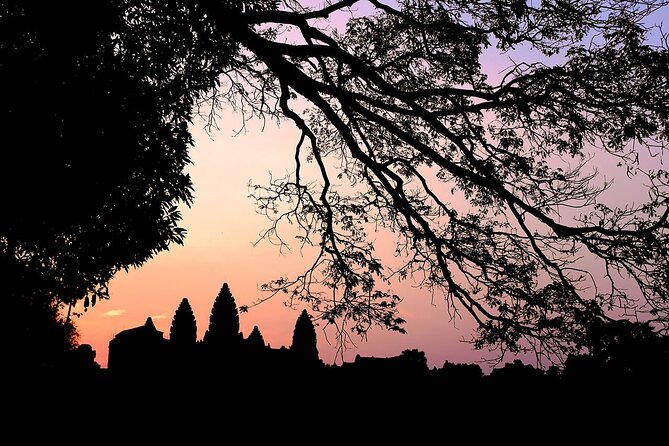
The reward is the changing outline of Angkor Wat as the sky brightens. Even a cloudy morning can feel calm and beautiful. If your only goal is the famous reflection photo, conditions may not cooperate. If you value the quiet before the temple fills, the early start is easier to justify.
After sunrise, you spend about three hours around Angkor Wat. That is important. You are not simply dropped off for a photo and moved along. There is time to enter the temple, walk its halls, and hear about the religious figures, stories, and design details from the guide.
Guides such as Pal are also praised for using an iPad with images and notes to explain what you are seeing. That can help when carvings are damaged or when a story involves many deities and symbols. A good guide turns a vast pile of stone into a place with purpose.
Angkor Thom and the South Gate
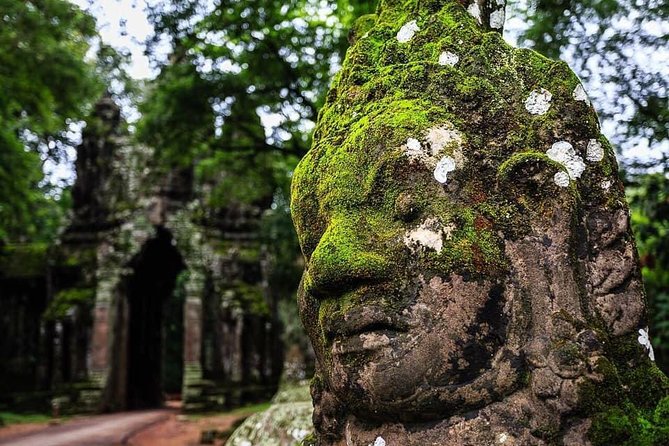
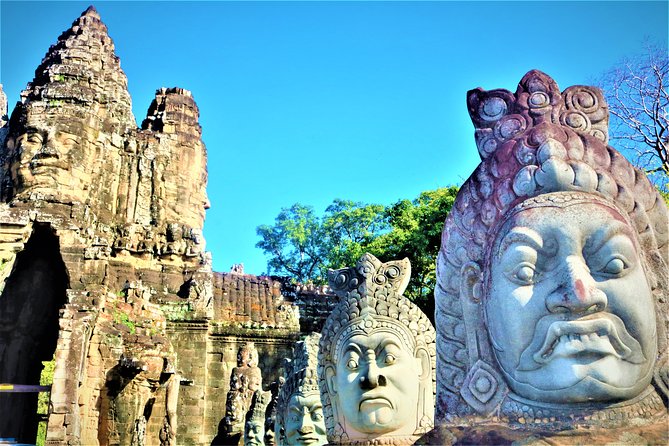
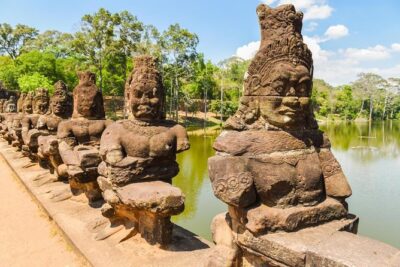
Angkor Thom was the Khmer Empire’s capital city, and its scale is easy to underestimate until you pass through the South Gate. You get about 30 minutes at the gate, where the approach and monumental figures provide a strong introduction to the larger city.
The separate Angkor Thom visit lasts about 90 minutes. The schedule usually includes the Bayon, the temple famous for its large carved faces. This is one of the places where a guide earns the fee. The towers, faces, galleries, and religious imagery can blur together without context.
The South Gate and Angkor Thom are listed as separate stops, but they make more sense as one story. First you enter the capital, then you explore its ceremonial and religious center. Take a moment to look beyond the obvious photo angles. The scale of the old city is part of what you are seeing.
Terraces and Ta Prohm
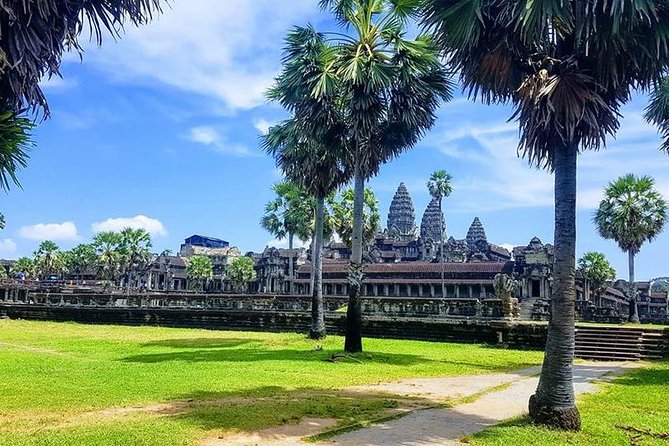
The Terrace of the Elephants and the Terrace of the Leper King add a more public, ceremonial side to the day. The tour allows about 90 minutes for this area, with a pass by the Terrace of the Leper King and the Terrace of the Elephants.
These are not the same kind of enclosed temple visit as Angkor Wat. You are reading the reliefs and imagining royal processions, court life, and the way these long platforms once worked within the capital.
Ta Prohm follows with a more dramatic mood. Tree roots push into the stone, and the temple retains much of the ruined appearance that made it famous after its 19th-century rediscovery. It once housed 2,740 monks. Today, the mix of towers, roots, narrow passages, and broken galleries makes it one of Angkor’s most atmospheric stops.
You get about an hour here. That is enough to see the signature sections, but Ta Prohm can feel crowded and congested at popular points. Your guide may help you find better photo positions and keep the group moving without making the visit feel like a forced march.
What the guides add
The guide can make or break an Angkor visit. The stone is impressive on its own, but the meaning is not always obvious.
Guides named Pal, Sak, Sopkee, Sokpee, Sokeep, Pi, Sarak, Bun, and Chhay are among those highlighted by name. Their strengths include explaining temple history, answering questions, keeping the group on schedule, and helping with photographs.
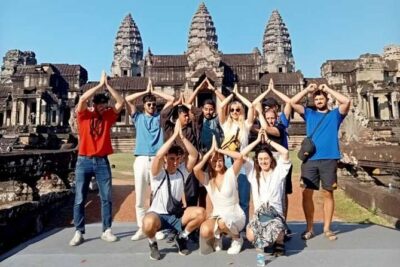
The photo help is unusually useful for solo visitors and couples. Several guides are praised for finding good angles and taking pictures for the group, sometimes using creative viewpoints. That does not replace your own camera time, but it saves you from asking strangers at every major site.
The guide also acts as a pace setter. These days contain many stops, and it is easy to spend too long at the first temple. A strong guide explains what is worth seeing, leaves room for questions, and gets you to the next site before the schedule collapses.
Guide quality can vary because the assigned person is not guaranteed. You can note preferred names when booking, but you should treat that as a request rather than a promise.
Price, group size, and the real value
The advertised cost is $49 per person. Add the required $62 temple pass for two or three days, and your basic cost becomes about $111 per person. Meals are extra.
That is a fair price for two days of transport, an English-speaking licensed guide, hotel pickup and drop-off, bottled water, cool towels, and a carefully arranged route through a large archaeological area. The pass is not a hidden small fee. It is the largest extra cost, so include it in your budget from the start.
The group can reach 15 people, though actual groups may be smaller. Groups of six or seven have been reported, and a group of 13 has also been described as comfortable. A smaller group gives you more access to the guide and makes photo stops easier. A full 15-person van will feel less personal, but it is still more manageable than a large coach.
The schedule is flexible enough to swap the order of the two days, and a day between the sunset and sunrise portions may be possible without an extra charge. Confirm the arrangement in advance if you need recovery time.
Who should book this Angkor tour?
I would choose this tour if you have only two days in Siem Reap and want a strong first look without arranging every ride yourself. It suits solo visitors, couples, families with older children, and anyone who wants historical explanation rather than a series of unconnected photo stops.
It is also a good fit if you care about Banteay Srei and the smaller temples, not just Angkor Wat. The route gives you a broad picture of the site, from royal capital to Buddhist sanctuary to tree-covered ruin.
I would hesitate if you dislike early mornings, long walking days, waiting for sunrise, or fixed group schedules. The sunrise morning is not a casual outing, and the first day may be longer than the basic duration suggests. Anyone with breathing problems should also consider heat, dust, pollution, and the uphill sunset viewpoint.
Pack water, sun protection, comfortable shoes, a small flashlight, and clothing that covers your shoulders and knees. A nap after the sunrise day is not a bad plan.
Should you book it?
Book it if you want the main Angkor sights plus Banteay Srei, reliable transport, and a guide who can explain the stories and help with photos. The combination of air conditioning, small-group travel, cold towels, and two different light experiences makes the $111 total before meals reasonable.
Skip it if you want a slow, private schedule or if sunrise sounds like punishment. For most people with limited time, though, this is an efficient and rewarding way to meet Angkor: one long day for the outer temples, one early morning for the great icons, and enough guidance to see more than beautiful stones.
FAQ
Is the $49 price the full cost?
No. The $49 tour price does not include the required $62 temple pass for two or three days. Meals are also separate, so budget about $111 per person before food.
What time does the tour start?
The listed start time is 8 a.m. for the regular tour day. The sunrise portion begins much earlier, with hotel pickup generally between 4:10 and 4:30 a.m., depending on the season.
What temples are included?
The route includes Preah Khan, Neak Pean, Banteay Srei, Pre Rup, Angkor Wat, Angkor Thom, Angkor Thom South Gate, the Terrace of the Elephants, the Terrace of the Leper King, and Ta Prohm. The itinerary also includes sunset on day one and sunrise on day two.
Is transportation air-conditioned?
Yes. The tour uses an air-conditioned vehicle and includes hotel pickup and drop-off. Bottled water and cool towels are provided during the tour.
How large is the group?
The maximum group size is 15 people. The actual group may be smaller, and groups of fewer than 15 have been reported.
What should I wear and bring?
Wear comfortable walking shoes and clothing that covers your shoulders and knees inside the temples. Bring sun protection, and consider carrying a small flashlight for the pre-dawn walk to Angkor Wat.
Just added in Siem Reap
- 1-Day Angkor Wat Private Tour with Spanish Tour Guide.★ 5.0 · 9 reviews
- Angkor Wat: Small-Group Tour with Balloon Ride and Lunch★ 4.6 · 13 reviews
- Sky Venture Microlight Siem Reap★ 4.9 · 18 reviews
- Angkor Wat plus Balloon Ride with Khmer Lunch★ 5.0 · 46 reviews
- Angkor Wat Tour by Tuk-Tuk with English Speaking Driver★ 4.5 · 65 reviews
- Authentic Cambodian Countryside Jeep Experience★ 5.0 · 62 reviews
- Siem Reap: Angkor 1-Day Private Tour with Sunset or Sunrise★ 4.9 · 61 reviews
- Floating Village Bike & Boat Sunset / E-Bike Available★ 5.0 · 78 reviews
Sunset Tours & Cruises, compared.
Angkor Wat Sunrise or Sunset Tour with Guide from Siem Reap
Read our review →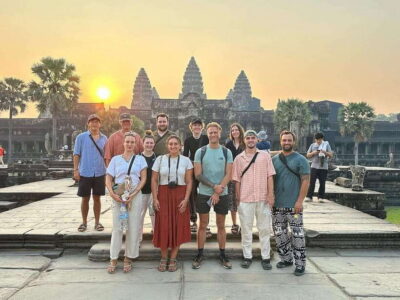
Angkor Wat: Small-Group Sunrise or Sunset Tour
Read our review →
Sunset tour of Kampong Phluk stilts home village on the Tonle Sap
Read our review →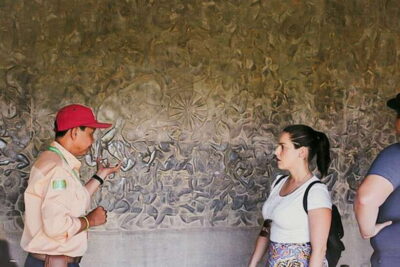
Angkor Wat 2-Day Tour with Sunrise and Sunset
Read our review →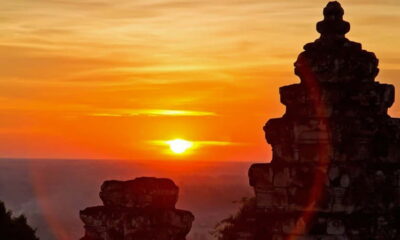
Angkor Wat Sunset Small Group Tour with Lunch Included
Read our review →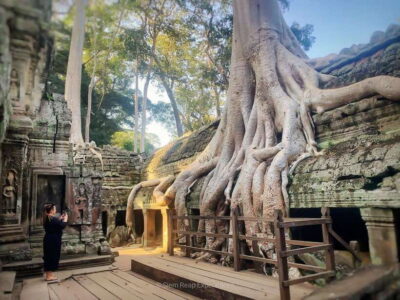
Siem Reap Floating Village Kampong Phluk Sunset with Boat
Read our review →Browse the lists this tour appears in