
Reviewed · TONLE SAP & FLOATING VILLAGE TOURS
Siem Reap 2 Days Private Tour Angkor Wat and Floating Village
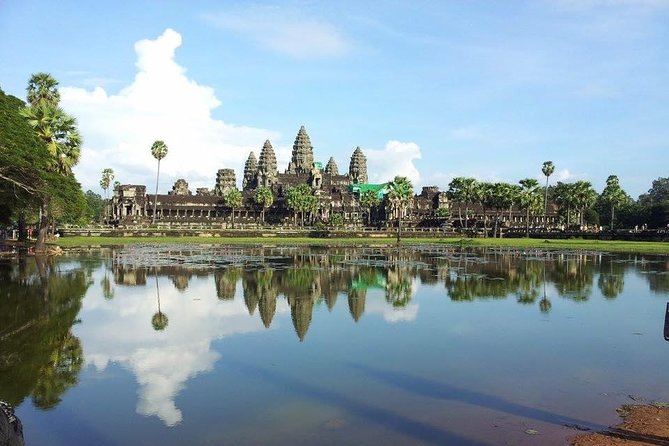
Angkor Wat is only part of this two-day Siem Reap experience. You also get the broad stone avenues of Angkor Thom, Bayon’s famous faces, tree-wrapped Ta Prohm, and a private boat ride through Kampong Phluk Floating Village on Tonle Sap Lake. It gives you a useful first look at both Cambodia’s ancient capital and its living waterways.
I like the private format, which lets your group travel in an air-conditioned vehicle and ask questions without keeping pace with strangers. I also like the practical care built in: hotel pickup, drinking water, cool towels, and an English-speaking licensed guide. One possible drawback is the pace. Nine temple stops on the first day make for a long, full schedule, and the Angkor Pass, meals, and tips are extra.
Key points to know before booking
- Angkor Wat is paired with Tonle Sap Lake, so you see Cambodia’s temple world and its water-based village life.
- The first day is packed, with Angkor Thom, Bayon, Baphuon, Phimeanakas, Ta Prohm, Angkor Wat, and Phnom Bakheng.
- Your group has a private vehicle and guide, rather than joining a shared coach.
- Guide Sokmeng is specifically identified in the tour information, and is described as professional, helpful, and attentive.
- Kampong Phluk includes a private cruise, with the boat portion lasting about three hours.
- The $170.05 price excludes the Angkor Pass and meals, so your final cost will be higher.
Angkor Thom gives you the right opening
The first morning begins at Angkor Thom, the enormous walled city that once served as the center of the Khmer Empire. Its scale helps you understand that Angkor was not just a collection of isolated temples. It was a planned royal city, with gates, terraces, temples, and ceremonial spaces spread across a large area.
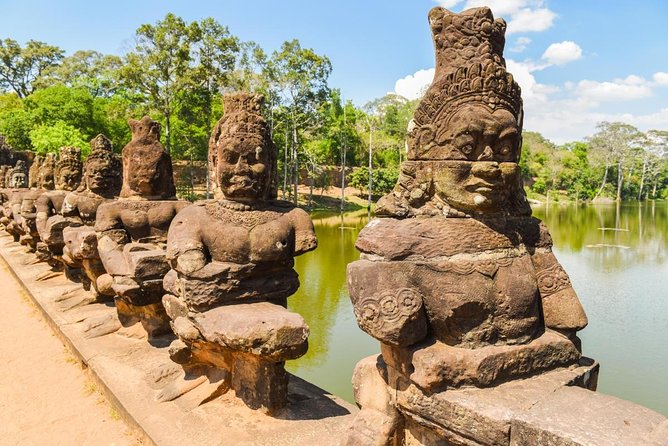
You have about two hours here, including the South Gate. The South Gate is the most familiar entrance, with a restored approach and rows of carved figures leading toward the city. Many of the heads remain in place, which makes this entrance especially easy to appreciate with a camera in hand.
I would pay close attention to your guide here. The stones can look like a grand entrance without much explanation, but the layout, carvings, and religious ideas behind Angkor Thom become far more interesting when someone connects the pieces for you. Admission is not included at each stop, but your guide assists with purchasing the Angkor Pass before entering Angkor Park.
Other trips out on the lake from Siem Reap:
- From Siem Reap: Kampong Phluk Floating Village Tour by Boat
★ 4.9 · 6,979 reviews - Sunset tour of Kampong Phluk stilts home village on the Tonle Sap
★ 5.0 · 4,865 reviews - Kompong Phluk Floating Village Half-Day Tour ( Morning / Sunset )
★ 5.0 · 1,494 reviews
Bayon and the royal center
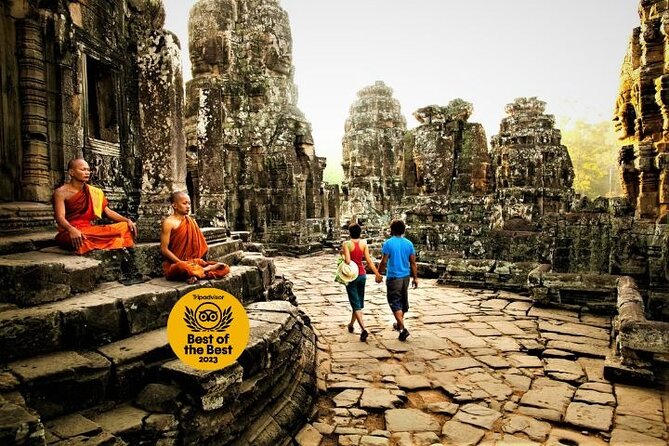
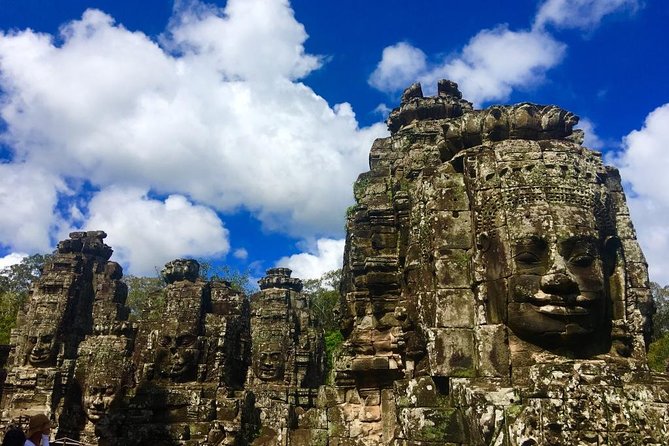
Bayon Temple receives about an hour and 20 minutes, enough time to explore its tight corridors and towers without rushing through in a few minutes. Its carved faces are the main attraction, though the temple can feel confusing at first. Towers rise at different angles, passageways overlap, and reliefs appear on walls at eye level.
This is one of the places where a licensed guide adds real value. The basic structure and earliest building stages are not fully known, and Bayon’s place at the center of Angkor Thom gives it a strong connection to royal power. Ask your guide to point out details instead of trying to identify every face yourself.
Baphuon follows, with about 50 minutes. Built on a long sandstone base, it has a different shape from the more familiar stepped temples. Phimeanakas receives another 30 minutes and sits near the former Royal Palace area. Neither stop has the instant visual impact of Angkor Wat, but both help fill in the story of how the royal city worked.
The Terrace of the Elephants takes another 30 minutes. Its long carved platform served as a ceremonial viewing area, and the name comes from the elephant reliefs along its face. This is a good place to appreciate the size of Angkor Thom. You are not simply looking at a temple, but at a royal center designed for processions and public display.
Ta Prohm delivers the most memorable ruins
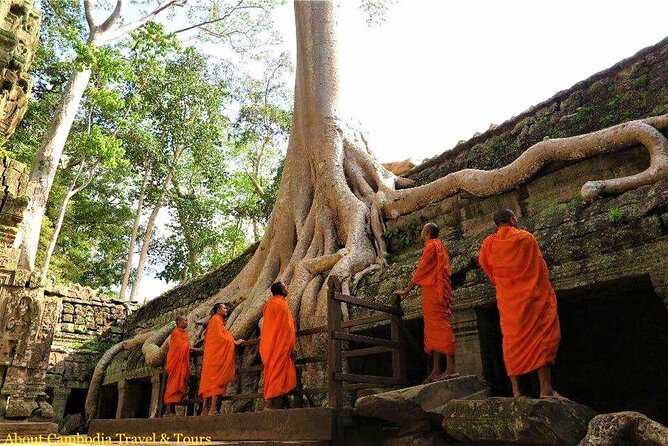
Ta Prohm is scheduled for about an hour and a half, which is useful because this temple needs time. Its stone corridors and galleries were left in a comparatively rough state, with trees growing through parts of the structure. The effect is dramatic, but the real appeal comes from seeing how nature and architecture now share the site.
The tour description calls Ta Prohm the kingdom of the trees, and that is a fair shorthand. Archaeologists cleared paths and strengthened unstable sections, but much of the atmosphere comes from the temple’s weathered condition. You get the famous photographs, but you also see a place that has not been polished into a perfect monument.
This stop can be crowded and photogenic, so your guide’s timing matters. Keep your expectations sensible: the trees are impressive, but access and views can vary as conservation work continues. Wear proper clothing here and at every temple. Shoulders must be covered, and trousers or knee-length skirts are permitted.
Angkor Wat needs more than a quick photograph
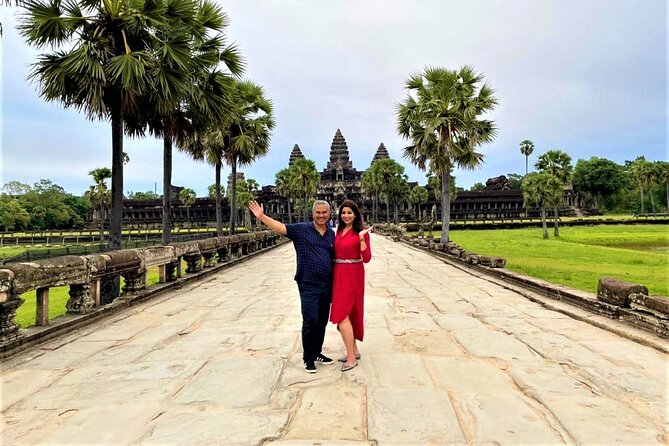
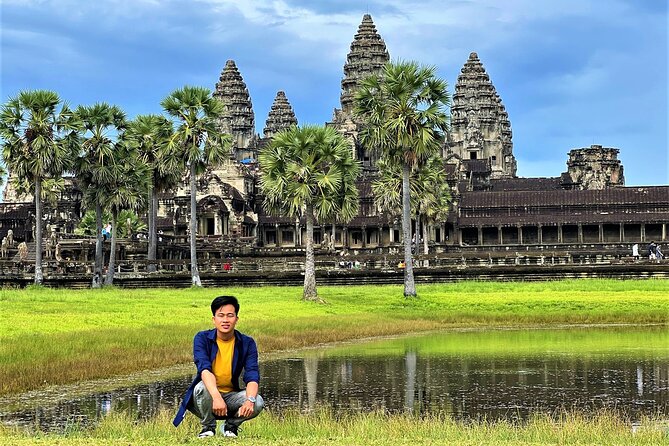
The schedule allows two hours at Angkor Wat, the largest and best-preserved monument in the Angkor group. That is enough for a solid introduction, though you could easily spend longer if you were exploring independently.
Angkor Wat is best understood as a carefully planned religious complex rather than a single impressive facade. Its balance, proportions, galleries, towers, reliefs, and long approach all matter. A guide can help you notice the details that are easy to miss when the first view naturally pulls your attention toward the central towers.
The temple is also one of the busiest places on the route. A private visit does not remove the crowds, but it gives you a guide who can explain what you are seeing and a driver who is focused on your group. The air-conditioned vehicle matters here. Siem Reap’s temple circuit involves repeated walks and stops, so a cool ride between sites is more comfortable than a shared vehicle with a fixed group schedule.
A few more things to do in Siem Reap worth a look
- Siem Reap: Angkor Wat 2-Day Tour with Sunrise and Sunset
★ 4.9 · 4,429 reviews - Angkor 2-Day Sunset & Sunrise Small-Group Tour
★ 5.0 · 2,567 reviews - 2 Days Exclusive Temple Highlights with Sunset and Sunrise Tour
★ 5.0 · 1,157 reviews - Siem Reap: Angkor Sunrise 1- or 2-Day Guided Temples Tour
★ 4.9 · 1,132 reviews
Phnom Bakheng adds a sunset option
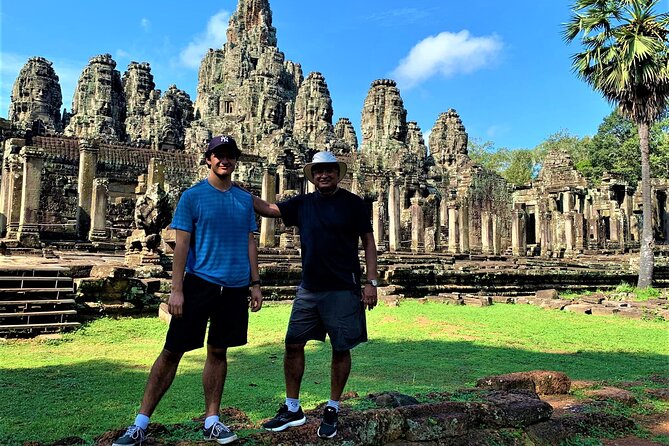
The final temple stop on day one is Phnom Bakheng, scheduled for about an hour. The temple itself is worthwhile, but it is especially known as a place to watch the sun go down over Angkor Wat.
This part of the day can be the least predictable. Sunset viewing depends on timing and conditions, and the site’s appeal means it may be busy. Treat it as a possible closing scene rather than a guarantee of a perfect sunset. If the view works, it is a memorable way to finish a demanding temple day. If it does not, you have still visited a temple with its own importance.
Day one includes around nine stops, so you should expect an early, active day with plenty of walking. The schedule favors first-time visitors who want a broad introduction rather than people who prefer a slow study of one or two monuments.
Tonle Sap shows a different Cambodia
Day two shifts from stone temples to water. Tonle Sap Lake is the largest freshwater lake in Southeast Asia, and its size changes between the monsoon and dry seasons. That seasonal movement shapes life around the lake and gives this part of the tour a different feel from the Angkor circuit.
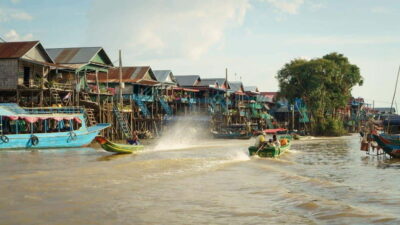
You have about two hours for Tonle Sap Lake before spending roughly three hours at Kampong Phluk Floating Village. The village is about 30 kilometers southeast of Siem Reap and is home to more than 3,000 people. Houses made of wood and bamboo stand on tall stilts, built to cope with changing water levels.
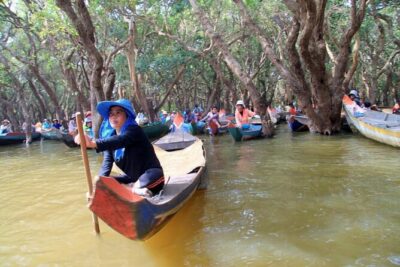
The private cruise is included, along with the boat visit to the floating village. This is one of the strongest reasons to choose this tour over a temple-only package. You are not spending a second day looking at more stone. You are seeing how a Cambodian community is linked to the lake and how seasonal water levels affect the setting.
Conditions at Kampong Phluk can vary with the season. The appearance of the village and the amount of open water will not be identical throughout the year. The boat portion also makes the day weather-sensitive, so bring practical sun protection and keep your expectations focused on the setting and daily life rather than a staged attraction.
Wat Preah Prom Rath adds local religious life
After the lake, the tour visits Wat Preah Prom Rath for about 45 minutes. This is one of Siem Reap’s older pagodas and contains wall paintings dating to the 17th century.
The stop is a useful contrast to the grand Angkor temples. Instead of viewing a monumental royal complex from the distant past, you get a look at a Buddhist religious site still connected to local life. The paintings are the main reason to visit, so listen closely when your guide explains what you are seeing.
Dress respectfully here, just as you do at the Angkor temples. The clothing rule is simple: cover your shoulders, and choose trousers or a knee-length skirt.
Artisans Angkor connects craft with employment
Artisans Angkor is a Cambodian social business that creates work for young people in rural areas while helping revive traditional Khmer crafts. The visit lasts about an hour.
This stop can feel different from the archaeological sites because it focuses on present-day skills and employment. You may see how traditional work is being maintained in a modern setting, and you can learn about the organization’s role in training and supporting young people. It is also a sensible place to buy a craft item if you want a Cambodian souvenir with a direct connection to local production.
The stop is not presented as a required shopping purchase. You can treat it as an educational visit, then decide for yourself if anything is worth buying.
West Baray and Svay Romiet slow the finish
West Baray is a large man-made lake surrounded by an earthen embankment. The visit lasts about 30 minutes, so it is a short stop rather than a major sightseeing session.
Its value is scale. After two days of temples and a visit to Tonle Sap, West Baray gives you another example of how water management shaped the Angkor region. There is also a local legend involving a ruler’s daughter and a crocodile, which your guide may explain along with the site’s background.
The last stop is Svay Romiet Pagoda, directly on the banks of West Baray. You have about 30 minutes here, and admission is free. It is a quiet ending to a schedule that began with Angkor Thom’s monumental gates and continued through Cambodia’s most famous temples.
What the $170.05 price really covers
At $170.05 per person, this is not the cheapest way to see Angkor. But the price includes a private air-conditioned vehicle, hotel pickup and drop-off, a professional English-speaking licensed guide, a private cruise on Tonle Sap Lake, drinking water, and cool towels throughout the tour.
The private setup is the key value. If you are traveling with family or friends, you are paying for flexibility, personal explanations, and transportation reserved for your group. A private tour also avoids the awkwardness of matching your day to a coach full of people with different interests.
You still need to budget for the Angkor Pass, which covers the temple visits. Meals are also not included. Local restaurants offer vegetarian and non-vegetarian food, with menu prices listed at roughly $3 to $10 per dish. Tips for the guide and driver are extra as well.
Group discounts may be available, so the per-person cost can make more sense for a larger party. Solo visitors should compare the price carefully with shorter shared options, while families and small groups may find the private arrangement easier to justify.
The guide and vehicle shape the experience
Your guide is described as a professional licensed English speaker, and the tour information specifically names Sokmeng in connection with a well-organized trip. Sokmeng is described as informative, professional, helpful, and attentive to small details, with the driver receiving similar praise.
That matters on a route this full. You need someone who can explain the temples without turning every stop into a lecture, keep the day moving, and help with practical matters such as the Angkor Pass. You also need a driver who understands that comfort and timing are important after hours of walking.
The vehicle is private and air-conditioned. Pickup and drop-off are provided at your hotel, but you need to give the company your hotel details when booking. Confirmation is provided at booking, and mobile tickets are supported.
Who should book these two days
I would choose this tour if you are visiting Siem Reap for the first time and want the major Angkor sites handled in one organized day. It also suits you if a private guide, a cool vehicle, and a separate boat trip matter more than finding the absolute lowest price.
Families, couples, and small groups will likely get the most value from the private format. The schedule is also good for anyone who wants both temples and Tonle Sap rather than spending every hour among ruins.
I would hesitate if you prefer a slow pace. Nine stops on day one can feel like a lot, particularly if you want extended time at Angkor Wat or Ta Prohm. You should also be ready for walking, heat, temple stairs or uneven surfaces, and an early start. Most people can participate, but the schedule is active.
The tour has a five-out-of-five rating from 30 reviews, with 100 percent recommendation shown in the supplied details. The strongest practical praise centers on organization, the guide, the driver, and the feeling that the private price is worthwhile despite looking higher than some alternatives.
Should you book this Siem Reap tour?
Book it if you want an efficient first visit with a private guide and a good mix of ancient monuments and present-day lake life. The best feature is the range: Angkor Thom, Bayon, Ta Prohm, and Angkor Wat on day one, followed by Kampong Phluk, Wat Preah Prom Rath, Artisans Angkor, and West Baray on day two.
Skip it if you want a relaxed temple study or already know Angkor well. Before booking, add the Angkor Pass, meals, and tips to the advertised price. If those extra costs fit your budget, this is a practical two-day introduction with strong attention to comfort and organization.
FAQ
Is this a private tour?
Yes. Only your group participates, and transportation is provided in a private vehicle.
How long does the tour last?
The experience lasts approximately two days.
Is hotel pickup included?
Yes. Pickup and drop-off at your hotel are included, but you need to provide the hotel details when booking.
Is an English-speaking guide included?
Yes. A professional, licensed English-speaking tour guide is included.
Is the Angkor Pass included?
No. The Angkor Pass is not included. Your guide assists you with purchasing it at the entrance to Angkor Park.
Is the boat ride at Tonle Sap included?
Yes. A private cruise to Tonle Sap Lake and Kampong Phluk Floating Village is included.
Are meals included?
No. Meals are at your own expense. Local restaurants offer vegetarian and non-vegetarian dishes, with listed prices of about $3 to $10 per dish.
What should I wear at the temples?
Wear clothing that covers your shoulders. Trousers or knee-length pants and skirts are permitted.
Are drinks provided?
Yes. Drinking water and cool fresh towels are provided throughout the tour.
Can I cancel for a full refund?
Yes, if you cancel at least 24 hours before the experience start time. Cancellations made less than 24 hours before the start time are not refunded, and changes within that period are not accepted.
Just added in Siem Reap
- Twilight Tastes of Siem Reap Include Dinner★ 5.0 · 13 reviews
- Ultimate Sunrise to Angkor Wat, Angkor Thom and Bayon Temple★ 5.0 · 3 reviews
- Trekking Tour at Phnom Kulen National Park from Siem Reap★ 5.0 · 3 reviews
- Full-Day Private Tour of Angkor Wat with Pick Up★ 5.0 · 12 reviews
- Private Day Trip to Angkor Temples with Expert Guide★ 5.0 · 4 reviews
- Siem Reap City Tour with War Museum and Killing Field★ 5.0 · 27 reviews
- Waterfall & River of 1000 Siva Linga- Kulen Mountain Private Tour★ 5.0 · 3 reviews
- Angkor Wat Experience Temple Pass and Siem Reap Food Tour★ 5.0 · 13 reviews
Tonle Sap & Floating Village Tours, compared.
Sunset tour of Kampong Phluk stilts home village on the Tonle Sap
Read our review →
Siem Reap Floating Village Kampong Phluk Sunset with Boat
Read our review →
Kompong Phluk Floating Village Half-Day Tour ( Morning / Sunset )
Read our review →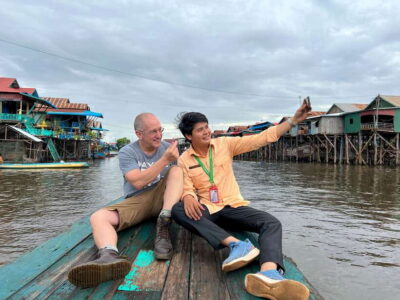
Kulen Mountain, Beng Mealea and Tonle Sap Tour
Read our review →
Tonle Sap Lake & Kampong Phluk Village Half-Day Tour
Read our review →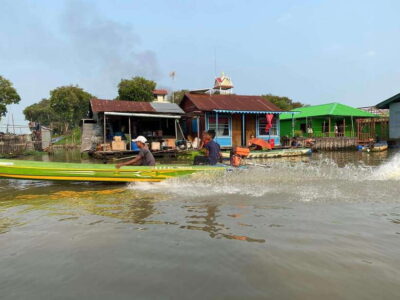
Tonle Sap, Kampong Phluk & Floating Village Tour
Read our review →
Sunset Dinner Tour: Tonle Sap Lake Floating Village
Read our review →Browse the lists this tour appears in