
Reviewed · BATTAMBANG & BAMBOO TRAIN TOURS
Full-day: Handicraft, Bamboo train, Killing cave, Bat Cave
Battambang’s best sights are not all grand monuments. They are the rice paper drying in the sun, the rice wine workshop, the farmer beside the Sangke River, and the sudden roar of thousands of bats leaving Phnom Sampou at dusk. This $15 private day tour ties those small moments to temples, markets, and the original bamboo train.
I like the way the day mixes food and village life with Cambodia’s harder history at Wat Samrong Knong and the Killing Cave. I also like the personal touch: guides including David and Kim make room for roadside stops, local tastings, and questions rather than rushing from one ticket booth to the next.
The trade-off is time and effort. Ten hours in a tuk-tuk, with bike sections, walking, heat, and a climb toward the Killing Cave, can wear you down. Lunch and the bamboo train cost extra, and this is not a good fit if you have limited mobility or high blood pressure.
Key points at a glance
- Taste local production at the source: See rice paper, spring rolls, dried bananas, bamboo sticky rice, rice wine, and fish market goods.
- Ride Battambang’s original bamboo train: The $5 fare is extra, but it adds a playful and distinctly local part of the day.
- Learn about Khmer Rouge history: Wat Samrong Knong and Phnom Sampou’s Killing Cave bring a serious side to the tour.
- Move beyond the city center: Tuk-tuk and bike sections lead to suspension bridges, farms, pagodas, a Cham village, and riverside communities.
- End with the Bat Cave: At dusk, thousands of bats stream from the mountainside, making a strong final scene.
- Expect a private, flexible day: English-speaking guides such as David and Kim can explain local life and adjust stops for your interests.
Why this Battambang day feels different
Many sightseeing days in Cambodia are built around a temple list. This one gives you a closer look at how people work, cook, worship, and move around Battambang Province. You spend time in food workshops and markets, then travel through rural villages before ending at Phnom Sampou.
The transport helps shape the experience. You are picked up and returned to your hotel, guesthouse, or another named location in Krong Battambang. A tuk-tuk handles the longer stretches, while bike sections bring you closer to the roadside details. You can talk with farmers, cross a suspension bridge, stop at a pagoda, and watch village activity without being sealed inside a large vehicle.
The day lasts about 10 hours. That is a long outing, but the route has enough variety to keep it from feeling like one extended temple visit. You will need to accept an early start or a full day on the road, depending on the departure time available when you book.
Other Battambang outings from Battambang:
- Battambang: Tuk-Tuk, Bamboo Train, Killing/Bat Caves, Sunset
★ 4.9 · 1,436 reviews - Battambang Tuk Tuk tour: Bambootrain, Killing & Bat Caves,Sunset
★ 5.0 · 799 reviews - Afternoon tour by tuk tuk to bamboo train,bat cave,killing cave,countryside.
★ 5.0 · 344 reviews
Rice paper, bamboo sticky rice, and the taste of Battambang
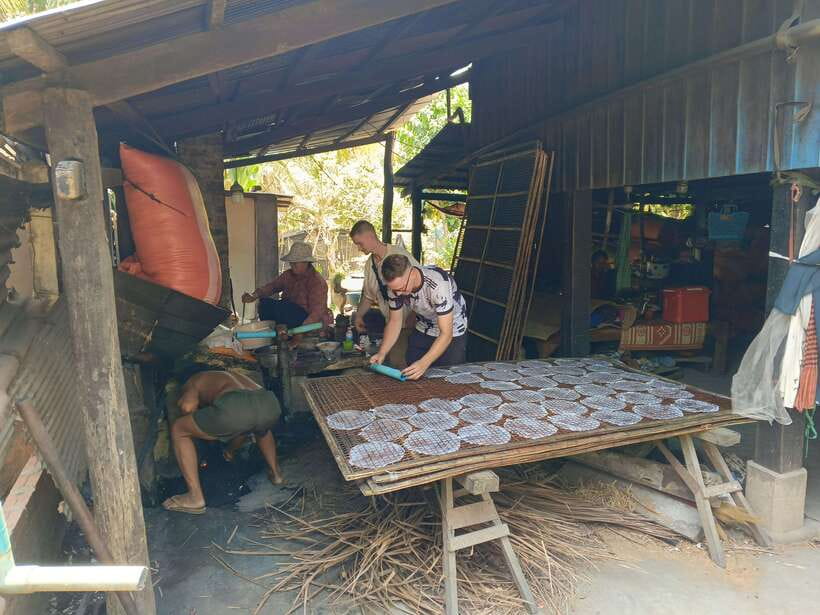
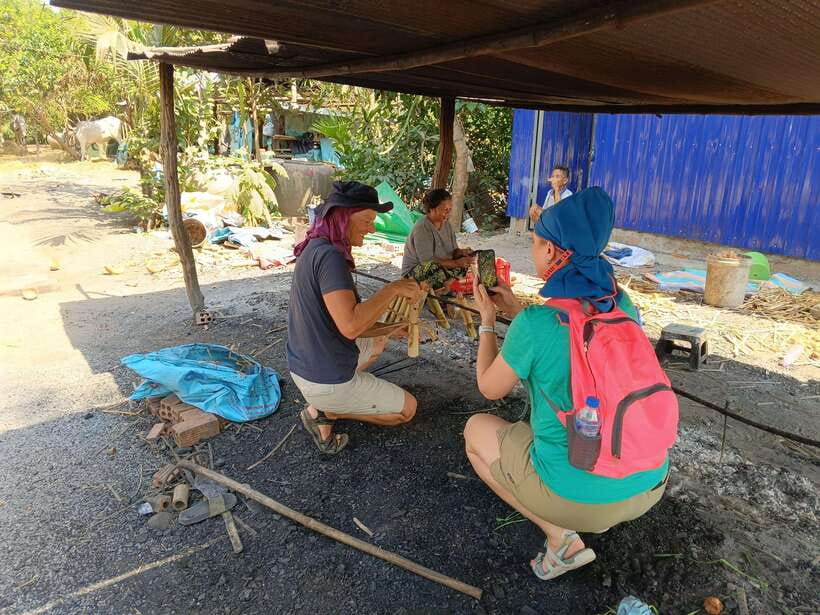
The morning begins with local food and handicraft production. You may see rice paper being made, learn how spring rolls are prepared, and taste items such as dried bananas and bamboo sticky rice. These stops work best if you ask questions. The guide can explain what you are seeing, and the tastings give you a direct sense of how ordinary ingredients become market food.
Bamboo sticky rice is especially useful for understanding the practical side of Cambodian cooking. Rice is prepared inside bamboo, creating a portable snack with a texture and flavor that differ from a plain bowl of steamed rice. The tour also includes rice wine production, where you can learn about a drink made in rural communities.
The food stops are not simply filler between monuments. They show you the local economy in small, clear pieces: farmers supply ingredients, households or small producers process them, and markets connect the finished food to buyers. If you enjoy eating your way through a place, this part of the day gives the tour much of its character.
You will also visit a prahok market. Prahok is fermented fish, a strong-smelling ingredient central to many Cambodian dishes. The market may not suit every nose, but it is an honest look at local food culture. Bring cash if you want to buy personal items, since personal expenses are not included.
Wat Samrong Knong and the Well of Shadows
Wat Samrong Knong brings the day into more serious territory. The temple grounds include the Well of Shadows, a memorial connected to the Khmer Rouge period. Your English-speaking guide explains what happened here and helps place the site within Cambodia’s recent past.
This stop deserves quiet attention. The tour also includes Buddhist temples and time to learn about the religion, but Wat Samrong Knong is not only a place for photographs. The memorial carries a painful message about violence and loss. I appreciate that it appears alongside everyday food and village visits, because Cambodia’s past and present are often found side by side.
You should not expect a long museum-style presentation. The value comes from being at the site, hearing the guide’s explanation, and having a chance to think about what you see. Keep your clothing respectful at temple stops, and remember that this part of the day may feel heavy compared with the food tastings that come before it.
Markets, workshops, and the road north
The route includes a fish market, local food producers, rice wine, rice paper, dried bananas, and spring rolls. Some stops last around an hour or more, which gives your guide time to explain the work instead of pointing at a product and moving on.
There are also spontaneous stops. David and Kim have been praised for noticing something interesting along the way and making time for it. That flexibility matters on a private tour. You are not locked into a large group’s pace, though the final timing still needs to work for the bamboo train and the bat flight at Phnom Sampou.
The northbound route reaches Wat Ek Phnom, the final major landmark before returning toward Battambang city. The temple gives the morning a more traditional sightseeing focus after the markets and workshops. You can expect a historic religious site, time to look around, and a chance to ask about Cambodian temple traditions.
The order may vary in practice, but the broad pattern is clear: local production first, temple and historical sites next, then a return through the city before the rural afternoon section. Wear shoes you can use for both temple grounds and uneven paths.
A few more things to do in Battambang worth a look
- Battambang: Bamboo Train, Bat Cave, Killing Cave by Tuk Tuk
★ 5.0 · 182 reviews - Full Day tour .City tour.Countryside.Bamboo Train.Secret Bat Cave
★ 5.0 · 178 reviews - Afternoon Tour: Bamboo Train, Killing Cave &Bat Cave
★ 5.0 · 73 reviews - Battambang: Bamboo Train, Bat Cave and Killing Cave Tour
★ 4.9 · 58 reviews
Battambang city by tuk-tuk
After the northern stops, you return to Battambang for a look at its colonial-era buildings and provincial hall. The city portion is less about ticking off a single famous sight and more about seeing how the old administrative center fits into modern Battambang.
You also stop at the Ta Dambong Kro Nhong statue, linked to the local founding story. The statue gives your guide a chance to explain a figure important to Battambang’s identity. It is a short urban stop, but it helps connect the city you are passing through with local legend.
The tuk-tuk is a good match for this route. You get open-air views and can stop more easily than you could in a coach. The downside is exposure to sun, dust, and road noise. The provider includes unlimited mineral water and cold towels, which are useful on a 10-hour day, but sunscreen and a hat still make sense.
Villages, suspension bridges, and the Sangke River
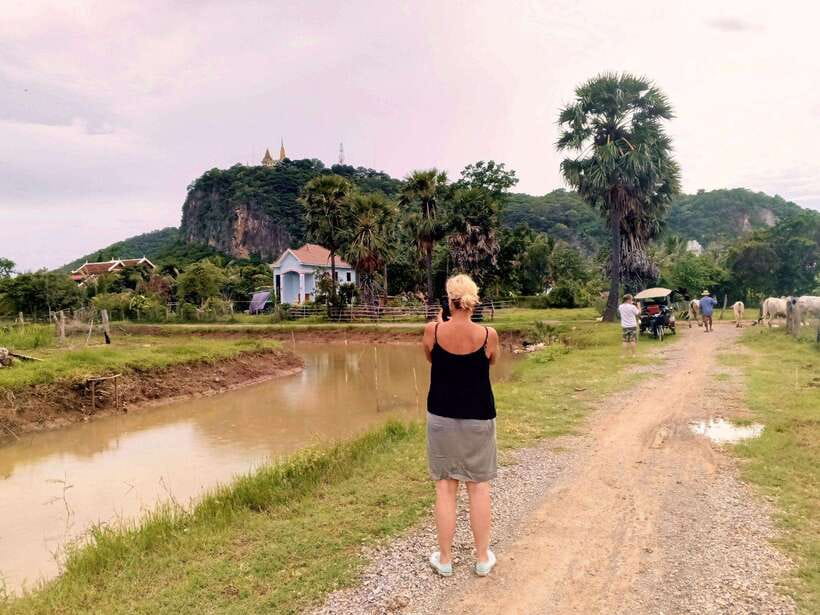
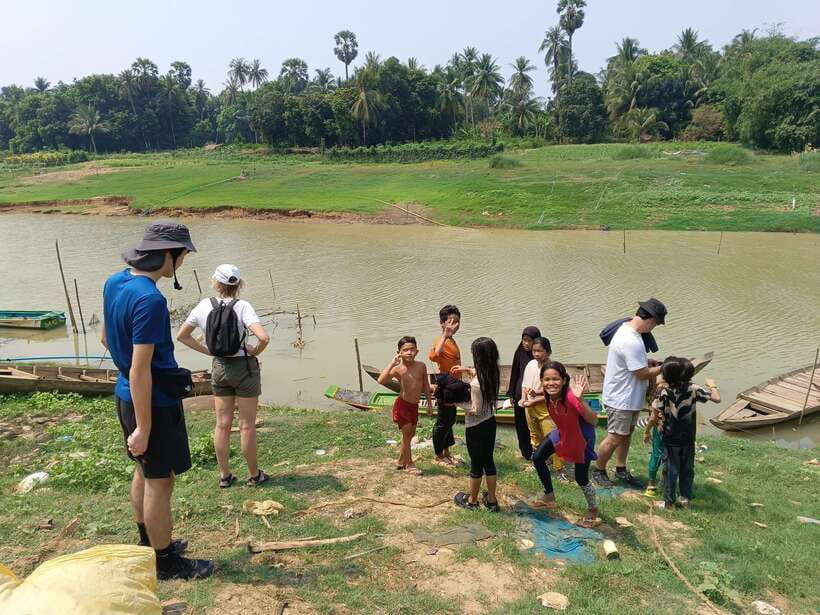
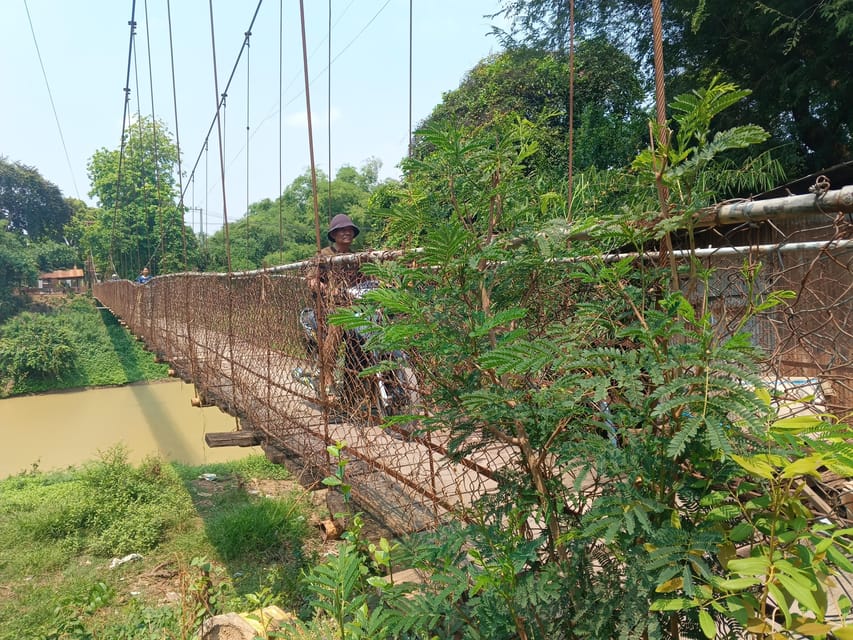
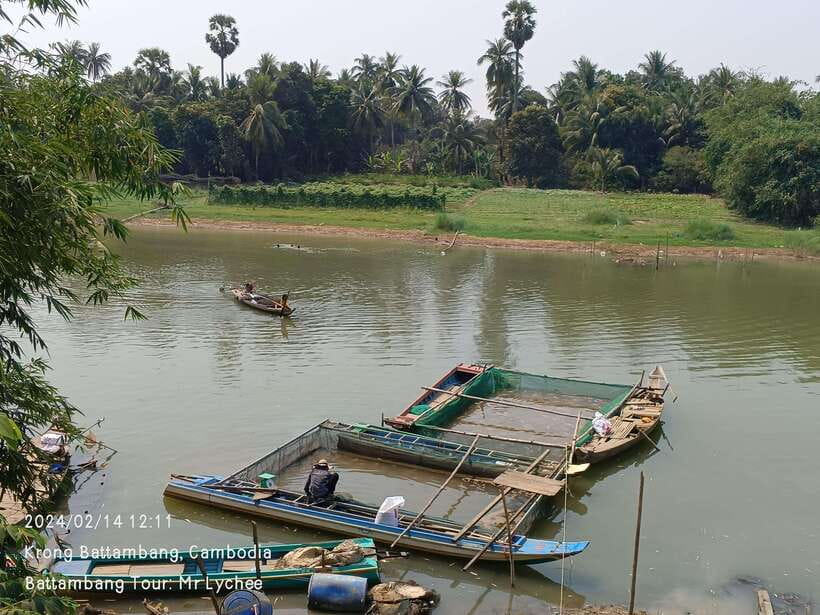
The afternoon moves into the countryside around the Sangke River. You cross suspension bridges, pass plantation farms, and visit a Cham village. The route also includes a pagoda and time to speak with farmers.
This is one of the tour’s strongest sections if you want daily life rather than a polished attraction. The villages offer a chance to see how homes, farms, religious buildings, and river crossings fit together. Your guide can help with conversation and explain what you are seeing, but you should still approach people politely and ask before taking close-up photos.
The bike portion adds effort and closeness. You are not simply looking through a tuk-tuk window. A listed bike segment lasts about 30 minutes, while other stops include bike touring as part of the visit. Exact cycling conditions are not specified, so you should be prepared for a modest but real physical component rather than assuming the entire day is vehicle based.
The suspension bridges and river views are scenic, but this is not a staged rural show. Road surfaces and crossings may feel basic. That is part of the point, though it also explains why the tour is not suitable for people with mobility impairments.
The original bamboo train for $5
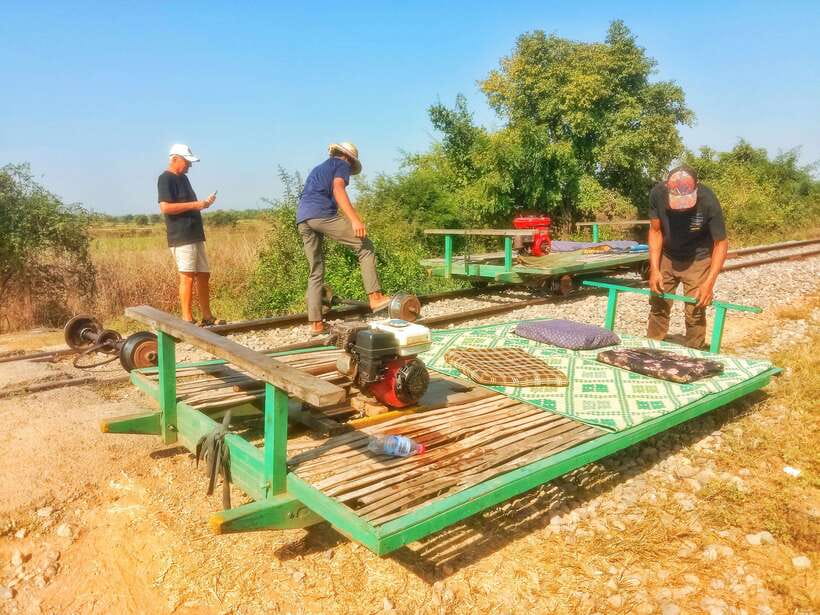
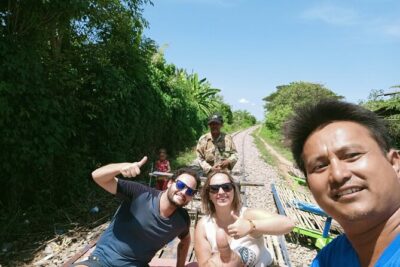
The bamboo train is one of Battambang’s signature experiences. You sit on a simple bamboo platform fitted to a railway track and travel through the countryside. The ride is short and unusual, with open views along the way.
The fare is not included. You should budget $5 per person for the bamboo train, in addition to the $15 tour price. Ask your guide how the current payment works on the day, since the supplied details give the cost but not a precise ride length or station procedure.
The bamboo train is fun because it feels improvised rather than polished. It is also worth keeping your expectations in check. This is not a luxury rail journey or a full transport route. It is a simple local attraction, and its appeal comes from the ride itself, the setting, and the story of how these bamboo platforms became associated with Battambang.
After the ride, you head to a village restaurant for a late lunch. Meals are not included, so bring enough cash. Guides David and Kim have offered lunch and dinner suggestions, which can be helpful if you want something local without spending time searching after a long day.
Phnom Sampou, the Killing Cave, and the Golden Temple
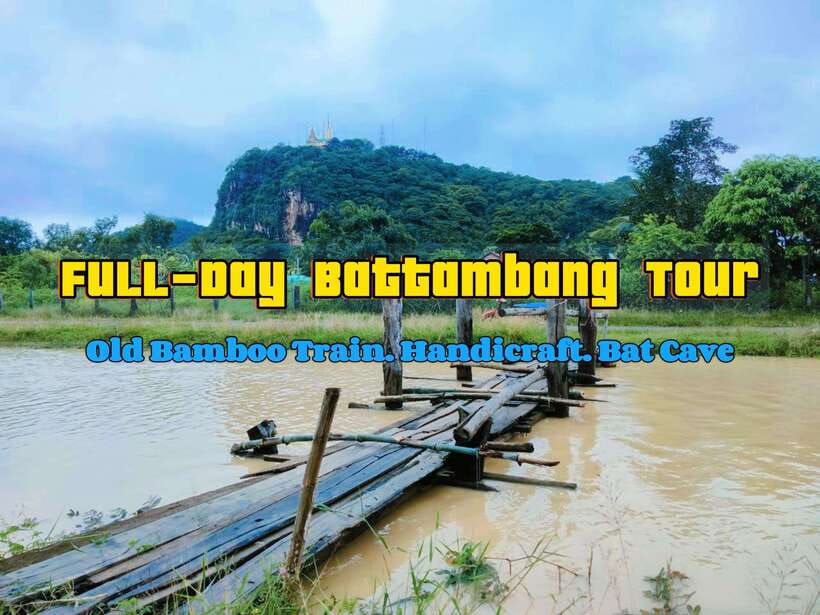
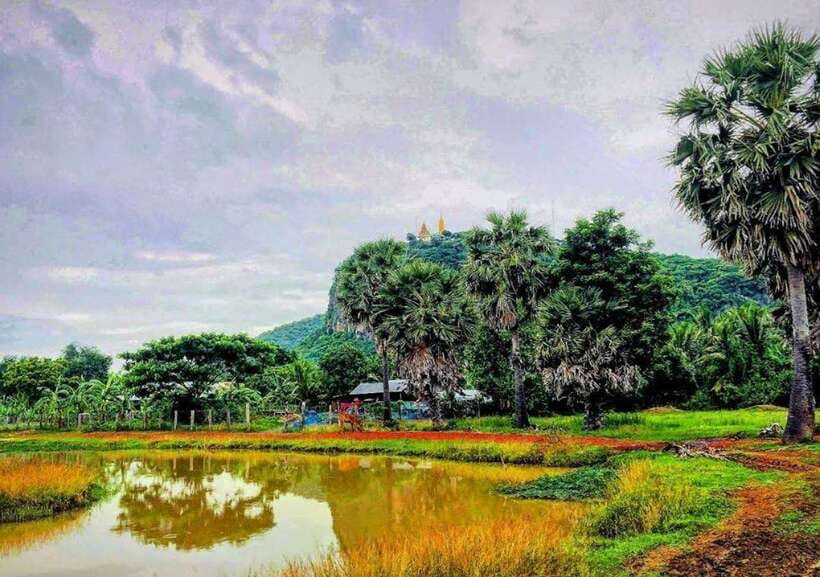
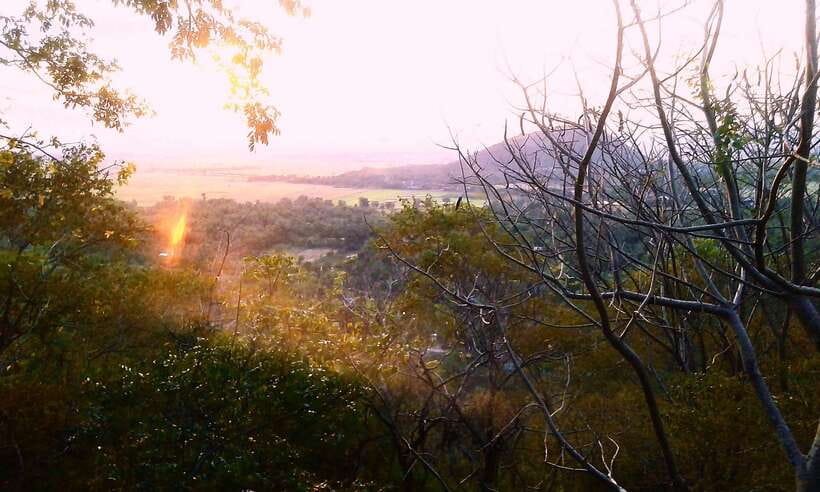
In the afternoon, the tuk-tuk continues to Phnom Sampou, a mountain area with shrines, Buddhist sites, and the Killing Cave. The route includes the Monkey Forest and the Golden Temple, where you can stop for views across the surrounding countryside.
The Killing Cave is another place connected to the Khmer Rouge period. Like the Well of Shadows, it asks you to slow down and listen. The cave is not a light sightseeing stop, and you should allow yourself time to absorb the history rather than treating it as just another photo point.
The entrance fee for the Killing Cave is included. The details state that walking up is free, while a ride up to the Killing Cave is not included. If you want the vehicle option, ask about the extra cost before committing. The mountain section can be tiring, so hiking shoes are a sensible choice.
The Golden Temple and shrines add a religious dimension after the difficult historical stops. You can see how the mountain remains both a place of worship and a site of remembrance. The combination gives Phnom Sampou more weight than a simple viewpoint stop.
The Bat Cave finale at dusk
The final stop is the Bat Cave, timed before sunset. As darkness approaches, thousands of bats fly out from the mountainside. The stream can continue for some time, creating one of the most memorable natural scenes in the Battambang area.
Timing matters here. The tour is designed to finish at the Bat Cave before sunset, but exact departure times and local conditions can affect the wait. Bring patience, water, and your camera, but do not expect the bats to perform on a strict schedule.
This is a smart ending because it changes the mood after the historical sites. You finish with motion, sound, and a striking view rather than another building. It also gives the long day a clear final moment before you return to Battambang.
What the $15 price really covers
At $15 per person, the value is strong if you want a full day with private transport and a guide. The price includes hotel pickup and drop-off, tuk-tuk transport, an English-speaking live guide, local snack tastings, unlimited mineral water, cold towels, and entrance fees for the Bat Cave and Killing Cave.
You still need to pay for lunch, personal purchases, and the $5 bamboo train fare. You may also need to pay extra if you choose a ride up to the Killing Cave instead of walking. Once those costs are added, the real day budget is higher than $15, but it remains a low-cost way to connect many sites.
The private format improves the value. You can ask to stop at something interesting, spend more time on a food production visit, or ask for advice about meals. The group is private, although the number of people in that group is not specified, so confirm the arrangement if that detail matters to you.
Free cancellation is available up to 24 hours before the tour for a full refund, and you can reserve now and pay later. Those terms make it easier to keep your schedule flexible, but you still need to provide a clear pickup point such as a hotel, guesthouse, or restaurant.
Who should book this day
I would choose this tour if you want Battambang beyond its central streets. It suits you if local food, small workshops, rural scenery, recent history, and unusual transport sound better than a day built only around major temples.
It also suits couples, families with older children, and small private groups who value an adjustable pace. The strongest parts are the explanations from guides such as David and Kim, the tasting stops, and the chance to connect ordinary village life with the major attractions.
I would think twice if you dislike long days, heat, open-air transport, walking, or strong market smells. The tour is not suitable for people with mobility impairments, high blood pressure, or anyone over 95. Pets are not allowed, although assistance dogs are allowed.
Bring a camera, sunscreen, cash, and hiking shoes. Alcohol and drugs are not permitted. Comfortable clothes and respectful temple wear will make the day easier, even though those clothing details are not formally specified.
Should you book it?
Book this tour if you want a broad and personal introduction to Battambang for a low starting price. The food workshops, village roads, bamboo train, Khmer Rouge memorials, Phnom Sampou, and Bat Cave give you a much fuller picture than a short city tour.
Skip it if you want a slow temple visit, guaranteed meal coverage, or a short outing with little walking. For everyone else, the mix is persuasive: you get real local production, serious history, countryside contact, and a memorable dusk finale in one private day.
FAQ
How long does the Battambang tour last?
The tour lasts about 10 hours.
What is included in the $15 price?
The price includes hotel pickup and drop-off, tuk-tuk transport, an English-speaking live guide, unlimited mineral water, cold towels, local snack tastings, and entrance fees for the Bat Cave and Killing Cave.
Is the bamboo train included?
No. The bamboo train costs $5 per person and must be paid separately.
Are meals included?
No. Meals are not included. You should bring cash for lunch and personal expenses. A village restaurant is used for a late lunch, and the guide can offer meal recommendations.
Is the tour private?
Yes. The experience is offered as a private group tour.
Can I be picked up from my hotel?
Yes. Pickup and drop-off are included. You need to provide the name of your hotel, guesthouse, restaurant, or another pickup location in Krong Battambang.
Is the Killing Cave entrance fee included?
Yes. The Killing Cave entrance fee is included. Walking up is free, while a ride up to the cave is not included.
What language does the guide speak?
The live guide speaks English. Guides named in the tour information include David and Kim.
More Full-Day in Battambang
- Explore Battambang full day tour by Tuk Tuk (start from 9am-6:30pm)
★ 5.0 · 240 reviews - Full Day-Tour: Handicraft, Bamboo train, Killing cave. Bat cave
★ 5.0 · 29 reviews - Full day tour by bicycle & tuk tuk,bamboo train,bat cave,villages
★ 5.0 · 27 reviews - Full-day: Wat Banan. Old bamboo train. Bat Cave. Killing cave
★ 5.0 · 13 reviews
Just added in Battambang
- Bamboo Train, Banann Temple, Fruit Bat, Bat Cave, Sunset★ 4.2 · 3 reviews
- Afternoon tour to Original Bamboo train. Bat cave. Killing cave★ 5.0 · 25 reviews
- Private Taxi Transfer Battambang from/to Phnom Penh★ 5.0 · 7 reviews
- Private Boat from Battambang to Siem Reap via Tonle Sap Lake★ 4.5 · 3 reviews
- Private Taxi Transfer From Battambang – Siem Reap City★ 5.0 · 4 reviews
- Tuk Tuk Tour (Full-Day)★ 5.0 · 7 reviews
- Explore local livelihood & countryside (Half-Day Cycling Tour)★ 5.0 · 19 reviews
- Afternoon Tour BambooTrain & Bat Cave★ 5.0 · 57 reviews
Battambang & Bamboo Train Tours, compared.
Tuk-Tuk, Bamboo Train, Killing/Bat Caves, Sunset
Read our review →
Battambang Tuk Tuk tour: Bambootrain, Killing & Bat Caves,Sunset
Read our review →
Afternoon tour by tuk tuk to bamboo train,bat cave,killing cave,countryside.
Read our review →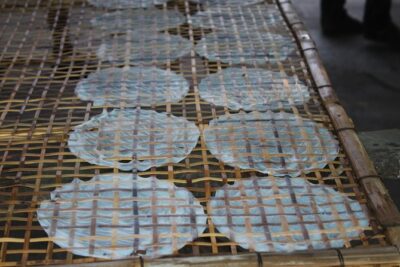
Local Livelihood Half Day Bike Tour in Battambang
Read our review →
Explore Battambang full day tour by Tuk Tuk (start from 9am-6:30pm)
Read our review →
Full Day tour .City tour.Countryside.Bamboo Train.Secret Bat Cave
Read our review →
Battambang Full Day Tour from Siem Reap – Bamboo Train, Killing Cave & Sunset
Read our review →Browse the lists this tour appears in